• Link to X
  • Link to Facebook
  • Link to Instagram
  • Link to TikTok
  • Link to Youtube
  • About
    • About Us
      • President
      • Board of Directors
      • Board of Advisors
      • Financials
      • Our Methodology
      • Success Tracker
      • Contact
  • Act Now
    • 30 Ways to Help
      • Email Congress
      • Call Congress
      • Volunteer
      • Courses & Certificates
      • Be a Donor
    • Internships
      • In-Office Internships
      • Remote Internships
    • Legislation
      • Politics 101
  • The Blog
  • The Podcast
  • Magazine
  • Donate
  • Click to open the search input field Click to open the search input field Search
  • Menu Menu

Archive for category: Education

Information and stories on education.

Education, Foreign Aid

USAID to Expand Its Teacher Training Project in Pakistan

USAID to Expand Its Teacher Training Project in Pakistan
The USAID Teacher Education Project in Pakistan has expanded to provide teaching services to every province in the country. This $75 million project has been working since 2011 to modernize Pakistan’s education system. With the help of Pakistan’s Higher Education Commission (HEC), over 2,600 students have enrolled in 15 universities and 57 colleges across the country. USAID hopes to see this number increase as more teachers emerge from the Teacher Education Program.

In order to reach out to more potential teachers, USAID realized the need to enlarge its program. Not only will the Teacher Education Project offer more locations, it is also giving 1,900 scholarships to students based on merit and financial need.

This higher education program will be implementing suggestions from a study conducted in 2006 that found flaws in Pakistan’s current teacher training system. The study discovered a trend of the government setting unrealistic goals for its education system and then, when it fails to meet those goals, creating new, also idealistic targets that are never reached. By making its goals more realistic, USAID is confident in its ability to improve Pakistan’s education system by producing high quality teachers.

As Pakistan trains more well qualified teachers, the country will begin to experience higher quality of education for its younger students as well. Javaid Laghari, chair of the HEC, is optimistic about Pakistan’s future, “We hope for a good change, when today’s students become tomorrow’s teachers.”

– Mary Penn

Source: UWN
Photo: BarakatNews

April 14, 2013
https://borgenproject.org/wp-content/uploads/borgen-project-logo.svg 0 0 Borgen Project https://borgenproject.org/wp-content/uploads/borgen-project-logo.svg Borgen Project2013-04-14 09:00:472020-06-07 21:59:02USAID to Expand Its Teacher Training Project in Pakistan
Education, Global Poverty

Celebs Participate in 2013 Clinton Global Initiative University

Celebs Participate in 2013 Clinton Global Initiative UniversityThe Clinton Global Initiative University, now in its sixth year, is being hosted this week in St. Louis at Washington University. Along with former President Bill Clinton, TV host Steven Colbert and Twitter founder Jack Dorsey will attend the event that aims to include today’s youth in the world’s most pressing global challenges through college campuses. Various other celebrities, including Jada Pinkett-Smith and Chelsea Clinton are also attending the event.

The event focuses on five main areas of interest relating to global issues, including poverty alleviation, public health, peace and human rights, education, and environment and climate change. The event is expecting around 1,200 participants to attend this year. Washington University is the host college this year because of its dedication “to training the next generation of civic leaders.”

Although the general public is not permitted into the event, some sessions can be viewed online via streaming video here.

– Christina Kindlon

Source: KMOV

April 11, 2013
https://borgenproject.org/wp-content/uploads/borgen-project-logo.svg 0 0 Borgen Project https://borgenproject.org/wp-content/uploads/borgen-project-logo.svg Borgen Project2013-04-11 09:22:042020-06-07 21:56:49Celebs Participate in 2013 Clinton Global Initiative University
Education

Madonna Auction’s Her Painting for Charity

madonna-auction-charity
On May 7, 2013, Sotheby’s will auction a painting from Madonna’s art collection, in its Impressionist & Modern Art Evening Sale. The sale of the Fernand Léger’s “Trois femmes à la table rouge – Three Women” painting is estimated at $5 to $7 million, and all proceeds will benefit the Ray of Light Foundation to support girls’ education in Afghanistan, Pakistan, and other countries.

“I have a great passion for art and a great passion for education. In conjunction with Sotheby’s, I would like to share these two passions. I cannot accept a world where women or girls are wounded, shot or killed for either going to school or teaching in girls’ schools. Let’s change the world!” commented Madonna.

In Afghanistan, just 12 percent of women are literate and it is estimated that only seven girls to every ten boys are able to attend school. In Pakistan, which has one of the largest populations of out-of-school children in the world, it is estimated that there are more than three million primary school-aged girls unable to attend school.

The Fernand Léger painting was done in 1921, at the height of his Mechanical Elements series. Over time, Léger’s rendering of female subjects became increasingly abstract and this painting on auction is an example of his unique Cubist moment. Madonna is taking this valuable piece of art, and turning it into an even more valuable catalyst for social-good.

– Mary Purcell

Source: Look At The Stars


April 5, 2013
https://borgenproject.org/wp-content/uploads/borgen-project-logo.svg 0 0 Borgen Project https://borgenproject.org/wp-content/uploads/borgen-project-logo.svg Borgen Project2013-04-05 13:14:412020-05-04 08:02:18Madonna Auction’s Her Painting for Charity
Education, Health

Gates Foundation Wants New Condoms

Gates Foundation Wants New Condoms

Bill Gates is asking investors and scientists to develop a new gadget—an improved condom.

It may seem like a job for Trojan, but the Bill and Melinda Gates Foundation wants new condoms. The unique request is part of its “Grand Challenges in Global Health” initiative. The program awards grants of $100,000 and follow-up grants of as much as $1 million to individuals who develop solutions to global health issues. The latest report details successful recipients combating malaria, HIV, and tuberculosis.

According to the Grand Challenges website, “Condoms have been in use for about 400 years yet they have undergone very little technological improvement in the past 50 years.” The only major improvements include the switch to latex and quality control measures to test each individual condom during production. Both of these measures increased the effectiveness of condoms, but the basic design of condoms has yet to transform.

Condoms are the most ubiquitous defense against unwanted pregnancy and sexually transmitted diseases. This undervalued resource is a lifesaver in developing countries.  Condoms should be necessary for sexual health, but many men and women shy away from using them due to discomfort, societal stigmas, and reduced sensation. Some cultures perceive condom use as a sign that the person has AIDS.

The Gates Foundation hopes to eliminate these concerns so more people will use condoms regularly. The challenge seeks to make prophylactics more user friendly. “If we could make something better, we could have a really substantial effect on HIV prevention and unintended pregnancy in Sub-Saharan Africa and South Asia,” said Stephen Ward, a program officer at the Bill & Melinda Gates Foundation.

The program is limited to condoms rather than multi-purpose prevention devices (such as vaginal rings) because these programs are not readily available worldwide. The condom is still simple enough that it can be distributed at a low cost. Not to mention, condoms are useful even in communities that lack health care professionals.  “Any advance or new design that gets people to use condoms would be a big plus,” said Dr. Anthony Fauci, one of the world’s leading AIDS researchers.

Applicants must complete a two-page application by May 7. Two frontrunners have already emerged. Origami, a California company, focused on usability and comfort. They are creating a new silicone injection-molded condom.  University of Washington researchers look to increase the effectiveness of anti-HIV drugs.  Their model features electrically spun fabric that allows sperm-blocking drugs to dissolve more quickly.

– Whitney M. Wyszynski
Source: Co.Exist
Photo: CNET

April 2, 2013
https://borgenproject.org/wp-content/uploads/borgen-project-logo.svg 0 0 Borgen Project https://borgenproject.org/wp-content/uploads/borgen-project-logo.svg Borgen Project2013-04-02 11:00:432024-05-24 23:47:08Gates Foundation Wants New Condoms
Education, Food Security, Foreign Aid, USAID

US AID and Nepal Partner to Educate on Agriculture

US AID and Nepal Partner to Educate on Agriculture
Nepal Economic, Agriculture, and Trade Activity (NEAT), a 32-month program funded by USAID, aims to “promote economic growth, reduce poverty, increase food security, and improve lives” throughout Nepal. As part of the program, USAID and Nepal have partnered up through the Nepal Ministry of Agriculture Development to distribute educational materials on agricultural practices in the hopes of improving the production of agriculture in the country.

Through the funding provided by USAID, more than 263,000 pamphlets were handed out detailing specific agricultural instructions, both written in Nepali and as visuals in order to aid those citizens who are illiterate. The pamphlets detail “critical agriculture practice” on 13 types of crops and 3 species of livestock.

The NEAT program has improved the agricultural education of 67,510 households throughout 20 districts of Nepal with a regular lack of access to proper food sources. Thus far, the project has already allowed area farmers to see an increased income of $8.5 million collectively. These farmers and households have had increased access to markets and are better educated on agricultural practices such as pest and disease control, use of fertilizer, improved seed, and “post-harvest handling.”

The Director of USAID’s Social, Environmental, and Economic Development Office, John Stamm, maintained that USAID is dedicated to creating sustainable development solutions, including the NEAT program – which will allow Nepalese citizens greater resources for continuing to improve their lives long after the program ends in August of 2013.

– Christina Kindlon

Source: USAID

March 31, 2013
https://borgenproject.org/wp-content/uploads/borgen-project-logo.svg 0 0 Borgen Project https://borgenproject.org/wp-content/uploads/borgen-project-logo.svg Borgen Project2013-03-31 14:30:432020-06-01 00:46:00US AID and Nepal Partner to Educate on Agriculture
Education, USAID, Women and Female Empowerment

USAID Funds Partnerships for Women’s Leadership

USAID Funds Partnerships for Women's LeadershipUSAID funds partnerships with Higher Education for Development (HED) to encourage women’s leadership throughout a number of developing countries, including South Sudan, Rwanda, Paraguay, and Armenia. As part of the new Women’s Leadership Program, five American universities will partner with universities and colleges throughout the select countries.
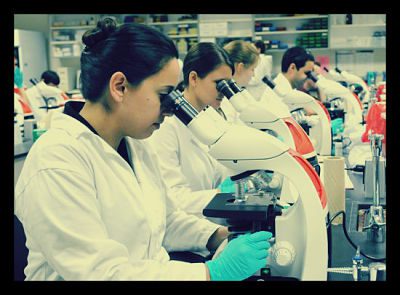
The partnership between universities aims at encouraging women’s status in a number of vital sectors for economic development, including agriculture, business, and education. The goals of the program also fall in line with previous goals laid out by USAID as part of the Gender Equality and Female Empowerment Policy, which was released in 2012.

HED will be in charge of administering the programs, which will total one in each country and two in Rwanda. Funding for the program from USAID will total $8.75 million.

Some of the more specific goals of the Women’s Leadership Program will include increased access to higher education and advanced degrees for women, increases in foreign universities research on women’s leadership, and encourage women’s leadership through advocacy in struggling communities. The American universities that are participating in the program are Arizona State University, Michigan State, Indiana University, UCLA, and the University of Florida.

USAID Senior Coordinator for Gender Equality and Women’s Empowerment, Carla Koppell, said “USAID is very excited to be collaborating with academic institutions in the United States and abroad in advancing women’s leadership. These partnerships offer a meaningful and important opportunity to ensure women are empowered and advance in economies and societies globally.”

– Christina Kindlon

Source: USAID

March 27, 2013
https://borgenproject.org/wp-content/uploads/borgen-project-logo.svg 0 0 Borgen Project https://borgenproject.org/wp-content/uploads/borgen-project-logo.svg Borgen Project2013-03-27 09:00:532020-05-26 01:04:42USAID Funds Partnerships for Women’s Leadership
Education

South America: Will STEM Jobs Solve Poverty?

South American STEM Jobs_opt
Guano, gold, silver, rubber, wool and other natural resources currently make up the largest exports of South America. However, due to the instability of natural resources, many economists believe that reversing the deficit in the STEMs (Science, Technology, Engineering, and Math) and focusing on research and development may solve the region’s poverty.

Currently, the average South American country spends 0.7% of gross domestic product on technological research and development. Economist Sebastian Rovira argues that economies based around natural resources without a focus on technological development are not sustainable. This will eventually lead to larger problems for South American economies.

Fortunately, Brazil has been leading the region in tech development with a large increase in patents and academic papers. Brazil intends to continue this development by providing  75,000 students with science and technology scholarships to study at top universities by 2014.

While many governments realize the benefits of South American STEM jobs, Rovira believes the private sector needs to do more to generate tech jobs and facilitate technological growth.

– Pete Grapentien

Source: MinnPost
Photo: Orlando Business Journal

March 21, 2013
https://borgenproject.org/wp-content/uploads/borgen-project-logo.svg 0 0 Borgen Project https://borgenproject.org/wp-content/uploads/borgen-project-logo.svg Borgen Project2013-03-21 09:30:112020-04-27 05:52:53South America: Will STEM Jobs Solve Poverty?
Education

Public Libraries as Tools for Development

libraries2_opt
As children, our perception of libraries was clouded by the old librarian sitting at the front desk ‘shh-ing’ everyone as they walked past. While American libraries retain their importance but may have lost their romantic allure, their reputation and modern use is only just beginning in developing countries.

With 73% of the world’s 320,000 public libraries in developing countries, organizations such as Beyond Access are highlighting the extensive potential public libraries can provide to governments who are trying to work on development throughout their countries. Libraries act as a central hub for multiple resources, one of the most important being free access to the internet.

For countries with heavy agricultural areas, farmers are able to research and apply for subsidies, such as farmers in Romania were able to do last year with the help of the 400 public libraries in Romania. 17,000 farmers applied for EU subsidies and were able to bring $27.1 million back into their communities.

The most attractive quality about libraries is their simplicity. They are an age old institution, directly tied to the government. Their operations are more or less the same from country to country. Funding is minimal; computers, basic stationery, office supplies, and training for staff. The return however is limitless.

EIFL, one of the dozen or so partners of Beyond Access, has built a massive group of 39 programs and public libraries. Their libraries serve one of five public interests including agriculture, employment and livelihood, culture and education, youth and at risk children, and health. For example, The Berd Public Library in Berd, Armenia has introduced organic farming practices to 9,000 villagers. The library also hosts lectures and provides journals and books on effective agricultural practices as well as opening up new markets online for farmers to sell their produce.

With startup companies around the world focusing on harnessing technology to bring villages and farming societies out of poverty, the institution of the library and the sense of belonging it brings to communities should not be forgotten. Most public libraries in developing countries can survive on yearly grants between $5,000-$20,000. They provide a constant flow of information as well as an opportunity for employment for the staff. By illustrating the hundreds of success stories in countries like Ghana, Serbia, Nepal, and Uganda, Beyond Access hopes to recruit more donors and policymakers to take advantage of one of history’s longest standing institutions when implementing programs.

– Deena Dulgerian
Source: The Guardian

March 21, 2013
https://borgenproject.org/wp-content/uploads/borgen-project-logo.svg 0 0 Borgen Project https://borgenproject.org/wp-content/uploads/borgen-project-logo.svg Borgen Project2013-03-21 02:33:472020-04-27 05:43:14Public Libraries as Tools for Development
Developing Countries, Development, Education, Technology, USAID

USAID and Cisco Promote Development in Burma

Cisco_USAID_Burma
The U.S. Agency for International Development (USAID) has partnered with U.S. technology and communications giant, Cisco, to provide Burma with two new technical education centers. The two Cisco Networking Academies will provide valuable skills in information and communications technology to the developing nation, and provide citizens with job-ready abilities to bolster the country’s growing information and communications tech (ICT) industry.

The USAID Administrator, Dr. Rajiv Shah, has said that technology infrastructure can create stable and continued economic growth and development, and that “ICT can expand economic opportunities, transform public service delivery, and provide more opportunities for citizen engagement.”

Cisco has been a continual partner of USAID, having established networking education centers in over 165 countries, which have provided relevant skills for entry-level careers in ICT while also developing other valuable general career abilities including “problem-solving, collaboration, and critical thinking.”

In Burma, Cisco has agreed to donate the equipment needed to start the two Networking Academies and the training for 15 faculty members. Sandy Walsh, Director of Cisco’s Social Innovation Group, said that Cisco is dedicated to providing education to help continue technological development in “emerging economies,” and that the academies will aid Burmese citizens in gaining career skills needed in the 21st century.

Three additional American tech leaders, including Intel, Microsoft, and Hewlett-Packard, participated in a technology delegation to Burma, also led by USAID, in hopes of continued collaboration that will increase internet access and promote digital literacy and government openness. The partnership between USAID and Cisco hopes to create alliances with American tech companies, the local government, and the private sector to increase “social and economic development” using technological resources.

 – Christina Kindlon

Source: USAID
Photo: VOA

March 17, 2013
https://borgenproject.org/wp-content/uploads/borgen-project-logo.svg 0 0 Borgen Project https://borgenproject.org/wp-content/uploads/borgen-project-logo.svg Borgen Project2013-03-17 09:01:592020-05-01 20:05:56USAID and Cisco Promote Development in Burma
Education

School In The Cloud Or In The Books?

School In The Cloud Or In The Books?An interesting debate has quietly ignited in the education and technology world, revolving specifically around developing countries. During the TED 2013 Conference, Sugata Mitra, a TED veteran, proposed his ‘wish’ for a School in the Cloud. Based on his ‘minimally invasive education’ (MIE) philosophy, Mitra’s ‘Hole-in-the-Wall’ experiments inspired the project for School in the Cloud. What it involves is bringing together different resources from educators to computers to expand the reach of education to rural areas.

The 22 minutes talk discusses Mitra’s experiment and interaction with children from villages in India and their unexpectedly quick understanding of information such as DNA replication and computer processors all in a language they didn’t understand. Education for Mitra has changed since the Victorian era. Children are not only able to teach themselves but are also able to teach each other without the consistently present teacher. It is through curiosity and encouragement that these children will be able to have access to the same education and thus future that children in developed countries do have, if not more.

Though Sugata Mitra won the 2013 TED Prize, he is not short of criticism. John J. Wood, founder of the organization Room to Read respectfully protested the idea behind School in the Cloud in a recent article for the Huffington Post. While the ‘Hole-in-the-Wall’ experiments have proven certain hypotheses, Wood believes otherwise. “Literacy is a baseline skill that every child needs and if they don’t have that — all the computers and clouds in the world mean nothing to them,” Wood argues.

The solution to educating children in the developing world should rely on, according to Wood, tangible and simple materials such as books. The fact that electricity, let alone internet access and broadband, is a rare and unpredictable commodity in these target areas should be a huge issue. Books don’t require updates or charging; they aren’t susceptible to crashes or even require an advanced understanding of technology. Books and libraries provide the ultimate learning experience that combines knowledge and a sense of community.

With 793 million illiterate people, the world should not focus on one extreme solution or another. Different solutions and pathways will provide equally successful results. For the children in these specific villages in India, learning through collaboration within themselves clearly worked in their favor. Perhaps physical books in a school setting with teachers would have brought them to the same point but the goal was reached and that is what matters.

Both John J. Wood and Sugata Mitra come from a heavy background in education, advocacy, and technology. Their efforts are all backed by statistics and other professional opinions. What could be done from this point on is to understand what areas, ethnicities, communities, age-groups, and other factors work best with which type of solution. Time and energy shouldn’t be wasted on experimenting. They should be spent on maximizing either computers and technology or books and teachers to help educate every child for a more stable and productive future.

– Deena Dulgerian
Source:TED

March 12, 2013
https://borgenproject.org/wp-content/uploads/borgen-project-logo.svg 0 0 Borgen Project https://borgenproject.org/wp-content/uploads/borgen-project-logo.svg Borgen Project2013-03-12 12:15:482024-05-24 23:43:42School In The Cloud Or In The Books?
Page 243 of 244«‹241242243244›

Get Smarter

  • Global Poverty 101
  • Global Poverty… The Good News
  • Global Poverty & U.S. Jobs
  • Global Poverty and National Security
  • Innovative Solutions to Poverty
  • Global Poverty & Aid FAQ’s
Search Search

Take Action

  • Call Congress
  • Email Congress
  • Donate
  • 30 Ways to Help
  • Volunteer Ops
  • Internships
  • Courses & Certificates
  • The Podcast
Borgen Project

“The Borgen Project is an incredible nonprofit organization that is addressing poverty and hunger and working towards ending them.”

-The Huffington Post

Inside The Borgen Project

  • Contact
  • About
  • Financials
  • President
  • Board of Directors
  • Board of Advisors

International Links

  • UK Email Parliament
  • UK Donate
  • Canada Email Parliament

Get Smarter

  • Global Poverty 101
  • Global Poverty… The Good News
  • Global Poverty & U.S. Jobs
  • Global Poverty and National Security
  • Innovative Solutions to Poverty
  • Global Poverty & Aid FAQ’s

Ways to Help

  • Call Congress
  • Email Congress
  • Donate
  • 30 Ways to Help
  • Volunteer Ops
  • Internships
  • Courses & Certificates
  • The Podcast
Scroll to top Scroll to top Scroll to top