• Link to X
  • Link to Facebook
  • Link to Instagram
  • Link to TikTok
  • Link to Youtube
  • About
    • About Us
      • President
      • Board of Directors
      • Board of Advisors
      • Financials
      • Our Methodology
      • Success Tracker
      • Contact
  • Act Now
    • 30 Ways to Help
      • Email Congress
      • Call Congress
      • Volunteer
      • Courses & Certificates
      • Be a Donor
    • Internships
      • In-Office Internships
      • Remote Internships
    • Legislation
      • Politics 101
  • The Blog
  • The Podcast
  • Magazine
  • Donate
  • Click to open the search input field Click to open the search input field Search
  • Menu Menu

Archive for category: Education

Information and stories on education.

Children, Education, Global Poverty, Sustainable Development Goals

Early Childhood Development and Economic Stability

early_childhood_development
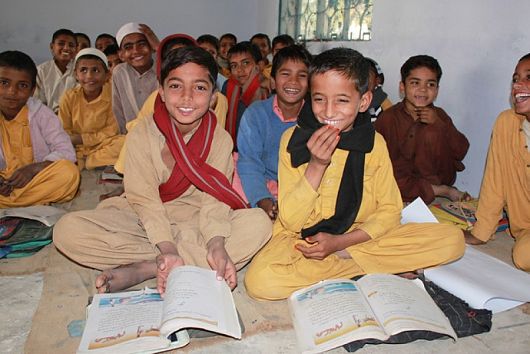
Early childhood development (ECD), or the time from a child’s birth to turning 8 years old, is considered the most critical window of childhood development.

During this eight-year window, children undergo intensive physical and social growth, shaping their bodies and perceptions of society.

But many children in developing nations lack the nutrition, healthcare and social engagement necessary during ECD to have a strong foundation for future growth and development.

ECD initiatives, ranging from parental training to preschool, have been shown to dramatically improve children’s earning potential and help them to escape the poverty cycle.

In the post-2015 Sustainable Development Goals, the United Nations specifically addressed the value of ECD in Goal 4, stating that by 2030 all children will “have access to quality early childhood development, care and pre-primary education so that they are ready for primary education.”

The British Prime Minister, David Cameron, echoed the importance of providing aid to ECD for the termination of global poverty, saying, “Children have been educated who otherwise would have missed out.”

Through aid efforts, programs are sprouting throughout some of the world’s poorest regions, showing promising results.

The World Bank reports that children in developing nations who have participated in ECD programs have higher levels of cognitive and academic performance than their peers.

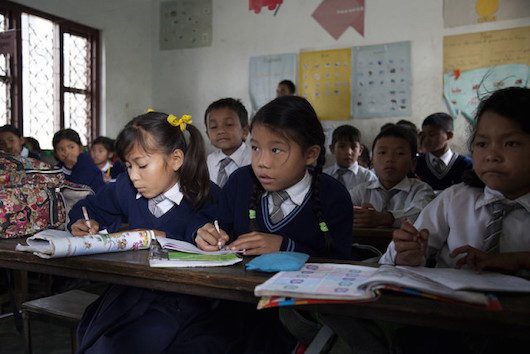
Children who have benefitted from ECD initiatives are also more prepared to enter primary school and learn more efficiently while in class. This early success in schools has led to lower levels of dropouts and grade repetitions.

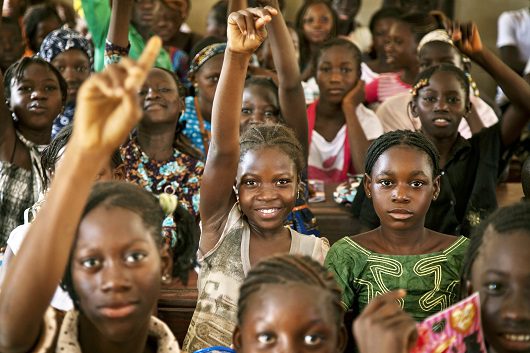
As educational levels rise, so does earning potential. Especially for girls. For every year of primary education a girl receives, her earning potential rises 10 percent to 20 percent, and for every additional year of secondary education, her earning potential rises another 15 percent to 25 percent, empowering her in the workforce.

As the workforces in developing nations expand with more educated and skilled laborers, the population at large benefits from an expanded consumer base.

With increased earning and buying power comes a more complex and stable economy that is less susceptible to shock and a higher gross domestic income.

According to UNICEF, this increase in school attendance shrinks the gap between the wealthiest and poorest families, hoisting children and their families out of the poverty cycle.

– Claire Colby

Sources: The Guardian 1, The Guardian 2 UNICEF, UN, USAID, World Bank
Photo: Sharp School

October 22, 2015
https://borgenproject.org/wp-content/uploads/borgen-project-logo.svg 0 0 Borgen Project https://borgenproject.org/wp-content/uploads/borgen-project-logo.svg Borgen Project2015-10-22 01:30:312024-12-13 18:05:16Early Childhood Development and Economic Stability
Aid, Education, Global Poverty

The Indonesian Family Hope Program Ends Poverty Cycle

Indonesia_Family

In 2013, 28 million Indonesians lived below the poverty line. Impoverished families throughout the nation were often too poor to afford healthcare and education for their children, leading to illness and injury that trapped them in generational poverty.

In an effort to break this generational cycle, the World Bank, in combination with the Ministry of Social Affairs, has created the Family Hope Program.

Financial and Developmental Aid

The Indonesian Family Hope Program works through a series of cash transfers. The money is given to parents who agree to participate in health and nutrition training, take their children to clinics when they’re ill and keep their children in school.

The program also provides startup money and skills training to parents. These micro-investments give families the means to become entrepreneurs and run their own family businesses, ensuring economic growth and generational development.

Health

Mothers participating in the program are encouraged to give their children the best possible start to life — beginning in the womb. The World Health Organization (WHO) recommends that women have four antenatal check-ups throughout the course of their pregnancy, thus lowering the risk of complications, infections and other life-threatening incidents through screenings. Yet, few women receive all four visits.

The Family Hope Program has increased the number of antenatal checkups by more than 7 percent. This establishes a precedent of continued family health. As mothers are healthier during and after pregnancy, children are healthier and receive better healthcare as a result. The 7 percent increase in antenatal care resulted in a mirrored raise in child immunizations by 7 percent.

The nutritional aspect of the program has also positively impacted childhood development, decreasing the number of children suffering from stunting by 5 percent. As a result of children being healthier, they are able to focus better and attend school.

Education

Along with the cash grants, more than 11,000 facilitators trained in education and nutrition hold seminars teaching mothers how to manage finances, improve the health of their families and aid their children in their studies.

The program has resulted in increased enrollment and school participation.

Many children from poor families stop attending school after completing their primary education, though not due to a lack of desire to attend. The program has removed financial barriers keeping children from continuing their education for the more than 3 million families that the program has reached.

Children now are 8 percent more likely to go on to secondary education and 10 percent more likely to enroll in junior secondary school. According to the United Nations, more education equals higher earning potential and better health, which are essential to end the generational poverty cycle.

– Claire Colby

Sources: NCBI, United Nations, World Bank, World Health Organization
Photo: PBase

October 21, 2015
https://borgenproject.org/wp-content/uploads/borgen-project-logo.svg 0 0 Borgen Project https://borgenproject.org/wp-content/uploads/borgen-project-logo.svg Borgen Project2015-10-21 01:30:342020-06-25 21:38:38The Indonesian Family Hope Program Ends Poverty Cycle
Education, Global Poverty

UK Students Sign Up to “Send My Friend to School”

send_my_friend_to_school
Since the United Nations’ decision to focus on education in 2000, approximately 58 million more children have been able to attend school thanks to various governments and organizations like Send My Friend to School banding together.

While this number seems large, that still leaves 58 million children out of school. And that doesn’t account for all of the dropouts that have taken place since.

In developing countries, there are still many obstacles getting in the way of a primary education for all children. Disability, cost, work, distance, conflict and a lack of teachers are only a few of the struggles that are still being addressed.

In the United Kingdom, the Global Campaign for Education began a program entitled “Send My Friend to School” in order to help the remaining 58 million children that are currently unable to receive a primary education.

This campaign focuses on allowing the children of the U.K. to participate in the solution. According to the campaign website, “over 10,000 schools and youth groups, and millions of children, have been involved so far in the U.K.”

The focus for these children is to band together and speak out for everyone’s right to an education. By speaking with and reminding leaders about their promise to get every child in school, they are able to keep education a priority.

According to Oxfam, an educational resource site, “Send My Friend to School is asking UK pupils to imagine that they were a world leader and tell politicians what crucial decisions they would make to get every child worldwide into school now.”

Since the campaign’s start in 2005, success stories have built up showing how much these children are capable of.

After the Southfield School campaign targeting MP Philip Hollobone and David Cameron, the two leaders expressed, “I am very impressed by the concern you have shown for the education of children in developing countries. Your colourful drawings demonstrate this as well as your enthusiasm for the campaign.”

Other such success stories have flooded the U.K. news.

The Send My Friend to School campaign has consistently shown that children are excellent advocates for global education needs. When organizations and direction are in place, children are able to accomplish much good.

– Katherine Martin

Sources: Send My Friend, Oxfam, Southfield School
Photo: Flickr

October 19, 2015
https://borgenproject.org/wp-content/uploads/borgen-project-logo.svg 0 0 Borgen Project https://borgenproject.org/wp-content/uploads/borgen-project-logo.svg Borgen Project2015-10-19 01:30:362024-05-27 09:28:10UK Students Sign Up to “Send My Friend to School”
Education, Global Poverty

Deaf Education Raises Morale in Africa

Deaf Education Raises Morale in Africa
The world recently celebrated Deaf Awareness Week, also known as the International Week of the Deaf. It was instigated in Rome, Italy in 1958 to “gather together and provide a united front to draw attention to deaf people, their accomplishments and to promote their rights.”

However, not all who are deaf and hard of hearing receive sufficient attention and rights, especially in the education department.

Many countries in Africa struggle to provide proper schooling for their growing numbers of deaf and hearing-impaired children. In fact, deaf education is almost nonexistent.

Hearing loss is prevalent in African countries where bacterial infections often go untreated. Due to poor screening and minimal awareness of hearing loss, it’s difficult to determine the percentage of deaf and hard of hearing persons in Africa.

Still, researchers estimate that about one in seven children in Nigeria experiences a decreased hearing capacity or total deafness.

The deaf and hard of hearing are often perceived as impaired and unable to learn. When Georgine Auma of Kenya went deaf at the age of 9, her parents pulled her out of school for an entire year until they could decide what to do with her.

Even with hearing aids, she experienced isolation and identity crisis. Many deaf and hearing-impaired children are left to grow up illiterate, which limits their opportunities and puts them at greater risk of extreme poverty.

What is being done about this? Human aid programs Signal and SignHealth Uganda (SHU) are working hard to provide special schools for deaf children and sign language training for parents and teachers.

“I thought I was the only deaf person in the world until I discovered Kenyan Sign Language at Maseno School for the Deaf,” said Auma. Her deaf education gave her a “sense of belonging” that she hadn’t felt since she lost her hearing.

Deaf education provides hearing-impaired children with increased self-confidence and the ability to learn. Since 2009, students have demonstrated an increase in literacy and capacity for learning at a faster level. They also interact better with their hearing peers.

In addition to improving deaf education, Signal and SHU strive to change the social stigma against the deaf and hearing impaired. More and more graduating students can find careers and avoid becoming a burden on society.

Slowly but steadily, Signal and SHU are building a positive attitude toward deafness that will improve the overall morale of Africa. When a nation’s children are educated and happy, the country prospers as a whole.

Auma, now a young adult, participates in the Young African Leaders Initiative to bring greater awareness to the need for deaf education. Her deaf and hard-of-hearing peers can look forward to a happier future full of possibilities.

– Sarah Prellwitz

Sources: USAID, Deafness, Hear-it, Signal
Photo: Wikimedia

October 16, 2015
https://borgenproject.org/wp-content/uploads/borgen-project-logo.svg 0 0 Borgen Project https://borgenproject.org/wp-content/uploads/borgen-project-logo.svg Borgen Project2015-10-16 01:30:142024-06-04 04:33:50Deaf Education Raises Morale in Africa
Aid, Children, Education, Global Poverty

Focusing on Education for Syrian Refugees

Education_for_Syrian_Refugees
The Syrian Refugee conflict has been a hot topic globally for months now. Many countries have been accepting Syrian refugees since the climax of the crisis, but once a temporary home has been found, what next?

On average, a refugee will stay in a camp for 17 years. In these crowded and busy communities, individuals and families try to create a semi-normal life.

For smaller children though, living in these refugee camps means growing up without a fair chance to attend school. Therefore, greater focus needs to be placed on education for Syrian refugees.

According to The UN Refugee Agency, UNHCR, the Syrian refugee crisis could be a large contributor to another global crisis. Poverty rates, already at a high, could be negatively impacted if proper action is not taken.

In a study done by the UNHCR entitled “Living in the Shadows,” the organization stated, “Two in every three Syrian refugee households are below the absolute poverty line in Jordan, and one out of six is below the Jordanian abject poverty line…households’ economic vulnerability appears to increase over time.”

While humanitarian aid is a huge part of alleviating this problem, more needs to be done. Refugee education and training in vocational skills are a necessity to combat the struggle of poverty within and outside of these refugee camps.

According to The Guardian, “Globally, over 50% of refugees are children. Yet only one in every two refugee children attend primary school. Only one in four refugee adolescents receive secondary school education.”

It has been proven several times over that educational opportunities are one of the key solutions to eradicating poverty. With education comes new skills, a more secure future, and a more stable country.

Recently, more countries have started to pick up on this trend and are working to make necessary changes.

In Turkey, the refugee educational opportunities for children has risen from 199,000 in 2014 to 299,000 this school year.

Lebanon, the country with the highest amount of hosted Syrian refugees, is providing education opportunities for 200,000 of those children.

According to the University World News, “The University of Copenhagen has asked the Danish government for permission to create extra student spaces for refugees and migrants arriving in the country.”

For refugees, education is everything. It is the key to getting out of poverty and a source of hope amidst hardship. Continuance of improved and increased educational opportunities is one of the top essentials of getting Syrian refugees out of poverty and helping them contribute to society wherever they currently reside.

– Katherine Martin

Sources: UNHCR, The Guardian, Today’s Zaman, Huffington Post, University World News
Photo: Todays Zaman

October 13, 2015
https://borgenproject.org/wp-content/uploads/borgen-project-logo.svg 0 0 Borgen Project https://borgenproject.org/wp-content/uploads/borgen-project-logo.svg Borgen Project2015-10-13 01:30:412024-12-13 18:05:12Focusing on Education for Syrian Refugees
Children, Education, Global Poverty

Deaf Children in Poverty: A Right to an Education

Deaf Children in Poverty: a Right to an Education
Obtaining an education in a poverty stricken country is hard for most children living in those conditions. It’s almost impossible when that child is deaf and has no access to sign language assisted learning. Millions of children are struggling to learn or not attending school at all because of this fact.

Educational; Disadvantage

In countries like Nepal, Kenya, China and Northern Uganda, parents, teachers and the wider community often see deaf children as mentally impaired or just altogether incapable of learning. So while these children may be lucky enough to obtain cochlear implants or hearing aids, they are forced to miss out on important learning milestones.

Kenyan Natha Yare recalls being denied her right to an education growing up because she was deaf. Natha talks about how her quality of education was compromised even though she was able to attend a school for the deaf, which was a 15 hour trip by bus.

The teachers there did not know Kenyan Sign Language. They simply wrote on the board, expecting the children to copy down what they saw, which they did. The children were then allowed to play, never actually gaining an understanding of what had been copied.

USAID Provides Resources to Deaf Children

USAID is dedicated to changing the way deaf children in poverty are treated in many countries worldwide. Many poverty stricken countries simply do not have the funds or even the resources to provide sign language teachers or aids.

USAID has helped to promote the implementation of sign language projects in several countries including Ecuador, Georgia and Morocco.

It is important for deaf children to learn sign language in order to allow them the opportunity to be able to express themselves, communicate and learn. In order to ensure this, teachers who are qualified to teach national sign language, and at all educational levels, must be hired.

Deaf children who never learn sign language are highly likely to develop into adults who have a hard time communicating with family, friends and the larger community. This will make it very hard for them to achieve true independence and to lead fulfilling, successful lives.

Education is Always the Key

Every child deserves to have access to a proper education and “the right to education in sign language for deaf people is safeguarded by the United Nations Convention on the Rights of People with Disabilities.”

By safeguarding this right, especially for those children living in extreme poverty, we give each deaf child the opportunity to reach their full potential and break the cycle of poverty.

– Drusilla Gibbs

Sources: USAID, HRW
Photo: Pixabay

October 13, 2015
https://borgenproject.org/wp-content/uploads/borgen-project-logo.svg 0 0 Borgen Project https://borgenproject.org/wp-content/uploads/borgen-project-logo.svg Borgen Project2015-10-13 01:30:212024-12-13 18:05:12Deaf Children in Poverty: A Right to an Education
Education, Global Poverty, Technology

Kio Kits: A Modern Education Solution

Kio_Kits
On a continent where electricity, let alone an internet connection or data coverage, is never a given, bringing technology to the classroom has proven to be a challenge in rural and poor urban regions of Africa.

A BRCK Initiative

But, the African software developers, engineers and technologists of the Kenyan company BRCK have recently rolled out an educational pilot program of tablets, specifically designed to combat connectivity problems.

The program, BRCK Education, comes from the creators of the original BRCK. A router and modem system boasting a built-in global SIM card, internal storage, surge protection, more than 8 hours of battery life, adaptable charging for solar panels, car battery and computer or wall outlet, BRCK grants access to the Cloud from anywhere.

BRCK Education’s pilot Kio Kit, which holds 40 tough Kio tablets, a set of headphones for each student, an original BRCK and wireless charging docks for the Kio, is designed to be a “holistic education technology solution that turns every classroom into a digital classroom,” according to BRCK.

Inside the Kio

The Kio Kits, which look like rugged, plastic suitcases, are not solely made for transporting and recharging the water and drop resistant Kio. The case houses an offline “micro-Cloud” server.

When the case is turned on, the micro-Cloud is activated, giving children and teachers access to the preloaded interactive content saved on the server, without the expense of having to connect to the internet.

Kio, meaning “window” in Swahili, kits are designed to give African school children the same quality education that their technologically more connected peers already enjoy.

The preloaded content is updated remotely, currently by four Kenyan education content companies and the international curriculum giant Pearson. This ensures that all children using the Kio are receiving the most up-to-date information.

But Pearson isn’t the only big-name backing the Kio Kits. Intel, Mozilla, and the African companies JP, e-limu and eKitabu are all getting in on helping the Kio Kits become a success.

Hope For Expansion

The pilot program is currently being run in schools in Kenya, Tanzania and Uganda. The African Wildlife Fund has also purchased Kio Kits to distribute to schools in Ethiopia, Congo and others.

If the pilot program goes well, BRCK is already designed to be used throughout the globe, making it a viable option for other developing nations.

The BRCK Education team hopes to positively change the lives of children who have little or no access to technology through the Kio Kits, in Africa and beyond.

The BRCK team is confident that their system will succeed in changing education for the better. As they claim on their website, “If it works in Africa it will work anywhere.”

– Claire Colby

Sources: BRCK 1, BRCK 2, Forbes, htxt.Africa
Photo: Potentash

October 12, 2015
https://borgenproject.org/wp-content/uploads/borgen-project-logo.svg 0 0 Borgen Project https://borgenproject.org/wp-content/uploads/borgen-project-logo.svg Borgen Project2015-10-12 01:30:382024-06-05 03:46:44Kio Kits: A Modern Education Solution
Development, Education, Food & Hunger, Global Poverty, Health

Improving Nutrition Boosts IQs in Developing World

As Nutrition Improves, Developing Countries Get Smarter
To say poverty is a complex issue is an understatement. The conditions that lead to and perpetuate poverty occur across levels, making it different for individuals, organizations and governments to address. Targeting initiatives toward healthy individual development is imperative to reduce poverty in the long-term.

Poverty, at its core, is a stressor. An inability to gain access to proper nutrition, quality medical care and education greatly affect the well-being of individuals and families.

For children, the effects of extreme poverty are magnified, which has implications for brain development, psychological well-being and ability to handle conflict. Iodine deficiency, which is common in developing countries, can lead to neural tube defects during pregnancy, especially if the fetus is female.

Iodine deficiency is the most common preventable cause of mental retardation in children; the CDC estimates that 18 million children worldwide are born disabled as a result of the deficiency. Currently, two billion people are at risk for iodine deficiency.

Iodine, in addition to other micronutrients, is critical for healthy brain development and functioning. Initiatives to address micronutrient deficiency work to not only reduce world hunger but also ensure that children can have healthy brain development.

Ensuring healthy brain development is not just preventing deficiencies, it gives children increased potential to develop abstract thinking skills. As noted by James Flynn, a psychologist who researches global patterns of IQ scores, intelligence increases as societies modernize.

Through modernization, individuals are more likely to have access to education, have more cognitively demanding work and utilize logic more often in their daily lives. In turn, critical thinking becomes more necessary and there is a need for individuals to have strong working memory and abstract thinking skills.

Flynn has also documented the “Flynn Effect”: as societies develop, the average IQ score increases. This is happening rapidly in developing countries; Kenya, for example, has seen an eleven point increase in IQ scores over a fourteen-year period. In contrast, the U.S. has seen an eighteen point increase over a 55-year period.

While it is difficult to untangle all of the factors contributing to developing countries’ increasing IQ scores, access to education and better nutrition are most likely strong influences on this gain. These countries are developing and modernizing simultaneously, which accelerates the increase in intelligence scores.

Flynn also argues that, in developed countries, the trend towards smaller families have exposed children to more adult speech, which further improves a child’s intelligence. Perhaps it is arguable, too, that as impoverished communities gain access to medical care and family planning and the birth rate reduces, these children reap similar benefits.

As organizations continue to implement programs fighting world hunger and reducing micronutrient deficiencies, this gain in IQ scores for developing countries is an important reminder that at its core, development work is an investment.

Investing in nutrition for individuals in poverty can bring better brain health, which leads to improved academic performance and increased resiliency, thus empowering people both now and in the future.

– Priscilla McCelvey

Sources: CDC, Vintage Books, Scientific American, UNICEF
Photo: Flickr

October 5, 2015
https://borgenproject.org/wp-content/uploads/borgen-project-logo.svg 0 0 Borgen Project https://borgenproject.org/wp-content/uploads/borgen-project-logo.svg Borgen Project2015-10-05 06:22:132024-12-13 18:04:58Improving Nutrition Boosts IQs in Developing World
Education, Global Poverty

The Philippines Education System Improves

Philippines_Education_System
The Philippines was granted independence by the United States in 1946. In the Postcolony modern world, the country is still struggling to compete in the modern economy, particularly with regards to its education system.

World Bank statistics placed the Philippines in the bottom 10 percent of all educated countries in 2013. A report put out this year by the United Nations Education, Scientific and Cultural Organization has shed light on the challenges currently faced by the Philippines.

UNESCO’s latest report shows that the Filipino Government is complying with UNESCO and implementing the necessary reforms to raise the standard of education in its country. However, the Filipino Government is still struggling to raise the standards of education in the country.

In particular, the safety of students is of the foremost concern to UNESCO. This year, the Anti-Bullying Act addresses the issue of students’ safety. The Filipino Government has implemented several key pieces of legislation addressing issues that have been affecting education.

As part of the Philippines Development Plan put out by UNESCO, the Philippines’ Department of Education will make it mandatory for everyone to complete basic education, and the Philippines have made great progress in this respect.

The World Bank has reported that in 2013, the participation for 6- to 11-year-olds was at 95.24 percent, which marked a significant increase since 2005.

In the same report, overall enrollment improved from 13 million to 14.4 million that year. The Philippines has made significant progress in improving the condition of education in the country. Despite a great deal of progress the Philippines has made, 42 percent of the country still remains below the poverty line making roughly $2 a day.

UNESCO and USAID are working with the Philippine Government to improve the conditions of education. USAID reports an average 7 percent growth in education and attributes this to the weak government in the region. UNESCO attributes the challenges in education to internal conflict and is working to broker a lasting peace in the region.

The Philippines Development Plan laid out the goal for 2011 to 2016, and with one year left, only time will tell if the Philippines will meet its goal.

– Robert Cross

Sources: Asian Scientist, ICEF Monitor, UNESDOC, USAID, USAID Reform Efforts, World Bank
Photo: Google Images

October 5, 2015
https://borgenproject.org/wp-content/uploads/borgen-project-logo.svg 0 0 Borgen Project https://borgenproject.org/wp-content/uploads/borgen-project-logo.svg Borgen Project2015-10-05 01:30:192024-12-13 18:05:02The Philippines Education System Improves
Children, Education, Global Poverty

The Importance of Computer Science Education in School

code
While the UN recently approved the Sustainable Development Goals in January 2016, eradicating poverty and combating climate change are considered the top two global problems. More than ever before, computer science education will be crucial for students in low-income communities in order to avoid poverty.

In today’s world of technology, it is imperative for students to become exposed to computer technology at a young age.

To ensure children learn about computer technology at an early age, New York City Mayor, Bill de Blasio, announced that within 10 years, all students attending the city’s public schools would be required to take computer science courses.

New York City plans to spend $81 million over the next 10 years and estimates training 5,000 teachers in the field, which could be a potential issue.

“The difficulty is getting enough teachers who are trained in it, and trained well enough to make it a good introduction to computer science,” said Barbara Ericson, the director of computing outreach at Georgia Tech’s College of Computing. “And if you are well-trained in computer science, you can make a lot more money in industry than teaching.”

Of the $81 million needed, half of the money will be raised through private sources, including the Robin Hood Foundation and venture capitalist Fred Wilson.

Interestingly, a survey done by Google found that many poor parents want their children to learn computer science education so they have the opportunity to lead a better life.

While 15.3 percent of New York City lives in poverty, the opportunity for these students to be exposed to computer science at a young age could change the course of poverty and their futures.

“Stimulating the curiosity of today’s young students for math and science is critical for creating tomorrow’s physicists, mathematicians and cosmologists,” said Rocky Kolb, Dean of the Physical Sciences Division at the University of Chicago.

With knowledge of computer education, students have the opportunity to attend college studying the field and could possibly work in New York City’s fastest-growing technology sector.

“If we can get them earlier, I think we can get them excited about it,” Mr. Wilson said.

– Alexandra Korman

Sources: Gigaom, NY Times, United States Census, University of Chicago,
Photo: blogs.perficient

October 4, 2015
https://borgenproject.org/wp-content/uploads/borgen-project-logo.svg 0 0 Borgen Project https://borgenproject.org/wp-content/uploads/borgen-project-logo.svg Borgen Project2015-10-04 01:30:042024-12-13 18:05:11The Importance of Computer Science Education in School
Page 200 of 241«‹198199200201202›»

Get Smarter

  • Global Poverty 101
  • Global Poverty… The Good News
  • Global Poverty & U.S. Jobs
  • Global Poverty and National Security
  • Innovative Solutions to Poverty
  • Global Poverty & Aid FAQ’s
Search Search

Take Action

  • Call Congress
  • Email Congress
  • Donate
  • 30 Ways to Help
  • Volunteer Ops
  • Internships
  • Courses & Certificates
  • The Podcast
Borgen Project

“The Borgen Project is an incredible nonprofit organization that is addressing poverty and hunger and working towards ending them.”

-The Huffington Post

Inside The Borgen Project

  • Contact
  • About
  • Financials
  • President
  • Board of Directors
  • Board of Advisors

International Links

  • UK Email Parliament
  • UK Donate
  • Canada Email Parliament

Get Smarter

  • Global Poverty 101
  • Global Poverty… The Good News
  • Global Poverty & U.S. Jobs
  • Global Poverty and National Security
  • Innovative Solutions to Poverty
  • Global Poverty & Aid FAQ’s

Ways to Help

  • Call Congress
  • Email Congress
  • Donate
  • 30 Ways to Help
  • Volunteer Ops
  • Internships
  • Courses & Certificates
  • The Podcast
Scroll to top Scroll to top Scroll to top