• Link to X
  • Link to Facebook
  • Link to Instagram
  • Link to TikTok
  • Link to Youtube
  • About
    • About Us
      • President
      • Board of Directors
      • Board of Advisors
      • Financials
      • Our Methodology
      • Success Tracker
      • Contact
  • Act Now
    • 30 Ways to Help
      • Email Congress
      • Call Congress
      • Volunteer
      • Courses & Certificates
      • Be a Donor
    • Internships
      • In-Office Internships
      • Remote Internships
    • Legislation
      • Politics 101
  • The Blog
  • The Podcast
  • Magazine
  • Donate
  • Click to open the search input field Click to open the search input field Search
  • Menu Menu

Archive for category: Economy

Information and stories about economy.

Development, Economy, Global Poverty

China’s War on Poverty

China's_War_On_Poverty
The rhetorical phrase “War on Poverty” is commonly used to describe programs and policies aimed at reducing or eliminating poverty. It has been used in the context of United States politics but is now also being applied by the media to Chinese efforts to reduce poverty, especially in rural areas. China has experienced a meteoric rise to economic prominence in a few decades, yet much of the country lies in the past, still experiencing economic hardship without the benefits of the recent successes. What is China doing to fight poverty?

Hundreds of millions of people have been salvaged from poverty since China’s rise to prominence, however, in 2012, China’s GDP per capita was less than other developing countries, including Iraq and Colombia. Part of this statistic lies with the fact that the Chinese economy has to sustain a huge number of people, but another reason for this surprising statistic is that economic growth in China has benefited some more than others. Specifically, those in urban areas have tended to gain more from recent economic advances than those in rural China.

In the past, the millions lifted out of poverty in China were a result in part of strong economic growth. Additionally, less people are working in agriculture and moving into other businesses and improving human capital systems. Anti-poverty actions by the government also played a role but perhaps have not been enough.

In the 1990s, China changed its definition of poverty to a level that was about two-thirds of the international standard, artificially lowering its poverty statistics. However, China has also thrown billions of dollars at the problem in the form of subsidized loans, grants and programs such as “Food For Work,” which aimed to stimulate the economic situation of the poor while at the same time improving infrastructure for water systems and roads.

Whether poverty reduction government programs like Food For Work were strong factors behind China’s first burst of poverty reduction between the 1970s and the late 1990s is hard to determine. Some believe that China’s staggering growth in those decades was the biggest driver for poverty reduction. If that is the case, then a slowdown in the Chinese economy (still at 7% growth approximately) could hurt the reduction in poverty unless new government programs can pick up the slack.

As previously mentioned, many of the poor in China have already benefited from economic growth, but many more are still impoverished. In the past month, President Xi Jinping reaffirmed the government’s responsibility to fight poverty in rural areas while at a conference about China’s 13th Five-Year Plan. A rash of suicides among children in a rural area of China and the death of five homeless children in 2012 (carbon monoxide poisoning from lighting a fire in a trash container where they were taking shelter) has caused hard questions to be asked and for government officials to talk about action. Recognition of the continuing problem by the Chinese government is a positive sign. The additional fact that the Chinese economy is becoming more dependent on a consumer class sheds light on the need for the Chinese economy to pull more out of poverty and into the consumption class. China’s war on poverty — the incentive to work towards ending poverty — is apparent, from both a public relations standpoint and an economic one.

– Martin Yim

Sources: Reuters, The Diplomat, Journal of Chinese Economic and Business Studies, IMF, Asia Society
Photo: Yibada

July 5, 2015
https://borgenproject.org/wp-content/uploads/borgen-project-logo.svg 0 0 Borgen Project https://borgenproject.org/wp-content/uploads/borgen-project-logo.svg Borgen Project2015-07-05 12:54:232024-12-13 17:51:38China’s War on Poverty
Economy, Global Poverty

How Tourism Can Revamp a Country’s Image

TourismMillions of people travel around the world every day, whether for work, vacation, personal leisure or to visit family and friends. In less than a day, you can fly to any corner of the world you please; you can go to sleep on a flight leaving from the U.S. and wake up in Europe or Asia. Advancements in international travel have shrunk the world, making once inaccessible regions open to tourists from all over the globe.
The travel and visitation to other countries, known as tourism, not only allows for personal exploration and adventure, but it also serves as a key factor in maintaining international relations and the international economy. Here are some reasons why tourism can help redefine a country’s image:

1. Tourism campaigns can change the way foreigners perceive a country.

A prime example of this phenomenon is seen in South Africa. In South Africa’s history filled with racially-based conflict and identity challenges, the detrimental period of apartheid has become one of the nation’s most well-known historical markers. The government, largely through the tourism sector, has successfully managed to secure its newfound democratic identity as an interracially knit community of diverse peoples which is equally supportive of all races and ethnicities. Through various video and advertising campaigns, the country created a new label for itself: the rainbow nation. Since then, South Africa’s tourism sector has seen widespread growth, and the country’s efforts to unite its ethnically and culturally diverse population has led to a revamping of the entire economic sector, largely caused by tourism.

2. Tourism boosts the economy.

Tourism is widely used as a tool to ignite economic and internal progress. According to the U.S. Travel Association, the tourism industry generates over two point one trillion dollars in economic output every year. This type of large-scale spending is often the sole savior for countries buried in debt. Additionally, 15 million jobs are supported by travel expenditures (includes eight million directly in the travel industry and seven million in other industries). Think about the wide variety of employment opportunities here: airlines, tour guides, travel consultants, and many more.

3. Tourism creates domestic and foreign appreciation of culture and heritage.

When you visit another country, you gain a sense of appreciation for that country’s existing culture and heritage. Many travelers use tourism solely for this purpose: to learn and appreciate the diverse ways in which other people live their lives. This appreciation, however, goes both ways. When a country creates tourism campaigns and celebrates its own national pride and beauty in order to convince foreigners to visit, this also fosters a sense of citizens’ pride and national identity.

4. Tourism can help a country re-populate.

Tourism Excellence, a business created to help the tourism industry prosper, said, “In many areas tourism has helped to slow or halt the drift to cities, by not only making the local area and its employment opportunities more attractive to young people, but by attracting ‘sea changers and ‘tree changers’ from major population centers.” Increasing an area’s population can transform a place from being a small town to a highly-populated, desirable location to live, which has unending benefits for a country’s image.

All of these points further clarify the importance of the tourism industry to a country. Travel and tourism remain essential components of a country’s economic, cultural, and social success.

– Hanna Darroll

Sources: Tourism Excellence, U.S. Travel Association
Photo: Karibu

July 2, 2015
https://borgenproject.org/wp-content/uploads/borgen-project-logo.svg 0 0 Borgen Project https://borgenproject.org/wp-content/uploads/borgen-project-logo.svg Borgen Project2015-07-02 10:26:162020-07-14 10:55:01How Tourism Can Revamp a Country’s Image
Economy, Global Poverty

5 Things I Learned about Poverty in Peru

poverty_in_peru
An avid world traveler, there is nothing I love more than exploring new places and experiencing cultures that are vastly different from my own. On my latest adventure, I spent two weeks roaming around the South American country of Peru. Although best known for its well-preserved Inca ruins and lovable llama population, I learned that there are many dimensions of Peru that the average tourist does not see. The spirit of the Peruvian people struck me at many moments during my visit, but here I offer up five things that I learned during my travels that I find particularly revealing.

1. Rural poverty is rampant

Although government statistics report that only a third of the Peruvian population lives below the national poverty line, about 8 million people still qualify as poor. As I traveled from town to town in buses and taxis, time and time again I was forced to think about how much better the average living conditions of Americans are in comparison. Poverty in Peru is deepest among indigenous people living in remote rural areas. In fact, the national rural poverty rate is over 50 percent, with 20 percent of people in the Andean region considered extremely poor. This was evident in the villages in the mountains I passed through; they looked almost abandoned, with people living in huts, little modern technology and often no electricity.

2. Everything is cheap

For American tourists, this is not a bad thing. Currently, one Peruvian Nuevo Sol is equivalent to approximately $3.15 (USD), making purchasing hotels and food throughout Peru a breeze for thrifty college students like myself. Although I enjoyed the benefit of this exchange rate, it reflects a sad truth about the Peruvian economy. The average GDP per capita is $5,000 (USD), a sum that the majority of Americans can barely imagine earning in a month or two in order to make ends meet.

3. People are desperate

Every time I would visit a notable tourist site, I was swarmed by locals selling knock-off goods, badly reproduced “Peruvian artifacts” and women dressed in traditional garb with llamas, trying to charge money to take a photo with them. It seemed all fun and games at first, but the more I thought about it the more I realized that these were the actions of desperate people. Clearly these individuals are in need, as they are making a mockery of their own culture in order to make a couple sols – usually just a dollar or less.

4. Despite their poverty, the people are helpful

You might expect an impoverished population to lie and steal in order to make ends meet – this is the stereotype that many Americans adopt when visiting foreign countries. I, however, kept an open mind when I arrived in Peru, and I was more than pleasantly surprised by the conduct of the people I encountered. I did not feel like I was lied to or cheated at any time on my trip. On the contrary, everyone I encountered was extremely willing to help me. From the customs official who gave me restaurant suggestions to the cab driver who pulled over several times to ask locals on the street where my hostel was located, to the woman selling rice who told me to move my cell phone from my pocket to a safer place, I was met with incredible kindness.

5. More than helpful, the people are happy 

Although the poverty in Peru was evident in many of the towns that I visited, also evident was the spirit of the Peruvian people. At no time during my trip did it seem that individuals in the towns were unhappy with their situation. Children played soccer, elders sat on the porches and watched the world go by, and those giving my friend and me tours for reasonable sums were passionate about the landscapes of their country. This was perhaps the most inspiring for me, for even without wealth the people of Peru are able to live fulfilling lives and be generous and welcoming to those around them, even foreigners. It is these kinds of people that are worthy of help, and it is important to remember that people in poverty are not much different from you and me.

– Katharine Pickle

Sources: Rural Poverty Portal, CIA
Photo: Pulsa Merica

June 28, 2015
https://borgenproject.org/wp-content/uploads/borgen-project-logo.svg 0 0 Borgen Project https://borgenproject.org/wp-content/uploads/borgen-project-logo.svg Borgen Project2015-06-28 09:00:422024-06-05 02:36:345 Things I Learned about Poverty in Peru
Development, Economy, Global Poverty

Closing Tax Loopholes to Fund Development

Closing_Tax_Loopholes_to_Fund_Development
“Tax abuse by multinational corporations increases the tax burden on other taxpayers, violates the corporations’ civic obligations, robs developed and developing countries of critical resources to fight poverty and fund public services, exacerbates income inequality, and increases developing country reliance on foreign assistance.”

This is the guiding principle and raison d’être for the recently formed Independent Commission for the Reform of International Corporate Taxation, thankfully referred to as ICRICT. ICRICT had its first meeting in March of this year after being established by a coalition of civil society groups including Oxfam, Christian Aid and the Council of Global Unions. Their aim, which is evident in their name, is to reform the global tax structure to put an end to tax loopholes and dodging.

Tax dodging, or tax evasion, occurs in a myriad of different ways, some quasi-legal and some entirely criminal. One of these, known as the separate entity concept, treats subsidiaries of multinationals as legally independent and allows the corporation to effectively shift profits away from high tax countries to regions with low or no taxes. This simultaneously reduces their tax burden and steals government revenue.

Complicated and arcane, international tax law does not spark much interest. However, it has massive implications for poverty rates and economic development around the world.

The reasons why are simple. Expounding on the guiding principle of ICRICT, the resources that are undermined by tax dodging would allow governments to invest more in public goods, specifically healthcare and infrastructure. A lack of quality education, public utilities and other government goods work against the poor and are an underlying reason why people remain in poverty.

The numbers are staggering. Africa, which received slightly less than $56 billion in official development assistance in 2013, loses more than $60 billion a year in “illicit financial outflows.” Another report estimates that for every dollar Africa receives in international aid, two dollars are lost due to tax evasion. A report by IMF researchers estimates that tax avoidance costs developing nations $213 billion a year. Globally, governments are robbed of over $3 trillion every year.

It is uplifting to realize that the window of opportunity for reform is ajar. The recent inception of ICRICT was preceded by America’s Foreign Account Tax Compliance Act, the OECD’s creation of a Common Reporting Standards and their Convention on Mutual Administrative Assistance in Tax Matters. These efforts are bringing attention and solutions to the problem.

As the window opens, the first sight on the horizon is the Third International Conference on Financing for Development, which is to take place in just over a month in Addis Ababa. The conference will make critical decisions on how the Sustainable Development Goals will be financed. Clamping down on tax dodging would uncover a huge source of funding.

In the ever-evolving arms race between regulators and thieves, the dedication and perseverance of international governing bodies and those that advise them may have tipped the balance in favor of the regulators. If successful, these anti-tax avoidance measures will harness and utilize billions of dollars for poverty reduction measures.

– John Wachter

Sources: Wall Street Journal, The Guardian 1, The Guardian 2, The Economist, ICRICT, United Nations
Photo: Flickr

June 26, 2015
https://borgenproject.org/wp-content/uploads/borgen-project-logo.svg 0 0 Borgen Project https://borgenproject.org/wp-content/uploads/borgen-project-logo.svg Borgen Project2015-06-26 09:45:012020-07-15 11:36:32Closing Tax Loopholes to Fund Development
Economy, Global Poverty

Expansion of Carbon Pricing Promises to Alleviate Poverty

Expansion of Carbon Pricing Promises to Alleviate PovertyWith an estimated value of between $16 and $54 trillion, the services provided by natural resources are an asset worth protecting. It is widely recognized that carbon dioxide from fossil fuel emissions threatens the environment and that reducing carbon emissions is a global necessity. A dominant strategy to reduce carbon is to make it more expensive which incentivizes individuals, companies and nations to use it more efficiently or switch to alternatives. Roughly 40 countries and over 20 subnational governments are either doing or planning to do so through legal mechanisms that increase carbon pricing. A recent analysis by the World Bank estimates that the value of these initiatives grew to nearly $50 billion this year.

There are two ways in which these efforts will be working to lighten the burden of poverty across the globe.

The first focuses on the role that a stable climate and healthy ecosystems have in providing a solid footing for economic development. Clean air and water, fire, flood and erosion control, mitigation from tsunamis and prevention of landslides are all services that intact ecosystems provide. These protect human populations and provide the foundation of productive agricultural systems.

Excessive use of carbon is leading to rising sea levels, increased desertification, stronger storms and less predictable weather, which will subvert the progress made on ending poverty and may create large groups of climate refugees, up to 200 million by 2050. In short, robust ecosystems offer goods and services and climate change undermines the provision of these goods and endangers massive economic, social and political costs.

The second way in which the expanding carbon market may reduce poverty depends on the design of the regulation. Currently, the two main strategies that reign supreme are cap and trade schemes and carbon taxes. The first sets a limit, the cap, on the amount of carbon that can be emitted and allows firms to trade permits to pollute. If one firm does not need to pollute, they may sell their permit to a polluter. Over time the cap is lowered and so are the emissions. Carbon taxes simply add a tax to carbon to make it more expensive and less attractive to use, though how the tax is applied and what is to be done with the revenue is flexible.

While both forms work to end poverty through protecting the environment, the cap and trade scheme contains an added component, termed carbon offsetting, which funds emissions-reduction projects in the developing world. Rather than buying permits to pollute, a firm can invest in an emissions-reduction project that otherwise would not have been financially feasible. These projects introduce clean technology and increase the level of investment in the developing world while protecting the environment.

Examples of U.N. certified emissions-reduction projects range from a soil conservation project in Moldova to reforestation of degraded croplands in Paraguay and generating power from rice husks in India. In 2013, total investment from certified projects was estimated to be over $315 billion. As carbon pricing expands, poverty reduction and sustainable development will follow.

– John Wachter

Sources: National Geographic, Oakridge National Laboratory, The Nature Conservancy, United Nations Framework Convention on Climate Change, United Nations Framework Convention on Climate Change, United Nations Framework Convention on Climate Change, World Bank
Photo: Eco Talk

June 19, 2015
https://borgenproject.org/wp-content/uploads/borgen-project-logo.svg 0 0 Borgen Project https://borgenproject.org/wp-content/uploads/borgen-project-logo.svg Borgen Project2015-06-19 01:28:492024-12-13 17:51:31Expansion of Carbon Pricing Promises to Alleviate Poverty
Economy, Technology

This Generation’s Billionaires Start as Technopreneurs

technopreneursIt’s no secret that technology has been the key to success for decades now. A truly original program or interface may as well be a golden ticket to superstardom, if Steve Jobs, Mark Zuckerberg or Bill Gates are any lesson. So it comes as no surprise that many development agencies are encouraging countries to invest in ‘technopreneurs’ – young people with a penchant for invention and a business plan to match.

Bill Gates has an annual income higher than that of many countries. If he were a country, he would be the sixty-fifth richest in the world. He has an estimated net worth of $77.8 billion and is widely considered to be the wealthiest individual in the world. All that from selling computers and software.

In 2011, President Barack Obama called for an “all hands on deck” approach to innovation, encouraging government officials, academics and philanthropists to “spark … creativity and imagination.”

This is an important priority of America’s domestically and abroad. Partnership for Growth, a bilateral effort to promote inclusive economic growth, has enabled USAID to place a new emphasis on innovation and education, most notably in the Philippines, which recently played host to the Global Entrepreneurship Symposium and Workshop, a summit designed to help young Filipino inventors hone their ideas, connect with possible investors and launch their businesses.

Aid professionals are hopeful that an emphasis on launching small tech startups will drive long-lasting growth in countries like the Philippines, which have an undersized middle class.

“Entrepreneurship is the fastest way to move wealth in society. Education gives people the tools to innovate and build businesses,” says Dado Banatao, a Filipino-American engineer and entrepreneur who now runs the Philippine Development Foundation and works with young inventors. “Entrepreneurship leads to the creation of jobs and redistribution of wealth, and puts the Philippines on the global economic map.”

In the United States, two-thirds of jobs are generated by small and medium-scale businesses. These small businesses are at the heart of a middle class, the sweet spot between struggling to survive and living to excess. Most developing countries lack a robust middle class. Instead of small and medium-scale businesses, developing countries like the Philippines have offices for mega-corporations like McDonalds, and nameless micro-enterprises like street food vendors or family-run convenience shops.

Even if a technopreneur does not strike it rich, she or he could still run her or his venture like a small or medium business. More businesses mean more jobs, which is an improvement for everyone. With this growing push for innovation and empowerment, it would not be a stretch to predict that the next generation of billionaires will be making their first millions as the founders of tech companies in developing countries.

– Marina Middleton

Sources: USAID, Brookings Institution, Universiti Kuala Lumpur
Photo: Flickr

June 18, 2015
https://borgenproject.org/wp-content/uploads/borgen-project-logo.svg 0 0 Borgen Project https://borgenproject.org/wp-content/uploads/borgen-project-logo.svg Borgen Project2015-06-18 08:00:172020-07-15 17:43:32This Generation’s Billionaires Start as Technopreneurs
Economy, Global Poverty

World Bank Encourages Overseas Hiring Online

World Bank Encourages Overseas Hiring Online
A recent effort by the World Bank has helped make overseas hiring feasible for many interested parties – and has driven a surge of employment in Africa.

Unemployment has always been a boogeyman of modern culture. Whether a fully-developed or an emerging market, no economy thrives when it has a high rate of unemployment. According to the U.N., the challenge of unemployment is growing by the year. In 2014, the number of unemployed passed 201 million people worldwide. A disproportionate number of these were women and young people just entering the workforce.

The internet could change that. Like almost everything else the internet has affected, the job market is a very different place now than it was only three or four years ago. Digital entrepreneurs are increasingly common, and small businesses have access to better tools and faster communication than was ever possible before.

Entrepreneurship is not always an option, however. Being a digital entrepreneur requires social networking, strong skill development and a market to work with. On the other hand, companies are often looking for new talent pools of employees.

A study supported by the Rockefeller Foundation and done in partnership with Dahlberg Consulting has recently resulted in a new service. The World Bank is now helping interested individuals and companies find global employees through a new online toolkit. Companies seeking new talent can look abroad for the perfect fit for their employees. Meanwhile, people with technology skills in developing countries can now find jobs that allow them to use their full capacities.

This new business model, called “online outsourcing,” has the power to catalyze new economic growth. It also has the potential to drive a new wave of economic inclusion and equality, as typically underrepresented groups can join the workforce.

The collaboration between the World Bank and the Rockefeller Foundation is part of the Rockefeller Foundation’s Digital Jobs Africa Initiative. The mission of the initiative is to create new, sustainable employment opportunities for youth in Africa and the skills training to match. This is all working toward the ultimate goal of positively impacting 1 million lives in Egypt, Ghana, Kenya, Morocco, Nigeria and South Africa.

So far, the collaborations have been a success. The partnership has enhanced digital job creation in Africa in a number of ways, including the development of an information technology park and capacity building for the digitization of public records in Ghana.

Africa’s economy and population are both growing at an unprecedented rate. By 2050, 400 million people under the age of 25 will need to be gainfully employed in order for the continent’s economic growth to be sustained. Initiatives like the partnership between the Rockefeller Foundation and the World Bank could be the key to success – both of Africa’s economy and of Africa’s youth. The job market is becoming truly global, and everyone will reap the benefits.

– Marina Middleton

Sources: The World Bank, The Rockefeller Foundation
Photo: Flickr

June 17, 2015
https://borgenproject.org/wp-content/uploads/borgen-project-logo.svg 0 0 Borgen Project https://borgenproject.org/wp-content/uploads/borgen-project-logo.svg Borgen Project2015-06-17 11:47:512024-12-13 17:51:30World Bank Encourages Overseas Hiring Online
Advocacy, Economy, Education, Health, Women

What it Means to Educate the World

Educate the World

Teach the world. Fix its problems. Seems like pretty simple logic.

However, advocacy for education around the world may seem like a broad scope, and many times the necessity of “spreading education” comes across so vague that it gets lost in the web of international aid “talk”. In order to understand the importance of education and creating more opportunities for education around the world, everyone should know some of the educational programs being created around the world. Here are a few just to start the long list!

Health Education: Rampant spread of disease is a significant concern in many developing nations around the globe. Many illnesses in poorer regions of the world are preventable and treatable, yet people in said communities continue to suffer. Health education is instilled in many countries, teaching many about general health and sexual health. HIV/AIDS in particular, remains a main focus for many international aid organizations, and by teaching safe sex practices and overall safer health practices, there will hopefully be an end to the spread of these deadly illnesses. To learn more about these kinds of organizations, go to www.planusa.org.

Economic Education: Instead of simply giving money to poor communities, it is important to also teach sustainable and smarter economic practices in order to assure more long-term effects from international aid efforts. Certain education advocacy groups go into poor communities in other countries, teaching small business owners and families more efficient strategies of economics and savings. This not only builds up said business, but also puts more money in the homes and to the families of the small communities, and moreover stimulates the overall economy. To learn more about these types of programs, go to www.trickleup.org.

Women’s Education: Educating and empowering women around the world is a huge objective in many international education programs. Many women in developing nations experience extreme oppression, and in many cases, abuse. By educating women, in particular skills and safer health practices, they are given more of ability to be independent, and are less likely to stay in circumstances in which they are abused. To see more about these types of programs go to www.learningpartnership.org.

Education covers a number of interests and fields, especially when dealing with international aid and relief organizations. By educating the world, we do more than teach people how to read and write. Education is matter of sustainable living, health, success and happiness.

– Alexandrea Jacinto 

Sources: Learning Partnership, Plan USA, Trickle Up Organization
Photo: World Vision

June 16, 2015
https://borgenproject.org/wp-content/uploads/borgen-project-logo.svg 0 0 Borgen Project https://borgenproject.org/wp-content/uploads/borgen-project-logo.svg Borgen Project2015-06-16 14:21:252024-12-13 17:51:29What it Means to Educate the World
Economy, Global Poverty

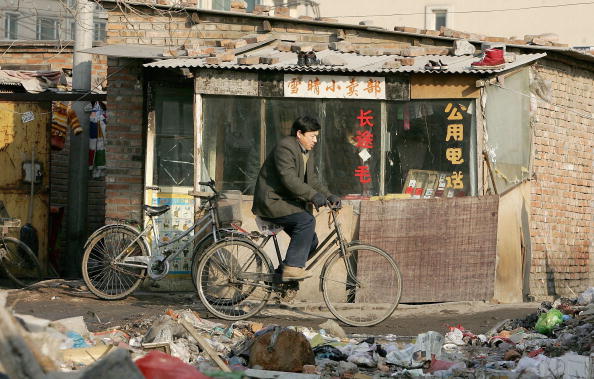
Poverty in Chengdu, China

poverty_in_changdu_china
The meteoric rise of the Chinese economy has captured worldwide attention in recent years. But in the city of Chengdu, further progress is threatened by poverty and corruption.

Located in southwest China, Chengdu serves as the capital of Sichuan province. It’s an important city in the region with rapid economic growth, but poverty in Chengdu still exists.

Hundreds of Fortune 500 companies have set up local branches and the city hosts a booming technology industry. It also hosts the world’s largest building, the New Century Global Center, a megaproject which was completed in 2014. A symbol of the region’s economic progress, the hulking structure has enough space to fit 20 Sydney Opera Houses.

Like many newly prosperous cities, however, Chengdu struggles with problems associated with migrant labor and corruption.

According to SOS Children’s Villages, an NGO dedicated to protecting the rights of children, migrant workers are struggling in Chengdu. The economic growth of the city attracts many workers from the surrounding countryside. When these workers fail to find jobs, their families find themselves in trouble. They have little access to essential services because, as migrants, their rights are limited. Economic prospects are dim and many children are forced onto the streets to find work.

Corruption is another concern for residents. Chengdu made world news in 2012 when a government official, Wang Lijun, fled to the American embassy in Chengdu amid a major corruption scandal.

Construction of the enormous Global Center was also mired in controversy, leading to the arrests of dozens of local officials. Deng Hong, a billionaire behind its construction, is under investigation by the Chinese government for corruption.

After nearly 40 years of aggressive market reforms, China’s economy is now the fastest growing on earth and roughly 500 million people have been lifted out of poverty. There is no doubt that Chengdu, like many Chinese cities, has benefitted from the nation’s skyrocketing economic prospects. The breathtaking pace of China’s economic growth is well-known.

In 2014, China surpassed the United States in purchasing power parity, a measure which examines national GDP relative to the cost of living. In absolute terms, the Chinese economy is likely to overcome its American counterpart in the coming decades.

For this growth to be sustainable, however, China must contend with urban poverty and local corruption.

– Kevin Mclaughlin

Sources: SOS Children’s Villages, The TelegraphWorld Bank

June 14, 2015
https://borgenproject.org/wp-content/uploads/borgen-project-logo.svg 0 0 Borgen Project https://borgenproject.org/wp-content/uploads/borgen-project-logo.svg Borgen Project2015-06-14 09:53:512024-12-13 17:51:24Poverty in Chengdu, China
Economy, Global Poverty, Malnourishment

Malnutrition in Mauritania

Malnutrition in Mauritania
Though the shores are teeming with fish, childhood malnutrition in Mauritania persists.

According to UNICEF, 20 percent of the country’s children under five are underweight. Another 22.5 percent of children exhibited signs of stunting, an inhibition of growth caused by chronic malnutrition. Wasting, a deterioration of fat and muscle due to acute malnutrition, was seen in 12.2 percent of children.

Mauritania ranks 27th in the world for under-five mortality, with a rate of 84 per 1000 births. Thirty-four percent of children are born with a low birth weight of less than 2500 grams.

Professor and nutrition expert Michael Golden stated in a 2012 interview with UNICEF that malnutrition is often caused by a combination of poverty, low social mobility and poor medical services. “What is needed now is to focus on health services research – how to deliver services effectively to poor people in places like Mauritania,” Golden said. “We need to maximize the efficiency of small numbers of staff who are not always well trained.”

One of the world’s poorest countries, Mauritania is known for its slave trade. Though slavery was outlawed in 1981, there were no criminal penalties for slave owners until 2007 and the practice is still widespread.

Mauritania’s economy relies mostly on agriculture, fishing and mining in lieu of industry. Very little of Mauritania’s land is arable and the country suffers from recurring droughts. Overfishing by foreigners has hurt its economy.

The country continues to be home to nearly 50,000 refugees fleeing neighboring Mali. In 2012, war broke out between the Malian government, Tuareg rebels and Islamic extremists. The region remains volatile and refugees are reluctant to return.

According to the U.N.’s Standing Committee on Nutrition, malnutrition is the single largest contributor to disease. It is especially dangerous for young children, who need a proper diet to develop. Without necessary vitamins and minerals, children may suffer from stunted physical and mental development.

Malnutrition is both a cause and symptom of global poverty. In countries where families consist of many children, it may not be possible to feed all of them. Those who are malnourished may struggle to work and mothers are often unable to breastfeed. As stunted children typically earn less as adults, malnutrition is a major factor in the cycle of poverty.

– Kevin Mclaughlin

Sources: CIA, UNICEF 1, UNICEF 2, UNICEF 3
Photo: Flickr

June 10, 2015
https://borgenproject.org/wp-content/uploads/borgen-project-logo.svg 0 0 Borgen Project https://borgenproject.org/wp-content/uploads/borgen-project-logo.svg Borgen Project2015-06-10 05:00:072024-05-27 09:24:03Malnutrition in Mauritania
Page 55 of 66«‹5354555657›»

Get Smarter

  • Global Poverty 101
  • Global Poverty… The Good News
  • Global Poverty & U.S. Jobs
  • Global Poverty and National Security
  • Innovative Solutions to Poverty
  • Global Poverty & Aid FAQ’s
Search Search

Take Action

  • Call Congress
  • Email Congress
  • Donate
  • 30 Ways to Help
  • Volunteer Ops
  • Internships
  • Courses & Certificates
  • The Podcast
Borgen Project

“The Borgen Project is an incredible nonprofit organization that is addressing poverty and hunger and working towards ending them.”

-The Huffington Post

Inside The Borgen Project

  • Contact
  • About
  • Financials
  • President
  • Board of Directors
  • Board of Advisors

International Links

  • UK Email Parliament
  • UK Donate
  • Canada Email Parliament

Get Smarter

  • Global Poverty 101
  • Global Poverty… The Good News
  • Global Poverty & U.S. Jobs
  • Global Poverty and National Security
  • Innovative Solutions to Poverty
  • Global Poverty & Aid FAQ’s

Ways to Help

  • Call Congress
  • Email Congress
  • Donate
  • 30 Ways to Help
  • Volunteer Ops
  • Internships
  • Courses & Certificates
  • The Podcast
Scroll to top Scroll to top Scroll to top