• Link to X
  • Link to Facebook
  • Link to Instagram
  • Link to TikTok
  • Link to Youtube
  • About
    • About Us
      • President
      • Board of Directors
      • Board of Advisors
      • Financials
      • Our Methodology
      • Success Tracker
      • Contact
  • Act Now
    • 30 Ways to Help
      • Email Congress
      • Call Congress
      • Volunteer
      • Courses & Certificates
      • Be a Donor
    • Internships
      • In-Office Internships
      • Remote Internships
    • Legislation
      • Politics 101
  • The Blog
  • The Podcast
  • Magazine
  • Donate
  • Click to open the search input field Click to open the search input field Search
  • Menu Menu

Archive for category: Economy

Information and stories about economy.

Activism, Development, Economy, Education, Global Poverty, Health

Rotary International Continues Fight Against Poverty

rotary_international
For the past 110 years, Rotary International has brought together business leaders, philanthropists and other individuals to promote interdisciplinary discussion to find solutions to the world’s biggest problems.

Started in the United States, the group now operates on a global scale. Through monetary donation or helping on the ground, Rotary’s 1.2 million members have positively impacted the world’s poor in a variety of ways.

Promoting Peace, Fighting Disease, Providing Clean Water, Saving Mothers and Children, Support Education and Growing Local Economies are Rotary’s biggest campaigns—made up of thousands of initiatives that work in different, but important, ways. Rotary International recognizes poverty is an intricate problem, and combatting it requires employing a litany of methods that enable individuals and countries alike to attain economic security.

Their greatest achievement is highlighted by the role they’ve played in the worldwide fight against polio. Launched in 1979, Rotary International has contributed $1.3 billion and countless volunteer hours to the campaign to eradicate polio. Since then, the number of polio-ridden countries has plummeted from 179 to three.

In January of this year, Rotary contributed an additional $35 million for immunization efforts that many believe will fully eliminate the disease.

Rotary can be just as effective on the ground. Their Clean Water campaign has provided millions with access to toilets, sanitation facilities and other water infrastructure.

Clean water also has many residual health and economic benefits. Healthy children mean less premature deaths, which stabilizes population growth. It also prevents the spread of infectious diseases, such as dysentery, diarrhea and ulcers. Access to local and clean water allows children to attend school instead of walking miles to retrieve it.

Since Rotary has expanded its Clean Water campaign in Ghana, the country has experienced a stark drop in waterborne diseases. Not surprisingly, 85 percent of Ghana’s citizens have access to a reliable water supply due to the newly drilled wells.

Rotary’s part in ending polio and bringing water security to Ghana are just the surface of what the group’s achievements. Its unique structure creates solutions at the local level, but change on a global scale. Going forward, they will have a substantial role in reducing and eventually eliminating global poverty.

Based on the past century, that role will be in safe hands.

Here is the link to Rotary’s website. Check it out to learn more about their mission and campaigns.

– Kevin Meyers

Sources: End Polio Now, Forbes, Rotary International 1, Rotary International 2, Rotary International 3

Photo: Rotary International

August 6, 2015
https://borgenproject.org/wp-content/uploads/borgen-project-logo.svg 0 0 Borgen Project https://borgenproject.org/wp-content/uploads/borgen-project-logo.svg Borgen Project2015-08-06 01:31:332024-12-13 18:04:41Rotary International Continues Fight Against Poverty
Economy, Global Poverty

Changing Migration Patterns in Latin America

Migration Patterns in Latin America
Although immigration is a major concern for policymakers in the United States, immigration and emigration have a significant impact on the economy and communities throughout Latin America.

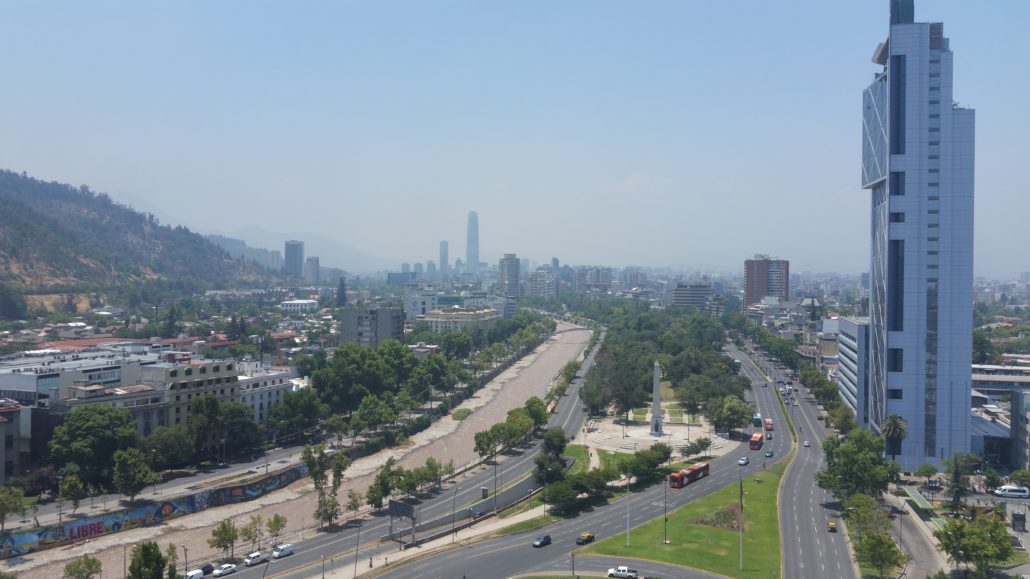
Over the last 25 years, in particular, migration patterns in Latin America show that immigrants have moved from unstable economies and governments into bordering states that have greater economic stability and prosperity. This continues to be the case in Chile, with migrants flowing in from neighboring countries.

The Southern Cone of Latin America is famous for its continued movement of people across country borders. This region includes Chile, Peru, Argentina and Uruguay. Chile has seen an influx of immigrants, particularly from Peru, since the 1990s. This was the turning point in the Chilean economy and government, transitioning over from a military regime to a more stable, democratic system.

This change in government led to more overall economic stability in Chile, creating more job opportunities and more money per household. Neighboring countries, such as Peru, have not seen such success.

This influx of immigrants has been accompanied by its own issues, particularly with regard to security concerns. Large groups of immigrants easily travel across state borders, because of geographic proximity, as well as insufficient border policies. For example, Peruvian immigrants that have migrated to Chile have created cultural enclaves within cities and populated areas of the country. These transnational communities as they are described have created a concern for not only governments of receiving nations, but also the citizens of said countries.

Social marginalization is one of the biggest obstacles many immigrants of said transnational communities report facing, forcing such cultural enclaves to emerge. This, in a way, defeats the purpose of many immigrants, in search of new opportunities, as they are almost forced to stay within the confines of communities that are primarily made up of other immigrants.

Though this is the case, many immigrants in Latin America continue to migrate to neighboring countries, because despite social and cultural obstacles, many do find more economic potential and opportunities for jobs that they have the qualifications and skillsets for.

Immigration is a concern that faces not only the United States and its borders but also persists as an issue throughout intraregional Latin America. Not only that, but the circumstances in which Latin Americans find themselves make immigration that much more appealing and feasible.

– Alexandrea Jacinto

Sources: Migration Policy Institute, Money Market, Bloomberg,
Photo: Flickr

August 5, 2015
https://borgenproject.org/wp-content/uploads/borgen-project-logo.svg 0 0 Borgen Project https://borgenproject.org/wp-content/uploads/borgen-project-logo.svg Borgen Project2015-08-05 11:23:142024-05-27 09:25:20Changing Migration Patterns in Latin America
Economy, Global Poverty, Refugees and Displaced Persons

Economics and Refugees

Economics and Refugees-TBPWhen there is an influx of people to a new area, in an effort to escape the horrors of war, disaster and other hardships, local economies can be significantly strained. A humanitarian effort to help those in need is beneficial, but oftentimes the number of people in need can create circumstances where it is extremely difficult to provide everyone with their basic needs.

Normally, local economies are structured to provide for a relatively stable amount of people. The equilibrium of local supply and demand is stable, however, when an influx of people grows the demand for all types of goods at once, it creates a supply vacuum. This increase in demand and lack of supply creates a whole host of problems.

Turkey has absorbed about 200,000 Syrians. Many have become beggars, wandering in traffic, looking for spare change and unable to find employment. Others take up trades on the street, taking customers from existing Turkish vendors and businesses. These two cases are examples of the lack of supply and the increase in demand. The beggars along with the increased competition for some small Turkish businesses have created a hostile atmosphere against the Syrian refugees.

Lebanon is a more extreme example of the strain that refugees can put on an economy. One in 10 of Lebanon’s residents is now a Syrian refugee, escaping the war and famine that has eviscerated their homeland. This has created a range of problems similar to those seen in Turkey, however, the magnitude of the number of refugees seen in Lebanon is much worse.

Lebanon is a much smaller country than Turkey, and it is also taking in many more refugees than Turkey. Food prices in Lebanon have skyrocketed due to the increased demand from more than a half-million refugees entering the country in the span of a few years. Electricity was already faulty and has now been hit with a 27 percent increase in demand due to the housing of many of the new refugees. Again, similar patterns are immerging within Lebanon as they did in Turkey.

Just as Turkey experienced similar economic disruptions, the social aspect of the new population has put social tensions on the list of concerns for government officials in Lebanon. Some economists argue that the new populace has actually been beneficial to the local economies of rural areas in Lebanon because of an increase in spending in the local area.

In places like Canada, the effects of refugees are somewhat different. Typically, when developed nations accept refugees from other countries they are not accepting hundreds of thousands at a time. This difference is important because it means that local economies are not strained to the same extent.

A study by the Institute for the Study of Labor found that employed refugees in Canada were no worse off than average. However, the study also showed that the unemployed did end up needing significant government assistance.

The study concluded that refugees were not damaging to the economy and identified discrimination and lack of credential recognition as potential factors in unemployment rates amongst refugees. Better job training programs could help refugees adjust to a new economic landscape and help them integrate into the economic system.

The case of the Syrian refugees is one of the best modern-day examples of how massive amounts of refugees can disrupt local economies. In the case of Canada and other developed nations, it exemplifies how a smaller amount of refugees entering the country does not affect the economic and social situation in ways that are comparable to Turkey and Lebanon.

Context is important to see how refugees can affect local economics, but it is clear is that events that create massive migrations can be harmful to neighboring economies. Perhaps programs that help disperse refugees across more countries could be improved or expanded to reduce the impact that refugees have when overwhelming local areas. Nonetheless, it is important to recognize that it is in everyone’s interest to take in those in need and help them adjust to their own new realities.

– Martin Yim

Sources: New York Times, Reuters, Institute for the Study of Labor
Photo: Flickr

August 5, 2015
https://borgenproject.org/wp-content/uploads/borgen-project-logo.svg 0 0 Borgen Project https://borgenproject.org/wp-content/uploads/borgen-project-logo.svg Borgen Project2015-08-05 01:30:532020-07-02 13:14:51Economics and Refugees
Economy, Global Poverty

Costa Rica Looks Beyond GDP in National Happiness Index

Costa Rica Looks Beyond GDP in Gross National Happiness Index

Earlier this summer, the National Teacher’s Cooperative of Costa Rica released its inaugural Gross National Happiness Index. Their results mirror what the Sustainable Solutions Development Network’s World Happiness Report and the Gallup Poll’s 2014 State of Global Well-Being Rankings find: Costa Rica’s citizens are generally happy. However, the fact that this index was compiled and published is of greater significance than the results it contains.

The acute and unwavering commitment to Gross Domestic Product (GDP) as the ultimate telltale for societal well-being has been distorting policies and steering resources away from sustainable and equitable growth since the Great Depression.

This skewed developmental path has resulted from GDP’s narrow focus on output. GDP, and more specifically its fundamental adherents, has its blinders on an array of other important benchmarks like health, quality of education, altruism and prosocial behavior, environmental health, gender equality, level of social connectivity and support networks, and, of course, financial status.

In other words, the GDP school of thought assumes increased output equals increased income which leads to societies being better off. In a broad, general and abstract sense this seems correct, but it does not hold up in the real world.

A more nuanced approach is required to get humanity back on the right tilt, to allow a better balancing of social, economic and environmental progress. Social scientists are working hard to discover just what makes people happy and societies well off, and how to do so. Their findings may inform a new era of enlightened public policy.

The good news is that when humankind sets a target, we get better at hitting it. We learn how to remove barriers to improvement and shift gears to meet the goals. A whole suite of tools—financial, economic and social—can be tweaked and set in motion to guide and support progress toward an objective.

Costa Rica’s effort to measure their citizens’ happiness marks a trend that has been incubating since 1972, when the King of Bhutan began measuring Gross National Happiness, GNH, instead of GDP. In 1990, the United Nations initiated their Human Development Index, measuring a variety of quality of life indicators. In 2010 Britain declared their intentions to study happiness as well as GDP, and global metrics of happiness and peace, including the World Happiness Report, Global Well-Being Rankings and the Global Peace Index, are on the rise and gaining prestige.

The growing importance of these indicators is a promising sign of a shift. Costa Rica’s high level of happiness and their new effort to measure it should be applauded and replicated by the international community.

– John Wachter

Sources: Foreign Policy, Tico Times 1, Tico Times 2, World Happiness Report
Photo: TicoTimes

July 31, 2015
https://borgenproject.org/wp-content/uploads/borgen-project-logo.svg 0 0 Borgen Project https://borgenproject.org/wp-content/uploads/borgen-project-logo.svg Borgen Project2015-07-31 12:08:072020-07-06 12:30:52Costa Rica Looks Beyond GDP in National Happiness Index
Economy

Global Public Good: International Trade Regime

International_Trade_Regime
In the interest of ending poverty, much attention has been focused on trade. Trade is supposed to make everyone better off and allow people to utilize their comparative advantage, selling goods to others and buying better goods for cheaper. What this abstraction looks like in real life is a messy bundle of tariffs, quotas, free trade zones and heaps of rules and regulations. This begs the question, how is an international trade regime a public good and what should it really look like?

Borrowing a page from game theory will help us answer this question. Imagine the government of country A imposing barriers to trade on country B. Country A may do this for a number of reasons, including pressure from their domestic private sector. Their action will impose costs on exporters and manufacturers in country B, which country A has little reason to take into account. Their decision to under-value the cost of their trade barriers takes the form of an externality and results in an inefficient international trade regime.

Therefore a case can be made for an international institution aimed at easing the flow of trade between countries to make everyone better off. This would be achieved by lowering tariff barriers, increasing the predictability of tariff rates, which give exporters a clearer view of how their products can compete in the international market, and providing a platform for member countries to discuss trade-related issues and negotiate agreements. Making trade easier would make people better off.

Being a member of this institution would offer network externalities, where one user can make the good more valuable for others, whose benefits would grow with the number of members, making it desirable to have all countries participate in the trade regime.

The most prominent figure in international trade is the World Trade Organization (WTO), which is responsible for correcting the externalities and making the benefits of trade available to all.

The level of trade has dramatically increased since the introduction of the WTO, but problems have arisen as well.

The way that many of these agreements have played out have not necessarily benefited the poorest countries. One reason is that “institutional adjustments related to trade are costly.” Member nations must be compliant with WTO rules and regulations, and because these regulations are generally the norm for developed countries, the costs of implementation are borne by the countries that are less able to afford them.

For example, the United Nations uses an estimate of $150 million for a typical developing country to meet requirements in just three of several WTO agreements, “customs valuation, health and phytosanitary measures and intellectual property rights.” $150 million can be equivalent to an entire year’s development budget for some of the least developed countries. Meeting the WTO requirements implies reforming the tax structure and social safety nets to comply with the rules for intellectual property, health measures and subsidies, among others.

Should developing nations opt out of the WTO, foregoing the expensive compliance costs but also the benefits of belonging to a market-opening, trade-facilitating institution? Before answering, a look at how the WTO can fix these problems is in order.

First, a broader evaluation of the fairness of the trade regime is required. Three aspects, identified by the United Nations Industrial Development Organization, include neutrality, the net benefit for all and the maximin rule. These aspects translate to ensuring that “each country should be at least as well off with the trade regime as without it”, all members need to see a benefit from the regime and developing countries need to experience increasing benefits from the system. Retooling the WTO according to these fairness aspects would benefit developing nations and boost the effectiveness of the international trade regime overall.

In addition, financial and technical support to help developing countries meet the exacting WTO requirements is needed. The WTO has recognized its failure and is dedicating more energy to building capacity and helping developing nations meet these requirements with little cost. Recently, Germany donated a little more than $1 million dollars to a fund dedicated to this purpose.

With a number of global trade deals on the table, including the massive Trans-Pacific Partnership and Transatlantic Trade Investment Partnership, a deeper look into the workings of the international trade regime and what efforts can be levied to make it work better can have a large effect on global poverty rates.

– John Wachter

Sources: Dartmouth University, United Nations Industrial Development Organization, World Trade Organization 1, World Trade Organization 2
Photo: Georgetown Law

July 27, 2015
https://borgenproject.org/wp-content/uploads/borgen-project-logo.svg 0 0 Borgen Project https://borgenproject.org/wp-content/uploads/borgen-project-logo.svg Borgen Project2015-07-27 15:22:082020-07-10 15:42:02Global Public Good: International Trade Regime
Economy, Global Poverty

What Iceland Can Teach Us about Financial Recovery

iceland_financial_crisis
During the financial crisis seven years ago, while many countries were struggling to stay afloat, Iceland was already at the bottom of the sea. A tiny country with a population of only 320,000, Iceland experienced near-total bank failure in the span of three days and a 95% decrease in stock. While monetary policies in the United States and Europe let large amounts of cash flow into the economy, Iceland let enormous amounts of dollars flow through. When the Icelandic krona crashed in 2008, the country’s three biggest banks had amassed wealth more than 10 times the country’s Gross Domestic Product (GDP). As a result of this “loose money” policy, 85% of the economy tanked. The lack of cash flow regulation in the economy led to its downfall and hindered the rebuilding process.

Iceland’s attempts at becoming an international banking powerhouse also factored into its demise. With very high interest rates, international investors could borrow dollars at 5%, exchange them for krona, and buy Icelandic stock at 9% interest. They would profit off the difference in interest rates. Without any governmental controls on the flow of money, all cash could have exited the country, further depressing the economy. However, with help from the International Monetary Fund, the Icelandic government began to impose strict capital controls, barring krona from leaving the country or residents from buying foreign currency or international stock. In the years immediately following the crash, the government raised taxes and provided debt relief to mortgage holders, but not to social services.

It also did something most developed countries have failed to do: jail bankers.

International hedge funds purchased claims for pennies at the height of the crash. Once financial recovery started, their assets grew, giving them a large share of power over the financial system. Due to continued cash control policy, this control affected the lives of Iceland’s residents as well. Residents were especially limited in the amount of foreign cash they could spend, which became a problem when traveling abroad or investing in international stock. “You have a feeling that there’s a system watching you and telling you what you can do with your money,” noted Gudmundur Kristjansson, a fisherman.

However, cash flow restriction and the devaluation that resulted posed some benefits for the economy as well. Exports became cheaper and imports more expensive, allowing residents to produce more goods rather than depend on foreign manufacturers. Devaluation caused wages to fall, so unemployment did not reach the soaring heights it did in Europe. Tourism increased as more people began to travel to Iceland for its cheap prices and its currency independence from less developed European countries.

However, the bars that once held Iceland in restricted success must soon be lifted. “We are enjoying the longest sustainable growth period in recent history,” commented Minister of Finance Bjarni Benediktsson, but cited lacking international investment and competing foreign companies as reasons for lifting the restrictions that helped foster the country’s success for so many years. “[Such controls] are not a sustainable situation for an economy,” said Prime Minister David Gunnlaugsson.

Today, unemployment in Iceland is at 4%, GDP is expected to grow by 4.1% in 2015, and tourism is a flourishing industry. Despite the uncertain future of the country’s economy, it is certainly faring better than other European countries that suffered under the crash. For Greece, whose citizens voted against a deal with creditors and potentially face a future of exiting the Eurozone and financial security, tight monetary restrictions would not be a likely solution. It has a population of 11 million to Iceland’s 320,000, and a GDP 16 times that of the tiny island. When Iceland was preventing its people from spending money, Greece was throwing it around in all directions. Yet Iceland serves as an example of how unorthodox financial practices—controlling the cash flow, granting influence to international hedge funds—can unfreeze a nation and help it rebuild. Restoring a country to financial security is a process of understanding its government, citizens and industries. For Greece and other struggling countries, it will be a struggle, but not a failure.

– Jenny Wheeler

Sources: IMF, New York Times
Photo: The Automatic Earth

July 25, 2015
https://borgenproject.org/wp-content/uploads/borgen-project-logo.svg 0 0 Borgen Project https://borgenproject.org/wp-content/uploads/borgen-project-logo.svg Borgen Project2015-07-25 09:16:072024-12-13 17:51:50What Iceland Can Teach Us about Financial Recovery
Economy, Global Poverty

The Missing Global Middle Class

global_middle_class

Although one billion people have risen out of extreme poverty in the past 15 years, concerns still remain. Amid the success in this impressive reduction, there are new concerns over how those who have risen up out of extreme poverty are transitioning into a working middle class.

A new study from the Pew Research Center found that, despite slight growth in the population living on between $10-20 per day (middle income), the growth was largely concentrated in specific regions of the world. These hot spots of growth include China, Eastern Europe and South America. In areas where extreme poverty is extremely concentrated, such as in India, Southeast Asia, Africa and Central America, growth was minimal. Furthermore, there are still large inequalities in wealth distribution, as demonstrated in the areas that have the majority of middle and upper income populations—North America and Europe.

The study also notes that even in these specific areas of improved prosperity, the improvements in their standards of living and qualities of life did not improve as much as may have been expected. Another reason for small middle class growth, despite larger reductions in extreme poverty, is the volatility of climate change. Of the many factors that push people back into poverty, climate change is increasingly understood as the true threat, as changing weather brings its effects to light.

The lack of growth in the middle class has huge implications on individual countries and globally. The middle class was predicted to have grown, which would have increased national economic and political participation and boosted health outcomes.

Many experts associate the development of the middle class with a certain advantageous social structure that benefits the country as a whole. The middle class is generally able to focus less on strictly surviving, which enables them to make certain choices about the kind of lives they want to live, and to demand rights to make those choices, which leads to, all around, more developed nations.

Still, over 70% of the world’s population lives in poor to low-income levels, and progress still needs to be made. The disparities seen, despite progress, are calls to action. One of the biggest public health and developmental challenges we face today is that of inequality and inequity. Seeing such discrepancies on a global level is further proof that this is a problem that needs global attention.

The report brings attention to the fact that, although poverty reduction has been successful in some cases, on a more global and long-term level, changes need to be made. There need to be more effective strategies aimed at not only helping people come out of poverty, but also helping people stay out of poverty. We now know that the effects that we had hoped to see as a result of poverty reduction have many intermittent steps and barriers that also need to be addressed in order to see the kind of results that were predicted. The benefits of a growing middle class are achievable and progress in poverty reduction is the first step, but until the other barriers that new global middle class members face are also addressed, people, their nations, and the world will not see the maximum benefits.

– Emma Dowd

Sources: BBC, Pew Global
Photo: Deccan Chronicle

July 25, 2015
https://borgenproject.org/wp-content/uploads/borgen-project-logo.svg 0 0 Borgen Project https://borgenproject.org/wp-content/uploads/borgen-project-logo.svg Borgen Project2015-07-25 09:01:512020-07-03 16:39:49The Missing Global Middle Class
Economy, Global Poverty

The Fall of Chinese Stock Markets and the Impact on Poor

stock_markets
The recent collapse of the Chinese stock markets has been tumultuous. Millions of Chinese middle-class citizens were caught up in the fervor; many of the stock-buyers have been Chinese without high school diplomas. Many observers in the west had feared that the meteoric growth of the stock markets in China was unsustainable. In 2014, the Shanghai Composite Index rose 21 percent in one month alone — a warning sign to many that this type of growth could not continue forever.

Since the beginning of the falling stock prices, at least 3.2 trillion dollars in value has vanished. The bubble was seemingly inflated — in part with government encouragement — with lax policies put in place to encourage further investment in stocks. Many people began to pour savings and accrue debt in order to pump more money in the over-valued stock prices. The government’s role in encouraging the bubble has now led to a loss of face for Chinese leadership and policy makers.

The ramifications of the Chinese stock market collapse could be widespread. A large fraction of the investments made were done not by large businesses or businessmen, but by middle class urbanites and even rural villagers. Much like the housing bubble in 2008, a tremendous loss in assets for middle and lower class Chinese could be hugely detrimental to the country. In light of the fact that the Chinese economy has been attempting to transition into a more consumer-based economy and the slowdown in growth in recent quarters, this financial crisis could be a major setback in China’s economic ambitions for the future.

The loss of value for stocks owned by every-day Chinese citizens means that demand would suffer and begin the cycle into lower economic health and greater uncertainty about the future of the markets. In general, an economic downturn is bad for everyone, from the most impoverished, to the well off. The poor in China will almost certainly suffer more, should the economy take a turn for the worst.

The Chinese Government has taken strong steps towards avoiding a complete collapse in stock prices. Pouring money into the teetering markets, the government is attempting to push back against the tide of sellers and avoid what many consider to be inevitable. Forty percent of stocks have stopped trading in an effort to stop the bleeding prices, but many argue that this is will do little. Market corrections will occur regardless — the bubble has already popped.

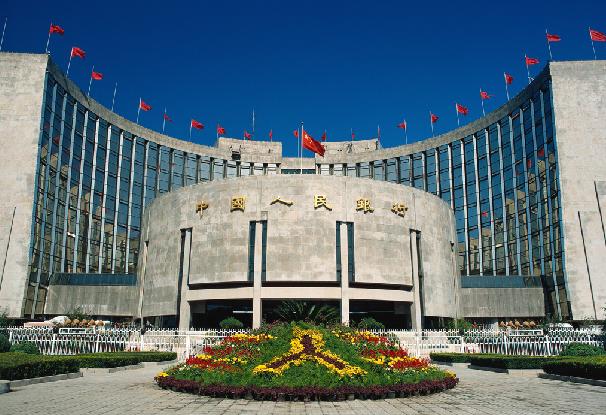
The secret is out — the majority of these unsustainably growing stocks belong to companies who are simply not worth even close to the price tag. Many of these Chinese companies have suffered huge blows to their reputation and legitimacy. Stopping trading is more likely than not, a desperate measure to allow for some leeway and time to think. The market is no longer in a psychological craze, and all the freezes will do is delay the inevitable market corrections.

The real question now is, how much value will be lost and how much will this hurt the middle and lower classes in China?

– Martin Yim

Sources: New Yorker, Bloomberg 1, Bloomberg 2
Photo: Gbtimes

July 24, 2015
https://borgenproject.org/wp-content/uploads/borgen-project-logo.svg 0 0 Borgen Project https://borgenproject.org/wp-content/uploads/borgen-project-logo.svg Borgen Project2015-07-24 18:53:192024-12-13 17:51:59The Fall of Chinese Stock Markets and the Impact on Poor
Economy, Global Poverty

Gentrification in Rio de Janeiro

gentrification_in_rio_de_janeiro
Many believe that gentrification is a purely American and European phenomenon in which large numbers of college graduates move to cheap, urban areas and open yoga studios, green markets and “hipster” coffee shops. However, gentrification is not only a global occurrence but also an established urban renewal and regeneration strategy in all corners of the world.

The Oxford Dictionaries define “gentrification” as the “renovation or improvement (of a house or district) so that it conforms to middle-class tastes.” Middle-class tastes in American cities like Portland, Seattle or New York City usually relate to the rise of what sociologists term the “creative class”—a group of young people entering the workforce concerned with personal expression and technological advances more than monetary progress. Professor and urban studies theorist Richard Florida found that one-third of Americans belong in the creative class.

“I define the Creative Class to include people in science and engineering, architecture and design, education, arts, music and entertainment whose economic function is to create new ideas, new technology, and new creative content,” said Florida.

Although developing countries have not necessarily experienced as significant a rise of a distinct creative class, middle-class residents of the community as well as significant tourist populations have completely redesigned global cities. Specifically, some poor shantytowns—favelas—in Rio de Janeiro, Brazil have experienced a complete upheaval of population and culture to cater to new, wealthier residents.

“Pacification programs” that officials applied in the past fifteen years, especially those immediately before Rio’s hosting of the 2014 World Cup and leading up to the 2016 Olympics, have done as much harm as good.

Favela residents report that areas that were once slums, full of rampant drug gangs, violence and poverty, are now safe places to live, policed by a permanent security presence. Increased security in favelas has attracted a population with a sense for business and entrepreneurship, which keeps the economic interests growing.

Foreigners have recently entered the housing market in favelas in Rio and are buying property more frequently than locals. As tourists no longer have to pay taxes to drug gangs, many foreign and native residents advertised their property for temporary stay on the Airbnb website during the World Cup and Olympics.

As the value and popularity of the city increases with new construction and business opportunities, property prices have risen dramatically. Houses that cost $2,500 in 2006 cost $75,000 in 2014. As a result, whole socioeconomic groups no longer have the ability to live in the favelas that they once called home. Current residents are also struggling with rent increases and displacement, and are being forced to move to more dangerous favelas.

Ebilene Rodriguez Periera, a 54-year-old resident of a favela in Vidigal, an area in Rio, said that the new hotels and restaurants are being built for foreigners, “not for us.” Veronica Mora, another resident of a favela in Santa Marta, detailed community resistance against rent increases, demolitions and evictions.

“For years, the authorities did nothing when it was so dangerous to live here. Now that the area is finally safe, they want us to move out,” said Mora.

American researcher and former resident of Santa Marta, Charles Heck, finds that pacification programs—essentially government-sponsored gentrification programs—have changed urbanization and urban regeneration policies. Many new urbanization policies now deny current residents basic trash, water and electrical services in what some urban theorist experts call an attempt to force residents out. Gentrification in Rio de Janeiro has resulted in Rio’s strategic plan to provide for a 5% reduction in favelas from 2013 to 2016.

“Post-UPP, urbanization has focused primarily on land titles and new businesses rather than health, sanitation, education and other infrastructure,” said Heck.

The U.N. has critiqued Rio’s implementation of gentrification policies in the past, as an organized governmental effort to include residents of favelas in urban plans is essential to a thriving city. Inclusion of large social and socioeconomic groups encourages citizen participation and increases the viability of solutions to social justice issues in Portland and Rio de Janeiro alike.

– Paulina Menichiello

Sources: Business Insider, NPR, Oxford Dictionary, The Guardian
Photo: Flickr

July 14, 2015
https://borgenproject.org/wp-content/uploads/borgen-project-logo.svg 0 0 Borgen Project https://borgenproject.org/wp-content/uploads/borgen-project-logo.svg Borgen Project2015-07-14 08:45:122020-07-03 10:23:20Gentrification in Rio de Janeiro
Children, Economy, Global Poverty, Health

How Coca-Cola Is Helping Deliver Medicines

coca_cola
Coca-Cola products reach every corner of the world while essential medicines do not. ColaLife, a UK charity, noticed this and decided to make a change. ColaLife uses Coca-Cola to open up the private sector supply chain to deliver affordable and effective medicines.

ColaLife produced the Kit Yamoyo, an anti-diarrhea kit. Diarrheal diseases cause life-threatening dehydration, which is the second leading cause of death in children under the age of 5 in developing nations. Each year, it takes the lives of 760,000 children, even though it’s curable.

The problem is that these children do not have access to the cure, which is what ColaLife sought to solve. The Kit Yamoyo contains Oral Rehydration Salts (ORS), soap, and zinc, which act as a cure. The package itself acts as a measuring device for water needed to mix up the ORS and zinc, and can also be used as a storage device as well as a cup.

The Kit Yamoyo has a v-shaped cup to easily fit into the Coca-Cola delivery crates. As a compact, low-cost product, the Kit Yamoyo piggybacks Coca-Cola’s supply chain to reach remote areas. It is a symbiotic relationship: Coca-Cola products continue to reach and get sold in remote areas, while the consumers gain access to more medicines than ever before.

The kits themselves are sold with Coca-Cola products. As the kits make their way out to the remote areas, the demand for them becomes greater. It’s a positive situation for everyone involved: Coca-Cola products are sold, the retailer makes a profit, and the consumer gets the medicine they need to help their children.

With enough funding, the Kit Yamoyo will have a big impact. It will widen vaccine coverage in remote areas and reduce death rates caused by dehydration and malnutrition. It will also encourage an increased investment in training and help health workers reduce child mortality rates. ColaLife has proven that the supply chain is just as important as the medicine itself.

– Hannah Resnick

Sources: ColaLife, University of Delaware, WHO, Zambia Daily Mail
Photo: Just Giving

July 9, 2015
https://borgenproject.org/wp-content/uploads/borgen-project-logo.svg 0 0 Borgen Project https://borgenproject.org/wp-content/uploads/borgen-project-logo.svg Borgen Project2015-07-09 15:00:312024-05-27 09:25:48How Coca-Cola Is Helping Deliver Medicines
Page 54 of 66«‹5253545556›»

Get Smarter

  • Global Poverty 101
  • Global Poverty… The Good News
  • Global Poverty & U.S. Jobs
  • Global Poverty and National Security
  • Innovative Solutions to Poverty
  • Global Poverty & Aid FAQ’s
Search Search

Take Action

  • Call Congress
  • Email Congress
  • Donate
  • 30 Ways to Help
  • Volunteer Ops
  • Internships
  • Courses & Certificates
  • The Podcast
Borgen Project

“The Borgen Project is an incredible nonprofit organization that is addressing poverty and hunger and working towards ending them.”

-The Huffington Post

Inside The Borgen Project

  • Contact
  • About
  • Financials
  • President
  • Board of Directors
  • Board of Advisors

International Links

  • UK Email Parliament
  • UK Donate
  • Canada Email Parliament

Get Smarter

  • Global Poverty 101
  • Global Poverty… The Good News
  • Global Poverty & U.S. Jobs
  • Global Poverty and National Security
  • Innovative Solutions to Poverty
  • Global Poverty & Aid FAQ’s

Ways to Help

  • Call Congress
  • Email Congress
  • Donate
  • 30 Ways to Help
  • Volunteer Ops
  • Internships
  • Courses & Certificates
  • The Podcast
Scroll to top Scroll to top Scroll to top