• Link to X
  • Link to Facebook
  • Link to Instagram
  • Link to TikTok
  • Link to Youtube
  • About
    • About Us
      • President
      • Board of Directors
      • Board of Advisors
      • Financials
      • Our Methodology
      • Success Tracker
      • Contact
  • Act Now
    • 30 Ways to Help
      • Email Congress
      • Call Congress
      • Volunteer
      • Courses & Certificates
      • Be a Donor
    • Internships
      • In-Office Internships
      • Remote Internships
    • Legislation
      • Politics 101
  • The Blog
  • The Podcast
  • Magazine
  • Donate
  • Click to open the search input field Click to open the search input field Search
  • Menu Menu

Archive for category: Economy

Information and stories about economy.

Economy, Global Poverty

How Economic Opportunity Reduces Child Marriage in India

disabled
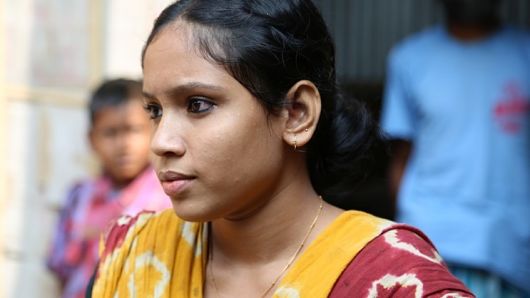
Child marriage continues to pose significant social challenges for countries around the world, but nowhere more than in India, where an estimated 47 percent of girls are married before their 18th birthday. But Indian state governments have developed promising programs to provide girls with opportunities aimed at weakening the social and economic arguments for marrying young.

While the Indian Prohibition of Child Marriage Act (PCMA) established legal ages for marriage at 18 and 21, respectively, for women and men, enforcement of the law depends on cooperation on the local level. Because the social and economic conditions that compel women to marry young have yet to be addressed, the PCMA remains largely ineffective.

According to Girls Not Brides, a global partnership of over 500 organizations working to ending child marriage, the primary factors driving child marriage are “economic considerations (poverty, marriage-related expenses/dowry), gender norms and expectations, concerns about girls’ safety and family honour, and lack of educational opportunities for girls.” While a National Action Plan to prevent such marriages was drafted in 2013, it is yet to be finalized.

State governments have adopted a number of policy initiatives to address the underlying conditions that compel children to marry. In late 2013, the government of West Bengal launched Kanyashree Prakalpa, a conditional cash transfer program intended to provide every indigent female student aged 13 to 18 with an annual scholarship and a $400 grant on her 18th birthday.

Girls must be unmarried to receive those benefits, which are meant to provide economic incentives for families that would otherwise marry off their daughters. According to Roshni Sen, one of the designers of the cash transfer initiative, nearly 3 million girls have enrolled in Kanyashree Prakalpa.

“They feel enormously enabled – it is not just the prospect of receiving money that excites them, but that they receive it in bank accounts that are opened in their names,” wrote Sen in an article for Devex. “It has put on hold their parents’ quest for a suitable groom. Most important, it has given them the opportunity to start a new dialogue with their parents, a dialogue in which they dare to speak of their future identities forged through continued education and professional training, identities which may – or may not – include marriage.”

Another initiative called Empowerment of Adolescent Girls, commonly referred to as SABLA and implemented by a district in West Bengal, is designed to help adolescent girls meet their nutritional requirements and to stay in school, with the goal of ensuring their eventual fulfillment of their rights to land.

According to Sen, strengthening women’s right to land can give them the resources they need to provide for their families on a long-term basis. It also helps organizations meet a number of development challenges, ranging from malnutrition to a lack of financial access. Under the program, government workers in West Bengal teach girls about their rights to attend school, their right not to be married before the age of 18, and their rights to assets, like land and other forms of capital.

These programs often help girls establish leverage with their parents, and evaluations of the program have found that “participating girls are more likely to stay in school, more likely to have an asset in their own name and less likely to be a child bride.”

Because national government policies depend on enforcement at the local level, smaller scale programs like SABLA are often better suited to remedying the deeply rooted social customs that drive phenomena like child marriage. As development organizations continue to focus on providing economic opportunity to vulnerable communities, poverty rates will decrease, and demographics like Indian women will be better able to realize their potential and gain the financial autonomy necessary for self-determination.

– Zach VeShancey

Sources: Devex, Girls Not Brides
Photo: Girls Not Brides

August 30, 2015
https://borgenproject.org/wp-content/uploads/borgen-project-logo.svg 0 0 Borgen Project https://borgenproject.org/wp-content/uploads/borgen-project-logo.svg Borgen Project2015-08-30 01:30:592024-12-13 18:04:54How Economic Opportunity Reduces Child Marriage in India
Economy, Global Poverty

Inflation in Brazil Hits New High

 Brazilian Inflation Hits New High- BORGEN
As the 2016 Rio De Janeiro Olympics loom, Brazil finds itself in the midst of an inflation crisis. At a staggering rate of 9.56 percent, inflation in the South American nation is higher than it has been in 12 years. Brazil has not seen such a level since November 2003. This stark increase highlights one of the main problems facing Latin America’s largest economy.

Although the rising cost of electricity has likely played a role in the increasing inflation rate, the main reason behind the economic slump is a lessening demand for Brazilian products. China plays a major role as one of the nation’s consumers, but the Asian giant is suffering an economic slowdown as well. Dwindling demand for commodities from the Chinese is a central cause of Brazil’s economic woes.

Extremely fast price increases and the depreciation of the Brazilian real versus the U.S. dollar have opened the door for the country’s central bank to raise interest rates substantially. To combat rising prices, the central bank has raised interest rates to 14.25 percent. This number is among the highest of major world economies. Officials at the bank hope that this raise will help the country reach a target inflation rate of 4.5 percent.

However, the outlook is bleak. Brazil’s economy is projected to shrink 1.5 percent, according to the International Monetary Fund. Current statistics show the Brazilian economy ranked seventh in the world.

Dilma Rousseff, the president of Brazil, is actively trying to cut the country’s deficit. Rousseff supports several measures to both cut spending and raise taxes in hopes to get the country back on its feet. Facing fiscal setbacks and possible impeachment, however, Rousseff’s political influence is at a low point and her actions may be in vain.

Although high inflation in Brazil affects poor and rich alike, those living below the poverty line are being hit particularly hard. Long known as a nation with a shocking income gap, there is little sign that this discrepancy will improve in the near future. The poor find it difficult to strive in a prospering economy, let alone one that is dramatically faltering.

– Katie Pickle

Sources: BBC, Wall Street Journal
Photo: Flickr


August 29, 2015
https://borgenproject.org/wp-content/uploads/borgen-project-logo.svg 0 0 Borgen Project https://borgenproject.org/wp-content/uploads/borgen-project-logo.svg Borgen Project2015-08-29 06:47:542020-07-01 11:29:44Inflation in Brazil Hits New High
Economy, Global Poverty, Inequality

Income Disparity Continues to Plague South Africa

Income Disparity in South Africa
The country of South Africa is divided among those with nothing and those with seemingly everything, making for extremely high rates of poverty for the country overall. The income disparity in South Africa has had an impact not only on the domestic economy and security, but also on the global economy.

Reports show that approximately four percent of households in the country of South Africa make up 32 percent of the country’s household incomes. At the same time, about 10 percent of the citizens live in what are considered extreme poverty conditions, meaning families are living on under $1.25 a day. This disparity has not only drawn attention to the state of the economy, but it has also put a significant strain on the social aspects of the country as a whole.

Though South Africa stands as the second largest economy in Africa, economic disparity amidst the population has created more social tensions and controversy than the numbers would anticipate. Research shows that rates of disparity between members of the 90th percentile and 50th percentile citizens, in terms of income and economic security, have been continuing to grow in recent years. This means that the likelihood of social mobility, say from working class to middle class, or any further for that means, are rather difficult, and nearly impossible.

Despite becoming a democracy, South Africa continues to suffer with inequality between its citizens. This has proven to be an issue regarding security, as the growing size of the lower class and number of impoverished people compares to that of the other four percent. Lack of education can be a great contributing factor to this, as the number of unskilled and uneducated workers heavily outweighs the number of skilled workers in the country. Lack of skill and education leads to less opportunity for the average South African worker. Thus, educating and teaching more skill sets to the people of South Africa may, in part, begin to decrease the growing gap that continues to drive the people of the country apart.

– Alexandrea Jacinto

Sources: CNBC Africa, World Policy
Photo: Daily Maverick

August 22, 2015
https://borgenproject.org/wp-content/uploads/borgen-project-logo.svg 0 0 Borgen Project https://borgenproject.org/wp-content/uploads/borgen-project-logo.svg Borgen Project2015-08-22 01:30:222024-12-13 18:04:51Income Disparity Continues to Plague South Africa
Economy, Foreign Aid, Global Poverty

What We Fail to Mention About Foreign Aid

foreign_aid
1. Foreign aid remains essential for developing nations. Providing healthcare, clean water, food, shelter, vaccines and schools can create opportunity. The catch we must avoid is generalizing these methods. Aid projects succeed when they target regions’ specific needs and histories.

2. We need to actually invest in the communities we serve. This requires “patient capital” which, according to CEO of Acumen, Jacqueline Novogratz, is “money that is invested in entrepreneurs who know their communities and are building solutions…thinking of low income people not as passive recipients of charity, but as individual customers, consumers, clients, people who want to make decisions in their own lives.” Patient capital is an inclusive approach to uplifting people out of poverty. While it requires risk, experimentation, and patience, the social impact can be enormous.

Journalist and activist, Andrew Mwenda, also advocates for wealth-creating “agents” that also give way to systems of productivity. “Wealth,” explains Mwenda, “is a function of income, and income comes from you finding a profitable trading opportunity or a well-paying job.” So, what is the solution? Entrepreneurs.

3. Economic gains in foreign aid investment beats the stock market. Paul O’Connell is the president and partner of FDO Partners, LLC, which is an investment management and research firm managing upwards to US$2.3 billion. O’Connell’s TedTalk, “Investments in the future: A new approach to foreign aid” talks about the economic gains from investing in poverty-related issues like vaccinations, education, and clean water, versus investing in the stock market. Investing in each category earns two to even six times the return in comparison to investing in stocks. O’Connell urges private investors to take the reigns on these investments because the payouts will be enormous.

– Lin Sabones

Sources: TED 1, TED 2, TED 3, Wall Street Journal, Oxfam America
Photo: USAID

August 21, 2015
https://borgenproject.org/wp-content/uploads/borgen-project-logo.svg 0 0 Borgen Project https://borgenproject.org/wp-content/uploads/borgen-project-logo.svg Borgen Project2015-08-21 01:30:112020-07-02 10:40:24What We Fail to Mention About Foreign Aid
Development, Economy, Global Poverty

Growing Investment in Africa Spurs Domestic and International Growth

Investment in AfricaRecently, international investors have turned their sights to Africa, whose expanding consumer class and abundant natural resources make it the next prime location for development and innovation. According to the Africa Attractiveness Survey, investment in Africa totaled $128 billion dollars in 2014, up 136 percent from the previous year. Investment reached $174 million per project, an increase from $67.8 million in 2013. This vast increase is largely spurred by several megadeals on the continent rather than many smaller ones. Although this “big money” form of investment may crowd out smaller investors, it paves the way for future funding from all types of businesses.

According to Charles Brewer, managing director for DHL Express Sub-Saharan Africa, an update in the way investors perceive the continent has been the source of increased funding. Economic growth, coupled with an improved business environment and strengthened infrastructure, has caused foreign investment to hit a historic high. Sufficient infrastructure is key to successful development because it lowers the expense of logistics. In the past, supply chain costs were nine times greater in Africa than in other continents. Deals, such as DHL Express’s, not only expands the frontier for international corporations but also lends to growth within Africa as well. Brewer predicts millions more in investment dollars from his company alone in 2015.

“With increased Foreign Development Investment and macroeconomic growth, I believe that Africa will become an economic powerhouse in the future. The region is abound with untapped opportunities and has much scope for growth,” says Brewer.

With more and more people benefiting from international aid and earning money, the consumer base in Africa has grown rapidly. This provides immense opportunities for companies to move into these countries and provide previously undeveloped services. Brewer lists 18 countries where his company has planned major projects. Such economic development will also provide more jobs to African workers and increase spending across the economy, leading to even more economic growth and future foreign investment. Companies such as DHL Express will help reinforce the business environment and create opportunities for African businesses all over the world. In this way, Africa is not a market to be cornered by the rest of the world; the world is a market soon to be cornered by Africa.

– Jenny Wheeler

Sources: IT News Africa

Photo: Flickr

August 19, 2015
https://borgenproject.org/wp-content/uploads/borgen-project-logo.svg 0 0 Borgen Project https://borgenproject.org/wp-content/uploads/borgen-project-logo.svg Borgen Project2015-08-19 08:01:022020-04-03 13:46:40Growing Investment in Africa Spurs Domestic and International Growth
Economy, Global Poverty

China’s Central Bank: RRRs and Rural Villages

china_bank
With official approval from the State Council, China’s central bank decided to cut reserve requirement ratios and benchmark interest rates for the third time in nearly five months in July. These cuts will specifically affect commercial banks that serve agricultural and rural areas, as well as provide loans to small businesses. The reserve requirement ratio (sometimes called the deposit-reserve ratio, or the RRR) is a regulation from the central bank which sets a minimum ratio (or fraction) of customer deposits that banks must hold in reserves (as currency, or note) within the bank. A decrease in RRR allows banks to more easily lend money to the institutions it supports, as a smaller amount of physical cash is required to finance loans.

Adjusting the RRR is common practice in China and is often used as a tool of domestic monetary policy. The deposit-reserve ratio has been altered several times in recent years and this is, in fact, the fourth round of interest cuts since 2014. While central banks in many nations refuse to make similar types of cuts in light of liquidity concerns, China has in the past shown leadership in this type of aggressive monetary policy. Such a policy is intended to allow for a positive credit flow towards rural and poverty-stricken areas.

Despite China’s rapid rise in recent years, growth has lately slowed—representing a transition from an economy characteristic of a rapidly-emerging nation, to a growth rate that is less fast-paced, but more sustainable. This new round of cuts reveals a strategy by China to restructure its borrowing mechanisms, as well as boost and stabilize its economy. Part of this strategy involves offering competitive advantages and lending options to small, independent businesses and agricultural enterprises.

This change, a lowering of the deposit-reserve ratio by 50 basis points (bps) for banks lending to rural, agricultural areas and to small businesses is intended to encourage financial institutions to invest in farmers, micro-businesses and rural development in many poverty-stricken areas of China. China explained its most recent round of cuts in the deposit-reserve ratios and benchmark interest rates by citing plans to “stabilize economic growth, upgrade structure and lower financing costs in society,” and describes the cuts as “conducive for financial institutions to support mass entrepreneurship and innovation.”

The new measure allows institutions to more easily lend money to small businesses in rural China and will provide more credit influx towards these small (but crucial) enterprises, which make up an important part of China’s economy. The cuts not only lower the costs of financing small enterprises but lower loan rates. This allows China’s financial institutions to encourage innovation and entrepreneurship amongst the least developed areas of society.

– Melissa Pavlik

Sources: CCTV, The New York Times, The People’s Republic of China
Photo: China.org.cn

August 18, 2015
https://borgenproject.org/wp-content/uploads/borgen-project-logo.svg 0 0 Borgen Project https://borgenproject.org/wp-content/uploads/borgen-project-logo.svg Borgen Project2015-08-18 10:39:252020-04-03 14:02:53China’s Central Bank: RRRs and Rural Villages
Economy, Global Poverty

2016 Olympics: Brazil and Its Economy

Brazil
Brazil will be the first South American country to host the Olympics for the 2016 Summer Olympics. Although Brazil has an emerging economy, the 2016 Olympics may do more harm than good as it relates to the economy and those living in poverty.

The theory is that hosting the 2016 Summer Olympics will cause a growth spurt in the economic development of Brazil with an influx of tourism and employment. However, Brazil also spent more than $11 billion on hosting the FIFA 2014 World Cup. The data from the World Cup shows that the costs of hosting such a big event may outweigh the benefits. The World Cup did little to boost the economy and the jump in tourism the government was anticipating was not as significant as expected.

The economy in Brazil is looking rather weak considering the fact that the country has $900 billion in foreign debt and economic activity is decreasing yearly by almost five percent.

The state of the economy coupled with the costly and grueling task of Olympic preparation seems to be rather dangerous. The budget for the Olympics was originally $2.93 billion but has risen to $13.2 billion since January 2014.

Although Mayor Eduardo Paes of Rio de Janeiro claims that 57 percent of the funding will be from private enterprise, the brunt of the consequences of the infrastructure projects will fall upon the shoulders of the Brazilian taxpayers.

Amid the excitement of the coming of the Olympic Games is the very real crisis of eviction that families are facing. The scarcity of land in Rio means that things have to be shifted around to accommodate the new infrastructure.

Thousands of families have been moved out of poor neighborhoods (called favelas) so the neighborhoods can be destroyed and then rebuilt as different Olympic structures. Approximately 3,000 families in Rio have been forced to relocate as a result of the Olympic projects.

An estimated 67,000 people have been evicted from their favelas since 2009 when Rio was chosen to host the Olympics. Those who fight against the eviction and refuse monetary compensation and alternate housing are met regularly with aggressive eviction attempts.

The price of land is quickly rising in anticipation of the Games. After the Games, the complexes will be converted to luxury condos for sale for up to $700,000.

The 2016 Summer Olympics will change the economy of Brazil and leave a lasting impact. Those who will feel the weight the most will be the voiceless poor.

– Iona Brannon

Sources: Bloomberg Business, Business Insider, The Guardian, NPR, Reuters, Seven Pillars Institute, Washington Times
Photo: Brazil the Guide

August 15, 2015
https://borgenproject.org/wp-content/uploads/borgen-project-logo.svg 0 0 Borgen Project https://borgenproject.org/wp-content/uploads/borgen-project-logo.svg Borgen Project2015-08-15 01:30:142020-03-27 13:38:342016 Olympics: Brazil and Its Economy
Economy, Global Poverty, Philanthropy

Forbes Calculates America’s Most Generous Companies

Forbes
A new survey released by The Chronicle of Philanthropy ranks 12 companies in order of who gave away the highest percentage of profits in 2013. Seventy U.S. companies participated in the survey. The top 12 most generous companies are listed below along with descriptions of their core values and donations.

12 Most Generous American Companies

  1. Alcoa: Alcoa, a metals, engineering and manufacturing company, values innovative solutions that better the world. They donated 12.1 percent of their profits to worthy causes.
  2. Safeway: Safeway, a grocery and food supply company, values quality food and integrity. They donated 7.2 percent of their profits to worthy causes.
  3. UPS: UPS, a commerce and messaging company, values excellent service and dedication. They donated 5.6 percent of their profits to worthy causes.
  4. Bank of America: Bank of America, a banking company, believes in the power of helping all people. They donated 5.4 percent of their products to worthy causes.
  5. State Farm Insurance: State Farm Insurance, an insurance company, values being a Good Neighbor and helping those in need. They donated 4.1 percent of their profits to worthy causes.
  6. Kroger: Kroger, a retail food company, believes in proving the best service, selection and value. They donated 3.3 percent of their profits to worthy causes.
  7. MetLife: MetLife, an insurance, benefits and retirement company, values individuals and seeks to help the future of others. They donated 3.2 percent of their profits to worthy causes.
  8. Target: Target, a retail company, values quality products to enable a successful life. They donated 3.2 percent of their profits to worthy causes.
  9. Nationwide: Nationwide, an insurance company, values helping others. They donated 3.2 percent of their profits to worthy causes.
  10. DOW Chemical: DOW Chemical, a chemical, biological and physical sciences company, is committed to innovations that help the world. They donated 2.4 percent of their profits to worthy causes.
  11. Goldman Sachs Group: Goldman Sachs Group, a bank, securities and investment management company, believes in making a difference in someone’s life. They donated 2.3 percent of their profits to worthy causes.
  12. Exelon: Exelon, an energy service company, values progress and knowledge that will help the world. They donated 2 percent of their profits to worthy causes.

– Kelsey Parrotte

Sources: Alcoa, Bank of America, DOW, Exelon, Forbes 1, Forbes 2, Goldman Sachs, Kroger, MetLife, Nationwide, Safeway, State Farm,, Target, UPS
Photo: Flickr

August 9, 2015
https://borgenproject.org/wp-content/uploads/borgen-project-logo.svg 0 0 Borgen Project https://borgenproject.org/wp-content/uploads/borgen-project-logo.svg Borgen Project2015-08-09 01:30:342024-12-13 18:04:42Forbes Calculates America’s Most Generous Companies
Economy, Global Poverty

New Development Bank Unveiled

new_development_bank
After three years of negotiations, officials from the world’s five major emerging national economies, Brazil, Russia, India, China and South Africa (BRICS), have officially unveiled their new collective multilateral development bank.

Considered a potential rival to the global influence of U.S.-led institutions like the World Bank and International Monetary Fund (IMF), the Shanghai-based New Development Bank (NDB) is the second multilateral bank poised to begin operations in the near future, along with the Asian Infrastructure Investment Bank (AIIB), which announced its launch earlier this year. Both banks will aim to provide increased funding for large-scale infrastructure development projects in poor and developing regions.

The leadership of the $100 billion NDB will come in the form of a rotating five-year presidency, with the inaugural term going to K.V. Kamath, an Indian banker who had previously worked at multilateral development institutions like the Asian Development Bank.

Experts anticipate that the emergence of the NDB and AIIB will mark a new era of development that will greatly complement Western-led development efforts. An increase in the level and diversity of multilateral investment will help to combat extreme poverty in more effective and creative ways.

“I’m optimistic that we are going to get a very different era when it comes to development cooperation. We’re at the beginning of the end of aid-led, Western-funded, post-colonial development,” said Civicus secretary-general Dhananjayan Sriskandarajah in an interview with Devex. “It’s not just about the rich giving charity to the poor through aid. It is about new forms of cooperation.”

In an open statement to the NDB, 44 civil society groups and social movements declared their hopes that the bank will deliver inclusive and participative development, prioritize poverty-focused goals and emphasize human rights and the environment. The signees claimed that these aims are critical if multilateral development institutions are to realize effective results in the coming years.

“Investment cannot bring development if it does not meet people’s needs. The NDB should support inclusive, accessible, participative development that is driven by communities, addresses poverty and inequality, removes barriers to access and opportunity, and respects human rights,” reads the statement. “If the BRICS can help create an institution that lives up to the above principles, they will have done the cause of international cooperation a great service, true to the name ‘New Development Bank’.”

Development experts note that many of the anti-poverty policies currently touted by leading institutions – austerity, privatization and liberalization, to name a few – have not yielded the results that poor and developing countries have hoped for. The emergence of alternative development institutions like the NDB and AIIB could challenge those long-prescribed economic policies.

According to the chief executive of ActionAid International Adriano Campolina, increased competition among multilateral development institutions will only increase the scale and effectiveness of anti-poverty projects in the regions that desperately need them. However, he noted that these institutions must strive to make poverty-reduction policies a focus on infrastructure development.

“Both industrialized and developing economies have been seeing a rapid increase in inequality,” he wrote in an article for Devex. “Development must also, therefore, prioritize policies like fair and equitable land tenure, creation of decent jobs, strong social protection and free access to quality education that have been proven to reduce inequality.”

Campolina and other experts note that in order for the New Development Bank to successfully differentiate itself from existing institutions, it must prioritize the aims of people in poor and developing countries, not those of itself and of its own donors. If it succeeds, it may well contribute to the absolute elimination of extreme poverty and help to develop the infrastructure required for poor countries hoping to make substantial steps in economic development.

– Zach VeShancey

Sources: Devex 1, All Africa, Devex 2
Photo: Merco Press

August 8, 2015
https://borgenproject.org/wp-content/uploads/borgen-project-logo.svg 0 0 Borgen Project https://borgenproject.org/wp-content/uploads/borgen-project-logo.svg Borgen Project2015-08-08 01:30:472024-12-13 17:52:17New Development Bank Unveiled
Economy, Global Poverty

Poverty in Mexico – 10 Facts You Should Know

Poverty in Mexico
Even though much of Latin America has been able to significantly reduce poverty, the country of Mexico still struggles. Below are the leading facts about poverty in Mexico. Education about the problem of poverty in Mexico is crucial and will help us remedy the situation.

Top Facts about Poverty in Mexico

  1. Around half of the population lives in poverty; about 10 percent of people live in extreme poverty.
  2. The number of people in poverty has mainly been increasing since 2006, when 42.9 percent of people were below the national poverty line.
  3. Chiapas, Guerrero and Puebla are the states with the highest levels of poverty.
  4. Mexico has a sizable GDP of about $1.283 trillion. Even so, Mexico’s GDP per capita or per person is $14,000. This means that there is a sizable wealth gap in the country between rich and poor.
  5. More than 20 million children live in poverty with more than five million living in extreme poverty, according to Fusion, the United Nations Children’s Fund.
  6. About 25 million Mexicans make less than $14 a day and a quarter of the workforce is underemployed.
  7. The average salary in rural areas is 3 to 4 times less than that of urban areas in Mexico.
  8. Economic growth is commonly believed to decrease poverty. Mexico’s annual growth rate is somewhat small, around two to three percent. Additionally, this economic growth has mainly benefitted the rich.
  9. Drug wars are thought to perpetuate poverty in Mexico.
  10. Despite all of this, Mexico has decreased extreme poverty in the country by 20 to 25 percent since 1995. This is mainly because of social welfare programs that were enacted during economic crises.

Even though poverty in Mexico is a sizable issue, there are certain steps the country can take to help those in poverty. Mexico can focus on decreasing the wealth gap and ensuring that economic growth benefits the poor. Additionally, Mexico can take steps to prosecute drug cartels. This may be easier said than done, but with these things in mind, Mexico can decrease poverty in the country.

– Ella Cady

Sources: World Bank, Huffington Post, IB Times, Poverties.org
Photo: PV

August 8, 2015
https://borgenproject.org/wp-content/uploads/borgen-project-logo.svg 0 0 Borgen Project https://borgenproject.org/wp-content/uploads/borgen-project-logo.svg Borgen Project2015-08-08 01:30:232024-05-27 09:26:38Poverty in Mexico – 10 Facts You Should Know
Page 53 of 66«‹5152535455›»

Get Smarter

  • Global Poverty 101
  • Global Poverty… The Good News
  • Global Poverty & U.S. Jobs
  • Global Poverty and National Security
  • Innovative Solutions to Poverty
  • Global Poverty & Aid FAQ’s
Search Search

Take Action

  • Call Congress
  • Email Congress
  • Donate
  • 30 Ways to Help
  • Volunteer Ops
  • Internships
  • Courses & Certificates
  • The Podcast
Borgen Project

“The Borgen Project is an incredible nonprofit organization that is addressing poverty and hunger and working towards ending them.”

-The Huffington Post

Inside The Borgen Project

  • Contact
  • About
  • Financials
  • President
  • Board of Directors
  • Board of Advisors

International Links

  • UK Email Parliament
  • UK Donate
  • Canada Email Parliament

Get Smarter

  • Global Poverty 101
  • Global Poverty… The Good News
  • Global Poverty & U.S. Jobs
  • Global Poverty and National Security
  • Innovative Solutions to Poverty
  • Global Poverty & Aid FAQ’s

Ways to Help

  • Call Congress
  • Email Congress
  • Donate
  • 30 Ways to Help
  • Volunteer Ops
  • Internships
  • Courses & Certificates
  • The Podcast
Scroll to top Scroll to top Scroll to top