• Link to X
  • Link to Facebook
  • Link to Instagram
  • Link to TikTok
  • Link to Youtube
  • About
    • About Us
      • President
      • Board of Directors
      • Board of Advisors
      • Financials
      • Our Methodology
      • Success Tracker
      • Contact
  • Act Now
    • 30 Ways to Help
      • Email Congress
      • Call Congress
      • Volunteer
      • Courses & Certificates
      • Be a Donor
    • Internships
      • In-Office Internships
      • Remote Internships
    • Legislation
      • Politics 101
  • The Blog
  • The Podcast
  • Magazine
  • Donate
  • Click to open the search input field Click to open the search input field Search
  • Menu Menu

Archive for category: Economy

Information and stories about economy.

Developing Countries, Economy, Extreme Poverty, Global Poverty

Poverty in Lahore, Pakistan

Poverty-in-Lahore-Pakistan
Pakistan is among the nations in the developing world that has made substantial progress in poverty reduction. The amount of people living in extreme poverty has gone down considerably over the years and continues to decrease today. What drives poverty reduction in Pakistan, especially in large areas such as Lahore, is income growth. Through a combination of support programs and reforms, as well as income equality, Pakistan was able to translate income growth to poverty reduction.

According to the World Bank Group, there are over 50 million less people living in poverty in present day Pakistan than there were in 1991. Additionally, the percent of people living on less than a dollar and a quarter a day fell from 66.5 percent to 12.7 percent. However, although extreme poverty in the region has been reduced, there is still over half of the population living under two dollars a day. Despite progress made in Pakistan, there still remains a high number of Pakistanis in poverty and many more who are vulnerable to falling back into poverty, especially in large cities such as Lahore.

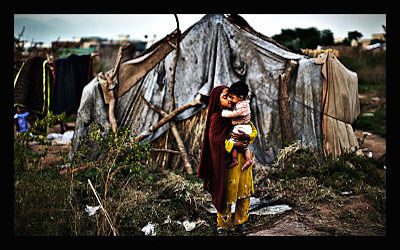
Lahore, a large region in Pakistan, is considered to be one of the most populated urban areas in the world and is one of the largest cities in the Islamic world. According to Index Mundi, as of January 2015, Lahore has an estimated 10 million people living in the region. The size of the region poses a bilateral problem; on the one hand, Lahore’s population and size contributes to its wealth and prosperity, while on the other hand, with a large city comes overpopulation and underdevelopment. Large cities such as Lahore often have another side to their urban development: the underdevelopment of parts of the region called the slums. Similar to the slums in various parts of India, Indonesia and Kenya, slums in Lahore are densely populated with areas lacking in basic necessities such as clean water, electricity, security and health care.

In Lahore, 30 percent of the region is considered to fall into the category of slums; however, the percentage does not take into account the amount of unregistered slum neighborhoods in the city. These slums are formed by low income communities that do not have the means to live in proper housing in the city, and they are a byproduct of over population, economic, political and social inequalities as well government intervention. Slums in Lahore are also a consequence of people moving from rural areas around Pakistan to the city in hopes of attaining a better life. The reality, however, reveals that many who move into the city have a difficult time securing employment, and eventually settle in the slum communities as a result. Health care, education, and basics such as sanitation and electricity, are extremely limited in the slums of Lahore and further contribute to low living conditions.

A solution that can bring poverty rates down in Lahore is to have more government involvement through political laws and reforms that pay special attention to these areas. More government interference and aid to counteract inequalities can be the beginning of reducing poverty in the slums of Lahore.

– Nada Sewidan

Sources: The World Bank, TribuneAcademia.edu
Photo: Pakistan Defence

June 6, 2015
https://borgenproject.org/wp-content/uploads/borgen-project-logo.svg 0 0 Borgen Project https://borgenproject.org/wp-content/uploads/borgen-project-logo.svg Borgen Project2015-06-06 12:00:572020-07-17 20:36:39Poverty in Lahore, Pakistan
Economy, Philanthropy

Alaffia’s Beauty Products Make Global Impact


A premium skin-care company called Alaffia empowers local people in Togo by handcrafting beauty products prepared from Certified Fair Trade shea butter. Better yet, all of the sales from Alaffia’s beauty products contribute to the livelihood of West African communities.

Alaffia offers creams, soaps, lotions and hair-care products made from the indigenous shea tree. Alaffia operates at a local level, employing women in need and enabling youth to stay in school to complete their educations.

This company is essential to West African women because they have difficulty obtaining employment since they are oftentimes not able to access education. Exclusion from the workforce leaves them vulnerable and often unable to support their families. Alaffia directly employs around 500 women in co-ops throughout Togo to cultivate shea by hand. These women are compensated with fair wages for their work and they bring unique knowledge and handcrafting skills to the job.

The company was founded by Togolese native Olowo-n’djo Tchala in 2004 after he realized the need to combat gender inequality and poverty. Alaffia was founded on Tchala’s belief that everyone deserves equality, empowerment and beauty.

Furthermore, Alaffia uses its profits to sponsor philanthropic projects in Togo. One such project is called “Bicycles for Education,” which provides disadvantaged students with bikes to get to and from school. So far, it has helped more than 6,300 students in Togo. Alaffia donates metal roofs, seats, and school supplies to rural schools through its “School Supplies and Repairs” project to create a functional learning environment for youth.

Alaffia has also provided over 3,200 pregnant women with pre- and post-natal care, and has funded the planting of 25,000 trees to combat climate change.

While philanthropy and environmental benefits certainly set Alaffia apart from other major beauty companies, Alaffia products are also made with unrefined ingredients and contain no synthetic fragrances or genetically modified organisms. They are vegan, gluten free and an ideal alternative line for those with sensitive skin.

These products help Africans profit from their natural resources and create sustainable goods that help our planet, empower local communities, and improve education for students.

Alaffia products can be purchased at natural and organic food stores such as Lassen’s and Whole Foods.

– Jenn Hartmann

Sources: Alaffia, Thurston Talk
Photo: Hello Beautiful

January 24, 2015
https://borgenproject.org/wp-content/uploads/borgen-project-logo.svg 0 0 Borgen Project https://borgenproject.org/wp-content/uploads/borgen-project-logo.svg Borgen Project2015-01-24 16:00:402024-05-27 09:23:13Alaffia’s Beauty Products Make Global Impact
Economy, Food Security, Nonprofit Organizations and NGOs, USAID

VEGA Brings Economic Growth Globally

VEGA
The Volunteers For Economic Growth Alliance, or VEGA, is a nonprofit that brings its members together to execute economic growth projects overseas.

Founded in 2004, VEGA was originally an initiative of the United States Agency for International Development. The organization was meant to be a procurement partner.

Today, VEGA represents itself as a respected NGO alliance of 23 member organizations. Each member brings its expertise to the Alliance to allow VEGA programs to grow in development and scale.

Based in Washington, D.C., VEGA can effectively manage its programs stationed in developing nations.

With a mission to mobilize expertise and resources to promote sustainable economic opportunities, VEGA’s programs aim to scale the services of local organizations, create jobs, increase commerce and trade and improve management.

Volunteers from the U.S. offer their expertise to programs that are committed to serving women, youth and others who are ready to be entrepreneurs in order to lift themselves out of poverty.

Currently, VEGA manages 36 programs in 28 countries.

These programs include: Farmer-to-Farmer, Capacity Building of Cambodia’s Local Organizations, Competitive Agriculture Systems for High Value Crops and Kazakhstan Business Connections.

Though programs only run in 28 countries, members have worked in over 140 countries, bringing their values and skills to local partnerships.

The expertise that VEGA members bring to the team range in areas from agriculture and food security, to tourism development and financial services. Also included are environment and energy, enterprise development and trade and investment.

VEGA believes that economic growth that emphasizes innovation, local partnerships and integrated solutions is the best way to promote prosperity.

With the power of volunteers rallying behind this mission, the strength in collaboration has allowed this NGO to make an impact in economic growth for the developing communities it serves.

– Chelsee Yee

Sources: VEGA Alliance, ACDI VOCA, Africa Agribusiness Magazine

Photo: USAID

December 11, 2014
https://borgenproject.org/wp-content/uploads/borgen-project-logo.svg 0 0 Borgen Project https://borgenproject.org/wp-content/uploads/borgen-project-logo.svg Borgen Project2014-12-11 04:00:092024-06-05 01:58:19VEGA Brings Economic Growth Globally
Economy

Japan’s Economy Failing

Economy Failing Japan
Japan is currently facing a dour economic situation comparable to  2011 when a tsunami struck Japan’s eastern coast. Following the tsunami, Japan’s economy started to shrink to 6.9 percent and is now down to its lowest rate since the environmental disaster.

Economists attribute Japan’s most recent third-quarter recession to lack of investment in housing in addition to a rise in taxes enacted as a part of a series of reforms. The value-added tax (VAT) has caused the world’s third-largest economy to shrink into recession.

The unpopular rise in taxes comes at an unfortunate time for current Prime Minister Shinzo Abe who is seeking reelection.

Another burdening issue for Japan is the vast economic debt it has garnered. The debt is due to the inequality between revenue and expenditures and Tokyo’s inability to address this serious problem.

As a major player in the world economic system, Japan’s recession is affecting U.S. markets as well. It could negatively impact the U.S. economy because Japan consumes a large number of U.S. goods as its fourth-largest trading partner. A surprising number of American-brand luxury retailers rely on Japanese consumers to buy their products.

On the bright side, however, the country is currently projected to increase the quantity of exports as demand is likely to rise. Japan is currently pursuing low interest rates offered by the central bank on long-term borrowing. This will allow Japan to rise slowly out of public debt while not incurring the backlash of high interest rates.

Prime Minister Abe outlined a three-step solution to resolve the economic crisis in 2012. First, the Bank of Japan increases inflation followed by increased government monetary spending including a hefty stimulus package. The last step of “Abenomics,” as the Prime Minister’s plan has been dubbed, is to completely restructure the system by implementing tax cuts and other long-term reforms.

Abenomics is essentially the coupling of short-term policies with long-term, structural reforms aimed at strengthening the overall economy. However, the projected benefits of “Abenomics” have yet to be seen and increased taxes have plunged the economy into recession.

Eventually, the system is meant to result in higher wages that will allow an increase in consumer spending over time.

– Maxine Gordon

Sources: Yahoo Finance, The Economist, Trading Economics, CFR, Reuters
Photo: Foreign Affairs

November 26, 2014
https://borgenproject.org/wp-content/uploads/borgen-project-logo.svg 0 0 Borgen Project https://borgenproject.org/wp-content/uploads/borgen-project-logo.svg Borgen Project2014-11-26 08:00:012024-05-27 09:23:02Japan’s Economy Failing
Economy, Global Poverty

Russia Looks to Weather Economic Sanctions

economic_sanctions
The Russian economy is suffering due to sanctions enacted by the United States and the European Union. Inflation has risen dramatically and with the ruble teetering back and forth, the safety of their currency is uncertain.

During the annexation of Crimea and Russian military movement in the Ukraine, the U.S. and E.U. increased trade restrictions on Russia and wealthy businessmen regarded as being close to Vladimir Putin. As the Russian economy shifts focus toward a stronger economic development and trade with the Asian countries, Russia’s reliance on the dollar decreases.

One of the ways in which Russia is attempting to achieve this is by trading in domestic currency rather than relying on the U.S. dollar. Russia’s dependence on Asia in general and China in particular hints at Putin’s larger goal for the Russian economy to be less involved in U.S. and Europe. Among of the most important deals Russia has made is  the Agreement on Cooperation which was signed by Vladimir Putin and Chinese president Xi Jinping. The $25 billion deal will allow Russia and China to trade in domestic currencies rather than the dollar.

Another significant deal is the $400 billion trade deal that will increase oil exports from Russia to China. It includes a proposal for a new pipeline that will send oil directly from Western Siberia to China. Underlying Putin’s unease with the U.S. is the desire to begin limiting U.S. economic hegemony. However, the dollar is so prevalent in the foreign economy it seems unlikely that a dramatic shift will occur in the near future. Russia’s largest market is currently the E.U. and sanctions have reduced the amount Russia is able to export.

Economic sanctions enforced by President Barack Obama seek to undercut Russian oil exports which make up half of Russia’s economic revenue. Putin announced recently at a G-20 Summit that the West needs to lift sanctions. He states, “This is harmful, and of course is doing us some damage, but it’s harmful for them as well because, in essence, it’s undermining the entire system of international economic relations.”

If Russia is less dependent on the U.S. market, sanctions will mean little to Putin and the Russian economy. Eventually there will be little to deter him from further military involvement in the Ukraine or elsewhere. It will be more difficult for the U.S. to influence Putin’s perceived aggression.

Russia is not the only country who wants to decrease dependence on the U.S. market. Other BRICS (Brazil, Russia, India, China and South Africa) countries are looking to do the same. For the meantime, Russia may be forced to cope with the low price of oil. American economists predict that the prices should level out at about $83 a barrel and stay there for a while to come.

– Maxine Gordon

Sources: International Business Times, Reuters, New York Times, The Guardian
Photo: Newsweek

November 19, 2014
https://borgenproject.org/wp-content/uploads/borgen-project-logo.svg 0 0 Borgen Project https://borgenproject.org/wp-content/uploads/borgen-project-logo.svg Borgen Project2014-11-19 08:00:552024-06-05 01:58:18Russia Looks to Weather Economic Sanctions
Economy

The Fluctuating Latin American Economy

The Latin American economy has experienced a period of great fluctuation since 2010. Whenever there is good news, there seems to be an equal and opposite force of bad news applied. Constant fluctuation has curbed poverty and opened the door to the middle class, only to have that door slam close. There are several key points to consider as to why this is.

In the past decade, nearly 50 percent of those in poverty have risen above the poverty ranking. But many are still struggling to enter the middle class. Around 200 million, or over two-thirds of the population, are at a high risk of falling back into poverty.

To fully understand this, it is necessary to know how economic divisions are classed in Latin America. Twenty-five percent of Latin Americans are earning less than $4 USD per day and this is considered living in poverty.  Some 34 percent  earn between $10 and $50 USD per day and these individuals are judged to be middle class. When someone earns between $4 and $10 USD, they are part of the vulnerable class. This final group accounts for 38 percent of the population.

The UNDP disclosed this information in the 2014 Human Development Report; a report that uses data as recent as August 24 of the same year.

But not all news is bad.

The middle class of the combined Latin America and Caribbean grew from 21 percent to 34 percent equaling 81 million individuals in the time period form 2000-2012. The vulnerable population grew from 35 percent to 38 percent. The UNDP recognized poverty dropping from 42 percent to 25 percent over that same time period as a significant regional achievement.

Now, Jessica Faieta, the UNDP Director for Latin America and the Caribbean, says the good news might be running out unless a change is made.

“It is very clear that using the same policies will not provide the same results,” said Faieta. “More than ever, the region must invest in universal social protection, particularly in the most critical phases of life, as is the case with children, the elderly and youth entering the labor market.”

Other analysts agree with her conclusion. The region lacks critical social protection, a defense that has been pinpointed as crucial to long-term economic growth. Nearly 50 percent of the country lacks access to medical services, a retirement pension or a labor contract. If this is not amended, the region cannot be expected to grow at the same rate indefinitely.

– Andrew Rywak

Sources: UNDP, The Economist, BBC

September 22, 2014
https://borgenproject.org/wp-content/uploads/borgen-project-logo.svg 0 0 Borgen Project https://borgenproject.org/wp-content/uploads/borgen-project-logo.svg Borgen Project2014-09-22 08:54:362024-05-27 09:21:48The Fluctuating Latin American Economy
Activism, Development, Economy, Global Poverty, Nonprofit Organizations and NGOs, Poverty Reduction, Volunteer

Bankers Without Borders

Bankers without Borders started with 100 volunteers but, in the past five years, has grown to include 16,000 business professionals, academics and students coming from over 170 countries, working to increase the impact and sustainability of poverty reduction projects. So far, BwB has used its consulting and coaching to help more than 1,000 projects in 38 countries.

BwB was founded in 2008 by the Grameen Foundation, the original banking organization working through microfinance. Its motive for creating BwB was to expand its services to gain coverage in areas not originally reached by Grameen Bank.

The company reaches out by partnering with other organizations, including nonprofits, Fortune 500 companies or poverty-focused social enterprises. The experts work for free, and the Grameen Foundation likes to refer to them as “Skillanthropists;” rather than donating money, the workers are donating their skills, time and knowledge.

The volunteers’ involvement ranges from sparing a few hours a week at the comfort of their desks at work or home, to living and working in the field for weeks or months at a time. The wide range of skills and commitment BwB requires makes it possible for many people of different skill sets to make an impact through the company.

BwB’s volunteers are involved in a wide variety of fields. These include financial consultants, legal professionals, translators, researchers, a marketing staff and even a Human Resource Reserve Corps to address human capital related issues for nonprofit partners abroad.

From an economic standpoint, BwB continues to prove useful. For every dollar spent creating a BwB project, an average of $10 in skill and time has been donated by its pro bono staff, adding up to over $10 million worth of skilled work.

The volunteers work not to create temporary relief for recipients, but rather to implement a sustainable solution for clients to have successful, profit-making businesses.

BwB has formed many useful partnerships over its five years of operation, notably with J.P. Morgan, Mastercard, Google, Bloomberg, John Hopkins University and the Washington Center. As of August 5, BwB has added Wells Fargo to its arsenal of partnership companies, as well.

From the quickly-expanding volunteer base to the quantitative economic data to the qualitative success stories shared on BwB’s website, it is clear that the Grameen Foundation’s extended project has proven successful.

– Courtney Prentice

Sources: Triple Pundit, Bankers Without Borders, Grameen Foundation, Grameen-Jameel
Photo: HW Production

August 25, 2014
https://borgenproject.org/wp-content/uploads/borgen-project-logo.svg 0 0 Borgen Project https://borgenproject.org/wp-content/uploads/borgen-project-logo.svg Borgen Project2014-08-25 16:33:272024-05-27 09:21:20Bankers Without Borders
Economy, Global Poverty

Rural Poverty and Urban Poverty

Poverty is not made up of a cut-and-dry set of circumstances. Rural poverty and urban poverty differ on many levels, with distinctive, environment-based issues that characterize quality of life.

There are similarities, of course, that span both rural and urban poverty. The International Monetary Fund (IMF) states that poverty usually entails deprivation, vulnerability and powerlessness. However, these issues are sometimes inflicted on certain individuals or groups more than others. For example, women and children are more likely to experience poverty more intensely than men and minorities tend to suffer more greatly than other groups.

The IMF reports that 63 percent of the world’s impoverished live in rural areas. Education, health care and sanitation are all lacking in rural environments. This causes many of the rural poor to move to cities, which often leads to a rise in urban poverty.


Compare and Contrast: Rural Poverty and Urban Poverty


The rural poor are divided into further subsets based on profession: typically, cultivators who own land and noncultivators who do not. Cultivators are slightly better off, as they are able to make some money operating farms and charging tenants for using their land. Noncultivators, however, are extremely poor, working as seasonal laborers on farms. Their pay is both low and erratic, as it is based on the schedules of farm owners and the other few employers available. The rural poor often suffer more than the urban poor because public services and charities are not available to them.

Several factors tend to perpetuate rural poverty. For example, political instability and corruption, customs of discrimination, unregulated landlord/tenant arrangements and outdated economic policies often make it impossible for the rural poor to rise above poverty lines.

While generally considered less severe, urban poverty provides the poor with a host of separate issues. The World Bank found that urban populations in developing countries are growing rapidly, at a rate of 70 million new city-dwellers per year. Former residents of rural areas are typically drawn to the city for the perceived wealth of economic opportunities, but often, those dreams fall short.

Compared to rural villages, there are indeed more job opportunities in urban areas. However, many migrants lack the skillset to take on many jobs, and positions for unskilled laborers fill up quickly. This shortage of jobs leaves new residents without a steady income, which creates a series of new problems in the city.

Without an income, the urban poor often find themselves in inadequate housing with poor safety and sanitation. Additionally, health and education packages are limited. Crime and violence are also much more rampant in urban settings than in rural ones, threatening the authority of law enforcement and the peace of mind of city dwellers.

Health is quite variable throughout rural and urban settings. While the rural poor lack access to urban health care programs, they sometimes benefit from the distance between the country and the city. In the close quarters that characterize city living, it is easy for disease to spread.

Additionally, communal resources in cities can actually lead to health problems. According to The Guardian, families usually have their own personal latrine, so if a health problem starts among the family, the latrine can be closed off and the health risk minimized. However, in cities where many people on a daily basis use public restrooms, disease can spread rapidly and tracking down the source can be nearly impossible.

Though rural poverty is currently higher than urban poverty, research shows that soon, urban areas will become home to the majority of impoverished people. The perception of greater opportunity leads the rural poor away from the countryside and into the cities, where they often end up in even further poverty. An overhaul of urban development programs is necessary to combat the issues with sanitation, safety and hunger that propagate urban poverty.

– Bridget Tobin

Sources: World Bank, The Guardian, International Monetary Fund
Photo: Brommel

August 18, 2014
https://borgenproject.org/wp-content/uploads/borgen-project-logo.svg 0 0 Borgen Project https://borgenproject.org/wp-content/uploads/borgen-project-logo.svg Borgen Project2014-08-18 16:00:212024-06-05 01:57:59Rural Poverty and Urban Poverty
Development, Economy, Global Poverty, Migration

Migrant Workers in Shanghai

Standing on a bustling street in Shanghai, it is hard to ignore the feeling of constant movement and intensity. The mantra seems to be: keep moving and keep progressing. And at both the individual and state level there is an insatiable desire to be the best.

But at what price? The pace of development in China is incredibly impressive and yet, despite the new and efficient subways, trains, and buildings, a contrast of wealth still exists.

As a whole, China has been on the forefront of poverty reduction in the last couple of decades, raising nearly 300 million people out of poverty. However, it is not hard to find the instances of impoverishment that still exist even in some of the most developed cities, like Shanghai.

The population of Shanghai in 2013 was 23.9 million, making it the largest and most populous city proper in the entire world.  Furthermore, it has experienced double digit growth nearly every year since 1992, falling below double digits only temporarily during the 2008-2009 recession.

According to the 2010 census, more than 39 percent of Shanghai’s residents are migrant workers who have flocked to the city from the nearby provinces of Anhui, Jiangsu, Sichuan, and Henan seeking better economic opportunities. These migrant workers in Shanghai, who have made up the largest percentage of the city’s growth in the past few years, often live in the poorest conditions.

As development has increased in China, upwards of 250 million people have left the countryside for the east coast in the hopes of finding more lucrative work. Migrant laborers often work in labor, construction, factories as well as the service sector. Their wages tend to be lower than those of Shanghai residents and their living conditions incredibly poor. Just down the street from the newest high apartments and office buildings, it is not unusual to see old neighborhoods crowded with huts full of migrant laborers.

It’s important to note that poverty for migrant laborers is relative. In China, poverty and inequality differ dramatically in different parts of the country. Many laborers, who migrate to Shanghai for work, come from even poorer rural villages. While their wages are low, the income is often still better than what could be made back home.

Despite this, without a Shanghai hukou, a registration card that is used to classify where individuals are from, migrants are unable to live in subsidized housing, access basic health care and unemployment benefits, or enroll their children in local schools.

Marginalized and discriminated against, the poorest of Shanghai struggle to find social acceptance as well as economic security in their new lives. Yet, these migrant workers are the drivers of China’s tremendous economic growth. If this growth continues, the people of Shanghai will have to find a way to better accommodate their ever-evolving workforce. One of the biggest obstacles Shanghai faces is housing. Real estate prices are extremely high, leaving many people with low wages unable to purchase or rent homes.

Addressing this issue, as well as reforming the hukou system to allow for migrant workers to access health, education and other public services, will help further reduce the poverty and inequality that persists in Shanghai and China as a whole. It is easy to let the gleaming towers and trendy streets distract from the reality that most of Shanghai’s current population is still very much struggling to move beyond impoverishment.

– Andrea Blinkhorn

Sources: Poverties, China Perspectives, World Population Review, Nyuzai Shanghai, WSWS
Photo: The Globe and Mail

August 18, 2014
https://borgenproject.org/wp-content/uploads/borgen-project-logo.svg 0 0 Borgen Project https://borgenproject.org/wp-content/uploads/borgen-project-logo.svg Borgen Project2014-08-18 12:24:302024-05-27 09:21:18Migrant Workers in Shanghai
Developing Countries, Economy, Education, Global Poverty, Health, Inequality

Economic Growth: Will a Rising Tide Lift All Boats?

Developing countries around the world face the tremendous challenge of promoting sustainable growth while also reducing poverty and increasing the living standards of their populations.

Around the world, conventional wisdom holds that by focusing development policy on economic growth, inequality will be reduced and incomes of every segment of society will increase–a rising tide lifts all boats.

While poverty has been reduced dramatically all around the world (700 million fewer people live in conditions of extreme poverty in 2010 than in 1990), big challenges still exist to further reducing this number. One of these challenges is rising inequality within and between nations.

Listed below are three reasons why income inequality must be addressed in both the developed and developing world in order to ensure long-term economic growth benefits for everyone and not just a select few.

1. Economic growth is not always equal

China, one of the countries where poverty reduction has been dramatic, is astoundingly tolerant of large gaps in inequality in exchange for growth. Deng Xiaoping, a top Communist Party leader from 1978 to 1992 who initiated economic reforms, is thought to have acknowledged, “It is good for some people to get rich first.”

While this may be true in some cases or at the beginning of market reforms, recent studies undertaken in Indonesia, South Africa, India and China reveal an increase in the gap between the rich and poor. This gap in income inequality can not only prevent further reduction in poverty, but it also has long term implications in the ability of large parts of the population of each country to be able to contribute to the country’s economy and growth.

2. Education, health, and job creation policies must be pursued simultaneously with growth policies

In order for a country’s population to contribute to and participate in the country’s economy, individuals must have the skills. Pursuing policies only focused on increasing GDP may improve growth outlook in the short run. However, in the long run, without education initiatives to match, a large segment of the population will remain poor.

In the 1990s, Brazil pursued a pro-equity growth policy in which it provided grants to help boost education. Average years of school for the poor shot up and when growth hit; they too were able to take advantage of the better jobs.

Just as an overall boost in education and health is important, so is robust job creation. People must have the opportunity to input the skills they have learned back into the economy.

For this reason, inequality cannot be solved without government involvement. The market left as is does not ensure that growth is shared equally. A combination of strong government programs and a strong private sector ensures better opportunities for more people.

3. Positive GDP growth can hide underlying inequality

The main measure of inequality within a given country is through the gini coefficient. The gini coefficient is a variable that measures how equal a country’s income is with zero representing an instance where everyone’s income is exactly equal, and one representing an instance in which one person has all of the income and the rest have none.

In South Africa, while the government is vocally committed to fighting poverty and inequality, between 2003 and 2008 overall income inequality increased. During this period, South Africa’s gini coefficient rose from an already high .66 to .70 – one of the highest in the world. So despite an average GDP growth rate of 3.2 percent (1994-2012), steps still need to be taken to ensure that the bottom segment of society is able to contribute and benefit from that growth.

Today, nearly 80 percent of humanity lives on less than $10 per day and over 3 billion live on less than $2.50. High levels of inequality exacerbate problems of poverty and reduce opportunities for the poor to move beyond their circumstances. Fewer opportunities for children to rise up economically means that inequality becomes more exaggerated over time and can affect the social structure of a country – leading to unrest, crime and violence.

Developed and developing countries alike all face the challenge of reducing their gini coefficient while also promoting growth. While each country faces unique challenges, this is one problem that can benefit from collaboration at the international level. From the information above, it becomes clear that poverty cannot be fully eliminated without measures in place that simultaneously address income inequality.

– Andrea Blinkhorn

Sources: Science Mag, Global Issues, Global Issues 2, Politics of Poverty, United Nations, South Africa, Hvistendahl, M. (2014). While emerging economies boom, equality goes bust. Science,344(6186), 832-835.
Photo: PBS

August 18, 2014
https://borgenproject.org/wp-content/uploads/borgen-project-logo.svg 0 0 Borgen Project https://borgenproject.org/wp-content/uploads/borgen-project-logo.svg Borgen Project2014-08-18 09:15:122024-06-05 01:58:00Economic Growth: Will a Rising Tide Lift All Boats?
Page 56 of 66«‹5455565758›»

Get Smarter

  • Global Poverty 101
  • Global Poverty… The Good News
  • Global Poverty & U.S. Jobs
  • Global Poverty and National Security
  • Innovative Solutions to Poverty
  • Global Poverty & Aid FAQ’s
Search Search

Take Action

  • Call Congress
  • Email Congress
  • Donate
  • 30 Ways to Help
  • Volunteer Ops
  • Internships
  • Courses & Certificates
  • The Podcast
Borgen Project

“The Borgen Project is an incredible nonprofit organization that is addressing poverty and hunger and working towards ending them.”

-The Huffington Post

Inside The Borgen Project

  • Contact
  • About
  • Financials
  • President
  • Board of Directors
  • Board of Advisors

International Links

  • UK Email Parliament
  • UK Donate
  • Canada Email Parliament

Get Smarter

  • Global Poverty 101
  • Global Poverty… The Good News
  • Global Poverty & U.S. Jobs
  • Global Poverty and National Security
  • Innovative Solutions to Poverty
  • Global Poverty & Aid FAQ’s

Ways to Help

  • Call Congress
  • Email Congress
  • Donate
  • 30 Ways to Help
  • Volunteer Ops
  • Internships
  • Courses & Certificates
  • The Podcast
Scroll to top Scroll to top Scroll to top