• Link to X
  • Link to Facebook
  • Link to Instagram
  • Link to TikTok
  • Link to Youtube
  • About
    • About Us
      • President
      • Board of Directors
      • Board of Advisors
      • Financials
      • Our Methodology
      • Success Tracker
      • Contact
  • Act Now
    • 30 Ways to Help
      • Email Congress
      • Call Congress
      • Volunteer
      • Courses & Certificates
      • Be a Donor
    • Internships
      • In-Office Internships
      • Remote Internships
    • Legislation
      • Politics 101
  • The Blog
  • The Podcast
  • Magazine
  • Donate
  • Click to open the search input field Click to open the search input field Search
  • Menu Menu

Archive for category: Economy

Information and stories about economy.

Economy, Global Poverty

New Ghanian Research and Training Center Aids African Supply Chains

African supply chains
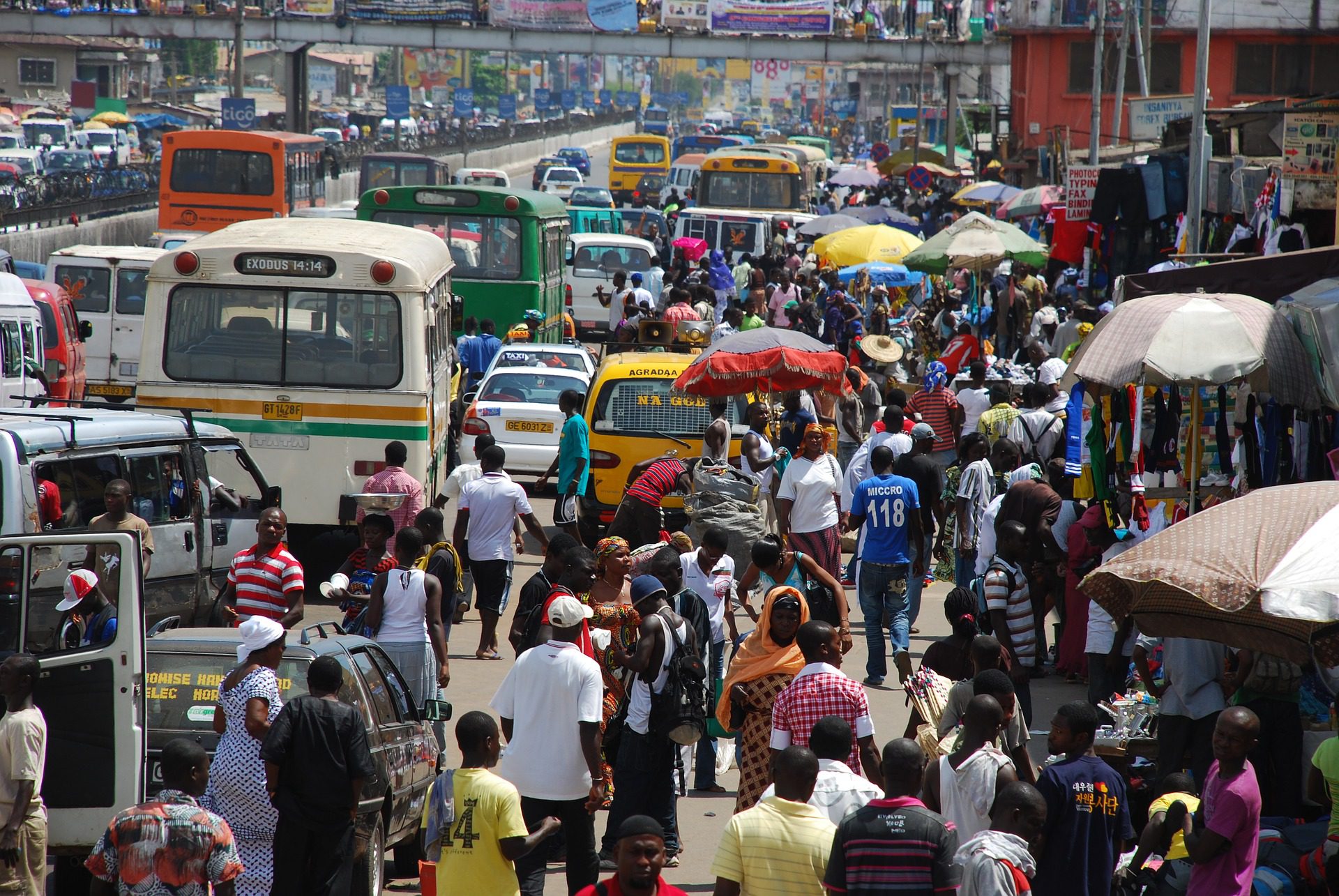
USAID recently announced its plans to invest $15 million in the development of a state-of-the-art research and training facility in Ghana that aims to improve African supply chains. Supply chains constitute the path that goods take as they go from a mere idea to a concrete purchase. Goods move through supply chains from companies to manufacturers and finally to buyers. Supply chains often operate on a global scale as communication and technology have progressed. Struggles to join capital-building and international supply chains prevent many African economies from experiencing serious growth.

According to Arizona State University research, healthy, efficient supply chains are essential for economic development. Furthermore, healthy supply chains are crucial to providing widespread access to necessary goods such as medicine and sanitary products. To grow African economies and expand access to resources, USAID is sponsoring a groundbreaking research and training facility in Ghana. It will be named the Center for Applied Research in Supply Chain-Africa. This facility aims to strengthen supply chains across the African continent.

A Research and Training Facility Rooted in Innovation and Education

The Kwame Nkrumah University of Science and University Technology in Ghana and Arizona State University, who have successfully partnered on projects in the past, will spearhead the Center for Applied Research in Supply Chain-Africa, also called CARISCA. Accordingly, the research and training center will function as a facility to “connect African researchers, practitioners, and businesses to supply chain assets around the world.” Additionally, the partnership between Kwame Nkrumah University and Arizona State University is a facet of USAID’s BRIDGE-Train program that seeks to connect American and African institutions in order to strengthen international relationships in education. Thus, the training center will not only connect business professionals but students and educators as well.

The Center for Applied Research in Supply Chain-Africa intends to boost economic autonomy in African countries. As a result, it focusses on providing marginalized populations with the opportunity to join expanding supply chains. USAID has committed itself to investments that will stimulate long-term growth. These will consequently reduce global poverty and decrease the need for international aid.

An African Free Trade Agreement

With the establishment of the African Continental Free Trade Area in 2019, the research and training facility in Ghana will likely prosper. The agreement will permit free trade between 28 African countries. Moreover, it will remove barriers that previously hindered movement through African supply chains. In 2016, only 18% of exports were intra-regional, meaning that relatively little trade is taking place between African countries. Researchers believe that by increasing intra-regional trade, many African economies could grow in order to make the whole continent a more dynamic force in international markets.

The development of the Center for Applied Research in Supply Chain-Africa in Ghana is a major investment in African economic growth. It will hopefully provide opportunities for innovation in African businesses.

– Courtney Bergsieker
Photo: Pixabay

September 28, 2020
https://borgenproject.org/wp-content/uploads/borgen-project-logo.svg 0 0 Kim Thelwell https://borgenproject.org/wp-content/uploads/borgen-project-logo.svg Kim Thelwell2020-09-28 10:00:302024-05-29 23:23:39New Ghanian Research and Training Center Aids African Supply Chains
Economy, Global Poverty

The Economy of the Kurdistan Region

The Economy of the Kurdistan Region
The Kurds, one of the indigenous peoples of the Mesopotamian plains, are an ethnically and religiously distinct nation in the Middle East without their own formal, independent state. In the early 20th century, the Kurds wished to have their own homeland – Kurdistan – and received provision for one in the 1920 Treaty of Sevres after World War One. However, three years later, the Treaty of Lausanne, which set modern Turkey’s territorial boundaries, failed to fulfill the promise of the land for the Kurdish state. In the decades following, subsequent efforts for the formation of an independent Kurdish state failed. Today, there are between 25 million and 35 million Kurds residing in portions of Turkey, Syria, Iraq, Iran and Armenia.

The Kurds receive the least pressure to assimilate in Iraq and have had a formally-recognized autonomous Kurdistan Region in the northern part of the country since 1992. About 5.1 million Kurds reside there and the 2005 Iraqi constitution states that its government, the Kurdistan Regional Government, has the right to exercise legislative, executive and judicial powers. Since 1992, Kurdistan’s relative autonomy has rendered it necessary to also have an autonomous economy. Here is some information about the economy in the Kurdistan Region.

The Economy in the Kurdistan Region

After Saddam Hussein’s removal from Iraq, some lifted their sanctions. In fact, the UN lifted some of its sanctions on Iraq and Iraqi sanctions on the Kurdistan Region. This allowed the Region to begin to take advantage of natural resources, namely oil. Furthermore, one of these sanctions included ending the Oil-For-Food Programme, an Iraqi-UN humanitarian program that was corrupt and hindered the development of the agricultural sector by lowering the need for domestic growth of food.

The Kurdistan Region’s main industries are oil, agriculture and tourism. Kurdistan has about one-third of Iraq’s total oil reserves. Historically, conflicts and sanctions have hindered the development of agriculture in the Region, but about 13% of the region’s land is arable and agriculture is the second-largest industry following oil. Kurdistan’s tourism industry has also grown since its autonomy from Iraq, and advertisements display it as a safe, peaceful and beautiful travel destination.

The Rise of the Islamic State (IS)

The rise of the Islamic State (IS) in Iraq hurt the development of Kurdistan’s economy. Kurdish military forces went to fight against the Islamic State’s advancement into the Kurdistan Region in 2014 and received support from the U.S. However, international oil companies and other key investors in the economy in the Kurdistan Region left the area despite the military forces’ success in fighting IS. As a result, international confidence in Kurdistan’s businesses has since decreased.

Although Kurdistan’s economy has more diversity and is more developed than the rest of Iraq’s, it is highly susceptible to international markets and fluctuations. After a dramatic decrease in oil prices in 2014, Kurdistan’s oil industry suffered another recession and has yet to fully recover, especially with the most-recent decrease in oil prices due to coronavirus.

However, despite hardships, the Kurdistan Region historically has the lowest poverty rates in Iraq. In 2013, in comparison with the southern province of Muthanna’s poverty rate at 49%, the northern Kurdish province of Sulaiminiyah had a poverty rate of just 3%. Past indications of Kurdistan’s economic development and autonomy paints a positive picture for the future, but the area will need to meet conditions such as stable governance and international support if the poverty rate is to remain low in the Region.

– Isabel Serrano
Photo: Flickr

September 25, 2020
https://borgenproject.org/wp-content/uploads/borgen-project-logo.svg 0 0 Kim Thelwell https://borgenproject.org/wp-content/uploads/borgen-project-logo.svg Kim Thelwell2020-09-25 12:54:402020-12-04 12:54:53The Economy of the Kurdistan Region
Development, Economy, Global Poverty, Health

Tourism and COVID-19: The Pandemic’s Impact on 3 Tourist Countries

tourism and COVID-19COVID-19 has caused major disruptions for travel on a global scale. The tourism industry has already experienced a loss of over $300 billion in the first five months of 2020, and that number is projected to increase to as much as $1.2 trillion due to the pandemic. Additionally, 100 to 120 million jobs associated with tourism are at risk. Tourism and COVID-19 have struggled to co-exist amidst the turmoil of 2020, especially in three major tourist countries. However, organizations are working to protect the future of the travel industry.

Global Tourism and COVID-19

Tourism is considered the third-largest export sector. It is an essential component of the global economy, comprising 10.4% of total economic activity in 2018. Some countries rely on tourism for 20% or more of their total GDP. Many countries rely on capital from tourists, ranging from small, low-income island countries to larger, high-income countries. However, according to a U.N. policy brief, there will be an estimated 58-78% decrease in tourists in 2020 compared to 2019. Three countries that have been especially affected by COVID-19 and tourism are Spain, Thailand and Mexico.

  1. Spain: Spain experienced the second-largest overall economic loss in tourism due to the pandemic, behind the United States. The country lost $9.7 million in revenue due to travel restrictions and decreased tourism. Because Spain is a high-income country and has various other contributors to its economy, it is expected to recover with greater resilience than similarly impacted, lower-income countries.
  2. Mexico: In 2018, Mexico gained a total of 7.15% of its GDP from tourism. However, Mexico’s income from tourism in April 2020 was a mere 6.3%. Additionally, the tourism sector accounts for approximately 11 million jobs in Mexico alone, many of which are now at risk.
  3. Thailand: Thailand has lost nearly $7.8 million due to travel restrictions since the start of the pandemic. The country has taken these limitations seriously in order to prevent the spread of COVID-19. However, this action has come at the cost of earning a ranking as one of the countries hit hardest by economic losses associated with tourism. The tourism sector is responsible for about 10% of the country’s total GDP.

Government Response to Tourism and COVID-19

Although COVID-19 has introduced an unprecedented economic strain on a global scale, governments are working to help countries recover. Spain released an aid package allocating €400 million to the transport and tourism sectors, €14 million to boost the local economy and €3.8 million for public health. Mexico’s government is distributing 2 million small loans of 25 thousand pesos (about $1000) to small businesses. Lastly, Thailand has approved three tourism packages to assist the local economy and small businesses.

NGO Policy Response to Tourism and COVID-19

With government and NGO action, experts predict that the travel sector will return to 2019 economic levels by around 2023. Many organizations are stepping in with policy solutions, providing hope for the industry’s revival. The U.N. World Tourism Organization released the COVID-19 Tourism Recovery Technical Assistance Package, highlighting three main policy areas: “Managing the crisis and mitigating the impact,” “providing stimulus and accelerating recovery” and “preparing for tomorrow.” Similarly, the International Labour Organization released a policy framework with four main pillars to protect workers, stimulate the economy, introduce employment retention strategies and encourage solutions-based social dialogue.

The Organization for Economic Cooperation and Development provides “Travel in the New Normal,” a series of six policy areas. These include helping businesses to implement “touchless” solutions, sanitation supplies, health screenings and other protective measures to prevent COVID-19. The OECD states that domestic travel will be vital for the recovery of tourist nations, contributing to 75% of the tourism economy in OECD member countries.

These efforts, along with other policy strategies, are vital to the recovery of the tourism industry. They will be particularly important for small- and medium-sized enterprises, industry-employed women and the working class as a whole. These policies will also further U.N. Sustainable Development Goals like No Poverty, Reduced Inequality, Partnership, Sustainable Cities & Communities and Decent Work & Economic Growth.

The tourism sector has suffered major losses in response to COVID-19, with a significant amount of revenue and jobs lost or at severe risk. Countries of all regions and income levels have been affected by the pandemic, including Spain, Mexico and Thailand. However, these setbacks provide unique opportunities to both transform the tourism industry and promote the Sustainable Development Goals.

– Sydney Bazilian
Photo: Flickr

September 25, 2020
https://borgenproject.org/wp-content/uploads/borgen-project-logo.svg 0 0 Kim Thelwell https://borgenproject.org/wp-content/uploads/borgen-project-logo.svg Kim Thelwell2020-09-25 10:03:452024-05-30 07:52:39Tourism and COVID-19: The Pandemic’s Impact on 3 Tourist Countries
Economy, Education, Global Poverty

Newfound Innovations in China Reduce Poverty

China Technological Innovations
As a highly populated country, China is home to many different demographics, when it comes to income distribution. Poverty in China frequents the rural areas, where development is slower when compared with metropolitan cities. Despite the country’s massive population, more than 82 million citizens are no longer impoverished. In that same vein, the poverty rate of China decreased from around 10% to just less than 2%. As a result of some technological innovations in China, the country has seen improvements in poverty rates.

Generating Synergy

An initiative done by China to reduce poverty is through increasing synergies within China’s markets. By connecting public and private businesses — small and hard-earning jobs like farming can gain more income. Not only does creating partnerships with different companies increase the flow of money — but it is also helping more jobs become available for struggling citizens. Moreover, it boosts the overall productivity of each organization involved. In 2019, the cooperation between China and the E.U. made over 3 trillion yuan (nearly $450 billion), an increase of nearly 10% from the previous year. Creating synergy has benefited China’s economy with new jobs and income sources — especially for low-earning workers.

Farmer Field Schools

Farmers in rural China are among the most vulnerable in the country, as they are the most impoverished. Farmer Field School is a 2019 initiative that provides educational and informative training for small farmers. These forms of training include teaching social skills and business management. Those immersed in this training reached a new profit of more than 15,000 yuan (more than $2,000). This figure represents an increase of around 105% compared with those who did not participate in the training. Farmer Field Schools have reinforced China’s rural farmers’ decision-making skills when it comes to agriculture. Furthermore, they have helped reduce the level of poverty seen among rural farmers by increasing their earnings with newfound knowledge.

BN Vocational School

BN Vocational School (BNVS) is an education program that is free of charge for the underprivileged youth. This organization focuses on generational poverty and how to help end it. As a vocational school, BNVS sets students up for success by equipping them with the skills they will need in their future career paths. Nearly 7,000 disadvantaged children have received education from BNVS via the 11 schools operated. BNVS helps its students escape poverty by nurturing their education to help them secure jobs in the future.

INOHERB Cosmetics

INOHERB Cosmetics is a Chinese company that specializes in herbal medicine: in particular, the Rhodiola plant. As a country that loves herbal medicine, Rhodiola became a product of high-demand — giving farmers an increased new workload. INOHERB proposed a policy that would pay farmers additional wages if they successfully grew the plant. With more than 8,000 seedlings planted and a successful survival rate of more than 80%, farmers were granted an additional 30,000 RMB (around $4,500) on top of their original income. INOHERB Cosmetic’s unique approach towards alleviating poverty has benefited more than 1,200 farmers and continues to mobilize and support impoverished workers.

Innovations in China Paving the Way Forward

With proven results, China’s efforts towards poverty relief has provided impoverished people with a second chance of increasing their incomes. Innovations in China have taken on distinct forms, such as educational initiatives and creating public and private business synergies. These innovational initiatives have certainly benefited the country and with a little more help and support from continued initiatives — more rural citizens can continue to do better.

– Karina Wong
Photo: Flickr

September 18, 2020
https://borgenproject.org/wp-content/uploads/borgen-project-logo.svg 0 0 Kim Thelwell https://borgenproject.org/wp-content/uploads/borgen-project-logo.svg Kim Thelwell2020-09-18 12:11:162020-09-18 13:51:50Newfound Innovations in China Reduce Poverty
Economy, Global Poverty

5 Facts About China During COVID-19

China during COVID-19Amid a global pandemic, every nation is doing what it determines best to eradicate the COVID-19 virus. As of June 18, China reported 28 active cases and 0 fatalities. China even brings in people that have been exposed or too close contact. It released 153 people from exposure observation. While nations have methods that differ from one another, China is minimizing the number of cases substantially. These are five facts about China during COVID-19.

5 Facts China During COVID-19: Early Months

  1. China shut down its major operations by late December. The government worked to contain the spread of the virus by closing public transportation and non-essential businesses. Officials took to disinfecting the streets and testing at every facility. However, by February, the hospitals still became overloaded with COVID-19 virus patients.
  2. Hospitals organized a counseling hotline for citizens to call and locate beds in hospitals that were available. The volunteers that run the hotline then record the information and keep active track of open beds in local hospitals to ensure no bed was going unused. The quicker they can locate open beds, the sooner hospitals can care for patients. The hotline also offered counseling services.
  3. As of June 17, there was a full sweep testing spree to determine any straggling cases. There were 91 confirmed imported cases, all non-severe. On top of this, there were 265 confirmed cases among 31 different provinces. Nine of those cases were severe. Hospitals were able to discharge 78,394, considering them cured. The governments had traced and contacted 754,966 people who had been in close contact with someone with COVID-19. Because of China’s vigilant virus tracing, each region is caring for its sick as needed and 5,220 of those traced are under observation.
  4. In Beijing, in May, for the first time since December students are back to in-person learning with the guidelines in place to accommodate social distancing and facial protection masks. Schools are placing the students’ desks three feet apart. Both instructors and students are wearing masks.
  5. Tourist sites are reopening, but they are limiting attendance. Shanghai Disneyland opened in May. After being on lockdown since December, Hubei has contained the virus after five months. The province has gone one month with no new cases. Every case has been reported and everyone has been tested and under observation. Any Chinese national traveling outside of China must go into isolated quarantine for 14 days after arriving home. This gives them the ability to travel safely without being restricted to lockdown any further.

Success So Far

China has taken exceptional measures to eradicate the COVID-19 virus and prevent any further spread. So far, it has been able to slowly reopen during COVID-19 and still keeping the case numbers to a dwindling minimum. China is determining how to maintain social activities while keeping citizens safe. These five facts about China during COVID-19 show that good safety practices and diligence may be key to reopening during the virus. Hopefully, this practice will continue to keep the numbers of patients down. Clearly, citizens and officials alike are taking these measures and precautions seriously.

– Kim Elsey

Photo: Gauthier DELECROIX

September 14, 2020
https://borgenproject.org/wp-content/uploads/borgen-project-logo.svg 0 0 Kim Thelwell https://borgenproject.org/wp-content/uploads/borgen-project-logo.svg Kim Thelwell2020-09-14 11:53:412021-04-29 07:55:215 Facts About China During COVID-19
Economy, Global Poverty

Barter for Better Fiji: Community Response to COVID-19

barter for better fiji
On the beautiful island of Fiji, a staggering 40% of the country’s GDP comes from the tourism industry. Therefore, when COVID-19 hit the island (and the rest of the world), many people found themselves out of a job. However, the local population found a solution. In the middle of a pandemic, Marlene Dutta set up a Facebook page called Barter for Better Fiji to allow for Fijians to procure essential items without causing undue financial stress.

While bartering has always been a part of Fiji’s economy, this Facebook page is notable for its scope. The page has already amassed over 180,000 members as of August 2020. Considering the island has a total population of 900,000 people, that means this 180,000 figure represents 20% of the country’s entire population engaged in this bartering process.

Poverty in Fiji

Bartering is becoming more prevalent in Fiji due to the increase in unemployment as a result of the new coronavirus. Almost 5% of the country’s population has lost their job due to the lack of tourism and that is in addition to 28.1% of the country living below the national poverty line. Fijians also suffer from malnourishment and at one point in the early 2000s, 40% of children suffered from childhood hunger.

Much of the poverty in Fiji can be attributed to the political instability in the country, but not all of it. The military coup in 1987 was the start of these conflicts and the turmoil has only increased Fiji’s poverty level. However, politics are not completely to blame because there is also drastic housing inequality; an estimated 140,000 people live in “substandard housing conditions.” All of these factors have contributed to Fiji’s current poverty levels and the pandemic has only made matters worse.

Bartering in Fiji

The Barter for Better Fiji Facebook page has many purposes. It helps the people in Fiji deliver essential resources to each other when finances are scarce. It is a form of mutual aid, which is essentially community members helping each other for a mutual benefit. Interestingly, this type of aid has come into the mainstream across the world, during the pandemic. Most importantly, for some people — this aid can be life-saving.

Fijians barter essential resources as well as everyday goods and services. People trade fresh produce for cleaning services or animals for transportation. Some people started bartering for fun and now help their friends and neighbors by donating items for bartering. As a whole, the bartering economy has allowed Fijians to take care of one another and provide for themselves and their families during a pandemic.

Uniting a Community

The best part about the Facebook group is how it has engaged the community. The founder of the group has been amazed at the good faith and compassion she has seen among the people of Fiji. She posits that it promotes an economy of kindness — one where people take a moment to help out their neighbors, even if they have never before spoken. As Fiji has shown, when life is centered around a caring community, there is a mutual benefit that permeates society.

– Hannah Daniel
Photo: Flickr

September 11, 2020
https://borgenproject.org/wp-content/uploads/borgen-project-logo.svg 0 0 Kim Thelwell https://borgenproject.org/wp-content/uploads/borgen-project-logo.svg Kim Thelwell2020-09-11 01:48:252020-09-11 01:48:25Barter for Better Fiji: Community Response to COVID-19
Economy, Global Poverty

5 Countries in Southeast Asia Supporting American Exports

American ExportsThroughout the past several decades, nations in Southeast Asia have seen significant declines in extreme poverty rates. As poverty has fallen and these nations have developed economically, the Association of Southeast Asian Nations has become the United States’ fourth-largest trading partner. While the United States does rely heavily on this region for imports, trade with ASEAN also supports American exports and bolsters nearly 346,000 American jobs. The following five countries in Southeast Asia are critical trading partners and demonstrate the economic benefits that can coincide with a decrease in extreme poverty:

1. Malaysia

Malaysia has been extremely successful in reducing poverty throughout the past several decades. According to the United Nations, “… in 1970, 49.3% of Malaysian households were below the poverty line.” As of 2015, the figure had fallen to 0.4%. As poverty has fallen, Malaysia has also grown economically, developing profitable manufacturing, petroleum and natural gas industries.

As the country has reduced poverty and developed economically, it has become an important trading partner to the United States. The United States imports electrical machinery, tropical oils and rubber from Malaysia. It also exports soybeans, cotton and aircraft to the nation. In total, the trade between the two nations totals around $57.8 billion each year and supports nearly 73,000 American jobs.

2. Thailand

Thailand is another country that has seen impressive levels of poverty reduction in recent decades. According to The World Bank, poverty rates fell from around 65% in 1988 to under 10% in 2018. The nation has also evolved economically, developing large automotive and tourism industries as poverty rates have fallen.

Trade between the United States and Thailand has steadily grown, totaling $48.9 billion in 2018. When analyzing imports, the United States relied on Thailand for machinery, rice and precious metals. In terms of exports, the United States provided the nation with electrical machinery, mineral fuels and soybeans. In total, the exports to the nation supported nearly 72,000 American jobs. Additionally, exports to Thailand have been increasing in recent years, growing nearly 14.5% from 2017 to 2018.

3. Vietnam

Vietnam is perhaps one of the most astounding examples of poverty reduction and economic development. The World Bank reports that “the poverty headcount in Vietnam fell from nearly 60% to 20.7% in the past 20 years.” As it has done so, the nation developed one of the most rapidly growing middle classes in Southeast Asia, became a center for foreign investment and developed key industries in electronics, footwear and textiles.

While the United States has come to heavily rely on Vietnamese imports, Vietnam is also a rapidly growing market for American exports. In fact, American exports of goods to Vietnam increased by 246.9%, and American exports of services to the nation increased 110% since 2008. According to the Office of the United States Trade Representative, “U.S. exports of Goods and Services to Vietnam supported an estimated 54,000 American jobs in 2015.”

4. Indonesia

Though the nation still has significant progress to make, Indonesia is another nation that has seen a reduction in extreme poverty rates. Since 1990, the nation has managed to half its poverty rate and make significant economic advancements. Currently the largest economy in Southeast Asia, the nation has developed notable industries in petroleum, natural gas, textiles and mining.

Trade with the nation totaled around $32.9 billion in 2019. While the United States imported apparel and footwear from the nation, it also exported soybeans, aircraft and fuels to Indonesia. In total, American exports to Indonesia are growing, increasing 19.1% from 2017 to 2018 and supporting nearly 56,000 American jobs.

5. Philippines

While poverty is still an issue in the Philippines, it has seen significant declines in recent years. According to the World Bank, poverty fell from 26.6% to 21.6% from 2006 to 2015. The nation has also made significant improvements in developing industries outside of agriculture. While agriculture composed nearly one-third of the nation’s GDP in the 1970s, it currently represents 9.3%, split between an emerging industrial and service sector.

Trade with the nation currently provides $29.6 billion each year, and exports to the Philippines grew 3% from 2017 to 2018. Mainly, the Philippines relies on American exports for electrical machinery, soybean meal, and wheat. Overall, exports to the Philippines support an estimated 58,000 American jobs.

Affecting nearly one in five American jobs, international trade is a critical part of the American economy. As demonstrated by Southeast Asia, a reduction in global poverty rates not only contributes to global economic development but also supports the export industry and American jobs.

– Michael Messina
Photo: Pexels

September 9, 2020
https://borgenproject.org/wp-content/uploads/borgen-project-logo.svg 0 0 Kim Thelwell https://borgenproject.org/wp-content/uploads/borgen-project-logo.svg Kim Thelwell2020-09-09 07:59:012020-09-09 07:59:015 Countries in Southeast Asia Supporting American Exports
Economy, Global Poverty

The Secret Village of Jamaica: Jamaica Deaf Village

Secret Village of JamaicaJamaica remains one of the largest islands in the Caribbean. However, many recognize it for more than its vibrant culture. The island has incurred great debt over the years and is constantly subject to mother nature’s unpredictability. Jamaica has a constant threat of hurricanes, high debt and an overall poorly structured economy. Therefore, many Jamaicans find themselves living under the international poverty line. Any person living below this line will face a number of obstacles. However, a disabled person living in poverty faces unique challenges. People with disabilities have a greater job opportunity in the U.S. In many other parts of the world, society has isolated them.

In Jamaica, there are laws that affect the daily lives of disabled islanders, especially those who are deaf. The deaf community in Jamaica cannot drive or work due to their lack of hearing ability. As a result, they spend their lives separated from the rest of their island nation. The Jamaican Deaf Village (JDV) is a small village in Mandeville, Jamaica where the deaf can easily live, work and communicate with each other. Mandeville is a small town in the mountains near the center of Jamaica. In this village, deaf people find a way to work and participate in the diminutive economy.

How the Village Began

This secret village in Jamaica established in 1958. Reverend Willis Etheridge and his wife visited the island and saw the unique struggles faced by the deaf community. The couple founded the Caribbean Christian Center for the Deaf (CCCD). In 1984, the organization took 100 acres of land and began the physical construction of the JDV. During the village’s early years, there was a church, factory and some small houses for the residents. The island of Jamaica is proud of its religious culture (mainly Christian). So, this church for the deaf was an important step for them. The factory was meant to provide employment specifically for deaf islanders so they could support their own families while also participating in the Jamaican economy.

After several years of planning, development and outreach, the first deaf residents moved into the village on July 15, 2002. Only a short time after that, workers produced the factory’s first product. This was the first step to creating a self-sufficient village.

How JDV Operates Today

The Jamaican Deaf Village in Mandeville has grown exponentially since its conception. Today, the village has farms, houses, apartments, a recreational center and a kitchen house. The kitchen house is a large kitchen and dining area where the residents will all gather together for their meals.

Each resident in the village takes on a specific role in order to create this self-sufficient community. Many women work in the kitchen house where they cook, clean dishes and do laundry. Another part of the kitchen house is the art room. This small room contains a number of paintings, sculptures, jewelry and various other art pieces created by JDV members. These pieces are popular souvenirs for visitors and another way for deaf Jamaicans to participate in the local economy.

The farm in JDV is a critical aspect of the village. Those who take on farming roles tend to livestock and crops daily. Their livestock consists mostly of cattle, goats and sheep. The crops produced in the village are a range of tropical fruits such as plantains, bananas, mangos and more.

Products from the farm are mainly used to feed the local residents. However, they can also sell their crops to the markets. Since the village is in the middle of the mountains, it takes several hours for residents to get into town. This creates another obstacle for the impoverished deaf. However, their small agricultural production plays a huge role in keeping them fed.

How the JDV Receives Funding

The key source of funding for this secret village in Jamaica is the factory. Over the years, they have manufactured a variety of products, but they started with furniture. The first object ever produced from this small factory was a wooden chair. The deaf is able to earn a living and partake in the Jamaican economy by manufacturing furniture and other objects. They build them in their home village and sell them to outside buyers.

This secret village of Jamaica also loves hosting visitors. The CCCD created a special program where visitors can come stay in the village for a period of time. While there, visitors help perform basic tasks. Visitors immerse themselves in the deaf culture and learn how each of the various roles of the village work. These roles range from farming to laying down cement for new buildings. Visitors from around the world can get a firsthand look at how these islanders keep themselves above the poverty line.

How the JDV is Essential for the Poor and Deaf

The key role of the JDV is providing the deaf community of Jamaica a life they would otherwise not have. About 19% of the Jamaican population in 2017 fell under the poverty line. This number has gradually decreased over the last three years. However, there is still a large number of Jamaicans who find themselves lacking basic necessities. The most common issues found among the impoverished population is a lack of food and clean, piped water. Jamaicans who suffer from a severe disability tend to find it even harder to gain access to these necessities. Disabled islanders are typically not allowed to work or even drive in most cases. This is especially difficult for the deaf as they can perform basic tasks but do not get utilized.

Many deaf Jamaicans will come to the United States just to get a degree or driver’s license. The Jamaican Deaf Village allows those with hearing disabilities to use their skills and create a life for themselves. This is an opportunity that would, otherwise, be denied.

The Jamaican Deaf Village plays an important role in the deaf community of Jamaica. However, it also contributes to the island’s overall economy. Over the years, the village has become a popular tourist destination. Just as most islands around the Caribbean do, Jamaica’s economy highly benefits from tourism. The village has become a hot spot for international visitors. In addition, the unique products created in the village create extra income.

This secret village in Jamaica provides a positive lifestyle for the deaf community they otherwise would not have. It also allows them to do their part to improve the island’s economy.

– Brittany Carter
Photo: Good Free Photos

September 7, 2020
https://borgenproject.org/wp-content/uploads/borgen-project-logo.svg 0 0 Lynsey Alexander https://borgenproject.org/wp-content/uploads/borgen-project-logo.svg Lynsey Alexander2020-09-07 11:08:372020-09-07 11:08:37The Secret Village of Jamaica: Jamaica Deaf Village
Economy, Global Poverty

Ecotourism: Leading Economic Development in Island Nations

Economic Development in Developing Island Nations
Island nations such as Fiji and Tonga are isolated paradises largely cut off from global markets. As tourism increases through the year however, these countries’ economies thrive. While ecotourism in developing island nations increases employment rates and the development of other important sectors, it has to be done with the land and its people in mind.

What is Ecotourism?

Ecotourism in developing island nations is an economic development tool that involves bringing local communities and travelers together in an environmentally friendly way. The main benefits include the preservation of native lands, increases in local employment rates and increased funds for continued conservation. If not kept in check however, ecotourism has the potential to exploit an island’s natural resources and populations, so it must be implemented in the most sustainable way possible. Once nations see improvements in their tourism industry, they can easily become vulnerable to large corporations wanting to create new—and potentially damaging—markets there.

Why Tourism is Important to Developing Island Nations

The World Bank has identified 11 Pacific Islands (PIC 11) that will benefit immensely from increased tourism. These islands are: Papua New Guinea (PNG), Solomon Islands, Vanuatu, Fiji, Tonga, Samoa, Kiribati, Palau, Marshall Islands (RMI), Federated States of Micronesia (FSM) and Tuvalu. These countries received over 1.3 million visitors in 2014 and are renowned for their beautiful landscapes, diverse cultures and incredible natural resources. Of this group, countries with the highest tourism rates also have the highest employment rates. The industry employs 15% of the population in Tonga, 18% in Samoa, 50% in Palau.

The Caribbean is one of the most popular tourist destinations, with many of its nations’ economies heavily or completely reliant on tourism industries. The World Bank has started initiatives within the region to establish “blue economies” that take both economic development and environmental effects into consideration. Since 2010, the region’s GDP has increased alongside the growth of island tourism. Unfortunately, these changes have come with an increase in plastic marine debris and the destruction of coral reefs. The main focus of these “blue economies” is to establish a balance between the ocean and the economy so everyone benefits.

Ecotourism Efforts to Support

There are many organizations working to make ecotourism in developing island nations a reality. Ecotourism Belize hires local workers in the Toledo District as guides for tours through the Belizean jungle. They also have a group of bird specialists and traditional healers hired. All employees are of Mayan descent so they are able to give honest representation of ancient Mayan culture and convey how it has been passed down through generations. All of Ecotourism Belize’s profits fund conservation efforts within the Maya Golden Landscape.

In 2017, Palau became the first country to require an “Eco-Pledge” by visitors upon entering. Over the past several years it has seen tourist rates grow seven times larger than the region’s native population. Home to beautiful natural ecosystems, Palau knew it had to mitigate the rise in the destruction of its land due to increased tourism. The country’s government found this destruction was due to a lack of education. By introducing visitors to a localized way of thinking about the environment, the government has taken an important first step towards successful ecotourism.

Keeping Things Balanced

Ecotourism in developing island nations has the potential to help eradicate poverty in these regions. Done correctly, it allows locals to hold onto their culture while protecting their resources and ecosystems at the same time.

– Stephanie Russo
Photo: Flickr

September 2, 2020
https://borgenproject.org/wp-content/uploads/borgen-project-logo.svg 0 0 Kim Thelwell https://borgenproject.org/wp-content/uploads/borgen-project-logo.svg Kim Thelwell2020-09-02 13:45:252020-09-02 13:45:42Ecotourism: Leading Economic Development in Island Nations
Economy, Global Poverty

Africa Struggles with Lack of Tourism Revenue

lack of tourism
As a result of the COVID-19 pandemic, international travel has been at a standstill, affecting many developing countries in Africa that rely heavily on the funds that tourism generates. The aftermath of the lack of tourism has resulted in the loss of jobs for locals, decreased funding for conservation and a plummet in economic stability.

Effects on Tourism Revenue

The pandemic has affected people worldwide, especially in impoverished African countries where the tourism industry has flourished, becoming the second-fastest growing tourism industry in the world, noted in 2019. Conservation, safari and other nature-based tourism activities closely relate to each other, creating a large industry for Africa to economically capitalize and grow upon. With the ban on international travel, though, the country has not been able to yield the same amount of tourism profits as in 2018, when it brought in $194.2 billion.

Projections determine that profits will not be nearly as high in 2020 as they were in 2018. In 12 months, predictions are that Africa will lose over $30-$50 million in tourism revenue due to cancelations and rescheduling of international travel. The effect of the COVID-19 pandemic is detrimental to Africa in 2020 as the U.N. estimated the people have lost 2 million jobs, directly affecting funding for businesses.

Loss of jobs and businesses, directly linked to lack of tourism and COVID-19, has changed the estimates on the poverty line in 2020. While projections determined that poverty in 2020 would decrease to 7.8%, loss of work and an increase in COVID-19 cases has now estimated that the poverty rate will increase from 8.2% in 2019 to 8.6% in 2020.

Poaching on the Rise

Anti-poaching laws went into effect in 2013 to abolish wildlife crimes in an effort to help the wildlife remain. The loss of funding and lack of tourism has affected many industries but poaching specifically has continued to be an ethical issue that Africa’s wildlife conservation and implementation of anti-poaching laws continue to battle.

With tourism on the decline during the pandemic, wildlife conservation efforts and parks have become drastically underfunded and unsupervised, with the termination of income and jobs for many residents. Lack of supervision within the parks has allowed for poachers to find loopholes and become inconspicuous as supervision in the parks decreases due to employment cuts.

With approximately 2 million residents out of work, it was not unexpected for Africa’s wildlife to become the cheapest option for food. In fact, estimates determine that 49 million people will fall below the poverty line due to COVID-19’s effect on employment opportunities.

Solutions and Partners

Though conservationists have a potentially destructive crisis at hand, many organizations will continue to use reserved funds in hopes of donations from private sectors and the assistance of other organizations. Conservation NGO African Parks commits 100% of its donations to 17 other parks who are partnered with the organization. However, due to the decrease in tourism, the park has lost 10% of its budget.

The World Health Organization has set forth the Global Humanitarian Response Plan, which has raised $7.6 billion as of April from funding inside and outside of Global Health Outreach base funding. This funding will allow for the Humanitarian Response Plan to assist not only Africa but 53 other struggling countries, regions and continents globally. In January 2020, the Global Humanitarian Response Plan sent “300 metric tons of humanitarian and medical cargo to 89 countries.” It will continue to assist with meals, water and medical supplies.

Severe food insecurity is not a new issue for residents in African regions: nearly 27.4% of the population was already severely food insecure in 2016. Urban areas will be heavily affected by these shortages. The World Food Program (WFP) is assessing the situation for food shortages. Knowing that many children receive food at school, WFP says it is working to provide “take-home rations” to assist with food insecurity. Furthermore, WFP positively stated that as of April 16, 2020, food assistance and movement remain normal for the time being and it is continuing to deliver food throughout South Africa.

– Allison Lloyd
Photo: Pexels

August 29, 2020
https://borgenproject.org/wp-content/uploads/borgen-project-logo.svg 0 0 Kim Thelwell https://borgenproject.org/wp-content/uploads/borgen-project-logo.svg Kim Thelwell2020-08-29 07:30:052024-05-29 23:22:26Africa Struggles with Lack of Tourism Revenue
Page 30 of 66«‹2829303132›»

Get Smarter

  • Global Poverty 101
  • Global Poverty… The Good News
  • Global Poverty & U.S. Jobs
  • Global Poverty and National Security
  • Innovative Solutions to Poverty
  • Global Poverty & Aid FAQ’s
Search Search

Take Action

  • Call Congress
  • Email Congress
  • Donate
  • 30 Ways to Help
  • Volunteer Ops
  • Internships
  • Courses & Certificates
  • The Podcast
Borgen Project

“The Borgen Project is an incredible nonprofit organization that is addressing poverty and hunger and working towards ending them.”

-The Huffington Post

Inside The Borgen Project

  • Contact
  • About
  • Financials
  • President
  • Board of Directors
  • Board of Advisors

International Links

  • UK Email Parliament
  • UK Donate
  • Canada Email Parliament

Get Smarter

  • Global Poverty 101
  • Global Poverty… The Good News
  • Global Poverty & U.S. Jobs
  • Global Poverty and National Security
  • Innovative Solutions to Poverty
  • Global Poverty & Aid FAQ’s

Ways to Help

  • Call Congress
  • Email Congress
  • Donate
  • 30 Ways to Help
  • Volunteer Ops
  • Internships
  • Courses & Certificates
  • The Podcast
Scroll to top Scroll to top Scroll to top