• Link to X
  • Link to Facebook
  • Link to Instagram
  • Link to TikTok
  • Link to Youtube
  • About
    • About Us
      • President
      • Board of Directors
      • Board of Advisors
      • Financials
      • Our Methodology
      • Success Tracker
      • Contact
  • Act Now
    • 30 Ways to Help
      • Email Congress
      • Call Congress
      • Volunteer
      • Courses & Certificates
      • Be a Donor
    • Internships
      • In-Office Internships
      • Remote Internships
    • Legislation
      • Politics 101
  • The Blog
  • The Podcast
  • Magazine
  • Donate
  • Click to open the search input field Click to open the search input field Search
  • Menu Menu

Archive for category: Economy

Information and stories about economy.

Economy, Global Poverty, Technology

How Delivery Apps Aided China During COVID-19

delivery appsWhen China was at the peak of its COVID-19 outbreak, unexpected lockdowns affected well over 700 million people. Hundreds of thousands of these people grew anxious and engaged in panic buying, leaving essential stores depleted. Many people suffered from a lack of necessary supplies as a result. However, within days, supplies from all around the world began flowing into China. In order to comply with lockdown measures, many people turned to digital delivery apps to continue receiving their basic necessities.

Efficient Delivery

Despite its new uses during the pandemic, delivery technology is not a new concept in China. In fact, China has one of the most efficient delivery systems in the world. While other globally renowned companies, such as the U.S.-based e-commerce platform Amazon, pride themselves on rapid, two-day delivery, China’s home delivery apps can be at your door within minutes.

These digital delivery platforms, better known as wai mai xiao ge (which directly translates to “takeaway lad”), have flourished throughout the country. Whether users need to order takeout, groceries or even a portable phone charger, these delivery apps can do it within minutes. Though these platforms were originally seen as a convenient method to receive goods, they soon turned into a vital lifeline after China enacted stay-at-home measures during the COVID-19 pandemic.

Creating Jobs

Besides aiding those at home in need of essential goods, wai mai platforms have also greatly benefitted the deliverers themselves. Meituan Waimai, one of the most prominent on-demand delivery companies in China, created over 336,000 jobs for wai mai drivers as the coronavirus surged. These new jobs were vital opportunities for those who lost their primary source of income during the crisis.

Zhang Shuai, a 24-year-old delivery driver from Zhengzhou in Henan province, works in Shanghai, one of the largest and wealthiest cities in China. Shuai signed up to work with Meituan Waimai when COVID-19 cases began to grow because it was too difficult to find any other job. However, his delivery job with Meituan Waimai now provides him with $1,400 per month, a wage that is higher than the average urban salary in Shanghai.

Many workers from remote, rural villages also use these jobs with delivery apps as an opportunity to move to more urbanized cities and establish a less regimented life for themselves. While living in the village, many people from rural China worked in factories that often required a specialized skill set and a peer who could provide a recommendation for them. However, the same workers can get hired as a deliverer in a metropolitan city soon after verifying their identity and credentials. Once hired, they can receive better pay than what factory work would provide.

The Future of Meituan Waimai

As the pandemic continues, home delivery systems also continue to grow with it. Prior to the COVID-19 outbreak, Meituan Waimai was a $46 billion business. However, within the last few months, it has reached a record high at $100 billion amid the virus and is projected to continue growing from there, providing more job opportunities as it does so.

– Heather Law
Photo: Pexels

August 28, 2020
https://borgenproject.org/wp-content/uploads/borgen-project-logo.svg 0 0 Kim Thelwell https://borgenproject.org/wp-content/uploads/borgen-project-logo.svg Kim Thelwell2020-08-28 07:13:142020-08-28 07:13:14How Delivery Apps Aided China During COVID-19
Economy, Global Poverty

Nintendo Fights Poverty One Console at a Time

Nintendo Fights PovertyAs citizens around the world were encouraged to socially distance and stay at home amid the initial spread of COVID-19, two things soared in popularity: household supplies, such as cleaning wipes and toilet paper, and one of Nintendo’s newest console releases. The Nintendo Switch has kept millions of people occupied while transitioning into a completely new- and for many, less busy- lifestyle. What may be the most fascinating aspect of this spike in product demand is that the purchasers of the Nintendo Switch have not only found a new pastime, but also contributed to the fight against global poverty from their very own couches.

Nintendo Fights Global Poverty

Nintendo’s headquarters are located in Kyoto, Japan, but the company has bases in almost forty other countries. However, benefits are not exclusively reserved for countries that house Nintendo stores. The company’s popularity, success and reach are also advantageous for other countries that are exporters of some of the necessary raw materials needed to make Nintendo Switches, such as various metals, fossil fuels, chemicals and plastics. Being an exporter of materials in high demand means that a country can earn high profits. Not only do these exporting countries see such an increase in profits, but they can also use the opportunity to lower the unemployment rate, as they will require more workers to accommodate rising global demand.

As its popularity spreads, Nintendo is expanding and creating more jobs across the globe. Despite Nintendo’s classification as a gaming company, expansion means that diverse positions in management, computer science, janitorial services, marketing and more will need to be filled as new regions, branches and stores are opened. And put simply, when more people earn wages, poverty can be reduced.

Nintendo Empowers Women

As Nintendo fights poverty by creating jobs in everything from metal transportation to software engineering, it has also developed a corporate promise to empower women. In 2016, the company set a goal to increase the percentage of women recruited or promoted by 5% throughout the following five years. Female employees have praised Nintendo for its active support on issues ranging from parental leave to paying for courses in professional female empowerment. Women make up approximately 70% of the globally impoverished due to pay gaps, being held primarily responsible for child-rearing and a smaller likelihood of being educated, and Nintendo’s efforts are slowly but surely lowering their global poverty rate.

Poverty in the United States

United States chapters of Nintendo fight poverty by donating annually to charities. These charities include the Boys & Girls Club of Bellevue, for which Nintendo holds drives to collect school supplies for low-income families and support chapters in low-income areas, the YWCA Family Village, where it sponsors a Thanksgiving dinner drive, and the Nintendo Annual Golf Tournament, from which proceeds are donated to a different charity every year. It also supports employees’ interests through its dollar-for-dollar gift-matching program to any certified organization of the employee’s choice.

As medical professionals continue to encourage people to stay at home, boredom is bound to ensue, and it may lead to an increase in sales for Nintendo consoles and games. For every product sold, dozens of Nintendo employees benefit; the truck drivers transporting materials, the project manager in Thailand overseeing electrical equipment exports, the factory worker making the consoles, the cleaning crews coming in after dark, and countless more. The interconnectedness of global industry ensures that one purchase can have effects in places customers have never even seen; those who have done nothing over quarantine but play on their Nintendo Switches can rest assured, then, that their impact is much larger than they think.

– Becca Blanke
Photo: Needpix

August 21, 2020
https://borgenproject.org/wp-content/uploads/borgen-project-logo.svg 0 0 Kim Thelwell https://borgenproject.org/wp-content/uploads/borgen-project-logo.svg Kim Thelwell2020-08-21 15:10:542024-05-29 23:22:20Nintendo Fights Poverty One Console at a Time
COVID-19, Economy, Global Poverty

The Impact of COVID-19 on Nigeria’s Economy

Nigeria's Economy
Nigeria, home to Africa’s largest economy, is facing consequences from the surge of COVID-19. After experiencing a recession in 2014, the country was finally seeing progress in its oil exports, resulting in overall financial recovery. That is until the pandemic hit. Nigeria is struggling to reignite its economy as the damages of the novel coronavirus persist. The country’s dependency on oil exports, along with the inevitable effects of a country-wide lockdown, are two reasons for Nigeria’s economic downturn. However, steps are being taken to boost Nigeria’s economy. This article articulates both the economic impact of COVID-19 in Nigeria and recent motions toward recovery.

COVID-19: The Numbers in Nigeria

According to the World Health Organization, Nigeria has seen over 38,000 cases of the coronavirus and over 800 deaths. In a country of around 214 million, the fatality rate is about 2% or 418,000 Nigerians. What does this mean for their economy?

Despite a recession from 2014 to 2016, The World Bank asserts that Nigeria’s economy may be headed toward the worst financial state the country has seen in four decades. Nigeria is extremely dependent on oil, which represents more than 80% of the country’s exports. With international travel halted due to COVID-19, the country has recorded an 18-year low on fuel prices, at $22 per barrel. According to economics experts, the Nigerian revenue flow will decrease to 1.1 trillion Naira (about $3 billion). That is about a 4.4 trillion Naira decline from the beginning of 2020.

The National Bureau of Statistics states that 42% of almost 2,000 citizens interviewed were out of work as a result of the pandemic. Out of all households interviewed, the poorest households saw the highest share of unemployment, at a jarring 45%. Moreover, 79% of reported households saw a decrease in their income as of March 2020.

Oil exports are not the only thing hurting Nigeria’s economy. Prices of common goods, like bread and water, increased shortly after a lockdown was enforced on March 30. A single loaf of bread increased from N350 to N450 (around ¢90 to $1.16). Pure, clean household water in Nigeria normally costs about N100, but since the pandemic, the price has doubled. As the consumption of goods, investments and net exports decrease, Nigeria’s economy is facing a harmful downturn.

The Good News

There remain reasons to be hopeful for Nigeria’s economy. Early in the pandemic, the National Orientation Agency (NOA) performed contact tracing calls to prevent the spread of COVID-19. These calls were made to people deemed “passengers of interest,” or those who had been traveling in recent weeks. Not only did these calls help slow the spread of the virus by enforcing self-isolation, but they also created a sense of comfort. The calls aided monitoring symptoms and provided psychological encouragement during an unprecedented time.

Nigeria’s government has also worked to help people financially impacted by COVID-19. The Central Bank of Nigeria (CBN) set out a 50 billion Naira ($139 million) stimulus package for Nigerian households and small to medium-sized businesses. Moreover, interest rates on CBN interventions decreased from 9% to 5% in an effort to aid Nigeria’s Economy.

UNICEF has also contributed to helping Nigeria throughout the COVID-19 pandemic. In collaboration with the Nigeria Center for Disease Control (NCDC), UNICEF is ensuring that all mothers with children under the age of two are able to safely breastfeed their babies, making sure they follow health guidelines.

With children out of school due to the pandemic, the National Agency for Food and Drug Administration and Control (NAFDAC) has provided training to mothers to screen their children for malnutrition. Many students depend on school lunches and considering the rate of job loss in Nigeria, this is a necessary step to ensure that all children are taken care of.

The pandemic has affected Nigeria’s economy and citizens to a grave extent. With oil exports reported at an 18-year low and job losses mounting, COVID-19 has destroyed whatever sense of progress Nigeria experienced since its last recession. With the support of the U.S International Affairs Budget, and with further foreign aid, Nigeria can hope for drastic changes in their job rates and oil exports.

– Anna Hoban
Photo: Flickr

August 20, 2020
https://borgenproject.org/wp-content/uploads/borgen-project-logo.svg 0 0 Kim Thelwell https://borgenproject.org/wp-content/uploads/borgen-project-logo.svg Kim Thelwell2020-08-20 07:53:062020-08-20 21:11:46The Impact of COVID-19 on Nigeria’s Economy
Economy, Global Poverty

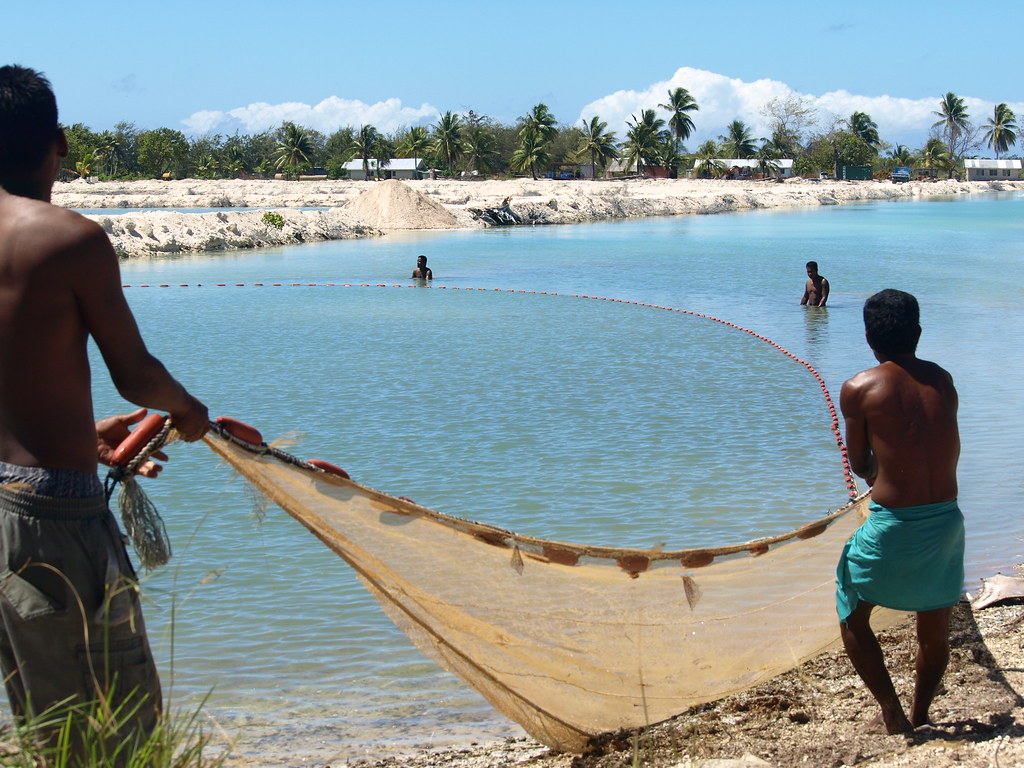
The Causes of Poverty in Kiribati

The Sources of Poverty in Kiribati
Kiribati is an archipelago comprising 32 coral atolls and one raised coral island located along the equator in the Pacific Ocean. The total landmass of the islands is slightly greater than New York City, but the islands stretch out across an area almost as large as the country of India with a population of approximately 112,000. The main island of South Tarawa accounts for roughly half the nation’s population, with a population density similar to that of Hong Kong and Tokyo. English is the country’s official language, but the popular dialect of I-Kiribati (a.k.a. Gilbertese) is commonly spoken. As of 1999, Kiribati is a member of the U.N. Today, poverty in Kiribati is prevalent, although unlike many other nations, the causes of poverty in Kiribati are slightly harder to define.

Subsistence Living

Many I-Kiribati lack access to fundamental services like water, sanitation, quality housing and other basic needs. The World Bank classifies Kiribati as “extremely deprived” although exact poverty estimates are hard to calculate because a significant portion (likely the majority) of the islanders practice a subsistence lifestyle, foregoing a role in the formal economy. This is especially true in the outer islands where people rely on fishing and agriculture to ensure their survival. The situation is precarious; however, as there is a widespread lack of arable land, droughts are common. Also, commercial overfishing has greatly reduced the bounty of fish Kiribati has been blessed with. Still, the people of the Kiribati islands find a way to overcome the mounting challenges confronting their lifestyle.

Underdeveloped Formal Economy

When it comes to the formal wage economy (which employs less than one-fifth of all potential workers), the densely packed island of South Tarawa is the home for over half of all jobs. A staggering amount of Kiribati’s income comes from fishing licenses sold to foreign vessels who want to fish tuna in Kiribati’s waters, but this income is highly unstable. A limited number of flights and poor national infrastructure inhibit its small tourism industry. The private sector economy lags far behind its public counterpart. Lack of a diversified economy is one of the causes of poverty in Kiribati.

Reliance on Imports

Most of the food and fuel consumed in Kiribati are imported from overseas. In 2004, a container vessel missed its scheduled food delivery date which caused a major food shortage on the islands. In past decades the population, especially younger people, is increasingly relying on cheaper imports of unhealthy and heavily processed foods. This has led to a rise in diabetes, heart disease and obesity. Kiribati has no domestic source of oil and thus relies on the international market. Direct foreign investment in Kiribati is very low, and in total, Kiribati’s imports are more than double the value of its exports. The causes of poverty in Kiribati can in large part be traced back to low food security and reliance on imports.

Education

The government of Kiribati provides free and compulsory primary education for students ages six to 13. Families living in rural areas incur travel expenses and all schoolchildren are subject to fees related to school uniforms and supplies. While this free education is certainly a positive, there is room for improvement in teacher training, curriculum and school facilities. Kiribati offers an additional five years of secondary education to students who place highly on national entrance exams. These schools are not free. Those who do not win access to these competitive schools receive the chance to continue with free secondary education for three more years. Nearly all secondary education schools are located on South Tarawa which requires prospective outer island students to move from their families and absorb a sizable financial hit. Around 80 percent of students do not continue on to secondary education after primary school.

Organizations Working for Change

Multiple organizations are working to help uplift locals and alleviate the causes of poverty in Kiribati. GAVI (Global Alliance for Vaccines and Immunizations) has been working in Kiribati for over a decade. It supplies vaccines to the islands and help local medical clinics administer these vaccines to the population. GAVI has committed more than $660,000. As of 2018, 95 percent of the islands have received coverage for critically important DTP3 vaccines (diphtheria-tetanus-pertussis).

Teachers are also working to improve the islands’ education system with the Kiribati Union of Teachers (KUT) performing outreach on three major islands. The KUT provides workshops for teachers, has set up a credit union and is attempting to provide social security to its members.

Lastly, the Kiribati branch of the Foundation for the South Pacific is working to address the most pressing concerns of food and water security. Working in partnership with The Outer Island Food and Water Project, it teaches local women and young people gardening techniques and cooking lessons. It also establishes local water points which greatly enhance water security. Thanks to this work, many villagers no longer have to travel long distances for fresh water and one local community has been able to sell extra vegetables for a profit.

Light at the End of the Tunnel

An underdeveloped economy, low food and water security, a developing health care system and an education system with much potential to be improved are among the causes of poverty in Kiribati. Despite these challenges, islanders continue to survive off their land and lead family and community-oriented lives. Organizations like GAVI, the KUT and the Foundation for the South Pacific have recognized the enormous opportunities in Kiribati and are contributing to positive change focused on improving the lives of the remarkable I-Kiribati.

– Spencer Jacobs
Photo: Pixabay

August 19, 2020
https://borgenproject.org/wp-content/uploads/borgen-project-logo.svg 0 0 Kim Thelwell https://borgenproject.org/wp-content/uploads/borgen-project-logo.svg Kim Thelwell2020-08-19 13:11:402024-05-29 23:18:46The Causes of Poverty in Kiribati
Economy, Global Poverty

4 Facts about Poverty in Turkmenistan

Poverty in Turkmenistan
Turkmenistan is a country in the Central Asian region with a population of more than 5.6 million and a coastline along the Caspian Sea between Kazakhstan to the north and Iran to the south. Prior to gaining independence in 1991, Turkmenistan was a Soviet republic.

The country is well-endowed with energy reserves including natural gas and oil, and its economy is highly dependent on energy production and exports. In addition, Turkmenistan is rich in cotton, another highly exported commodity. Although 48.2% of the country’s labor force works in agriculture, this sector represents only about 8% of its GDP. Turkmenistan, moreover, continues to grapple with substantial barriers to economic and political progress, subjecting many of its citizens to poverty and other sources of hardship. Here is some information about poverty in Turkmenistan.

4 Facts About Poverty in Turkmenistan

  1.  Turkmenistan has made significant progress when it comes to poverty reduction. In 1999, an estimated 58% of the population in Turkmenistan was living in poverty compared to 0.2% in 2012. GDP per capita witnessed a similar kind of improvement over the same period. In 1999, GDP per capita in Turkmenistan was only $1,800. That figure increased to $8,900 in 2012, and in 2017, it reached $18,200, earning the country a rank of 97th highest GDP per capita in the world.
  2. Reports have stated that Turkmenistan possesses the world’s fourth-largest reserves of natural gas. However, its heavy reliance on energy exports exposes its economy to sizeable vulnerabilities, including fluctuations in the energy prices. High energy prices in the last decade enabled sensible progress in the form of utility subsidies on the part of the Turkman government since 2014. However, the country’s GDP growth rate has declined to 10.3%, as a result of low energy prices, in 2014 from 14.7% in 2011. In 2015, its GDP growth rate further declined to 6.5%. These setbacks have resulted in cutbacks on government subsidies and infrastructure spending.
  3.  The country’s first political leader, Niyazov, died in 2006 and Berdimuhamedow, who continues to be president today, succeeded him. The reign of Niyazov led to the suppression of political dissent and tightly limited freedom of movement and travel. Moreover, in 2004 and 2005, Turkmenistan’s development experienced a significant hindrance when the government cut one year off of secondary school requirements, replaced 15,000 health care professionals with military conscripts and closed all regional hospitals. Political repression and limited civil freedoms continued under Berdimuhamedow. With a transparency index of 154 among 176 countries, corruption on all levels of government has also been a major obstacle to development in Turkmenistan, limiting its potential for foreign investment opportunities.
  4.  The state has heavily regulated Turkmenistan’s economy. In fact, the state controls an estimated 90% of agricultural production. People also report long waiting queues throughout grocery stores that the state owns or controls. Since Turkmenistan has subsidized food items like bread and considering that Turkmen farmers cannot grow unauthorized products, the country’s economy is far from efficient or self-sufficient. Government control over the foreign exchange rate, thus restricting the private sector’s ability to import the foodstuffs necessary to sustain the population, has further exacerbated this fact.

Looking Ahead

While official estimates for poverty in Turkmenistan are low, at 0.2%, there are several drawbacks that the country faces in regard to both its economy and its social and political standing. These range from the need to diversify its economic model from its heavy reliance on energy export revenues to the promotion of a more free business and investment climate. In the meantime, international cooperation and coordination ought to strive to ensure that the recent food shortages in Turkmenistan do not escalate into a full-fledged hunger crisis.

– Oumaima Jaayfer
Photo: Flickr

August 15, 2020
https://borgenproject.org/wp-content/uploads/borgen-project-logo.svg 0 0 Kim Thelwell https://borgenproject.org/wp-content/uploads/borgen-project-logo.svg Kim Thelwell2020-08-15 01:30:572022-04-07 10:06:154 Facts about Poverty in Turkmenistan
Economy, Global Poverty

Cryptocurrency in Africa: The Future of a Continent’s Economy

cryptocurrency in AfricaCryptocurrency in Africa has become increasingly popular over the last couple of years, as many people become more interested in the possible economic benefits that can come from the new technology. Cryptocurrency is entirely digital money that uses a decentralized system. As a result, there is not one entity with complete authority over the process. The whole system works over the internet allowing transactions to happen anywhere in the world with no government regulation. Bitcoin, created in 2009, is the leading cryptocurrency company in Africa. There are a variety of users, from individuals to small businesses, that use the technology for investments, banking and payment transfers across borders.

Why Cryptocurrency is So Popular in Africa

In April 2019, Google Trends data showed that Nigeria had the world’s most searches for Bitcoin. Also in 2019, South Africa has the highest volume of cryptocurrency ownership compared to internet users. It was found that 10.7% of internet users in South Africa owned Bitcoin compared to the worldwide average of 5.5%.

In 2020, despite the global economic uncertainties, COVID-19 brought by businesses closing and people not working, Bitcoin trading has continued to increase in Africa. In May 2020, Nigeria had the highest trading volume in one week at $7.2 million, its third-best P2P trading week. Kenya was second with another record week by trading $1.6 million. South Africa came in third exchanging $1.1 million in a week.

Cryptocurrency in Africa mainly gained wide popularity because of high inflation rates across the continent. In 2018, South Sudan saw rates of 83.5% compared to the previous year. Other countries like Nigeria, Ghana and Zimbabwe, who printed $100 trillion notes worth only $40 in 2015, also experienced double-digit inflation rates. These hyperinflation rates had many citizens doubting the economic services of their central banks and governments.

Benefits of Cryptocurrency

In an effort to protect their money from the economic turmoil in their country, Africans started transitioning to Bitcoin. Since companies like Bitcoin have no single domain, the money inside the company is not affected by a single country’s inflation rate, which allows the citizens of African countries to protect their money from a failing economy. As a result, trust for these cryptocurrency companies builds.

Cryptocurrency in African also gives its people the ability to make cross-border payments. Some African countries have a history of fraud which had caused problems with international money transfers. In Nigeria, PayPal banned citizens from receiving money from other nations because of the country’s problems with fraud. However, cryptocurrency allows these citizens to transfer and receive money from anywhere around the world without the high fees that other money transfer companies usually have.

Cryptocurrency companies are blockchain technology that stores public records in a decentralized system. This also makes it impossible to alter transactions and assets. Many African countries use this new technology, through companies like Bitcoin, to elevate their status. They also use this technology to continue pushing their economy up to a level playing field with other nations. In 2019, Kenya and Nigeria announced plans to work more closely with these companies. These countries hope that by regulating cryptocurrency companies and their technology, the governments can begin bringing its people out of immense poverty and start becoming a greater global power.

– George Hashemi 
Photo: Flickr

July 17, 2020
https://borgenproject.org/wp-content/uploads/borgen-project-logo.svg 0 0 Kim Thelwell https://borgenproject.org/wp-content/uploads/borgen-project-logo.svg Kim Thelwell2020-07-17 15:09:072020-07-17 15:09:07Cryptocurrency in Africa: The Future of a Continent’s Economy
Economy, Global Poverty, Women and Children

10 Facts About Poverty in Japan

Poverty in Japan
On the surface, Japan seems to successfully avoid the hardships and setbacks that can plague powerful economies. However, Japan actually employs costly efforts to hide its growing economic struggles. Here is some information about poverty in Japan.

10 Facts About Poverty in Japan

  1. Less than one percent of Japan is homeless. As of 2018, Japan has a population of 126.5 million people. According to the latest Ministry of Health, Labor, and Welfare statistics, Japan’s current homelessness figure stands below 5,000. This is a steady decline from nearly 26,000 people without homes in 2003. While this appears to be a remarkable feat of social reform, the truth is that the Japanese government commits millions of dollars every year to ensure homelessness remains low. The goal is to ensure that the Japanese economy appears strong. In reality, poverty in Japan is increasing. The dozens of government reforms Japan enacts each year are extremely costly and are approaching unsustainability.
  2. Japan is “the most equal major society” in terms of wealth distribution. According to the Statista Research Department, a total of 92% of the Japanese population has anywhere from $10,000 to $1 million in either assets or wealth. On paper, these figures appear to demonstrate an extremely healthy economy; however, they hide the fact that poverty in Japan is well over 16%. The notion that 92% of Japanese citizens fall into some category of “wealthy” may be misleading, serving as a straw-man statistic booster.
  3. A rising percentage of individuals in Japan are poverty-stricken. Japan has seen a huge and sudden rise in poverty and poor economic conditions, especially since 2012. According to The Guardian, 3.5 million Japanese children live in poverty-stricken homes. Since 1991, poverty has increased as a systemic problem for Japan, reaching 16.3% this past year. This figure could continue to rise dramatically as the working population decreases.
  4. Japan is in an economic game of “cat and mouse.” Ever since Japan experienced a major increase in retired citizens, poverty in Japan has become a greater issue. As a result, Japan has had to increase the retirement age to 70, shift focus to labor force participation (which breeds unequal disbursement of employment opportunity) and implement expensive government reforms to cope with the declining workforce population and the increasing retired population.
  5. Japan pours a ton of resources into battling unemployment. Poverty in Japan entered an unprecedented era of severity after a major drop in workforce members in 1991. Before 1991, unemployment hovered just below 2% for decades, then rose drastically to nearly 6% by 2002. In fact, this singular event nearly toppled Japan as a world economic leader. Today, Japan has returned to a nearly 2% unemployment rate, although the country has had to pour a huge amount of financial resources in order to accomplish this stabilization. The country still has not fully recovered.
  6. One-third of Japan is retired, and the government does not know what to do. Currently, around a third of Japan’s population is 65 or above. Japan actually has the oldest population in the world. This is partly why Japan has become one of the slowest growing major economies. Aggressive government spending is essential to care for a huge portion of Japan’s population, and the problem is only getting worse as the population continues to age.
  7. Japan suffers from an imbalanced ratio of employed citizens and recipients of social benefits. Much like the United States, Japan’s social benefits system is increasingly problematic. Japan’s “Baby Boom” generation nearly all receive social security. Meanwhile, the section of the economy that pays for social security benefits is not keeping up with financial demands. Japan’s birth rate is likewise falling behind the number of new social benefit recipients. In fact, Japan is expecting to see an unsustainable ratio of ‘recipient to payer’ in social benefit programs by 2025.
  8. Japanese single mothers carry disproportionately heavy financial burdens. In Japanese culture, if a divorce occurs, the mother receives full child custody in nearly 80% of divorce cases. Right now, there is no enforcement of child support programs — meaning that single mothers in Japan may take on 100% of the financial burden of raising children. As a result, thousands of single mothers end up in poor economic standing and have to seek government assistance. Because the subject of single motherhood due to divorce is taboo, thousands of women live without assistance. This leaves many of them in extreme poverty.
  9. Abandoned houses have become a common phenomenon. “Akiya” is a term to define a house that has been vacated or abandoned and remains empty. According to World Habitat, there are currently around 9 million abandoned homes in Japan, with an expected increase of up to 21 million abandoned homes by 2033. This adversely affects poverty in Japan because the government has to repurpose and upkeep vacant houses; this is an enormous financial burden.
  10. Japanese poverty affects women differently than men. Japan has made some remarkable advancements towards equality in the workforce in recent years. About 71% of women are employed, versus the 58% female employment rate a decade ago. Women in Japan also enjoy long and generous parental leaves. However, despite these progressive advances, the female workforce is facing an uncertain future, with prospective poverty rates for older women expected to reach 25% by 2040. With rapidly declining birth rates and increasing retirement rates, current female employment levels will not be able to combat another wave of retirement recipients and the social benefit impacts.

Why This Knowledge is Important

The Japanese economy is the third-largest in the world, and many regard Japan as a global example of economic strength and prosperity. However, the hard reality is that Japan is a struggling country that is finding it harder to support its citizens every year. Without aid, Japan may find itself unable to provide and maintain its population without making drastic sacrifices — which would not only decrease the strength of Japan but also impact the wider global economy.

– Donovan McDonald
Photo: Flickr

July 12, 2020
https://borgenproject.org/wp-content/uploads/borgen-project-logo.svg 0 0 Jennifer Philipp https://borgenproject.org/wp-content/uploads/borgen-project-logo.svg Jennifer Philipp2020-07-12 01:30:542022-03-10 12:49:3710 Facts About Poverty in Japan
Economy, Global Poverty, Poverty, Poverty Reduction

7 Facts About Poverty in Cyprus

Poverty in Cyprus
Cyprus is an island country in the Mediterranean Sea, just south of Turkey, with a population of 1.2 million. The Republic of Cyprus, the country’s only internationally recognized government and part of the European Union, controls 60% of the southern region of the island. The Turkish Republic of Northern Cyprus controls 36% of land in the north region of the island. The division between the North and South republics of Cyprus has created a power struggle of high tension, leaving the island politically unstable. Despite this instability, Cyprus has seen an improvement in decreasing poverty rates, as well as an expanding economy. Here are seven facts about poverty in Cyprus.

7 Facts About Poverty in Cyprus

  1. Cyprus’s economy is growing and expanding. Its tourism sector saw a significant boost in 2018 when more than 4 million travelers visited the island, a 7.8% increase from 2017. This increase in tourism correlates to its increase in GDP per capita, rising from $25,957.85 to $28,341.05 in 2018. Experts expect Cyprus’s GDP per capita to increase even more in 2020, with models estimating a 1.03% increase.
  2. When Cyprus gained independence in 1960, it began transitioning to a service economy. Cyprus’s economy started focusing more on its tourism and service sectors instead of agriculture. This allowed the GDP to rise. As of 2020, Cyprus’s GDP was $34.5 billion, a 3.9% growth since 2019.
  3. Cyprus’s unemployment rate has decreased. With the expansion of Cyprus’s economy came more jobs in the tourism and service sectors. As a result, unemployment rates have decreased. Since 2015, the country has cut its unemployment rate almost in half, from 14.91% in 2015 to 7.92% in 2019.
  4. Education in Cyprus is growing. Today, Cyprus has five private universities and three public ones. Both are rapidly expanding and connecting with other institutions across the globe. These schools continuously put millions of dollars back into the local economy, thus, providing thousands of jobs for the community.
  5. Life expectancy is increasing in Cyprus. As of 2020, the island’s life expectancy is 81.05 years, a 0.19% increase from 2019. Future projections from U.N. data predict a continuous upward trend.
  6. Cyprus does not have a standard minimum wage law for all workers. However, some occupations do have certain wage requirements. These requirements undergo review and revision annually in an effort to be fair to citizens. Since there is no countrywide minimum wage, however, this leaves room for many disparities in poverty and wealth.
  7. The Economic Interdependence Project is a partnership between the Republic of Cyprus and the Turkish Republic of Cyprus Chambers of Commerce. Created in 2009, the project’s goal is to intervene and encourage partnerships between businesses of both parties. The project hopes to reveal the benefits of the two communities working together to improve Cyprus’s economic stability and growth. They have been able to open the first island-wide business directory with more than 200 businesses. Additionally, the project also gave Market Research Grants to some businesses. 

Concluding Thoughts

Despite Cyprus’s political tensions between the southern and northern regions, the country has expanded its economy, increased tourism and implemented programs that encourage business relationships. These factors have allowed for an overall decrease in poverty in Cyprus. Hopefully, this progress will continue in the coming years.

– George Hashemi 
Photo: Wikimedia Commons

June 25, 2020
https://borgenproject.org/wp-content/uploads/borgen-project-logo.svg 0 0 Kim Thelwell https://borgenproject.org/wp-content/uploads/borgen-project-logo.svg Kim Thelwell2020-06-25 14:00:482024-05-29 23:17:357 Facts About Poverty in Cyprus
Economy, Global Poverty

The State of Poverty in Ireland

Poverty in Ireland
Ireland joined the EU in 1973, after which the country enjoyed a period of rapid economic growth between 1995 and 2007. In 2008, however, Ireland suffered a recession. The effect of this recession still echoes through the state of poverty in Ireland.

During their time of prosperity, Ireland’s GDP rose from 69.2 billion in 1995 to 275 billion in 2008. During this period, Ireland’s unemployment also fell from 11.7% to 6.7%. Experts suggest that this rapid economic growth was possible because many tech firms poured into Ireland during the 1990s. Ireland’s favorable tax rate, which was 20% to 50% lower than its neighboring countries, encouraged these tech firms. This constant investment by tech firms, international corporations and development in tourism further contributed to Ireland’s economic growth.

In 2008, the global financial crisis hit. Ireland’s unemployment rate spiked from 4.9% in 2007 to 6.7% in 2008. This employment rate peaked at 15.4% in 2012.

To remedy its economy, Ireland agreed to a $92 billion loan package from the European Union and the IMF in late 2010. In March 2011, the Irish government further committed to meeting the deficit targets with Ireland’s EU-IMF bailout program. Through multiple measures, Ireland became the first country of the European Union to exit the bailout program in 2013.

Lasting Impact of the 2008 Financial Crisis

According to Social Justice Ireland’s 2019 report of poverty in Ireland, 15.7% of Ireland’s population, or 760,000 people, lived below the poverty line. Among this number, 202,000 are children and 111,000 people living in poverty are in employment. Poverty can still be an issue for those individuals who are employed since many of these jobs are low-paying. Some estimates suggest that approximately 23% of Ireland’s full-time workforce worked in these low-paying jobs in 2019.

This is especially concerning since income disparity in Ireland is quite large. Researchers found that the top 10% of households have 24% of total disposable income while the bottom 10% only have 3%. This further contributes to child poverty in Ireland.

Child poverty is also one of the most concerning aspects of poverty in Ireland. In their same 2019 report, SJI estimated that around 23.9% of impoverished people in Ireland are children. This leads to deprivation in material, cultural and social resources that can aid them to develop into a healthy adult. Child poverty has far-reaching consequences on child development, education and future job prospects of those affected.

Combating Poverty in Ireland

The Irish government is taking active measures to combat poverty. For example, a report from the Economic and Social Research Institute found that Ireland’s tax system took most measures to reduce household income inequality among its European peers. In the ESRI report, researchers stated that, through broad-based Universal Social Charge and the early level that the income tax kicks in, the level of inequality in take-home income in Ireland is getting closer to the EU average.

To combat child poverty, the Irish government also devised a national policy in 2014, in which the government aimed to reduce children in poverty by two-thirds by 2020 by supporting families in poverty. Furthermore, the Irish government’s Budget 2020 will increase the Living Alone Allowance and the Qualified Child Payment, which both aim to further assist those on social welfare. The Irish government estimates that the new budget could help 108,000 children to enroll in early childhood care and education programs.

Poverty in Ireland is a remnant of the economic turmoil that the Irish people suffered during 2008. However, as apparent in Ireland’s economic growth after 2013, Ireland has proved its resilience. While income inequality and child homelessness are still an issue, the Irish government is more than cognizant of these problems. Many in Ireland have hope for a better economic future.

–  YongJin Yi
Photo: Flickr

June 18, 2020
https://borgenproject.org/wp-content/uploads/borgen-project-logo.svg 0 0 Jennifer Philipp https://borgenproject.org/wp-content/uploads/borgen-project-logo.svg Jennifer Philipp2020-06-18 11:30:402022-03-10 10:49:06The State of Poverty in Ireland
Economy, Global Poverty

Tackling Youth Unemployment in Africa

Youth Unemployment in Africa
The growth in the African economy has been steadily increasing overall. However, the vast majority of the increase in jobs is not going to the youth. During a study from 2000 to 2008, only 22% of all employed people were 25 and younger. In 2019, the youth unemployment rose to 11.58% in Sub-Saharan Africa since a dip in 2008.

Youth unemployment rates in Africa are currently at 10.64% and are the lowest they have been in the past 20 years. This improved economy could allow all generations to obtain employment opportunities. Young generations often cannot afford to not work, yet 51% of young women and 43% of young men in Sub-Saharan Africa do not have employment. The young generations in Africa are also becoming more educated with secondary education completion. Many expect that this higher education should rise over 10% in the next 20 years. Despite these statistics, youth unemployment could maintain low rates in the upcoming years.

What is the Digital Economy?

The digital economy is the way that people make money via online platforms, websites, companies and other outlets. The digital economy has transformed in recent years; now, many government services commonly use it and it is one of the main methods to sell products and services around the world. The digital marketplace includes more than just the use of the internet, but other technological tools.

With the invention of the internet and increased technological advances, there have been multitudes of positive impacts on individuals across the globe. There is a tremendous impact on even the most impoverished lives in Africa.

Digital Jobs Africa

Digital Jobs Africa is a project by the Rockefeller Foundation, that people know for its commitment to “promoting the well-being of humanity throughout the world.” One approach organizations are taking to make an impact on the impoverished persons in Africa is by providing support through funding and training for ICT based employment. African impoverished youth have the highest unemployment rates but are in an extremely accessible position. These youth can utilize the opportunities in digital employment to provide substantial support for the communities and families.

Jobs in the informal sector have shown lower wages than formal wages as some have witnessed in Zambia and Ghana. Digital jobs that can be short-term project-based work or a long-term salary position in information technology fields provide significant financial opportunity. Additionally, previously marginalized groups of young workers can step out of the $2-a-day earnings, which is extreme poverty. If technology companies employ African youth, there is potential to halt the continued marginalization of hard-working youth in Africa. The jobs could begin changing the way various industries view youth.

5 Digital Opportunities within the Digital Economy in Africa

  1. Impact Sourcing: Impact sourcing is directly employing those with limited opportunities, i.e. those with high rates of marginalization in the industry.  
  2. Online Work: Online work is another opportunity that can be team-based or individual to complete tasks or projects.
  3. Local Content Innovation: Local content innovation revolves around new technology creation in software engineering, application development, and filling unique local demands for businesses and consumers.
  4. E-Public Goods: E-Public Goods is the idea of using the internet-based application to facilitate higher accessibility and rates of use in government focuses like health, education or agriculture.
  5. E-entrepreneurship: Some are also exploring e-entrepreneurship. These opportunities involve launching a service or product through the training and education that people obtained in IT or technology.

There is vast potential for youth in Africa to gain an education or training in fields of technology. These digital economy opportunities could profoundly impact the unemployment rates in Africa if companies employ African youth.

– Cassiday Moriarity
Photo: Flickr

June 5, 2020
https://borgenproject.org/wp-content/uploads/borgen-project-logo.svg 0 0 Jennifer Philipp https://borgenproject.org/wp-content/uploads/borgen-project-logo.svg Jennifer Philipp2020-06-05 07:30:352020-06-08 06:56:32Tackling Youth Unemployment in Africa
Page 31 of 66«‹2930313233›»

Get Smarter

  • Global Poverty 101
  • Global Poverty… The Good News
  • Global Poverty & U.S. Jobs
  • Global Poverty and National Security
  • Innovative Solutions to Poverty
  • Global Poverty & Aid FAQ’s
Search Search

Take Action

  • Call Congress
  • Email Congress
  • Donate
  • 30 Ways to Help
  • Volunteer Ops
  • Internships
  • Courses & Certificates
  • The Podcast
Borgen Project

“The Borgen Project is an incredible nonprofit organization that is addressing poverty and hunger and working towards ending them.”

-The Huffington Post

Inside The Borgen Project

  • Contact
  • About
  • Financials
  • President
  • Board of Directors
  • Board of Advisors

International Links

  • UK Email Parliament
  • UK Donate
  • Canada Email Parliament

Get Smarter

  • Global Poverty 101
  • Global Poverty… The Good News
  • Global Poverty & U.S. Jobs
  • Global Poverty and National Security
  • Innovative Solutions to Poverty
  • Global Poverty & Aid FAQ’s

Ways to Help

  • Call Congress
  • Email Congress
  • Donate
  • 30 Ways to Help
  • Volunteer Ops
  • Internships
  • Courses & Certificates
  • The Podcast
Scroll to top Scroll to top Scroll to top