• Link to X
  • Link to Facebook
  • Link to Instagram
  • Link to TikTok
  • Link to Youtube
  • About
    • About Us
      • President
      • Board of Directors
      • Board of Advisors
      • Financials
      • Our Methodology
      • Success Tracker
      • Contact
  • Act Now
    • 30 Ways to Help
      • Email Congress
      • Call Congress
      • Volunteer
      • Courses & Certificates
      • Be a Donor
    • Internships
      • In-Office Internships
      • Remote Internships
    • Legislation
      • Politics 101
  • The Blog
  • The Podcast
  • Magazine
  • Donate
  • Click to open the search input field Click to open the search input field Search
  • Menu Menu

Archive for category: Development

Information and stories on development news.

Development

10 Facts: Partnership for Supply Chain Management

partnership-supply-chain-management
Here are ten facts about the Partnership for Supply Chain Management (PFSCM).

  1. The Partnership for Supply Chain Management is a nonprofit organization established in 2005 by two of the leading international health consultancy organizations in the U.S.—JSI Research & Training Institute, Inc. (JSI) and Management Sciences for Health (MSH), both nonprofits.
  2. PFSCM’s goal is to ensure reliable availability of essential products to programs in the developing world and to strengthen national supply chains to become sustainable mechanisms for delivering these products to clients.
  3. Through its innovative projects, PFSCM procures and distributes essential medicines and supplies, provides technical assistance to strengthen existing supply chains and collaborates with in-country and global partners to coordinate efforts in these areas.
  4. PFSCM is not a traditional procurement services agent in that it takes a holistic approach to deliver integrated supply chain services (from quantification and forecasting to delivery) to ensure commodity security for its clients. PFSCM shares its forecasts and quantifications with vendors and other international organizations supporting health services to the developing world. In times of short supply, the organization works to minimize the effects of shortages for all stakeholders, not just its own clients.
  5. PFSCM assists countries in determining and implementing the most appropriate strategy for each supply chain component, whether managed internally or outsourced, to achieve the best value.
  6. PFSCM is made up of a staff of more than 400 from team member organizations that include nonprofit organizations, commercial private-sector corporations, and academic institutions, providing all the technical skills needed to ensure reliable availability of essential products to international development programs.
  7. Since PFSCM was established in 2005, it has delivered health commodities to countries in Africa, Asia, Eastern Europe, Latin America, and the Caribbean and helped strengthen supply chains in more than 20 countries throughout the developing world.
  8. PFSCM has the physical presence of team member field offices in over 90 countries.
  9. Currently, PFSCM is implementing two projects that aim to reduce the worldwide impact of HIV & AIDS, malaria, and tuberculosis. The first program, the U.S. President’s Emergency Plan for AIDS Relief (PEPFAR), was launched to combat global HIV & AIDS—the largest commitment by any nation to combat a single disease in history. The second program, The Global Fund to Fight AIDS, Tuberculosis and Malaria is a major financing institution in the fight against these diseases in 140 countries.
  10. If an organization is interested in procuring items through PFSCM click here. Requested information includes organization details, products you require, quantities, funding availability and funding source, product delivery details, and the level of urgency of your requirement.

– Kira Maixner
Source PFSCM
Photo UNJLC

June 17, 2013
https://borgenproject.org/wp-content/uploads/borgen-project-logo.svg 0 0 Borgen Project https://borgenproject.org/wp-content/uploads/borgen-project-logo.svg Borgen Project2013-06-17 09:54:212024-05-24 23:53:3910 Facts: Partnership for Supply Chain Management
Advocacy, Aid Effectiveness & Reform, Developing Countries, Development, Foreign Aid

The Listening Project

the-listening-project-international-aid
The Listening Project began as an attempt to capture the side of international developmental aid that we don’t often get to hear. It’s conductors, Mary B. Anderson, Dayna Brown and Isabella Jean, wanted to collect the experiences of those who receive aid, so as to better outline their expectations and understand their realities.

The project’s main objective is to highlight the importance of critical feedback from those whose lives it affects most deeply. They discovered that there was an overwhelmingly popular opinion among the 6,000 people interviewed that the notion of aid is good, but its implementation is increasingly bad.

They found that those receiving international assistance generally held expectations that it would contribute not only to the economic betterment of their country but also to its increased political and social conditions. Ultimately, they hoped that the support they received would garner a relationship with the international community based on solidarity.

Almost every interview began along the lines of: “We very much appreciate the assistance… but…” The “but” was nearly always followed by a personal example of a negative externality produced by their country’s growing dependence on foreign aid. The interviewees agreed that their reality does not meet their expectations. While the stories concerning aid were all very cheerful in the short-term, they grew to be disheartening in the long-term.

The chief negative effect identified in the interviews typically involved an increase in the general sentiment of powerlessness and dependency. Those interviewed said that, at times, international actors bring projects that wind up perpetuating the need for more projects and more assistance. Additionally, the influx of public funds often leads actors within the country to create policies and projects that assume these funds will always be available. These practices establish an endless cycle of dependency.

Interviewees also noted how aid can increase tension between groups. Often this is brought on by a sense of relative deprivation caused by specific targeting of aid of one group and not of another. Because foreign agencies sometimes assign aid along ethnic or religious lines- divisions that may have caused violent conflict in the past- there runs a danger of reigniting long-standing prejudices.

Finally, interviewees say that the solidarity they hoped would come from aid has instead lead to a sense of mistrust toward aid agencies. The main suggestion of a great number of those interviewed was that there should be an increase in consultation. Aid agencies need to observe more closely the local social dynamics that play out in different cultural contexts before administering to the people.

On a more uplifting note, many observed an increasingly positive impact on the status of women. Many international programs focus on the improvement of the lives of women, and a great number have been successful at helping women become empowered. These programs often serve two purposes: to increase the capabilities of women and to force men to realize how this increase can contribute to the betterment of their community as a whole.

Before the project, the researchers wanted to emphasize that they in no way disagreed with the potential foreign assistance holds to bring positive impacts to the billions of people living in poverty worldwide. Their take on the issues of aid revolves around problems of implementation, not motivation.

They state in their book Time to Listen: Hearing People on the Receiving End of International Aid that the main problems stem from the historical focus on disaster response instead of prevention. They suggest that a proactive approach to humanitarian issues is the most helpful in the long-term. They also cite certain aid agencies’ adoption of business principles and mechanisms as a prevalent issue. Aid agencies sometimes adhere too closely to the interests of their profit-seeking donors while failing to respond appropriately to the needs of aid recipients.

Additionally, when local partners are used as “middle men,” it creates a wider disconnect between donor and recipient. This can provide an opportunity for the diversion of funds and most certainly breeds “competition instead of collaboration.”

The Listening Project aims to bring these contradictions between expectations and realities to light. Since its beginnings in 2005, the project has influenced multiple aid agencies to adopt policies that can better address the issues raised by the aid recipients. As the voices of these people are heard, the awareness of the need for changes in the way foreign assistance is provided also increases.

– Kathryn Cassibry

Source: The Listening Project
Photo: Global Humanitarian Assistance

June 17, 2013
https://borgenproject.org/wp-content/uploads/borgen-project-logo.svg 0 0 Borgen Project https://borgenproject.org/wp-content/uploads/borgen-project-logo.svg Borgen Project2013-06-17 06:34:002024-06-04 01:03:12The Listening Project
Developing Countries, Development, Global Poverty

Focusing on the Living, Not the Dying

Poverty_reduction_success

So much of the emphasis in judging the quality of life of a country, or its progress, focuses on death. The numbers tell how many people die; how many of the dead were mothers, how many were children, the most fatal diseases, the most deaths by violence, etc. Christopher Murray, a Harvard researcher, took issue with this standard of measurement. While he agreed that death was a powerful indicator of a country’s welfare, he also saw a major oversight in using it as a yardstick. To Murray, it was important not solely to focus on the dead, who we can do nothing for, but also examine the quality of life of the living. Not only to think of how to keep people alive but also to ensure they are living well. Murray’s viewpoint was to revolutionize metrics. He spearheaded the shift from measuring mortality to the implementation of the DALY measure – Disability-Adjusted Life Year.

In simplest terms, the DALY measures the number of years a population lives with a disability, adjusting its productivity accordingly (as a major psychological or health problem will undoubtedly decrease a worker’s effectiveness), as well as measuring the impact of shorter life expectancy (often which is related to the disabilities in the DALY). ‘Disability’ in the term covers a wide arrange of conditions, among them pain, arthritis, mental illness such as depression and PTSD, disfigurement and major diseases. A highly sophisticated system, the DALY is weighted to measure the impact of conditions on younger members of a population more than older members to give a more accurate measure of impact on the economic potential of a given population (as the young are seen to have more potential than the aged because of longevity, energy, new skills, etc.).

Measuring the global burden of disease this way has yielded surprising – and often controversial – results. Yet this data is promising and exciting in that it shakes our current system and demands attention to issues that have so far been neglected. For example, depression and suicide are found to be more damaging than tuberculosis or cirrhosis, and one of the fastest-growing diseases is glaucoma. The DALY’s results have not been welcomed by all, however. When first introduced after measuring international statistics, many countries were graded much lower than on an objective mortality scale and hotly contested the results.

The importance of metric systems in foreign aid is steadily increasing: in a world where every dollar could be used in many different ways, expenditure on aid and social programs needs to be well justified, with potential for results from investment. When asked about the use of DALYs to give an accurate picture of the state of global health, Murray stated, “People walk around with a mental map that’s different for every one of us. A real map has got to be a better guide.”

– Farahnaz Mohammed

Source: Discover Magazine
Photo: Change

June 16, 2013
https://borgenproject.org/wp-content/uploads/borgen-project-logo.svg 0 0 Borgen Project https://borgenproject.org/wp-content/uploads/borgen-project-logo.svg Borgen Project2013-06-16 08:47:262024-05-24 23:54:51Focusing on the Living, Not the Dying
Developing Countries, Development

Polio 101

Polio 101
Poliomyelitis, commonly referred to as polio, is a highly contagious viral disease that, despite being deemed as a problem of the past by the Western world, remains a very current problem in other parts of the world. Though its remnants are seen in the stunted limbs of the survivors, polio’s worst effect is no disfigurement.

Polio is a potentially fatal disease of the nervous system that causes paralysis. After infection, the organs can stop functioning within a matter of hours. Fatalities normally occur if the virus affects the respiratory system, preventing the victim from breathing. In some cases, polio leaves an individual with permanent paralysis, typically in the lower body.

In the majority of cases, polio shows no symptoms. Although anyone can contract the disease when they come in contact with it, the disease mainly affects children under five. Currently, there is no cure for polio once it has been contracted. Programs to eradicate polio work solely through prevention by vaccinating children at a young age.

As a result of a huge global effort to eradicate the disease, it has largely disappeared and has become one of the global health’s success stories. Only 223 cases were reported in 2012 (down from an estimated 350,000 in 1988). According to the World Health Organization, only three countries in the world still report polio as a problem: Afghanistan, Nigeria, and Pakistan.

At the Global Vaccine Summit in the United Arab Emirates in April 2013, a five-year plan was presented to ensure the eradication of all forms of polio, backed by contributions of 75% of the 5.5 billion necessaries for implementation.

– Farahnaz Mohammed
Source: WHO
Photo: Cyrusdurant

June 15, 2013
https://borgenproject.org/wp-content/uploads/borgen-project-logo.svg 0 0 Borgen Project https://borgenproject.org/wp-content/uploads/borgen-project-logo.svg Borgen Project2013-06-15 08:00:512020-06-29 03:15:08Polio 101
Development, Food & Hunger, Food Security

Vaccine Could Limit Cattle Deaths in Africa

Maasai_cattle_fever_opt

A research group in Belgium is developing a new type of vaccine against bovine malignant catarrh fever (BMCF). BMCF is a virus that kills thousands of cattle across the world and specifically has been a major problem for cattle herders in East Africa. In East Africa wildebeest carry the virus and spread the infection to cattle. The disease is often fatal and can infect up to 40% of a heard in any sporadic outbreak. The Maasai people of East Africa, who herd large numbers of cattle, have been hit hard by this disease, losing seven to ten percent of their cattle to BMCF every year.

No vaccines have been found so far, however, researchers at the Faculty of Veterinary Medicine’s Immunology Vaccinology lab at the University of Liege, claim they have altered the BMCF virus so that it does not develop after infection. The original virus causes an uncontrollable division of white blood cells, much like cancer. In the genetically engineered virus, the researchers have managed to stop the production of the protein that leads to this uncontrollable division. Researchers exposed the new virus to rabbits who did not show signs of BMCF and were protected against any other strains of the BMCF virus they came in contact with. Research leader Benjamin Dewals claims, “…we have generated a virus that does not induce BMCF, does not persist in the infected host and protects against a subsequent infection with a virulent virus.”

This study shows promise for the future eradication the BMCF disease, however Dewals recognizes it may take 5 to 10 years to develop a vaccine for cattle specifically. George Russell, a specialist in cattle infections, states, “…such a vaccine will need to be demonstrated in cattle and the protection conferred will need to be evaluated in terms of dosage and duration of protection…” Despite the challenges that lie ahead, this discovery represents a big step forward in the effort to ultimately find a cure for this disease.

– Catherine Ulrich

Source: AllAfrica
Photo: Hope4Africa

June 14, 2013
https://borgenproject.org/wp-content/uploads/borgen-project-logo.svg 0 0 Borgen Project https://borgenproject.org/wp-content/uploads/borgen-project-logo.svg Borgen Project2013-06-14 08:11:372020-06-26 21:35:50Vaccine Could Limit Cattle Deaths in Africa
Development, Food & Hunger, Food Aid, Food Security

3D Printers to End World Hunger?

3D_Printer

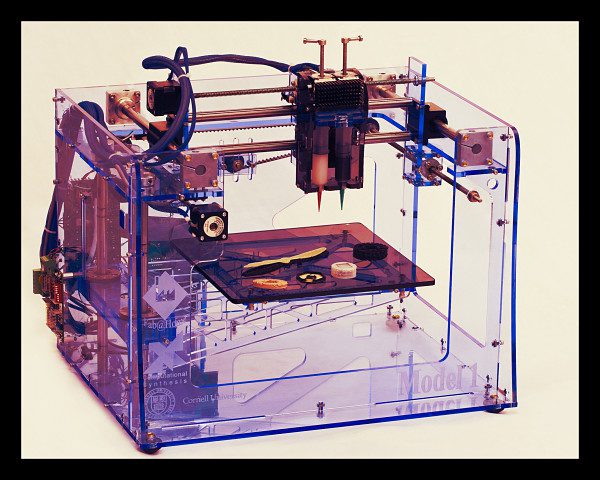
NASA recently invested $125,000 in a project aimed to solve the challenges of supplying food in space missions. The project would astronauts to create their own food in space by utilizing 3D printers.

Just as a paper printer shapes ink to form letters, a 3D printer uses different materials to create a 3D object. To produce food for its astronauts in space, NASA is looking to print edible materials with 3D printers, including powdered forms of carbohydrates, proteins, and other nutrients. 3D printers could be beneficial for long space voyages because powdered substances could last up to 30 years.

While NASA may be looking to use 3D food printers for space travel, there is great potential for the use of 3D printers here on Earth, namely to end world hunger. With the long shelf life of food produce by 3D printers, the concern of food being wasted due to spoilage disappears. The powdered forms of the nutrients are also easier to transport because they exist in a more compact state.

The nutrients used in a 3D printer can also be retrieved from unconventional sources. For instance, insects could be used as a source of protein, which the UN has noted recently as a way to fight world hunger. Insects are rich in protein, emit less greenhouse gases than livestock, and are easy to harvest. Whether or not insects are used as the protein source of printed foods, the 3D printer could allow for better transportation and longevity of nutrients, which would help considerably in the fight to end world hunger.

– Jordan Kline

Source: Food and Agriculture Organization of the United Nations,National Geographic,Time Magazine
Photo: Wikipedia

June 14, 2013
https://borgenproject.org/wp-content/uploads/borgen-project-logo.svg 0 0 Borgen Project https://borgenproject.org/wp-content/uploads/borgen-project-logo.svg Borgen Project2013-06-14 04:00:422020-06-26 21:36:503D Printers to End World Hunger?
Development, Global Poverty

10 Facts About Poverty in Ethiopia

Poverty in Ethiopia Poor Facts
Poverty in Ethiopia remains a major concern, but the country has also seen great progress. Ethiopia has the second largest population of all African countries and has only once, for a brief period of time, been colonized. One of Africa’s oldest independent countries, Ethiopia has a rich culture and long history. However, it is currently considered one of Africa’s poorest countries despite a rapid population boom in recent decades. Read how Ethiopia reduced poverty.


10 Key Facts on Poverty in Ethiopia


  1. Ethiopia is located in East Africa and is historically a rich country.
  2. Agriculture accounts for more than half of its economy, and employs 80% of its population.
  3. With an estimated population of 86 million people, 78% of Ethiopians struggle with an income below US$2 a day.
  4. The life expectancy of the average Ethiopian was 59 years old in 2011.
  5. The State Health expenditure is approximately $3 per person in Ethiopia.
  6. For every 1,000 children five years old and younger, there are 166 deaths.
  7. Preventable diseases, including Malaria, account for at least 60% of health problems in the country.
  8. Approximately 34% of the rural population in Ethiopia has access to an improved water source.
  9. Ethiopia’s main exports are coffee, hides, oilseeds, beeswax and sugarcane. Ethiopia’s main source of income comes from its agricultural economy that is often affected by drought.
  10. Almost two-thirds of its people are illiterate.

– Kira Maixner


Source: The World Bank , Merlin USA , BBC
Photo: World Vision

1. Donate
2. Email Congress
3. Volunteer


June 11, 2013
https://borgenproject.org/wp-content/uploads/borgen-project-logo.svg 0 0 Borgen Project https://borgenproject.org/wp-content/uploads/borgen-project-logo.svg Borgen Project2013-06-11 04:00:022024-05-24 23:40:2810 Facts About Poverty in Ethiopia
Aid Effectiveness & Reform, Development

Four Downsides of Big Data

Downsides of Big Data
It is easy to get excited about all the new information we now have about the world’s development projects. Maps and tables, charts and graphs flood our inboxes with ‘big data.’ Most recently, AidData published a huge dataset on Tracking Chinese Aid to Africa. All the hype has caused some backlash, and rightfully so. Big data is still data and requires the same careful handling as any other dataset. This is not meant to dull enthusiasm or lessen the use of data. This is a precaution against the misuse and overgeneralization of big data. One size does not fit all, and overgeneralizations from large or small datasets can be dangerous. Here are Big Data’s 4 downsides found by practitioners and academics.

1) Big data is not a panacea. One size does not fit all. The dynamic nature of development projects means that many are time-place specific. While sweeping data collection projects can lead to better practices at high-level institutions, implementing policies based on improperly generalized data is bad policy and poor use of data.

2) Difficulties in filtering relevant information. Data from developing countries regarding health systems, political upheaval, natural disasters, etc. are most often reported by vulnerable people experiencing the event first hand. The sourcing of the data is often social media. Aside from possible problems with the validity of the data, the sheer amount of potential data is enormous. Key word searches across selected media yield thousands of data points which have to be carefully reviewed to filter for relevancy. The computer programs are simply not nuanced enough to pull out the differences between hate speech, for example, and slang (as shown in a study on mapping hate speech in twitter recently). Additionally, a parallel problem is availability of reliable and secure statistical processing. Unlike data processing for pharmaceutical companies, aid data processing is not backed by billions of dollars in profit.

3) Data exhaustion on the ground. By the time social scientists are through cleaning, manipulating, and making sense of the data, the situation on the ground has often changed. This is called “data exhaustion.” The big data collectors (UN, World Bank, USAID, AidData) are constantly playing catch up. This means that the people on the ground are not able to use the most up-to-date information. The use of social media has mitigated the delay; however, data extraction and implementation of policies based on data is a top-down approach that may not accord with the culture of the project or practical feasibility. For example, the best way to empower women according to big data analyses might be to get women into the work place allowing them independent incomes. The on-the-ground reality might be that they are already responsible for non-paid work, such as childcare or maintaining subsistence crops, which already takes up their whole day.

4) Validity of data is questionable. As indicated by the debates over the validity of AidData’s Tracking Chinese Aid to Africa, socially sourced data cannot be the only source of data to influence policy. Self-reporting has inherent “barriers, blindspots and biases.” For example, the information collected from the Arab Spring was based on self-reporting of goings-on. The outside world used information from texts, Tweets, Facebook and blog posts to analyze the situation.

These four potential downsides of big data all suggest the need for caution in using data to inform development policy.

– Katherine Zobre

Source: Relief Web
Photo:
AidData

June 10, 2013
https://borgenproject.org/wp-content/uploads/borgen-project-logo.svg 0 0 Borgen Project https://borgenproject.org/wp-content/uploads/borgen-project-logo.svg Borgen Project2013-06-10 04:00:332024-06-07 04:44:45Four Downsides of Big Data
Development

Defining an Emerging Market

Defining an Emerging Market
The term “emerging markets” was coined in 1981 at the International Finance Corporation when promoting the first mutual funding investments in developing countries. While the term is sometimes considered unhelpful, it is important to identify and define these markets. Emerging markets are a hot topic as they are predicted to surpass the US, German, and UK economies in the future.

There are three factors that distinguish an emerging market from a developed market. Firstly, rapid economic growth defines emerging markets. Great examples of emerging markets are Brazil, Russia, India, China, and South Africa (BRICS). In recent decades, these developing countries have boosted their large economies based on global capital, technology, and talent. The GDP growth rates of these countries have outpaced those of more developed economies, lifting millions out of poverty and creating new middle classes and large new markets for consumer products and services. The large labor pools of these countries give their economies a huge advantage over more developed economies.

The second factor that defines the emergence of a developing economy is how much competition it offers in comparison to developed markets. Along with the rapid pace of development, these countries pose serious competition to current dominant economies in developed countries such as the United States, the United Kingdom, Germany, France, and Italy.

Lastly, emerging markets are often defined in terms of their financial situation and infrastructure. While their rapid growth and competitiveness are positive growth indicators, the amount of red-tape and inconsistencies involved in dealing with these markets marks them as emerging. Unfortunately, some argue that the corruption in these markets will halt them all together despite other growth factors.

While the economies of Brazil, Russia, India, and China are well on their way to surpassing “emergence”, the predicted emerging economies of the future are Colombia, Indonesia, Vietnam, Egypt, Turkey, and South Africa (CIVETs). According to John Bowler, director of Country Risk Service at the Economist Intelligence Unit, the sizeable populations of some of these countries and the wealth of natural resources in others, just might make them the economic boomers of the next decade.

– Kira Maixner

Source CNN , Forbes
Photo ACF

June 8, 2013
https://borgenproject.org/wp-content/uploads/borgen-project-logo.svg 0 0 Borgen Project https://borgenproject.org/wp-content/uploads/borgen-project-logo.svg Borgen Project2013-06-08 05:30:212024-06-04 01:07:56Defining an Emerging Market
Development

What Does CRS Do?

What Does CRS Do?
Catholic Relief Services (CRS) was founded in 1943 by the Catholic Bishops of the United States to serve WWII survivors in Europe. The organization now serves over 100 million people in over 100 countries. Their mission is to serve impoverished and disadvantaged people, working in the spirit of Catholic social teaching to promote the sacredness of human life and the dignity of the human person. Although CRS is a Catholic based organization, they help whomever they can regardless of their race or religion, employing Catholics and non-Catholics alike.

CRS works to ease suffering, provide development assistance, and foster charity and justice. They have a set of guiding principles including: the sacredness and dignity of humans, preservation of basic human rights, supporting the social nature of humanity, promoting the common good, subsidiarity, solidarity, stewardship, and strengthening the options of the poor. CRS is governed by a board of directors including clergy, elected bishops, and Catholic lay men and women.

CRS provides both emergency and long-term relief to countries. They work to provide basic necessities, healthcare and education to the poorest and most vulnerable populations in the world. CRS focuses on six key areas of services including: emergencies, hunger, education, health, peace and helping at home.

CRS assists in regions affected by natural disasters and wars, providing water, food, shelter, as well as attempting to bring about long lasting peace if possible. CRS fights hunger through development of agriculture, improved water and sanitation, sustainable work options and through providing microfinance loans to those in need. They build improved educations systems, especially for women and girls and develop community-based health care systems to improve medical conditions. CRS also fights HIV/AIDS and establishes programs to reduce child and maternal mortality.

CRS proclaims Peacebuilding as the most important thing they do, lying at the heart of their operations. Conflict resolution, education and prevention are incredibly important to CRS. However, CRS also believes that rebuilding civil society and civic organization encourages good governance and makes governments accountable to their populations.

Some good examples of their programs are their programs to improve agriculture in Latin America. They are connecting farmers with suppliers and vendors to agricultural cooperatives to help the poorest farmers thrive. They have introduced more efficient technology to increase profits by the means of bean processing plants and drip irrigation systems. This method has seen beneficial results in Nicaragua and Ecuador where farmers have seen an additional dollar in profit per pound of cocoa. CRS is looking to expand their programs to Haiti in the wake of their natural disaster. CRS is creating an exit strategy for farmers in poverty by helping them improve their products, expand their markets and become self-sustainable.

– Caitlin Zusy 
Source: CRS Blog, CRS

June 7, 2013
https://borgenproject.org/wp-content/uploads/borgen-project-logo.svg 0 0 Borgen Project https://borgenproject.org/wp-content/uploads/borgen-project-logo.svg Borgen Project2013-06-07 04:00:432024-05-24 23:54:13What Does CRS Do?
Page 157 of 163«‹155156157158159›»

Get Smarter

  • Global Poverty 101
  • Global Poverty… The Good News
  • Global Poverty & U.S. Jobs
  • Global Poverty and National Security
  • Innovative Solutions to Poverty
  • Global Poverty & Aid FAQ’s
Search Search

Take Action

  • Call Congress
  • Email Congress
  • Donate
  • 30 Ways to Help
  • Volunteer Ops
  • Internships
  • Courses & Certificates
  • The Podcast
Borgen Project

“The Borgen Project is an incredible nonprofit organization that is addressing poverty and hunger and working towards ending them.”

-The Huffington Post

Inside The Borgen Project

  • Contact
  • About
  • Financials
  • President
  • Board of Directors
  • Board of Advisors

International Links

  • UK Email Parliament
  • UK Donate
  • Canada Email Parliament

Get Smarter

  • Global Poverty 101
  • Global Poverty… The Good News
  • Global Poverty & U.S. Jobs
  • Global Poverty and National Security
  • Innovative Solutions to Poverty
  • Global Poverty & Aid FAQ’s

Ways to Help

  • Call Congress
  • Email Congress
  • Donate
  • 30 Ways to Help
  • Volunteer Ops
  • Internships
  • Courses & Certificates
  • The Podcast
Scroll to top Scroll to top Scroll to top