• Link to X
  • Link to Facebook
  • Link to Instagram
  • Link to TikTok
  • Link to Youtube
  • About
    • About Us
      • President
      • Board of Directors
      • Board of Advisors
      • Financials
      • Our Methodology
      • Success Tracker
      • Contact
  • Act Now
    • 30 Ways to Help
      • Email Congress
      • Call Congress
      • Volunteer
      • Courses & Certificates
      • Be a Donor
    • Internships
      • In-Office Internships
      • Remote Internships
    • Legislation
      • Politics 101
  • The Blog
  • The Podcast
  • Magazine
  • Donate
  • Click to open the search input field Click to open the search input field Search
  • Menu Menu

Archive for category: Children

Information and stories addressing children.

Children, Education, Global Poverty

10 Facts About Children’s Education Worldwide


The Global Partnership for Education estimated that 264 million children were out of school during the 2015 school year. In low-to-middle-income countries around the world, one in four young people is illiterate. The quality of worldwide children’s education is not the only reason why 250 million kids either don’t make it past four years in school or have not learned basic math, reading or writing skills by grade four. So why aren’t children going to school?

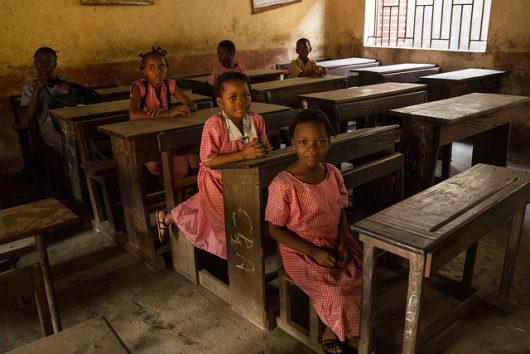
  1. A country’s lack of funding for education contributes not only to the absence of actual schools and materials (400 million students worldwide do not have desks) but a low quantity and quality of teachers as well. Multiple education levels often make up one class, which impacts drop out rates and the overall quality of worldwide children’s education.
  2. Their families are poor. When a child’s parents are illiterate, unemployed or sick, all factors contributing to poverty, the risk of that child either dropping out of school or not going to school at all are doubled.
  3. Worldwide children’s education rates drop during times of war or conflict. According to UNICEF, about 48.5 million children do not attend school because they live in high conflict or war zones. In Syria, more than two million children are unable to attend school, with a quarter of schools no longer being used for educational purposes. About 50,000 education professionals have either fled the country or died in the fighting.
  4. Poor families often see no other option than to marry off their female children, a major cause of a lack of worldwide children’s education, particularly for girls. These victims of child marriage are restricted from education by immediate cultural obligations such as housework and pregnancy. A child with a literate mother is 50 percent more likely to live past five years old.
  5. School is too far away. Many children walk up to three hours to school each way. In an impoverished country where the children are hungry, disabled and responsible for working around the house, this is simply too much time to invest. Additionally, long and hazardous walks can be dangerous, especially for girls.
  6. There are 150 million disabled children around the world, with 80% in developing countries, and the rate is increasing. Nine out of 10 of these children are out of school. The reasons range from physical barriers to the negative attitudes of teachers to inadequate policies. ADD International based in the U.K. partners with and connects a network of disability activists around the world, providing tools, resources and support.
  7. They have to work. 11% of children are child-laborers, which comes to 168 million young people.
  8. They or their families are sick. Even in first-world countries, illness can be a huge barrier for worldwide children’s education. Developing countries have less accessible healthcare, making it more difficult to prevent and treat even the simplest conditions. When parents have access to healthcare, they have a higher chance of being able to work to provide for their families.
  9. They are female. Females account for 54% of the non-schooled population globally. This problem is particularly common in the Arab States and Asia, where cultural norms dictate a higher value in men than women. Especially for menstruating girls, a lack of bathroom privacy and sanitary supplies can lead to missing school. In Somalia, where 36% of girls go to school, the government implemented the Go To School initiative in order to give more girls access to education.
  10. They are hungry. According to the Global Citizen, “Being severely malnourished, to the point, it impacts on brain development, can be the same as losing four grades of schooling.” In developing countries, stunted children are 19% less likely to be able to read by age eight. This is a problem, as there are 171 million children stunted by age five in these countries.

From 2002 to 2014, the Global Partnership for Education helped 64 million children make it to primary school in its partner countries. The organization supports 65 developing countries to ensure that every child receives a quality basic education, prioritizing the poorest, most vulnerable and those living in countries affected by fragility and conflict.

The WE Movement partners with countries in Africa, Asia and Latin America to redesign villages that encourage sustainable community change. They build schools, educate teachers, deliver school supplies, build wells and water pumps, provide medical clinics and health training, assist with agriculture and food production and offer parents educational services.

Although there has been much progress in global education, the barriers holding children back from reaching their full potential through quality education still exist. When educated, young people are more likely to have the self-confidence and knowledge to better both their communities and their own livelihoods. Worldwide children’s education is an important tool in the overall reduction of global poverty.

– Katherine Gallagher

Photo: Flickr

July 15, 2017
https://borgenproject.org/wp-content/uploads/borgen-project-logo.svg 0 0 Borgen Project https://borgenproject.org/wp-content/uploads/borgen-project-logo.svg Borgen Project2017-07-15 01:30:042020-06-02 12:29:2410 Facts About Children’s Education Worldwide
Children, Global Poverty, Hunger

How Many People Die from Hunger Each Year


Hunger continues to be the world’s biggest health problem. Hunger is one of the most emblematic images of poverty: the picture of stunted, malnourished children tends to resonate empathetical feelings in almost anyone. Just thinking of an image like this shows how, in one way or another, society knows how much suffering world hunger causes. With this information, the real question is how many people die from hunger each year.

This year, 36 million people will die from starvation. Essentially, that equates to a person dying of hunger every second of the year. Of these 36 million inhabitants, children are especially vulnerable. Every minute, 12 children under the age of five will die of hunger. This fact represents a death every five seconds.

The question itself of hunger, not just hunger-related deaths, is just as equally an important issue. The Oxford English Dictionary defines hunger as the want or scarcity of food in a country. The current world population is more than seven billion, and 795 million people, or one in every nine people, suffer from hunger. Almost all of these people are living in developing countries. Countries in Asia suffer from this problem more than any other region, with 525 million people suffering. Sub-Saharan African countries follow with a combined 214 million.

These regions are the most susceptible to conflict and drought, and usually, these tragedies end in famine.  All of these factors are a direct relation to hunger. Consequently, 50 percent of all hungry people are families that depend on agriculture.

While there may have been an extreme spike in cases of hunger from 1995 to 2009 (an increase from sub-800 million hungry citizens to more than one billion in 2009), there has been a stark and continual decrease from 2009 to 2017. Currently, the world is seeing the lowest number of hungry people since 1995. There are 200 million fewer people suffering from hunger than there were 25 years ago.

With the understanding of how many people die from hunger each year and how many people still suffer from it, the question is how can this issue be addressed? One method to fight against global hunger is by supporting The Borgen Project. The Borgen Project places its focus on alleviating global poverty.  By ridding the world of poverty, there will directly influence those who are also suffering from hunger.

– James Hardison

Photo: Flickr

July 13, 2017
https://borgenproject.org/wp-content/uploads/borgen-project-logo.svg 0 0 Borgen Project https://borgenproject.org/wp-content/uploads/borgen-project-logo.svg Borgen Project2017-07-13 01:30:162020-06-08 09:18:36How Many People Die from Hunger Each Year
Children, Education, Global Poverty

10 Facts About Education in Thailand


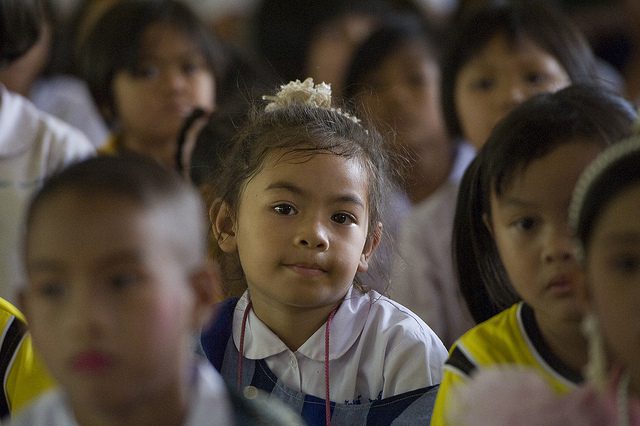
In Thailand, a Southeast Asian country boasting scenic coastlines and rich religious history, literacy soars while achievement rates remain comparatively low.

Though the government invests generously in public education, the nation at large fails to measure up to global academic standards. Many citizens attribute this phenomenon to governmental bias and call for structural changes.

Education advocates have garnered the attention of public officials, but some obstructions still riddle the path to successful reform. Below are 10 facts about education in Thailand, including recent efforts to revitalize the system.

  1. Access to education in Thailand has risen consistently over the past two decades. All Thai children are guaranteed an education under the 1999 Education Act, and children of other nationalities living in Thailand gained the same right in 2005. A 2009 decision increased free education from 12 to 15 years. Between 2000 and 2009, primary and secondary school enrollment increased by nine percent and 17 percent, respectively.
  2. Despite Thailand’s universal access to education and 96.7 percent literacy rate, Thai students scored below the global average on PISA tests in 2014, ranking 35th out of 40 countries. Recent reports from the Trends in International Mathematics and Science Study (TIMSS) also indicate that the country has fallen behind.
  3. In 2015, the government spent 19.35 percent of its yearly budget on education, a greater portion than was spent on anything else. However, Thailand has yet to see cumulative improvements in its schools.
  4. The lack of success might be the result of poorly divided funds. Instead of distributing it equally, the government funnels a large proportion of money toward schools where students already have a high likelihood to succeed and gives less to smaller and more rural schools.
  5. As a result, schools in poor areas must stretch their resources thin. Individual teachers often teach multiple grades and subjects.
  6. Due to these inequalities, students in city schools demonstrate higher rates of improvement than students at rural schools, according to the PISA test.
  7. While funding inequality puts small, rural schools at a particular disadvantage, the outdated curriculum does a disservice to all Thai schools. The system has used the same curriculum since 2008, which itself is only a slightly edited version of curriculum from 2001.
  8. The Asian Correspondent predicts economic problems in Thailand, as this curriculum focuses on outdated industries and skills. Unless the curriculum is updated to better fit the demands of the modern world, the Thai education system runs the risk of producing an unemployable generation.
  9. In 2014, the National Council for Peace and Order resolved to reconstruct the education system but has taken no discernible actions yet.
  10. Tutor schools and “shadow education” systems have emerged at the hands of parents, as there is a widespread distrust of the public education system. However, many continue the fight for better public education, as low-income families have fewer options to teach their children independently.

The future of education in Thailand may appear a bit rocky, but there is potential for improvement. With national attention on schools, and many families so passionate that they’ve come up with ways to combat the issue in their own homes, opportunities for students are bound to continue multiplying.

– Madeline Forwerck

Photo: Flickr

June 21, 2017
https://borgenproject.org/wp-content/uploads/borgen-project-logo.svg 0 0 Borgen Project https://borgenproject.org/wp-content/uploads/borgen-project-logo.svg Borgen Project2017-06-21 07:30:522024-05-28 00:02:1410 Facts About Education in Thailand
Children, Global Poverty

The Psychology of Poverty: The Chicken or the Egg


Does poverty lead to a negative state of mind, or does a negative state of mind lead to poverty? Are the two connected at all? What role does psychology play in understanding poverty?

The psychology of poverty is another facet of poverty’s debilitating toll on individuals. An article by the Association for Psychological Science states that people who deal with “stressors” like poverty and discrimination are more susceptible to physical and mental disorders.

Studies have demonstrated that children who grow up poor have lesser amounts of gray matter in their frontal and parietal lobes. Poverty also affects the size of their hippocampus and amygdala, parts of the brain responsible for memory, learning and processing social and emotional information. Furthermore, children from poor families have decreased access to cognitive stimuli. Cognitive stimuli include things such as books, computers and other learning resources. These effects impede a child’s learning ability.

Psychology Problems Linked to Poverty

Living in poverty, especially persistent poverty, increases an individual’s likelihood of suffering from anxiety, depression and attention problems. These are complex symptoms that provide more barriers to escaping poverty.

Martha J. Farah, a University of Pennsylvania professor, says that studies have shown that many people think that those who are poor are poor because they do not try hard enough. She says that neurons should not be blamed, though.

Commenting on Carson’s statement about poverty as a state of mind, Gary Evans, a professor at Cornell University, said that “he’s correct in identifying that there’s this link [between the state of mind and poverty], but I think he’s got the relationships backward.”

The American dream mentality that encourages individuals to pull themselves up by their bootstraps and march onward towards a better life has merit in its promotion of perseverance. Its harms, especially when intermingled with poverty, lie in its tendency to individualize progress. In other words, it may frown upon outside help. Furthermore, it may diminish the complexity of poverty’s hold on households.

The psychology of poverty further demonstrates its complexities. And complex problems rarely have simple solutions. Poverty is a beast that must be tamed collaboratively with individual insight, community collaboration, a national passion and global innovation.

– Rebeca Ilisoi

Photo: Flickr

June 16, 2017
https://borgenproject.org/wp-content/uploads/borgen-project-logo.svg 0 0 Borgen Project https://borgenproject.org/wp-content/uploads/borgen-project-logo.svg Borgen Project2017-06-16 01:30:302020-04-18 13:09:57The Psychology of Poverty: The Chicken or the Egg
Children, Education, Global Poverty

The Citizen’s Foundation: Helping Children Access Education in Pakistan


In 1995, The Citizen’s Foundation (TCF) was created by a group of people who believed that education in Pakistan should be a right, not a privilege. For the 20 million children who still do not have education today, that belief could change their lives.

The program began its mission by creating five schools in the slums of Karachi. Now they operate nearly 1,000 schools across poverty-stricken areas of Pakistan.

One of the main goals of The Citizen’s Foundation (TCF) is to help women and girls out of poverty by changing their roles in rural communities. Women who are mothers, and have been considered little more, are now being taught to read in communities with TCF schools. In addition, nearly 15,000 new jobs came along with the schools, and almost all of these positions have been filled by women.

TCF hopes for a balanced gender ratio in its students, and it has nearly attained that goal. Today, 45 percent of students are girls–that is 45 percent of the 145,000 students now receiving education in Pakistan.

The Citizen’s Foundation hopes to create stability through education and employment that will benefit Pakistan domestically while reducing the threat of corruption festering in impoverished communities that has threatened national security abroad.

With career counseling, vocational training, alumni development programs and summer camps, TCF is encouraging the well-being of entire communities, not just putting children behind desks. They have even implemented nine water filtration plants and five reverse osmosis plants to bring clean water to the communities where they operate.

The success of TCF has been recognized across the world. In 2011 the organization was awarded the Qatar Foundation’s award for the Annual World Innovation Summit for Education (WISE), and in 2013 it won a Skoll Award for Social Entrepreneurship, which included $1.25 million of support.

$144 provides one year of education in Pakistan, and The Citizen’s Foundation is determined to continue implementing their curriculum’s in rural, poor areas across the country until that education is a reality for every child.

– Brooke Clayton

Photo: Flickr

June 14, 2017
https://borgenproject.org/wp-content/uploads/borgen-project-logo.svg 0 0 Borgen Project https://borgenproject.org/wp-content/uploads/borgen-project-logo.svg Borgen Project2017-06-14 01:30:052024-05-28 00:02:06The Citizen’s Foundation: Helping Children Access Education in Pakistan
Children, Education, Global Poverty

Literacy in India: Room to Read


Literacy in India is distributed unevenly, and in the rural places where it is absent, it has continued to perpetuate poverty. Thirty-six percent of the world’s illiterate live in India, and one in five people were considered poor in 2016.

Room to Read is a program dedicated to using education as a weapon against that imbalance. It launched in 2003 in India and is now the most successful program among the 10 countries where it operates. By encouraging active reading habits and setting a goal to have all girls finish secondary school, literacy in India is improving immensely with the program’s help.

Students involved with the Room to Read Literacy Program read three times as fast as students in nearby schools, and of the 2014 graduates from the Girl’s Education Program, 84 percent went on to pursue post-secondary degrees.

Forty-seven percent of girls in India marry before the age of 18, and therefore do not pursue education. Young marriage perpetuates poverty, as the young women must provide for a family with limited opportunities. Today, female literacy in India is up to nearly 63 percent compared to 45 percent in 2000, and poverty is declining along with it.

For its humanitarian successes, Room to Read was given a Skoll Award for Social Entrepreneurship in 2006. This distinction represents the proven impact of an organization and grants it $1.25 million in support.

The sustainable model of Room to Read works largely with local governments to create a model of education that can be recreated and instated across developing countries even after the organization’s direct involvement has expired.

So far, the state governments of Uttarakhand and Chhattisgarh have been the most impressed in India, and have asked Room to Read to implement its educational system in the states for five years. What began as 360 schools in 2015 grew into 1,000 by 2016, and the three million children reached in India so far is expected to grow to a total of four million.

Putting that in the perspective of a campaign in its 14th active year, it is no surprise that Room to Read has benefited 11.5 million children globally, with its campaign in India ranking the most successful. Poverty will continue to become rare as literacy in India becomes the norm.

– Brooke Clayton

Photo: Flickr

June 6, 2017
https://borgenproject.org/wp-content/uploads/borgen-project-logo.svg 0 0 Borgen Project https://borgenproject.org/wp-content/uploads/borgen-project-logo.svg Borgen Project2017-06-06 07:30:172024-05-28 00:02:06Literacy in India: Room to Read
Children, Education, Global Poverty

How Does Education Affect Poverty?


How does education affect poverty? Education can eradicate poverty if given the chance; those in poverty can only benefit from education. People living in poverty that are unable to attain a formal education will have a much more difficult time escaping their living and working conditions. The right education can lift people from poverty and improve their lives financially, physically and mentally.

For many countries, there is free public education, however, there are additional costs for uniforms, books or transportation. In rural areas, children may travel for hours each way to get to school on a bus. These expenses can be overwhelming for low-income families.

Sometimes the families are forced to pull children from school in order for them to work to support the family. The problem with taking children out of school to work is that it results in an education that was cut short, if it even began at all.

Poverty is more than simply not having enough money. But having an education can alleviate some of the problems faced in poverty. How does education affect poverty? Education improves food security and reduces malnutrition. By educating citizens on agriculture and farming techniques, they become capable of growing and selling their own food. This creates a source of income as well as healthy living.

Literacy allows women to read about prenatal vitamins, and other health information during pregnancy. Families can learn about the importance of drinking clean water and safely preparing food. Education reduces the spread of communicable diseases that plague poverty stricken areas. When a community does not understand how a disease is spread, it can catch like wildfire infecting many people. But through education, children and families can learn how to protect themselves against illnesses like HIV/AIDS and Ebola. Education improves gender equity. By allowing girls to be educated they are empowered to make their own decisions in life and it can cut the rates of early marriage and pregnancy.

How does education affect poverty? Education creates development, free-thinking citizens and better health and wellbeing. A good education can provide a lifetime of opportunities. Providing an education allows people living in poverty to think outside of only wondering when the next meal might be. An education can drastically improve quality of life for those living in poverty. Providing an education for the poverty-stricken allows them to provide for themselves in the future.

– Karyn Adams

Photo: Flickr

June 4, 2017
https://borgenproject.org/wp-content/uploads/borgen-project-logo.svg 0 0 Borgen Project https://borgenproject.org/wp-content/uploads/borgen-project-logo.svg Borgen Project2017-06-04 01:30:172024-05-28 00:00:13How Does Education Affect Poverty?
Children, Global Poverty

Child Poverty in Turkey

Poverty in Turkey
Despite having one of the world’s fastest-growing economies, Turkey needs to address its poverty problems. Recent data shows that child poverty in Turkey is spinning out of control, especially among rural populations. Located where Western Asia meets Southeast Europe, Turkey has a population of over 80 million people, with about 30 percent of the population under the age of 18. Many of these children lack basic necessities, such as education and medical care.

According to a recent report, two out of every three children are affected by child poverty in Turkey. This data is based on the European Union standards of living, which evaluates the material deprivation of the average household. The report explains that when making international comparisons, child poverty in Turkey is extremely severe and persistent. UNICEF builds on this by stating that as poverty continues to grow out of control, more Turkish children are threatened by the poverty threshold.

Rural populations are significantly further behind compared to the urban population in terms of education and wages. In rural areas, many schools lack teachers, which forces schools to accommodate as many as 100 students per classroom. These large classrooms lead to poor educational outcomes. Additionally, thousands of young girls in Turkey are out of school or denied education. This lack of education leads to poor wages and job opportunities, with some families resorting to child labor or child marriage in order to make ends meet.

Children are often times denied proper healthcare. According to UNICEF, immunization rates for childhood diseases are in need of improvement, especially in rural areas. There is also roughly 2,000 children with HIV/AIDS, with UNICEF believing the numbers are likely higher.

Steps are being made to address child poverty in Turkey. The Turkish government has made ongoing efforts to improve medical care for children, educational opportunities for girls and prenatal care for mothers. Additionally, UNICEF has partnered with Procter & Gamble and has helped educate 250,000 mothers about better parenting.

Experts state that it is absolutely crucial that Turkey addresses these impoverished living conditions since child poverty is one of the root causes of poverty in adulthood. One expert named Didem Gürses writes that “in order to break the generational cycle, poverty reduction must begin in childhood.”

Child poverty in Turkey must be addressed if Turkey wishes to end poverty and have a successful future.

– Morgan Leahy

Photo: Flickr

May 21, 2017
https://borgenproject.org/wp-content/uploads/borgen-project-logo.svg 0 0 Borgen Project https://borgenproject.org/wp-content/uploads/borgen-project-logo.svg Borgen Project2017-05-21 01:30:282024-05-28 00:00:19Child Poverty in Turkey
Children, Education, Global Poverty

What Does Education in Iceland Look Like?


Education in Iceland is incredibly important. In a 2016 study, Iceland was ranked the third most literate nation in the world, trailing behind Finland and Norway. The small island country is home to a population of around 332,000 people.

Iceland is well known for being progressive. Its equality endeavors are evident in the structure of its education system. According to the nation’s website, “A fundamental principle of the Icelandic educational system is that everyone should have equal opportunities to acquire an education, irrespective of sex, economic status, residential location, religion, possible handicap and cultural or social background.”

Education in Iceland is a four-level system.

  1. Preschool is the first level of education, which children attend between one and six years of age. There are fees for preschool, but they are largely subsidized.
  2. Compulsory education follows preschool education. Compulsory education is free and mandatory for children between the ages of six and 16. Unlike in the United States, homeschooling is not an option.
  3. Upper secondary education is the third level. It is available to anyone who has completed compulsory education, and is mostly compromised of students 16 to 20 years of age. The upper secondary level is essentially the equivalent of high school in the United States and is free with the exception of one private school.
  4. The fourth tier is education at a university, otherwise known as higher education. To apply for university, a student must first have completed upper secondary education. For the most part, universities in Iceland are required to accept all students with an upper secondary degree. Public universities in Iceland are tuition-free; the only costs associated with higher education are registration fees.

With a literacy rate of 99 percent and an unemployment rate at around 2.7 percent, perhaps the rest of the world can learn from the system of education in Iceland.

– Shannon Elder

Photo: Flickr

May 17, 2017
https://borgenproject.org/wp-content/uploads/borgen-project-logo.svg 0 0 Borgen Project https://borgenproject.org/wp-content/uploads/borgen-project-logo.svg Borgen Project2017-05-17 01:30:112024-05-28 00:00:00What Does Education in Iceland Look Like?
Children, Global Poverty

Child Labor in Pakistan

Child Labor in Pakistan
Child labor in Pakistan? For many years, Pakistan’s reputation has been notorious as one of the worst child labor offenders. In recent years, child labor prevention efforts have been heightened. Beginning in 2017, a province in Pakistan passed a new law banning child labor. Could this province be a guide for the rest of the nation? Here are the three things you need to know about child labor in Pakistan and how lawmakers are putting an end to this problem.

More than 12.5 million children are involved in child labor in Pakistan. According to Reuters, “Pakistan’s Labour Force Survey, 2014-15 showed that of those children aged between 10 and 14 years active in child labor, 61 percent were boys and 88 percent came from rural areas.”

In Pakistan, 38.8 percent of the population is living in poverty, with one in four individuals living in acute poverty. For many citizens in Pakistan, it is hard to find a job or to secure one paying enough to provide for a family. Students from impoverished backgrounds who are unable to enter school are most likely to become affected by child labor in Pakistan.

Many child workers are often abused where they work, suffering beatings or torture. Many children are sent to live with middle class and elite class families to perform as domestic servants. Jobs like these become particularly dangerous for children, as they are at the risk of physical and sexual abuse without real supervision.

There are a few programs funded by the government to tackle child labor in Pakistan. For instance, the Children Support Program gives parents money so that they can send their children to school instead of encouraging them to join the work force. This program is available to parents of children ages five to 16. So far, the government has distributed $3 million to families.

In 2016, Pakistan was criticized for not conducting any surveys focusing on the child labor of the past 20 years. This allowed for about 25 million children, who are not attending school, slip under the radar.

On Jan. 26, 2017, the province of Sindh made child labor illegal under The Sindh Prohibition of Employment of Children Bill, banning children under the age of 14 from working. The law also prohibits adolescents from working between the hours of 7 p.m. to 8 a.m. and for those adolescents who are working, they cannot work more than three hours a day.

Sindh is known as the most impoverished province in Pakistan. As reported by tribune.com, “In Sindh, 43.1 percent [of the] population is extremely poor due to lack of education, health facilities and poor living standards.” The new law states that offenders of the child labor law will be imprisoned for six months and fined 50,000 rupees. Meanwhile, offenders who are found with child workers in dangerous workplaces (such as stone crushing and carpet weaving) will be sentenced to three years of imprisonment with an increased fine of 100,000 rupees.

Since the province of Sindh is beginning to tackle the issue of child labor in Pakistan, in the future, the rest of the Pakistani work force could follow its example and eliminate all labor misconducts.

– Maria Rodriguez

Photo: Flickr

May 15, 2017
https://borgenproject.org/wp-content/uploads/borgen-project-logo.svg 0 0 Borgen Project https://borgenproject.org/wp-content/uploads/borgen-project-logo.svg Borgen Project2017-05-15 01:30:502024-12-13 17:57:54Child Labor in Pakistan
Page 97 of 137«‹9596979899›»

Get Smarter

  • Global Poverty 101
  • Global Poverty… The Good News
  • Global Poverty & U.S. Jobs
  • Global Poverty and National Security
  • Innovative Solutions to Poverty
  • Global Poverty & Aid FAQ’s
Search Search

Take Action

  • Call Congress
  • Email Congress
  • Donate
  • 30 Ways to Help
  • Volunteer Ops
  • Internships
  • Courses & Certificates
  • The Podcast
Borgen Project

“The Borgen Project is an incredible nonprofit organization that is addressing poverty and hunger and working towards ending them.”

-The Huffington Post

Inside The Borgen Project

  • Contact
  • About
  • Financials
  • President
  • Board of Directors
  • Board of Advisors

International Links

  • UK Email Parliament
  • UK Donate
  • Canada Email Parliament

Get Smarter

  • Global Poverty 101
  • Global Poverty… The Good News
  • Global Poverty & U.S. Jobs
  • Global Poverty and National Security
  • Innovative Solutions to Poverty
  • Global Poverty & Aid FAQ’s

Ways to Help

  • Call Congress
  • Email Congress
  • Donate
  • 30 Ways to Help
  • Volunteer Ops
  • Internships
  • Courses & Certificates
  • The Podcast
Scroll to top Scroll to top Scroll to top