• Link to X
  • Link to Facebook
  • Link to Instagram
  • Link to TikTok
  • Link to Youtube
  • About
    • About Us
      • President
      • Board of Directors
      • Board of Advisors
      • Financials
      • Our Methodology
      • Success Tracker
      • Contact
  • Act Now
    • 30 Ways to Help
      • Email Congress
      • Call Congress
      • Volunteer
      • Courses & Certificates
      • Be a Donor
    • Internships
      • In-Office Internships
      • Remote Internships
    • Legislation
      • Politics 101
  • The Blog
  • The Podcast
  • Magazine
  • Donate
  • Click to open the search input field Click to open the search input field Search
  • Menu Menu

Archive for category: Children

Information and stories addressing children.

Children, Global Poverty

5 Things to Know About Childhood Hearing Loss


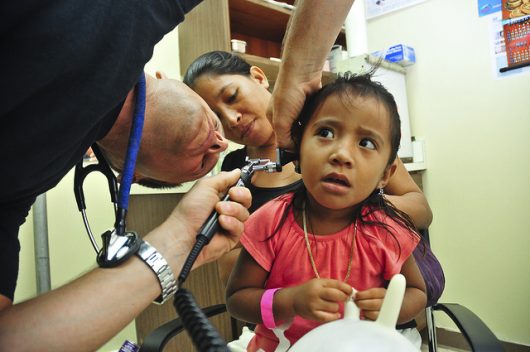
Childhood hearing loss is at an all-time high. The number of people with hearing impairments increased from 42 million in 1985 to 360 million in 2011. Hearing loss can be particularly hard on children since it affects the child’s ability to develop speech, language, and social skills. The WHO is working on treating childhood hearing loss, and here are some things to know about the condition.

Thirty-two million children are living with disabling hearing loss, and most of them are living in impoverished countries. More than 90 percent of chronic ear infections are in the Southeast Asian, Western Pacific, and African countries, as well as among the ethnic minorities of the Pacific Rim.

Three-quarters of children under fifteen years of age in low and middle-income countries have hearing loss that is preventable, but due to lack of access to healthcare, many children in impoverished countries do not get the luxury of treatment. Some examples of congenital causes of hearing loss, which are usually present before or during birth, are low birth weight, birth asphyxia, inappropriate use of drugs during pregnancy, or severe jaundice. Some causes of childhood hearing loss occur during the child’s lifetime and include infectious diseases like meningitis, measles, mumps, chronic ear infections, and collection of fluid in the ears. Chronic otitis, which describes any type of infection and inflammation in the middle ear, is one of the most common causes of childhood hearing loss.

There are many ways childhood hearing loss can be treated. If a baby younger than six months has signs of hearing loss, the baby should receive intervention right away. The earlier the intervention, the greater the improvement to a child’s development. Developing countries could also introduce more hearing aids, since only 10 percent are given the amount that they need.

There have been success stories about children being cured of their deafness. Recently, 16 Palestinian children were able to hear after Israeli doctors gave them cochlear implants. The Peres Center for Peace coordinated these 16 successful surgeries over the course of last year.

Since most hearing loss is preventable, how can people prevent their children from permanent ear damage? Providing better healthcare to impoverished countries can decrease the likelihood of children receiving ear infections that could result in hearing loss. Some precautionary measures include: immunizing children from diseases such as measles, meningitis, rubella, and mumps, immunizing mothers to prevent their unborn babies from receiving those diseases, providing hygienic practices including healthy ear care, screening children for otitis media and reducing exposure to loud noises.

Childhood hearing loss can be preventable and treatable if access to healthcare is provided.

– Emma Majewski

Photo: Flickr

March 28, 2017
https://borgenproject.org/wp-content/uploads/borgen-project-logo.svg 0 0 Borgen Project https://borgenproject.org/wp-content/uploads/borgen-project-logo.svg Borgen Project2017-03-28 01:30:252024-12-13 17:57:405 Things to Know About Childhood Hearing Loss
Children, Global Poverty

The Promise of 3D-Printed Prosthetic Limbs


The World Health Organization estimates that about 30 million people are in need of a prosthesis, but in many developing countries, less than 10 percent of those who require assistive devices and technologies have access to them. Braces and artificial limbs are among the most desperately needed medical devices. This shortage is due to a lack of expertise to produce and fit prosthetics in developing countries, as well as the time and financial cost to patients. Recent advances in 3D-printed prosthetic limbs might provide a solution to this problem.

Increase in Necessity

Disability is an important developmental issue because people with disabilities experience grim socioeconomic outcomes and poverty as they face extra barriers to healthcare, education, and employment. Without prosthetics, those that have lost limbs due to war, accidents or disease are entirely reliant on others for survival.

This is an especially pressing issue due to the recent spike in the use of landmines in several war-torn countries. Stepping on a landmine invariably causes foot and leg injuries, and secondary infections usually result in amputations. A report by the International Campaign to Ban Landmines found that in 2016, global landmine casualties were at a 10-year high, and funding for landmine clearance campaigns was at a 10-year low. While the Mine Ban Treaty banned the use of antipersonnel mines in 1999, armed conflicts in Afghanistan, Iraq, Libya, Syria, Ukraine, and Yemen contributed to a sharp spike in the number of people killed and injured by mines.

Children living in these areas are particularly vulnerable to landmines. For example, in Afghanistan, children made up 45 percent of the civilian landmine casualties reported in 2014. Children are more likely to die from the injuries sustained in a landmine explosion. Of those maimed children who survive, few will be in a position to receive prostheses that can keep up with their growth. This is where 3D-printed prosthetic limbs can make a big difference.

Who’s Making Them?

Programs like 3D PrintAbility, Project Daniel, Cyborg Beast, and Enabling the Future are working to provide affordable and reliable 3D-printed prosthetics in developing countries. Traditionally, creating a prosthesis is a cumbersome process that can take several days. With 3D printing, this process is shortened considerably. The residual limb is scanned, creating a 3D model that can be customized to fit the patient. The prosthetic is then printed in about six hours.

As with many new technologies, there are still several issues to finalize, in terms of testing the prosthetics, making the technology available in areas of need, and training personnel to use the equipment. However, 3D-printed prosthetic limbs are a great example of how technology provides novel ways to improve lives.

– Helena Kamper

Photo: Flickr

March 24, 2017
https://borgenproject.org/wp-content/uploads/borgen-project-logo.svg 0 0 Borgen Project https://borgenproject.org/wp-content/uploads/borgen-project-logo.svg Borgen Project2017-03-24 07:20:592024-12-13 17:57:39The Promise of 3D-Printed Prosthetic Limbs
Children, Global Poverty

The Mwelu Foundation


The Mwelu Foundation is a photography and film production trust based in Nairobi, Kenya, working to help children in the city’s slums realize their creative talents. Founded in 2007 by local photojournalist Julius Mwelu, the organization serves around 80 Kenyan children with help from local volunteers.

Mwelu has two separate programs, one for children up to 17 years old and another for young adults between 18 and 25 years old. Both programs serve to nurture talent by “providing children with a voice and promoting education,” in hopes of breaking the cycles of poverty and violence that are typically present in the area.

Initially, the foundation focused on photography, then added film after much success. The team has produced ten professional photographers and has played a role in seven documentaries and five short films.

The foundation’s School Outreach Project has partnered with four local schools to provide weekly training in photography. When schools are closed, trainers host week-long workshops that focus on changing central themes. By the end of the week, they produce either photography or a film. In addition to film and photography, journalism and creative writing are also artistic focuses.

In 2012, the trust created a community library. The library consists of two spaces that can each fit around 30 students, serving both primary and high school-aged kids. The library allows a space for study, homework help, and access to books.

The project has an additional focus on building life skills, particularly for girls, promoting them to be active in their classes. This is very important, as it allows them to have similar opportunities as their male counterparts. The foundation has a group specifically for girls, Mwelu Divas, which creates projects that document life in the slums. Girls involved in the program say it helps them detour from traditional destructive paths that many women in the area find themselves in, such as early pregnancies and dropping out of school.

The Mwelu Foundation has received support from many groups including Africalia Belgium, Wings of Support, and Canon. While the slum of Mathare is often seen as a hopeless place, The Mwelu Foundation is invoking hope and opportunity through art.

– Shannon Elder

Photo: Flickr

March 22, 2017
https://borgenproject.org/wp-content/uploads/borgen-project-logo.svg 0 0 Borgen Project https://borgenproject.org/wp-content/uploads/borgen-project-logo.svg Borgen Project2017-03-22 09:59:052024-12-13 17:57:40The Mwelu Foundation
Children, Education, Global Poverty

Global Education: The Kailash Satyarthi Children’s Foundation


In one year, more than 15 million child marriages occur, leaving one in 10 women married before age 15. There are 168 million children in the labor force, 85 million of whom are working in hazardous environments. More than one million children are trafficked, and 140 million children are sexually abused.

Kailash Satyarthi, Indian Nobel Peace Laureate, has advocated for ending global violence against children for more than 30 years. With his organization, The Kailash Satyarthi Children’s Foundation (KSCF), he hopes to end child exploitation. He won the Nobel Peace Prize in 2014 for his “struggle against the suppression of children and young people and for the right of all children to education.”

Satyarthi founded and chaired seven different organizations, including the KSCF. All of the organizations focus on rehabilitating children from different forms of slavery and exploitation. Satyarthi has successfully liberated more than 85,000 children.

The Kailash Satyarthi Children’s Foundation has two working locations — one in New Delhi, India and the other in Washington, D.C. While both locations work toward the same goals, the India location focuses more on direct action while the U.S. location provides outreach and engagement.

The organization bases its mission on two goals. First, governments, businesses and societies should create policies to ensure that children remain unharmed. Second, child labor and poverty should be permanently eradicated by providing good education. The KSCF specifies that, “An education cannot be considered a quality education unless it emphasizes children’s rights and empowerment.” By prioritizing prevention, protection and policy change, the KSCF works to end child exploitation.

Satyarthi speaks to the necessity for action in terms of laws and policies. He maintains that we have the power to end child exploitation, and that we can provide the world’s children with better lives and education.

In an article published by UNICEF last year, he wrote, “All children deserve a fair and equal start in life. They deserve freedom and a childhood. They deserve comprehensive, well-rounded, quality education. These have to be viewed not just as basic rights but as a means towards a more inclusive and sustainable society.” The Kailash Satyarthi Children’s Foundation works toward just that.

– Shannon Elder

Photo: Flickr

February 28, 2017
https://borgenproject.org/wp-content/uploads/borgen-project-logo.svg 0 0 Borgen Project https://borgenproject.org/wp-content/uploads/borgen-project-logo.svg Borgen Project2017-02-28 01:30:102024-12-13 17:56:44Global Education: The Kailash Satyarthi Children’s Foundation
Children, Global Poverty, Technology

Twelve-Year-Old Creates My Locator App to Help Lost Children

LocationTwelve-year-old Nigerian girl Tomisin Ogunnubi recently created the My Locator app for Android to help lost children find their way home.
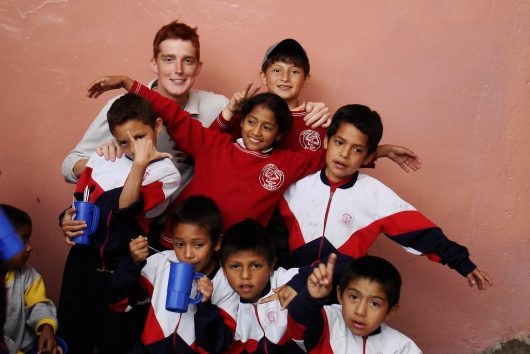
The free app comes with a ‘current location’ setting that shows users their location and nearby streets. Users can also use the app to save a location, such as their house or school, and get directions to the saved location.

The My Locator app also comes with an ‘alert’ button that calls state emergency services in Lagos and shows emergency responders the child’s location. Ogunnubi created the My Locator app under the guidance of her school, Vivian Fowler Memorial College for Girls.

More than 30,000 children in Nigeria are separated from their parents or lost due to unrest caused by Boko Haram. More than two million people across the country have been internally displaced by the conflict.

Boko Haram began militant operations in Nigeria in 2009 in an attempt to create an Islamic state. The group has created unrest in Nigeria and neighboring countries with bombings, abductions and assassinations.

Boko Haram caught international attention in April of 2014 when the group kidnapped 276 schoolgirls from a secondary school in the town of Chibok. Two thousand more children may remain in Boko Haram’s custody, according to Amnesty International.

Children who are separated from their parents or orphaned must resort to any method they can to survive, such as begging or prostitution. They face many dangers, including being abducted by Boko Haram, forced into labor or being sexually abused.

Girls are especially at risk for sexual abuse and forced marriage. Even if they find care with a relative or foster parent, their caretaker may marry them off in exchange for money. While aid workers may try to reunite lost children with their families, this could take months. Children’s relatives may be dispersed across different states in Nigeria or be one among thousands in crowded refugee camps.

Although the situation caused by Boko Haram may make it unsafe for children to return to their homes, the My Locator app has the potential to help children find their way to a space that is safer than their present location, such as a refugee camp or nearby town. When crises are so dire that humanitarian aid becomes scared, technology can serve to help those in need.

– Cassie Lipp

Photo: Flickr

February 23, 2017
https://borgenproject.org/wp-content/uploads/borgen-project-logo.svg 0 0 Borgen Project https://borgenproject.org/wp-content/uploads/borgen-project-logo.svg Borgen Project2017-02-23 01:30:552024-05-27 23:59:17Twelve-Year-Old Creates My Locator App to Help Lost Children
Children, Education

Call to Arms to Boost Cultural Learning in England

Learning in EnglandIt has been increasingly difficult for young people to access arts and culture. School art provisions are declining rapidly. The total estimated cost spent in England and Wales on educational art services for 2016/2017 is projected to fall another 13 percent from 2015.
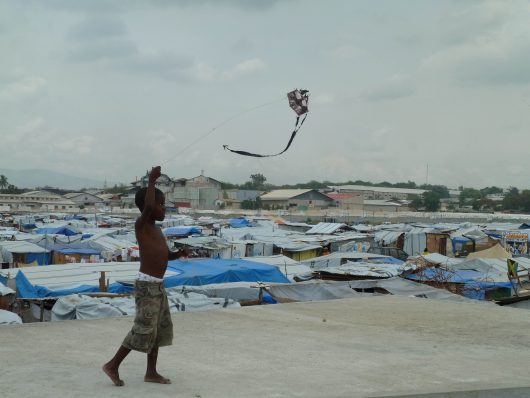
As a result, there has been a decline in English children becoming involved in art subjects, a reduction in art teaching hours and fewer art teachers employed in schools. Informal programs have also suffered due to local authority cuts.

The Cultural Learning Alliance (CLA) exists to address these issues. The alliance is a collective voice working to ensure that all children have meaningful access to cultural programs. Its goals are to advocate for a coherent national strategy for cultural learning, to unite the education, youth and cultural sectors, to showcase projects and demonstrate why cultural learning is so important.

The CLA first published the Imagine Nation report in 2011 to set the agenda for a national conversation about the value of cultural learning. The following statistics were included in the 2017 version of the report and outline the benefits of cultural learning:

  • Participation in structured arts activities can increase cognitive abilities by 17 percent.
  • Students from low-income families who take part in arts activities at school are three times more likely to graduate. These students are also 20 percent more likely to vote as young adults.
  • Studying art subjects increases the likelihood of students maintaining employment.
  • People who take part in the arts are 38 percent more likely to report good health.
  • Employability of students who study arts subjects is higher.

David Puttnam, the chairman of the CLA, has described the report as a wake-up call to boost cultural learning in England. “It is essential that access to arts is a right and not a privilege,” he says.

Similarly, Michelle Obama has stated that “Arts education…is the air many of these kids breathe. It’s how we get kids excited about getting up and going to school in the morning. It’s how we get them to take ownership of their future.”

The Imagine Nation report has resulted in a “call to arms” to boost cultural learning in England. According to the report, “we must act now to ensure that the next generation is given all the tools it needs to build a stronger, healthier society.”

– Liliana Rehorn

Photo: Flickr

February 11, 2017
https://borgenproject.org/wp-content/uploads/borgen-project-logo.svg 0 0 Borgen Project https://borgenproject.org/wp-content/uploads/borgen-project-logo.svg Borgen Project2017-02-11 01:30:062020-05-26 21:19:42Call to Arms to Boost Cultural Learning in England
Children, Education, Global Poverty

Education in Mali

Read more
February 6, 2017
https://borgenproject.org/wp-content/uploads/borgen-project-logo.svg 0 0 Borgen Project https://borgenproject.org/wp-content/uploads/borgen-project-logo.svg Borgen Project2017-02-06 01:30:162026-03-04 12:25:53Education in Mali
Children, Refugees, War and Violence

Three Reasons to Welcome Refugees

Welcome RefugeesThe current refugee situation has been called the worst humanitarian crisis of our time. In 2015, the United Nations High Commissioner for Refugees (UNHCR) estimated that there were more than 65 million forcibly displaced people worldwide. More than half of all refugees come from three countries: Syria, Afghanistan and Somalia. For the countries to which these refugees have fled, the massive influx of displaced persons is often viewed as a burden. However, with the right policies and integration services, host countries can benefit from them. Here are three reasons to welcome refugees:

  1. Successful integration can lead to significant economic benefits. Economic growth is strongly correlated with the available workforce. Over the past decade, immigrants have constituted 47 percent and 70 percent of the workforce increase in the United States and Europe, respectively. According to a study by McKinsey Global Institute, the refugee population has the potential to increase the GDP of European countries by more than 60 billion euros annually (USD$65 billion). As productive members of their new communities, refugees would place less of a burden on social welfare programs.
  2. Successful integration decreases the risk of social conflict and radicalization. Approximately half of the 21.3 million refugees worldwide are children. Coordinated efforts should be made to incorporate these children into education systems, as education boosts their future economic prospects and decreases the risk of radicalization. Language programs for adults and children would help refugees build relationships with native speakers in their communities.
  3. It’s a moral imperative. Though this is the least tangible of the three reasons to welcome refugees, it is perhaps the most compelling. A refugee is defined as “someone who is unable or unwilling to return to their country of origin owing to a well-founded fear of being persecuted for reasons of race, religion, nationality, membership of a particular social group, or political opinion.” According to the 1951 Convention Relating to the Status of Refugees, refugees are entitled to access to courts, education, work, and documentation as part of their basic rights. As such, refugees are not threats– they are fellow human beings seeking life, liberty, and the pursuit of happiness.

– Rebecca Yu

Photo: Flickr

February 3, 2017
https://borgenproject.org/wp-content/uploads/borgen-project-logo.svg 0 0 Borgen Project https://borgenproject.org/wp-content/uploads/borgen-project-logo.svg Borgen Project2017-02-03 01:30:332020-05-28 08:43:23Three Reasons to Welcome Refugees
Children, Education

Sex Education in China

Sex Education in China
Sex education in China is almost nonexistent. Many schools in China don’t even have a sex education program. Instead, students are typically taught only the basic anatomical differences between males and females.

This lack of education is dangerous in light of the recent sexual revolution in China. According to China Daily, more than 70% of Chinese young people have sex before marriage. Similarly, China has a rate of 13 million abortions annually, according to a 2013 study. Most of the women receiving abortions are single women between the ages of 20 and 29.

“Many young people don’t use contraception at all and that is reflected in high abortion rates for youth,” says Joan Kaufman, a Distinguished Scientist at the Schneider Institutes for Health Policy at Brandeis University.

Research from Fudan University similarly concluded that “there is a large unmet need for reproductive health services for women prior to marriage in China.” For example, 68% of Chinese women were confused about the difference between oral contraceptives and the morning-after pill, according to the China World Contraception Day Organization.

This lack of education makes women vulnerable to abuse, unwanted pregnancy and STIs, particularly HIV. For example, sexual transmission now accounts for 91% of all HIV infections.

HIV is linked to poverty in that it prevents patients from being able to work and greatly increases the entire family’s medical expenditures. Public information and education on prevention – especially targeted to high-risk groups such as young people – will be instrumental in reducing the spread of this epidemic.

Unwanted pregnancies are also connected to poverty. According to Luis-Felipe López- Calva, the World Bank Lead Economist for Latin America and the Caribbean, “Poverty and lack of opportunity are directly associated with teenage pregnancy and early motherhood, which can become impediments to women wanting to take full advantage of development opportunities.”

Although sex education in China is still a new concept, the Chinese government is making an effort to increase AIDS awareness and promote sexual health. Similarly, Chinese Internet users have begun posting videos that teach crucial sex facts in one-minute clips.

Improving sex education in China will be instrumental in reducing poverty. Not only will it reduce HIV transmission and unwanted pregnancies, it will also ensure that young people, particularly women, have full access to economic and further educational opportunities.

– Liliana Rehorn

Photo: Flickr

January 26, 2017
https://borgenproject.org/wp-content/uploads/borgen-project-logo.svg 0 0 Borgen Project https://borgenproject.org/wp-content/uploads/borgen-project-logo.svg Borgen Project2017-01-26 01:30:042024-12-13 17:56:31Sex Education in China
Children, Education, Technology

Rumie: Providing Education Through Technology

Rumie: Providing Education Through Technology
A Toronto-based startup called Rumie is helping expand children’s access to education by providing them with tablets that are preloaded with educational materials.

In a global economy that is largely knowledge-based, insufficient access to education means that over a billion children worldwide are left behind. Providing education through technology is, therefore, more important than ever.

Rumie aims to combat this by providing low-cost, energy-efficient tablets to children in impoverished areas. These tablets come preloaded with a combination of educational materials and games that children can unlock by studying. These tablets are especially useful in areas where access to books, libraries or other educational materials are rare.

The tablets use LearnCloud to organize and distribute free educational materials to children who often lack access to the internet. All the materials on LearnCloud are free and available to anyone, and they can be uploaded by anyone. Once resources are uploaded, Rumie’s partners in each country organize them and upload them to children’s tablets.

The tablets cost $50 each, and the company raises money for them through a campaign on Indiegogo. They contain a “learn” section with educational materials and a “play” section which contains games that can be unlocked by a teacher or by doing educational exercises.

The tablets contain software that allows users to organize materials in a similar way to the organization on LearnCloud. This means that materials on the tablet are easy for students to access and work with. The tablets’ technology also allows Rumie to collect data and monitor the devices for feedback, therefore allowing them to improve as necessary.

Rumie provides tablets to children in North America, Africa, Asia and the Middle East. Their latest project, the LearnSyria initiative, aims to provide educational materials to children in refugee camps in three ways. People all over the world can choose to either upload topics and materials to the LearnCloud, they can donate money to help provide tablets to children or they can spread the word about Rumie’s mission.

Rumie tablets were shipped to Liberia with the intent to be used for rehabilitating child soldiers in 2014. Instead, these tablets became a source of entertainment and hope for children during the isolation and fear of the Ebola epidemic. Children were able to stay busy and continue learning even while confined to their homes, and the Huffington Post describes children holding their Rumie tablets with “a faint glimmer of hope and self-empowerment in what is otherwise an overwhelmingly dire situation in Liberia today.”

Rumie is taking bold steps by providing education through technology to empower children globally and create change for the future.

– Eva Kennedy

Photo: Flickr

January 12, 2017
https://borgenproject.org/wp-content/uploads/borgen-project-logo.svg 0 0 Borgen Project https://borgenproject.org/wp-content/uploads/borgen-project-logo.svg Borgen Project2017-01-12 01:30:372020-06-03 12:45:41Rumie: Providing Education Through Technology
Page 99 of 137«‹979899100101›»

Get Smarter

  • Global Poverty 101
  • Global Poverty… The Good News
  • Global Poverty & U.S. Jobs
  • Global Poverty and National Security
  • Innovative Solutions to Poverty
  • Global Poverty & Aid FAQ’s
Search Search

Take Action

  • Call Congress
  • Email Congress
  • Donate
  • 30 Ways to Help
  • Volunteer Ops
  • Internships
  • Courses & Certificates
  • The Podcast
Borgen Project

“The Borgen Project is an incredible nonprofit organization that is addressing poverty and hunger and working towards ending them.”

-The Huffington Post

Inside The Borgen Project

  • Contact
  • About
  • Financials
  • President
  • Board of Directors
  • Board of Advisors

International Links

  • UK Email Parliament
  • UK Donate
  • Canada Email Parliament

Get Smarter

  • Global Poverty 101
  • Global Poverty… The Good News
  • Global Poverty & U.S. Jobs
  • Global Poverty and National Security
  • Innovative Solutions to Poverty
  • Global Poverty & Aid FAQ’s

Ways to Help

  • Call Congress
  • Email Congress
  • Donate
  • 30 Ways to Help
  • Volunteer Ops
  • Internships
  • Courses & Certificates
  • The Podcast
Scroll to top Scroll to top Scroll to top