• Link to X
  • Link to Facebook
  • Link to Instagram
  • Link to TikTok
  • Link to Youtube
  • About
    • About Us
      • President
      • Board of Directors
      • Board of Advisors
      • Financials
      • Our Methodology
      • Success Tracker
      • Contact
  • Act Now
    • 30 Ways to Help
      • Email Congress
      • Call Congress
      • Volunteer
      • Courses & Certificates
      • Be a Donor
    • Internships
      • In-Office Internships
      • Remote Internships
    • Legislation
      • Politics 101
  • The Blog
  • The Podcast
  • Magazine
  • Donate
  • Click to open the search input field Click to open the search input field Search
  • Menu Menu

Archive for category: Advocacy

Information and news on advocacy.

Advocacy, Food & Hunger, Nonprofit Organizations and NGOs

Fighting Hunger With Hunger: The Fast-a-Thon

fighting_hunger
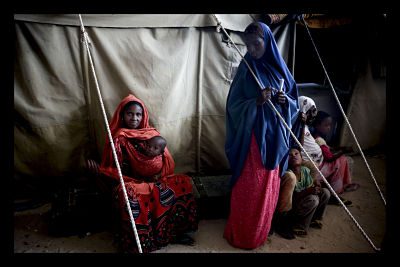
Hundreds of organizations around the world work to raise awareness of world hunger. “Nearly 870 million people, or one in eight people in the world, were suffering from chronic undernourishment in 2010-2012.” Statistics such as this, along with photographs and true stories of the world’s hungry have found their way to people who can help. But what these figures and images cannot do to a person is allow them to know what hunger really is—to move one beyond sympathy and allow them to possess real comprehension of what hunger feels like. This is the premise upon which the “Fast-a-Thon” was laid.

For years, college campuses across the U.S. and Canada have held annual “Fast-a-Thons” in an effort to fight hunger, both locally and internationally. The idea was coined by the Muslim Students Association (MSA) at University of Tennessee, Knoxville, and has since been taken on by hundreds of college campuses, charity organizations, and businesses across continental America.

Here’s how it works: a group of students, community members, co-workers, etc. pledge to fast for a day (some for 24 hours, some from morning to evening). For each pledge, a business sponsor donates a certain amount of money to a charity of the group’s choosing. At the end of the day, Fast-a-Thon participants come together to share a meal to break their fast. In solidarity with those in hunger and in support of alleviating their pain, Fast-a-Thon participants have raised hundreds to thousands of dollars to feed the hungry.

Interested in hosting a Fast-a-Thon in your community? Follow this easy step-by-step guide:

1. Find the beneficiary to whom all donations will go towards. This could be a local soup kitchen or an umbrella organization fighting hunger.

2. Find businesses that will sponsor your Fast-a-Thon or, in other words, agree to donate a certain amount of money to your chosen beneficiary for every Fast-a-Thon pledge made.

3. Spread the word and encourage everyone to pledge and participate!

4. Host a dinner where participants can break their fasts together.

– Lina Saud

Sources: World Hunger, MSA Texas
Photo: Stephen Leahy

July 29, 2013
https://borgenproject.org/wp-content/uploads/borgen-project-logo.svg 0 0 Borgen Project https://borgenproject.org/wp-content/uploads/borgen-project-logo.svg Borgen Project2013-07-29 04:38:472017-03-20 13:03:37Fighting Hunger With Hunger: The Fast-a-Thon
Activism, Advocacy, Nonprofit Organizations and NGOs, Philanthropy

Top 5 Apps to Satisfy your Philanthropic Urges

1. Charity Miles

Often the biggest obstacles in overcoming the challenge of getting off the couch and going for a run is the question “why now and not later?” We all know the importance of exercise, but the inability to find motivation to work out is what keeps us on that couch. Similarly, we all know the importance of giving and helping those in most need of help. The issue we often face regarding charity is the fact that we are often without extra cash.

Charity Miles has the answer to both of these problems. Founded in April 2012, the folks at Charity Miles developed a charity app where, with each mile you bike, run, or walk, a percentage of a dollar will be donated to the charity of your choice. And the best part is that the app is entirely free.

With a limit of one million dollars, each user can garner 10 cents per mile and walkers and runners will earn 25 cents per mile. With this app, users can get themselves into shape and put food on another person’s table. Charity Miles provides users with more motivated than ever to hit the road and feeling great about about themselves in mind, body, and soul.

2. Donate a Photo

It doesn’t get much easier than this. The developers at Johnson & Johnson have unraveled an excellent app that allows users to fight for the world’s underprivileged. For each original photo donated to Johnson & Johnson (up to one a day), they will donate $1 to a service of your choice. The beauty of the app is that users can donate a photo every single day and raise $365 a year for their cause without any cost to them. So far, Johnson and Johnson have declared 25,730 photos donated.

3. Volunteer Match

Volunteer Match is a free service that allows users to connect with volunteer opportunities both in their area and beyond. Users just need to download the app, decide what area they want volunteer in and hit connect! The service provides users with reviews of different organizations and allows them to build a repertoire to share with friends.

4. One Today

Google has entered the charitable arena with their new One Today app. The idea behind the app is to allow users to “Do a little. Change a lot.” The app allows users to donate $1 at a time to a cause of their choice, whether it be saving cheetahs or providing clean water to a village. This app has no fee for nonprofits so 98.9% of all donations go to their intended cause. For the users, the app tracks each and every dollar donated and provides updates on how that dollar was spent and the impact it causes.

5. TabForACause.org

While this is a website and not an app, the premise is very effective at fundraising. This Google Chrome and Firefox extension signals the nonprofit’s sponsors to donate a fraction of a penny to a charity for each tab a user opens. Through conducting daily business, useres, with no cost to them, can help fund Water.org and provide developing countries with clean drinking water.

– Thomas van der List

Sources: Donate A Photo, Volunteer Match, Android Police, Tab For A Cause, Charity Miles
Photo: The Guardian

July 23, 2013
https://borgenproject.org/wp-content/uploads/borgen-project-logo.svg 0 0 Borgen Project https://borgenproject.org/wp-content/uploads/borgen-project-logo.svg Borgen Project2013-07-23 05:11:262018-01-30 13:13:06Top 5 Apps to Satisfy your Philanthropic Urges
Activism, Advocacy, Nonprofit Organizations and NGOs

5 TED Talks in 5 Minutes

5 TED Talks in 5 MinutesTED Talks have become a breeding ground for ingenuity, passion, ideas and intelligence. A meeting place of the world’s best, bravest and most forward-thinking minds, TED talks offer the entire world the ability to listen and participate in the global conversation on how we better the world. Here, for those who have little time, are 5 Ted talks that offer a powerful punch of inspiration in less than 5 minutes.


Asher Hassan’s Message of Peace from Afghanistan – Asher Hassan

In this short but potent TED talk, Asher Hassan manages to obliterate our image of the now ravaged Pakistan as a place of poverty, misery and Islamic fundamentalism to show a hopeful, resilient and entirely human face to the country. Through a series of striking photographs, showing vendors selling bags, a displaced internal refugee child, spools of brightly colored rainbow spools of thread. Hassan’s subjects are the individuals who get lost in Pakistan sold to us by the media, and the ones who are most affected by our action or inaction in their country.


Selling Condoms in the Congo – Amy Lockwood

Amy Lockwood needs four minutes and seventeen seconds to illustrate an all-too-important phenomenon that causes aid programs to fail: not targeting efforts towards the group, but focusing on the feelings on the donor. In the Congo, sex workers use very few of the free condoms that aid agencies provide but would use the generic, priced ones sold. Lockwood, as a marketing professional, asked herself why. Her talk offers a simple but powerful tweak in the way we approach aid that could make a world of difference.


Photos That Changed the World – Jonathan Klein

The man at the head of Getty Images, the industry’s largest and most quality bank of photography and imagery, gives a short talk on the power of photographs in provoking action. Using iconic images from history like the Hindenburg explosion, ‘Kissing the War Goodbye’ and mass graves of the Holocaust to today’s most controversial photographs, such as torture in Abu Ghraib, military war injuries and slaughtered gorillas lying crucified on bamboo poles, Klein illustrated how a picture can be worth more than a thousand words in an age full of discourse and short on action.


Escaping the Khmer Rouge – Sophal Ear

Not a big ideas talk, but a heartfelt personal story, Sophal Ear speaks of his escape from Cambodia during the country’s horrific political turmoil. Today, Ear leads research on post-conflict countries and assists in the development, reinforcing the fact that refugees are more than statistics, but brave, resilient lives worth saving.


How I Built a Windmill – William Kamkwamba

One of the most inspiring talks on TED, this talk is a Q&A session with William Kamkwamba, from a small village in Malawi. At 14, he saw how to build a windmill in a library book. In his words, “I tried it, and I made it.” Prompted along by TED speaker, William’s unassuming ingenuity in attempting to improve his village’s access to electricity and water is heartwarming and incredible.

– Farahnaz Mohammed

Sources: TED

July 22, 2013
https://borgenproject.org/wp-content/uploads/borgen-project-logo.svg 0 0 Borgen Project https://borgenproject.org/wp-content/uploads/borgen-project-logo.svg Borgen Project2013-07-22 04:00:542020-07-06 23:13:545 TED Talks in 5 Minutes
Activism, Advocacy, Nonprofit Organizations and NGOs, War and Violence

Center for Civilians in Conflict

Center_for_Civilians_in_conflict
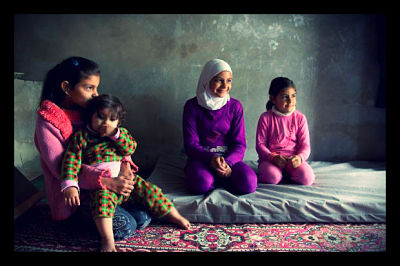
The Center for Civilians in Conflict is a non-profit organization that advocates for civilians threatened by armed conflicts around the world. The organization was founded in 2003 by Marla Ruzicka, an American political activist and aid worker who was concerned about the wellbeing of civilians who were indirectly harmed by U.S. bombs in the War on Terror.

Originally titled the Campaign for Innocent Victims in Conflict (CIVIC), Ruzicka’s startup received funding from the U.S. government to conduct aid operations specifically targeting hurting civilians in Iraq and Afghanistan. Ruzicka’s life tragically came to an end in April 2005 when she was killed by the blast from a suicide bomb in Baghdad. Since Ruzicka’s death, the Center for Civilians in Conflict (the new name of the organization as of 2012) has broadened its horizons to countries outside of Afghanistan and Iraq to further the legacy of an extraordinary humanitarian.

Today, the Center for Civilians in Conflict operates in Mali, Libya, Pakistan, Syria, and Somalia, in addition to Iraq and Afghanistan. The main areas of the Center’s work are these parts of the world that can be characterized as “conflict zones.”  Civilians who are threatened by a conflict are interviewed by CCC volunteers and the grievances of these civilians are documented and brought to the attention of the warring parties or military groups involved.

In January 2013 the Center assembled a roundtable of experts to analyze the outcome of U.S. military involvement in the Syrian civil war. The specialists utilized data collected from interviews from CCC field missions in Syria, Lebanon, Turkey, and Jordan in 2012. The interviewers obtained information from a large number of sources including “leaders of the political and armed opposition, Syrian army defectors, UN agencies, local and international NGO staff, government and military officials, lawmakers, diplomats, doctors and nurses, journalists, civil society activists, and religious leaders.”

The panel concluded that a five-point plan of action must be instituted by the US military if they chose to become involved in Syria. This is only one example of the thorough way in which the Center for Civilians in Conflict contributes to the protection of innocent civilians in conflict zones.

According to the organization’s website, the Center for Civilians in Conflict identifies themselves as “advocates and advisers creating policies and practices to make warring parties more responsible to civilians before, during, and after combat operations.”  This expectation of “responsibility” on the part of the perpetrators is one of the hallmarks of CCC, making it an effective and singular champion for noncombatant victims of war.

– Josh Forget

Source: Foreign Affairs, Civilians in Conflict

July 18, 2013
https://borgenproject.org/wp-content/uploads/borgen-project-logo.svg 0 0 Borgen Project https://borgenproject.org/wp-content/uploads/borgen-project-logo.svg Borgen Project2013-07-18 08:40:352024-05-25 00:00:42Center for Civilians in Conflict
Advocacy, Aid Effectiveness & Reform, Children, Education, Foreign Aid

Child Sponsorship Works

 child-sponsorship-works-borgen-project-compassion-international_opt
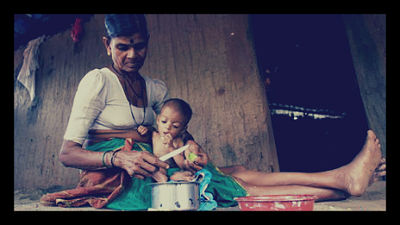
When people ask how to help the poor, child sponsorship often is suggested. Indeed, for a small amount of money each month, organizations allow individuals to sponsor a child and help to provide education, food, and clothing for them. In return, the sponsors get a picture of the child and quarterly or annual updates from the organization regarding their child.  It has long seemed like an easy way to make an impact. The question many people ask, however, is does it really work? One development economist decided he was going to find out.

It seemed no one had ever been interested in finding the answer despite the fact that 9 million children are sponsored worldwide and more than $5 billion dollars per year is invested in child sponsorship programs. For organizations, obviously the stakes were high. If they allowed researchers to study the effectiveness of their programs, what would they do if they came back ineffective? After several years, one organization decided to allow themselves to be studied under one condition: anonymity.

The study initially looked at individuals in Uganda, studying 809 individuals including 188 who were sponsored as children. The results from the first study were any economist’s dream. The data clearly showed large and statistically significant impacts on the educational outcomes of sponsored children. It appeared the program was actually working! To solidify the results, the study was conducted in six other countries: Uganda, Guatemala, the Philippines, India, Kenya and Bolivia. Data was obtained on 10,144 individuals and the results were consistent with the first study. 27 to 40% more sponsored children complete secondary school and 50 to 80% more complete a college education. In addition to effects on education, the study found that sponsored children were also more likely to gain meaningful employment.

As a result of the study, the sponsorship organization removed the anonymity clause. Compassion International was the organization that allowed its program to be scrutinized; the results were clear that child sponsorship works. It helps lift kids and families out of poverty and provides them with hope. For more information about child sponsorship, visit Compassion International at www.compassion.com.

– Amanda Kloeppel
Sources: Christianity Today, Compassion International

July 13, 2013
https://borgenproject.org/wp-content/uploads/borgen-project-logo.svg 0 0 Borgen Project https://borgenproject.org/wp-content/uploads/borgen-project-logo.svg Borgen Project2013-07-13 06:00:172020-05-14 11:01:29Child Sponsorship Works
Advocacy, Developing Countries, Extreme Poverty, Human Rights

Mercy Corps

Mercy Corps
Mercy Corps works to save and improve lives in some of the most impoverished places on earth. Since it was founded in 1979, the NGO has worked in war-torn and poverty-ridden countries to turn crises into opportunities. 95% of their staff are local residents working in nations like Somalia, Afghanistan, the Congo and Iraq.

The countries in which Mercy Corps works have several things in common. Usually children’s lives are at risk, women’s education is ignored, and there is little chance for economic growth. The organization helps to provide and build food security and create educational and economic opportunities. Their method is to listen to the locals and prioritize urgent needs first. They look at long-term and innovative solutions that bring systemic change.  Through taking responsible risks and thinking big, the organization is able to help large numbers of individuals.

Mercy Corps believes communities work best when they work for their own growth and change. They believe local markets provide sustainable recovery and good governance is the foundation to success. They focus their work on places in transition either from conflict, natural disasters, or political upheaval. They start with emergency relief and move to long-term goals to create communities that can withstand future shocks.

To get involved with Mercy Corps, check out their website at www.mercycorps.org.  They have lots of opportunities from donating money to fundraising to attending events or visiting their office in Portland. They also have a list of open positions and offer internships for those interested in a longer or more permanent position.

It is evident that the organization is making a difference in some of the toughest places on earth. Lives are being saved and communities are being changed through the work Mercy Corps does.

– Amanda Kloeppel
Source: Mercy Corps

July 13, 2013
https://borgenproject.org/wp-content/uploads/borgen-project-logo.svg 0 0 Borgen Project https://borgenproject.org/wp-content/uploads/borgen-project-logo.svg Borgen Project2013-07-13 04:00:412021-12-13 09:56:56Mercy Corps
Advocacy, Children

Hunger Kills Every 10 Seconds: A New Campaign

hunger_opt
The UK campaign, Enough Food for Everyone If, knows how to use statistics in a way that emphasizes their message.

The statistic they are currently using is that hunger kills every 10 seconds. This is derived from the fact that three million children died from hunger in 2011. Those three million deaths spread evenly across the year equals ten seconds a death.

Some assert that this statistic is a manipulation of the data, as the real issues surrounding those three million deaths are slightly complicated. It is not as simple as people simply starving to death.

A large portion of the deaths involved in the three million per year statistic are caused by infectious diseases or other things that poor nutrition can be related to. When children aren’t given the proper nutrition in the earliest parts of their lives, their bodies are much more susceptible to infectious diseases that a normal healthy child would simply be able to fight off.

The problem isn’t only involving malnutrition in children, but also malnutrition in mothers. In many societies, women aren’t given the best food in the household, therefore they can end up being malnourished during pregnancy and breast feeding, leading to malnutrition in their children.

Malnutrition is especially prevalent in communities that rely heavily on cereals and starches for their diets. These areas tend to neglect the importance of fruits and vegetables in their diets, and sometimes it is the case that milk or meats are avoided in these areas for cultural reasons.

Despite the complexities revolving around the statistic perpetuated by the IF campaign, the campaigners rely on the ‘hunger kills every 10 seconds’ statistic to give people a concrete way to think about the magnitude of global hunger. When people hear that three million died of hunger in 2011 they tend to block it out, as it is hard to conceptualize such a large number. The Enough Food for Everyone If campaign puts this statistic in an easy to understand way that makes people identify with individuals in poverty.

Enough Food for Everyone If uses its resources to raise awareness about world hunger in order to impact governmental decisions in favor of providing more aid to developing countries. The campaign also has put out helpful ways that people can contribute to ending hunger through their consumer choices, such as buying local, in season vegetables. The campaign is exemplifying how putting data in a certain manner and context can make all the difference in the impact is has.

– Martin Drake

Source: BBC News, Enough Food for Everyone If
Photo: BBC News Images

July 6, 2013
https://borgenproject.org/wp-content/uploads/borgen-project-logo.svg 0 0 Borgen Project https://borgenproject.org/wp-content/uploads/borgen-project-logo.svg Borgen Project2013-07-06 05:20:492016-04-15 16:16:35Hunger Kills Every 10 Seconds: A New Campaign
Advocacy, Children, Education, Women and Female Empowerment

Varkey GEMS Fights for Global Education

varkey_opt
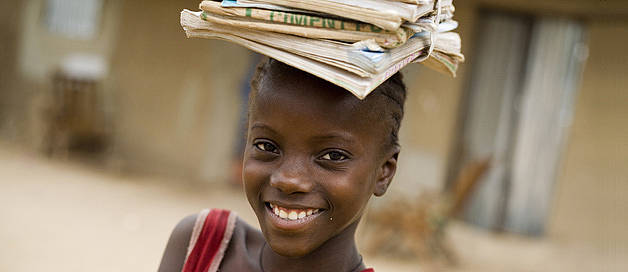
Despite the importance of global education, donor agencies and major developed countries have decreased their federal budgets and funding. Developing countries like India are working hard to get children into school and are increasing enrollment rates, but the fact remains that attendance rates and general accessibility to education in developing countries are lower than they should be.

Vikas Pota, CEO of Varkey GEMS Foundation, interprets this as “a major setback for children all over the world”, and states that “we need innovative solutions to make sure children have the opportunity to attend school”.  The Varkey GEMS Foundation attempts to imrove the standards of education for underprivileged children, with one of their major goals being to impact 100 underprivileged children for every child enrolled in a GEMS school. In order to ensure that “every child has a chance to prosper”, the foundation provides scholarships and leadership development, as well as builds schools throughout the developing world. Another core goal of the foundation is to promote gender equality and provide for girl’s and women’s education as well.

At the launch of the foundation in December 2010, Bill Clinton had this to say, “There will rarely be people who launch something with so much potential to lift the hopes and spirits and dreams of children as this Foundation has done tonight. The benefits from an educated child will affect not only the child itself, but his or her family and the wider community… the world is depending on it”. By focusing on education of underprivileged children, it is the hope of Pota and of the foundation that those children will be able to lift themselves from poverty into a life of better opportunities and independence.

Pota believes that the biggest crisis we face in education “is that of not investing enough in our teachers”. Over the next ten years, the foundation hopes to train over 250,000 teachers globally, with the help of government aid. Another problem is that the majority of aid to basic education is not allocated to the lowest income countries where the most aid is needed. Pota calls for collective responsibility and action, which starts with the citizens. Calls to congress people and legislators are the most effective way to show support, and will increase the likelihood that budgets for education-based aid will increase.

– Sarah Rybak
Source: Huffington Post, Gems Education
Photo: A Celebration of Women

July 4, 2013
https://borgenproject.org/wp-content/uploads/borgen-project-logo.svg 0 0 Borgen Project https://borgenproject.org/wp-content/uploads/borgen-project-logo.svg Borgen Project2013-07-04 04:10:582020-05-14 10:45:39Varkey GEMS Fights for Global Education
Advocacy

London Hunger Summit Funds $4 Billion

London Hunger Summit Funds $4 Billion
The London Hunger Summit this year encouraged global leaders to take a stand on global hunger and poverty and make a difference. As a result, by the end of the day, $4 billion of funding had been secured to go towards ending hunger and malnutrition across the world. The Summit was a global accomplishment, with donations coming from businesses, governments, charities, and foundations in many countries.

The money will be distributed to several different causes, and some countries specified where they would like their donations to be spent. For example, Australia asked that their $40 million donations go towards improving nutrition in the Pacific Ocean area, and the British company Del Agua’s $670 million donations will be spent throughout the following years on providing clean drinking water in Rwanda.

However, even though raising $4 billion is a huge accomplishment, the U.K. can still improve to do even more for the world’s poor by more closely monitoring donations to determine where they are most needed. Some donors are not as transparent as they should be when they give back, so the U.K. doesn’t have the best data to learn where those donations are going and how much is actually making it to the people who need help. By monitoring how much money is given and which areas are receiving the help, the U.K. can decide which areas still need assistance, therefore maximizing efficiency and helping the most people possible.

– Katie Brockman

Source Huffington Post, The Guardian

July 3, 2013
https://borgenproject.org/wp-content/uploads/borgen-project-logo.svg 0 0 Borgen Project https://borgenproject.org/wp-content/uploads/borgen-project-logo.svg Borgen Project2013-07-03 04:00:402020-07-14 22:35:28London Hunger Summit Funds $4 Billion
Advocacy, Developing Countries, Development

Nominees Sought for Development Achievement Award

Nominees Sought for Development Achievement Award
Nominations are now available for The Guardian‘s Development Achievement Award.  Anyone who has traveled to the developing world has met outstanding individuals changing the lives of the impoverished and marginalized. The Guardian’s Development Achievement Award seeks to reward and recognize individuals making a huge impact in the poorest parts of the world.

These individuals work hard in the face of intense challenges. They spend tireless hours fighting for those they represent and deliver help that goes far beyond their pay grade.  However, often their work is known only by those who are directly impacted by it or those who happen to come across them in the areas where they work. The Development Achievement Award, now in its fifth year, seeks to bring some publicity and awareness to these hardworking individuals.

The winner of the award will receive public recognition for his or her work and achievements. Their accomplishments will be publicized to both colleagues and a broader global audience. Dr. Kshama Metre, last year’s winner, is a pediatrician who runs an organization called Cord that has helped thousands of poor in rural India by dealing with the causes and effects of poverty in a holistic manner. Renwick Rose, the winner from 2011, is an advocate for farmers’ rights in the Caribbean and works hard to fight for fair trade wages and practices within the region.

The nominees for the Development Achievement Award must be unsung heroes and have made an exceptional contribution to alleviating poverty. They should be individuals whose work deserves more recognition than it has received thus far and people who have gone above and beyond their regular line of work.  The winners will receive a film about their work, a profile in a Guardian supplement, and a presentation of the award in their own country. Nominations are welcome from anyone in the world for anyone in the world. The closing date for nominations is August 5, 2013.

– Amanda Kloeppel

Source:The Guardian

July 1, 2013
https://borgenproject.org/wp-content/uploads/borgen-project-logo.svg 0 0 Borgen Project https://borgenproject.org/wp-content/uploads/borgen-project-logo.svg Borgen Project2013-07-01 04:00:492020-07-08 19:14:37Nominees Sought for Development Achievement Award
Page 69 of 77«‹6768697071›»

Get Smarter

  • Global Poverty 101
  • Global Poverty… The Good News
  • Global Poverty & U.S. Jobs
  • Global Poverty and National Security
  • Innovative Solutions to Poverty
  • Global Poverty & Aid FAQ’s
Search Search

Take Action

  • Call Congress
  • Email Congress
  • Donate
  • 30 Ways to Help
  • Volunteer Ops
  • Internships
  • Courses & Certificates
  • The Podcast
Borgen Project

“The Borgen Project is an incredible nonprofit organization that is addressing poverty and hunger and working towards ending them.”

-The Huffington Post

Inside The Borgen Project

  • Contact
  • About
  • Financials
  • President
  • Board of Directors
  • Board of Advisors

International Links

  • UK Email Parliament
  • UK Donate
  • Canada Email Parliament

Get Smarter

  • Global Poverty 101
  • Global Poverty… The Good News
  • Global Poverty & U.S. Jobs
  • Global Poverty and National Security
  • Innovative Solutions to Poverty
  • Global Poverty & Aid FAQ’s

Ways to Help

  • Call Congress
  • Email Congress
  • Donate
  • 30 Ways to Help
  • Volunteer Ops
  • Internships
  • Courses & Certificates
  • The Podcast
Scroll to top Scroll to top Scroll to top