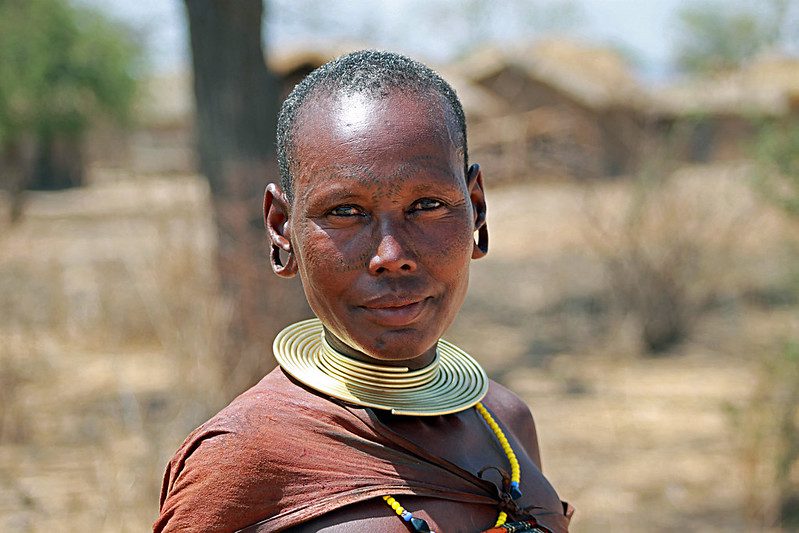
 Accusations of witchcraft are not just a thing of the past: in Tanzania, older women are frequently attacked and accused due to this label. For example, an 80-year-old woman named Mirondo describes how a group of men entered her hut in the middle of the night, blindfolded her, bound her and beat her. They destroyed her crops and burned down her home. They even said, “we have shown you mercy and are not killing you today, but you have 24 hours to leave the village or else we will come back and kill you.” Despite its horror, this type of story is not uncommon. Accusations of witchcraft continue to threaten women’s rights in Tanzania.
History of Witchcraft in Tanzania
Any Tanzanian woman can be subject to witchcraft accusations. Marginalized groups including the elderly, ill or albino are especially in danger. These persecutions can occur for a variety of reasons including poverty, age, infection with diseases like HIV and land disputes. Women are sent threatening letters, attacked and even killed. An estimated one thousand women are killed in Tanzania annually. However, this statistic is likely higher, as these crimes are often unreported. These witchcraft accusations represent a clear violation of women’s rights in Tanzania.
Witchcraft has a long history in East African countries. The practice began centuries ago as a way to understand natural disasters, infertility and death. Although laws remain in place banning witchcraft, approximately 93% of Tanzanians still believe in its existence according to a 2012 Pew Research Center report. Furthermore, 60% use witch doctors for healing purposes. These witch doctors, though, are some of the most common accusers of witchcraft. Clearly, the belief in witchcraft is deeply ingrained in society. A report by the University of Dar es Salaam even stated that it is too strong to be eliminated through the law. These researchers propose a different solution: mass scientific education.
Working with Communities to Change Attitudes
The organization HelpAge is embracing the idea of using education to reduce witchcraft accusations. Teamed with local partners, this nonprofit trains members of over 90 villages to protect and support women’s rights in Tanzania. Their community programs include women’s rights training, HIV education, paralegal training, and exposure to traditional drama, music and dance.
In terms of paralegal training, community members learn to provide legal support and advice for disputes like inheritance, land and marriage rights. Paralegals also help women draft wills to protect their assets. These education and training programs take a community approach to promoting women’s rights in Tanzania.
Improving Conditions for Affected Women
HelpAge also builds houses and improves sanitation for women who were threatened, attacked, or isolated due to witchcraft accusations. The very design of these facilities keeps the organization’s mission of eradicating witchcraft persecutions in mind. For instance, houses come with fuel-efficient stoves to show that red eyes—believed to be a sign of witchcraft—are simply a result of cooking over smoky fires.
What Next?
HelpAge has already made a significant impact on improving women’s rights in Tanzania. The areas that have implemented projects have seen a 99% reduction in the killing of older women. However, improvement can still be made. The organization believes the national government must change its policies to hold people accountable for witchcraft attacks. HelpAge also advocates modification of inheritance laws so widow’s property cannot be seized. While it is undoubtedly difficult to change the beliefs deeply ingrained in communities, this mindset shift is critical to protecting the livelihoods of thousands. Accusations of witchcraft are a very real threat to women’s rights in Tanzania, but there is hope for a future of safety.
– Fiona Price
Photo: Flickr

Witchcraft Threatens Women’s Rights in Tanzania
History of Witchcraft in Tanzania
Any Tanzanian woman can be subject to witchcraft accusations. Marginalized groups including the elderly, ill or albino are especially in danger. These persecutions can occur for a variety of reasons including poverty, age, infection with diseases like HIV and land disputes. Women are sent threatening letters, attacked and even killed. An estimated one thousand women are killed in Tanzania annually. However, this statistic is likely higher, as these crimes are often unreported. These witchcraft accusations represent a clear violation of women’s rights in Tanzania.
Witchcraft has a long history in East African countries. The practice began centuries ago as a way to understand natural disasters, infertility and death. Although laws remain in place banning witchcraft, approximately 93% of Tanzanians still believe in its existence according to a 2012 Pew Research Center report. Furthermore, 60% use witch doctors for healing purposes. These witch doctors, though, are some of the most common accusers of witchcraft. Clearly, the belief in witchcraft is deeply ingrained in society. A report by the University of Dar es Salaam even stated that it is too strong to be eliminated through the law. These researchers propose a different solution: mass scientific education.
Working with Communities to Change Attitudes
The organization HelpAge is embracing the idea of using education to reduce witchcraft accusations. Teamed with local partners, this nonprofit trains members of over 90 villages to protect and support women’s rights in Tanzania. Their community programs include women’s rights training, HIV education, paralegal training, and exposure to traditional drama, music and dance.
In terms of paralegal training, community members learn to provide legal support and advice for disputes like inheritance, land and marriage rights. Paralegals also help women draft wills to protect their assets. These education and training programs take a community approach to promoting women’s rights in Tanzania.
Improving Conditions for Affected Women
HelpAge also builds houses and improves sanitation for women who were threatened, attacked, or isolated due to witchcraft accusations. The very design of these facilities keeps the organization’s mission of eradicating witchcraft persecutions in mind. For instance, houses come with fuel-efficient stoves to show that red eyes—believed to be a sign of witchcraft—are simply a result of cooking over smoky fires.
What Next?
HelpAge has already made a significant impact on improving women’s rights in Tanzania. The areas that have implemented projects have seen a 99% reduction in the killing of older women. However, improvement can still be made. The organization believes the national government must change its policies to hold people accountable for witchcraft attacks. HelpAge also advocates modification of inheritance laws so widow’s property cannot be seized. While it is undoubtedly difficult to change the beliefs deeply ingrained in communities, this mindset shift is critical to protecting the livelihoods of thousands. Accusations of witchcraft are a very real threat to women’s rights in Tanzania, but there is hope for a future of safety.
– Fiona Price
Photo: Flickr
Innovations in Poverty Eradication in Nigeria from Zenvus
Improving Agricultural Productivity
Food production systems are inefficient in many parts of the country. For instance, with little availability of irrigation or fertilizer, 66% of the labor force works to produce 90% of Nigeria’s calories. This deficiency in resources is a result of outdated farming methods. The Green Revolution, which applied World War II technology to farming through mechanization and increased crop yields by 200%–300% in the last 50 years, skipped over Nigeria. Likewise, other developing nations missed this innovation as well. Zenvus, an agricultural technology company, aims to fill this gap by providing access to resources that help Nigerians experience the same explosive productivity boost that other countries enjoyed, decades ago. Here are just three of the many services Zenvus offers as innovations in poverty eradication in Nigeria:
The Spirit of Innovation and a Positive Future
Companies like Zenvus provide hope for Nigerians through their capacities to create jobs, increase wages and ensure sufficient food access for all Africans. With 239 million in sub-Saharan Africa alone in poverty, the spirit of Zenvus’ innovations in poverty eradication in Nigeria is perhaps more essential (and more promising) than ever.
– Michael Straus
Photo: Wikimedia Commons
5 Facts about Poverty in Guinea-Bissau
Guinea-Bissau is a small West African country with a population of fewer than 2 million, bordered by Senegal, Guinea and the Atlantic Ocean. Although the country gained its independence from Portugal in 1974, its subsequent history has been marked by continuous instability and frequent coup d’états. Moreover, Guinea-Bissau suffers from high levels of poverty, economic fragility and a dire lack of medical and nutritional resources, ranking it among the poorest nations in the world. Below are five key facts necessary to understand poverty in Guinea-Bissau.
5 Facts about Poverty in Guinea-Bissau
Changing the Future: UNICEF
Today, organizations such as UNICEF continue to work to improve living conditions in many areas of Guinea-Bissau. UNICEF is currently partnered with the country’s Ministry of Health and helps support the distribution of Vitamin A and deworming supplements for children under 5. UNICEF has also played a key role in establishing inpatient and outpatient treatment for severe acute malnutrition in 78 health care centers throughout Guinea-Bissau. Lastly, the organization has partnered with the Ministry of National Education and Higher Education (MENES) to provide training to schoolteachers and decrease teacher absenteeism, ultimately targeting education quality and student retention rates.
Conclusion
Despite improvements in the past decade, Guinea-Bissau still suffers from multidimensional poverty and remains far below its socioeconomic potential. Political conflicts and strong wealth disparities in the West African nation have constrained its ability to make tangible progress in several developmental indicators such as food security and better wages. Looking forward, poverty in Guinea-Bissau must remain the focus of international aid and development initiatives to ensure growth and security for children and adults alike.
– Oumaima Jaayfer, Moon Jung Kim
Photo: Flickr
Updated: June 10, 2024
5 Facts About Women’s Rights in Albania
5 Facts about Women’s Rights in Albania
Continuing the Fight
Women in Albania struggle to lead independent lives due to the prevalence and severity of gender inequality. Sexist laws and cultural norms limit women’s rights in Albania. This, in turn, prevents many women from achieving equality in health, safety and prosperity. Though organizations like U.N. Women and the Center for Legal and Civic Initiatives, improving the quality of life for these women has become a real possibility.
– Courtney Bergsieker
Photo: Wikimedia Commons
Women’s Rights in Indonesia
Child Marriage
Concerning Indonesian girls, 14% marry before their 18th birthday. This is in part, due to their society’s view of women and discriminating legislation. The Marriage Law, established in 1974, states that parents can marry their daughter off as young as 16 years old. In April of 2018, Indonesia’s president, Joko Widodo, came forth and said that he was drafting a presidential decree that would ban child marriage. However, there has been no timeline set for the decree to be passed. Child marriage indirectly takes away a girl’s future and exposes them to a greater chance of being a victim of sexual violence. This can be directly related to the percentage of women in the workforce (51%) and the percentage of women experiencing sexual violence in their lifetime (33%).
UN Women
U.N. Women give girls and women in Indonesia the voice they deserve. This organization advocates for an end to the violence wrought against women while actively pursuing partners to respond to it. U.N. Women do so much for the women of Indonesia, from giving them access to entrepreneurship classes to directly fighting the government. This, in an attempt to hold authorities accountable for women’s rights in Indonesia. In the mix of their many programs, there is WeLearn and WeEmpower Asia, which both give women resources to integrate into the workforce. WeLearn’s goal is to improve equal learning opportunities and empower women to start their businesses. Where WeLearn encourages women into the workplace, WeEmpower Asia aims to achieve a business environment that empowers women and urges companies to adopt the Women’s Empowerment Principles.
Women Making Progress
Women’s rights in Indonesia have come a long way. Women in Indonesia now march freely in their opposition to the rights they have (or lack, rather). As backstory, the reason that this big (yet slowly closing gender gap) exists is because of the country’s second dictator, Suharto. He ruled for 32 years and widened the gap exorbitantly. However, most notably, he put the mindset in place that women and men garner different treatments. Now, the gap is closing and for the better. In political parties, 30% of the cabinet must be comprised of women. Further, as mentioned above, President Joko Widodo has the highest number of women in his cabinet in the country’s history. Now, those women in the cabinet are pushing for bills like the Sexual Violence Bill, to be passed.
Thanks to Suharto, the women in Indonesia have a lot of work to do. Fighting for women’s rights is not an easy battle. As for the support of men, Gitika Bhardwaj says that “I do think there are a large number of men who are supporting gender equality in the country but unfortunately there have not been enough high-level public awareness campaigns.” In the next few years, these women leaders hope to see the inequality gap as not a tangible thing, but a thing of the past.
– Bailey Sparks
Photo: Flickr
3 Things to Know About Hunger in the Congo Region
3 Things About Hunger in the Congo Region
Continue the Support for Change
The more international aid that is directed toward the Congo, the more people will receive much-needed help. Supporting organizations that give aid to those in need is extremely important for this exact reason. The support will help save lives and create stability for years to come within the Congo region and likewise, the effects can ripple throughout the global economy.
– Staff Reports
Photo: Flickr
Updated: September 15, 2024
How Amazon and UPS Battle Food Insecurity in Guatemala
September 1, 2020, brought joy to citizens of Guatemala City as nearby schools finally received a long-awaited donation from the company, Amazon. Through coordinated efforts with Guatemala Minister of Education Claudia Ruíz Casasola, Amazon donated cooking supplies which will be dispersed among 500 schools surrounding Guatemala City. These schools are located in the Dry Corridor, an area that has suffered from food insecurity due to dramatic flooding followed by months of drought. Amazon’s donation to these 500 schools will perhaps assist 100,000 students currently battling food insecurity in Guatemala.
Amazon’s Partnership with the World Food Program (WFP) USA
Amazon is a partner of the World Food Program USA (WFP), an organization dedicated to fighting global hunger and famine. The organization has had quite a year, providing meals for 138 million people. They even raised $1 million in 10 days for those suffering the results of the explosion in Beirut. This partnership has allowed WFP to continue its efforts in supporting the Guatemalan government’s school feeding program while combating global hunger as a whole.
Amazon’s Partnership with the United Parcel Service (UPS)
This donation was long-awaited, as Amazon delivered the initial shipment back in February of 2020. Concerns surrounding the COVID-19 pandemic and international shipping delayed the distribution of the donation until now. Therefore, making this a moment of excitement and gratitude. However, the shipment of this donation was made possible through the generosity of the United Parcel Service (UPS). UPS covered the cost of the shipment of Amazon’s donation to the schools in Guatemala, contributing to the support of the WFP as it navigates the global challenges of the pandemic. The donations expect utilization in January when many public schools plan on welcoming back students.
The outcomes of this donation are plentiful, as food insecurity is a major threat to the children in Guatemala. This year’s cropping season produced Guatemala’s worst crop yield in 35 years due to excessive drought. Moreover, Guatemala faces the highest level of malnutrition in Latin America. As a result, many school-aged children face stunted growth and the pandemic contributed to a total of 1.2 million citizens, already in need of food assistance.
Through the generosity of Amazon and UPS, items such as bowls, blenders and pans will arrive in schools to prepare breakfasts and lunches for students facing food insecurity. By battling food insecurity in Guatemala and malnutrition in schools, the government can work to make sure students are receiving their necessary nutrient intakes. In parallel, this does not place financial stress on families to provide daily meals for their children.
Mission Guatemala
The Guatemalan government’s school feeding program, in addition to other initiatives, such as Mission Guatemala, has the goal of ending any deaths relating to hunger across the country. Large organizations like the WFP, along with major businesses like Amazon and UPS have the potential to assist in the fight against global hunger in countries like Guatemala. Amazon and UPS have set a positive example with this donation. In this way, they bring awareness to the food crisis that exists in countries outside of the U.S. Due to the companies’ global influence, other major brands may follow suit. Potentially, making donations and partnering with organizations that work to assist others.
The WFP USA also accepts donations and the opportunity to begin fundraising through their website. Advocacy is essential, and any individual contribution can assist those battling hunger, as seen by the generosity of both Amazon and UPS.
– Evan Coleman
Photo: Flickr
West African Super Grain Bringing Prosperity to Sahel Farmers
Fonio is a millet with small grains native to West Africa. It is a staple of many dishes in the Sahel region of Niger, Chad, Nigeria and Mali. Also, it has been compared to quinoa and teff by several food scientists. The grain, which has a nutty flavor, can be roasted, pounded or boiled to make bread, couscous and porridge. Also, its swift maturity cycle of two months and its health benefits (gluten-free and fiber-rich) has skyrocketed the popularity of this West African super grain across the Atlantic to Western grocery shelves.
The rise of fonio will benefit the farmers in the Sahel struggling with food security and poverty. A semi-arid region, the 10 Sahel countries experience only 12–20 inches of rainfall per year, making it difficult to sustain agricultural prosperity. Additionally, the GDP in this area ranges between $900 to less than $3,000 per capita — with oil and minerals being the main sources of income. Importantly, due to these nations’ fragile, political environments, business relations tend to suffer. Financial experts are looking at crops like fonio already native to the region so citizens in these countries can help grow the economy. In this same vein, activities like farming will help. Here are some ways the West African super grain will bring prosperity to the region.
Fonio: Loyal to the Homeland
For thousands of years, fonio has flourished in the arid soil of the Sahel region, just south of the Sahara Desert. Land that is not arable is beneficial for it, as the plant grows in poor soil with little to no need for fertilizers. Its long roots assist in providing topsoil and supplying the atmosphere with carbon dioxide. Farmers in the Sahel are familiar with its low-maintenance and use the crop’s ability to self-fertilize to grow other crops in conjunction. It is rotated with other crops to keep the desert land as fertile as possible. Since fonio favors dry, arid soil, the Sahel is one of the few regions in the world where mass production is possible. As the West African super grain continues to grow in popularity, its environmental selectiveness will be an advantage for Sahel farmers in monopolizing production and generating wealth in the region.
Fonio in the Culinary World
Pierre Thiam, an acclaimed Senegalese chef, restaurateur, author and culinary ambassador, founded Yolélé Foods to bring formerly unknown West African staples to the Western palate. In particularly, fonio. Earlier this year, Yolélé released a series of pre-seasoned fonio pilafs intended to be ready within minutes of opening. While the company focuses in the Brooklyn area, it imports fonio directly from the Sahel. To help farmers increase productivity, the company partnered with SOS Sahel, a nonprofit focused on improving conditions in the region. Additionally, Yolélé built the first industrial-scale mill in Dakar, the capital of Senegal (where Thiam is from). With the increased demand for the crop, hopes are high that farmers in the region will have a steady source of income for their labors.
Win-Win
If the popularity of the West African super grain is any indication, fonio could reach quinoa’s status in the culinary world. In Western homes, it is quickly becoming a key ingredient for those with celiac disease, as well as in gluten-free households. While citizens of these nations incorporate the grain into their salads, bread and cakes — farmers in the Sahel are working to ensure their way of life is not endangered by poverty and hunger.
– Faven Woldetatyos
Photo: Flickr
10 Facts About Hunger in the United Kingdom
10 Facts About Hunger in the United Kingdom
Moving Forward
In the past five years, the U.K. government has taken important steps to help end hunger in the United Kingdom. Furthermore, organizations like FareShare and End Hunger U.K. remain central change-makers on the local and national level. Government actors and organizations together provide hope that they can end hunger in the United Kingdom sooner rather than later.
– Zoe Engels
Photo: Flickr
Women’s Rights in Saudi Arabia
Progress of Women’s Rights in Saudi Arabia
Challenges of Women’s Rights in Saudi Arabia
Many have hailed the Saudi government for these progressive developments. In addition, the Crown Prince has earned a reputation as a progressive creating a new Saudi Arabia. However, amid years of loosening restrictions, outspoken Saudi women have continued to face persecution. Most famously, women’s rights activists Loujain Al-Hathloul, Eman al-Nafjan, Aisha al-Mana, Aziza al-Yousef and Madeha al-Ajroush were arrested in 2018. The activists are allegedly sexually abused and tortured for their activism and open criticism of Saudi Arabia. As of August 2020, they continue to await trial in a Saudi prison.
Women’s rights in Saudi Arabia thus continue to reflect the country’s conflicting traditional and progressive values. Some view the Crown Prince’s reform as a mere distraction from an overarching culture that views women as property. As Lina al-Hathloul, the sister of the incarcerated activist Loujain Al-Hathloul, told TIME in May, Saudi Arabians are struggling to define what falls in line with these values. “Now we don’t have the religious police and we have concerts,” she said. Lina al-Hathloul mentioned that under the new public decency law, the police can arrest and imprison women for dancing at a concert.
According to the Crown Prince’s ambitious Vision 2030 plan, progress and reform in Saudi Arabia have just begun. Imprisoned activists and blurred boundaries ensure that even with the rights granted in recent years, Saudi women will enter this decade of advancement with caution.
– Stella Pagkas
Photo: Flickr