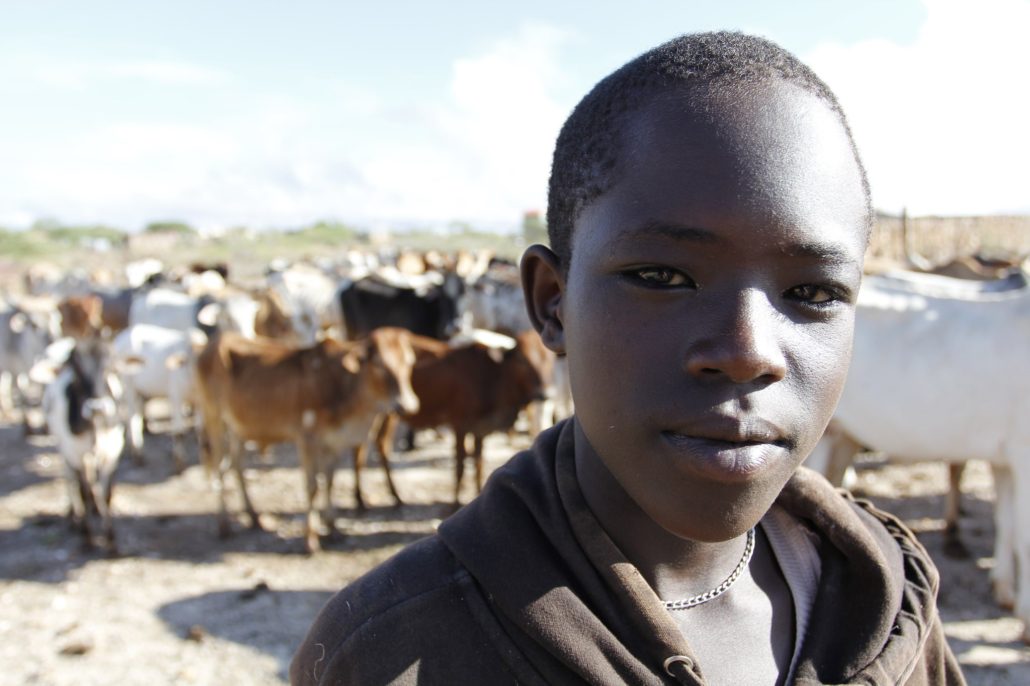
In 2015, the World Bank launched the Africa Climate Business Plan. The Plan marks a strategic effort to accelerate low-carbon, climate-resilient development in sub-Saharan Africa. A great success, the World Bank is now in its first stages of rolling out the Next Generation Africa Climate Business Plan, building off of lessons learned from the first installation. The new plan is ambitious, but necessarily so—with climate impacts on the rise and less than a decade left to achieve the U.N. Sustainable Development Goals (SDGs), Africa must rapidly deploy climate-smart, inclusive development projects. The Next Generation Africa Climate Business Plan stems from the World Bank’s greater commitment to placing climate at the center of all development efforts. It works toward carving out green paths to prosperity.
A Continent in Crisis
By and large, sub-Saharan Africa has contributed the least to greenhouse gas emissions. Despite this, it suffers some of the most devastating impacts of environmental challenges and changing weather patterns. The year 2019 was the third-warmest year ever on record in Africa.
A sample of 30 African countries found that two-thirds were warming quicker than the whole world on average. Poorer countries are more vulnerable to weather challenges due to the limited adaptive capacity of rural economies. Though Africa’s engines of growth are diversified, agriculture is still its largest economic sector. Agriculture makes up 15% of the continent’s GDP. It is highly climate-sensitive. Changing weather patterns and natural disasters like droughts and cyclones have directly impacted productivity.
Africa boasts a variety of climate types from arid to rainforest or temperate, so changing weather manifests differently in different regions. Effects can range from rising sea levels and coastal erosion to extreme floods, landslides and even desert locusts. These events threaten food and water security, as well as the overall socio-economic development of the continent. Changes in weather reverse development gains, undermining the health, safety and stability of communities. Climate-informed development is urgent; without it, an estimated 43 million additional people in sub-Saharan Africa could fall below the poverty line by 2030.
Strategic Focuses
The Next Generation Africa Climate Business Plan is all about thinking ahead for the future, but this does not mean that the World Bank is not looking to the past for guidance. The new and improved Climate Plan is building on the successes of its predecessor, the original Africa Climate Business Plan. This plan supported 246 projects with more than $33 billion in World Bank financing over the course of its six-year tenure. As the largest financial sponsor of climate action in Africa, the World Bank plans to ramp up existing efforts and institute new initiatives as part of the Next Generation Plan. With the plan, it will work to cooperatively tackling changing weather and promoting development within African countries.
The Next Generation African Climate Business Plan is essentially a sustainable development blueprint with five Strategic Directions. These include:
- Food Security
- Environmental Sustainability
- Clean Energy
- Resilient Green Cities
- Climate Shocks
The plan also has two Special Areas of Emphasis including Climate-Informed Macroeconomic Policies and Green and Resilient Infrastructure. At its core, it aims to scale up climate resilience as part and parcel of development efforts to reduce poverty and grow economies.
The Plan in Action
Until recently, Adwoa Adezawa, a resident of the Cape Coast of Ghana, lived in a community entirely without power. However, Adwoa, along with thousands of other Ghanaians, could purchase a mini solar grid thanks to the $220 million Ghana Energy and Development Access Project (GEDAP) financed by the World Bank. GEDAP focuses on inclusive access to renewable energy through the deployment of off-grid solar products. The project includes subsidies to make energy more affordable. It also collaborates with local financiers like rural banks to support access to financing. Benin, Burkina Faso, Cabo Verde, Cameroon, Central African Republic, Chad, Cote d’Ivoire, The Gambia, Guinea, Guinea-Bissau, Liberia Mali, Mauritania, Niger, Nigeria, Senegal Sierra Leone and Togo have all rolled out similar solar programs.
Given that sub-Saharan Africa has the lowest energy access rates in the world—electricity reaches only around half of its people—such programs are critical. Efficient, affordable solar energy is a pillar of the Next Generation Africa Climate Business Plan. Furthermore, the World Bank has been scaling up such projects each year.
Other cruxes of the plan include outfitting cities with low-carbon urban planning approaches and promoting climate-smart agriculture. The World Bank already supports modern agriculture projects in Ethiopia, Niger and Zambia. Additionally, it currently works to target 28 million farmers to ensure food security across 20 countries. The World Bank aims to train farmers on climate-smart agricultural approaches and expand integrated landscape management to more than 60 million hectares. Overall, expectations have determined investments in new projects will reach $22.5 billion by 2025. Treating development and climate action as interwoven, interdependent goals, the World Bank is pushing for growth that not only minimizes environmental impact but actively corrects past and future trends of environmental degradation.
– Margot Seidel
Photo: Flickr

Combatting Human Trafficking in Uruguay
Uruguay has recently increased its national response to violent and organized crime after seeing an increase has included the smuggling of drugs, weapons and people. To help end human trafficking in Uruguay, the government is taking steps to increase awareness and identification about the practice and its victims.
The United Nations defines human trafficking as the transfer of persons through the use of force or coercion for the purpose of exploitation, often involving forced labor or sex work. Around 10% of human trafficking occurs in Latin America, accounting for over $1 billion of the money traffickers make throughout the world.
Where Uruguay Stands
A small country of over 3.4 million bordering Brazil and Argentina, Uruguay has historically had one of the lower crime rates in South America. Despite this, the 2020 Trafficking in Persons Report categorizes Uruguay as a Tier 2 country, which it has been for the last five years. The report, which the U.S. State Department publishes, consists of three primary tiers. The first denotes that a country is making sufficient effort to end human trafficking and the third signals that a country is making little to no effort.
In 2019, Uruguay identified 83 new victims of human trafficking; this number is down from the 95 victims it identified in 2018. Shelters and other services are available for victims, however, most resources like these are only in the capital of Montevideo. Victims identified in other areas of the country face additional challenges because of this.
Most victims of human trafficking are women and girls, who are often from vulnerable communities. Poverty is one of the leading risk factors that experts associate with human trafficking, meaning that in addition to direct responses to human trafficking, reducing poverty can also be a form of prevention.
What Uruguay is Doing
As a Tier 2 country, Uruguay still has room to improve its handling of human trafficking but is making significant efforts to advance the quality of its response and resources for victims. Primary among these is the country’s National Action Plan in 2018, which involved the creation of a committee focused on ending human trafficking in Uruguay.
Besides raising public awareness about the issue, Uruguay is also training law enforcement and other officials on how to recognize human trafficking when it occurs and provide help. A national hotline is also now available 24 hours a day. Uruguay is also providing access to shelters and services for victims outside of Montevideo as an ongoing effort to end human trafficking in the country.
Civil society and the public have also made their voices heard on the topic, including former victims. In the summer of 2019, Sandra Ferrini, who experienced trafficking as a teenager, made a powerful statement as she led the country’s first march against human trafficking.
Potential Improvements
The efforts that Uruguay is enacting to prevent and educate about human trafficking have improved the country’s situation, but it still needs to do more work. The Trafficking in Persons report made several recommendations for Uruguay to continue improving its efforts.
One area the recommendations focused on was improving the long-term support for victims. Suggestions included more funding for shelters, particularly in areas outside of the capital Montevideo. Programs for social reintegration are also a promising form of support, including those that focus on vocational training.
The report also recommended that Uruguay pursue more prosecutions of the people running human trafficking. Cases against traffickers have increased in the last few years, with 18 cases undergoing prosecution in 2019 compared to just 10 a few years before. Increasing prosecution can further hold perpetrators accountable and decrease trafficking in Uruguay.
With further engagement on the issue from both the government and the public, Uruguay can improve services for victims and significantly reduce human trafficking within its borders.
– Nicole Ronchetti
Photo: Wikipedia Commons
Factors of Child Poverty in the Dominican Republic
The Dominican Republic is a major tourist destination, reeling in an estimated 6.5 million visitors in 2018. However, it also hosts a largely divided society with 40% of its population falling under the poverty line. Due to this poverty, Dominican children struggle considerably, dealing with several issues that do not allow them to succeed and confine them to a life of poverty. Here is some information about child poverty in the Dominican Republic.
Limited Access to Proper Education
One of the hardest struggles Dominican children must deal with is a lack of proper public education. These children in poverty attend public schools which often provide low-quality education with a lack of resources and poorly trained professionals. Due to a lack of financial resources, these schools also suffer from ill-suited scholastic programs and buildings in need of repair. Consequently, “more than 40% of Dominican children are uneducated,” and just 60% of enrolled children complete their primary education. Another problem worth addressing is the Dominican Republic’s high rate of repetition, especially in rural areas, with 44% of students in grades one to five, being three or more years older than the appropriate age and 60% of students in grades six to eight, again being older than the age they should be.
Child Labor
These children are then must work in order to support their struggling families. In fact, 2.1% of Dominican children from ages 10-14 are obliged to join the workforce. In fact, 28.1% of working children work in agriculture, 8.6% work in industries such as construction and producing baked goods and 63.4% have employment in public services. Many of these jobs are unsafe for children and some even suffer sexual trafficking and exploitation, especially Haitian children who traffickers frequently send to the Dominican Republic.
Mistreatment and Abuse
Due to a lack of enforcement and prohibition, Dominican children frequently suffer from abuse. As of 2014, reports determined that 62.9% of children experienced physical or psychological mistreatment by their caregivers. This treatment of children in the Dominican Republic is concerning and leads to adults who deem it right to use violence to solve conflict and gain power. In fact, 8% of Dominican men from ages 15 to 49 consider it justified to physically abuse their wives for at least one reason, while 2% of Dominican women in the same age range agree with this justification of abuse.
Child Marriage
Another significant issue young Dominican women struggle with is the regularity of child marriage. In fact, 36% of Dominican girls must marry before they turn 18 and 12% marry before they turn 15. Furthermore, as of 2014, 21% of girls from ages 20-24 reported having given birth before the age of 18. These marriages are harmful to these young women, who must place their own education and goals to the side to become wives and mothers against their will.
Lack of Identity
Another huge problem for Dominican children is the number of births that are not on the official record. “More than a quarter of births in the Dominican Republic are not officially reported,” concluding in a large number of children with no identity or nationality. This leads to huge difficulties for these children who will never be able to fully enjoy their rights as citizens. For example, the Ministry of Education requires students to have a birth certificate to graduate high school, forcing all unidentified children to be unable to get a degree, leaving them with the least amount of opportunities to succeed.
Solutions
Several organizations have emerged and the Dominican Republic is passing legislation to aid and raise awareness on these critical issues regarding child poverty in the Dominican Republic. Some of these organizations include Save the Children and UNICEF, which raise money to support poor communities by providing potable water and promoting health and hygiene.
Save the Children also focuses on improving education for Dominican children, using its platform to refurbish school buildings, build gardens, enhance teacher’s knowledge and improve sanitary infrastructure. It has protected 1,665 children from harm and provided 27,318 children a healthy start to their lives. Furthermore, The Ministry of Labor has increased the number of hired inspectors from 148 to 205 in 2019, demonstrating moderate improvement in decreasing child labor. More than anything, the Dominican Republic has made considerable improvements in healthcare, providing healthcare to 366,236 poor citizens who had previously lacked it through the Health Sector Reform APL2 (PARSS2). These improvements target the Dominican Republic’s most critical issues, including education, child labor and sanitation, helping alleviate the prominent issue that is child poverty in the Dominican Republic.
– Juan Vargas
Photo: Flickr
COVID-19 in the Democratic Republic of Congo: How Big Data Is Helping
The COVID-19 Situation in the DRC
While this nation has faced many struggles since the rapid spread of the virus in the summer of 2020, big data provides hope for a more organized and effective response to COVID-19 in the DRC. The DRC has not had a census since 1984 and since then, the nation has split its 11 provinces into 26, leading to an even more disjointed understanding of the DRC’s population. Big data via mobile companies could allow for updated population estimates and health infrastructure data leading to a better COVID-19 response.
UNICEF has improved mass media communication in the DRC and trained nearly 100 media professionals on warning signs of COVID-19 to allow professionals to inform the public on COVID-19 better. Since these efforts, 25 million people in the Democratic Republic of Congo were reached by mass media to prevent the spread of the disease.
How Technology Can Help Slow the Spread
Ongoing advancements in big data and the availability of technology worldwide have allowed many countries to make better forecasts for the spread of COVID-19. These advancements allowed the DRC’s government to make more information-based policy decisions.
Oxford University’s Big Data Institute has studied the benefits of using mobile apps to provide data on a nation’s citizens that would allow for a more efficient and succinct response to COVID-19. Nearly half of COVID-19 transmissions happen before symptoms arise, which means mobile apps that notify individuals who may have been exposed provide a quick and widespread response to stopping the spread.
Mobile Big Data and the DRC’s Fight Against COVID-19
In May 2020, mobile operators in the Democratic Republic of Congo, namely Africell, Organe and Vodacom, agreed to collaborate to use their big data analytics to provide information for the government’s response to COVID-19. This agreement led to a nationwide dashboard that allows health authorities to track mobility among the population and across different health districts to trace the spread of the virus.
Since the introduction of COVID-19 in the DRC, the virus has spread quickly from the central, populated districts to other provinces. Utilizing big mobile data to track this spread will allow better informed policy choices from the government. Analysis of this data has also led to updated information on the stock levels and needs of health care facilities in the DRC.
An example of the utilization of this big data is when the DRC’s government took confinement measures and prevented travel to the province of Gombe. Big mobile data companies in the DRC have provided the government with call detail records (CDRs) that have shown a 70% drop in travelers to Gombe after implementing the rules, showing high adherence to government recommendations.
Future Measures to Use Technology to Stop the Spread
Big mobile providers are working with the Ministry of Health to predict hotspots for COVID-19 in the DRC in the future using data that tracks population mobility. Looking beyond the COVID-19 pandemic, big data analytics provide hope for more efficient government policies and a strengthened relationship between healthcare facilities and the Ministry of Health in the Democratic Republic of Congo.
– Tatiana Nelson
Photo: Flickr
The World Bank’s Africa Climate Business Plan
In 2015, the World Bank launched the Africa Climate Business Plan. The Plan marks a strategic effort to accelerate low-carbon, climate-resilient development in sub-Saharan Africa. A great success, the World Bank is now in its first stages of rolling out the Next Generation Africa Climate Business Plan, building off of lessons learned from the first installation. The new plan is ambitious, but necessarily so—with climate impacts on the rise and less than a decade left to achieve the U.N. Sustainable Development Goals (SDGs), Africa must rapidly deploy climate-smart, inclusive development projects. The Next Generation Africa Climate Business Plan stems from the World Bank’s greater commitment to placing climate at the center of all development efforts. It works toward carving out green paths to prosperity.
A Continent in Crisis
By and large, sub-Saharan Africa has contributed the least to greenhouse gas emissions. Despite this, it suffers some of the most devastating impacts of environmental challenges and changing weather patterns. The year 2019 was the third-warmest year ever on record in Africa.
A sample of 30 African countries found that two-thirds were warming quicker than the whole world on average. Poorer countries are more vulnerable to weather challenges due to the limited adaptive capacity of rural economies. Though Africa’s engines of growth are diversified, agriculture is still its largest economic sector. Agriculture makes up 15% of the continent’s GDP. It is highly climate-sensitive. Changing weather patterns and natural disasters like droughts and cyclones have directly impacted productivity.
Africa boasts a variety of climate types from arid to rainforest or temperate, so changing weather manifests differently in different regions. Effects can range from rising sea levels and coastal erosion to extreme floods, landslides and even desert locusts. These events threaten food and water security, as well as the overall socio-economic development of the continent. Changes in weather reverse development gains, undermining the health, safety and stability of communities. Climate-informed development is urgent; without it, an estimated 43 million additional people in sub-Saharan Africa could fall below the poverty line by 2030.
Strategic Focuses
The Next Generation Africa Climate Business Plan is all about thinking ahead for the future, but this does not mean that the World Bank is not looking to the past for guidance. The new and improved Climate Plan is building on the successes of its predecessor, the original Africa Climate Business Plan. This plan supported 246 projects with more than $33 billion in World Bank financing over the course of its six-year tenure. As the largest financial sponsor of climate action in Africa, the World Bank plans to ramp up existing efforts and institute new initiatives as part of the Next Generation Plan. With the plan, it will work to cooperatively tackling changing weather and promoting development within African countries.
The Next Generation African Climate Business Plan is essentially a sustainable development blueprint with five Strategic Directions. These include:
The plan also has two Special Areas of Emphasis including Climate-Informed Macroeconomic Policies and Green and Resilient Infrastructure. At its core, it aims to scale up climate resilience as part and parcel of development efforts to reduce poverty and grow economies.
The Plan in Action
Until recently, Adwoa Adezawa, a resident of the Cape Coast of Ghana, lived in a community entirely without power. However, Adwoa, along with thousands of other Ghanaians, could purchase a mini solar grid thanks to the $220 million Ghana Energy and Development Access Project (GEDAP) financed by the World Bank. GEDAP focuses on inclusive access to renewable energy through the deployment of off-grid solar products. The project includes subsidies to make energy more affordable. It also collaborates with local financiers like rural banks to support access to financing. Benin, Burkina Faso, Cabo Verde, Cameroon, Central African Republic, Chad, Cote d’Ivoire, The Gambia, Guinea, Guinea-Bissau, Liberia Mali, Mauritania, Niger, Nigeria, Senegal Sierra Leone and Togo have all rolled out similar solar programs.
Given that sub-Saharan Africa has the lowest energy access rates in the world—electricity reaches only around half of its people—such programs are critical. Efficient, affordable solar energy is a pillar of the Next Generation Africa Climate Business Plan. Furthermore, the World Bank has been scaling up such projects each year.
Other cruxes of the plan include outfitting cities with low-carbon urban planning approaches and promoting climate-smart agriculture. The World Bank already supports modern agriculture projects in Ethiopia, Niger and Zambia. Additionally, it currently works to target 28 million farmers to ensure food security across 20 countries. The World Bank aims to train farmers on climate-smart agricultural approaches and expand integrated landscape management to more than 60 million hectares. Overall, expectations have determined investments in new projects will reach $22.5 billion by 2025. Treating development and climate action as interwoven, interdependent goals, the World Bank is pushing for growth that not only minimizes environmental impact but actively corrects past and future trends of environmental degradation.
– Margot Seidel
Photo: Flickr
The Fight Against Homelessness in Italy
Italy is located along the Mediterranean coastline. The European country has a population of more than 60 million people with an average of 95 million tourists visiting every year. What many are not aware of is that immigrants, women and children are especially vulnerable to experiencing homelessness in Italy. The fight against homelessness in Italy has become a more prominent issue. Police began fining homeless people in the street for not following the lockdown measures that the country implemented. Thus, the Italian Federation of Organizations for Homeless People has appealed for greater leniency from the state.
The organization wrote, “They cannot stay at home because they do not have a home. There is an economic sanction which they cannot pay, and they have to go to the magistrate. They are not on the street for fun.”
Historical Context of Homelessness in Italy
Though worsened by the pandemic, homelessness in Italy has long been an issue. Italy is a developed nation with a GDP that expectations have determined will be around $1920 billion in 2021. However, homelessness has worsened due to the economic crisis. In 2016, homelessness impacted 50,724 people in Italy. Since 2013, this number has increased by roughly 3,000. Furthermore, 5.1 million people were living in extreme poverty in 2017. Due to its geographical location, Italy receives an influx of immigrants. As a result, 58% of Italy’s impoverished population are immigrants. In 2017, 117,153 people arrived in Italy by ship. About 67% of these migrants use Caritas, a counseling service offering advice regarding homelessness. Homelessness impacts the region of Lombardia in northern Italy the most. According to Italian Caritas, there is an increase in youth homelessness as well.
The Good News
There are various organizations that are striving to fight homelessness in Italy. For example, the Baobab Experience is an organization that previously aimed to find shelter for 120 people who slept in Piazzale Spadolini (Tiburtina Station) and has continued to provide hospitality for the homeless population in Rome. Additionally, it has advocated that the homeless receive health checks, beginning with migrants who do not have residency permits. Many of these migrants avoid hospitals in fear of detainment, so this would allow them to check their health without those consequences.
The Baobab Experience emerged in 2015 as a result of a migratory emergency when 35,000 migrants passed through Baobab, located in Via Cupa, Rome. More than 70,000 people have passed through the camps that the organization has since established. Thanks to private donations, the Baobab Experience also supports individuals with medical and legal assistance. Furthermore, the organization provides water, food, clothing and an opportunity for leisure. Many of the migrants travel through Italy to reach other countries, however, others are asylum seekers, often must wait in the streets for months before any legal practice can begin.
Further Efforts
Other NGOs such as Asgi, Naga, Magistratura Democratica and Fondazione Migrantes have called on the government to protect vulnerable migrants and homeless people. The organizations argue that these people lack sufficient protection from COVID-19 and protecting them will improve public health. Additionally, the NGOs have requested authorities shut down large migrant reception centers, enable access to the international protection system, accept homeless people into appropriate facilities and create alternatives to detention centers.
Although the fight against homelessness in Italy remains a serious problem, especially for marginalized groups such as migrants, women and children, NGOs and similar organizations keep the government accountable and provide hope for all of those impacted. By supporting such organizations that positively impact the lives of thousands, we can all contribute to eliminating homelessness in Italy.
– Marielle Marlys
Photo: Flickr
The Water Crisis in Uganda: Realities and Solutions
Water is a necessity for all living beings, and access to safe water is a basic human right. Despite the world experiencing exponential growth in all areas with advances in science and technology, 40% of people experience water scarcity. The country of Uganda is no exception; 8 million Ugandans lack access to safe water. This lack of clean water affects the health of the Ugandan people, their productivity and their economy. Here is what to know about the water crisis in Uganda.
The Current State
One in nine people worldwide has no safe alternative to contaminated water sources. The stress of economic growth over the last two decades in Uganda has put an enormous strain on the land and its resources. Approximately 19% of Ugandans only have access to streams, ponds and unprotected hand-dug wells as sources of drinking water.
Human waste, soil sediments, fertilizers and mud all run into drinking water sources due to the widespread absence of proper toilets and showers. Additionally, the lack of adequate filtration systems and the loss of vegetation, which acts as a natural filtration system, lead to various health problems. According to BioMed Central, 22% of deaths of Ugandan children under the age of 5 are a result of diarrhea.
The water crisis in Uganda also results in 32% of Ugandans having to travel more than 30 minutes to access safe drinking water. The excess time that people spend on water provision hinders their ability to work, maintain the household and take care of children.
Initiatives for a Better Future
Many initiatives are underway to address the water crisis in Uganda and the problems it has created. For example, in 2013, Water.org launched its WaterCredit solution, which has led to increased water and sanitation loans. This initiative has reached more than 276,000 people and the organization and its partners have disbursed approximately $13 million in loans, helping to create long-term solutions to the water crisis in Uganda.
Another program addressing the water crisis is the Uganda Women’s Water Initiative, which transforms contaminated water into clean and drinkable water for school children. More than 300 women in Gomba, Uganda, received training to build rainwater harvesting tanks and Biosand filters. The simple filter consists of layers of rock, sand and gravel that remove 99% of bacteria from water. Funded by Aveda and GreenGrants, this initiative conducts programs about hygiene and sanitation that support these women. Thanks to this program, school children are safer from typhoid and diarrhea which would keep them sick and out of school. Remarkably, Gomba saw a reduction of school absences by approximately two-thirds thanks to filters and harvesting tanks.
An additional project tackling the water crisis in Uganda is the result of a partnership between Generosity.org and the International Lifeline Fund (ILF). The project has three initiatives that include clean water projects, education on sanitation and hygiene practices and strengthening local health services in Northern Uganda. The goal is to improve conditions for approximately 10,000 people.
Looking Forward
Better water and sanitation systems are critical for a healthy society and a stronger economy. In many countries, organizations such as UNICEF have made efforts to combat water issues. This is especially true in the fellow country of Liberia, where the organization strived to developed water, sanitation, and hygiene systems (WASH), with 65% of such machinations functionally today. The Ugandan government now aims to have clean water and improved sanitation for everyone by 2030. Uganda plans to reach this goal by investing in quality water infrastructures, which involves restoring and maintaining clean water sources as well as promoting hygiene and investing in sanitation facilities. Organizations like Water.org and ILF are helping realize this ambitious goal.
– Tara Hudson
Photo: Flickr
Addressing the Gender Wage Gap In Belgium
Starting in 2018, Belgium’s large corporations have agreed to publicize their pay gap statistics. The country’s pay gap averages out to show that a woman’s salary is typically 5.8% lower than a man’s. Holding one of the lowest inequalities in salary, Belgium beats countries such as Sweden or Norway, countries that are known for their gender equality reputation. In fact, only three countries show better results than Belgium: Luxembourg at 1.3%, Romania at 3.3% and Italy at 4.7%. With the average gender gap across the EU being 19.2%, the question of what Belgium is doing differently to support their women is put forth.
Laws Fighting Gender-Based Inequality
Since 2012, Belgium’s legislature has enforced the gender pay gap to be taken into consideration when determining salaries for unions and employers. The Adopted Gender Pay Gap Reduction Act calls for each company to outline the labor cost difference between men and women. This would later be available to the public through the National Bank. Furthermore, the law requires employers to provide an action plan if it is reported that their female employees are earning less than their male counterparts. Women are also encouraged to reach out to their company’s mediator if they feel that they are being discriminated against.
Since 2011, a minimum of one-third of Belgium’s members on the board of directors of various companies and public-sector organizations must be women. To ensure this is being carried out, companies must present annual reports to prove their effectiveness in following the quota.
Additionally, the country’s general anti-discrimination act targets problems stemming from racism. Furthermore, Belgium has a specific law addressing gender-based discrepancies. This act is established to prohibit inequality regarding pregnancy, maternity, gender identity, gender expression or sex changes. These changes have been embedded into the country’s constitution.
Self-Organized Initiatives
Since 2005, progressive women in Belgium have been advocating for equal pay. An annual Equal Pay Day is organized to recognize how much harder women must work to earn the same amount of money as men. Public campaigns and large volunteer-run activities are just a few ways how organizations hope to raise awareness. Countries around the world have since adopted this practice, and it has become an “international source of inspiration.”
These are some ways the gender wage gap in Belgium is closed. However, the goal must be to eradicate the remaining difference of 5.8%. Still, Belgian laws can be an example of how to effectively fight gender inequality and empower women.
– Meghana Nagendra
Photo: Flickr
Caribbean Nations Unites on Storm Resilience
COVID-19 and Caribbean Storms
The COVID-19 pandemic has already made it difficult to rebuild from past storms. Economies have been critically damaged as many regions depend on tourism. Furthermore, the government has to now prioritize already minimal resources for the public health crisis instead of disaster relief efforts.
With more devastating storms to come, the well-being of these Caribbean nations is a critical concern. Amid the uncertainty, Caribbean nations have united on storm resilience to implement effective emergency preparedness and response.
Initiating Institutional Reform
Nations throughout the Caribbean are acknowledging the obstacle of insufficient investments in National Disaster Management Organizations (NDMOs) that stem from deficiencies in their institutional frameworks. In January 2021, The Caribbean Disaster Emergency Management Agency (CDEMA) launched an initiative to augment disaster preparedness and enact institutional evaluations for Eastern Caribbean countries like Dominica, Saint Kitts and Nevis, Grenada, Saint Vincent, the Grenadines and St. Lucia. These evaluations, conducted by in-person interviews and questionnaires from national disaster experts and program representatives, will find weaknesses in each countries respective NDMOs. From there, the initiative will create a foundation that will support future regional cooperation.
During these institutional assessments, a reoccurring fault was the inadequacy of the NDMOs ability to collect and manage triable data and information. In response, the project received further funding to implement data collection training workshops that cover managing COVID-19 and the oncoming hurricane season. To guarantee the sustainability of these reforms, the project needs to engage policymakers and stakeholders within the government as well as gain input from ministries of finance in the countries involved.
Mobilizing Finance and Insurance Coverage
Caribbean nations have united on storm resilience by developing the Caribbean Catastrophe Risk Insurance Facility (CCRIF) in 2007 which provides the region with insurance coverage for hurricanes and earthquakes. This “sovereign parametric” insurance method is bought by the government and relies on risk modeling instead of on-the-ground damage evaluations to estimate the cost of disasters. The insurance policy automatically pays out when pre-agreed conditions like wind speed, rainfall and modeled economic losses meet or exceed a certain limit.
This creates fast payouts that avoid time-consuming damage evaluations. This also allows businesses to reopen sooner, roads and airports to quickly start operating again and affected communities to recover faster, preventing further long-term damage.
USAID Collaboration in Disaster Response Training
The United States Agency for International Development (USAID) has continued to support the International Federation of Red Cross and Red Crescent Societies (IFRC) to expand the Red Cross national societies in Caribbean countries. USAID allocated more than $43.1 million in 2020 to support disaster risk reduction activities in Latin America and the Caribbean. These tools will empower communities to adequately prepare for, respond to and recover from disasters.
Setting an Example During Turbulent Times
Preventing future destruction from violent storms and natural disasters will require serious commitment and collaboration among Caribbean nations. In addition, these circumstances call for increased international support during a time where pre-existing vulnerabilities have been intensified by a threatening pandemic. Witnessing how Caribbean nations have united on storm resilience in face of disaster can provide a positive example for other countries during a time where global unity is most essential.
– Alyssa McGrail
Photo: Flickr
Social Safety Nets in Ethiopia: Reducing Urban Poverty
Population Growth and Development
For the last 15 years, Ethiopia has been celebrating strong economic development. Due to its rapid population growth, large pockets of poverty have been popping up more frequently in urban areas. The challenge then becomes building social protection programs fast enough to keep up with the country’s population.
Ethiopia’s problems are structural, meaning that accessibility to labor markets is one of the key reasons urban areas appear to be stuck in a stalemate. Still, in 2016, Ethiopia took its first big step in the right direction by creating its first social protection system to target the urban impoverished and gender inequality.
The Urban Productive Safety Net Project (UPSNP)
According to the World Bank, the objective of the UPSNP “is to support the Government of Ethiopia to improve income of targeted poor households and establish urban safety net mechanisms.” As one of the few programs in sub-Saharan Africa, the UPSNP is a vanguard for social safety and economic relief and has already established many parts of the much larger structural framework envisioned. These include mobile childcare and primary education facilities to inspire mothers’ participation and pilot programs to encourage and empower young workers and behavioral change interventions to establish better business practices.
Results of the UPSNP
The results of this ongoing project have been quite successful in ensuring growth that is both economically sufficient and socially inclusive. Since its start in 2016, the UPSNP has assisted more than 600,000 beneficiaries, 60% of them being women, and distributed livelihood grants to more than 51,000 small business owners. Another accomplishment is the opening of bank accounts through the Commercial Bank of Ethiopia for all its beneficiaries, adding up to more than $11.3 million saved. Additionally, the UPSNP connected more than 60,000 beneficiaries to basic social services such as health insurance and family support and developed COVID-19 adaptable transfer systems.
The Road Ahead
With the overwhelming success of the UPSNP, Ethiopia is carving the way for a new social safety net project called the Urban Productive Safety Net and Jobs project (UPSNJP). This new project focuses on incorporating disadvantaged youth into labor markets and support for refugees and homeless people. In cooperation with its predecessor, these social safety nets in Ethiopia are restructuring the economy to strengthen the bridge between citizens of urban communities, labor markets and the rights that are due to them.
The Government of Ethiopia has come a long way since the early 2000s when it had one of the highest poverty rates in the world. Ethiopia has made significant progress, and with further support of global organizations, Ethiopians can be supported and safeguarded, even in the wake of COVID-19.
– Matthew Hayden
Photo: Flickr
5 Key Facts about Healthcare in South Sudan
Following the Sudanese civil war, the Republic of South Sudan became an independent nation in July 2011. As of 2020, the Republic of South Sudan has a population of over 11 million people and comprises 10 states and three administrative areas. Due to Sudan’s particularly challenging circumstances, access to healthcare in South Sudan remains dangerously low. Here are some of the challenges that the international effort to provide healthcare in South Sudan faces.
5 Essential Facts About Healthcare in South Sudan
Looking Forward
While South Sudanese healthcare is unable to address the needs of the population, South Sudan is making significant strides to increase access to and quality of healthcare. Despite the aforementioned difficulties, improvements such as the creation of a Health Care Sector Development Plan that emphasizes the creation of jobs in the healthcare professions and gives hope for the future of healthcare in South Sudan.
Moreover, the government in South Sudan has begun to work with private, international organizations to bring aid to its citizens. One example is the government’s partnership with the International Committee of the Red Cross (ICRC) to provide healthcare facilities, such as the Malakal Teaching Hospital, and help deliver on-the-job training to hospital staff across the country. While the ICRC began its work in Sudan in 1986, operations have expanded rapidly in recent years. Organizations such as the United Nations International Children’s Emergency Fund (UNICEF) are working alongside the Red Cross in South Sudan to expand the scope of medical care. UNICEF alone conducted medical consultations for more than 285,000 people in the early months of 2020.
It appears that both the scope and quality of healthcare in South Sudan are improving, albeit gradually. One can partly attribute this improvement to the international community. War-torn countries like South Sudan are dependent on foreign aid to revitalize critical infrastructural systems, such as healthcare. In February 2020, the United States sent more than $900 million to combat the humanitarian crisis in South Sudan. The continuation of these funds is integral to the successful revitalization of South Sudan’s healthcare system. Without widespread medical care, the possibility of a major humanitarian crisis in South Sudan threatens regional stability.
– Kendall Carll
Photo: Flickr