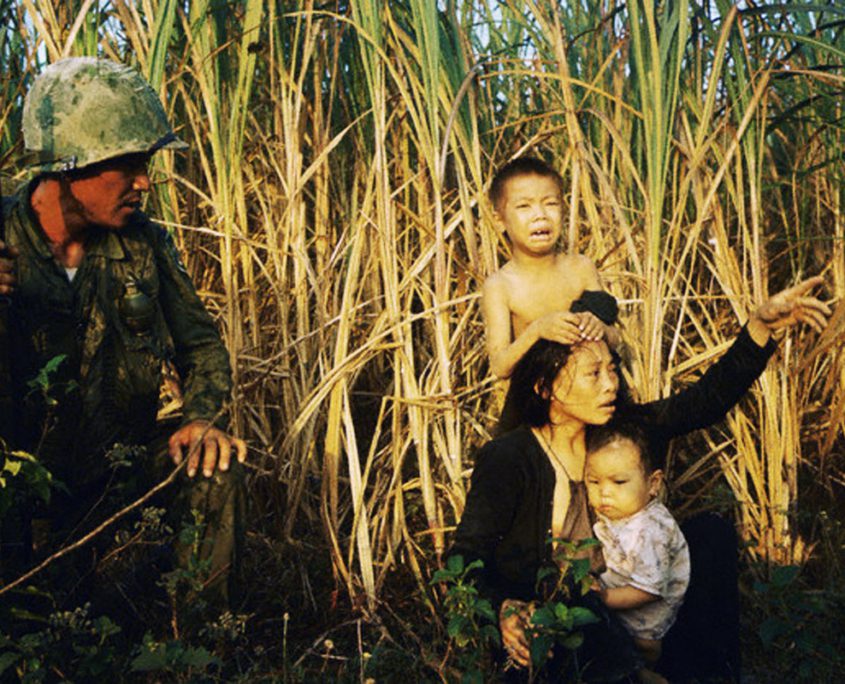
Countless Vietnamese people fell victim to the Vietnam War, which devastated Vietnam for two decades. Millions not only fell victim to conventional weapons of war, but millions have also suffered from the unconventional methods of that war, namely herbicidal warfare. Decades later, the United States government is working toward rectifying that wrong by assisting those who have suffered from the gas. Primarily, the U.S. is working through the United States Agency for International Development (USAID) by providing restitution for victims of Agent Orange.
Herbicidal Warfare
The Vietnam War has its roots in post-World War II when Vietnam temporarily split into two separate entities. Communist guerillas controlled the North, while the French Backed Emperor Bao Dai controlled the South. As the conflict between the two grew, the French became further entwined in the conflict, eventually leading the fight. Although a small, largely untrained force, the communist group, led by the charismatic leader Ho Chin Minh, successfully fought the French, winning the decisive Battle of Dien Bien Phu in 1954. Both sides signed the treaty at the Geneva Conference in 1954 and created an officially split Vietnam with promises of a nationwide election and reunification in 1956.
Although U.S. involvement in Vietnam was initially marginal, the CIA provided training and equipment to the South government, then controlled by Ngo Dinh Diem. Afterward, the U.S.’s involvement quickly escalated. After the torpedoing of two U.S. warships in the Gulf of Tonkin, the United States began bombing campaigns and eventually deployed over 2.7 million soldiers throughout the war.
Agent Orange in the Vietnam War
The war officially lasted from 1955 to 1975, and over the two decades, nearly 3 million Vietnamese died, 2 million of whom were civilians. Although conventional warfare was primarily responsible for these deaths, herbicidal warfare provided its contributions. The United States dropped 20 million gallons of herbicides across the country, subjecting over 4 million Vietnamese to the toxic compounds. Primarily, the U.S. government used Agent Orange, an orange herbicide comprising two different types of herbicides, 2, 4-D and 2, 4, 5-T, containing the poisonous chemical compound dioxin.
Although the U.S. stopped using dioxin in 1971, Agent Orange has had disastrous effects on the Vietnamese population. Everything from multiple forms of cancers, congenital disabilities, soft tissue sarcomas and peripheral neuropathy links to Agent Orange. The effects are widespread. Of the 4.8 million people across Vietnam that have had exposure to the herbicide, 3 million are suffering deadly diseases as a result. Tragically, the herbicide spans generations as many born two generations removed from the conflict suffer from congenital disabilities and health problems directly from Agent Orange. The lifespan of dioxin is complicated, but in human bodies, it can last up to 20 years, while it can last more than 100 years in sediments of bodies of water. It has contaminated soil, water supplies and food.
United States Liability
Although the U.S. government has provided over $197 million in payments to Vietnam veterans, providing restitution to Vietnamese citizens has been more complicated. The U.S. government has yet to apologize or accept responsibility for the after-effects of the herbicide. Even so, for the sake of strong bilateral ties with the U.S., much of the blame has gone to the chemical companies involved in the production of Agent Orange. However, companies insist that the responsibility falls on the U.S. government.
Vietnamese organizations have made multiple attempts to receive financial reparations for the Agent Orange that the U.S. used during the war. In 2004, a Vietnamese group sued over 30 companies involved in the production and manufacturing of Agent Orange; they alleged that the chemical agent’s use constituted a war crime. A Brooklyn district court dismissed the case in 2005.
Restitution in Vietnam
Nevertheless, as Vietnam and the U.S. improve their bilateral relations through USAID, the U.S. has taken on the initiative to help clean up the residual dioxin. In 2019, national security advisor Robert O’Brien announced that over $110 million of the USAID budget would go toward cleaning up the primary site for the storage of Agent Orange during the war, Bien Hoa Airbase Area. The joint project between USAID and Vietnam’s Air Force Air Defense Command will take up to 10 years. USAID is building upon the successful 2018 project with the Vietnamese government to clean up the area around the Da Nang Airport.
More so, it is providing relief for the victims of Agent Orange. The Obama Administration started this with the Trump Administration continuing the program. Afterward, the Biden Administration renewed the program. The U.S. Agent Orange/Dioxin Assistance to Vietnam report from the Congressional Research Service claims that aid for health-related services and assistance began being appropriated to USAID to use in Vietnam in 2009 but has continued with the dedication of a total of $94 million for just health-related services since 2011. Each year, the total has increased, apart from 2011 and 2013 when it dropped by $200,000. The most recent appropriations came in December 2020, dedicating $14.5 million to health-related activities. However, the majority of the appropriations went toward funding medical infrastructure and capacity building.
Looking Forward
More recently, USAID has moved to direct assistance. In April 2019, USAID announced a memorandum of intent to support people with disabilities. Shortly after, USAID set up staff in the country to collect information to understand the problem better. With this knowledge, the organization announced a grant to fund initiatives to improve the quality of life for those dealing with dioxin’s adverse effects. As Xuan Dung Phan describes it, “USAID will work with local NGOs to provide hospital-based/home-based rehabilitation, palliative care, home modifications, training, personal assistance services and assistive products.”
Although the U.S. government has refused to accept responsibility, through USAID, it has provided life-changing service for the millions of Vietnamese dealing with the residual consequences of its Agent Orange spraying during the Vietnam War. Thus, USAID is providing restitution for victims of Agent Orange.
– Vincenzo Caporale
Photo: Flickr

Artificial Intelligence in Vietnam: A Tool For Development
Development of Artificial Intelligence in Vietnam
In 1986 the Communist Party of Vietnam passed a set of reforms that shifted its centrally planned economy to a more decentralized one that prioritizes market forces. The reforms had profound consequences for the Vietnamese economy and poverty reduction. In the last three decades, the poverty rates declined from a stunning 70% to just around 6%, while the GDP per capita increased by 2.5 times.
However, in recent years the Vietnamese government has sought ways to build upon this growth through investment and further reforms. One area of interest is AI. Nonetheless, investment in the burgeoning technology has been lackluster until recently. Between 2015 and 2019, Vietnam invested less than a dollar per capita in AI. Meanwhile, Singapore invested $68 per capita in this technology.
However, many private companies have tried to invest and develop AI creating a small community of AI specialists. The country lacked government support, infrastructure, resources and training to develop the industry fully.
National Strategy on R&D and Application of Artificial Intelligence
Lately, the Vietnamese government has shifted its approach from passive support to underwriting the industry’s success. In March of 2021, the then Prime Minister, now President Phuc, laid out a master plan to develop the industry of artificial intelligence in Vietnam. The plan, entitled the ‘National Strategy on R&D and Application of Artificial Intelligence,” lays out Vietnam’s plan to develop AI until 2030.
Among other things, the strategy sets out to develop three national innovative centers on AI, ten Renowned AI Centers in the region, three national centers for big data and high-performance computing and 50 open, linked and connected data sets.
The entire government is being called upon to assist in this development. Fifteen government ministries and the Bank of Vietnam have all been given goals for integrating AI applications. A few examples from the strategy include: The Department of Defense has been asked to develop “intelligentization and modernization of equipment and weapons,” and the Ministry of Trade is tasked with creating “automated in-store purchases and delivery completion.”
Vietnam’s Long Term Strategies
The plan dedicates a certain amount of focus and resources towards AI development and vows to create an AI ecosystem and regulatory structure. The goals of the national strategy are ambitious. The Vietnamese government hopes the national strategy will propel Vietnam to the top four Southeast Asian countries and in the top 50 of the world for the AI industry by 2030. Essentially, the government is planning to make AI an important technology, spanning countless industries and private and government functions.
This support of artificial intelligence in Vietnam has manifested into more than just promises. A couple of months after the announcement to develop AI in the country, Vietnam launched its first artificial intelligence research center at the Hanoi University of Science and Technology. The Hanoi University and the Naver Group from South Korea will jointly run the center. The center will focus on basic research, connecting domestic and international AI operators and creating “made-in-Vietnam” core technologies. Furthermore, as one of the directors at the University, Dr. Ta Hai Tung described the center’s purpose as “…promoting AI applications in various industries and areas to accelerate digital transformation and boost the 4.0 industrial revolution in Vietnam.”
The Importance of AI for a Developing Country
In essence, the impacts the technology will have on the economy, society and everyday life motivate AI development in Vietnam. Overall, the potential application of AI technology is widespread. It spans healthcare, transportation, national security, finance and criminal justice and promises to streamline decision-making and data analysis and integration. AI development brings speed, efficiency, adaptability and expertise as it increases innovation, productivity, efficiency and cuts the cost of everyday business operations. As a result, the firm Price Waterhouse Coopers predicts AI can increase global GDP by $15.7 trillion by 2030.
The benefits of AI are particularly critical for developing countries that require non-traditional and cheaper technologies to streamline its development. For example, a financial institution out of Kenya, M-Shawri, which supplies customers with unsecured loans, utilizes AI to predict applicants’ default probability. In Mexico, the diabetic company, Clinicas de Azucar, utilizes AI to analyze health care data to better support thousands of diabetic customers.
AI development in Vietnam is predicted to be just as impactful. On its current trajectory, artificial technology is expected to contribute 12% to its GDP by 2030. As Tomoya Onishi describes it, “Hanoi wants AI to raise public sector productivity, particularly online public services to reduce processing and waiting times, public servant numbers, and other costs. Using AI to beef up national security is also high on the agenda.”
Artificial Intelligence as the Future
As the world prepares for an AI-driven future, Vietnam is searching to take advantage of the nascent technology to maintain and expand its remarkable growth. More than its rhetoric, the Vietnamese actively support the development of the technology through investment and setting up the necessary regulatory and legal structure. In other words, the government has prioritized artificial intelligence as a tool for development in Vietnam.
– Vincenzo Caporale
Photo: Flickr
Global Citizen Corps: Reducing Youth Participation in Terrorist Groups
Mercy Corps’s Global Citizen Corps (GCC) Program
Mercy Corps came to fruition in 1979 and assists foreign countries going through difficult times, such as war, natural disasters, economic crisis and political turmoil. Through the establishment of the GCC program in 2003, the organization focuses on helping young individuals improve their future and communities.
First, the program allows adolescents from the United States to chat online with other young individuals residing in the Middle East. With the use of narratives, conversations and volunteer work, the American youth educate foreign counterparts about the ability to seek data, how to speak up, the skills needed to be a leader and what it takes to make a difference in communities. Furthermore, the program works with each country’s government, local businesses and third sector to help the youth find employment. The GCC examines every procedure and method created by each of these institutions to ensure fairness for all citizens. In particular, the GCC helps advocate for better various projects for adolescent job search.
The GCC also provides basic resources and a safe space for young people who do not own a residence. The program assists young individuals to feel secure in any environment by introducing therapy and treatment. The program meets the emotional and physical needs of adolescents to prevent youth participation in terrorist groups. Lastly, the GCC gathers thousands of adolescents from all over the globe to participate in the program’s leadership course. The course allows young individuals from around the world to establish relationships, come to a mutual understanding about how to improve environments and inspire other adolescents to engage in community service.
GCC’s Impact
Since the program’s inception, GCC taught 15,000 young individuals about occupational skills, financial knowledge, job searching and interpersonal competence in 2009. Additionally, approximately 60,000 adolescents participated in community service, ranging from neighborhood gatherings to raising awareness for important issues in 2009. The GCC program caught the attention of nearly 12 million young citizens through social media and other news outlets in the same year.
Hope for the Future
All in all, the Mercy Corps’ GCC program aids in lowering youth participation in terrorist groups by creating online chat forums, advocating for fair institutional rules and practices, attending to adolescent basic needs and teaching leadership classes. The wide range of information and opportunities drive young individuals to advocate for positive change in youth life and nearby communities. When the youth put time and attention toward productive activities, joining a terrorist group appears unappealing. As the Global Citizen Corps program reaches more young citizens living in war-torn countries, the decline of terrorism looks achievable.
– Samantha Rodriguez
Photo: Flickr
Desert Locust Control Act Hopes to Aid Struggling African Countries
The Act Explained
In more specific terms, the Desert Locust Control Act would create an interagency working group that comprises several representatives from varying federal departments and agencies carrying out the act’s requirements. These duties would include monitoring the effectiveness of regional efforts to mitigate the outbreak and finding opportunities for additional support. Furthermore, the act asks to ensure the delivery of necessary assets to control the outbreak and provide humanitarian assistance to those affected. Lastly, the act would improve coordination among the involved government agencies, relieve the impact of restrictions due to the COVID-19 pandemic and work to prevent future desert locusts as well as other potentially harmful outbreaks.
What Desert Locusts Cause
This act has become necessary for a variety of reasons. For example, the Food and Agriculture Organization has reported that as of December 2020, there were 42 million people suffering from food insecurity in East Africa. This number will increase if the locust outbreak is not handled. It becomes especially disheartening when considering the highly destructive nature of the desert locust. A small swarm can eat enough food for 35,000 people in one day, while a larger swarm can devour enough to leave 81 million people starving. It’s important to note the urgency of the situation as well. By June of this year, the number of desert locusts could increase by 400 times, due to there currently being favorable weather conditions for their breeding and each locust generation increasing by 20 times on average.
Problems Amplifying the Crisis
Another concerning factor of this recent outbreak is the economic damage to these countries, with locust-related losses being estimated at $8.5 billion for livestock production and asset damages. Furthermore, COVID-19 regulations have already created unfavorable conditions for agricultural production by disrupting supply chains, transportation and access to services and labor. These conditions have consequently increased the chances for a potential food security crisis in the past months. The desert locust outbreak only compounds these issues and creates a crisis within a crisis, making a worse situation out of an already dire issue. Unfortunately, the desert locust will also place vulnerable citizens, including women and children, into further vulnerability, when accounting for the fact of the eventual increase in crime due to food shortages. The International Rescue Committee (IRC), has estimated that 5,000 households, especially those run by women, will need humanitarian assistance by August of 2021.
The immediacy of this outbreak, the drastic results and the economic and political difficulties present, have made it necessary for the U.S. and other foreign countries to involve themselves and provide assistance. As evidenced, the Desert Locust Control Act will be crucial for the well-being of several impacted African countries as the second wave is almost 20 times larger than the first one. Due to this, African communities will need foreign aid in order to safely and effectively nullify this issue.
– Juan Vargas
Photo: Flickr
USAID Provides Restitution for Victims of Agent Orange
Countless Vietnamese people fell victim to the Vietnam War, which devastated Vietnam for two decades. Millions not only fell victim to conventional weapons of war, but millions have also suffered from the unconventional methods of that war, namely herbicidal warfare. Decades later, the United States government is working toward rectifying that wrong by assisting those who have suffered from the gas. Primarily, the U.S. is working through the United States Agency for International Development (USAID) by providing restitution for victims of Agent Orange.
Herbicidal Warfare
The Vietnam War has its roots in post-World War II when Vietnam temporarily split into two separate entities. Communist guerillas controlled the North, while the French Backed Emperor Bao Dai controlled the South. As the conflict between the two grew, the French became further entwined in the conflict, eventually leading the fight. Although a small, largely untrained force, the communist group, led by the charismatic leader Ho Chin Minh, successfully fought the French, winning the decisive Battle of Dien Bien Phu in 1954. Both sides signed the treaty at the Geneva Conference in 1954 and created an officially split Vietnam with promises of a nationwide election and reunification in 1956.
Although U.S. involvement in Vietnam was initially marginal, the CIA provided training and equipment to the South government, then controlled by Ngo Dinh Diem. Afterward, the U.S.’s involvement quickly escalated. After the torpedoing of two U.S. warships in the Gulf of Tonkin, the United States began bombing campaigns and eventually deployed over 2.7 million soldiers throughout the war.
Agent Orange in the Vietnam War
The war officially lasted from 1955 to 1975, and over the two decades, nearly 3 million Vietnamese died, 2 million of whom were civilians. Although conventional warfare was primarily responsible for these deaths, herbicidal warfare provided its contributions. The United States dropped 20 million gallons of herbicides across the country, subjecting over 4 million Vietnamese to the toxic compounds. Primarily, the U.S. government used Agent Orange, an orange herbicide comprising two different types of herbicides, 2, 4-D and 2, 4, 5-T, containing the poisonous chemical compound dioxin.
Although the U.S. stopped using dioxin in 1971, Agent Orange has had disastrous effects on the Vietnamese population. Everything from multiple forms of cancers, congenital disabilities, soft tissue sarcomas and peripheral neuropathy links to Agent Orange. The effects are widespread. Of the 4.8 million people across Vietnam that have had exposure to the herbicide, 3 million are suffering deadly diseases as a result. Tragically, the herbicide spans generations as many born two generations removed from the conflict suffer from congenital disabilities and health problems directly from Agent Orange. The lifespan of dioxin is complicated, but in human bodies, it can last up to 20 years, while it can last more than 100 years in sediments of bodies of water. It has contaminated soil, water supplies and food.
United States Liability
Although the U.S. government has provided over $197 million in payments to Vietnam veterans, providing restitution to Vietnamese citizens has been more complicated. The U.S. government has yet to apologize or accept responsibility for the after-effects of the herbicide. Even so, for the sake of strong bilateral ties with the U.S., much of the blame has gone to the chemical companies involved in the production of Agent Orange. However, companies insist that the responsibility falls on the U.S. government.
Vietnamese organizations have made multiple attempts to receive financial reparations for the Agent Orange that the U.S. used during the war. In 2004, a Vietnamese group sued over 30 companies involved in the production and manufacturing of Agent Orange; they alleged that the chemical agent’s use constituted a war crime. A Brooklyn district court dismissed the case in 2005.
Restitution in Vietnam
Nevertheless, as Vietnam and the U.S. improve their bilateral relations through USAID, the U.S. has taken on the initiative to help clean up the residual dioxin. In 2019, national security advisor Robert O’Brien announced that over $110 million of the USAID budget would go toward cleaning up the primary site for the storage of Agent Orange during the war, Bien Hoa Airbase Area. The joint project between USAID and Vietnam’s Air Force Air Defense Command will take up to 10 years. USAID is building upon the successful 2018 project with the Vietnamese government to clean up the area around the Da Nang Airport.
More so, it is providing relief for the victims of Agent Orange. The Obama Administration started this with the Trump Administration continuing the program. Afterward, the Biden Administration renewed the program. The U.S. Agent Orange/Dioxin Assistance to Vietnam report from the Congressional Research Service claims that aid for health-related services and assistance began being appropriated to USAID to use in Vietnam in 2009 but has continued with the dedication of a total of $94 million for just health-related services since 2011. Each year, the total has increased, apart from 2011 and 2013 when it dropped by $200,000. The most recent appropriations came in December 2020, dedicating $14.5 million to health-related activities. However, the majority of the appropriations went toward funding medical infrastructure and capacity building.
Looking Forward
More recently, USAID has moved to direct assistance. In April 2019, USAID announced a memorandum of intent to support people with disabilities. Shortly after, USAID set up staff in the country to collect information to understand the problem better. With this knowledge, the organization announced a grant to fund initiatives to improve the quality of life for those dealing with dioxin’s adverse effects. As Xuan Dung Phan describes it, “USAID will work with local NGOs to provide hospital-based/home-based rehabilitation, palliative care, home modifications, training, personal assistance services and assistive products.”
Although the U.S. government has refused to accept responsibility, through USAID, it has provided life-changing service for the millions of Vietnamese dealing with the residual consequences of its Agent Orange spraying during the Vietnam War. Thus, USAID is providing restitution for victims of Agent Orange.
– Vincenzo Caporale
Photo: Flickr
5 Improvements for Kosovo Women in Politics
Kosovo women hold more power in politics than ever before, including the highest office. Vjosa Osmani became the acting president of Kosovo after the arrest of the previous leader for war crimes in November 2020. For Kosovo women in politics, suppression from the 1990s Serbian rule still affects their representation in democratic offices since Serbia refuses to recognize Kosovo’s 2008 declaration of independence. However, 44 of 120 new Parliament members the country elected in February 2021 were women, marking the highest number of women that the body has ever elected.
5 Ways That Kosovo Women are Gaining Representation in Politics
An Optimistic Future
Kosovo women in politics are steadily increasing their solidification of power within the democracy. Kosovo’s independence is growing, though Russia and China’s support of Serbia only recognize Kosovo as a partially independent country. But, the United States and reputable European countries wholeheartedly recognize Kosovo’s independence, providing hope to not just women but also Kosovo’s people in general.
– Libby Keefe
Photo: Flickr
Economic Expansion and Poverty Reduction in Asia
Asia’s Economic Profile
In 2020, the Gross Domestic Product (GDP) of Asia was greater than the GDP of the rest of the world combined. Experts estimate that by 2030, the Asia-Pacific region will account for 60% of the world’s economic growth.
Tremendous economic growth is not a new phenomenon in Asia. In fact, since 1960, Asia’s economy has grown at a higher rate than any other continent. East Asia’s economy, specifically, has exceeded the rest of the world over the same time frame. Japan kickstarted Asia’s period of growth after World War II. Soon after, the “four dragons” — Taiwan, Singapore, Korea and Hong Kong, emerged. The dragons each experienced tremendous and sustained economic growth in the latter half of the 20th century. In 1978, China opened its economy to the world, marking a huge leap forward for Asia’s economy.
With economic growth comes an increase in prosperity as the Asia-Pacific region is home to 90% of the world’s new members of the middle-class. While Asia’s economic prospects are tremendously promising, economic growth does not always translate into advancements in quality of life. Poverty reduction is an essential component of improving living standards and poverty reduction in Asia has been an important focus for Asian governments.
Poverty Reduction in Asia
Since the beginning of Asia’s period of tremendous economic growth, the region has seen similarly tremendous progress in poverty reduction. Asia continues to lead the world in poverty reduction.
No single country is more responsible for this achievement than China. In the last 30 years, more than 700 million people in China have made it out of extreme poverty. On a shorter time scale, China’s efforts to reduce poverty have yielded similarly promising results. From 2015 to 2019, China reduced poverty from 5.7% to 0.6% of the total population. In February 2021, China officially celebrated the end of absolute poverty, defined as the level at which a person cannot afford to meet their basic needs like food, water, healthcare, education and more.
Room for Improvement
Economic growth is not solely responsible for the successes of poverty reduction in Asia. In fact, as economic growth has progressed, Asia has actually experienced diminishing marginal returns in poverty reduction. In other words, as Asian economies have continued to grow, the growth has had a reduced effect on poverty reduction rates. Economic expansion and poverty reduction do not always happen equally. Policy is still needed to ensure poverty does not become a hidden issue. Despite all the expansion of the past 50 years, poverty in Asia is still a significant problem.
Asia’s progress in reducing poverty has been substantial but continued efforts are needed to truly eradicate poverty with further progress. There are still more than 320 million people in Asia who live in extreme poverty, defined as less than $1.90 a day. Furthermore, the COVID-19 pandemic has negatively affected poverty reduction in Asia. A World Bank report in September 2020 estimated that for the first time in 20 years, poverty could rise in East Asia. It estimated that as many as 38 million East Asian people could fall below the $5.50 poverty line. As such, continued focus on poverty reduction efforts is crucial, now more than ever.
– Leo Ratté
Photo: Flickr
A Closer Look at Healthcare in Turkmenistan
The Effects of Dictatorship
Dictatorship in the 2000s had a lasting, negative impact on healthcare in Turkmenistan. As previously noted, Turkmenistan was under the dictatorial rule of president Niyazov until his death in 2006. The dictatorship resulted in direct harm to healthcare. Imprisonment and torture of those who opposed the administration combined with over-incarceration in overcrowded facilities hurt healthcare in Turkmenistan. The rule of president Niyazov, however, also indirectly contributed to the country’s healthcare struggle. This occurred primarily due to the government’s focus on secrecy rather than prevention, meaning that the dictatorship was more concerned with limiting the exposure of the healthcare crisis in Turkmenistan than actually addressing it. These failures have had lasting, adverse effects on healthcare in Turkmenistan.
Corruption Undermines Healthcare
While Niyazov’s rule came to an end in 2006, the corruption of the healthcare system in Turkmenistan is yet to cease. Bribery is commonplace in the healthcare system, with doctors being forced to pay an unofficial penalty “for every incident of an undocumented health problem that surfaces among the population of the district that they are responsible for.” Local administrations then use this money to bribe health inspectors “to ensure positive reports about their work.”
Additionally, the legacy of secrecy and coverup remains today. Despite being bordered by a country with 500,000 COVID-19 cases in April 2020, and having taken no formal quarantine measures, the Turkmenistan officials repeatedly reported no official cases around this period. Even within the country’s health departments, few people knew the real risk that COVID-19 posed due to the government’s secrecy. False reports and large-scale coverups likely make it most challenging to address the reality of healthcare in Turkmenistan as the truth is often unclear.
Poor Air Quality
The air pollution in Turkmenistan is “considered moderately unsafe” under guidelines put forward by the World Health Organization. While 10 µg/m3 of PM2.5, the fine particulate matter that pollutes the air and can cause health issues, is the maximum recommended level for air pollutants, Turkmenistan has a mean of 22 µg/m3. In the short term, this air pollution can cause typical symptoms like shortness of breath and lung and nose irritation while also worsening the effects of asthma and emphysema. In the long term, however, the risks become more severe, inducing lung cancer, cardiovascular disease, chronic respiratory illness and more.
The Future of Healthcare in Turkmenistan
Partnerships with other countries and international organizations provide hope for the future of healthcare in Turkmenistan. A new project started by Japan and the U.N. Office for Project Services (UNOPS) aims to deliver medical equipment and supplies to aid the country’s healthcare system. The project Enhancing the Healthcare System through the Provision of Medical Equipment in Turkmenistan will invest $2.8 million into the Turkmenistan healthcare system.
Moreover, a WHO-EU joining project titled Crisis Response for Central Asian Countries is a €3 million project involving Turkmenistan and neighboring countries that aims to assist in the response to COVID-19 as well as strengthen emergency response preparedness and detection efforts. Thus far, the project held a virtual training seminar led by international experts to train healthcare workers and provide them with hands-on skills. While Turkmenistan’s past was defined by its secrecy and closed-off posture regarding its healthcare system, the trend appears to be reversing as international aid in cooperation has been invited to help revitalize healthcare in Turkmenistan.
– Kendall Carll
Photo: Flickr
Fragility, Conflict and Violence (FCV) Fuels Poverty
Fragility
The International Development Association (IDA) reports that ½ of the world’s poor live in “fragile, conflict-affected states.” The World Bank defines fragile states as those meeting three different criteria: unstable institutional and political settings, the introduction of peacekeeping forces, international acknowledgment of instability and at least 2,000 per 100,000 migrants moving across borders. These criteria illuminate a political security crisis and forecast conflict.
Conflict
Along with fragility, conflict is a significant predictor of poverty and instability. The World Bank states that conflict accounts for “80% of all humanitarian needs.” Conflict also greatly contributes to the refugee crisis, inflating the number of displaced people around the world. FCV-afflicted countries account for 82% of forcibly displaced people. The addition of refugees limits the development of the host country even further and exacerbates issues of economic equality.
Conflict-affected states are home to half of the global poor. Conflict is identified by the World Bank as, “countries having 10 per 100,000 of their population experiencing conflict related deaths.” Countries on this list include Afghanistan, Syria, Somalia and South Sudan. Unsurprisingly, these countries are also among the top 5 contributors to the world’s refugee crisis.
Violence
In the last ten years, there has been a noticeable spike in intrastate violence. Poverty levels in countries with protracted conflict have increased, along with the levels of both internal and external displacement. Factors of political instability, intrastate conflict and corruption contribute to a cycle of poverty. Violent settings are likely to have high numbers of refugees fleeing those areas. The Global Citizen wrote, “By the end of 2019, 79.5 million individuals were forcibly displaced worldwide as a result of persecution, conflict, violence or human rights violations.”
Resulting from the outbreak of the Syrian Civil War, Syria is the world’s largest contributor to the global refugee crisis. Many flee country borders and are unable to attain asylum. Rather than return to a homeland of FCV, refugees remain in camps with limited access to work, education and commodities.
The Good News
In an effort to advocate and assist those most affected by FCV, the IDA has provided consistent and significant aid to the world’s poorest countries predisposed to experiencing poverty. One example of an IDA success story is Afghanistan. The IDA has endorsed 45,751 democratic community development councils throughout Afghanistan and has provided laborers 66 million days of work. The organization also helps provide vaccinations and central infrastructure to areas in need. With the help from other NGOs and nonprofit organizations, The World Bank is attacking these issues head-on through means of prevention, engagement, assistance and litigation to ensure further development in countries most affected by fragility, conflict and violence.
– Allyson Reeder
Photo: Flickr
Organizations and Government Initiatives Tackling Women’s Rights in Cyprus
The Republic of Cyprus is located in the eastern Mediterranean Sea. With a population of 1.2 million people, this country faces gender inequality in education, wages and poverty rates. However, its government is working to improve women’s rights in Cyprus through various policies and programs.
The Gender Gap
Cyprus ranks 21st on the European Union’s Gender Equality Index. The European Institute for Gender Equality (EIGE) developed this measurement to see how different factors like age and disability have an impact on gender equality. Cyprus’ ranking emphasizes the need for improved gender equality, specifically women’s rights. Even though there are more women in education than men, in 2017, only 32% of women were secondary school graduates. However, this percentage went up to 38% only a year later.
Despite having more female graduates from secondary and tertiary education, men often receive more pay than women. In fact, women earn half of what men earn. A disproportionate number of women live in poverty in comparison to men. The AROPE (at-risk-of-poverty and social exclusion) measure, which measures poverty, exclusion from the labor market and material deprivation, found that 23.3% of women were in poverty in 2019 while men were at 21.2%. Three in 10 women were at risk of poverty or social exclusion in 2017.
Despite its low ranking in the Gender Equality Index, Cyprus is making faster progress than other countries when it comes to gender equality scores. One can credit this improvement to effective government initiatives.
Government Initiatives
The Constitution of Cyprus has a section on gender equality. Article 28 of the constitution focuses on the equal treatment of women and prohibits discrimination. Cyprus has implemented many government policies and programs to improve gender equality in the country. The government distributed its Strategic Plan on Equality between Women and Men 2014-2017 to different government departments, ministries and local authorities. This precedent has continued with its National Action Plan (NAP) on Gender Equality 2018-2021, increasing awareness for gender equality throughout different areas of the country.
The government of Cyprus has established six new committees to bridge this gender gap. Two committees specifically target violence against women and trafficking and economic empowerment. The government has also increased collaboration with different women’s organizations.
Cyprus Women’s Lobby and Cyprus Antipoverty Network
The Cyprus Women’s Lobby is a branch of the European Women’s Lobby, a nonprofit organization that works with European institutions and civil society organizations. The Cyprus Women’s Lobby is a network of 16 women’s organizations and nonprofit organizations. This group formed in 2008 to improve gender equality and women’s rights in Cyprus. The NAPN-Cyprus (National Anti-Poverty Network Cyprus) is a network of nonprofit organizations. This network focuses on eliminating poverty and social exclusion. NAPN-Cyprus helps alleviate the gender inequality in the country, specifically of women’s rights due to their higher levels of poverty.
Women face a disproportionate amount of inequality in Cyprus. However, their government and different nonprofit organizations are looking to bridge this gap in inequality.
– Mia Banuelos
Photo: Flickr
Okere City: The Rebuilding of a Greener Uganda after a Decade of War
The Ugandan Bush War
From 1980 to 1986, the Ugandan Bush War (also known as the Luwero War) ravaged several Ugandan villages. The conflict began with former General Idi Amin’s rise to power. Early in his presidency, Idi Amin established a military dictatorship. The Uganda National Liberation Front soon overthrew him. Originally implemented by Tanzania to replace Idi Amin, the UNLF’s regime lasted from early 1979 until it was eventually dismantled due to the attacks of Amin loyalists in 1980.
Detached groups of Amin loyalists massacred most of the Ugandan National Liberation Army. With the attacks on the previous Ugandan prime minister, Apollo Milton Obote, and the capturing of most villages along the West Nile, the Uganda Army wreaked havoc in Northwestern Uganda until internal conflict resulted in the separation of the insurgent group. This division generated a new, opposing group known as Uganda National Rescue Front.
Not long after, Obote regained office in 1981 and inspired the emergence of even more rebel armies. In 1982, however, the National Resistance Army, Uganda Freedom Movement, Uganda National Rescue Front and the Nile Regiment came together to create the Uganda Popular Front.
The conflict did not stop there, as the ex-soldiers continued to rebel against the new government well into 1994. Following Idi Amin’s presidency, President Yoweri Museveni took office in 1986 after allying with the rebellions that toppled the reign of his predecessors. President Museveni is currently in the sixth term of his presidency and suppressed the continuous attacks.
The Situation Today
An estimated 1 million Ugandan’s lost their lives throughout the 80s and early 90s. The end of the Ugandan Bush War left the remaining villages uprooted and their residents devastated. President Yoweri Museveni is still working to rebuild the toppled infrastructures of these villages and the Ugandan economy as a whole. The increasingly innovative solutions invented in Okere Mom-Kok are one prime example of the efforts.
The City of Okere
The city of Okere is located in the Otuke District, Uganda and consists of 14 villages, each with about 200 people. Made famous for its shea trees, Okere City is the inspiration for Marvel’s “Black Panther.” The shea tree is currently in high demand due to its scarcity after the war. Furthermore, their energy-efficient components make them very coveted.
This area was hit the hardest and is still recovering, thus the pioneering of greener and more sustainable living technologies. From the use of shea butter as a charcoal substitute to solar energy being accessible to the entire network of villages, the city of Okere continues to thrive and evolve. The main village currently consists of a church, markets, schools, clinics and several other crucial establishments.
Okere City is one of the many villages left destroyed by the Ugandan War and is still building towns essentially from the ground up. But this development created greener, more accessible technologies and spread throughout the country. The future for Okere City is bright and illuminates a beacon of hope for the livelihoods lost throughout the travesty that was the Ugandan Bush War.
– Caroline Kratz
Photo: Flickr