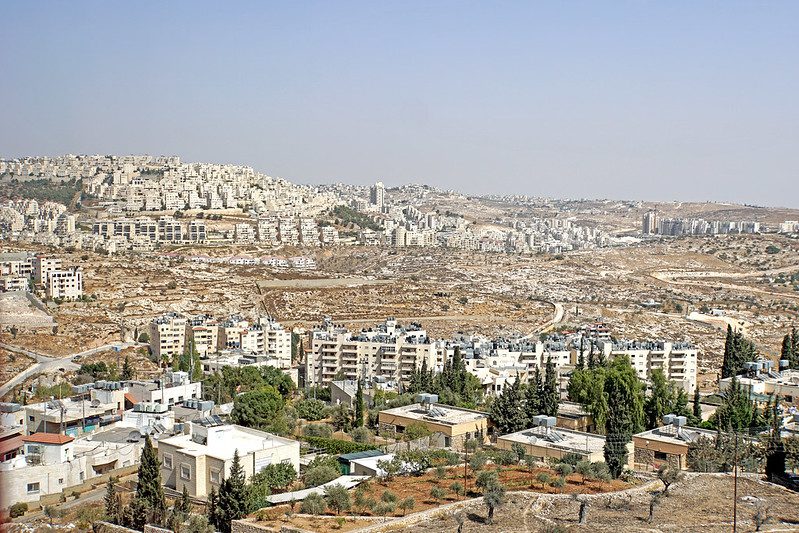
 In the early 2000s, the decades of conflict between Israel and Palestine led many to demonstrate solidarity with the Palestinians. Around this time, Israel built the West Bank Wall that divides the territory. This wall has become a platform for artistic expression regarding the situation in the region and the overwhelming impoverished conditions. It also made way for a rise in poetic expression.
The West Bank Wall
In the early 2000s, the Israeli government began building the West Bank Wall to isolate and separate regions and landscapes. It has become one of the many issues and burdens that Palestinians have had to face. The wall stretches for over 400 miles, longer than the Green Line, the 1949 border set between the two territories. Additionally, 85% of the wall lies in the West Bank.
Since most of the wall sits on the West Bank, the Israeli government seized Palestinian land and homes for its construction. Hundreds of families lost their homes, livelihood, farms and water sources. The rest were isolated from the other side of the wall. About 140 Israeli checkpoints control the area, which exists under Militia Law. Within the boundaries of the wall, Israel has denied Palestinians basic freedoms, humanitarian assistance and material supplies, all of which have worsened the living conditions, especially for those living in poverty.
Despite the West Bank Wall’s detrimental effect on the Palestinians, they turned to art for hope and an escape from the daily violence and impoverished conditions. The West Bank Wall became a literal platform for artistic expression regarding the circumstances. Palestinians have contributed to different forms of art across the entire wall, whether it be portrait, symbolism, graffiti or abstract. This marked the drastic rise of the use of art as a form of communication. It has also kept the Palestinian flag alive, which was banned by the Israeli authority. Even international artists, like Banksy, contributed to the symbolic street art and murals across the wall.
Art Initiatives by Anera and UNRWA
While the West Bank Wall provides a platform for Palestinian artists, NGOs like Anera and UNRWA have worked to implement educational art and music programs for young children in Gaza and the West Bank. Anera works closely with local arts, music and cultural organizations in the West Bank and Gaza to promote artistic expression and learning. Anera has implemented summer camps at several preschools in Gaza that use artistic expression to provide psycho-social support for children. Since the situation in Gaza is relentless and draining, especially for children, it is important to provide an outlet that promotes stress relief. These summer camps serve to use art as a way to remove children from the constant austere conditions and the stresses of life. UNRWA schools provide similar classes and camps for the same purpose; to mitigate the psycho-social effects of the conflict and the stresses of poverty.
Gazan Women Sell Their Embroidered Art
Some Palestinian groups have even used art as a form of income. These individuals sell sewn accessories and painted portraits and landscapes of culturally significant symbols. A historical example that lives on to this day is The Sulafa Embroidery Project. Established in 1950, the organization employs several hundred women in Gaza and provides them with the necessary materials to create embroidered masterpieces. These pieces are sold internationally. In 2014, the women began making these pieces for the New York International Gift Fair. Unfortunately, due to the Gaza bombings in 2014, The Sulafa Embroidery’s initiatives temporarily ceased and The Poverty Alleviation Fund stepped in to ease the circumstances and allow the products and samples to reach the New York International Gift Fair.
The Gaza Poets Society
Art, however, is not the only escape from the stressful and burdensome environment. Poetry in Palestine has been around for a very long time. From Mahmoud Darwish to Fadwa Tuqan, poetry is rooted in Palestinian culture. Recently, there has been a break from the traditional and classical Arabic poetry — often performed in coffee shops and saloons — and a rise in poetry and live performances of all kinds of performing arts among young Palestinians, all for a way to feel free.
In 2018, Mohammed Moussa, a Palestinian born and raised in Gaza, founded the Gaza Poets Society, a nonprofit group of more than 30 young aspiring poets and performers from Gaza who meet every week to write and share poetry as well as plan for a monthly live event of performances. “It’s easy to lose hope when you’re locked in a place where 70% of Gazans are suffering from depression, 60% are classified as poor and 65% of college graduates have no job and no chance of getting one because of Israel’s blockade on Gaza,” said Moussa on a 2018 campaign raising money for the Gaza Poets Society operations.
Escape and Hope
Moussa understood the burdens that came with living in Gaza. “I think I have experienced a lot, growing up here. I experienced genocides, wars, deaths, suicide, siege. I was a friend of chaos, I was born in chaos, I still live in chaos.” he said. Moussa was born in the Jabalia Camp, the largest of the Gaza Strip’s eight refugee camps. It is a place not unfamiliar with the struggle to find hope. To Moussa and the rest of the group, the Gaza Poets Society is one of Gaza’s biggest forms of optimism. “Poetry is a beautiful escape from the unbearable reality we live in.” He said. “Words hold us more than the ground does in this city. That’s what we feel about poetry.”
For many Palestinians, art and poetry began as a form of resistance. Now, it provides hope and faith in a better future as well as a soothing outlet from the difficult and trifling times of today.
– Nada Abuasi
Photo: Flickr

The UN Believes the Prickly Pear Could Be the Key to Food Security
Resistance to Drought and Heat
The study states that the prickly pear requires up to 80% less water than crops such as corn, rice and soy. Additionally, those crops have upper-temperature limits, whereas the prickly pear is able to grow in extreme heat. Africa’s largest country, Algeria, is classified as being around 80% arid or semi-arid, which leaves its population of more than 43 million vulnerable to food insecurity. In 2013, the country formed a cooperative of farmers, scientists and traders to begin cultivating the prickly pear. For this project, they consulted with Mexico, whose people and ancestors have ample experience with the cactus.
The cooperative built its first processing factory in 2015. The factory produces oil that is exported to France, Germany and Qatar. Since then, the enterprise has steadily grown. The cooperative built another factory in 2018 and plans to begin exporting its goods to the United States.
Can be Used as a Biofuel
The primary crops grown for biofuels are corn, sugar cane, soybean and palm oil, which comprise 97% of the biofuel industry. Sugar cane and corn require three to six times more water than the prickly pear, though they produce the same amount of energy. When grown as biofuel, corn, sugar cane, soy and palm oil crops can only be used for that very purpose. In contrast, farmers can first harvest the prickly pear for food before its waste-product is converted into fuel. It’s a circular system versus a linear system. When it comes to the question of the prickly pear as the key to food security, this distinction makes all the difference.
Food for Humans and Livestock
The prickly pear borders on being a superfood. It’s rich in vitamins, minerals and phytonutrients. It contains antioxidants and is anti-viral and anti-inflammatory. For animals, the plant’s pads, or “nopales,” contain nearly 80% water, making them ideal feed for livestock. It can also be prepared in countless ways, though many people around the globe are unfamiliar with its myriad of uses.
Eritrea, a northeast African country is a prime example of this missed opportunity. Here, they sell the prickly pear on roadsides and in marketplaces alongside more popular fruits such as bananas, guavas and oranges. However, the Eritrean people, who regularly face food shortages, are largely unfamiliar with the number of ways the plant can be consumed. As a result, it has yet to be cultivated on a mass scale. Nearly all of the prickly pears that are brought to market are harvested from wild cacti.
Can Function as a Carbon Sink
One of the strongest arguments for the prickly pear as the key to food security is its function as a “carbon sink.” The fruit grows in areas where other plant life can not be established and then captures excess CO2 from the atmosphere. Cultivated on a mass scale, this could lead to lower temperatures and more rainfall, thus decreasing the number of droughts that threaten food security worldwide.
Challenges and Opportunities Ahead
In 2015, Madagascar faced a drought-induced famine. The lack of rain laid waste to their chief crops, including rice, cassava and sweet potatoes. Desperate for nourishment, many turned to the prickly pear, which was then regarded as a weed. The FAO points to the plant’s usefulness during the direst conditions as proof of the potential benefits of cultivating it on a larger scale. Droughts have continued to plague the people of Madagascar, with approximately one million inhabitants living on the brink of famine. The continued suffering of those living in the world’s most precarious conditions underscores the need for attainable, wholesale solutions. The FAO believes one such solution, agriculture or “green gold,” is well within reach.
– Greg Fortier
Photo: Flickr
Decent Work Country Programmes: Preventing the Job Shortage in Iraq
Iraq’s Economy
With billions going yearly to its public service, the nation is in an economic vise. It has been estimated that public employees get about 17 minutes of work done every day. Currently, Iraq is the seventh-largest country producing oil, but oil revenue has been decreasing. The nation spends little of the income it generates on potential economic development of the implementation of projects. Iraq is unable to pay its bills due to a lack of funds. This led to a financial meltdown, which resulted in the fall of the government after widespread movements against corruption and unemployment. The marches were centered against high state officials in a community where unemployment hovers about 15% and one in every four people lives in poverty, earning as little as $2.20 per day.
Youth Unemployment
Approximately 700,000 young Iraqis join the employment market every year. A primer published for the World Bank on job development in Iraq listed the youth unemployment rate at 36%. There is no noticeable difference in the rate of unemployment between young people with primary education and those with higher degrees. Because of this, Iraqi youth have been at the frontline of occupation riots in Iraq. Similar to Iran, the country’s poor budget management and corruption have been central to their outrage.
Iraq’s prosperity is largely dependent on its ability to build employment for the young population. This is particularly true of university-educated young people. A study by the World Bank estimates that Iraq needs to increase the number of jobs by 100 to 180% to address its workforce needs sufficiently.
Decent Work Country Programmes (DWCPs)
The International Labor Organization (ILO), together with the Ministry of Labour and Social Affairs of Iraq (MOLSA), is implementing DWCPs in Iraq. DWCPs are systems for financial guidance that focus on creating jobs through the growth of the private sector. They also assist with the expansion of social security coverage, freedom of association and National Employment Policy design and implementation. In March 2020, in response to a request by MOLSA, the ILO formed the first cooperation department for Iraqi counties in the city of Baghdad. With a budget of $17.5 million, the program is implementing five projects to encourage quality work and increase job opportunities. These projects will help Iraq’s government, employees and employers.
Overall, there are high hopes for the country’s future. The youth are not going to stop demanding change until they get it. With big changes the government is hoping to make in the next decade, there could be a possible decrease in the rate of unemployment.
– Rand Lateef
Photo: Flickr
G7 Alliance to End Educational Poverty in Developing Countries
The G7 Alliance, otherwise known as Group of Seven, is a global intergovernmental organization made up of Canada, France, Germany, Italy, Japan, the United Kingdom and the United States. The key principles of this organization are freedom and human rights, democracy and the rule of law and prosperity. The organization promotes sustainable development through “a community of values” by convening at yearly G7 summits. Most recently, the G7 has entered an alliance to end educational poverty in developing countries.
The G7 Alliance and Goal 5
The G7 Alliance derives from Goal 5 of the G7 Alliance’s Global Goals. The goal is to achieve gender equality. The G7 hopes to do this by ensuring equal access to quality primary and secondary education for both boys and girls. Together, the priorities aid in the path to end poverty in developing countries by 2030.
The G7’s 2021 effort toward Goal 5 includes sending 40 million more girls to school within the next five years. To achieve this, G7 countries will allocate $15 billion to support women and girls’ education in low- and middle-income countries. This movement also includes action to aid in an additional 20 million girls across the world learning how to read by 10 years of age.
Many developing countries already neglected education, especially for women and girls, before the COVID-19 pandemic. The pandemic inflicted a new set of conditions that worsened education reform in countries that need it most. Prior to the COVID-19 pandemic, 132 million girls around the world lacked access to an adequate education. Additionally, only one in four countries has equal likelihoods of upper-secondary school attendance for boys and girls.
According to Save the Children, the effects of the pandemic have threatened to reverse the gains that many areas have made regarding girls’ education in recent years. About 11 million girls are currently at risk of completely losing their access to education. In Ethiopia alone, the COVID-19 pandemic forced over 26 million children to leave school due to school closures.
Moving Forward in the Alliance to End Educational Poverty
The G7 Alliance’s commitment toward Goal 5 is one of the largest in terms of scope and projected impacts. However, the Alliance has yet to decide the details of where the funding must come from and where the funding must go.
The G7’s alliance to end educational poverty is placing education at the forefront of policy reform and international aid as countries adjust to the constant new norms that come with each day of the COVID-19 pandemic. This priority could positively affect global economics and accelerate overall global recovery and wellbeing.
– Kylie Lally
Photo: Flickr
Biden Pledges $600 Million in Syrian Aid
US Aid to Syria
Secretary of State Anthony Blinken announced that the U.S. would contribute $600 million in aid during a conference titled “Supporting the Future of Syria and the Region” in Brussels. At the conference, Blinken said, “There is no military solution that will bring peace, security and stability to Syria and the region.” He then continued, “Systemic corruption and economic mismanagement at the hands of the Assad regime have exacerbated the dire humanitarian crisis, which has been further compounded by the challenge of COVID-19.”
At the figure of roughly $600 million, this amount is slightly less than the 2020 pledge from the U.S. where the U.S. aimed to contribute $700 million in Syrian aid. However, the United States still remains the largest donor in Syrian response efforts. In fact, the U.S. has contributed almost $13 billion to the cause since 2011.
The U.S. ambassador to the United Nations, Linda Thomas-Greenfield, also addressed the announcement of the Syrian aid at a press briefing. She confirmed, “This funding brings the total U.S. government humanitarian assistance to nearly $13 billion since the start of the decade-long crisis.” She further stated that the monetary assistance includes nearly $141 million in support of the COVID-19 pandemic efforts in the Syrian region. This assistance will provide humanitarian relief to the Syrians still living inside Syria as well as the 5.6 million Syrian refugees in asylum countries like Turkey, Lebanon, Jordan and Iraq.
A Commitment to Continued Support
The pledge of $600 million from the U.S. also illustrates a break from the Trump administration’s efforts to cut aid to Syria and foreign assistance funding. However, even despite Trump’s opposition, Congress for the most part disagreed and U.S. assistance to Syria remained steady throughout his term. This continued funding comes at a good time as humanitarian needs in Syria has never been greater, according to the United Nations. Roughly 66% of Syrians need humanitarian assistance. Across Syria, UNICEF estimates that more than half a million malnourished children are experiencing stunted growth due to inadequate food and nutrition.
Vulnerable Palestinian Refugees
Meanwhile, the U.N. Relief and Works Agency for Palestine Refugees in the Near East (UNRWA) is still advocating for the support of the 440,000 Palestinian refugees in Syria. The UNRWA reports that a shocking 90% of these refugees in Syria are living in absolute poverty. Since the Biden administration pledged to restore relations with Palestinians, the U.S. is expected to resume aid to the relief agency since Trump ceased funding to the UNRWA in 2018.
With significant support from the U.S. and the rest of the international community, the humanitarian crisis in Syria may finally come to an end. Supporting Syrian aid ultimately means supporting the most vulnerable people in desperate need of relief.
– Elisabeth Petry
Photo: Flickr
The Fight Against Multi-Drug Resistant Tuberculosis in Afghanistan
Medecins San Frontieres
MSF came to Afghanistan in 1980 and strives to serve individuals with critical medical conditions, children and pregnant women. More specifically, MSF started its MDR-TB program in 2017 to improve the quality of life of individuals with MDR-TB. Since the program’s inception, MSF identified over 40 patients with multi-drug resistant tuberculosis in Afghanistan and many of them received treatment that lasted nine months, as opposed to the standard 20 months. The short treatment time helped eliminate the negative symptoms the patients endured with regular treatment. During their treatment, MDR-TB patients received one of the two antibiotics called bedaquiline and delamanid.
Some patients reside at the association’s clinic in Kandahar to receive antibiotics every day. During their stay, individuals affected with MDR-TB consume nutritious food to help them recover faster. Also, the patients receive counseling and learn how to stop the transmission of tuberculosis to their loved ones.
United Nations Development Programme
The Government of Afghanistan provides universal healthcare to all its citizens. However, many Afghani citizens with MDR-TB do not receive treatment due to the inability to travel to medical centers in the city. The United Nations Development Programme (UNDP) noticed the struggle that individuals endured to get medical care and constructed four treatment centers in Kabul, Nangarhar, Herat and Balkh. The UNDP came to Afghanistan over half a century ago and strives to get rid of destitution, establish systemic change and teach citizens to be adaptable. More specifically, UNDP works towards providing better medical treatment for citizens affected with MDR-TB.
With the help of donations from the Global Fund, each treatment center bought over 20 beds and built enough space to manage 200 patients. Next, over 1,000 health care workers learned how to better identify and manage the disease. Lastly, programs teach Afghani citizens about the disease to decrease judgment towards MDR-TB patients.
Oriental Consultants Global Co., Ltd.
OC Global began helping Afghanistan in 2009 and aims to construct innovative projects all over the world. In Afghanistan, the corporation helped build a new hospital in Kabul that aims to reduce the number of MDR-TB cases.
Inside the hospital, a laboratory allows medical professionals to draw blood from patients to diagnose them more efficiently and swiftly. Next, the corporation bought all the necessary equipment needed to provide better medical treatment. Lastly, with the data collected from the patients, the hospital learns more about the disease and spreads this knowledge to others.
Looking Forward
All in all, MSF, UNDP and OC Global assist in lowering the cases of multi-drug resistant tuberculosis in Afghanistan. These organizations strive to provide easy access to medical care, better quality treatment and a quick diagnosis. As more citizens become aware of the services provided by these three entities, complete management of MDR-TB appears achievable.
– Samantha Rodriguez-Silva
Photo: Flickr
The Correlation between Poverty and Obesity in Nauru
However, there are several related factors that also contribute to the health crisis Nauruans face today. While the island originally imported food from Australia and New Zealand, it has now spread farther to the west, such as China and Malaysia. The difference in language is a barrier that prevents the proper interpretation of food labels and consequently presents a hazard in maintaining food safety. Additionally, phosphate mines largely comprise the island, leaving the already small country with even fewer viable means to grow and sustain crops. As a result, the only option for the civilians of Nauru to gain their meals is to rely on cheap Western imports.
Poverty’s Role in Obesity
While Nauru may suffer from similar economic disadvantages as low-and-middle-income countries, its primary challenge is that the most accessible food is extremely detrimental to civilians’ health. Inexpensive, imported food from Western culture is now featured in Nauruan diets, often consisting of instant noodles, white rice and soda. Even worse, the existence of mutton flaps has been pinpointed by health experts as one of the main causes of obesity in the Pacific Islands because of its regular consumption by citizens, but it is still eaten on a regular basis in Nauru.
From a young age, the education system teaches children in Nauru about healthy eating and balanced diets; yet obesity is still a rampant problem. Amy McLennan, an Oxford University anthropologist who spent 11 months in Nauru, noted that “there’s a lot of desire to achieve better health, [but] at the moment, there’s a lack of tools and resources and the environment to do that.” The problem of obesity is an endless cycle that Nauru’s collapsed economy and years of unhealthy practices make difficult to erase.
Health Complications from Nauru’s Obesity Crisis
By assimilating the negative aspects of the Western diet and neglecting proper exercise, an overwhelming majority of Nauruans have seen a decline in their health. The World Health Organization denotes that 75% of all deaths on the Pacific archipelago are the result of diabetes, cardiovascular disease and hypertension. Notably, all of the aforementioned conditions are related to a spike in obesity and high blood pressure. A BMI, or a Body Mass Index, is a range that measures body fat in proportion to height and weight. With Nauru’s average BMI falling around 34, it is above the BMI for an average obese person of 30 which highlights the need to turn around these troubling statistics.
Diabetes, however, is the most prominent of these obesity-risen conditions on the island, a situation that has gotten significantly worse according to Eva, a diabetes care manager in Nauru. Eva asserted in an interview, “I have seen so many funerals for such a small island. So many people are dying at an early age because of diabetes.” The combined effect of unhealthy meals and the absence of exercise has exacerbated the number of diabetes cases on the island.
Awareness about Obesity in Nauru and Solutions
Raising awareness about the obesity epidemic that the Pacific islands have struggled with for many years is important for increasing the well-being of Nauruans’ lives and creating a more stable environment. Although there is a lack of viable land to yield more crops and fresh food, increasing fitness in Nauru will aid in reducing the chances of cardiovascular disease and cases of type 2 diabetes. At a societal level, implementing healthy practices can instill beneficial practices into individuals’ lifestyles in the long run. The food industry also has a significant role in international obesity rates. Addressing these issues and stopping companies that import fatty and greasy foods to developing countries, such as Nauru, is a step toward initiating crucial change.
– Esha Kelkar
Photo: Flickr
3 Organizations Providing Mobility through Wheelchair Donations
From genetic disorders to infections that require amputation, people need a wheelchair for any number of reasons. In Sierra Leone, 1,600 people are amputees due to the devastating civil war that ended in 2002. Countries in Africa that have been hard-hit by Ebola, Malaria and other diseases are home to thousands of people that need wheelchairs but can’t afford them.
These people regain their sense of dignity and self-worth when they can move freely on their own. Without the assistance of a wheelchair, they have to rely on others to get from place to place. This makes school and work extremely difficult. With a wheelchair, people with physical disabilities can bring themselves to work and school, breaking themselves out of the vicious cycle of disability and poverty. Here are three organizations that are helping to make mobility a reality for people through wheelchair donations.
Walkabout Foundation
The brother and sister team Luis and Carolina Gonzalez-Bunster founded Walkabout Foundation in 2009. In 1994, Luis suffered damage to his spinal cord in a car accident. The injury paralyzed him and doctors told him he would never walk again.
Since its creation, Walkabout Foundation has donated 17,400 wheelchairs to people living in poverty in 25 countries. The foundation has also raised $1.642 million for research and founded two rehabilitation centers, one in India and the other in Kenya.
“Walkabout Foundation restores dignity, freedom and independence by providing wheelchairs and rehabilitation in the developing world and funding research to find a cure for paralysis,” the foundation’s homepage reads.
Free Wheelchair Mission
Free Wheelchair Mission is a faith-based organization that raises money for and donates wheelchairs to developing countries. It celebrates its official 20th anniversary this year.
The organization builds its own wheelchairs, which engineers have designed with cost efficiency and availability in mind. For example, the wheelchairs’ wheels are bicycle wheels because bicycles are a common mode of transportation almost anywhere in the world, making replacement parts for the wheelchairs easy to find and install.
In the 22 years since Founder and President Don Schoendorfer started producing and donating wheelchairs, Free Wheelchair Mission has donated more than 1.2 million wheelchairs in 94 countries.
Latter-day Saint Charities
Latter-day Saint (LDS) Charities is the humanitarian section of The Church of Jesus Christ of Latter-day Saints. Among its many charitable outreaches, it provides not only wheelchairs but also education on how to maintain and build wheelchairs so that community members can build their own wheelchairs.
In 2018 alone, LDS Charities made 53,800 wheelchair donations in 40 different countries. Volunteers work together with local governments and non-governmental groups to distribute wheelchairs and provide training for those receiving wheelchairs, their loved ones and their communities. Even with the COVID-19 pandemic, LDS Charities made 21,365 wheelchair donations in 2020.
Vulnerable groups receiving these wheelchair donations from the three organizations and others alike have their lives changed forever. The gift of mobility is irreplaceable and invaluable, improving the living conditions of those with physical disabilities.
– Holly Dorman
Photo: Flickr
Food Insecurity in Venezuela
Food Insecurity and Poverty in Venezuela
Andres Burgos wakes up around 3 a.m. every day to prepare arepas: the Venezuela staple of cornbread. After filling his backpack, he rides his bicycle through the streets of Caracas, Venezuela. He looks for people prying into trash bags for food and offers them this bread stuffed with ham, cheese or vegetables. There are many others like Burgos that do the same in Venezuela’s major cities.
According to the Food and Agricultural Organization of the United Nations (FAO), levels of food insecurity are higher in 2021 than in the WFP study from 2019. In the same line of analysis, ENCOVI, a group of national universities, conducted a survey that concluded 74% of Venezuelan households face extreme poverty and food insecurity.
Due to the economic situation in the country, the pattern of consumption has forced the fragile population to change diet habits. Individuals are forced toward consuming more carbohydrates such as rice, pasta and beans. Items including meat, fish, eggs, cheese and vegetables are often too expensive for this sector of society. This type of diet leads to chronic malnutrition.
Addressing Food Insecurity in Venezuela
Numerous organizations are advocating to improve the lives of Venezuelans in need. Recently, Executive Director of the WFP David Beasley arrived in the country to set up the program: The Venezuela Humanitarian Response Plan with Humanitarian Needs Overview 2020. The goal is to reach out to the most vulnerable populations and include them in the program’s three objectives: to ensure the survival and well-being of the most vulnerable, to continue sustaining essential services and strengthening resilience and livelihoods and to strengthen institutional and community mechanisms to prevent, mitigate and respond to protection risks
Cuatro Por Venezuela Foundation is another organization that collects funds with the goal of empowering vulnerable Venezuelans with the skills to provide for their own needs and ultimately improve their quality of life. Programs include a health program, a nutrition program and an empowerment program. The health program provides medicine and supplies and hosts educational health drives. The focus of the nutrition program is providing food staples, including formula, to orphanages, nursing homes, schools, hospitals and organizations that cook for the homeless. Additionally, the empowerment program offers training for success in micro-business and funds educational programs centered around children’s creativity, social dialogue and use of their free time.
GlobalGiving is a website that hosts groups and organizations that are collecting funds for a variety of social programs. This one site offers the ability to donate to programs targeting a large spectrum of vulnerable individuals, including the food insecure in Venezuela. Likewise, Alimenta la Solidaridad is an organization that develops sustainable solutions to the food security challenges of Venezuelan families. The organization promotes community organization and volunteer work as a way to provide daily lunches to children at risk of or experiencing a nutritional deficiency as a result of the complex humanitarian crisis.
These organizations are just a handful from the vast number working toward helping the most vulnerable populations of Venezuela who are facing food insecurity and poverty.
– Carlos Eduardo Velarde Vásquez
Photo: Flickr
The Hungarian Water Pollution Crisis
The Danube River
Because of its landlocked status, Hungary’s primary source of water comes from the Danube River. This groundwater provides water for 90% of the Hungarian population. Additionally, this river basin covers nearly 10% of Europe and extends to 19 countries, providing 80 million people with water. Its water is used for drinking, energy, production, agriculture and transport. Those near Danube River rely heavily on it as a vital resource, but it’s currently not safe to do so. The river poses a threat to those whose utilize it due to the large presence of pollutants.
The river is contaminated with a variety of harmful substances: organic pollution, nutrient pollution, hazardous substance pollution and microbial pollution. The main factor causing this pollution in untreated wastewater. Corporations often have inadequates processes and facilities to properly treat water before releasing into the river basin. The untreated water then flows into villages and smaller cities that typically don’t have the means to purify the water to a safe level. These dangerous conditions make the water unsuitable for consumption, but Hungarians largely have no other options for obtaining water. Aid is needed to bring clean and drinkable water to all Hungarians, especially to those in poverty and in rural areas.
GEOInsight’s Technology for Water Pollution
The Hungarian start-up GEOInsight works to analyze data in a useful and digestible way. Its mission is to find data showcasing areas with heavily polluted water and use absorbents to treat those areas. These absorbents are ecological machines that measure the amount of waste and remove the micropollutants. GEOInsight focuses its efforts on natural adsorbents in water as a way to fight against water pollution.
Hungary’s government as well as the industries dispelling the wastewater can utilize GEOInsight to combat the water pollution in Hungary. GEOInsight can aid these organizations in understanding the data behind the polluted water. GEOInsight can also work with the organizations to help figure out what question needs to be asked in order to solve this water crisis. In addition, GEOInsight can help to create solutions for the problem. To specifically combat the Hungarian water pollution crisis, GEOInsight began developing technologies to detect micropollutants. The organization’s technologies more accurately remove pesticides better than conventional wastewater treatments.
Earlier this year, the start-up partnered with the water waste management company in Hungary, Hungary’s Department of Aquaculture and UTB Envirotec. GEOInsight, through its mission and partnerships, aims to solve the Hungarian water pollution crisis that increases the dangers of thousands of Hungarians on the brink of total poverty.
Hungary’s Partnerships For Progress
Hungary has been striving to clean its water system in a multifaceted approach. Since 2009, Hungary has funded research that seeks solutions to decontaminating the Danube River. It has even looked beyond its borders to try to fix the Hungarian water pollution crisis. Hungary partners with Slovakia to coordinate water quality, Romania to coordinate environmental risks and with the Czech Republic to coordinate energy priority. These intergovernmental measures are vital in the fight for water safety as are the local companies. With continued focus, advocacy and policies directed toward clean water and water accessibility for all, the Hungarian water crisis can finally be put to an end.
– Vanessa Morales
Photo: Flickr
Art and Poetry at the West Bank Wall
The West Bank Wall
In the early 2000s, the Israeli government began building the West Bank Wall to isolate and separate regions and landscapes. It has become one of the many issues and burdens that Palestinians have had to face. The wall stretches for over 400 miles, longer than the Green Line, the 1949 border set between the two territories. Additionally, 85% of the wall lies in the West Bank.
Since most of the wall sits on the West Bank, the Israeli government seized Palestinian land and homes for its construction. Hundreds of families lost their homes, livelihood, farms and water sources. The rest were isolated from the other side of the wall. About 140 Israeli checkpoints control the area, which exists under Militia Law. Within the boundaries of the wall, Israel has denied Palestinians basic freedoms, humanitarian assistance and material supplies, all of which have worsened the living conditions, especially for those living in poverty.
Despite the West Bank Wall’s detrimental effect on the Palestinians, they turned to art for hope and an escape from the daily violence and impoverished conditions. The West Bank Wall became a literal platform for artistic expression regarding the circumstances. Palestinians have contributed to different forms of art across the entire wall, whether it be portrait, symbolism, graffiti or abstract. This marked the drastic rise of the use of art as a form of communication. It has also kept the Palestinian flag alive, which was banned by the Israeli authority. Even international artists, like Banksy, contributed to the symbolic street art and murals across the wall.
Art Initiatives by Anera and UNRWA
While the West Bank Wall provides a platform for Palestinian artists, NGOs like Anera and UNRWA have worked to implement educational art and music programs for young children in Gaza and the West Bank. Anera works closely with local arts, music and cultural organizations in the West Bank and Gaza to promote artistic expression and learning. Anera has implemented summer camps at several preschools in Gaza that use artistic expression to provide psycho-social support for children. Since the situation in Gaza is relentless and draining, especially for children, it is important to provide an outlet that promotes stress relief. These summer camps serve to use art as a way to remove children from the constant austere conditions and the stresses of life. UNRWA schools provide similar classes and camps for the same purpose; to mitigate the psycho-social effects of the conflict and the stresses of poverty.
Gazan Women Sell Their Embroidered Art
Some Palestinian groups have even used art as a form of income. These individuals sell sewn accessories and painted portraits and landscapes of culturally significant symbols. A historical example that lives on to this day is The Sulafa Embroidery Project. Established in 1950, the organization employs several hundred women in Gaza and provides them with the necessary materials to create embroidered masterpieces. These pieces are sold internationally. In 2014, the women began making these pieces for the New York International Gift Fair. Unfortunately, due to the Gaza bombings in 2014, The Sulafa Embroidery’s initiatives temporarily ceased and The Poverty Alleviation Fund stepped in to ease the circumstances and allow the products and samples to reach the New York International Gift Fair.
The Gaza Poets Society
Art, however, is not the only escape from the stressful and burdensome environment. Poetry in Palestine has been around for a very long time. From Mahmoud Darwish to Fadwa Tuqan, poetry is rooted in Palestinian culture. Recently, there has been a break from the traditional and classical Arabic poetry — often performed in coffee shops and saloons — and a rise in poetry and live performances of all kinds of performing arts among young Palestinians, all for a way to feel free.
In 2018, Mohammed Moussa, a Palestinian born and raised in Gaza, founded the Gaza Poets Society, a nonprofit group of more than 30 young aspiring poets and performers from Gaza who meet every week to write and share poetry as well as plan for a monthly live event of performances. “It’s easy to lose hope when you’re locked in a place where 70% of Gazans are suffering from depression, 60% are classified as poor and 65% of college graduates have no job and no chance of getting one because of Israel’s blockade on Gaza,” said Moussa on a 2018 campaign raising money for the Gaza Poets Society operations.
Escape and Hope
Moussa understood the burdens that came with living in Gaza. “I think I have experienced a lot, growing up here. I experienced genocides, wars, deaths, suicide, siege. I was a friend of chaos, I was born in chaos, I still live in chaos.” he said. Moussa was born in the Jabalia Camp, the largest of the Gaza Strip’s eight refugee camps. It is a place not unfamiliar with the struggle to find hope. To Moussa and the rest of the group, the Gaza Poets Society is one of Gaza’s biggest forms of optimism. “Poetry is a beautiful escape from the unbearable reality we live in.” He said. “Words hold us more than the ground does in this city. That’s what we feel about poetry.”
For many Palestinians, art and poetry began as a form of resistance. Now, it provides hope and faith in a better future as well as a soothing outlet from the difficult and trifling times of today.
– Nada Abuasi
Photo: Flickr