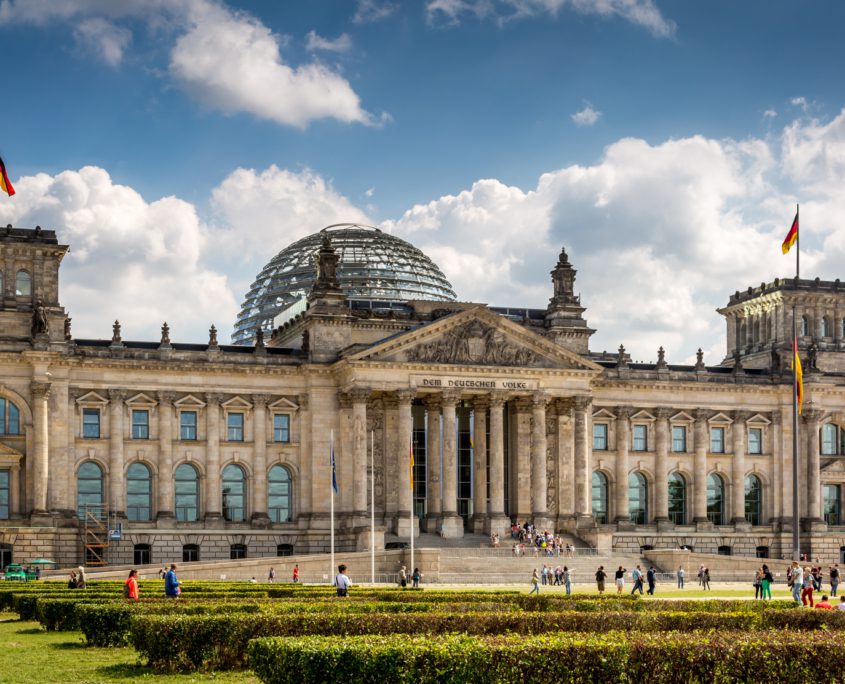
On March 3, 2021, the German cabinet proposed a supply chain law (Lieferkettengesetz) obliging companies active in Germany to ensure that their entire supply chain meets human rights standards. Under the National Action Plan (Nationaler Aktionsplan), Germany has promoted human rights among companies since 2016, but a study in 2020 found that only 22% of responding firms had undertaken the recommended measures. Under this plan, modeled on the United Nations Guiding Principles on Business and Human Rights, the German government agreed to consider imposing a mandatory due diligence law if fewer than half of German firms satisfied the human rights monitoring criteria.
Although the cabinet had planned to present a draft of the law in March 2020, Peter Altmeier, the Minister of Economic Affairs and Energy, held up the proceedings. On February 2021, the two ministers driving the law announced that they reached a consensus with Altmeier. Hubertus Heil, Minister for Development Co-Operation, and Gerd Müller, Minister for Labor and Social Affairs, both pushed for more impactful human rights protection, while Altmeier was adamant about safeguarding German economic competitiveness.
What Germany’s Supply Chain Law Imposes
Germany’s supply chain law requires firms active in Germany to perform various due diligence procedures in order to monitor, prevent and ameliorate potential human rights abuses in their supply chains. In its current form, the law would come into effect in 2023 and in its first year only apply to the 600 largest companies, all with more than 3,000 employees. After the first year, it would apply to a further 2,900 companies, all with more than 1,000 employees. By 2026, the government or a contracted body will carry out an evaluation of the law’s effectiveness and, if necessary, provide ideas for improvement.
For suppliers with whom they have a contractual relationship, companies have to set up a risk management system, conduct regular risk analyses and take action against known human rights breaches. They also have to establish a procedure through which to hear complaints. For example, people working in unsafe conditions can theoretically voice their situation through this channel. That being said, many of these people are often not aware of their right to do so, nor are many of them able to navigate the German legal system. To overcome this problem, Germany’s supply chain law grants civil society organizations the power to file lawsuits on behalf of these mistreated workers.
Remaining Problems of the Draft
For suppliers they do not have direct contact with, companies only have to perform risk analyses if they are aware of a potential human rights breach. If, for example, Amnesty International publishes information about human rights abuses in Congolese mines that supply electric car batteries for Volkswagen, then the law requires Volkswagen to conduct a risk analysis.
However, as this demonstrates, companies have less monitoring responsibility for more removed suppliers. Many non-governmental organizations argue that this provides too little protection for the mining industry. Moreover, many direct suppliers of the largest German companies are already located in Germany, potentially limiting the law’s impact abroad.
How Germany’s Supply Chain Law Monitors and Enforces Compliance
The German Federal Bureau for the Economy and Export Control (Bundesamt für Wirtschaft und Ausfuhrkontrolle) will monitor whether companies are complying with Germany’s supply chain law. Companies judged to fall short of what the law demands will face fines and sanctions. Fines will not exceed 8 million euros or 2% of annual revenue for companies with annual revenue of over 400 million euros. If a company receives a fine of more than 175,000 euros, it also cannot compete for public procurement contracts for three years.
Aside from these punitive measures, the law also requires companies to hire or designate an employee who is responsible for evaluating whether the company is abiding by the law or not. The company’s leadership, whatever form it may take, must regularly meet with this employee.
Next Steps
In April 2021, Germany’s supply chain law will enter into discussion in the Bundestag, Germany’s lower chamber of parliament. Non-governmental organizations are trying to galvanize public support in order to convince or pressure parliament into making the law more comprehensive and stringent. In addition to arguing that the restriction to direct suppliers makes the law too small in scope, they have criticized that companies face neither civil nor criminal liability.
Whether they will successfully strengthen Germany’s supply chain law is too early to say. However, the government aims to approve the law before Germany’s elections in September 2021. By then, the extent and potential impact of Germany’s supply chain law on global human rights will be clearer. For now, it is a promising and hopeful, yet somewhat restrained, step in the right direction.
– Alex Vanezis
Photo: Flickr

Organizations Supporting the Matamoros Refugee Camp
The Matamoros Refugee Camp
The influx of immigrants to the U.S. border can be attributed to root causes of “economic problems, ongoing violence, worsening corruption, challenges to democracy as well as the devastating impact of the coronavirus.” In 2017, the majority of immigrants from Central America were from El Salvador (39.7%), Guatemala (27.2%) and Honduras (18.6%).
An asylum seeker is defined as “a person who has left their country and is seeking protection from persecution and serious human rights violations in another country.” Since the implementation of the MPP, roughly 70,000 people made the difficult choice to leave their country of origin to seek asylum in the U.S. and about 70,000 were returned to Mexico. A refugee camp thus formed in Matamoros, Mexico, located on the southern bank of Rio Grande, directly across the border from Brownsville, Texas. At this camp, hundreds, and at times, thousands of people wait for the duration of their immigration proceedings.
The conditions of living at the camp posed serious health risks. Furthermore, as of December 2020, there were more than 1,000 reports of “rape, kidnapping, torture and other violent attacks” against asylum seekers at the U.S. border. In addition to the risks posed at dangerous border towns, the camp faced deteriorating conditions, including a lack of access to water and sanitation. In juxtaposition to the peril faced in a crowded refugee camp, there were celebrations within the community of residents. People formed church groups and tent schools. They celebrated quinceaneras and fell in love. The refugees at the Matamoros camp showed resolve to find some level of normalcy within a period of uncertainty and fear.
Organizations Supporting the Camp
Resource Center Matamoros (RCM) is a humanitarian organization that has become a staple of social support for immigrants at the border. Gaby Zavana, the organization’s co-founder, told The Borgen Project that there were no medical resources and no infrastructure in the early days of the camp.”We initially provided food, tents and blankets, but that shifted to providing an office building for the refugees to have access to legal teams, medical teams and social support services.” The work that Zavana does within the RCM is multi-faceted. She explained that as the organization expanded, RCM started to take on the role of camp management.
Zavana says that RCM prioritized public health issues by setting up temporary camp showers so that people would not have to bathe in the river. Additionally, RCM targeted camp infrastructure, paving walkways and helping people construct better home structures and kitchens. The work of RCM extends to lobbying the Mexican and U.S. government and advocating on behalf of the asylum seekers at the U.S. border.
Angry Tias and Abuelas, the recipient of the Robert F. Kennedy Human Rights Award in 2019, is an organization based in the Rio Grande Valley, Texas. The organization has engaged in efforts to provide food to the hungry, visit the imprisoned and comfort people stranded at the border. It also set up stores in the Matamoros camp to supply essential items like diapers and cooking utensils to the migrants, free of charge.
Fixing Immigration Policy
The Biden administration announced in late February 2021 its plans to close the Matamoros refugee camp, terminate the MPP and dedicate $4 billion to address the underlying causes of migration from Central America. The administration has started processing migrants and all of the residents of the camp have now moved to await their hearings in the U.S. When asked about the environment of the camp upon hearing the news of its impending closure, Zavana told The Borgen Project that the residents were unusually quiet. The quietness could signify a deep, silent reflection of their experiences at the camp and futures in the United States.
The number of people coming to the border has increased dramatically since the termination of the MPP. Zavana says that “a big portion of RCM’s work has gone to the camp so the closure of the camp can free up resources to focus on new arrivals.” RCM is currently working on an interim shelter to house new arrivals until more shelter facilities open up.
The Road Ahead
The tides are shifting for asylum seekers at the U.S. border. The Matamoros refugee camp provided some level of security for thousands of people fleeing persecution, violence and poverty in hopes of receiving asylum in the United States. The efforts of organizations like the Resource Center Matamoros allowed camp residents to live with more dignity and humanity. The Biden administration’s upheaval of Trump-era immigration policy is promising for the past residents of the Matamoros refugee camp.
– Brittany Granquist
Photo: Flickr
Evidence-based Policymaking Meets Foreign Aid
Evidence-based Policymaking in Congress
There is no single body today which defines or guides evidence-based policymaking. Implementations of evidence can be unique but tend to share similar goals and core principles.
Its proponents are numerous. Many organizations have recently launched their own initiatives to begin major pushes for evidence-based policymaking. In Washington alone, the Bipartisan Policy Center, Pew Charitable Trusts, Urban Institute and Brookings Institute are key examples.
When the Urban Institute introduced its Evidence-Based Policymaking Collaborative, it heralded the increasing momentum behind the use of evidence in policymaking — even suggesting the potential for a “golden era” of evidence-based policymaking. In its own words, evidence-based policymaking is about “[using] what we already know from program evaluation to make policy decisions and to build more knowledge to better inform future decisions.”
Evidence Proponents
A number of recent factors have made this change possible today. For instance, in order for policymaking backed by evidence to be possible in the first place, institutions must begin by using high-quality data which enables further analysis. Some contributing changes are computerization and digitalization, which have improved the availability of evidence. Increased investments in rigorous research have made analyzing evidence more fruitful to ultimately enable the evidence process.
The Bipartisan Policy Center launched its own Evidence-Based Policymaking Initiative in 2017 to continue providing policymakers with recommendations. It bases its definition of evidence-based policymaking on three principles: data collection, data analysis and evidence use.
In its suggestions to policymakers, the Evidence-Based Policymaking Initiative recommended that “for the evidence-based policymaking process to become more routine, policymakers must recognize that evidence is an essential and necessary input into the policymaking process.”
Evidence in Federal Agencies
USAID is a strong example of a United States government institution that has made significant strides in implementing evidence into its policies. The agency has implemented evaluative processes to assess and cement the use of evidence.
In October of 2019, Results for America released a press statement highlighting USAID, among nine other federal agencies, for its progress in its use of evidence.
USAID’s 10-year-old Development Investment Ventures (DIV) is a strong example of successful inclusions of evidence in policymaking. The Center for Global Development (CGD), a think tank and research institution, described DIV as comparable to venture capital funds. Both of them aggressively try new and untested approaches. DIV scales up the impacts of programs that are proven to work. However, DIV is unlike venture capital funds in that it seeks social returns rather than monetary gain.
DIV has managed to make remarkable impacts through its programs. Five of its innovations have yielded at least $17 in social impact per dollar invested.
CGD pointed out that the DIV programs that showed the strongest scalability were ones that “had a low cost per person reached; were based on established evidence; included an academic researcher in the design process to help test, iterate, and improve the innovation over time…” While organizations such as CGD continue to see room for improvement in evidence implementations, current evidence-based implementations at USAID are examples of the positive impact.
– Marshall Wu
Photo: Flickr
China and AfCFTA: Mutual Aid Realized
AfCFTA is the largest free trade conglomerate in the world; 55 countries signed on to AfCFTA, consisting of 1.3 billion people and a gross domestic product of $3.4 trillion. Moreover, expectations have determined that 30 million Africans will be able to improve their income, leaving poverty behind. The move could remake Africa as a new power for trade, both internally and externally. However, the agreement is contingent on some key workings to reach the full potential of AfCFTA’s reach.
China and AfCFTA
The contingencies are large and focus on infrastructure, policy and eliminating tariff and non-tariff obstacles to improve and enhance continental trade. Some of these contingencies require funding beyond continental borders.
China, the burgeoning world power, is making its presence known in Africa, folding the continent into its monolithic project, The Belt and Road Initiative (BRI). The initiative would give incentives for Chinese investors to support infrastructure, trade and industrialization in Africa.
The BRI pivots on the ancient “Silk Road,” which were the trade routes that flowed in and out of China to the West and beyond. The Han Dynasty established the road in the year 220 B.C.E. It was over 4,000 miles long, connecting the Middle East to Central Asia and eventually, Europe.
The updated Silk Road Economic Belt and the Maritime Silk Road combine to make the BRI. The initiative invests in railways, highways, energy pipelines and benefits from streamlined border crossings. Folding in over a billion African workers and consumers is tantamount to its success. Through the initiative, China and AfCFTA have a great interest in working with each other.
Infrastructure
Africa is receiving funding for infrastructure already. In fact, China is the top investor in the African infrastructure of any foreign country. This is a much-needed economic boost for the continent.
The United Nations Economic Commission for Africa’s chief for energy and infrastructure, Dr. Robert Lising, placed a price estimate on what would allow AfCFTA work. He pointed to estimates the African Development Bank put forth amounting to $130-$170 billion per year.
He stated that “This is a huge amount of money so China’s involvement is definitely welcome… In addition, we all know that there is available capital and equipment linked to China’s involvement in Africa’s infrastructural development.” He also pointed out that China’s competitive involvement would lower prices, benefitting Africa. Additionally, he mentioned that while Western involvement is welcome as well, Western forces often come with conditions, whereas China does not.
He said that “If you want to reap the full benefits of the AfCFTA, you need regional infrastructure development… If you want to close the gap in infrastructure development in Africa, you need to bring in all the partners including China through the BRI.” He reminded others that Chinese involvement in African infrastructure is not a new thing, happening for the last five decades. Citing the completion of Nairobi to Mombasa rail lines and the Addis Ababa to Djibouti line to support his claim.
A Partnership of Need
A round table discussion that the Center for China & Globalization organized and held in December 2019 further supports Dr. Lising’s thoughts. Isabel Domingos, ambassador from Sao Tome and Principe at the conference lays out a plan for mutual benefit. She stated that “China has needs and Africa also has needs; China has potentialities and Africa also has potentialities. We have the African Continental Free Trade Area that can be one place to promote both sides, and find a place to deepen the cooperation between China and Africa.”
While there remain anxieties over the confluence of Chinese involvement in AfCFTA, the consensus is clear; the involvement of foreign capital in AfCFTA is crucial. China stands to gain from its involvement and has the capital available that the African continent needs.
China and AfCFTA are a strong match. As Africa continues on its current trends of globalization, China can heed the call. The entire world will watch the results as a blueprint for international involvement.
– Christopher Millard
Photo: Flickr
Education in Chile Slowly Overcomes Pinochet-Era Divisions
Expanding Financial Access in Mexico
The Problem
Mexico is a nation burdened by inequalities. With a Gini coefficient hovering around 0.5, Mexico is one of the most unequal upper-middle-income countries in the world. Contributing to the high income and wealth inequality are the massive gaps in access to financial services.
There is an undeniable correlation between financial access and inequality. For example, countries with extensive access to financial services broaden the economic opportunities for both individuals and firms. The World Bank’s Systematic Country Diagnostic for Mexico in 2019 found that expanding financial inclusion can significantly increase income for low-income individuals and populations.
The report also found that low financial inclusion negatively impacts economic inequality, productivity, growth and employment of micro, small and medium enterprises (MSMEs). Mexico is a stark example of a country with low financial inclusion. Only 37% of Mexican adults have bank accounts, which is a much lower number than the average percentage for upper-middle-income countries.
The poor level of financial access in Mexico sinks even lower for rural citizens. Although more than 20% of Mexico’s population live in rural areas, only 7% of rural residents borrowed from a financial institution in 2016. Another demographic hindered by financial access inequality is MSMEs, which provide about 70% of the employment in Mexico. Just 11% of these enterprises use bank credit due to the cost and access issues.
The Programs
To address the troubling lack of financial access in Mexico, the nation’s authorities have introduced several reform programs in the past five years. The Expanding Rural Finance Project received supplemental support from the World Bank. This allowed for greater oversight and more available resources. The Expanding Rural Finance Project authorized 192 participating financial intermediaries to supply 174,000 credits to 140,000 rural producers and MSMEs between 2016 and 2020. The average loans of $1,850 have helped ease rural poverty by providing funds for workers and employers in the area. Furthermore, more than 80% of these credit recipients were women, exceeding the set target of 60%.
In addition, the Financial Inclusion DPF, supports a comprehensive legal and regulatory framework for Fintech in Mexico. Financial institutions that adopt Fintech use technology to enhance financial services and make banking more accessible and effortless. Automated transfers, mobile payments and flexible loan management are some of the many benefits offered by Fintech-associated institutions. The newly implemented framework in Mexico is groundbreaking in the global picture and will increase financial inclusion by expanding convenient financial services.
The Results
Mexico’s programs addressing inequality in financial access have shown several signs of progress. Between 2016 and 2020, the Expanding Rural Finance Project widened financial access in Mexico for impoverished citizens, rural populations, MSMEs, women and youth. It provided hundreds of thousands of credits extending to participating producers. The project particularly helped Mexican workers on the disadvantaged end of income inequality. Of people who received credits, 17% live in communities classified as marginalized by the National Council for Population. The program distributed approximately 76% of all sub-loans in the Mexican states with the highest levels of poverty. About 12% of credit recipients had never borrowed from formal financial institutions. As gender inequality permeates income inequality, 81% of credit recipients from the project were women.
The Mexico Financial Inclusion DPF program also contributed to the expansion of financial access in Mexico. Only slightly more than a year after the program’s initiation, 93 businesses have already requested authorization to operate as Fintech institutions. About 59 of the businesses are electronic payment fund institutions and 34 are crowdfunding institutions. The quick adjustment to Fintech suggests an overarching trend for Mexican enterprises. Many want to benefit from the ease of access and innovation promoted by the Fintech model. The transition will benefit non-financial enterprises and average citizens as well. This is because the Fintech framework provides for faster payment transfers, easier loan processes and more convenient services available for remote residents.
Looking Ahead
Mexico’s glaring discrepancies in financial inclusion have supported ongoing economic inequalities for decades. However, programs administered by the government in the past several years have made strides in the right direction as financial access is widening for disenfranchised groups all over the country. If Mexico continues to expand financial access through credit programs and Fintech innovation, the country will likely see a decrease in economic inequality and reap the benefits of a more egalitarian society.
– Calvin Melloh
Photo: Flickr
USAID Builds Schools in Pakistani Flood Relief Effort
The 2010 Indus River Floods
The Indus River floods in July and August 2010 were a result of massive monsoon rains causing severe flash flooding in Pakistan. The floods were estimated to have damaged or destroyed more than one million homes and affected more than 20 million people in the region. The impact was felt in just about every area of life in Pakistan.
Industries like farming and healthcare were severely hurt by the floods. Farmers were estimated to have lost millions of acres of usable land and more than a million livestock. Additionally, more than 500 hospitals or clinics in the region were reportedly damaged or destroyed.
On top of this, data from UNICEF in 2010 indicated that more than 1.6 million children either saw their schools damaged by floodwaters or converted into shelters. The massive displacement of children even resulted in fears of a rise in militia kidnappings at the time.
In total, the economic impact of all of that damage done by the floods was estimated as a loss of $43 billion.
USAID’s Pakistani Flood Relief
USAID has given more than $159 million toward education relief following the flood, with $81 million of the funding put directly toward the construction of new schools in northern Sindh. The money helped facilitate the completion of 106 schools, with 14 additional schools targeted to be finished by 2023. The schools will help serve more than 50,000 students in Sindh whose schools were affected by the flood.
These new schools have been built with the inclusion of elements like laboratories and computers in order to turn them into templates for the kind of high-quality educational standard that can hopefully be provided to other areas in the country in the future.
The State of Pakistan’s Education System
Despite efforts, Pakistan’s education system still faces challenges. According to UNICEF, just 56% of Pakistani children between the ages of 5 and 16 are currently in school. This means the country has more than 22 million children in this age range out of school, making Pakistan the country with the second-most out-of-school children in the world.
Additionally, significantly fewer children are enrolled in secondary school compared to primary school and significant gaps exist in overall schooling services. Socioeconomic gaps, for example, are prevalent in areas like Sindh where only 48% of the most impoverished children in the region are in school.
In other regions like Balochistan, significant gender gaps have emerged. Only 22% of girls are in school in the region. This reflects an overarching gender problem which can be seen in the disproportionate number of boys compared to girls in the education system as a whole.
Nevertheless, USAID’s newly completed schools as part of the Pakistani flood relief efforts represent the start of positive progress being made in the country’s education system. With each and every effort, Pakistani children are given an opportunity to rise out of poverty.
– Brett Grega
Photo: Flickr
Strides in Renewable Energy in India
Renewable Energy in India
With the implementation of 160 gigawatts (GW) of solar and wind energy, India projects to create more than 330,000 new jobs by 2022. In 2017, the solar and wind energy sectors of renewable energy have already employed 151,000 people. People living in poverty in rural areas will benefit from job creation and increased energy will provide children with more time to work on their education after dark, increased productivity for families and increased health benefits.
Types of Renewable Energy in India
Continued Development
Though large strides have been made in renewable energy in India, further development could bring significant benefits. India plans to quintuple current wind and solar energy capacity and could potentially become the world’s third-largest economy by 2030.
Renewable energy has improved the lives of many citizens living in India, however, more than 600 million people still use firewood for cooking and many have unreliable energy sources. Expanding renewable energy across India will further improve the quality of lives of citizens and bring many out of poverty through the creation of jobs in renewable energy sectors and increased opportunities for education and training in the sector.
– Simone Riggins
Photo: Flickr
Inadequate Sanitation In Indonesia
Proper sanitation is crucial in preventing the spread of infectious diseases, which are more severe to those living in poverty without access to adequate healthcare. The primary cause of child mortality in Indonesia is diarrhea. Typhoid is also a leading threat to the health of Indonesians. Both diarrhea and typhoid are amplified by inadequate sanitation, poor hygiene and limited water supply.
Water Contamination Spreads Disease
According to USAID, “In Indonesia, one in three people does not have access to a flush toilet, latrine or septic system.” Instead, many Indonesians defecate in the streets, which further compromises the health and safety of people living in those communities. Rivers, streams and runoff are often the only water source for residents of rural areas. Without proper resources for treatment, water can carry diseases that are harmful and even deadly to those who consume it.
Only about 7% of wastewater in Indonesia is treated. As a result, many communal water access areas have contaminated water. In impoverished areas, it is not sustainable for communities to continually purchase bottled water. In the capital city, Jakarta, pollution can be found in 96% of the water. There is also a widespread disconnect from infrastructure in residential areas, leaving hundreds of families without consistent access to sanitation.
With the new challenge of the pandemic, Indonesia is facing the highest fatality rate in Asia as a result of inadequate access to sanitation, which is necessary to fight the spread of the disease. When families are struggling to meet their basic needs for consumption and hygiene, regular hand washing and adequate sanitization practices are not a priority.
Educational and Financial Support
Organizations like UNICEF are supporting the government of Indonesia. They help provide more frequent and safe access to sanitation and drinking water. In emphasizing education and health literacy during primary school, UNICEF aims to get ahead of the problem. “Over the past 25 years, the rate of access to sanitation facilities has nearly doubled across the country, increasing from 35% in 1990 to 61% in 2015,” reported USAID. USAID has also greatly contributed to this cause. In 2015, the organization helped more than 2.2 million Indonesians improve their water supply and provided better sanitation to 250,000 people.
The IKEA Foundation is also fighting the issue by providing microfinance loans to Jakarta for the introduction of pipelines and water access to rural residential areas. Families living in low-income areas are spending a lot of money to purchase water. With the installation of pipelines and clean well systems, sanitary water is becoming more accessible and affordable to those who need it most.
– Ally Reeder
Photo: Flickr
Everything to Know About Germany’s Supply Chain Law
On March 3, 2021, the German cabinet proposed a supply chain law (Lieferkettengesetz) obliging companies active in Germany to ensure that their entire supply chain meets human rights standards. Under the National Action Plan (Nationaler Aktionsplan), Germany has promoted human rights among companies since 2016, but a study in 2020 found that only 22% of responding firms had undertaken the recommended measures. Under this plan, modeled on the United Nations Guiding Principles on Business and Human Rights, the German government agreed to consider imposing a mandatory due diligence law if fewer than half of German firms satisfied the human rights monitoring criteria.
Although the cabinet had planned to present a draft of the law in March 2020, Peter Altmeier, the Minister of Economic Affairs and Energy, held up the proceedings. On February 2021, the two ministers driving the law announced that they reached a consensus with Altmeier. Hubertus Heil, Minister for Development Co-Operation, and Gerd Müller, Minister for Labor and Social Affairs, both pushed for more impactful human rights protection, while Altmeier was adamant about safeguarding German economic competitiveness.
What Germany’s Supply Chain Law Imposes
Germany’s supply chain law requires firms active in Germany to perform various due diligence procedures in order to monitor, prevent and ameliorate potential human rights abuses in their supply chains. In its current form, the law would come into effect in 2023 and in its first year only apply to the 600 largest companies, all with more than 3,000 employees. After the first year, it would apply to a further 2,900 companies, all with more than 1,000 employees. By 2026, the government or a contracted body will carry out an evaluation of the law’s effectiveness and, if necessary, provide ideas for improvement.
For suppliers with whom they have a contractual relationship, companies have to set up a risk management system, conduct regular risk analyses and take action against known human rights breaches. They also have to establish a procedure through which to hear complaints. For example, people working in unsafe conditions can theoretically voice their situation through this channel. That being said, many of these people are often not aware of their right to do so, nor are many of them able to navigate the German legal system. To overcome this problem, Germany’s supply chain law grants civil society organizations the power to file lawsuits on behalf of these mistreated workers.
Remaining Problems of the Draft
For suppliers they do not have direct contact with, companies only have to perform risk analyses if they are aware of a potential human rights breach. If, for example, Amnesty International publishes information about human rights abuses in Congolese mines that supply electric car batteries for Volkswagen, then the law requires Volkswagen to conduct a risk analysis.
However, as this demonstrates, companies have less monitoring responsibility for more removed suppliers. Many non-governmental organizations argue that this provides too little protection for the mining industry. Moreover, many direct suppliers of the largest German companies are already located in Germany, potentially limiting the law’s impact abroad.
How Germany’s Supply Chain Law Monitors and Enforces Compliance
The German Federal Bureau for the Economy and Export Control (Bundesamt für Wirtschaft und Ausfuhrkontrolle) will monitor whether companies are complying with Germany’s supply chain law. Companies judged to fall short of what the law demands will face fines and sanctions. Fines will not exceed 8 million euros or 2% of annual revenue for companies with annual revenue of over 400 million euros. If a company receives a fine of more than 175,000 euros, it also cannot compete for public procurement contracts for three years.
Aside from these punitive measures, the law also requires companies to hire or designate an employee who is responsible for evaluating whether the company is abiding by the law or not. The company’s leadership, whatever form it may take, must regularly meet with this employee.
Next Steps
In April 2021, Germany’s supply chain law will enter into discussion in the Bundestag, Germany’s lower chamber of parliament. Non-governmental organizations are trying to galvanize public support in order to convince or pressure parliament into making the law more comprehensive and stringent. In addition to arguing that the restriction to direct suppliers makes the law too small in scope, they have criticized that companies face neither civil nor criminal liability.
Whether they will successfully strengthen Germany’s supply chain law is too early to say. However, the government aims to approve the law before Germany’s elections in September 2021. By then, the extent and potential impact of Germany’s supply chain law on global human rights will be clearer. For now, it is a promising and hopeful, yet somewhat restrained, step in the right direction.
– Alex Vanezis
Photo: Flickr
Ending Slavery in the Thai Fishing Industry
With Thailand’s status as one of the world’s largest fishery exporters, the rest of the world is entangled in the industry’s human trafficking and forced labor violations. The spotlight ended up on Thailand in 2015 due to reports of slavery in the Thai fishing industry. In response, there has been movement from world governments and organizations alike towards ending slavery. However, industry workers, mostly poor migrants from Myanmar and Cambodia, continue to suffer.
Slavery Exposed
In June 2014, the story broke that the world’s top four shrimp retailers commissioned Thai fishing boats that supposedly had workers who were human trafficking victims aboard. Further reporting revealed the Thai fishing industry’s extensive misuse of workers. Supposedly, these workers experienced poor working conditions and confinement similar to a prison. In fact, workers were receiving pay below the minimum wage and not obtaining payments on time. Additionally, in extreme cases, reports as of January 2018 have determined that some workers died, suffered beatings or were trafficking victims.
Oceana analyst Lacey Malarky explained the reason for the pattern of human rights abuses in the fishing industry. Malarky said that the decline of global fishing stocks has caused fishing boats to travel further away. This caused “operators [to resort to] illegal, unreported and unregulated fishing and human rights abuses to protect costs.”
Global Response to Slavery in Thailand
In response to reports of slavery in the fishing industry in Thailand, the U.S. reduced Thailand to Tier 3 status in its Trafficking in Persons report. Tier 3 is the lowest status regarding human trafficking that a country can receive. Additionally, the European Commission gave Thailand a “yellow card” and threatened a “red card,” resulting in European Union sanctions.
At the time, the consequences were devastating to Thailand’s fishing industry. The U.S. and European Union are the second and third largest markets for Thai seafood exports. The E.U. imported almost $500 million of Thai seafood in 2016 and the U.S. imported over $28 billion in 2018.
In response, Thailand’s National Council for Peace and Order made moves to overhaul “fishing industry monitoring, control and management.” New frameworks say that “teams of officials are now supposed to check fishing boats each time they depart and arrive in port.” Additionally, it made the effort to strengthen its laws and increase penalties if laborers’ rights experienced infringement.
Issues with Enforcement
One primary issue with protecting victimized fishermen is that Thai law does not protect migrant workers. In general, Thailand does not strongly enforce laws that protect workers. A Human Rights Watch report in 2018 found that “Thai inspection frameworks fail to adequately or systematically address issues of forced labor.”
For example, the government introduced a “pink card” registration scheme in 2014. This was to decrease undocumented migrants working in Thailand. However, the initiative has done very little to protect the most vulnerable. The “pink card” monitors and controls workers by occasionally making sure that fishermen match the pink card. This details a specific location and crew manifest of the boat a particular fisherman is on. Critics say that focusing on the “pink card” denies that both documented and undocumented migrants can be victims of exploitation.
Another issue with intervention is that many poor fishermen agree to mediation and settlements following complaints. This tends to result in laborers being unable to receive the money they have entitlement to while abusive bosses can avoid legal action. The pattern of complaints resulting in settlements causes the continuation of abuse, failing to end slavery in the Thai fishing industry.
Documenting Progress
In the last six years, there have been significant efforts to reduce instances of slavery in the fishing industry. In January 2019, Thailand became the first Asian country to ratify the International Labour Organization Work in Fishing Convention. This is a guide that specifies laws and regulations to improve working conditions in industrial fishing. Additionally, in March 2021, a dozen industry associations in Thailand “signed pacts to rid their supply chains of child and forced labor.”
Seafood Slavery Risk Tool
Developed by Sustainable Fisheries Partnership, Seafood Watch and Liberty Shared, the Risk Tool analyzes risk using both public and non-public information. This is to help businesses “identify the risk of slavery in their supply chains.” The technology continues to evolve. The updates to the Risk Tool will provide businesses with interactive maps. This shows the risk of “forced labor, human trafficking and hazardous child labor” to help businesses make decisions about suppliers.
Global Fishing Watch’s Automatic Identification System
The Global Fishing Watch is an online database tracking fishing ships via an onboard satellite transmitter. This is called the Automatic Identification System, which was originally developed to prevent ship collisions, and now catches vessels engaged in illegal behavior. The system targets ships that need further inspection by collecting data on four points of potentially illegal behavior. The points include whether ships stayed at sea for months, temporarily turned off transmitters to enter marine protected areas, engaged in trans-shipment and avoided strict ports. Using the technology, analysts are hopeful that more justice will be possible for vulnerable, victimized workers.
Reports show that Thailand has made huge steps toward ending the abuse and misuse of workers. However, more is necessary to end slavery in the Thai fishing industry. Through further attention and ongoing attempts to mitigate and bring justice to slave labor in Thailand’s fishing industry, the treatment of laborers in the Thai fishing industry should improve.
– Brittany Granquist
Photo: Flickr