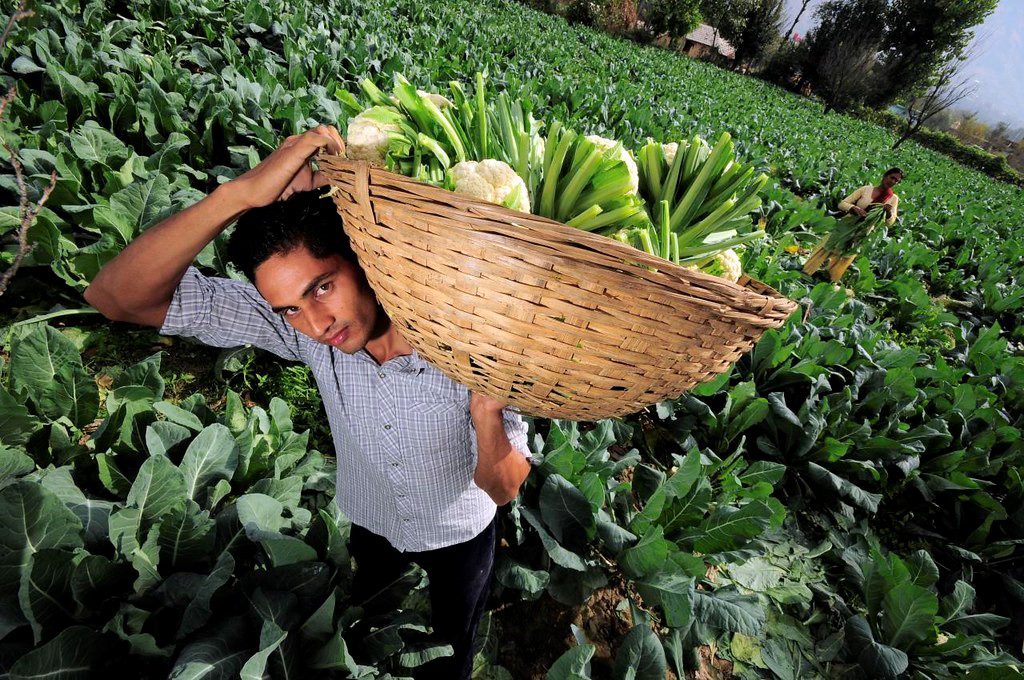
Being an agricultural country from the beginning, India ranks second worldwide in farming outputs. With agriculture employing more than 50% of India’s workforce, it also is the largest source of livelihood in India with more than 70% of its rural households depending primarily on farming. Despite the incredible importance of farmers to the Indian economy and way of life, farmers in India have a history of debts, extreme poverty and low quality of life. In addition to these existing problems, the global pandemic has greatly intensified the pressure on farmers and has made it considerably more difficult for many to sustain themselves, resulting in a farming crisis in India. According to the National Crime Records Bureau, 296,438 people in the farming sector in India have committed suicide from 1995 to 2019. Predictions have determined that this number will increase.
Farmer Debts and Loans
According to an NSSO report from 2016, the average Indian farmer earns about Rs 77,112 annually, which is about $1,045. As the Economic Times in India stated, only about 50% or less of the household income of a farming family comes from farming, while the rest comes from other sources. To supplement for low income, many farmers take up more than one job, sometimes working as a bus driver or security guard for example. With the pandemic and nationwide lockdown, many farmers have lost their second source of income, further aggravating their already strained financial situation.
The rising costs of farming and the low pay for farm produce have pushed many farmers into a cycle of vicious debts. The New York Times published an article describing the life of Leela Singh, a farmer in Akanwali village. Mr. Singh attempted to secure a loan of a few thousand rupees which is about $100, due to fears that his farm would be seized. Unable to sustain himself and his attempt to secure a loan failing, he hung himself in June 2020. Gurpreet Singh, his 24-year-old son, had to stop his schooling in order to save money on tuition fees so that he could help his family. Gurpreet Singh described the pandemic and the enormous stress that his family must endure when he said: “We are now having to beg for money from someone or the other.”
The Reason Farmers are in Debt
According to the Economic Times in India, 85% of India’s farmers operate on less than five acres of land. With 82% of farmers being small and marginal and contributing 51% of agricultural input, small farmers are the backbone of the agricultural industry. Despite this, farming remains an unstable and difficult profession. In order for many small farmers to escape the clutches of poverty, they must find additional sources of income.
Risks in production further aggravate the low quality of life for small farmers. The increased cost of cultivation, inadequate irrigation, drought, flood and crop failure all contribute to the lack of viability in the farming profession and debt of farmers. Additionally, difficulty in selling within the market can make or break the income of a farmer. Agricultural costs and unstable incomes have caused many farmers to take on even more debt. Furthermore, money-lending due to necessity and often the inability to pay back loans, have pushed farmers further into poverty and debt. The nationwide lockdown has only exacerbated these existing problems, which has resulted in difficulty in taking produce to the markets and selling it.
Solutions to the Farming Crisis in India
Despite the potential for productivity in the agricultural sector, low productivity in agriculture contributes to the difficulty and poverty among farmers in India. Unutilized scientific knowledge and the mechanization of small farms are major solutions to the issue of low productivity. According to the World Bank, a key solution for increasing agricultural productivity and improving the incomes of farmers is the adoption of innovative technologies and practices by farmers. These actions will facilitate farmers in improving their yields, managing inputs more efficiently, having a better quality of products, adapting to climate issues and conserving resources.
The Open Knowledge Repository states that efforts to improve agricultural productivity include the gradual reforms in the agricultural sector that have spurred innovation and changes in the food sector due to private investment. These efforts have been successful and continue to succeed in light of the ongoing policy and investment imperatives. Due to these efforts, agricultural growth has improved in recent years, but with a long-term rate of 3% improvement, agricultural improvement has been meager in comparison to its potential.
Organizations that are Making a Difference
The World Bank offers major support to the agriculture and rural development of India. Focusing on agriculture, resources, irrigation and rural livelihood development, the World Bank’s program in India has committed about $5.5 billion in net commitments. This money is going towards new technology, innovation systems, farmer livelihood support and poverty reduction efforts.
Many NGOs have emerged in recent years in order to improve the livelihood of farmers and to make farming a viable profession. One organization, Haritika, works on projects that target water harvesting and management, crop optimizations, afforestation and the conservation of resources. Additionally, it focuses on improving child education, promoting women’s empowerment, reducing illiteracy, responding to a lack of health care and assisting farmers struggling with extreme poverty. It provides farmers with seeds, saplings, pesticides and other supplies in order to alleviate the financial strain of farmers and ensure that they are able to support their families. Founded in 1994, Haritika has constructed water harvesting structures, built trenches around hills to treat non-arable areas and improved and diversified agriculture in order to create additional employment in the farm sectors. To support those in poverty, it has aided in the formation and strengthening of village water supply and sanitation.
The farming crisis in India has resulted in challenges for many families in the country. However, the efforts of organizations like Haritika and the World Bank should reduce some of the challenges farmers in India are facing.
– Arya Baladevigan
Photo: Flickr

A Closer Look at Humanitarian Aid in Pakistan
The European Union Assists
The European Union (E.U.) has contributed a fair amount of humanitarian aid to Pakistan. In 2020, the E.U. addressed some of the concerns regarding internally displaced Pakistani people and Afghan refugees by providing around €40 million worth of aid. Around 60% of this amount goes towards resolving health concerns that the COVID-19 pandemic has caused. The pandemic has put the Pakistani healthcare system under strain, which makes aid increasingly important. The humanitarian aid in Pakistan is also helping to give displaced Pakistanis access to quality education and sanitation facilities.
Aid also reaches Afghan refugees who have not integrated into Pakistani society and instead live in isolated communities within Pakistan. The E.U. helps these Afghan refugees by providing them with proper healthcare, education and sanitation facilities. The E.U. support also addresses the natural disasters that occur in Pakistan. The E.U. provided €1.15 million to Pakistan in August 2020 when the country experienced severe flooding. The aid that the E.U. provided allowed for shelter toolkits, personal hygiene supplies and access to reliable water and sanitation for families that these events impacted.
The International Rescue Committee Helps
The International Rescue Committee (IRC) is another organization providing significant humanitarian aid in Pakistan. From 2013 to 2019, the IRC worked with Pakistan on the Pakistan Reading Project (PRP), which aimed to improve the reading skills of 1.3 million Pakistani children. The program reached more than 1.7 million students and trained more than 27,000 teachers. The IRC further supports the education of Pakistani children by building and repairing schools. Considering the amount of displaced Pakistani people and Afghan refugees, the IRC provides what it calls “child-friendly places.” These are areas where children are safe to interact with other children and learn and heal from traumatic events they have experienced.
The Aga Khan Agency for Habitat
The Aga Khan Agency for Habitat (AKAH) is an organization that has been providing humanitarian aid in Pakistan since 1988. One area, in particular, is disaster response. The AKAH trains Pakistani volunteers on how to deal with any natural disasters they may encounter. These volunteers would be the first responders if a natural disaster occurs in the area they live in. These volunteers are called Community Emergency Response Teams (CERTs). The AKAH has been able to establish 162 CERTs and a total of 36,000 volunteers serve as first responders. More than 50% of the 36,000 volunteers are women.
Pakistan is an impoverished nation and therefore needs humanitarian assistance to deal with the many challenges it faces. These three organizations provide aid that addresses these pressing issues.
– Jacob E. Lee
Photo: Flickr
5 Facts about the Burundi Refugee Crisis
Here are five facts about the Burundi refugee crisis.
The 2021 Burundi Refugee Response Plan will ensure that Burundi refugees will be safe wherever they choose to reside. The plan advocates for more education and vocational training and incorporates Burundi refugees into local livelihood activities. It also ensures that basic needs, including health services, food and shelter are met in refugee camps.
– Samantha Silveira
Photo: Flickr
How Brazil Helps Venezuelan Refugees
Brazil’s Relocation Efforts
Brazil has gone above and beyond for the Venezuelan refugees that have come to the country for refuge. Many of the Venezuelan refugees resided in the Brazilian northern state of Roraima. However, a relocation strategy that launched three years ago meant 50,000 refugees that were living in Roraima were relocated to other cities across Brazil. This effort is part of Operation Welcome and it has immensely improved the quality of life for Venezuelan refugees, according to a survey that the UNHCR conducted in which 360 relocated Venezuelan families participated.
Within only weeks of being relocated to a new city, 77% of these families were able to find a place of employment, which led to an increase in their income six to eight weeks after relocation. Quality of life improved for Venezuelans who partook in this survey. The majority of them were able to rent homes and just 5% had to rely on temporary accommodation four months following their relocation. This is a great improvement in comparison to the conditions refugees lived in before relocation. Before relocation, 60% of Venezuelan refugees had to rely on temporary shelter and 3% were entirely homeless. This relocation effort is a significant way in which Brazil helps Venezuelan refugees.
Brazil’s Social Assistance
Brazil helps Venezuelan refugees with its social assistance programs, specifically Brazil’s key conditional cash transfer program, Bolsa Familia. Social assistance programs are designed to help impoverished families, many of which are Venezuelan refugees. Currently, there are low but rising numbers of Venezuelans that are taking advantage of this program. According to the UNHCR, only 384 Venezuelans were using Bolsa Familia in January 2018. More than two years later, in February 2020, this number rose to 16,707. While the number could be higher, the past two years show an upward trend of Venezuelans using this important program to improve their living conditions in Brazil.
The Catholic Church in Brazil Assists
The Catholic Church in Brazil is providing its fair share of help to Venezuelan refugees. A center in the capital of Brazil is hosting Venezuelan migrants relocating from the refugee centers in the Amazon region. The center is receiving support from ASVI Brasil, which has a relationship with the Catholic Church, and Brazil’s Migration and Human Rights Institute. The effort was designed to support Operation Welcome, the Brazilian government’s initiative to address the Venezuelan migration crisis. The center will be able to house 15 Venezuelan families at a time and will rotate families every three months. The center will ensure working people from families have a safe place to live before moving on.
Brazil helps Venezuelan refugees by providing several forms of support. Many of these Venezuelan refugees have left their country because of unimaginable conditions of poverty and violence. The support from Brazil allows these refugees to avoid the hardships of poverty and secure shelter, basic needs and employment in order to make better lives for themselves.
– Jacob E. Lee
Photo: Flickr
Examining the Farming Crisis in India
Being an agricultural country from the beginning, India ranks second worldwide in farming outputs. With agriculture employing more than 50% of India’s workforce, it also is the largest source of livelihood in India with more than 70% of its rural households depending primarily on farming. Despite the incredible importance of farmers to the Indian economy and way of life, farmers in India have a history of debts, extreme poverty and low quality of life. In addition to these existing problems, the global pandemic has greatly intensified the pressure on farmers and has made it considerably more difficult for many to sustain themselves, resulting in a farming crisis in India. According to the National Crime Records Bureau, 296,438 people in the farming sector in India have committed suicide from 1995 to 2019. Predictions have determined that this number will increase.
Farmer Debts and Loans
According to an NSSO report from 2016, the average Indian farmer earns about Rs 77,112 annually, which is about $1,045. As the Economic Times in India stated, only about 50% or less of the household income of a farming family comes from farming, while the rest comes from other sources. To supplement for low income, many farmers take up more than one job, sometimes working as a bus driver or security guard for example. With the pandemic and nationwide lockdown, many farmers have lost their second source of income, further aggravating their already strained financial situation.
The rising costs of farming and the low pay for farm produce have pushed many farmers into a cycle of vicious debts. The New York Times published an article describing the life of Leela Singh, a farmer in Akanwali village. Mr. Singh attempted to secure a loan of a few thousand rupees which is about $100, due to fears that his farm would be seized. Unable to sustain himself and his attempt to secure a loan failing, he hung himself in June 2020. Gurpreet Singh, his 24-year-old son, had to stop his schooling in order to save money on tuition fees so that he could help his family. Gurpreet Singh described the pandemic and the enormous stress that his family must endure when he said: “We are now having to beg for money from someone or the other.”
The Reason Farmers are in Debt
According to the Economic Times in India, 85% of India’s farmers operate on less than five acres of land. With 82% of farmers being small and marginal and contributing 51% of agricultural input, small farmers are the backbone of the agricultural industry. Despite this, farming remains an unstable and difficult profession. In order for many small farmers to escape the clutches of poverty, they must find additional sources of income.
Risks in production further aggravate the low quality of life for small farmers. The increased cost of cultivation, inadequate irrigation, drought, flood and crop failure all contribute to the lack of viability in the farming profession and debt of farmers. Additionally, difficulty in selling within the market can make or break the income of a farmer. Agricultural costs and unstable incomes have caused many farmers to take on even more debt. Furthermore, money-lending due to necessity and often the inability to pay back loans, have pushed farmers further into poverty and debt. The nationwide lockdown has only exacerbated these existing problems, which has resulted in difficulty in taking produce to the markets and selling it.
Solutions to the Farming Crisis in India
Despite the potential for productivity in the agricultural sector, low productivity in agriculture contributes to the difficulty and poverty among farmers in India. Unutilized scientific knowledge and the mechanization of small farms are major solutions to the issue of low productivity. According to the World Bank, a key solution for increasing agricultural productivity and improving the incomes of farmers is the adoption of innovative technologies and practices by farmers. These actions will facilitate farmers in improving their yields, managing inputs more efficiently, having a better quality of products, adapting to climate issues and conserving resources.
The Open Knowledge Repository states that efforts to improve agricultural productivity include the gradual reforms in the agricultural sector that have spurred innovation and changes in the food sector due to private investment. These efforts have been successful and continue to succeed in light of the ongoing policy and investment imperatives. Due to these efforts, agricultural growth has improved in recent years, but with a long-term rate of 3% improvement, agricultural improvement has been meager in comparison to its potential.
Organizations that are Making a Difference
The World Bank offers major support to the agriculture and rural development of India. Focusing on agriculture, resources, irrigation and rural livelihood development, the World Bank’s program in India has committed about $5.5 billion in net commitments. This money is going towards new technology, innovation systems, farmer livelihood support and poverty reduction efforts.
Many NGOs have emerged in recent years in order to improve the livelihood of farmers and to make farming a viable profession. One organization, Haritika, works on projects that target water harvesting and management, crop optimizations, afforestation and the conservation of resources. Additionally, it focuses on improving child education, promoting women’s empowerment, reducing illiteracy, responding to a lack of health care and assisting farmers struggling with extreme poverty. It provides farmers with seeds, saplings, pesticides and other supplies in order to alleviate the financial strain of farmers and ensure that they are able to support their families. Founded in 1994, Haritika has constructed water harvesting structures, built trenches around hills to treat non-arable areas and improved and diversified agriculture in order to create additional employment in the farm sectors. To support those in poverty, it has aided in the formation and strengthening of village water supply and sanitation.
The farming crisis in India has resulted in challenges for many families in the country. However, the efforts of organizations like Haritika and the World Bank should reduce some of the challenges farmers in India are facing.
– Arya Baladevigan
Photo: Flickr
Environmental Poverty in Mongolia: Impacts on Nomadic Life
The biosphere is rapidly deteriorating and nomadic life in Mongolia is paying a high price. Those who lose their livestock to severe weather conditions also lose their main source of revenue and safety. Many abandon their farms to pursue a life in the cities, where other calamities await. Today, the situation of environmental poverty in Mongolia has grown direr than ever.
The Problem of Landowners
Mongolia’s abrupt transition from a Soviet satellite state into a free market economy left little room for nomads to enjoy fiscal mobility. Shortly after lands were privatized, opportunists secured farmlands and promptly overexploited them. These elites would excessively hoard horses, sheep and yak, who would subsequently mow the grounds down to bare land. Nomads, who had lived as if the land was shared and had known how to properly cultivate and harvest from their farms, were left in the dust. Today, 80% of the country’s livestock belongs to the richest 20% of owners.
The agricultural inexperience of many of these owners came at environmental and economic costs. “Herding is a skill that you learn over a lifetime,” says Dr. Timothy May, professor in Eurasian Studies at the University of North Georgia. “Being a nomad looks like you’re just raising animals and the animals know what to do, but you have to know how to manage the animals. What would work with their pastures and so forth.”
Natural Catastrophes
Overfarming and other sorts of extraction, such as mining, have grown into large-scale issues like pollution and public health conditions. Gers, tent-like structures that serve as portable houses, are often heated by burning raw coal and cheap minerals. Particulate air matter or dust particles clog the air and damage respiratory systems. As a result, pneumonia is currently the leading cause of death in the country.
Possibly the most devastating climate crisis, however, is the largest determinant of nomadic poverty. Dzuds are various natural catastrophes specific to Mongolia’s shifts in weather and are only growing in size and severity. Of the five types of dzuds, the most commonly known is a tsaagan dzud. During these, a layer of ice or snow blocks animals from reaching food or water, leaving them to die in mass groups. In 2010, 20% of the country’s animals were wiped out as a result. This year, many experts are suggesting the risk of a dzud is unnervingly high.
Environmental Poverty on the Rise
With each environmental change, nomads are increasingly vulnerable to the clutches of poverty. Cities like Ulaanbaatar are already saturated with public health concerns like food insecurity and urban populations are still growing. Maternal mortality and water scarcity are further complicating the issue.
Not all hope is lost, however. Dr. May suggests that by empowering skilled nomads, they could start to untangle the economic and environmental damages. “Nomadic lifestyle is better not only for the animals but the quality of the product, there is an industry that can be there,” he says, “because there’s plenty of money to be made with the nomadic life….They can feed the country — they can be self-sufficient, and with plenty to export.” These recommendations, among other solutions, are important to addressing the cycle of environmental poverty in Mongolia.
– Danielle Han
Photo: Flickr
5 Nonprofit Organizations Fighting Human Trafficking
5 Nonprofits Working To Stop Human Trafficking
While human trafficking still persists, nonprofits are putting in the effort to eradicate this unjust practice. With organizations like Agape International Mission, Destiny Rescue, Coalition to Abolish Slavery and Trafficking, Crisis Aid International and Free the Slaves, fighting human trafficking is a group effort. These, along with many other organizations, will continue to fight for a future where people will no longer worry about forced labor, sex trafficking, forced marriage or any other cruel form of exploitation.
– Jose Ahumada
Photo: Flickr
The World Bank’s Crisis Response to the COVID-19 Pandemic
In early October 2020, the president of the World Bank Group (WBG) gave a speech to address the COVID-19 pandemic and the World Bank’s crisis response. In his speech, WBG president David Malpass discussed the enormous toll that the COVID-19 pandemic has had on developing countries. He also stated that the World Bank’s response would focus on alleviating poverty, inequality and debt burdens, and support educational and health opportunities.
Disparities
Dramatically uneven access to Personal Protective Equipment (PPE) across the globe is one indication of global disparities in economic well-being, which in turn have affected pandemic response capabilities. Lowering the transmission of COVID-19 requires the coordination of a globalized response. However, localized country-wide challenges in securing PPE, the most basic of pandemic safety necessities, prevent this possibility.
Illustrating this challenge is the fact that low-income countries have little economic agency to act during the global pandemic. Developed countries may face shortages in supplies of PPE. Those countries may even opt to reduce the supply of outgoing PPE sales in order to remediate domestic shortages. However, restrictive budgets, few local manufacturers and no way to import PPE exacerbate shortages in developing countries.
A 2020 National Institute of Health study estimated that if countries tightened up sales of PPEs, “export restrictions could initially increase prices of medical masks by 20.5%, Venturi masks by 9.1%, and protective equipment, such as aprons and gloves by 1% and 2% respectively” around the globe. Illustrating the problem, a recent survey of seven low-income developing countries across the world showed that on average, clinics and health centers were only able to supply two of four necessary PPE items to medical staff. The challenges presented by PPE distribution demonstrate the importance of the World Bank Group’s aid programs around the world.
Dual Challenges
Lockdown guidelines that have successfully “flattened the curve” in developed nations are not always a viable option for developing economies. For example, in India, nearly 90% of the workforce is in the informal employment sector. In sub-Saharan Africa, 86% of workers have informal employment. The nature of informal work requires workers to leave the house for work and as a consequence, choose between keeping their families fed or respecting lockdowns. Countries that struggle to lower transmission rates or offset the financial damage of lockdowns see dual challenges. Implementing measures that “flatten the curve” and lower transmission rates cause economic harm. On the other hand, failing to reduce hospitalizations inflicts strain on medical systems, leading to high infection rates and death tolls.
“A Fire That Must Be Put Out”
In the World Bank Group’s June 2020 COVID-19 Crisis Response Approach Paper, the ongoing COVID-19 crisis is described as “a fire that must be put out.” As a direct result of the pandemic, for the first time in 60 years, the World Bank projected that Emerging Markets and Developing Economies (EMDEs) will see economic contraction. The global economy will likely shrink by 5.2% in 2020, the deepest recession since World War II. For comparison, the global economy shrank less than 2% during the 2009 financial crisis. A number of traits cause EMDEs to be especially vulnerable to the pandemic’s negative economic impacts. Traits such as weaker health systems, dependence on global trade and tourism exacerbate financial instability. For the first time in decades, global poverty will rise.
The World Bank Group’s Response
Despite challenges, international financial institutions, including the WBG, are moving quickly to prevent the loss of hard-won development growth in EMDEs. The WBG has recognized the new paradigm of the pandemic and as an organization, has shifted its focus to a crisis response agenda. In April of 2020, the WBG announced the first projects directly related to COVID-19 and prepared to deploy up to $160 billion over a period of 15 months to address COVID-19.
Like other international organizations, the World Bank’s crisis response to COVID-19 aims to focus on issues directly related to the pandemic. However, the WBG ensures a continuation of its broader development objectives by placing its COVID-19 crisis response agenda within its own Twin Goals. Adopted in 2013, its Twin Goals are to bring extreme poverty down and to promote prosperity among the bottom sector of every country. The WBG’s massive $160 billion project rollout focuses on direct response to COVID-19, and on protecting past economic development gains. This includes maintaining steady progress towards the Twin Goals.
The World Bank’s current crisis response agenda can be divided into near, medium and long-term agendas. These agendas are termed relief, restructuring and resilient recovery. Relief relates to dealing with the most direct impacts of COVID-19. Its restructuring plans include strengthening health systems, restoring human capital and restructuring social and economic sectors. Resilient recovery is about building a future in recognition of a changed post-pandemic world. In pursuing these plans, the WBG ultimately aims to assist at least one billion people affected by the pandemic.
– Marshall Wu
Photo: Flickr
Poverty in the Fashion Industry is a Feminist Issue
The Feminist Movement
The feminist movement means supporting women all over the globe. The fashion industry is part of the feminist movement because it is a female-dominated industry. According to Labour Behind the Label, 80% of garment workers worldwide are women. They produce the t-shirts with feminist quotes found in stores all over the globe. However, in 2019, Oxfam reported that 1% of Vietnamese garment workers and 0% of Bangladeshi garment workers earned a living wage. In 2019, the Spice Girls’ #IWannaBeASpiceGirl t-shirts sold for Comic Relief’s “gender justice” campaign were made by underpaid female Bangladeshi garment workers. These workers earned 35p an hour during 54-hour workweeks amounting to 8,800 takas — well below the living wage estimate of 16,000 takas. Furthermore, the workers were exposed to harassment and abuse. The business practices of fast fashion brands highlight the imbalance between the feminist movement, consumer actions and the grim reality of garment workers.
The Feminist Movement and Fast Fashion
Fashion brands are a powerful force in ending cycles of poverty. But, fast fashion prioritizes the fast production of cheap clothing made by overworked and underpaid garment workers. According to the Clean Clothes Campaign, it is typical for a garment worker to work 96-hour workweeks for seven days a week, ranging from 10-18 hours a day. On average, the wages paid are two to five times less than what is needed for a worker and her family to live above the poverty line. The Juniper Research study predicts that online shopping fueled by COVID-19 will increase fashion sales to $4.4 trillion by 2025. Top fashion CEOs earn in four days what garment workers spend their whole life trying to make. The unfortunate truth is that fast fashion has made the richest men in the world at the expense of the most vulnerable women.
Poverty in the Fashion Industry
In 2017, the Deloitte Access Economics report for Oxfam Australia reported that paying garment workers a living wage would only increase the retail price of clothing by 1%. In other words, a living wage and fair working conditions are reasonable consumer expectations. Researchers from the University of New South Wales and the University of Queensland also reported that increasing the cost of clothing by 20 cents would allow Indian garment workers to earn a living wage. By investing more in clothing production, brands and consumers can support the global development of garment workers. This will allow workers and their families to invest in education, healthcare and their local community.
Ethical Fashion
Garment workers employed at ethical brands are paid a living wage, have safe working conditions and are treated fairly. On the other hand, fast fashion workers face gender discrimination through mandatory pregnancy tests, abuse and sexual harassment. Fashion as a feminist movement has the power to address the main human rights abuse in the industry — the non-payment of a living wage.
Female empowerment is a catalyst for prosperity. The United Nations reports that investing in the education of girls and women helps global transformation. It contributes to economic growth, reduces poverty through increased productivity and improves health outcomes. Studies have shown that providing basic education to girls until adulthood enables them to better manage their family size, provide better care to their family and send their children to school.
However, poverty is an important factor in whether girls and women obtain an education. Without a living wage, poverty-stricken workers cannot afford to send their children to school and the cycle of poverty continues. Education has the power to help improve the lives of women and reduce maternal and child mortality rates. Therefore, education for girls fosters the development and empowerment of women.
Moving Forward
Poverty in the fashion industry is a feminist issue. Brands that invest in the talented and skilled female workforce acknowledge that living wages empower women and their local communities. Garment workers need to be placed at the forefront of the industry to negotiate better pay and working conditions. Being in leadership roles ensures that fashion as a feminist movement represents the most vulnerable around the world. The fashion industry and consumers have the power to help end global poverty, improve access to education and empower women through conscious consumerism.
– Giselle Magana
Photo: Flickr
4 Sustainable Fashion Brands Fighting Poverty
ARMEDANGELS
ARMEDANGELS is a fair fashion brand that prioritizes producing contemporary and modern collections with fairly produced, eco-friendly and high-quality products. The company ensures high standards and fair working conditions by working with PETA, the Fair Wear Foundation and the Fairtrade Organization. Since 2011, the brand has been Global Organic Textile Certified (GOTS) and only works with regenerative and sustainable materials, which include organic linen, organic wool, recycled cotton, organic cotton and more.
In April 2018, the company founded ARMEDANGELS Organic Farmers Association to help small farmers transition from conventional cotton to organic cotton. The brand also strives in pushing for social change by engaging in political and environmental activism. Within its Greener Deal, donations were provided to organizations actively involved in climate protection in Europe and Germany. ARMEDANGELS also achieved climate neutrality and its CO2 emissions are two-thirds lower in intensity than classic fashion companies.
SOKO
SOKO is a certified women-led B-corp ethical jewelry brand that employs Kenyan artisans who produce collections for conscious consumers. This company believes that economic sovereignty and financial inclusion provide lasting impacts and actively works to reduce poverty and inequality. The brand works toward this goal with its virtual manufacturing platform. The platform connects 2,300 independent artisans with a global marketplace through mobile technology. The SOKO platform allows artists to receive orders and payments to hand-make products from upcycled and ethically sourced materials. Because of this network, workers can improve and preserve their cultural techniques at scale. They can also earn five times more than those employed in an average artisan workplace.
SOKO employees only work 50% or less of their total capacity. This helps them to avoid sole reliance on this particular sustainable fashion brand, to guarantee their freedom and to encourage sustainable, long-term economic sovereignty. Because of policies like this, the United Nations, USAID and the World Bank have endorsed SOKO for its social impact.
Nudie Jeans
Nudie Jeans is a Swedish denim brand founded in 2001 that produces 100% organic cotton denim collections for more than 50 countries. The company prioritizes environmental and social sustainability through its free repair services, resale of secondhand trade-in jeans and by paying its garment workers a living wage. Since 2016, Nudie Jeans’ stakeholders have verified that 3,400 workers have been provided additional payments to ensure a living wage. These payments expanded in 2019 to include workers employed in the spinning mills, knitting and processing units. This has the effect of creating a fair trade system throughout its supply chain.
Akola
Akola is a jewelry brand that uplifts Ugandan women by providing empowering job opportunities in Jinja, Uganda. Akola employs nearly 200 Ugandan women. By handcrafting each piece, female workers break free from poverty through fair-paying jobs that help them achieve economic independence. Because of this policy, positive economic impacts reverberate through families and communities.
The women are also provided with a holistic curriculum of programs. The brand offers training programs on leadership, financial literacy and skills to become self-reliant. This brand uses cultural techniques and local and sustainable materials such as upcycled palm leaves, cow horns and agave plants. The impact of Akola is shown by the fact that 66% of Akola-employed women own land or a home, almost 80% of Akola children are enrolled in school and almost 30% of Akola women are in community leadership positions.
These sustainable fashion brands fighting poverty help create solutions in the fashion industry. Supporting fair fashion can help garment workers escape the cycle of poverty.
– Giselle Magana
Photo: Flickr
COVID-19 in Mexico
Vaccine Inequality
Vaccine inequality is prominent among those living in poverty. Vaccines are not currently reaching the rural areas of Mexico where there are thousands of people who are now geographically isolated from vaccine centers. Additionally, those who live in rural areas would require technology to stay informed about these vaccine centers, but poverty inhibits people from accessing technology and therefore the necessary education and information about vaccination.
Many citizens in Mexico did not originally believe in the severity of the novel coronavirus; face masks did not start being worn as soon as recommended. Health authorities reported not only that many people were not using face masks but also a large number of people were unable to afford one. As a result, patients who were living in extreme poverty are less likely to survive COVID-19 in Mexico. This is largely due to the fact that the impoverished are more exposed to the virus compared to those who are able to afford to quarantine and avoid exposure.
Demographics
The Mexican government is struggling to give the necessary attention to many who need it most. According to the National Council for the Evaluation of Social Development Policy, or CONEVAL, COVID-19 in Mexico caused a 63% drop in household income. The pandemic has proven that staying home is a privilege that many impoverished citizens do not have. Statistically speaking, 27% of people living in poverty contracted the novel coronavirus, while only 5% of the upper-class contracted COVID-19. This demonstrates the clear relationship between high rates of infection and socioeconomic status in Mexico.
Looking Forward
COVID-19 in Mexico has caused thousands of deaths, and the lack of infrastructure and government initiatives has caused delays in the vaccination process. However, Mexico has received more than 2.7 million COVID-19 vaccines on behalf of the United States. The White House has made what is considered a positive diplomatic step forward in providing Mexico with these doses of the vaccine, and the hope is that even more vaccines will be sent by the U.S.
The NGO Direct Relief has donated 330,000 masks to help relieve the crisis. As well, Direct Relief assisted in importing the 100,000 KN95 masks donated by Academy Award-winning film director Alfonso Cuarón. Many people are benefiting from the action, and the vaccination process is slowly improving in Mexico.
COVID-19 in Mexico has demonstrated how socioeconomic status affects access to healthcare and the ability to protect oneself from the pandemic. However, vaccination has begun and donations of personal protective equipment, or PPE, are steps in the right direction for Mexico’s handling of the novel coronavirus.
– Ainara Ruano Cervantes
Photo: Flickr