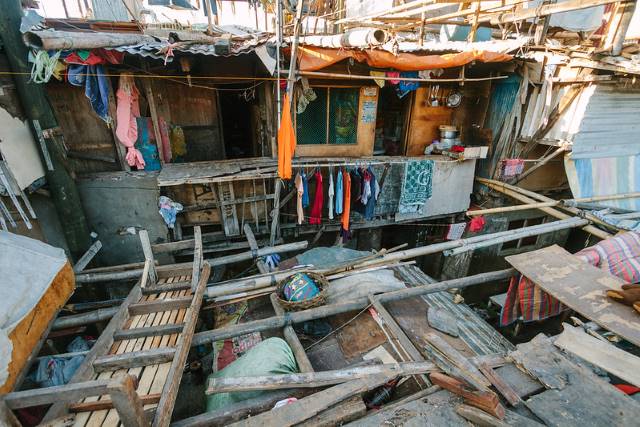
 The homeless population in the Philippines is a staggering 4.5 million, representing about 4% of the population. This number is expected to rise to 12 million by 2030 if no action takes place to address the issue. Manila, the capital of the Philippines, is where a significant portion of homeless Filipinos reside. For this reason, activists often center efforts around increasing housing solutions for the Filipinos in Manila. Hope in solving the housing crisis is rising as efforts begin introducing creative solutions to cater to the Philippines’ unique needs.
Bamboo Houses
EarthTech, an innovative development agency focused on sustainability, recognizes the Philippines’ housing problem as a crisis. EarthTech has proposed an affordable, sustainable and efficient solution: modular homes made out of bamboo. Unlike other housing solutions for the Philippines, CUBO Modular, the designer of the homes, prefabricates them off-site. This means that the homes can be put together on-site in just four hours. The engineered bamboo lasts up to 50 years and absorbs carbon rather than produces it. This makes bamboo a durable and environmentally friendly material.
Solar Paneled Homes
The Philippines has one of the highest household electricity rates in Southeast Asia, often creating a financial burden for low-income houses. Imperial Homes Corporation (IFC) has been tackling this problem through the development of “energy-efficient communities” like Via Verde Homes.
Via Verde houses consume about 25% less water and roughly 40% less energy in contrast to standard housing. IFC also installed solar panels on the roofs of all Via Verde Homes. The solar panels substantially cut down families’ electricity bills, allowing them to afford other essential needs. The IFC continues to work on building low-income, solar-paneled homes in the Metro Manila area. The innovative company has received international attention, winning the ASEAN Business Award for Green Technology in 2017.
Resistant Housing
The Philippines Archipelago experiences an average of 22 typhoons a year. Normally, five to nine of those typhoons cause serious damage. Typhoon Sisang in 1987 demolished more than 200,000 homes, after which the Department of Social Welfare and Development initiated the Core Shelter Housing Project. The Project teaches the Filipino community how to construct their own weather-resistant homes. The Project has created more than 41,000 low-cost houses for people whose homes have been destroyed by annual typhoons. Each home costs about $300 to build. Construction of the homes focuses on resistance, and when finished, can withstand typhoons up to 180 kph. Furthermore, the shelters are built with locally available materials such as concrete and steel. This makes the shelters one of the most ideal housing solutions for the Philippines.
Long-Lasting and Inclusive Urban Development
The Philippines Housing and Urban Coordinating Council, a governmental organization, released a statement addressing the growing homeless population in Manila and other cities in the Philippines. The Council stressed the need for community input regarding housing solutions in the Philippines. Bringing the community into the conversation means leaders can better understand the root problems that affect a particular area.
The Council would focus on long-lasting urban development, meaning permanent housing solutions rather than more temporary and unstable shelters. The statement also addressed the need for increased water and job availability. The Council believes this would holistically solve the Philippines’ housing crisis.
Advocacy and Sustainability
Habitat for Humanity runs a Habitat Young Leaders Build movement that mobilizes youth to speak out in support of homeless communities, build houses and raise funds for housing solutions. Habitat Philippines is advocating the Presidential Proclamations to implement tenure policies for informal settlers who reside in illegal, unused housing, making them vulnerable to losing shelter.
This organization, along with the Department of Human Settlements and Urban Development, is in the process of implementing the New Urban Agenda into the development strategy of the Philippines. This Agenda is a document outlining standards and policies necessary for sustainable urban development. Thus, the implementation of the New Urban Agenda would provide the foundation for permanent housing solutions for the Philippines and other urban programs.
Moving Forward
In order to create permanent housing solutions for the Philippines, urban development that includes resources and programs to keep Filipinos out of homelessness and poverty is needed. Housing that is sustainable, resistant to natural disasters and affordable to purchase and maintain will ensure the basic right to shelter for many Filipinos.
– Sarah Eichstadt
Photo: Flickr

Poverty and Disability in Canada
Millions of Canadians live with disabilities. Around 16% of people 15 and older live with a disability, making up more than 4 million people. A correlation exists between poverty and disability in Canada. While about 10% of people without a disability live in poverty or around 3 million people, the poverty rate among those living with a disability is 14%, or around 600,000 people. Poverty rates also vary greatly among different types of disabilities.
What is a Disability?
The above statistics come from a 2006 study of the Participation and Activity Limitation Survey (PALS). The survey describes disability as any type of difficulty regarding hearing, seeing, communicating, walking, leaning over, learning or other physical or mental work. Disabilities hinder productivity at work, at school and at home.
Types of Disabilities and Their Poverty Rates
The connection between disability and poverty in Canada runs deep. Furthermore, a person’s particular type of disability correlates directly to their likelihood of living in poverty. Among people with disabilities in general, the poverty rate is around 14%. For people with limited mobility, the rate is a little over 15%. For people with limited ability to communicate, the rate is 24%. People with hearing disabilities have the lowest poverty rate among disabled people at 10%.
The Majority of Canadians Support the Canadian Disability Benefit
The Canadian Disability Benefit, which the Canadian government created in 2021, set up a $12 million fund to benefit Canadians with disabilities over the course of the next three years by changing and reforming programs and benefits already in place. People recognize the link between disability and poverty in Canada. Nearly 90% of people polled either strongly or moderately support the Canadian Disability Benefit.
Disability Without Poverty Movement
Many programs aim to help eliminate poverty among people with disabilities in Canada. One is the Disability without Poverty movement, which is dedicated to ensuring people with disabilities are included in the design of the Canadian Disability Benefit. COVID-19 has greatly hurt people’s ability to seek help, including those with disabilities trying to acquire proper aid and benefits.
The connection between disability and poverty in Canada is a close one. Current aid programs in the works, like the Canadian Disability Benefit, have the design of helping people with disabilities during the COVID-19 pandemic. About 60% of Canadians are generally in favor of Canadians with disabilities receiving more aid and benefits, with even stronger support for the Canadian Disability Benefit in particular.
– Jake Herbetko
Photo: Flickr
Benefits of Widespread Internet Access in Moldova
Small Country, Vast Internet
Despite the tiny country’s high poverty rate, internet access in Moldova ranks among the best in the world. Roughly 90% of Moldova’s population enjoys “superfast gigabit internet access.” While “the United States is twice as urbanized as Moldova, its gigabit coverage” reaches only 18% of the population. Only South Korea and Singapore, both much wealthier and more urbanized than Moldova, boast better coverage. The rest of the top 10 countries for gigabit coverage rank among the world’s 40 wealthiest nations globally. Meanwhile, Moldova ranks as only the 98th wealthiest nation in the world.
Since the dismantling of the Soviet Union in 1991, the international community has provided Moldova with grants and loans aimed at spurring economic growth and reducing poverty. The privatization of telecoms was a prerequisite in a developmental assistance offer from the World Bank in the late 2000s. To fulfill the condition, “a fiber optic cable was laid across” the Dniester River in 2009. Thanks to the new infrastructure, internet access became widespread as 99% of Moldovan communities were able to connect to the fiber optic network. Fiber optic cable also connects Moldova directly to Frankfurt in Germany, a major European digital hub.
Emigration and the Benefits of Connectivity
Moldova has high emigration rates — as much as a quarter of the population live and work in Russia and other European countries, often illegally. As a consequence, Moldova is highly dependant on remittances. Many Moldovans working abroad purchase computers and send them to their families in Moldova for communication purposes. These communication methods require internet access, boosting the demand for internet access in Moldova even further.
Thanks to Moldova’s excellent internet speeds and connectivity, many countries have begun outsourcing IT and call center jobs to Moldova. Italy, in particular, outsources many jobs to Moldova because many Moldovans speak Italian as a second language. These outsourced jobs serve to ignite economic growth in Moldova, providing citizens with employment opportunities and a way out of poverty.
Internet Access and Poverty Reduction
The internet is recognized as a tool that contributes to the social and economic development of a country. Internet access aids in the “delivery of essential services such as education and healthcare.” Through the internet, people have access to remote job opportunities that were once out of reach. Furthermore, the internet not only expands people’s access to job opportunities but also creates a demand for jobs in the technology and engineering sectors.
According to the World Bank, increasing “internet penetration to 75% of the population in all developing countries” would contribute up to $2 trillion to their combined GDPs. Furthermore, this rate of penetration would generate “more than 140 million jobs” globally.
Widespread internet access in Moldova may help the country to bounce back from the COVID-19 pandemic. With the added assistance of international powers already investing in the country, Moldova can pick up where it left off and continue its trend of poverty reduction.
– Courtney Roe
Photo: Flickr
The Green Super Rice Project Reduces Poverty
Resilient Rice Varieties
Predictions indicate that the demand for rice will only increase, leading to a growing need to maximize production. The Green Super Rice project aims to research and test GSR varieties from African and Asian countries. The research will allow developers to attain “resource-saving and environment-friendly rice production while still achieving a yield increase and quality improvement.” Furthermore, farmers will be able to achieve crop resilience through new varieties. Rice grows in a unique, wet environment in which few other crops can survive. This means that the environment is specific and crucial to the rice itself. A hybrid variety may allow for a crop that can survive with little water.
Creating new or hybrid varieties involves combining existing rice varieties through a breeding process. The process inputs the unique traits of each variety into the second generation of rice. Proven traits that show up on previously tested seeds include a “resistance to multiple insects and/or diseases, high use efficiency of fertilizers, water-saving, drought tolerance and stress resistance based on high grain yield and quality.”
Increased Output and Income
An important aspect of the Green Super Rice project is the profit it will bring to impoverished smallholder farmers around the globe. The new varieties of GSR allow farmers to garner a high yield from crops while using fewer rice seeds. This is beneficial for rice-producing farmers with smaller plots of land because farmers can produce more rice to sell and eat. Rice farming becomes more profitable for smallholder farmers, and because of the larger production volume, rice also becomes more affordable for buyers.
Proven Resiliency and Impact
Since the launch of the Green Super Rice project in 2008, more than 78 varieties of rice have been successfully bred and distributed to around 18 target countries in Asia and Africa. These countries are able to select varieties that meet their unique agricultural requirements, such as drought resiliency and disease tolerance. When Typhoon Haiyan ravaged the central Philippines, GSR crops stood strong as one of the few crops able to grow in the increased soil salinity. Because of the ability to increase yields and withstand harsh environments, GSR crops are able to increase food security and reduce poverty, especially in developing countries that rely on rice for their economic and nutritional needs.
While only introduced less than 15 years ago, the Green Super Rice project holds many promising benefits for not only the economies of developing countries but also the countries’ citizens. The project is playing a key role in advancing economies and improving food security across the globe.
– Grace Ingles
Photo: Flickr
Providing Housing Solutions for the Philippines
Bamboo Houses
EarthTech, an innovative development agency focused on sustainability, recognizes the Philippines’ housing problem as a crisis. EarthTech has proposed an affordable, sustainable and efficient solution: modular homes made out of bamboo. Unlike other housing solutions for the Philippines, CUBO Modular, the designer of the homes, prefabricates them off-site. This means that the homes can be put together on-site in just four hours. The engineered bamboo lasts up to 50 years and absorbs carbon rather than produces it. This makes bamboo a durable and environmentally friendly material.
Solar Paneled Homes
The Philippines has one of the highest household electricity rates in Southeast Asia, often creating a financial burden for low-income houses. Imperial Homes Corporation (IFC) has been tackling this problem through the development of “energy-efficient communities” like Via Verde Homes.
Via Verde houses consume about 25% less water and roughly 40% less energy in contrast to standard housing. IFC also installed solar panels on the roofs of all Via Verde Homes. The solar panels substantially cut down families’ electricity bills, allowing them to afford other essential needs. The IFC continues to work on building low-income, solar-paneled homes in the Metro Manila area. The innovative company has received international attention, winning the ASEAN Business Award for Green Technology in 2017.
Resistant Housing
The Philippines Archipelago experiences an average of 22 typhoons a year. Normally, five to nine of those typhoons cause serious damage. Typhoon Sisang in 1987 demolished more than 200,000 homes, after which the Department of Social Welfare and Development initiated the Core Shelter Housing Project. The Project teaches the Filipino community how to construct their own weather-resistant homes. The Project has created more than 41,000 low-cost houses for people whose homes have been destroyed by annual typhoons. Each home costs about $300 to build. Construction of the homes focuses on resistance, and when finished, can withstand typhoons up to 180 kph. Furthermore, the shelters are built with locally available materials such as concrete and steel. This makes the shelters one of the most ideal housing solutions for the Philippines.
Long-Lasting and Inclusive Urban Development
The Philippines Housing and Urban Coordinating Council, a governmental organization, released a statement addressing the growing homeless population in Manila and other cities in the Philippines. The Council stressed the need for community input regarding housing solutions in the Philippines. Bringing the community into the conversation means leaders can better understand the root problems that affect a particular area.
The Council would focus on long-lasting urban development, meaning permanent housing solutions rather than more temporary and unstable shelters. The statement also addressed the need for increased water and job availability. The Council believes this would holistically solve the Philippines’ housing crisis.
Advocacy and Sustainability
Habitat for Humanity runs a Habitat Young Leaders Build movement that mobilizes youth to speak out in support of homeless communities, build houses and raise funds for housing solutions. Habitat Philippines is advocating the Presidential Proclamations to implement tenure policies for informal settlers who reside in illegal, unused housing, making them vulnerable to losing shelter.
This organization, along with the Department of Human Settlements and Urban Development, is in the process of implementing the New Urban Agenda into the development strategy of the Philippines. This Agenda is a document outlining standards and policies necessary for sustainable urban development. Thus, the implementation of the New Urban Agenda would provide the foundation for permanent housing solutions for the Philippines and other urban programs.
Moving Forward
In order to create permanent housing solutions for the Philippines, urban development that includes resources and programs to keep Filipinos out of homelessness and poverty is needed. Housing that is sustainable, resistant to natural disasters and affordable to purchase and maintain will ensure the basic right to shelter for many Filipinos.
– Sarah Eichstadt
Photo: Flickr
UNICEF’s Pledge to Help Children During COVID-19
The Impact of COVID-19 on Children’s Health
Children are not as vulnerable to the direct physical impacts of COVID-19, but nevertheless, children worldwide suffer from the indirect impacts of COVID-19. The BBC reports that in South Asia, the disruption of essential services such as nutrition and immunization programs has led to 228,000 deaths of children younger than 5. During COVID-19, “the number of children being treated for severe malnutrition fell by more than 80% in Bangladesh and Nepal.”
Furthermore, “immunization among children dropped by 35% and 65% in India and Pakistan respectively.” In 2020, across South Asian nations, India experienced the highest increase in child mortality at 15.4%. The COVID-19 virus has abruptly halted many essential programs and services that helped safeguard the lives of vulnerable children in developing countries.
The disruption of health services has also affected adolescents battling diseases such as typhoid, malaria, HIV/AIDS and tuberculosis. The BBC reports almost 6,000 deaths across South Asia stemming from the inability to access the required treatment. The deficiency in medical services also resulted in 400,000 unwanted pregnancies in teenagers due to inadequate access to contraception.
Child Labor and Child Marriage
The COVID -19 pandemic has resulted in widespread unemployment and reduced household income, causing a rise in cases of child labor, reports Human Rights Watch. Parental deaths stemming from COVID-19 leave children orphaned, unable to have their basic needs met. UNICEF warns the international community that “school closures, economic stress, service disruptions, pregnancy and parental deaths due to the pandemic are putting the most vulnerable girls at increased risk of child marriage.” The organization estimates that 10 million more girls are now at risk of child marriage due to the impacts of COVID-19.
The Impacts of School Closures
At the peak of COVID-19 in 2020, 91% of all students across more than 188 countries could not receive an education due to school closures. School closures deprive children “of physical learning opportunities, social and emotional support available in schools and extra services such as school meals.” Children from disadvantaged backgrounds face more barriers than children from more affluent families. These vulnerable children are at risk of losing the most in terms of educational progress.
The UNICEF Pledge
UNICEF has committed to work alongside “governments, authorities and global health partners” to ensure medicines, vaccines, nutritional resources and other vital supplies reach the most vulnerable people. UNICEF is prioritizing safe school reopenings, ensuring all safety protocols are in place. Where schools cannot reopen, UNICEF is working to develop “innovative education solutions” and provide remote learning support.
Since a lack of internet connectivity and electricity presents a barrier to online learning in impoverished communities, UNICEF has committed to ” bridge the digital divide and bring internet connectivity to 3.5 billion children and young people by 2030.” UNICEF is also working with governments and partners to ensure that children’s rights form a central part of COVID-19 response plans.
As the pandemic continues, the future is still unclear. During an unprecedented global crisis, UNICEF’s pledge to help children during COVID-19 shows its ongoing commitment to upholding children’s rights globally.
– Jessica Barile
Photo: Flickr
3 Advancements in Women’s Rights in New Zealand
3 Advancements in Women’s Rights in New Zealand
The Road Ahead
The country continues enacting policies to advance women’s rights in New Zealand. Prime Minister Jacinda Ardern is also offering relief to those hit hardest by COVID-19. Due to Ardern’s exceptional response to the COVID-19 crisis, she was victorious in her re-election campaign. As the country pushes ahead in hopes of eliminating COVID-19 altogether, New Zealand’s government proposed a $2.8 billion income support initiative. The initiative will serve as financial assistance to the country’s most vulnerable group: women.
As history and current policies reveal, New Zealand is making great strides in terms of women’s rights. The country’s commitment to gender equality is reflected in its legislation and its parliamentary representation.
– Jordyn Gilliard
Photo: Flickr
Geography’s Influence on Child Poverty in Fiji
Child Poverty in Fiji
Child poverty in Fiji is widespread throughout its rural areas. The United Nations released a report that displays rural child poverty rates at 40.92%, almost double urban rates of 22.22%. The extent of the discrepancy between those living in rural and urban areas is clear. There is a similar difference in the ages of those experiencing poverty in Fiji. The United Nations report highlights that 32.1% of children younger than the age of 14 experience poverty.
Poverty in Fiji has an unparalleled effect on young children in rural areas. This has led to a stunting rate tallied at 7.5% among infants and young children in 2004. Infants and young children are not the only ones affected by malnourishment as 22% of adolescents in Fiji were underweight as of 2005.
The Effects of Geography on Child Poverty in Fiji
In Fiji, there is a clear connection between poverty, geography and education. Fiji’s remote location impacts the price of uniforms, books and transportation. Although education is free up to the second level, the secondary costs of education present additional barriers for children living in poverty.
Even if rural Fijian families scrape together money for their children’s education, underdeveloped road and sea transportation prevent easy accessibility. Children often have to travel through three or more towns on foot to reach the nearest school.
Furthermore, children do not receive consistent protection against violations and abuse. Many children work as domestic servants and face domestic or sexual violence. Authorities underreport these conditions, and oftentimes, local authorities dismiss the crimes with little supervision from the country’s federal policing system.
Solutions to Child Poverty in Fiji
Many efforts are in place to help combat child poverty in Fiji. Several Fijian children in poverty reside in rural areas where the lack of access to quality education perpetuates the cycle of poverty. Understanding this issue, the Australian High Commissioner administered the Australian Direct Aid Program. The program seeks to help improve educational opportunities for these children. This project gifts items like new furniture, library books, water tanks and dormitory renovations that provide better education resources to students in rural Fiji.
Similarly, help from volunteer groups such as the Peace Corps, Habitat for Humanity, the Red Cross and student initiatives, such as Rustic Pathways, greatly impacts these Fijian communities. For example, the Peace Corps states that close to 90% of the communities improved in livelihood security and sanitation.
Another significant step in combating child poverty in Fiji occurred when Fiji joined the Sanitation and Water for All Partnership. The partnership made access to clean water a constitutional right. This led to 70.1% of Fijian households having access to clean water. Increased access to clean water means children can go to school and receive an education instead of spending time collecting water for the home.
Moreover, the World Bank has approved the Fiji Transport Infrastructure Investment Project. It awarded the Fijian government $50 million to make improvements to land and sea infrastructure. The expected outcome is easier and safer travel, which in turn, allows children facing poverty in rural areas of Fiji better access to education.
The Future of Poverty in Fiji
Fiji’s geography negatively influences impoverished children within its borders. Through improvements to the education system, increased sanitation, access to clean water and better infrastructure, children facing poverty in Fiji have a greater opportunity to attend and complete school. Through education, children are able to break cycles of poverty.
– Lily Vassalo
Photo: Flickr
The Fight Against Human Trafficking in Italy
Human Trafficking in Numbers
As of 2018, Italy ranked in the top five EU Member States with the highest number of registered trafficking victims. Italy also tied fourth for the highest percentage of sexually trafficked people at 82%. The other EU countries with similar statistics include Greece, Czechia and Hungary. In comparison, EU states like Sweden and Croatia have rates of 24% and 28% respectively.
Basics of Human Trafficking in Italy
Unaccompanied, young migrants seeking asylum are particularly vulnerable to human trafficking in Italy. Italy’s government reported at least 1,660 victims of trafficking, with many other victims unaccounted for. Save the Children points out the concerning increase in children and minors affected by trafficking, which increased from 9% to 13% within a single year. Many of these children end up contributing to underground labor, which fuels the Italian economy.
The risk factor for other workers falling victim to forced labor and labor trafficking in Italy feeds to these statistics. The United States Department of State found that, in 2020, roughly 3.7 million irregular workers and 1.5 million unregistered workers were at potential risk of labor-related trafficking.
Preventing Human Trafficking in Italy
The U.S. Department of State classifies Italy as a Tier 2 country. This means that the Italian government has participated in some efforts to combat human trafficking but still has work to do. For example, the country has demonstrated greater cooperation with international policies and laws against human trafficking. It has also prioritized additional fundraising to support victims of trafficking and places more emphasis on training Italian law enforcement to address trafficking.
In addition, many global groups such as the Group of Experts on Action against Trafficking in Human Beings (GRETA) have worked hard to hold countries like Italy accountable for strengthening their policies. GRETA has noted decent progress on the issue of human trafficking in Italy. GRETA monitors human trafficking as the Council of Europe Convention on Action Against Trafficking in Human Beings stipulates.
The Council maintains a human rights treaty among European Nations and the Council of Europe to reach an overarching goal of assisting and protecting trafficked human beings. GRETA thus performs legislative evaluations to ensure countries meet these goals and provides comprehensive reports and guidelines on combatting trafficking and prosecuting identified traffickers.
GRETA has acknowledged the progress in combating human trafficking in Italy as recently as 2019. The Italian government increased its funding for anti-trafficking projects, which has gone toward safeguarding protections for unaccompanied children who have fallen victim to human trafficking in Italy.
Challenges in Combatting Human Trafficking in Italy
The U.S. Department of State has noted that Italy still has not reached the “minimum standards” necessary to adequately and fully combat trafficking. As a result, the U.S. government has kept Italy at a Tier 2 status. Italy is not meeting the standards due to a decrease in trafficking investigations and prosecutions. The Italian Ministry of Interior reported only 135 trafficking investigations, which is a substantial decrease from 314 persons in 2018 and 482 persons in 2017. The government also does not have a consistent database for consolidated information about trafficking investigations, convictions or prosecutions. This adds to the difficulty of monitoring and assessment efforts.
Hope for the Future
Nevertheless, hope still exists in the fight against human trafficking in Italy. The U.S. government noted improvement in Italy’s 2020 trafficking report, acknowledging the measures the country implemented, even though there is still room for improvement. For example, improvements have emerged in victim assistance and increased funding for victims and victim’s rights groups. Funding has also gone toward NGOs advocating for trafficking rights, which GRETA specifically acknowledges as a step toward overall improvement in policies. With these efforts, Italy can reduce incidents of human trafficking in the country,
– Rebecca Fontana
Photo: Flickr
Global Citizen Fellowship Fights Poverty
What to Know About The Global Citizen Fellowship
The Global Citizen Fellowship began in 2018 and is open to citizens ages 21 through 25 who reside in Nigeria and South Africa. The inspiration behind creating the program was based on young citizens of Africa suffering from barriers such as unemployment. As a part of the BeyGOOD Initiative, the Global Citizen Fellowship prioritizes a focus on extreme poverty. The purpose of the Global Citizen Fellowship is to provide experiences that will help young people fight to end extreme poverty. One of the components of the Global Citizen Fellowship includes skills development. The 2021 program began in July and will continue through the year.
Global Citizen Fellowship’s Advisory Council
Some of the young people involved in this year’s program are currently members of the advisory council. Bonang Matheba founded the Bonang Matheba Bursary Fund, which advocates for issues such as providing free sanitary products. Aisha Yesufu is involved in the Bring Back Our Girls Movement and has held an entrepreneurial role for more than two decades. Charmaine Houvet is Cisco Africa’s public policy director and works with projects like the Global Broadband Plan for Refugees Project. Hamzat Lawal dedicates efforts to supporting the younger generation and is the leader of Connected Development. Nozipho Tshabalala is a phenomenal leader in the broadcasting field and works with Global Citizen, Learn Reflect Mobilise Grow and the World Bank. Tumi Sole is a corporate attorney fighting for social justice with his organization #CountryDuty.
One Way to Support Global Citizen
One trend created by Global Citizen Live will be beneficial to supporting the fight to end extreme poverty. Global Citizen recently created #MoveTheWorld Mondays to post on social media platforms. The purpose of #MoveTheWorld Mondays is to share one action weekly on Global Citizen’s accounts that can help end extreme poverty. People will have the opportunity to participate in the cause by taking actions shared in each post. One of the benefits of participating in #MoveTheWorld Mondays includes being able to attend events.
The Global Citizen Fellowship, a program created in 2018, encourages young people to join the fight to end extreme poverty. Many Africans, especially the younger generation, suffer from unemployment and other barriers. Therefore, it is important for people to contribute to fighting extreme poverty. Members of the Global Citizen Fellowship’s advisory council express their passion for helping their communities through their occupations. Global Citizen’s #MoveTheWorld Mondays can inspire more people to participate in ending extreme poverty.
– Chloe Moody
Photo: Flickr
The Impact of COVID-19 on Poverty in Haiti
Residual Struggles from the Earthquake
In 2010, Haiti experienced a massive earthquake that left many without homes or income. The earthquake cost many lives and also hit farmers hard. Massive aftershocks that still exacerbate the island’s financial woes arrived after the earthquake. In order to move forward, Haiti relied on donations and volunteer work from other countries. However, a large portion of the billions donated disappeared due to corruption, and as the world’s attention shifted elsewhere, people once again forgot Haiti.
COVID-19’s Economic Impact on Haiti
Following the setbacks of the massive 2010 earthquake, the island began to make slow strides toward improvement. Between 2000 and 2012, extreme poverty declined from 31% to 24%. However, due to the COVID-19 pandemic, Haiti is once again seeing increasing rates of extreme poverty. The country has also begun to see a high number of COVID-19 cases that are “threatening to overwhelm Haiti’s fragile health care system.”
Though reported COVID-19 cases in Haiti are increasing, the overall number remains comparatively low. The recent increase was due largely to increased access to COVID-19 testing. However, as cases begin to spike, Haiti lacks the financial ability to buy COVID-19 vaccines, instead relying on donations from other countries and the World Bank.
COVID-19’s Political Impact on Haiti
As Haiti continues to battle COVID-19, it is also in the midst of political unrest that the assassination of Haitian President Jovenel Moïse caused. For many, COVID-19’s impact on poverty in Haiti is a low priority because of more pressing issues such as kidnappings, political turmoil and natural disasters.
Public Awareness and Health Needs
Following the assassination of President Jovenel Moise, the country is on the verge of a public health emergency. The impact of COVID-19 on poverty in Haiti has lost its place as a top priority due to the country’s current political turmoil. The fear of war, famine, corruption and outside interference has left the country at a standstill. However, in July 2021, U.S. President Joe Biden donated 500,000 doses of the Moderna vaccine to Haiti. According to Dr. Jacqueline Gautier, a member of the national technical advisory group on COVID-19 vaccination, “Because COVID-19 did not impact us badly, people don’t think it is worth it actually.” This came after fears of vaccine side effects from AstraZeneca spread throughout the island.
Haiti’s economic advancement and wellbeing rely on the generosity of other countries. According to some scholars, France should be a key player in aid to the country since it has exploited Haiti the most.
Another pressing issue is the lack of vaccine promotion in the country. The disconnect between the public and health officials has contributed to the lack of awareness and understanding of the virus and the vaccine. As the Haitian government continues to try and prevent the country from dropping further into unrest, it will be extremely important for the government to educate its citizens on how important COVID-19 awareness is.
Under the leadership of former Haitian president Jovenel Moise, government reform and reshaping government affairs played a key role in combatting the COVID-19 crisis. Unfortunately, President Moise’s death has placed Haiti’s progression to a halt. It is now up to the international community to unite and extend care to Haiti. With vaccine donations coming in from major powers such as the United States and China, Haiti still has a chance to see its vaccination rate improve while also getting the COVID-19 crisis under control.
– Jordyn Gilliard
Photo: Unsplash