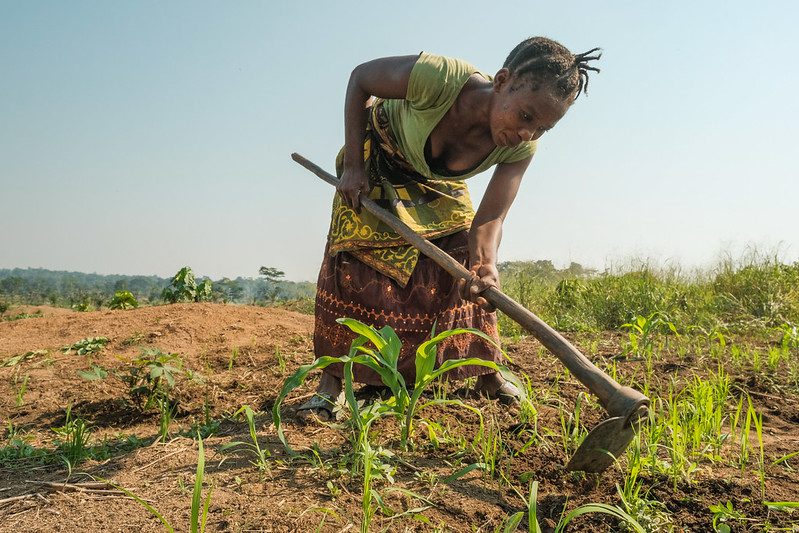
As one of the poorest countries in the world, the Democratic Republic of the Congo (DRC) consistently deals with the consequences of poverty, such as disease and starvation. The country’s low GDP of $49.87 billion leaves its government with little funds for the infrastructural and industrial development necessary to invigorate its economy and derive profits. At the same time, the Congo contains trillions of dollars in untapped natural resources, which, of course, it cannot extract for sale on the global market because of its economic underdevelopment and consequent lack of industrial power. However, foreign aid can enable the Congo to develop its industries and invest in the machinery needed to cultivate and export its vast natural resources.
Successfully entering the global market promises large profits, economic development and stability and infrastructural development. For the Congo, such economic success entails allocating its profits towards government programs that would eliminate poverty, starvation and disease.
For this reason, the United States Agency for International Development (USAID) has intervened in the Congo, providing $781 million, with $40 million given for this reason alone, in financial and economic support to jumpstart the country’s underdeveloped industries. Furthermore, it has intervened in the Congo’s labor sector to open the ability for women and previously marginalized groups to work in hopes of increasing economic productivity. Details about USAID’s work and overall vision for economic development in the Congo are below.
USAID’s Vision
USAID’s support in the Congo stems from its goal of bringing the country to a place of economic self-reliance. The organization believes it can achieve this goal by localizing agricultural practices, enlarging and empowering the Congo’s workforce, encouraging the expansion of farmable land, influencing local economic participation and introducing stable mining techniques to safely extract the Congo’s natural resources. While USAID’s support in the Congo has led to slow development, it hopes to see drastic economic changes by 2025.
Country Development Cooperation Strategy (CDCS)
The organization’s Country Development Cooperation Strategy aims to transform local enterprise by encouraging economic participation. USAID’s program first intends to do this by enlarging the Congo’s labor force and diversifying its agricultural sphere. The size of the labor force is a driving factor in economic development. Young people and women are also overrepresented in the country’s unemployed population.
Through its Country Development Cooperation Strategy, USAID desires to increase employment in the Congo, which would not only result in economic productivity but also market participation. Importantly, increased market participation results in the spreading of wealth in which both the buyer and the seller benefit from the exchange. Thus far, USAID has focused on widening the Congo’s labor force by empowering women and previously marginalized groups to work. If citizens become employed, they can adequately farm and harvest foodstuffs, which would bring them the agricultural productivity necessary for economic independence apart from global food imports. Furthermore, by increasing employment, USAID hopes that these workers will expand their local agrarian enterprises to account for the “80 million hectares of arable land” in the Congo that farmers currently only use 10% of. Such an expansion is a necessary step for economic self-reliance.
Another concern is establishing economic productivity in a way that preserves the Congo’s plentiful natural resources without damaging them. It is no secret that resources such as water and forests experience pollution or destruction during aggressive industrial development. Because USAID desires to foster the expansion of farmable land and induce market participation, it is also interested in minimizing “biodiversity and habitat loss.” In effect, safe practices that are conscientious of the environment and reflect sustainable resource management will inevitably “increase economic opportunities for local communities.”
Responsible Minerals Trade (RMT)
USAID’s Responsible Minerals Trade (RMT) program is concerned with commencing a well-regulated minerals sector that focuses on decreasing the likelihood of trafficking and slavery concerning humane economic progression. In the past, the Congo has struggled with a plethora of problems, with blood-diamond mining as the most prevalent issue because of its humanitarian negligence and economic greed. Aside from the strict humanitarian violations, mining agencies that engaged in illegal practices rightfully could not sell their products on the global market and instead sold their minerals on the black market, thereby evading taxes that the government would have profited from and allocated towards industrial development.
However, USAID’s Responsible Minerals Trade program helps the Congo’s government surveil illegal practices and encourages mining companies to adopt legal practices, such as paying their employees and paying their taxes to the government. Consequently, USAID’s support in the Congo, on “both industrial and small-scale, artisanal mines will build on the tax and business reforms” and “will continue to support responsible minerals trade and promote compliance.” If these legal business models become widely adopted, the Congo will continue to derive profits that it can channel towards industrial development, which, in effect, will bolster its economy and render government programs directed towards poverty elimination.
Conclusion
USAID’s support in the Congo has resulted in $781 million in foreign aid and culminated in the formation of the Country Development Cooperation Strategy and the Responsible Minerals Trade, which envision increased employment and high profits through legal and humane market practices. If done properly, the Congo’s economy will grow stronger, empowering it to extract its valuable resources leading to overall economic self-reliance. Because of USAID’s support in the Congo, poverty in the Congo is closer to reaching elimination.
– Jacob Crosley
Photo: Flickr

AmazonPasto: Sustainable Farming Techniques in the Amazon
AmazonPasto, an app that the Instituto Ouro Verde built, will bring sustainable farming techniques to rural farmers in the Amazon. The organization expects AmazonPasto to help Brazilian rural farmers increase their agricultural yield. The app also provides rural farmers access to economic development services. Importantly, AmazonPasta offers a concept for future innovations in global poverty reduction strategies.
What is the IOV?
The Instituto Ouro Verde (IOV), or Insitute of Green Gold, is a Brazilian non-governmental organization (NGO) fighting rural poverty with innovative solutions. Launched in 1999, the IOV operates within eight different municipalities across Brazil. Working to build a more resilient Brazilian economy, the NGO connects small farmers to sustainable land restoration practices. Already, the IOV works with 1,200 small-scale farmers and has restored 2,700 hectares of pastoral land. Also, this land now produces $35,000 in agricultural products a year. By building stronger food production systems, the IOV hopes to promote social participation and fight poverty head-on.
Why Focus on Small Farmers?
Brazil is currently the fourth largest agricultural production economy in the world. Small-scale farming operations are the chief economic drivers. In fact, small-scale farms are responsible for 85% of all agricultural production and employ 75% of the total farm labor pool.
Operating in rural regions, the small-scale agricultural sector also has the highest wealth inequality within Brazil. This makes it a focal point of poverty reduction strategies. Poverty in Brazil has dramatically improved over the last three decades, dropping from 17.4% in 1990 to 4.2% in 2020. However, of the estimated 20 million people remaining in poverty, rural farming supports nearly half. For this reason, targeting rural farmers for economic development has become a key aspect of ending poverty in Brazil.
How is an App Going to Help?
The Brazilian NGO launched AmazonPasto as a way to expand rural reach. Researchers at the organization found that most farmers had access to a smartphone. Using this to their advantage, the Instituto Ouro Verde built AmazonPasto as a central hub for land restoration practices.
Within the app, farmers can build sustainable farming techniques by deciding what native trees they should plant and how to improve soil quality. They can also access troubleshooting practices. Farmers can also upload their ideas and share them with each other. The AmazonPasto has already created over 60 hectares of silvopastoral systems. These are areas where animals graze among the trees. In turn, the silvopastoral systems produce both milk and crops. The Brazilian government can buy the milk and crops at a fixed price for use in schools and other institutions. The 60 hectares house 20,000 trees, and IOV hopes to increase the project by 150 hectares each year for the next six years.
By providing a source for both reliable income and food, the AmazonPasto app and the project have made a dramatic difference for the small-scale farmers. This is especially true for a number of farmers who were previously homeless.
Moving Forward
While the app currently only undergoes use for sustainable farming techniques, the IOV hopes to expand the utility of AmazonPasto to other development services. The organization has begun extending microcredit lines to rural farmers and small communities. As of 2021, the IOV has identified 21,000 properties that may benefit from their work. The institute predicts their combination of economic and ecological development strategies will reforest 3,000 hectares of protected land. Further, if all goes according to plan, the AmazonPasto app expects to help produce $7.9 million of agricultural yield.
Rural poverty deep in the Amazon may sound like a foreign affair, but an app successfully increasing accessibility for those in poverty has broad implications for the future of global poverty reduction.
– Aiden Marina Smith
Photo: Flickr
Low Health Literacy in Developing Countries
While developing countries often face pressing issues such as inadequate health care, a less obvious but equally threatening problem is low health literacy rates. In comparison to developed nations, health literacy rates in developing nations are significantly low. However, if society as a whole works to educate and empower individuals to make better choices regarding their health, low health literacy, also known as the “silent killer,” will see a drastic reduction. Here is some information about low health literacy in developing countries.
Defining Health Literacy
The World Health Organization (WHO) defines health literacy as an individual’s ability to adequately comprehend health information and to implement this knowledge into their everyday life in order to “maintain or improve quality of life.” An individual with lower health literacy is more likely to make questionable health choices and is less likely to take preventative action against manageable diseases.
Limited health literacy also correlates with unhealthy lifestyle choices, increased hospitalization rates and higher mortality rates. These impacts make it clear to understand how inadequate health literacy serves as a “silent killer,” especially within developing nations where these rates are prominently low.
The Situation in Developing Countries
Low health literacy rates link to inadequate education systems and health systems because these structures hold the responsibility of relaying health information to the general public. Thus, nations that lack these proper systems are more likely to have insufficient health education levels.
A survey of adult citizens in Isfahan, Iran, indicates that almost 80% of respondents did not have sufficient health literacy. Most of the respondents with inadequate health literacy were females with “low financial status” and limited education. This data suggests that an overwhelming number of individuals in developing nations lack satisfactory health education, particularly women. The reason for this is likely issues of gender equality — women lack access to education, essential services and employment opportunities. Furthermore, poverty disproportionately impacts women all over the world.
Taking Action
There are several ways to improve health literacy rates, and therefore, improve global health. It is crucial to educate the population on their health and to empower them to effectively manage their well-being. Several interventions have proven effective. In South Africa, providing individuals with informative yet easy-to-read pamphlets that include graphics is improving health education in the country. Meanwhile, in China, findings determined that “periodic training of health educators is essential for improving health knowledge” among the general public.
Media is yet another way to improve health education. In Uganda, “more than one in three used the internet to search for health information.” In Iran, secondary school students cited television as their most helpful source of information on HIV/AIDS. In Israel, “a model of Media Health Literacy (MHL)” showed potential in improving health literacy among younger citizens.
Across Asia, the Asian Health Literacy Association (AHLA) works to understand and improve health literacy rates. This organization aims to raise awareness of this issue “among researchers, officials, healthcare organizations as well as experts in health and education, corporations and media” in order to formulate effective interventions to improve these rates in Asia. AHLA sees this as an essential part of improving the quality of healthcare “and reducing health disparities between communities, groups and nations.” Ultimately, the AHLA aims to improve global health, starting with Asia.
Moving Forward
Increasing health literacy rates in developing countries is an effective way to improve global health and eliminate inequalities. Through education programs, improved communication and dedicated organizations, these rates can improve. By educating individuals on matters of health, people all over the world can live an improved quality of life.
– River Simpson
Photo: Flickr
Examining 60 Years of USAID’s Foreign Assistance
On November 3, 2021, the United States Agency for International Development (USAID) celebrated its 60th year of existence. The Foreign Assistance Act of 1961 made the formation of USAID possible. USAID’s creation stems from President John F. Kennedy’s aim to consolidate the foreign assistance work of several organizations into one main agency. Today, USAID operates in more than 100 nations across the world, fully or partially manages $24.8 billion in accounts and employs roughly 3,450 U.S. citizens to help fulfill USAID’s foreign assistance mission.
Official Mission Statement of USAID
As an agency representing the foreign assistance interests of U.S. citizens, USAID aims to “promote and demonstrate democratic values abroad and advance a free, peaceful and prosperous world.” Ultimately, USAID plays an instrumental role in making a reality the foreign policy values of the U.S. As such, “through partnerships and investments” USAID aims to “save lives, reduce poverty, strengthen democratic governance and help people emerge from humanitarian crises and progress beyond assistance.”
The Birth of USAID
Coming out of World War II, the U.S. stood as the world’s preeminent superpower. However, not long after, in 1947, the Cold War rivalry between the U.S. and the Soviet Union began. Looking to prevent the spread of communism, the U.S. realized its endeavors would require more than just military might — the U.S. would also need to win the hearts and minds of developing countries before the Soviet Union did.
Through diplomacy and goodwill, the U.S. hoped to spread democratic and free-market principles to as many countries as possible, and in return, not only stop the spread of communism but also open up new global markets for trade and shared prosperity. With this goal in mind, President Kennedy felt the U.S. needed a more strategic approach to foreign assistance. Therefore, he pushed Congress to pass the Foreign Assistance Act of 1961, which empowered him to then create USAID via executive order.
USAID Over the Years
USAID’s approach to international development has evolved over the years. In the 1960s, the focus was on large-scale capital and technical assistance projects in select countries committed to economic reforms. Gears shifted in the 1970s when the agency pivoted toward a more humanitarian approach that focused on widespread delivery of food, education and health services to the most impoverished populations. The 1980s brought about the increasing use of U.S. NGOs and for-profit contractors to fulfill USAID’s mission. In the post-9/11 world, development assistance in Afghanistan and Iraq would consume a large share of the USAID budget as the U.S. sought to rebuild these war-torn nations.
The Legacy
In the early years of USAID’s foreign assistance, the U.S. stood as the undisputed leader in international development aid. Through its innovative development and humanitarian efforts over the decades, it is clear that USAID has helped shape a better world with much less hunger, disease, illiteracy, child and infant mortality and all-around suffering than would otherwise be the case. Other advanced nations have since developed similar programs, with several countries now spending significantly more on official developmental assistance than the United States, proportional to their respective gross national incomes (GNI). However, the U.S. still leads in absolute spending, with $47 billion in foreign assistance obligations worldwide in 2019, of which, USAID obligations made up 45%.
In a November 3, 2021, tweet to mark the 60th birthday of USAID, Secretary of State Antony Blinken said, “Now more than ever, as we face historic challenges in global health, climate and other critical issues, it’s vital that our diplomacy and development go hand in hand. That’s why I’m so grateful to the outstanding public servants at USAID…” Ultimately, USAID’s foreign assistance transforms nations, improving the lives of millions of people while contributing to the U.N.’s 17 Sustainable Development Goals (SDGs) and reducing global poverty.
– Jeramiah Jordan
Photo: Flickr
Sam Smith Supports War Child
Two filmmakers founded War Child in 1993 after observing the violence that children endured during periods of war. The organization describes itself as “the only specialist charity for children affected by conflict.” With the slogan, “A world where no child’s life is torn apart by war,” War Child works to address the realities children face during war and provide them with prompt support, safety and coping mechanisms. The organization shows children from Iraq, Yemen, Afghanistan, the Democratic Republic of Congo and the Central African Republic that there is more to life than the destructive nature of war.
War Child’s Work
Since the traumatic impacts of conflict and violence on children, War Child takes an approach to help children through four key areas: protection, education, livelihoods and advocacy. Armed groups tear children from their families through false promises of education or money while abducting others. This can leave these children with severe and lifelong psychological problems. The organization’s support includes “setting up children’s helplines,” strengthening child justice systems, “rehabilitating and reintegrating former child soldiers” as well as reuniting children with parents.
More than 75 million children ages 3 to 18 are not in school in 35 countries experiencing war. War Child aims to address this problem in multiple ways, including providing children with early childhood education programs and initiating Education in Emergencies initiatives. The organization also provides teachers with training to best support learners in conflict-ridden environments. By incorporating play into learning programs, the organization attempts to remedy trauma. These initiatives give children a sense of normalcy during a period of time in their lives where chaos surrounds them.
The organization also recognizes the need to provide children with humanitarian aid to address their basic human needs. The organization provides cash assistance to communities for people to use according to “their own priorities and preferences.” To strengthen economic resilience, the organization assists people in securing employment or establishing businesses “by providing them with technical, business and life skills, establishing group-based saving schemes and providing small grants making the best out of existing market opportunities. ”
In many crisis-prone countries, agriculture plays an important role. As such, War Child created Peace Gardens. Peace Gardens allow children to develop agricultural skills while increasing food security as crop produce can provide nutritious school meals for children.
Sam Smith’s Role in War Child
Sam Smith’s global impact extends far beyond his role as a singer-songwriter. Smith became War Child’s Global Ambassador in 2017 after conversing with a child in Jordan who, as Smith put it, “said something that will stay with me forever.”
Smith subsequently took to his social media pages, urging his fans to support War Child. For his 26th birthday, in 2018, Smith asked that his friends, family and fans make donations to War Child instead of buying him birthday gifts. After releasing his hit single “Too Good at Goodbyes,” in 2020, he launched a four-city mini-concert tour, with all profits from the ticket sales going toward supporting War Child.
War ravages land and people, however, children face disproportionate impacts of war. Through the efforts of War Child, children living in conflict-riddled lands can look toward a brighter tomorrow.
– Nia Hinson
Photo: PxHere
Shark Conservation Alleviates Poverty in West Africa
In the past 50 years, global shark and ray populations have declined by more than 70%. The drop is largely due to the high demand for shark fin soup and medicinal shark products. Shark hunting provides a major source of income for people around the world, especially in places like West Africa where dwindling fish populations limit other fishing opportunities. However, shark hunting poses a threat to humans and aquatic ecosystems by causing imbalances in the food chain. Shark conservation alleviates poverty by preserving marine ecosystems that people rely on for food, medicine and income.
Socioeconomic Impacts
Shark and ray products play significant roles in West African economies, particularly when it comes to trade. Fishermen kill more than 100 million sharks every year. In West Africa, fishermen commonly pursue shark hunting because commercial fish populations are becoming scarce. The loss of sharks further disrupts the food chain by limiting the number of apex predators. As a result, big fish consume smaller fish that might otherwise be the targets of commercial fishermen.
Shark products are expensive, high-protein alternatives to traditional fish, but diminishing shark populations has greater ecological implications. In the long term, many ecosystems will not be able to survive without sharks, causing the communities that rely on those ecosystems to suffer. Therefore, shark conservation can alleviate poverty by maintaining a steady food supply chain for communities around the world.
Local Shark Monitoring and Management Versus Legislation
In Liberia, more than 30,000 people rely on fishing as a main source of income. Fish also account for about two-thirds of the country’s animal protein consumption. Therefore, preserving aquatic ecosystems, in part by protecting sharks, is essential to Liberia’s economy and health. Methods of shark conservation include shark monitoring and sustainable fishing management.
The National Fisheries and Aquaculture Authority started an initiative in 2019 to monitor and collect data on fishing and shark populations in Liberia. A 2014 pledge that Liberia made with 12 other West African nations to conserve shark and ray populations inspired the initiative. According to a trial program, Liberian waters are home to 19 shark species that all fall under the International Union for Conservation of Nature’s Red List of threatened species. Critics of the initiative worry that data collection will not be enough to preserve shark populations. Legislative action may be necessary to make a lasting impact on shark conservation.
Recent Efforts in Shark Conservation
A group of representatives from 12 West African countries held a workshop in Senegal in 2017 to discuss the implementation of international trade regulations to protect sharks and rays. The 2016 listing of endangered shark species from Appendix II of the Convention on International Trade in Endangered Species of Wild Fauna and Flora (CITES) inspired the workshop. An Appendix II listing dictates that shark products from the selected species undergo legal and sustainable trade, without damage to wild shark populations. The Senegalese government led the workshop alongside Humane Society International and The Pew Charitable Trusts. Environmental officials, experts and fisheries also partook in the conversation. Following the 17th CITES conference in September 2016, eight West African countries co-sponsored at least one of the proposals to protect sharks and rays.
Conservation To Save Lives
Sharks play a vital role in West Africa’s ecosystems, economies and societies. Unsustainable shark hunting can severely disrupt marine life and food supply chains, which humans and animals rely on to survive. Shark conservation can alleviate poverty by preserving aquatic ecosystems and the natural resources they have to offer.
– Cleo Hudson
Photo: Pxfuel
Access to Education in Rural Zambia
In the year 2011, Zambia moved up in income status with a reclassification from a low-income country to a middle-income country. The reclassification stems from improvements in Zambia’s economic and social structures. Zambia has made strides in the education realm in particular, with high primary school education completion rates. However, due to geographical barriers and higher rates of poverty, access to education in rural Zambia does not see the same equality as other parts of the country. Acknowledging the role of education in poverty reduction, it is imperative to improve access to education in rural Zambia.
School Completion in Zambia
A point of pride for Zambia is its national primary school completion rate, which stands at 91.8%. However, when comparing the national primary school completion rate with semi-urban or rural regions, regional discrepancies become apparent. In Zambia’s northern region, comprising mostly of rural areas, this rate stands at 81.3%, indicating clear geographic disparities in completion rates.
Despite high national primary school completion rates, just 67% of students go on to attend high school. Barriers to high school attendance include a lack of secondary schools “to accommodate all primary school graduates.” Additionally, school fees are necessary from eighth grade upward, which many impoverished families cannot afford.
Poverty and Access to Education in Rural Zambia
For students living in rural areas, the long distance to educational establishments presents an additional barrier. In fact, rural Zambia faces the most obstacles in keeping children in school because there are few schools, often far from students’ homes. Most rural Zambians cannot afford the costs of transportation to schools because rural areas face a higher rate of poverty.
Furthermore, impoverished families struggle to afford the costs of school fees. According to the World Bank, the poverty rate in rural Zambia stood at 76.7% in 2015 while the urban rate stood at 23.4%. The World Bank also estimates that about 75% of Zambia’s impoverished reside in rural regions.
This has far-reaching impacts. Children who do not go to school often end up in child labor in order to contribute to household income. Furthermore, parents marry off their young girls to ease the economic burden on the family. Access to education in rural Zambia will lower both child labor and child marriage rates while providing a pathway out of poverty.
In order to improve access to education in rural Zambia, the most significant barrier to education, poverty, must stand as a priority in aid efforts. In order to keep more children in school in Zambia, geographical location and financial means must not stand as barriers to education.
CAMFED Zambia Takes Action
CAMFED Zambia began in 2011, initially working in Zambia’s rural areas, such as the northern region. In particular, girls in rural areas face a higher rate of exclusion from education. Thus, CAMFED Zambia “empowers the most marginalized girls in rural Zambia to attain a full secondary school education.” With CAMFED’s efforts, the female students it supports “achieve a completion rate of 96% and a progression rate of 98%.”
CAMFED also supports the education of other marginalized children. Since its beginnings, CAMFED Zambia has helped more than 400,000 children obtain primary and secondary education through donor support. “CAMFED provides holistic support” in the form of “school or exam fees, uniforms, sanitary wear, books, pens, bikes, boarding fees or disability aids” to ensure children remain in school.
Efforts to improve access to education in rural Zambia ensure that children gain the knowledge and skills to rise out of poverty. With an education, these children are able to secure higher-paying, skilled jobs, enabling them to contribute to growing Zambia’s economy overall.
– Hariana Sethi
Photo: Flickr
USAID’s Economic Support in the Congo
As one of the poorest countries in the world, the Democratic Republic of the Congo (DRC) consistently deals with the consequences of poverty, such as disease and starvation. The country’s low GDP of $49.87 billion leaves its government with little funds for the infrastructural and industrial development necessary to invigorate its economy and derive profits. At the same time, the Congo contains trillions of dollars in untapped natural resources, which, of course, it cannot extract for sale on the global market because of its economic underdevelopment and consequent lack of industrial power. However, foreign aid can enable the Congo to develop its industries and invest in the machinery needed to cultivate and export its vast natural resources.
Successfully entering the global market promises large profits, economic development and stability and infrastructural development. For the Congo, such economic success entails allocating its profits towards government programs that would eliminate poverty, starvation and disease.
For this reason, the United States Agency for International Development (USAID) has intervened in the Congo, providing $781 million, with $40 million given for this reason alone, in financial and economic support to jumpstart the country’s underdeveloped industries. Furthermore, it has intervened in the Congo’s labor sector to open the ability for women and previously marginalized groups to work in hopes of increasing economic productivity. Details about USAID’s work and overall vision for economic development in the Congo are below.
USAID’s Vision
USAID’s support in the Congo stems from its goal of bringing the country to a place of economic self-reliance. The organization believes it can achieve this goal by localizing agricultural practices, enlarging and empowering the Congo’s workforce, encouraging the expansion of farmable land, influencing local economic participation and introducing stable mining techniques to safely extract the Congo’s natural resources. While USAID’s support in the Congo has led to slow development, it hopes to see drastic economic changes by 2025.
Country Development Cooperation Strategy (CDCS)
The organization’s Country Development Cooperation Strategy aims to transform local enterprise by encouraging economic participation. USAID’s program first intends to do this by enlarging the Congo’s labor force and diversifying its agricultural sphere. The size of the labor force is a driving factor in economic development. Young people and women are also overrepresented in the country’s unemployed population.
Through its Country Development Cooperation Strategy, USAID desires to increase employment in the Congo, which would not only result in economic productivity but also market participation. Importantly, increased market participation results in the spreading of wealth in which both the buyer and the seller benefit from the exchange. Thus far, USAID has focused on widening the Congo’s labor force by empowering women and previously marginalized groups to work. If citizens become employed, they can adequately farm and harvest foodstuffs, which would bring them the agricultural productivity necessary for economic independence apart from global food imports. Furthermore, by increasing employment, USAID hopes that these workers will expand their local agrarian enterprises to account for the “80 million hectares of arable land” in the Congo that farmers currently only use 10% of. Such an expansion is a necessary step for economic self-reliance.
Another concern is establishing economic productivity in a way that preserves the Congo’s plentiful natural resources without damaging them. It is no secret that resources such as water and forests experience pollution or destruction during aggressive industrial development. Because USAID desires to foster the expansion of farmable land and induce market participation, it is also interested in minimizing “biodiversity and habitat loss.” In effect, safe practices that are conscientious of the environment and reflect sustainable resource management will inevitably “increase economic opportunities for local communities.”
Responsible Minerals Trade (RMT)
USAID’s Responsible Minerals Trade (RMT) program is concerned with commencing a well-regulated minerals sector that focuses on decreasing the likelihood of trafficking and slavery concerning humane economic progression. In the past, the Congo has struggled with a plethora of problems, with blood-diamond mining as the most prevalent issue because of its humanitarian negligence and economic greed. Aside from the strict humanitarian violations, mining agencies that engaged in illegal practices rightfully could not sell their products on the global market and instead sold their minerals on the black market, thereby evading taxes that the government would have profited from and allocated towards industrial development.
However, USAID’s Responsible Minerals Trade program helps the Congo’s government surveil illegal practices and encourages mining companies to adopt legal practices, such as paying their employees and paying their taxes to the government. Consequently, USAID’s support in the Congo, on “both industrial and small-scale, artisanal mines will build on the tax and business reforms” and “will continue to support responsible minerals trade and promote compliance.” If these legal business models become widely adopted, the Congo will continue to derive profits that it can channel towards industrial development, which, in effect, will bolster its economy and render government programs directed towards poverty elimination.
Conclusion
USAID’s support in the Congo has resulted in $781 million in foreign aid and culminated in the formation of the Country Development Cooperation Strategy and the Responsible Minerals Trade, which envision increased employment and high profits through legal and humane market practices. If done properly, the Congo’s economy will grow stronger, empowering it to extract its valuable resources leading to overall economic self-reliance. Because of USAID’s support in the Congo, poverty in the Congo is closer to reaching elimination.
– Jacob Crosley
Photo: Flickr
5 Global Food Security Initiatives Secretary Vilsack Supports
The secretary of agriculture in President Barack Obama’s administration, Thomas J. Vilsack, has returned in 2021 to serve in the same position under President Biden. Secretary Vilsack has received recognition for his civil service and efforts to combat global poverty, receiving recognition from the Congressional Hunger Center and the Global Child Nutrition Foundation. He is also “a former member of the board of directors for GenYOUth as well as Feeding America.” At the U.N.’s Food Systems Summit in September 2021, Secretary Vilsack declared that the U.S. would invest $10 billion to ensure global food security over the next five years. Here are five global food security initiatives that Vilsack supports.
5 Global Food Security Initiatives Secretary Vilsack Supports
Reducing Global Poverty and Hunger
Secretary Vilsack maintains his efforts to reduce both poverty and hunger through his work in the USDA. By supporting and overseeing various food security initiatives and aid programs, Secretary Vilsack positively impacts the lives of those in need across the world.
– Dana Gil
Photo: Flickr
Nome Rotary Club Feeds the Maasai Mara
In the first week of November 2021, the Rotary Club of Nome, Alaska, provided a month’s worth of food resources to the Maasai Mara village of Nkorkorri, Kenya. One of Africa’s most recognizable tribes, the Maasai Mara faced devastation due to COVID-19 restrictions on tourism. The project to assist Nkorkorri village stands as part of the Rotary Club of Nome’s 75-year-long commitment to humanitarianism.
Background Story
It all began in 2018 when Nome Rotary member Marcy O’Neil traveled to Kenya in collaboration with the ME to WE Foundation to provide eye care to patients of the Kishon Health Centre in Narok. The ME to WE Foundation is an enterprise of WE Charity, an organization that partners with communities around the world to create sustainable solutions to poverty, such as supporting small farms, funding education and building hospitals.
During her time in Kenya, O’Neil worked alongside several Maasai warriors whom she kept in touch with after returning to Alaska. In an interview with The Borgen Project, O’Neil explained that “once [COVID-19] shut the world down and tourism came to a halt, most Maasai men who supported their families through tour guiding lost their jobs and income.” Compounding the Maasai’s troubles, Kenya is enduring a severe drought, leading to higher food insecurity rates in villages and starving livestock. “Over the past couple months, two of my Maasai friends reached out to our group that worked with them back in 2018 to see if we could find ways to help their villages,” O’Neil said.
O’Neil worked with Benson Leparan Sankuya of Nkorkorri village to calculate the funds needed to feed 450 people for one month. After finalizing the details, O’Neil made a formal proposal to the Rotary Club of Nome at the club’s November 6, 2021 meeting. The club of 25 Rotarians voted unanimously to approve the project, combining a club donation with two individual member donations.
The Maasai Mara
The Maasai Mara people are semi-nomadic cattle herders native to the Maasai Mara region of Narok, Kenya. Historically, cattle husbandry met all of the Maasai Mara’s needs, but in recent years, wildlife conservation, privatization and commercial development have led to the displacement of the Maasai, among other impacts. A drastic reduction in herd sizes means the Masaai can no longer solely rely on “the cattle economy,” but instead, must look to farming practices or economic endeavors in the tourism industry.
The Maasai Mara National Park is a world-famous destination for wildlife enthusiasts. International visits to Kenya totaled 2 million in 2019, however, the wake of the COVID-19 pandemic decimated the country’s billion-dollar tourism industry, which endured an estimated loss of at least 80 billion Kenyan shillings (about $752 million). In addition, the livestock industry plummeted when pandemic restrictions called for the closure of cattle markets and slaughterhouses, putting intense strain on traditional livelihoods. The combination of factors left tens of thousands of the Maasai Mara without income or food security.
Assisting the Maasai
A collective of 15 nature conservancies located in and around the Maasai Mara National Park helps nearby communities sustainably manage and protect Kenya’s wildlife. During the pandemic, when income from foreign visitors came to a halt, officials at the Nashulai Masaai Conservancy looked to counteract food insecurity through crowdfunding to provide weekly food rations to at-risk Maasai families.
Aiming to decrease the area’s economic dependency on the tourist industry, the conservancy began training Maasai people in beekeeping and farming to increase both food security and income. The conservancy also trained women to make soaps, sanitizers and sanitary pads to sell as local markets.
Whether an organization is small or large, working on-site or helping from afar, humanitarian service projects provide life-saving support to the most vulnerable people. The Rotary Club of Nome President Adam Lust tells The Borgen Project that his hope is for the club’s service to the Nkorkorri village of Maasai Mara to develop into a long-term endeavor. Nevertheless, as it stands, the club of just 25 people has helped reduce the detriments of poverty by providing sustenance to an entire community.
– Jenny Rice
Photo: Flickr
Tackling Air Pollution in Africa
Air pollution in Africa is one of the largest threats facing the continent today. Moreover, those who air pollution most affects live in the poorest communities. In the last 30 years, deaths attributed to air pollution increased by 60%. That was a jump from 164,000 to 258,000. Unfortunately, due to a lack of resources and unstable political systems, only seven countries in Africa have access to reliable air pollution monitors. The good news is that Africa is getting help from governments and non-governmental organizations (NGOs). Both governments and NGOs are investing their resources to provide a cleaner future and improve the lives of millions of Africans in low-income communities.
USEPA Efforts in Ghana
Efforts by the United States Environmental Protection Agency (USEPA) in Ghana aim to address air pollution in both industrial and urban communities. Areas of focus also extend to the exposure of toxic chemicals and the quality of water in low-income communities. In collaboration with the Environmental Protection Agency (EPA) Ghana, the USEPA trained staff to not only examine the benefits of controlling air pollution but also how to better manage their monitoring stations. This support could result in both an overall healthier population and greater prosperity.
In addition to implementing new programs, in August 2018, Ghana’s EPA launched the Greater Accra Metropolitan Areas Air Quality Management Plan (GAMAAQM) which sets new standards for vehicle emissions. It also sets the standards for national air quality. On October 14, 2021, EPA Ghana announced that they would build three air quality monitoring stations in the Accra Metropolitan Area by the beginning of summer 2022. The data from these stations will allow government agencies to inform their constituents of the air quality. It will also help to pass policies that reduce air pollution and improve overall public health in all communities.
USEPA Efforts in Ethiopia
Much like its sister partnership with Ghana, Ethiopia is working to reduce air pollution and to develop and implement an efficient Air Quality Management Plan (AQMP). In Ethiopia, air pollution is the second-highest factor of death and the third-highest factor for disability.
In collaboration with Ethiopia’s EPA and several other government agencies, the next step includes finalizing the Air Quality Management Plan (AQMP). Ethiopia’s EPA will also reach out to local governments to help implement these measures. To date, Ethiopian EPA members have undergone training to identify air quality and manage air pollution monitoring stations. Ethiopia’s EPA is also collaborating with the UN Environment for a technical training program that will build capacity for the current air quality assessment program.
Columbia University’s Clean Air Toolbox for Cities
The Clean Air Toolbox for Cities (TCATC) is working to improve the lives of more than 43 million people across several cities in Africa and India. Some cities include Nairobi, Kenya; Kampala, Uganda; Addis Ababa, Ethiopia and Chennai, India. TCATC’s work focuses on a multitude of initiatives that reduce air pollution in impoverished communities. Some of those initiatives include:
A highlight of TCATC’s work in India includes data gathered from 109 fine particulate matter sensors in 25 Indian cities. That data shows that the increase in monitoring stations from 2017 to 2020 improved India’s Central Pollution Control Board (CPCB) ability to track air pollution and spatial coverage in 17 states. Places like Kolkata, Delhi and Mumbai saw more “good” air-quality days in 2019 and 2020 than in 2017.
The Work Continues
Air pollution in Africa is a devastating crisis. Luckily, organizations like the USEPA and TCATC are working with local governments, which is helping to make a difference. As these groups build monitoring stations, air pollution tracking and awareness improve. As that happens, air quality is improving. Most importantly, with time, millions of impoverished Africans will be healthier and more prosperous.
– Sal Huizar
Photo: Flickr