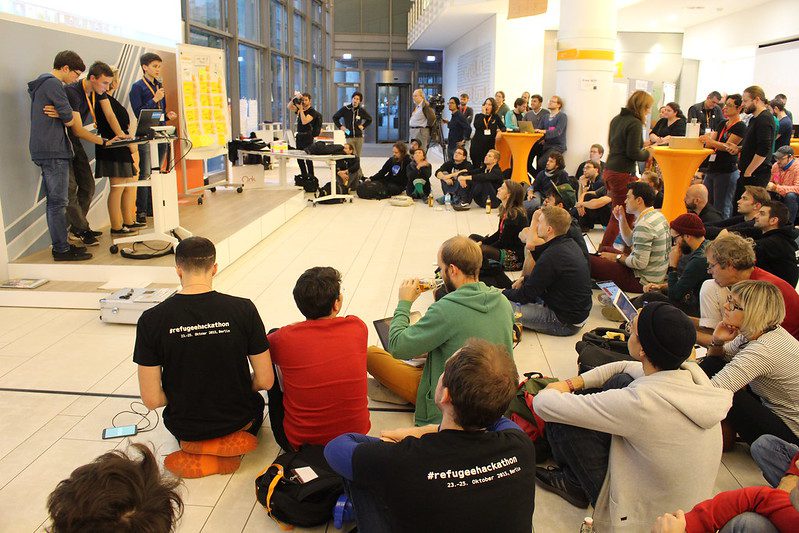
 When hundreds of thousands of refugees arrived in Germany in 2015/16, including many unaccompanied minors, SPIEGEL foreign correspondent Susanne Koelbl wondered about the stories of these young people. Having reported from countries such as Afghanistan, Iran, Syria and Saudi Arabia for many years, she has experienced poetry’s power as a common form of storytelling.
Inspired by its beauty, Koelbl teamed up with Afghan-born lawyer and translator Aarash D. Spanta and a United Nations (U.N). adviser Andreas Jödecke to create a space for poetry in Berlin, hoping that they may be able to encourage young Farsi-speaking refugees to find their voices and tell their stories. The effort was an undeniable success.
The young men who attended (primarily young men were sent on the journey to Europe unattended) wrote of their trip in poems which were published later that year in an anthology that resulted in several writers performing their writing at Berlin’s 16th International Literary Festival (ilb). The Poetry Project met with The Borgen Project to give further insight into its work, mission and future plans.
How and Why Poetry Works
When organizing opportunities for the young refugees to write poetry, “we’re really thinking, how can we build connections?” Theresa Rüger told The Borgen Project. Rüger herself is a literature scholar who stumbled upon The Poetry Project at the ilb. Seeing the poems displayed in the Haus der Berliner Festspiele, she was inspired and applied to be a part of it. She explains that the workshops allow young people to tell their stories, meet others and build connections.
The inspiration to use poetry as a medium came from Koelbl’s encounters with poetry in countries such as Afghanistan. Rüger describes Koelbl’s joy as everyone from cab drivers to dinner hosts took the opportunity to share their own poetry, recite traditional poetry and use poetry to convey emotion where regular conversation failed. Searching for a medium to express the young refugees’ experiences, Koelbl decided poetry could be the answer she sought. In many countries, Rüger explains, poetry is close to the present, allowing it to weave in and out of everyday conversation. Perhaps due to this poetic connection, the young people working with The Poetry Project found that their emotions and stories flowed easily into this medium.
There’s another reason, however, that poetry fits so well to express the complex emotions and experiences at play here. “Sometimes the young people are afraid that their audience won’t be able to deal with [their stories],” Rüger explains, “or that they’re going to ask questions that they don’t want to answer.” Poetry introduces a degree of separation between reader and writer, allowing the refugees to get their story out there while retaining a comfortable distance from their audience.
Expansion
Today, The Poetry Project has expanded to include workshops in four languages: Farsi, Arabic, Ukrainian and Kurdish. Work is also translated into English and German. Workshops are held in the same room in the Project’s main office in Berlin, Rüger informs me and take place every weekend, with an additional drop-in session on Wednesday afternoons. This session, Theresa explains, can be used as a time to “just drop by if they want to write or just to talk to us.” In short, it is another opportunity for social connections to be forged and for trust to be built. Like the weekend workshops, attendance at the Wednesday sessions isn’t mandated. Instead, young people are free to invest as much time as makes them feel comfortable.
Spreading the Word
The young people involved in The Poetry Project don’t limit their words to the page. More than 10 readings are organized annually and young poets are frequently invited to speak at literary institutions in readings that impress the audience deeply. The performances “differ from your regular reading where you have a professional author. It feels more immediate.” Emotions run high in audiences facing “very young people” speaking of such harsh experiences and “often people cry.”
The readings’ most impactful are those delivered to the young poets’ peers: school children whose lives match the refugees’ perfectly in years but differ vastly in lived experience. Rüger tells of school assembly halls echoing with the jokes of 150 teenagers, raucous and reluctant to sit quietly for their teachers. But when the young poets come out on stage and begin to read, she says, “You could hear a pin drop.”
The awe and enthusiasm were verified by the school-age audience at the International Literary Festival Berlin, where students lined up to spend their “pocket money” on The Poetry Project’s first anthology after sitting spellbound through the reading. They even requested that the readers sign their individual copies.
Looking Forward
Looking ahead to 2024 and beyond, Rüger describes how The Poetry Project has many projects, readings and events that will continue to spread its message and be a platform for young refugee voices. The Project has scheduled a collaborative performance with a dance group, the publication of a new anthology and a partnership with PEN Berlin – a writer’s association that specializes in supporting persecuted authors to come to Germany and establish themselves in the German publishing scene.
PEN Berlin also organizes additional workshops “held by professional authors who share a mother tongue with the participants.” In addition, The Poetry Project has planned participation in the event series “75 Jahre Grundgesetz – intersektional” from the Bundeszentrale für politische Bildung. Through the event series, The Poetry Project will join the discussion of Germany’s Basic Law from a “diversity-oriented, intersectional perspective,” adding its poetry to the debate on how the law relates to “marginalized and discrimination-affected groups.”
The Poetry Project has established itself as a center that works tirelessly to build connection, understanding and empathy. It provides opportunities for young refugees to foster a sense of belonging and to get their stories heard – all while helping those who grew up in Germany gain a more robust understanding of what refugees have experienced. Its methodology is simple – pass the mic to those who’ve been through it.
– Peggy Hughes
Photo: Flickr

How Japan is Helping to Alleviate Poverty in the East
Japan Fund for Poverty Reduction
The Japan Fund for Poverty Reduction (JFPR), founded in 2000, provides grants to the poorest nations and most vulnerable groups, particularly the Asia-Pacific region. Such countries include India, Nepal, the Philippines and Malaysia. It aims to foster sustainable socioeconomic development. The grants target poverty reduction initiatives with the direct participation of nongovernment organizations, community groups and civil society. Eastern countries received $612.4 million from Japan as of 2013.
Nepal
From 2001 to 2011, JFPR helped Nepal with 10 projects and more than $17 million worth of aid. These projects include agriculture, governance and social sectors. At the moment, JFPR is supporting Nepal’s efforts to reduce anemia and other vitamin and mineral deficiency-related conditions. In addition, it assists the Nepal Police in inventing a new and improved system for the treatment of victims of crime against women and children in five districts.
Marginalized groups in Nepal such as Dalit, Majhi, Kumal and Bhote, have been helped by raising awareness about their social rights, organizing campaigns for social awareness and other workshops. Japan aims to integrate them fully into Nepalese society. There are also efforts to increase the number of Nepalese with legal identity documents, especially among the poor and vulnerable groups.
The ODA programs
Japan is also a major donor to countries in East Asia and other regions. In 2021, $10.7 billion was allocated to Asia. Through its ODA programs, areas such as health care, education, infrastructure development and agriculture are aided. Notable improvement has been seen in East Asia and Southeast Asia. In 1990, approximately 21% of people were living in poverty in Southeast Asia, as opposed to 6.8% in 2004.
ODA –India
India has been one of the biggest receivers of Japan’s ODA loan over the last few decades. The Delhi Metro presents itself as a success story as a result of Japan’s contributions. The country introduced its Shinkansen System to India to build high-speed railways, the staple project of the Japan-India partnership. In 2022, India received 567.5 billion yen in loans from Japan and 4.7 billion yen in grants. Japan continues its support through the “Act East” policy and “Partnership for Quality Infrastructure” which help to support strategic connectivity.
Looking Ahead
Japan’s commitment to alleviating poverty in neighboring Eastern countries is making a significant impact, providing vulnerable communities with the tools needed for sustainable development. Through targeted grants and development projects, Japan is fostering economic growth, enhancing social welfare and improving the living standards of millions. The success stories emerging from these efforts highlight the powerful role of international collaboration in tackling global poverty. Looking ahead, Japan’s innovative programs promise to continue supporting the fight against poverty, driving progress and prosperity in the East.
– Sepy Akbarian
Photo: Unsplash
How ShelterBox is Aiding Nigeria
However, since 2018 ShelterBox has been aiding Nigeria by saving and protecting the lives of thousands affected by Boko Haram, as well as providing general support as a result of climate-driven scarcity worsened by conflict in the Lake Chad Basin.
Improving Food and Water Insecurity
According to the UN Office for the Coordination of Humanitarian Affairs (OCHA), Nigeria faces a humanitarian emergency. More than 8.3 million Nigerians require emergency assistance, 80% of whom are women and children. Around 314,000 Nigerians have died from food insecurity due to the decline of agricultural production, which is a major catalyst affecting public health in Nigeria and has been worsened by conflict in the Lake Chad Basin, flooding and extreme weather. This has resulted in the displacement of 3.2 million and leaves 10.6 million Nigerians in need of humanitarian assistance as the majority of the Lake Chad population depends on agriculture, livestock, fishing and manual labor for survival, according to Refugee International.
ShelterBox and their partner ACTED are aiding Nigeria by providing lifesaving items such as kitchen sets, water containers and purification equipment to reduce food and water insecurity, enabling Nigerians to rebuild their lives, according to its website. Because of the effects of flooding, extreme weather and military-enforced movements, Nigerians are prevented from effectively growing and harvesting crops to support their livelihood. However, by providing kitchen sets, water containers and purification equipment, food and water insecurity is decreasing as ShelterBox and ACTED have successfully helped over 7,300 families from 2018 to 2022, according to its website. Additionally, water purification equipment has enabled Nigerians to access safe and clean water, significantly reducing the chances of disease from dirty water.
Providing Shelter and Security
With no choice but to flee their homes in search of safety away from conflict and food insecurity, more than 2 million Nigerians remain displaced from homes in the northeast of Nigeria, as of 2019. Thousands have no choice but to live in overcrowded displacement sites which are significantly below international minimum standards. Although some Nigerians choose to build improvised shelters with sticks and ripped fabric, it does not provide efficient shelter from extreme weather and provides no privacy or security, making women and children in particular even more susceptible to intrusions and attacks.
There are 9.7 million people in urgent need of humanitarian assistance in the Lake Chad region, according to ShelterBox. In partnership with other charities, ShelterBox has been aiding Nigeria by providing tents, shelter kits, rope, tarpaulins, mosquito nets, solar lights, blankets and other lifesaving necessities to increase the security and health of Nigerians amid the humanitarian crisis.
From 2018 to 2022 in partnership with IEDA, ShelterBox has been successfully aiding more than 100,000 refugees and displaced Nigerians. Additionally, ShelterBox has provided a type of shelter known as the Bama shelter to more than 30,000 Nigerians in the epicenter of the crisis in partnership with ACTED.
The Bama shelter is large enough for a family of five; it has a timber-framed structure with tarpaulin material for the wall and the roofing structure, ShelterBox reports. Windows provide natural sunlight and ventilation and for extra safety, the shelter has a secure lockable door to prevent intrusions and attacks. ShelterBox also provides sleeping mats, blankets and mosquito nets, allowing Nigerians to start again with a safe and comfortable lifestyle.
Aiding Nigeria Through the Crisis
After many years of instability, ShelterBox and other charities have worked tirelessly to aid Nigerians through the humanitarian crisis which remains an ongoing issue after ten years since the conflict began. Overall, Boko Haram seems to be at its final stages of conflict, however, aiding Nigeria remains vital. Other factors such as extreme weather patterns and flooding have resulted in food and water instability amongst Nigerian communities which continues to worsen as years go by.
– Emily Whatley
Photo: Flickr
5 Charities Operating in Costa Rica
SOS Children’s Villages
Children are an at-risk group in Costa Rica. In 2020, UNICEF found that “nearly 32% of all children and adolescents live in monetary poverty, of which 12% live in extreme poverty.”
SOS Children’s Village is helping some of the most vulnerable kids in society right now who struggle with poverty, child labor and violence and has been doing it since 1972. Currently, 190 kids attend the organization’s schools and kindergartens and 300 live in its care. The organization also created the YouthLinks program. This digital platform “connects young people with mentors in the country.” The mentors teach employable skills and job market advice to young people.
Cruz Roja
Cruz Roja operates in Costa Rica and is a part of the international Red Cross community. The organization has more than 5,000 volunteers throughout the country and has responded to an incident every minute in 2023.
The organization provides key medical services to Costa Ricans and has a fleet of around 600 ambulances operating in 122 communities around the country. Cruz Roja is also ready to provide humanitarian assistance in cases of natural disasters and has specialized units prepared to provide support in different environments and situations.
Hope Partners International
Hope Partners is a Christian organization that operates in Costa Rica. Its goal is to break the cycle of poverty and improve the lives of young people there.
Recently, the organization opened its first purpose-built facility in the Pavas neighborhoods in the capital San Jose. Pavas is one of the most deprived areas in San Jose where only 20% of residents have a high school diploma. The new facility will impact the lives of over 600 kids and it will provide a hub for Hope Partners to deliver their food and education programs.
Rahab Foundation
The U.S. Department of State recognizes Costa Rica as a Tier 2 country regarding its efforts to eliminate human trafficking, stating that the country “does not fully meet the minimum standards for the elimination of trafficking but is making significant efforts to do so.”
Founded in 1997, the Rahab Foundation helps victims of human trafficking and the sex trade. It provides many different forms of help for the victims including job training, legal advice and psychological care. The foundation provides care and various classes to victims and their children. Women are also offered “offered vocational training in micro-enterprise administration, baking, sewing, jewelry making, quilting and cosmetology.”
Sex trade victims and their families often find themselves in the cycle of poverty. The Rahab Foundation helps these victims recover and create a healthy lifestyle for themselves and their children.
Hogar Siembra
As of 2023, Costa Rica registered more than “30,000 domestic violence complaints over the past four years, with an alarming 10,000 cases reported in 2023 alone.” Founded in 1983, Hogar Siembra is an organization providing shelter to girls aged 12 to 18 who have suffered from abuse or domestic violence.
The organization provides various kinds of training to these girls, teaching them simple habits such as hygiene and providing English language courses. It also provides regular therapy and mental health check-ups, alongside work opportunities and academic education, ensuring to prepare young girls for their adulthood.
Hogar Siembra allows young women to not be defined by their abuse. It is helping these victims restart their lives and create a prosperous future for themselves.
Costa Rica is struggling with poverty and its effects. The work of these five charities operating in Costa Rica is helping at-risk groups create a poverty-free future for themselves.
– Richard Sartor
Photo: Flickr
Guardians of Everest: Poverty Amongst Sherpas
A Legacy of Mountaineering Excellence
For generations, Sherpas have served as the unsung heroes of Himalayan expeditions, guiding climbers through treacherous terrain and shouldering the burdens of the ascent. Renowned for their unparalleled strength, resilience and intimate knowledge of the mountains, Sherpas play an indispensable role in facilitating the conquest of some of the world’s highest peaks.
Moreover, Mount Everest, known as Sagarmatha in Nepal, has become a bucket-list expedition for some and often requires a Sherpa guide to navigate the tough terrain. As a result, the central Sherpa community has undergone a lasting alteration of its cultural practices and means of sustenance. According to The Kathmandu Post, tourism employs 11.5% of the Nepals workforce— about 370,000 people. The majority of Sherpas work within this industry.
Disparity in Compensation
Despite their indispensable contributions, Sherpas often find themselves at the short end of the economic stick. While expedition leaders and adventure companies reap substantial financial rewards from high-priced mountaineering expeditions, Sherpas receive meager wages for their laborious work. This vast disparity in compensation underscores the exploitative dynamics within the adventure industry, where Sherpa labor is undervalued and under-compensated. According to National Geographic, a guided hike to Everest can cost anywhere between $30,000 and $120,000.
We Are Reckless reported that on average, Sherpa guides only make around $4000 for the whole climbing season. Furthermore, it noted that guides with Western backgrounds make around $50,000 comparatively. In fact, the wage gap between Western guides and Sherpa guides emphasizes the lack of regard for Sherpa’s lives that the tourism industry has and brings to light the reality of poverty among Sherpas.
Occupational Hazards and Lack of Protection
Mountaineering expeditions, fraught with altitude sickness, avalanches and extreme weather, pose inherent risks. Sherpas, pivotal to these ventures, often face these dangers without adequate protection, insurance, or compensation for injuries or fatalities. Their safety and well-being frequently take a backseat in the quest for summit achievements. Unfortunately, a tragic event occurred in 2014 when at least 13 Sherpa guides perished in an avalanche on Everest, trapped in a ‘human traffic jam’ while carrying equipment for clients. Nonetheless, Sherpas routinely navigate these hazardous zones to facilitate climbers, and this highlights the perilous conditions they endure to support expeditions.
Environmental Degradation and Cultural Erosion
The commodification of Everest and other Himalayan peaks has led to environmental degradation and the erosion of traditional Sherpa culture. Commercial mountaineering has transformed once-pristine landscapes into overcrowded tourist hubs, straining fragile ecosystems and diminishing the spiritual significance of sacred mountains. Depali Rai, writing for Protocol Mag, describes the gentrification of Everest’s base camp, claiming the “once remote misty villages some 3440 meters above sea level now host Irish pubs, import Korean Ramyun and serve Nepalese and Western fare in equal measure.”
Sherpas, deeply reverent of the natural world and profoundly connected to their ancestral homeland, are grappling with the loss of traditional livelihoods and cultural identity amid unchecked commercialization.
Looking Forward
As awareness of poverty amongst Sherpas grows, there is an increasing call for equitable treatment, fair wages and safer working conditions in the mountaineering industry. Moreso, concerted efforts to address these issues can lead to a more sustainable and respectful approach to Himalayan expeditions, ensuring the Sherpas are honored not just for their skill but also for their indispensable contribution to the adventure tourism economy.
– Lauren McKenna
Photo: Flickr
Digital Innovation Empowering Rural Entrepreneurs
The Power of Direct Cash Transfer
As technological advancements gain popularity in urban settings, rural communities are not left behind, due to aid from organizations like GiveDirectly. This organization equips people in rural areas with phones, enabling contributors to send funds directly to those in greatest need. GiveWell and GiveDirectly have demonstrated the success and sustainability of grants over loans in reducing poverty, through tracking and analyzing cash transfers. These grants, with few or no strings attached, have not only shown a proven track record of success but also represent the most ethical giving method, granting recipients complete control over their paths out of poverty.
Microloans vs. Unconditional Wealth Transfer
Assuming impoverished people cannot manage their finances overlooks the structural and systemic nature of poverty. This perspective has fueled the popularity of microloans as a poverty reduction strategy. When donating to an organization, contributions often cover staff salaries, outreach costs and more, stretching funds to support not only the target populations but also the organization’s sustainability. Meanwhile, loans risk entrenching people in a cycle of poverty, with the burden of repayment potentially falling on their children if the parents fail to pay off the debt.
For this reason, GiveWell has invested in the analysis of GiveDirectly, a study that compares microloans to unconditional cash transfers. According to GiveWell, “It requires far more overhead to run a microlending operation than to run a cash transfer operation.” Additionally, many microloan agencies operate as for-profit businesses rather than humanitarian nonprofits like GiveDirectly. This distinction often means there’s less incentive for them to avoid indebting the people they aim to assist
The Case for Direct Cash Transfers
Organizations have rigorously studied cash transfers, finding strong evidence they reduce monetary poverty. A 2016 report from the Department for International Development highlights cash transfers as among the most thoroughly researched development interventions. However, only 2% of major government funding goes toward direct cash transfers.
Global Market Access for Rural Artisans
Technological innovation, particularly online marketplaces, is advancing global development by opening access to the global market. People in low-income, rural areas often create sought-after artisanal products, but traditionally they could sell them only to tourists at local prices. For-profit and nonprofit companies are emerging to offer entrepreneurs technology access and digital business strategies. These initiatives empower rural women’s groups to develop websites or use existing platforms to sell their products at fair prices, reflecting the hours of labor invested in their creation. Digital platforms connect rural producers directly with consumers and markets, eliminating intermediaries and ensuring fair prices for their products. The ongoing trends show that collaborating through websites fosters community-led development.
The Future of Technology in Development
Digital innovation and solutions, such as direct cash transfers and global market access, are reshaping the landscape of poverty alleviation, empowering rural entrepreneurs to take charge of their economic futures. These advancements promise a sustainable pathway out of poverty, leveraging technology to bridge gaps and foster inclusive growth.
– Kiera Gorman
Photo: Flickr
Looking Back: 5 Influential Global Poverty Reduction Acts
5 Influential Global Poverty Reduction Acts
Fighting Global Poverty
The U.S. continues to lead global poverty reduction acts through impactful legislation. Crucial issues from food security to education and conflict resolution are being addressed. In addition, these acts represent a multifaceted approach to eradicating poverty. They showcase the U.S.’s dedication to fostering sustainable development and stability worldwide. As these programs move forward, their ongoing success and expansion offer hope for a future where global poverty is significantly diminished. They underscore the importance of continued support and innovation in tackling these challenges.
– Marley Wilson
Photo: Flickr
Gaming in Africa: Human Development Benchmark
Kolko and Putnam argue that gaming fosters the spread of computer technologies in areas and among groups that might otherwise lack access. They claim that “games constitute a significant portion of the ICT (information and communication technologies) ecology in developing regions and provide a pathway to people’s ‘first touch’ of a computer.” Understanding and utilizing technology in developing countries opens up local and international employment opportunities while educating communities. These opportunities are crucial for transitioning developing nations into developed ones capable of competing on the global stage.
Proliferation of Gaming in Developing Regions
Unfortunately, the 2009 proposal was denied and the matter has not been revisited by the U.N., but the scientific and social studies that have been done since have reinforced the concept of games as a benchmark of human development. The idea of gaming as an important step in the artistic and social development of a nation has not only been adopted by academics but also by nations all over the developing world.
Elevating Gaming in Africa
The Pan African Gaming Group (PAGG), an international collective of video game developers across Africa, aims to enhance the status of gamers and developers on the continent. In developing nations, gamers often find game consoles and high-end computers hard to access, prompting a shift to more affordable technology. Mobile gaming has engaged more than 186 million people throughout Africa, a demographic PAGG serves by collaborating with studios across the continent to create games that reflect African life.
Gaming’s Economic Potential
In a statement on its website, PAGG states “We believe that if games are culturally relevant to the local communities that we serve… create positive impacts in the lives of Africans and their community.” The group aims to foster a gaming community in Africa with the potential to become a significant force in the international market, a goal that appears to be bearing fruit.
Gam3s predicts that gaming in Africa will be a billion-dollar industry by the end of 2024. Key factors include wider internet access and more affordable cell phones, but Africa’s adaptation to modern gaming markets involves more complex strategies.
African Developers
Companies like Microsoft, Apple and EA rely heavily on credit card transactions for game purchases and subscriptions. However, with Africa’s credit card usage at only 2.7%, accessing games from major companies poses a challenge. Despite this, gaming in Africa continues to grow, due to innovative solutions tailored for the local market. These solutions include OPay, a digital bank based out of Nigeria and the sale of game vouchers in local stores and supermarkets, making gaming more accessible to a broader audience.
Innovations have paved the way for African developers like Leit Arts, Kayfo Games and Digital Mania to gain recognition. With strong local support and growing interest from international gamers, these companies could transform Africa into a key player in online creation, gaming and community building in the digital world.
– Charles McFadden
Photo: Unsplash
How the Poetry Project Is Platforming Young Refugees in Berlin
Inspired by its beauty, Koelbl teamed up with Afghan-born lawyer and translator Aarash D. Spanta and a United Nations (U.N). adviser Andreas Jödecke to create a space for poetry in Berlin, hoping that they may be able to encourage young Farsi-speaking refugees to find their voices and tell their stories. The effort was an undeniable success.
The young men who attended (primarily young men were sent on the journey to Europe unattended) wrote of their trip in poems which were published later that year in an anthology that resulted in several writers performing their writing at Berlin’s 16th International Literary Festival (ilb). The Poetry Project met with The Borgen Project to give further insight into its work, mission and future plans.
How and Why Poetry Works
When organizing opportunities for the young refugees to write poetry, “we’re really thinking, how can we build connections?” Theresa Rüger told The Borgen Project. Rüger herself is a literature scholar who stumbled upon The Poetry Project at the ilb. Seeing the poems displayed in the Haus der Berliner Festspiele, she was inspired and applied to be a part of it. She explains that the workshops allow young people to tell their stories, meet others and build connections.
The inspiration to use poetry as a medium came from Koelbl’s encounters with poetry in countries such as Afghanistan. Rüger describes Koelbl’s joy as everyone from cab drivers to dinner hosts took the opportunity to share their own poetry, recite traditional poetry and use poetry to convey emotion where regular conversation failed. Searching for a medium to express the young refugees’ experiences, Koelbl decided poetry could be the answer she sought. In many countries, Rüger explains, poetry is close to the present, allowing it to weave in and out of everyday conversation. Perhaps due to this poetic connection, the young people working with The Poetry Project found that their emotions and stories flowed easily into this medium.
There’s another reason, however, that poetry fits so well to express the complex emotions and experiences at play here. “Sometimes the young people are afraid that their audience won’t be able to deal with [their stories],” Rüger explains, “or that they’re going to ask questions that they don’t want to answer.” Poetry introduces a degree of separation between reader and writer, allowing the refugees to get their story out there while retaining a comfortable distance from their audience.
Expansion
Today, The Poetry Project has expanded to include workshops in four languages: Farsi, Arabic, Ukrainian and Kurdish. Work is also translated into English and German. Workshops are held in the same room in the Project’s main office in Berlin, Rüger informs me and take place every weekend, with an additional drop-in session on Wednesday afternoons. This session, Theresa explains, can be used as a time to “just drop by if they want to write or just to talk to us.” In short, it is another opportunity for social connections to be forged and for trust to be built. Like the weekend workshops, attendance at the Wednesday sessions isn’t mandated. Instead, young people are free to invest as much time as makes them feel comfortable.
Spreading the Word
The young people involved in The Poetry Project don’t limit their words to the page. More than 10 readings are organized annually and young poets are frequently invited to speak at literary institutions in readings that impress the audience deeply. The performances “differ from your regular reading where you have a professional author. It feels more immediate.” Emotions run high in audiences facing “very young people” speaking of such harsh experiences and “often people cry.”
The readings’ most impactful are those delivered to the young poets’ peers: school children whose lives match the refugees’ perfectly in years but differ vastly in lived experience. Rüger tells of school assembly halls echoing with the jokes of 150 teenagers, raucous and reluctant to sit quietly for their teachers. But when the young poets come out on stage and begin to read, she says, “You could hear a pin drop.”
The awe and enthusiasm were verified by the school-age audience at the International Literary Festival Berlin, where students lined up to spend their “pocket money” on The Poetry Project’s first anthology after sitting spellbound through the reading. They even requested that the readers sign their individual copies.
Looking Forward
Looking ahead to 2024 and beyond, Rüger describes how The Poetry Project has many projects, readings and events that will continue to spread its message and be a platform for young refugee voices. The Project has scheduled a collaborative performance with a dance group, the publication of a new anthology and a partnership with PEN Berlin – a writer’s association that specializes in supporting persecuted authors to come to Germany and establish themselves in the German publishing scene.
PEN Berlin also organizes additional workshops “held by professional authors who share a mother tongue with the participants.” In addition, The Poetry Project has planned participation in the event series “75 Jahre Grundgesetz – intersektional” from the Bundeszentrale für politische Bildung. Through the event series, The Poetry Project will join the discussion of Germany’s Basic Law from a “diversity-oriented, intersectional perspective,” adding its poetry to the debate on how the law relates to “marginalized and discrimination-affected groups.”
The Poetry Project has established itself as a center that works tirelessly to build connection, understanding and empathy. It provides opportunities for young refugees to foster a sense of belonging and to get their stories heard – all while helping those who grew up in Germany gain a more robust understanding of what refugees have experienced. Its methodology is simple – pass the mic to those who’ve been through it.
– Peggy Hughes
Photo: Flickr
Zambia’s Cholera Outbreak: The Battle for Public Health
Cholera is a waterborne illness caused by the bacterium Vibrio cholerae, which produces a toxin in the small intestine, leading to loss of fluids and electrolytes. The bacterium manifests itself in contaminated water, which in turn affects underdeveloped countries lacking resources for proper water supplies and sewage disposal.
Densely populated areas such as Lusaka, with limited or no access to clean water and sanitation, are facing the worst consequences, with a devastating 4,443 cumulative cholera cases since October 2023.
Government Initiatives
In response to Zambia’s cholera outbreak, the Zambian government has taken decisive action through robust initiatives, including the Multi-sectoral Cholera Elimination Plan (MCEP) 2019-2025, with the aim to eliminate cholera by 2025. The MCEP has set six targets, including, but not limited to, improved surveillance of cases, reduction of the overall mortality rate of cholera by 90%, accelerated access to safe drinking water and conduction of oral cholera vaccination campaigns.
According to the World Health Organization and the United Nations Children’s Fund (UNICEF) Joint Monitoring Programme for Water Supply and Sanitation, 39% of Zambia’s population does not have access to basic drinking water services. In comparison, 69% do not have access to basic sanitation services. The MCEP has estimated that in order to reach its targets, Zambia will need to provide basic water supply to 660,000, basic sanitation to 1.16 million and basic hygiene services to 1.46 million people yearly. In order to do so, the MCEP has set a budget for $99,345,493 over seven years, with $67,877,076 dedicated directly to water supply, sanitation and hygiene.
NGOs and International Aid Efforts
In addition to government initiatives, nongovernmental organizations (NGOs) and international aid agencies have played a crucial role in addressing Zambia’s cholera outbreak. For example, Oxfam and the Keepers Zambia Foundation (KZF) are working together to train volunteers to be health promoters. Volunteers help people who fall ill with cholera get oral rehydration therapy, refer patients to the hospital and encourage people to practice good hygiene. Furthermore, Oxfam is working with KZF to provide oral rehydration salts and chlorine to treat unsafe water, as well as providing equipment such as soap and clean buckets to prevent the further spread of cholera.
Another example of international aid efforts comes from WaterAid. The organization calls on global governments and stakeholders to invest funds in sustainable water resources, sanitation and hygiene services to support Zambia both immediately and in the future. Moreover, WaterAid Zambia is working with local Zambian communities to fight against waterborne diseases such as cholera. This includes education on basic hygiene practices and promotion of community-led sanitation initiatives. These are sustainable, long-term changes that address the root causes of the cholera outbreak in order to prevent any possible future outbreaks.
Innovations in Cholera Prevention
There are currently three WHO pre-qualified oral cholera vaccines: Dukoral, Shanchol and Euvichol. All of these vaccines require two doses for full protection. Dukoral requires a buffer solution of 150ml of clean water and protects for two years. Shanchol and Euvichol, however, do not require a buffer solution and protect from cholera for three years.
The latter two are currently available for mass vaccination campaigns in areas with an outbreak through the Global Oral Cholera Vaccine (OCV) stockpile, supported by Gavi, the Vaccine Alliance. Currently, a mix of live, killed and conjugated vaccines are in development with the hopes of long-term protection and easy administration.
Conclusion
Zambia’s cholera outbreak has underscored the critical need for comprehensive public health interventions to address waterborne diseases effectively. While significant progress has been and continues to be made through government initiatives, NGO efforts and international aid efforts, challenges such as limited supplies and heightened demand persist. However, with sustained commitment, investment and community engagement, Zambia can work towards a future where the impact of cholera outbreaks is minimized and public health resilience is strengthened.
– Emily Weir
Photo: Flickr
Maternal Health in Bangladesh
Causes of Maternal Mortality in Bangladesh
Maternal mortality ranks as the third leading cause of death for women aged 15 to 49 in Bangladesh, where most of these deaths are preventable through high-quality prenatal care and skilled attendance during labor and delivery. Poor health care facilities and limited access to them indirectly contribute to maternal mortality in the country. The two primary direct causes are obstetric hemorrhage, accounting for nearly one-third of maternal deaths and eclampsia, responsible for 23% of maternal deaths.
The State of Maternal Health Care in Bangladesh
Home births dominate in Bangladesh, with 71% occurring at home, yet only 4% receive attention from trained birth attendants. The country’s health worker coverage is at a mere 17% of the global threshold, highlighting a critical shortage of skilled birth attendants, especially in rural areas. For instance, in Cox’s Bazar, a rural area with one of Bangladesh’s highest maternal mortality rates, 90% of women give birth at home without trained attendants or emergency care access due to the region’s health care facility scarcity.
Further analysis of maternal health in Bangladesh reveals that 38% of maternal deaths occur on the day of delivery and 6% occur one day after. Additionally, 19% of these deaths happen at home, another 19% occur while en route to health care facilities, 49% occur in public health care facilities and 13% in private ones. Notably, about 80% of women who give birth in public facilities also die in these settings, underscoring the challenges within Bangladesh’s public health care system.
Efforts of CARE International and Other NGOs
CARE International, an NGO, has launched various programs to enhance maternal health in Bangladesh, including the Joint Action for Nutrition Outcome (JANO). This program educates mothers and pregnant women about health issues, nutrition and precautions during and after pregnancy, reshaping their understanding of the importance of accessing professional health care services.
In addition, the SHOUHARDO III program, another initiative by CARE, has made significant strides in enhancing maternal health in Bangladesh. In 2021, it trained female private community skilled birth attendants to assist pregnant and lactating women in the remote Char and Haor areas of northern Bangladesh. These trained professionals offer safe delivery services, antenatal and postnatal checkups, counseling, and referrals.
Other international organizations are also playing a key role in enhancing maternal health in Bangladesh. Among them, the United Nations Population Fund (UNFPA), through its ‘Solving Referral Challenges for Urban Poor to Access Emergency Obstetric and Newborn Care’ project, collaborates with 40 maternity centers in Dhaka. The initiative leverages the ‘Ma Jaan’ app, connecting pregnant women in emergencies to the nearest participating hospital. This effort not only aims to bolster maternal health in Bangladesh but also leverages technology to propel the health care sector forward.
Looking Ahead
Efforts by CARE International and other NGOs are paving the way for improved maternal health in Bangladesh, showcasing the potential for significant advancements through education, training and technology. With continued focus and support, these initiatives promise a brighter future for Bangladeshi mothers, reducing preventable maternal deaths and ensuring safer childbirth experiences across the country.
– Olusegun Odejobi
Photo: Flickr