Top 10 Facts About Girls Education in Croatia
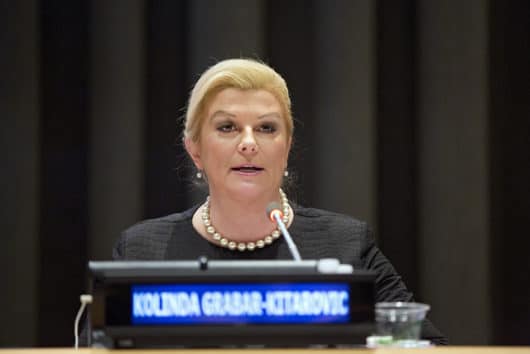
Croatia is a small country located in the Balkan region of Europe. It was formerly part of Yugoslavia and still adopts many of the conservative views of the former communist regime. The conservative viewpoints of the country place social restrictions on women, but they are encouraged to participate in the workforce and contribute to the economy. Croatian legislation provides incredibly specialized opportunities for both girls and boys as they move from their basic education to their career paths, but girls education is still highly influenced by traditional gender roles. In the article below, top 10 facts about girls education in Croatia are presented.
Top 10 Facts About Girls Education in Croatia
- The female literacy rate is lower than those of men. In general, the adult population in Croatia has a very high literacy rate of 97 percent. The men literacy rate is at 99.7 percent while the literacy rate for women is at 98.9 percent.
- Primary education is compulsory. Girls and boys are required to attend eight years of elementary education and then can choose to move to a secondary school and later in college. Schools teach orally in Croatian, but all written work is done in Latin. Students learn a minimum of two languages in their elementary education system. Secondary schools are optional and focus on specific areas of education and trade. Students may choose vocational, art, or specialized high school programs. Almost 67 percent of students in secondary school attend a vocational school. Female students have a gross enrollment ratio (GER) of over 100 in secondary education compared to male students with a GER of 95.6. More female students are also enrolled in tertiary education programs.
- Roma girls face difficulties completing primary education and Roma culture is highly discriminated in Croatia. They have Indian origins and generally live in the Northeastern provinces of the country. Few Roma children speak Croatian fluently and these children usually end up struggling in primary schools. Less than 50 percent of these children finish primary school and move onto secondary school.
- Most of the Croatian citizens are Roman Catholic and sexually conservative. The sex education policies of the country focus on the Family Planning method and teach abstinence-only programs. Homosexuality and gender disparity are portrayed in a negative and often “sinful” light. Girls are encouraged to follow a traditional role in their relationships and learn little knowledge about birth control methods and Sexually Transmitted Infections (STI) prevention.
- Sex and gender discrimination is normal. Girls do not learn about all of their possibilities due to the social conservative approach of education in Croatia. The role they are taught to follow tends to lead them away from science, technology, engineering and mathematics (STEM) career paths and influences their secondary school choices. In addition, homosexuality and transgenderism are perceived as being abnormal.
- Girls are encouraged to focus on the arts and educational career paths. This practice affects the number of women enrolled in STEM classes. Men only make up 8.1 percent of those enrolled in education courses at universities and women are underrepresented in computer science, engineering, and architecture courses.
- Schools promote gender equality in theory. The Istanbul Convention was adopted in Croatia in May 2018. It addressed many civic and gender rights issues. The Croatian government implemented national legislation to create an institution of Gender Sensitive Education. The National Policy for Gender Equality focused on the elimination of gender stereotypes, teacher education on gender equality, and less influence of gender on occupational paths. However conservative gender roles are still imposed in spite of this legislation.
- Secondary schools have had more success adhering to the progressive gender legislation. The terminology of various occupational choices are being equalized and textbooks are being distributed with efforts to maintain gender neutrality. The Croatian Employment Service provides occupational guidance for students after primary schools regardless of gender through educational brochures and the computer program “My Choice”.
- Enrollment rates of women are currently growing in secondary and tertiary education programs. The proportion of women who complete their university or vocational studies is considerably higher than men at 59.5 percent. Around 55 percent of women attending tertiary schools receive a doctoral degree. At least 58.2 percent of university attendants also received a master’s degree.
- Most teachers in primary and secondary schools are women. The number of men with careers in education increases as the education level increases. However, even in higher-level universities and vocational schools, the gap between the percentage of female to male teachers is still 12.7 percent. Women dominate the education system, except in administrative and management capacities. Only 20.9 percent of deans in the 52 higher education system are women.
Girls are able to receive an incredibly comprehensive academic education through the Croatian public school system. With the adoption of the Istanbul Convention girls’ rights throughout the country should increase, including their rights in the school systems. The country has attempted to make strides in gender equality but still focuses on conservative viewpoints of sexuality. As the social structure of Croatia becomes more progressive, so will the dynamic of women in the academic sector.
– Emily Triolet
Photo: Flickr
