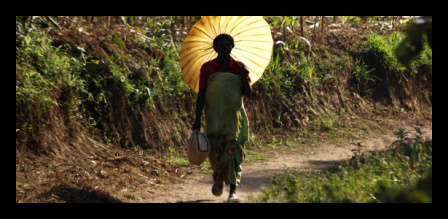
 Just in the last ten years in Rwanda, deaths from HIV, TB, and malaria have dropped by 80 percent, annual child deaths have fallen by 63 percent, maternal mortality has dropped by 60 percent, and life expectancy has doubled. All at an average annual healthcare cost of $55 per person.
Normally, after horrific national traumas, like Rwanda’s genocide of almost a million people in 1994, countries fall into a cycle of poverty and economic stagnation. Poor health and disease cripple workers and then the national economy, leaving the country ineffective to break out of depression.
A recent article in BMJ, led by Dr. Paul Farmer, Chair of the Department of Global Health and Social Medicine at Harvard Medical School, examined data from the World Health Organization (WHO) and attempted to identify why Rwanda was able to make such dramatic progress when so many other nations have failed before them.
They identified 5 critical factors In Rwanda’s healthcare success:
1. The government formed a centralized plan for economic development, with one of the pillars being health care; knowing that, without improving health, poverty would persist. There were heavy research and reliance on facts and data to formulate their health metrics.
2. Aid allocation was controlled and monitored; the government insisted that all aid agencies meet transparency and accountability standards consistent with the national development plan.
3. A treatment plan addressing all the associated issues around AIDS was implemented: tuberculosis, malnutrition, need for in-home care, community health workers, “psychosocial” support, primary and prenatal care.
4. Financial incentive was given to coordinate care; a performance-based financing system was set up to pay hospitals, clinics and community health workers to follow-up on patients and improve primary care.
5. Universal health insurance for all citizens, with particular attention to providing for the most vulnerable populations. The average, annual out-of-pocket health spending was cut in half, and households experiencing health care bills that force them into poverty were significantly reduced. (Half the funding came from international donors and a half from annual premiums of less than $2 per person.)
Access to healthcare for ALL citizens is a prerequisite for controlling diseases and thus allowing for economic growth to lift people, and nations, out of poverty. The medical advances in Rwanda have pushed their economic growth, the GDP per person has tripled, and millions have been lifted from poverty over the last decade. Rwanda offers a replicable model for the delivery of high-quality healthcare and effective oversight, and even with limited resources.
– Mary Purcell
Source: The Atlantic

$1.25 and Change: The Cost Of Living In The Developing World
President Obama’s push to increase the national minimum wage to $9.00 has stirred up plenty of conversations lately. This has been a very divisive issue over which party lines are clearly drawn. Politicians, news anchors, lobbyists, and economists have been debating the importance of the possible change that $1.75 could make here at home. Here in my home state of Ohio, the increase would be $1.30. But, what could that bit of money do elsewhere?
The World Bank found that in 2008 about 1.4 billion people in the developing world depended on a cost of living of less than $1.25 and set this amount as the definitive worldwide poverty line. Roughly one in every four inhabitants of any given developing country is estimated to fall under this category. While that number has been dropping steadily over the past decade, it is still a frighteningly high number. So, what can you get for $1.25?
In Kenya your $1.25 could buy you:
-2 0.33 liter bottles of Coca-cola
or
-2 loaves of bread
or
-1 liter of gasoline
But forget luxury items like a dozen eggs, that run at a market low of $1.44. And with the cheapest transportation available you’d better need no more than two buses to get where you’re going since they will cost you $0.50 each way, and that’s a day without any food cost at all. You may think that the American dollar would buy more abroad but it is important to remember that the $1.25 line used to mark poverty level is based on the purchase power parity, or the relative price that the same grouping of goods would cost in different markets. Even with this in mind, my $1.79 cup of coffee that I’m drinking now would be more than unattainable for a person living below the poverty level.
So, keep in mind that $1.25 can make a difference. Thankfully, the number of people living in poverty is decreasing each year. With great effort, we can keep that trend going.
– Kevin Sullivan
Source: Numbeo, World Bank
Photo: Traditii Romania
Revolutionary Rice Farming In India
Before Kumar’s crop of 22.4 tonnes, the record was held at 19.4 tonnes by Chinese agricultural scientist Yuan Longping who is known as the “father of rice.” Also outdone were scientists of the International Rice Research Institute in the Philippines and some of the biggest European and American seed and GM companies. These record growths aren’t stopping with rice either. Six months after Kumar’s record-breaking crop, his friend Nitish broke another world record for growing potatoes. Another Bihari farmer, Ravidra Kumar, broke the Indian record for growing wheat. With all these recent developments, the village of Darveshpura is quickly gaining a reputation as India’s “miracle village.”
Scientists and development experts have conducted tests on the soil to determine the cause of these “super yields.” Besides a richness in silicon, the key catalyst has been found to be the utilization of a farming method known as System of Rice (or Root) Intensification (SRI). SRI consists of nurturing half as many seeds as normally are done and transplanting them when younger in the grid pattern to keep the soil from drying faster. This “less is more” method has led to increased yields of wheat, potatoes, sugar cane, and many other crops and opens a door to a long-term sustainable alternative to the “green revolution” which involves changing the genes and soil nutrients to improve yields.
Agricultural scientists are at odds as to whether the SRI method is the main cause of such high yields. Regardless, it is increasingly being accepted as one of the most significant developments for farmers in the past half-century. Dr. Surendra Chaurassa from the Department of Agriculture of Bihar believes that this could change the way rice farming in India is being done and recommends that every state in India incorporate the method. “Farmers use less seeds, less water and less chemicals but they get more without having to invest more,” he said.
As Dr. Chaurassa describes it, the process is “revolutionary” especially in a nation where 93% of the population of 100 million depends on growing rice and potatoes. Bihar, the poorest state in India, is now in the middle of this “new green grassroots revolution.” Nitish Kumar who can now afford to send his children to school and spend more on health says, “In previous years, farming has not been very profitable. Now I realize it can be.”
– Rafael Panlilio
Source: The Guardian
Why Investing in Africa is the Right Move
Africa is notorious for being a troubled continent. However, as the economic problems begin to fade, stock markets are projected to rise, making Africa a prime candidate to overtake Asia in terms of economic growth by 2015.
The IMF has estimated that in the next five years, 10 out of the 20 fastest-growing economies will be in sub-Saharan Africa and two will be in North Africa. An example of exploding economic growth is Nigeria, where the average income has quadrupled since 2000. Sierra Leone, Ghana, Kenya, and Ethiopia are all seeing quick economic inclines as well.
While African markets are becoming more and more likely to expand rapidly in the next few years, making investing in Africa a lucrative choice, many investors are still reluctant to invest due to the lack of liquidity (ability to buy and sell) of African stock.
– Pete Grapentien
Source: The Telegraph
Women Entrepreneurs, Champions Against Poverty
In the rural Nicaraguan community of La Laguna, Ana Cecilia Acuña is joining the ranks of a growing group of women entrepreneurs worldwide and defying the traditional gender roles of her community while improving the lives of everyone around her. Ana grew up in poverty, often without enough food to eat and working when she was young to pay for school. As an adult, Ana opened up a store that feeds her community with items such as oil and rice funded by micro loans from the non-profit organization Opportunity International.
One problem that faced her community was obtaining potable water from a viable source. With encouragement from Opportunity International, she joined the La Laguna Community Cooperative and later became the first woman member of the board. The cooperative then received a loan for enough money to dig a well and create water pipes that serve many of the families in the community. Soon they plan to have potable water running to each of the 3,800 people in the area. Fresh water in their homes supplants the previous method of walking seven kilometers to fill up a bucket of water. Currently, Ana Cecilia Acuña is one of five employees of the cooperative and is proud to make enough money to move out of her mother’s house and pay for her son’s school fees.
According to Vicki Escarra of Opportunity International, “when a woman is given an opportunity to change her life, she invests 90% back into her family.” From there the women entrepreneurs will invest what they make into their community. It is with the belief in this principal that Opportunity International hopes to raise $50 million for their One Woman Initiative that will provide two million women worldwide, like Ana, with loans to start their own small business. Seventy percent of the people who live on $2 or less a day are women. It is easy to feel helpless to make real change when faced with the daunting statistics of poverty, but the growing popularity of organizations that fund entrepreneurs using micro loans make it more accessible than ever to make real change in someone’s life on a small budget.
– Sean Morales
Source: The Huffington Post
Photo: TechnoServe
5 Critical Factors In Rwanda’s Healthcare Success
Normally, after horrific national traumas, like Rwanda’s genocide of almost a million people in 1994, countries fall into a cycle of poverty and economic stagnation. Poor health and disease cripple workers and then the national economy, leaving the country ineffective to break out of depression.
A recent article in BMJ, led by Dr. Paul Farmer, Chair of the Department of Global Health and Social Medicine at Harvard Medical School, examined data from the World Health Organization (WHO) and attempted to identify why Rwanda was able to make such dramatic progress when so many other nations have failed before them.
They identified 5 critical factors In Rwanda’s healthcare success:
1. The government formed a centralized plan for economic development, with one of the pillars being health care; knowing that, without improving health, poverty would persist. There were heavy research and reliance on facts and data to formulate their health metrics.
2. Aid allocation was controlled and monitored; the government insisted that all aid agencies meet transparency and accountability standards consistent with the national development plan.
3. A treatment plan addressing all the associated issues around AIDS was implemented: tuberculosis, malnutrition, need for in-home care, community health workers, “psychosocial” support, primary and prenatal care.
4. Financial incentive was given to coordinate care; a performance-based financing system was set up to pay hospitals, clinics and community health workers to follow-up on patients and improve primary care.
5. Universal health insurance for all citizens, with particular attention to providing for the most vulnerable populations. The average, annual out-of-pocket health spending was cut in half, and households experiencing health care bills that force them into poverty were significantly reduced. (Half the funding came from international donors and a half from annual premiums of less than $2 per person.)
Access to healthcare for ALL citizens is a prerequisite for controlling diseases and thus allowing for economic growth to lift people, and nations, out of poverty. The medical advances in Rwanda have pushed their economic growth, the GDP per person has tripled, and millions have been lifted from poverty over the last decade. Rwanda offers a replicable model for the delivery of high-quality healthcare and effective oversight, and even with limited resources.
– Mary Purcell
Source: The Atlantic
A Voice for the Poor
There are billions of people in the world today who are currently living under the shaky circumstances of poverty. One in five people in the world survive on less than $2/day, while 1.5 billion struggle with less than $1/day. This shocking truth affects people everywhere and creates a lack of hope and opportunity.
Although there is aid money that is accessible, cash transfers have become comparably effective way to help the poor. In the effort to achieve the UN Millennium Development Goal of eradicating extreme poverty, cash transfers have played a significant role in reducing the high number of people living in extreme poverty. While the benefits of having access to cash transfers are well known, the people who are most in need of them believe that the value and improvement of the system can be better. For the poor, their voices remain unheard.
Cash transfer programs in developing countries have been viewed as an effective and fast way to provide aid. Because of how money is distributed, the money is not being given to everybody due to eligibility concerns and a lack of people properly applying before deadlines. Some countries such as Kenya had trouble trying to figure out the application process for cash transfer programs. Like many people living in poverty stricken area, many are unaware of what to do and are more focused on surviving.
While there are always benefits to receiving money, there is also conflict in the process of collecting it. Elderly people in Uganda have had a difficult time trying to voice their issues whenever mistakes occurred. Whenever there is any kind of conflict, elders are faced with the problem of whether to address it or not. They don’t believe that a voice truly exists for them. Not being able to share their complaints has a lot to do with their fear of having their benefits taken away from them.
As the poor are struggling to reach out to share their voice, there is an ethical argument for them to have a say in society. Although they already face such vast conflicts in their life as the poorest in society, discrimination plays into their lives on the basis of gender, age, disability, ethnicity, sexuality and religion.
Being able to find a voice for the poor is not only going to better their lives, but it will properly open up a different perspective on how unjust the poor are treated. This issue is not that these programs are not already effective enough in combating poverty, but by having their own voice, the poor can address their issues with aid systems to the government and donors for improvement, efficiency, and fairness.
– Jada Chin
Source: The Guardian
Photo: Council on Foreign Relations
Listen to the Poor
In 2010, Armando Barrientos had a plan: just give direct money and resources to the poor, no need for the expensive aid industry. The argument made calls for community involvement, by directly transferring money to the poor. In this way, the recipients have a chance to decide what to do with that money. According to Barrientos’ argument in the Guardian, this model is being implemented in several countries including Mexico, Brazil, South Africa, and India. These countries provide “regular transfers of money to households in poverty with the aim of improving their nutrition, making sure children go to school and ensuring expectant mothers have regular check-ups.” Nevertheless, these same social transfer programs are difficult to set up without the help of the international community.
This year, the aim is a little higher; The Guardian posted an article discussing these social transfer programs in a broader light. The goal is to know how the poor and affected communities feel about these programs, if the programs actually help or detract the communities, and how the recipients can make better use of these money transfers. Recently, governments and aid donors have been more interested in involving the recipient communities in the decision-making, monitoring, and evaluating of “social protection programs.” Although the very concept of money transfers has generated positive results and is appreciated in several countries including Palestine, Mozambique, Yemen, and Uganda, monetary transactions are not sufficient enough in order to meet people’s basic needs.
Additionally, the access to cash transfers is confusing and alienating as the extremely poor either: do not know how to become eligible for funds, how to apply to receive funds, or are stuck on waiting lists for too long. Cash transfer recipients are reluctant to complain about such conditions regarding long waiting and the insufficiency of cash because the recipients are afraid to be regarded as “troublemakers,” which may cost them their access to funds altogether.
It is more efficient and effective to include the recipients in the decision-making process since the money directly affects them and their communities. It is also ethical, “people have a right to a say over what affects them.” The poor need a voice that will be listened to in order to improve social protection and cash transfer programs, making aid more effective, fair, and beneficial to the global community.
– Leen Abdallah
Source: Guardian
The Importance of Sanitation to Education
Many people know the importance of clean water and basic sanitation for health, yet, hardly think of what not having these amenities means for schools and education. According to a program called Support My School, studies have shown that schools lacking “basic amenities like Toilets, Access to Water and Basic Infrastructure create[s] an unwelcome environment in schools, which leads to a higher rate of absenteeism, finally resulting into drop-outs.”
For rural India, this becomes an extremely large issue because an estimated 50 percent of schools here are without functioning toilets. This is why Coca-Cola India, NDTV and UN-Habitat have teamed up to start to Support My School, a program in India geared to revive schools in semi-urban and rural towns and improve their sanitary and water efforts.
Support My School does not just help get clean water and working toilets into school, it also builds awareness on just how important water and sanitation are too many aspects of life, including education, utilizes whole communities to find solutions for the schools, and raises money through donations from stakeholders, corporations, and the general public. The program believes that improved sanitation and the provision of other basic amenities will make schools and students happier, healthier, and more active.
As of today, Support My School has raised 13.6 crore, which is equivalent to 2.495 million dollars. 272 schools in India have been revitalized. And over 43,000 students have reaped the benefits of the campaign.
– Angela Hooks
Sources: Support My School, Coca-Cola India
How Quinoa Can Lead to Nutritional Security
Quinoa contains essential amino acids and vitamins, yet has no gluten. It is easy to grow because of its adaptability to different environments – thriving in below-freezing temperatures, as well as altitudes way above sea level. Thus, cultivating quinoa in areas with arid farming conditions and high malnutrition rates is both a possible and effective way to help combat global poverty and improve the standard of living in many countries. During the project’s launch, Secretary-General Ban Ki-Moon commented that the International Year of Quinoa will act as “a catalyst for learning about the potential of quinoa for food and nutrition security, for reducing poverty.”
Bringing awareness to the value of quinoa worldwide is beneficial not just to the fight against global hunger and poverty, but to quinoa farmers as well. As the price of quinoa rises due to its increased popularity with large companies, farmers that cultivate quinoa will experience higher incomes.
– Angela Hooks
Source: AllAfrica
Photo: NY Times
Political Crisis in Mali Affects Education
How does a political crisis or violent fighting within a country affect education?
For Mali, a political crisis has meant the displacement of over 700,000 students and teachers, the destruction and closing of at least 115 schools, and a large psychological impact on students from exposure to violence that must be addressed.
The political crisis in Mali began over a year ago. It puts the Mali government against Tuareg rebels and has resulted in the uprooting of a large number of residents from northern Mali and has pushed them southward, out of harms way. This uprooting has forced many children to find new schools to attend. It has also pushed teachers into finding new schools to teach in. While 500,000 out of the original 700,000 students have found new schools to attend since being displaced, there is still “an urgent need to rebuild schools, train teachers and provide learning supplies,” according to a statement made by UNICEF. This is because many of these news schools were already facing issues with overcrowding are now operating beyond their capacities, and finding themselves unable to cope with the displayed northerners.
Malian educational authorities are working with UNICEF officials to quickly open up more schools in northern Mali. Over 1,100 Malian teachers have been trained to provide psychological support to students, as well as mine-risk education, since December. This is a big necessity because, as put by UNICEF Representative Françoise Ackermans, “when a teacher is afraid to teach and when a student is afraid to go to school, the whole education is at risk.”
Yet, education will continue to be negatively affected as long as violence progresses in the area. As of today, Mali is still highly volatile, making even walking to school dangerous. Political crises and violent fighting between two groups within a country have very serious effects on its citizens, creating far-reaching consequences. Ensuring children have access to schools ensures these children have access to knowledge, an important asset to all.
– Angela Hooks
Source: UN News Centre
Photo: Care