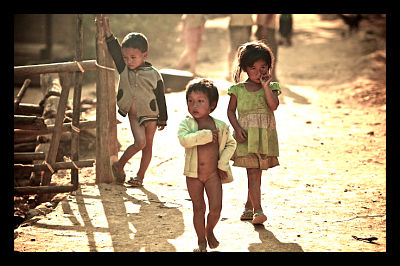
The numbers on poverty are stunning.
One in three people do not have access to electricity. One in three children and one in seven adults suffer from malnutrition. One in five people do not have access to safe drinking water.
The experience of inequality and poverty based suffering is reported again and again in reports issued by international organizations ranging from the UN to the World Bank to the FAO. Poverty robs people of dignity and health to the point that life expectancy falls along with security and quality of life. When the basic rights and needs of people are not met and they are trapped in the cycle of poverty there is an accrued toll on human life. Poverty is so threatening and destabilizing to individual safety and health that it robs people of years of life because the cost and cumulative damage is so great.
The numbers of life lessened by poverty add up each and every day. Every five seconds a child dies of hunger; Every five minutes 19 children under five years of age die of pneumonia; Due to inadequate and substandard medical care, 500,000 mothers every year die in childbirth; five million children every year do not survive to celebrate their fifth birthday.
These numbers imply that there is an inherent cost of life for those who are not privileged and wealthy. In our globalized society, access and participation – which are fundamental aspects of human rights – are not truly guaranteed and protected. One in five, or almost 20 percent of the global population, face barriers to access to food and are unable to participate in the global economy. Just over 300 million people worldwide have a life expectancy of less than 60 years, partially due to nutrient deficient and incomplete diets as well as the array of maladies and disease that stem from malnutrition and systemic poverty.
Thirty- five percent of the world population does not receive enough protein, and therefore not enough physical energy to function and work normally. Globally, there are 2 billion people who are anemic, including 5.5 million people who reside in countries of wealthy western capitalism.
In the United States, poverty is concentrated along the southern poverty belt stretching from New Mexico, across the deep south and Tennessee and Kentucky, to the Carolinas and Georgia.
A new CDC study recently revealed that states where more than 1 in 3 people live in high poverty areas reported the lowest life expectancy. In regions of poverty like this, burdens such as limited health care, higher crime rates, and poor schools and housing can keep people trapped in poverty and rob them of potential years of life.
Not just being poor, but living in areas blighted by poverty can mean a shorter life span and a stolen future for many people. Underperforming schools, few job opportunities, higher crime rates, poor nutrition and food access, lack of health care and housing all add up to shorter, unhealthier, impoverished lives.
This is no longer an issue of individual security, but larger issues of development, human rights, and economic stability. In order to truly tackle poverty we have to tackle the root causes of inequality, conflict and government corruption. Only when equal access to food and equal enjoyment are obtained can we reach the level of global security where poverty and malnutrition no longer threaten entire countries and limit chances for development and justice.
– Nina Verfaillie
Feature Writer
Sources: Mission Allende, Pravda

Manny Pacquiao Fights for the Philippines
Manny Pacquiao is much more than a national sports hero for the people of the Philippines. He is a sign of resolve, strength, and hope in the face of a horrific disaster.
On November 23, Pacquiao began his boxing comeback against Brandon Rios in Macau for the WBO Welterweight title. Leading up to the fight, Pacquiao proclaimed that he would dedicate his effort in honor of the victims of the devastating typhoon that hit the Philippines earlier this month. Pacquiao almost always dedicates his fights to the people of his native country, but this time, that dedication had special meaning.
When the typhoon hit, Pacquiao was embroiled in his brutal training schedule leading up to the match. In lieu of abandoning his training to visit the region, Pacquiao decided to push forward in order to win the match and give the people of the Philippines a much-needed reason to celebrate.
The “super typhoon” that ravaged the Philippines is one of the most deadly and tragic national disasters in global history. Typhoon Haiyan, as it has been named, is responsible for 3,976 deaths, 1,598 missing persons, and 18,175 injuries, according to the National Disaster Risk Reduction and Management Council. The brunt of the damage was felt in the Eastern Visayas region. The region’s largest city, Tacloban, is unrecognizable from the structural damage and the breakdown of communication systems.
But as an example of the importance of “Pac-Man,” Manny Pacquiao’s nickname, to the people of the Philippines, the country’s leaders worked with Sky Cable to telecast the match at a local sports stadium in Tacloban for all to see. Even in the face of such historic destruction, a Pacquiao victory would provide an “opportunity for us to relax and unite as a people,” says Eduardo del Rosario, Civil Defense Chief of the Philippines.
Pacquiao delivered. In a unanimous decision, Pacquiao defeated Brandon Rios for the championship belt, and with it, gave the Philippines a cause for cheer. While a victory in the ring, unfortunately, cannot undo the devastation of Typhoon Haiyan, it does embody the indomitable spirit of the Philippines.
– Taylor Diamond
Sources: Boston Herald, Huffington Post
Photo: HBO
Can This Straw Save the World?
Water is Life founder Ken Surritte was on a well-drilling trip to Africa in 2007 when he realized the limitations of using this method of providing clean water alone. After building a well for an orphanage outside of Kisumu, Kenya, Surritte was surprised to find that kids were still getting sick. The culprit was a “drinking fountain” at the local school which was actually a stagnant pond. Surritte wondered what he could give kids to take to school with them, and the idea for a portable filtration straw was born.
884 million people around the world do not have access to clean water, resulting in 6,500 deaths from waterborne diseases like typhoid, cholera, dysentery, E-coli, guinea worms, and diarrhea every day. Children under five are at the greatest risk. In fact, diarrhea is the second leading cause of death among this age group in the world, and a child dies every 21 seconds from this preventable disease.
Water is Life is a nonprofit that works to distribute its WiL filtration straws to communities in need across the world. The straws, which are made of a hard plastic and measure ten inches long and one inch in diameter, come on a lanyard for easy transport. The straws use a combination of membrane filters, iodine crystals, and charcoal filters to purify water, filtering out harmful waterborne illnesses and particles as small as 15 microns. The WiL straws work just like an ordinary straw: users place the straw in a water source and suck, drawing water through the filtration components until clean water reaches the mouth. They can clean a minimum of 800 liters of water, and on average, a straw will last one person a year. The straws clog internally when no longer effective. These life saving devices cost only ten dollars each.
The WiL straw is just the first part of a comprehensive plan to provide sustainable clean-water solutions to communities around the world, and is meant to provide immediate relief to communities while longer-term solutions are sought. After straws are distributed by Water is Life teams on the ground, the teams get to work evaluating and developing a plan to provide a sustainable, pure water source within one year, using technologies like wells and point-of-use filters. Teams also provide hygiene and sanitation education in community centers and village schools. This unique “crawl, walk, run” approach allows for immediate intervention and long-term prevention of waterborne illnesses, saving lives now and in the future.
Water is Life has been hugely successful in the four short years since it began distribution of straws and implementation of its sanitation programs. The non-profit has worked in North and South America, Asia, and the Middle East, distributing over 60,000 straws in 32 countries, and has plans to grow the program.
For those looking to get involved, Water is Life provides many volunteer opportunities for individuals and groups, ranging from speaking at schools to get students involved with campaigns, to repackaging filters at the organization’s Oklahoma office, to traveling to help distribute WiL straws and other life-saving materials on the ground. Have the money, but not the time? Just ten dollars provides someone in need with immediate and long-term access to clean drinking water. Check out waterislife.com for more ways to help.
– Sarah Morrison
Sources: Water is Life, Oklahoma City News
Photo: Seasons for Life
Imagine There’s No Hunger Campaign
The Imagine There’s No Hunger campaign is in its sixth year this year. The goal of the campaign is to help children in impoverished regions who suffer from hunger and poverty related issues. The campaign was inspired by John Lennon’s vision for a world at peace and without hunger; it teaches children all over the world to recognize their own power in making a difference in their living conditions and food scarcity. The campaign encourages rural families in impoverished communities to grow their own food, offering sustainable agricultural programs and training in 34 grassroots organizations. Spearheaded by Hard Rock International and WhyHunger, the campaign has accomplished huge gains in the war on poverty. This year, Yoko Ono Lennon has teamed up with Hard Rock International and is advocating for widespread support for the campaign. Thus far, the Imagine There’s No Hunger campaign has provided enough food in communities to ensure 5.5 million meals for children in 22 countries.
In the months of November and December, the campaign receives special media attention as they encourage the public to get involved in their mission and make donations to help end world hunger for children. A number of musicians have joined the Imagine There’s No Hunger campaign, and participate in fundraising concerts and visits to grassroots organizations. The musicians involved in the campaign use their star power to help bring fans on board with Imagine There’s No Hunger.
By working with grassroots organizations across the world, Imagine There’s No Hunger helps to develop agricultural systems in places that have a weak agricultural condition. The campaign encourages healthy eating and homegrown food; they have helped launch programs that feed children farm-fresh food and teach farmers the proper methods of farming. Imagine There’s No Hunger doesn’t just want to supply a quick order of food for starving countries, but help implement systems and training programs so that countries can subsist on their own and receive income well into the future.
This year, the Imagine There’s No Hunger campaign wishes to make a greater impact than ever before on children living in poverty. With the help of teammate Yoko Ono Lennon, the campaign has received an increase in public attention and advocacy. Ono is scheduled to make an appearance in December in Tokyo to continue her goal of rallying support for the campaign.
– Chante Owens
Sources: Imagine Peace, Why Hunger
Photo: Daily Mail
Shakira’s Philanthropy Doesn’t Lie
Over the course of her career, Colombian recording artist Shakira has been nominated for five American Grammys and eight Latin Grammys, both of which are among the highest honors in the music industry, and has amassed an estimated net worth of a staggering $200 million. However, despite her international fame and incredible fortune, Shakira remains an avid humanitarian, having initiated and participated in many charity organizations, particularly those that target her home country of Colombia.
After solidifying her position as a true Latin American music star with the release of her critically-successful breakthrough album, Pies Descalzos, Shakira founded the Pies Descalzos Foundation (Barefoot Foundation) in efforts to aid the impoverished children of Colombia. While growing up in her native country, Shakira made it a mission to serve the country’s poor after watching children make homes out of park benches and street corners.
The extent to which early experiences impacted Shakira’s humanitarian motives is manifested in the name of the non-profit, non-governmental charity organization. Pies Descalzos not only pays homage to the album that launched Shakira’s musical career but also recognizes the thousands of children who are far too destitute to even afford shoes
One of the overarching goals of Pies Descalzos is improvements in international education quality – an opportunity that can enable needy children to break out of the confines of squalor. Pies Descalzos provides children with the opportunity for attaining an education and necessary tools for survival, such as food, that they otherwise would have been unable to access.
Since 2003, the foundation has launched six schools in Colombia that provide support to impoverished children and their families by providing education, food, and financial support. Also founded by Shakira, the Barefoot Foundation in America, rather than focusing its efforts solely on Colombia, takes its aid worldwide, promoting universal education.
After receiving honors from the United Nations in 2006, Shakira reinforced the urgency and importance of Pies Descalzos and other charity foundations by stating, “Let’s not forget at the end of this day when we go home, 960 children will have died in Latin America.” With her adamant support of global education and passionate efforts towards eradicating hunger and poverty, Shakira has demonstrated that the power of music can travel far beyond entertainment purposes to serve inspiring humanitarian purposes.
– Phoebe Pradhan
Sources: Ace Show Biz, Celebrity Net Worth, People
Photo: People
Pope Francis: Champion of the Poor
Forbes Magazine has released its annual “World’s Most Powerful People” list, ranking the leaders of nations, intergovernmental agencies and businesses in relation to global influence. In the year 2013, the fourth most influential person in the world is the newly elected leader of the Roman Catholic Church, who has been drawing a lot of positive attention to the office.
As the leader of a church membership of over 1 billion people, Pope Francis has been dedicated to taking the papacy to the poor and the downtrodden. In Latin America, he has recently been nicknamed the Slum Pope because of his frequent visits to the more dangerous and impoverished neighborhoods in the region. His visits to the more destitute areas have given hope that the Catholic Church will do more to help those who cannot help themselves.
After his election in March, Pope Francis called for the church and its followers to return to helping the poor. In the papal tradition of taking on a new name after election, he purposely chose the name of Francis, after Saint Francis d’Assisi. The saint is widely known and recognized as the son of a wealthy man who left his riches to help the poor as a member of the clergy. In Pope Francis’ speeches, he has often championed the themes of poverty, hope and social justice which are the interests of the poor. Helping the poor is the constant theme of his papacy which has been warmly received wherever he has visited.
In his short ministry, he has visited the Italian Island of Lampedusa which is the frequent destination of fleeing African Immigrants seeking better economic and social opportunities in Europe. Every year many Africans unsuccessfully embark to the island with the hopes of ending their poverty but, instead, drown in the Mediterranean before reaching their goal. In his visit to the island, the Pope wept for those that had died and suggested repurposing church resources to accommodate African migrants.
As one of the most admired figures in the world, the Pope has always had a tremendous impact on not only his religious followers but leaders of nations across the world. The Pope is trying to use his office as a worldwide leader to be an advocate for improving the livelihood of the poor. His admirable example is one that should be emulated by leaders throughout the world.
– Travis Whinery
Sources: CNN, CNN Blog, Time, BBC News, Fox News, Forbes
Photo: The Times
JP Morgan Chase Historic Settlement
On November 17, 2013, the megabank JP Morgan Chase reached a record civil settlement of $13 billion and still could face criminal charges. The vast majority of the settlement, $9 billion, will go to State and Federal agencies that insured and backed the many bad mortgages the bank doled out from 2006-2009, including a $2 billion fine received by federal prosecutors. Consumers of the bad-faith mortgages will receive the benefit of the remaining $4 billion through a reduction in interest rates, temporary payment deferment, the removal of abandoned homes from low-income neighborhoods and other measures designed to offer relief to those hit hardest by the bank’s improper practices. There is no mention of the bank buying back any of the sour loans, and those who have already foreclosed are out of luck.
As a whole, the settlement stands to make little impact on the banking giant despite the historic figure. JP Morgan Chase revealed they had put aside $23 billion some time earlier just to pay for expected damages. Last year alone the company recorded over $20 billion in profits, and, despite the current litigation, the company’s stock is increasing as the housing market stabilizes. Last year, the US government budgeted just $42 billion in foreign aid and $11.2 billion in war-related aid to Afghanistan and Iraq. Sequestered litigation funds from JP Morgan Chase alone could have paid almost half of that budget.
Syria is embroiled in an incredibly costly war that has left many homeless as they flee the fighting or watch as their homes are destroyed by shelling. With the total number of refugees expected to hit 3 million by the end of this year, the UN has appealed for $5 billion in aid to house and care for these victims. Right now, they are about $2 billion short of that request. Before the US Justice Department transfers their imposed fine to the treasury, think of the millions of Syrians lacking food, healthcare, water and shelter.
Typhoon Haiyan has destroyed or damaged over 240,000 homes in the Philippines and over 800,000 people have been displaced from the storm. Though aid efforts have been swift and generous, rebuilding destruction of that magnitude will not come quickly. Hurricane survivors will need temporary shelter for months while debris is cleared, utility lines are restored and, eventually, homes are rebuilt. Estimates say the country suffered a total of $15 billion in physical damages. Federal and State investors could donate their $7 billion to the recently homeless of the Philippines and easily cover the cost of returning them to shelter.
$13 billion is a massive sum, why not think big? As of July of this year, the UN estimated a need for $12.84 billion to assist the entire world’s crises. One settlement that only represents a little more than half of JPMorgan Chase’s 2012 profits could provide adequate humanitarian relief to the entire world for the year. One company’s misdeeds resulting in relief for millions across over 25 countries; that would be historic.
– Tyson Watkins
Sources: NY Times, USA Today, Reuters, Reuters, NY Times, USAID, Yahoo News
Photo: Business Week
The Impact of Poverty on Life Expectancy
The numbers on poverty are stunning.
One in three people do not have access to electricity. One in three children and one in seven adults suffer from malnutrition. One in five people do not have access to safe drinking water.
The experience of inequality and poverty based suffering is reported again and again in reports issued by international organizations ranging from the UN to the World Bank to the FAO. Poverty robs people of dignity and health to the point that life expectancy falls along with security and quality of life. When the basic rights and needs of people are not met and they are trapped in the cycle of poverty there is an accrued toll on human life. Poverty is so threatening and destabilizing to individual safety and health that it robs people of years of life because the cost and cumulative damage is so great.
The numbers of life lessened by poverty add up each and every day. Every five seconds a child dies of hunger; Every five minutes 19 children under five years of age die of pneumonia; Due to inadequate and substandard medical care, 500,000 mothers every year die in childbirth; five million children every year do not survive to celebrate their fifth birthday.
These numbers imply that there is an inherent cost of life for those who are not privileged and wealthy. In our globalized society, access and participation – which are fundamental aspects of human rights – are not truly guaranteed and protected. One in five, or almost 20 percent of the global population, face barriers to access to food and are unable to participate in the global economy. Just over 300 million people worldwide have a life expectancy of less than 60 years, partially due to nutrient deficient and incomplete diets as well as the array of maladies and disease that stem from malnutrition and systemic poverty.
Thirty- five percent of the world population does not receive enough protein, and therefore not enough physical energy to function and work normally. Globally, there are 2 billion people who are anemic, including 5.5 million people who reside in countries of wealthy western capitalism.
In the United States, poverty is concentrated along the southern poverty belt stretching from New Mexico, across the deep south and Tennessee and Kentucky, to the Carolinas and Georgia.
A new CDC study recently revealed that states where more than 1 in 3 people live in high poverty areas reported the lowest life expectancy. In regions of poverty like this, burdens such as limited health care, higher crime rates, and poor schools and housing can keep people trapped in poverty and rob them of potential years of life.
Not just being poor, but living in areas blighted by poverty can mean a shorter life span and a stolen future for many people. Underperforming schools, few job opportunities, higher crime rates, poor nutrition and food access, lack of health care and housing all add up to shorter, unhealthier, impoverished lives.
This is no longer an issue of individual security, but larger issues of development, human rights, and economic stability. In order to truly tackle poverty we have to tackle the root causes of inequality, conflict and government corruption. Only when equal access to food and equal enjoyment are obtained can we reach the level of global security where poverty and malnutrition no longer threaten entire countries and limit chances for development and justice.
– Nina Verfaillie
Feature Writer
Sources: Mission Allende, Pravda
A Top Donor of Humanitarian Aid
In 2012, Turkey surprised the world by giving more than $1bn in humanitarian aid, placing 4th on the list of the world’s top donors. Which countries find themselves on this list? The top three are the United States ($3.8bn), the European Union ($1.9bn) and the United Kingdom ($1.2bn). Despite Turkey’s economic crisis a few years ago, the country has managed to recover in record time, allocating a large budget for international humanitarian aid.
A sum of this aid has already been working for developing countries such as Somalia. Turkey’s aid program has promoted growth in a country displaced by war and hunger. Since the implementation of Turkey’s government assistance for Somalia there are new school buildings, several projects for rural villages underway and the possibility of new hospitals. Turkey has provided scholarships for students and have advised the Somalis every step of the way. Turkey has even provided a monthly budget of $4.5m per month of additional aid. Red Crescent, Turkey’s primary humanitarian organization has helped with this development throughout Somalia. They have built new health clinics, decontaminated water supplies and cleared trash to better the health of Samalis. Samali ambassadors have called Turkey, “a savior sent by God to Somalia.”
Now a year later, Turkey continues to offer aid. After Typhoon Haiyan hit the Phillipines, Turkey’s Red Crescent sent an Airbus cargo plane filled with tents, blankets and other vital supplies. In total they have given over 65 tons of aid items. Several of Turkey’s humanitarian aid organizations have also sent rescue teams, food packages and have begun work on aid campaigns. To believe Turkey once received development assistance after its civil war and now contributes alongside superpowers is truly remarkable.
– Maybelline Martez
Sources: The Guardian, The Guardian Aid Effectiveness, World Policy, World Bulletin
Photo: Key Media
Romania Struggles with Poverty
Romania, the small country in southeastern Europe, has struggled with poverty throughout its history. The traditionally agricultural country has floundered since ceasing to be a communist state in 1989. Poverty is most pronounced in rural areas, which are home to 44% of Romania’s population.
Low agricultural production is a large problem for the rural poor. Additionally, there are few opportunities for formal employment or higher education outside of urban areas of Romania. Remote mountainous areas receive little support from the government, and suffer from a lack of social services, infrastructure, sanitation and opportunity.
Poor Romanians often leave in search of better opportunities overseas, sometimes at rates of hundreds of thousands per year. The earnings sent home by these emigrants have made up as much as 6% of Romania’s GDP. While poverty is a clear and large scale problem in Romania, the government has no formal policy to help raise the employment rate or improve conditions in rural areas. In fact, there is a marked absence of government initiatives to reduce poverty.
One ethnic group in particular is plagued by poverty, illiteracy, squalid living conditions as well as government discrimination and social persecution. The Romani people, known negatively around Europe as ‘gypsies’, were held as slaves around Europe until the mid-eighteen hundreds. They were exterminated by the Nazis on a large scale, and continue to be mistreated around Europe. Romania is home to as many as two million Roma people, and they are five times as likely as other groups to live in poverty.
Frequently, Roma, like other Romanians, leave to find work and better fortunes in more affluent parts of Europe. Many Europeans discriminate against the Romani, however, and an influx of Roma people in France has contributed to the recreation of racist, fascist groups from the 1940s.
Romani people often live in segregated neighborhoods, or in their own villages entirely. One such village, in a rural region of Romania, is generally ignored by the authorities and does not even appear on maps despite its population of over 500 people. The citizens of Ponorata live without electricity, in handmade wooden homes and frequently in conditions that have been described as ‘medieval’. Illiteracy and unemployment are rampant.
The plight of Ponorata is a symptom of a wider problem in rural Romania, which is the lack of initiative taken by the government to solve the poverty of these areas. While some non-governmental organizations run schools and health centers, there is a desperate need for a more widespread and coordinated strategy to improve the quality of life of Romanians, especially the Roma.
– Abigail Hanson
Sources: Daily Mail, Rural Poverty Portal, Euractiv
Reality Check: Emerging African Middle Class
Africa, over the past 15 years, has seen robust economic growth and made strides in governance and stability. While it is difficult to generalize about the state of an entire continent, it is doubtless that fewer Africans live in abject poverty and an African middle class is growing into consumers for international goods and services.
While many Western banks and investors are eager to profit from this new and developing market, it is important that they remain aware of the realities of the African market for consumer goods.
Africa has begun to emerge from decades of violence and corruption, which only help to keep people impoverished. In the past twenty years, the number of major conflicts in Africa has been reduced from twelve to just four. Increased peace and stability not only increase people’s ability to provide for their families, but also increases consumer confidence.
Additionally, the number of democracies in sub-Saharan Africa has grown from three in 1989 to 23 in 2008. Better governance and transparency has made it easier for people to start businesses and for outside investors to participate in African economies.
The middle class in Africa is defined as those living on USD $2-$20 a day, though those making between two and four US dollars are considered to be a ‘floating class’. This group is highly susceptible to being pulled back into poverty in the event of a food crisis or if the major breadwinner in the family should lose their ability to work. They are, however, part of the recent spending boom in Africa.
Consumer spending is expected to rise from USD $860 billion in 2008 to a projected USD $1.4 trillion in 2020. In the past decade, six out of the ten fastest growing economies in the world were in Africa, with Ghana leading the charge with a growth rate of 13% annually. All this has been highly encouraging to Western investors, eager to cash in on the growth of a new market while debt and banking issues slow economic growth at home.
Much of the information about the growth of the African middle class has not been entirely accurate, however. These hopeful facts and statistics do point to positive trends, but the African middle class is not homogeneous, nor does it have all the characteristics of middle classes in the West or in Asia.
It is important to bear in mind that Africa is home to an incredible diversity of people and cultures, and the middle class in South Africa will likely have different habits than middle class folks in Rwanda or Mali or Ghana. Additionally, certain accomplishments, such as a college degree, are considered requisites for the middle classes in the West or in Asia, but in Africa this is less true.
Middle class Africans are often involved in entrepreneurship, or in importing goods for sale in their local communities. Many investors make assumptions about middle class Africans based upon the spending habits of middle class populations elsewhere, but the economic outcome of the growth of the African middle class is likely to look very different.
– Abigail Hanson
Sources: UHY, World Bank, Harvard Business Review