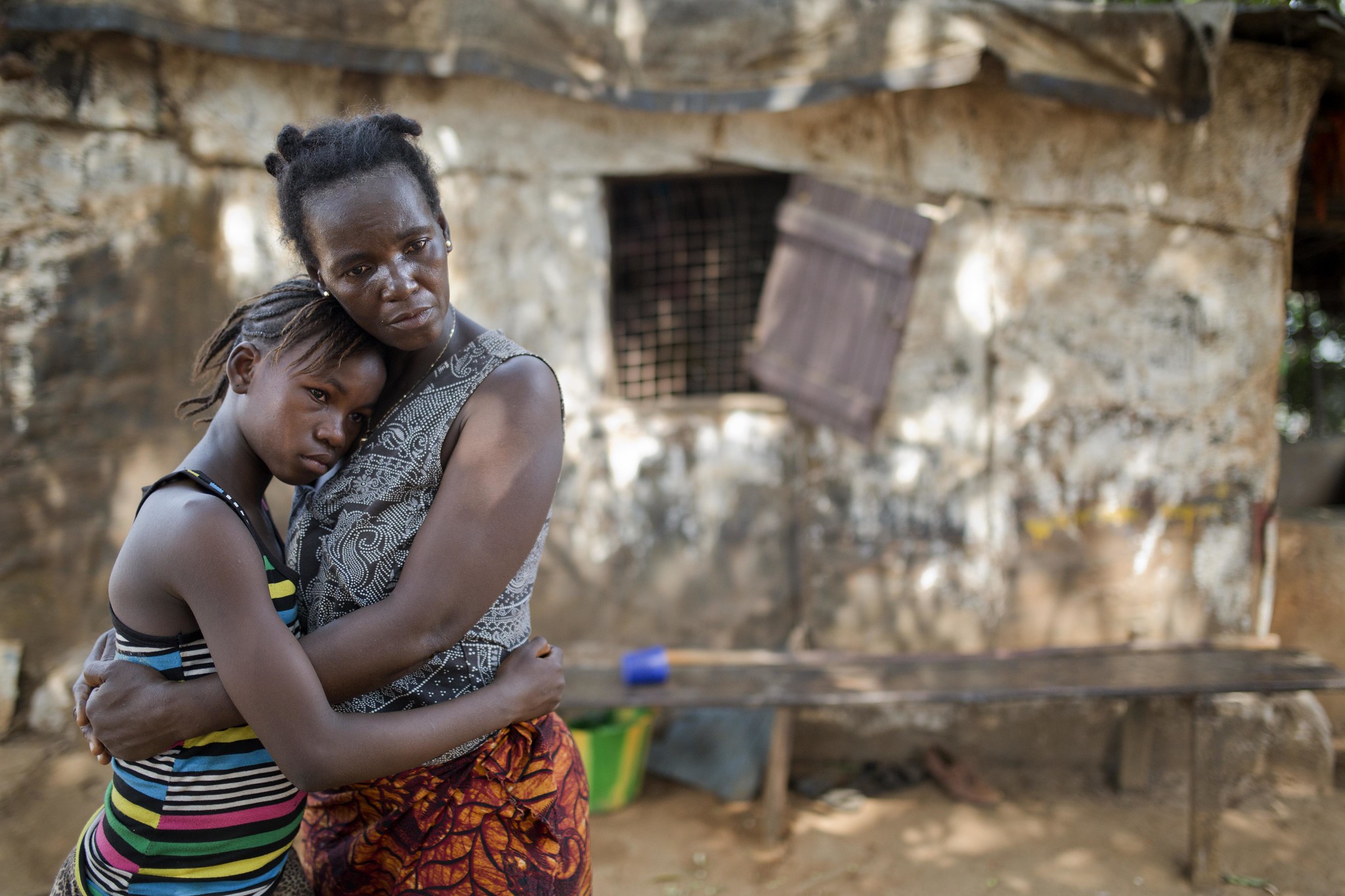
Sierra Leone has adopted a new method to facilitate discussions about corporal punishment and the violence it perpetuates. Supported by UNICEF’s Learning for Peace program, groups of performers write original plays that deal with the consequences of violence.
One theater performance is titled “The Stepson.” The lead character is a young boy who is beaten by his stepmother before going to school and being physically punished again there. This leads him to run away from home. The goal of the play is to educate and open up dialogue about corporal punishment in Sierra Leone, while providing alternatives for conflict resolution.
Performances like this are not new to development efforts. Other programs around the globe are using theater to effect change in their communities. The Bedari Theatre Programme in Pakistan builds on the Punjabi tradition of street theater to facilitate conversations and change in regards to child marriage. A group in Timor-Leste, called Damas, consists of an all-female ensemble that challenges gender stereotypes through their subject matter and by turning Shakespeare on his head to cast women in male roles. The Theater of the Oppressed, which has spread from its Brazilian heritage to the far corners of the globe like India and Australia, works to give marginalized persons a voice through performance.
In all of these participatory programs, education is key. In Sierra Leone, school is part of the problem. Corporal punishment scares children away from the classroom; a group of students enlisted by the rebels in Sierra Leone’s civil war came back after fighting and killed their teachers because of the violence inflicted on them in school. Theater provides a way to educate the population in a safe and engaging way that challenges the conventional classroom culture.
The performances also educate the performers. PETA, a Phillipine group, found that when children who scavenged in the garbage to survive were involved in theater workshops, they became more confident and articulate. Often, the cast of a performance will include local volunteers, and groups will interview community members to create a realistic, relatable script. This allows the performances to be culturally appropriate and to open up dialogue.
The community will often not respond well to people in authority, but a grassroots conversation fostered by entertainment creates opportunities for people to engage with each other on a topic.
There are other advantages to using theater for development. It is portable, recordable, and cost-effective, particularly when enlisting volunteers from the community to help write and act. It is also public, so people do not feel invaded by the message, but instead volunteer to come see the performance. A major advantage is that understanding and engaging with the performances does not require literacy, so performances are accessible to all.
Theater binds communities together in appreciating each other’s talents and having conversation. It is fun, so people want to be involved, which allows more advocacy efforts to reach more people.
Despite the good work theater does in initiating change in communities, there are some drawbacks. One drawback is the time involved in creating a work. When volunteer writers and actors get together, it can take a lot of time to construct a coherent, rehearsed play. This is a disadvantage when a new topic becomes immediately relevant. The large groups involved can also sterilize the message in order to please everyone.
The government can be another issue. Since governments often provide funding, they sometimes attempt to use theater performances to push their own agendas. Or, in the case of Ghana, the government will shut down programs out of fear the performance will not support current political systems.
People also expect theater to make drastic changes on its own. Theater works best when coupled with other advocacy efforts, like the dialogue sparked by the Sierra Leone performances.
The 20th annual conference for Pedagogy and Theatre of the Oppressed began on Thursday, July 3. Hosted by the University of Nebraska, the conference will aim to improve the development work done by theater performance and give marginalized people a stronger voice.
– Monica Roth
Sources: Oxford Journals, UNICEF Girls Not Brides, Jana Sanskriti, ActNow, Omaha.com
Photo: Girls Not Brides

The Hard Knock Life of Syrian Children
Try to imagine back to when you were in elementary school. Most children are happy living without major troubles, or at least children in the United States. Many do not have much to worry about. Most American children are going to school and are living stress-free lives. They are enjoying themselves, playing outside with their friends or playing video games, but the same could not be said for the children of Syria.
Millions on children have been affected by the conflict going on Syria for past three years, 6.5 million, to be exact. Over 2.8 million children are no longer attending school and more then one million are refugees in nearby countries. They no longer live their normal stress-free lives; they do not have “normal” childhoods.
Many Syrian children have endured horrible health issues due to poor sanitation and many are also malnourished. Many also face diseases such as measles and polio due to lack of proper immunizations.
Parents often turn to marrying their daughters off at early ages, as early as 13 years old, so that they do not get molested. Syrian refugee children are more vulnerable to rape and other acts of sexual violence.
In Syria, three million children no longer attend school, mostly because their schools have been destroyed, teachers have left and families are now using schools as homes. Other children quit school to work so that they could help make income to support their families.
The Lebanese government has been trying to help by setting up schools for child refugees but there have been problems such as overcrowding, language barriers and cost of transportation.
UNICEF has been helping since day one and partnering up with others to help. The organization has also immunized more than 20 million children when there was a polio breakout, supplied safe drinking water and provided psychological support.
Save The Children is another organization that has been getting involved and helping child refugees. Anyone could help through UNICEF or Save the Children. Just remember that you would not your children having to go through such horrible living conditions on a day-to-day basis.
– Priscilla Rodarte
Sources: Save the Children, World Vision, UNICEF
Photo: World Vision
Controlling Malaria Outbreaks
Combating poverty drives innovation. In order to reduce the suffering from poverty, countries investigate cost effective methods of preventing poverty and reducing the negative effects of poverty, such as disease or malnutrition. Confronting public health concerns, like malaria, in developing countries inspires scientific innovations to end the problem in an efficient yet inexpensive way. In this way, controlling malaria outbreaks improves health care worldwide.
Malaria is preventable and treatable, yet the disease killed over 600,000 people in 2012. The Center for Disease Control reported that malaria outbreaks are the leading cause of death in many developing countries and disproportionately affects young children, pregnant women and travelers.
Malaria is both a symptom and cause of poverty. Impoverished people struggle to take preventative measures against malaria, and if individuals contract malaria, the cost of treatment and the inability to work burden them. Furthermore, countries must create and manage health facilities and treatments. The Center for Disease Control estimated the direct cost at $12 billion per year. This creates a cycle of poverty in which both people and nations are unable to escape.
Some of the solutions, though, destroy too many mosquitoes, which affects the environment. Many predators depend on mosquitoes as their primary food source, so the ecological effect of eliminating all mosquitoes would be significant.
Because of this, researchers are investigating effective preventive measures to target a specific type of mosquito. The Economist reports that Dr. Nikolai Windbichler and Dr. Andrea Crisanti found a method of killing only the mosquitoes of the Anopheles genus, or the ones that carry malaria. By ensuring that the mosquitoes no longer produce female mosquitoes, Dr. Windbichler and Dr. Crisanti ensure that the mosquitoes cannot reproduce or draw blood and spread the malaria parasite.
The researchers designed a protein called endonuclease, which erodes the X chromosome of the mosquitoes. Producing female offspring requires two X chromosomes, and the egg only holds X chromosomes. As a result, if the protein limits the production of X chromosomes in male mosquitoes, it will limit the amount of female mosquitoes produced. A male dominated species of mosquitoes would lower the population as a whole and limit the transmission of malaria.
However, the Economist notes that natural selection will eventually allow the mosquitoes to evolve past the protein, so this solution depends on the elimination of the parasite within the species.
Ecologist Phil Lounibos expresses some skepticism of this type of solution. He believes that eliminating or decreasing the population of one species will not affect the spread of the disease. In a study he led, multiple genus of mosquitoes would cross inseminate and spread the parasite to other types of mosquitoes.
Stalling the disease, though, could allow countries to divert funds from malaria treatment to increasing economic productivity and improving the lives of the country’s impoverished. Developing new methods of malaria control presents exciting possibilities for controlling and combating malaria.
Between 2000 and 2012, malaria interventions saved over 3 million lives, and scientific innovation could drastically increase this number.
– Tara Wilson
Sources: The Economist, Center for Disease Control, WHO, Nature
Photo: The Health Site
Five of the Most Common Killer Diseases
The Global Post has drawn up a list of the world’s biggest killers by using information from the World Health Organization. Below are a list of some of our most common killer diseases per country.
5. Cirrhosis of the Liver
Caused by excessive drinking, the disease is unique to Mexico as the only place in the world where it is the primary cause of death. Yet the disease is nothing to roll your eyes at: caused by healthy liver tissue being replaced by scar tissue, the scar tissue blocks the flow of blood, nutrients and other important proteins through the liver. Cirrhosis of the liver is the 12th leading cause of death by disease in the world — except for in Mexico, where it’s number one.
4. Tuberculosis
Tuberculosis is often thought of as a disease of the past, but it is still affecting millions of people around the world. In fact, it’s on the rise — the World Health Organization reports around 500,000 new TB cases each year, and it is second only to AIDS as an infectious killer worldwide. A bacterial infection that can spread through the lymph nodes and blood stream to any other part of the body, TB is the leading cause of death in areas such as Pakistan and North and South Africa.
3. HIV/AIDS
Despite the enormous progress made at slowing down the spread of HIV/AIDS, it is still the leading cause of death throughout most of Africa. Just two years ago, around 25 million people — roughly 70 percent of the global total — were living with HIV/AIDS in Sub-Saharan Africa, and an estimated 1.6 million new HIV infections and 1.2-million AIDS related deaths were reported that same year. In areas such as South Africa, Botswana and Swaziland, the percentage of HIV-prevalence is as high as 26.5 percent.
2. Cancer
It would be hard to find someone not somehow directly affected by cancer. As the second-leading cause of death in the world, cancer has certainly taken its toll — especially in areas such as France, the Iberian peninsula, Austria, Switzerland, the Netherlands and Denmark, where cancer (primarily lung and throat) is the leading cause of death. Classified as the rapid growth of cells, there are more than 100 types of cancer that we currently know about.
1. Heart Disease
It’s no surprise that heart disease tops the list as the world’s deadliest killer, but it is a little shocking to see the massive list of countries where heart disease outranks all other diseases. These countries include Canada, the United States, Russia, Australia, most of South America and part of Africa, to name a few. From first- to third-world countries, heart disease continues to remain the deadliest disease in the world.
– Nick Magnanti
Sources: International Business Times, WebMD 1, WebMD 2, The New York Times, Medical News Today, AVERT, CDC
Photo: Diseases-Causes-Cure blog
Germany Battles Over Minimum Wage Law
Ending months of negotiations, Germany’s legislature voted on a minimum wage law mandating $11.61 an hour. The vote passed despite opposition from both trade unions and businesses calling out the program’s potential flaws.
The vote is considered to be a piece of landmark legislation for Germany, as in the past wages were set via agreements between employers and employees. Before this vote, Germany was one of a group of seven countries in the European Union who did not have a national minimum wage.
Opponents of the legislation, however, are outraged over some changes to the legislation in the eleventh-hour before the vote. Citizens under the age of 18 do not fall under the protection of the new law. Opponents claim that having a minimum wage would prevent younger citizens from being able to hold an apprenticeship.
For the first six months after the law is enacted, those who have been without employment for a long period of time will also fail to be covered by the law. Supporters of this restriction claim that if the long-term unemployed were paid $11.61 from the point of the law’s enactment, it would just make it more difficult for the unemployed to find jobs.
Compulsory work placement, something which mainly affects students, will also not be covered by the new minimum wage law, along with newspaper publishers for two years.
According to the Federal Association of German Newspaper Publishers, around 160,000 newspaper sellers will be affected by the lack of pay and the total number of people who won’t be covered by the new law is approximately 3 million.
There are around 7.1 million people in part-time employment in Germany, according to a 2012 report. The report also stated that around 4.8 million people were unemployed.
“These exemptions hit the most vulnerable in the labor market, of all people,” said Frank Bsirske, the head of the white-collar trade union Ver.di. “Millions of people will continue to be exposed to the arbitrariness of starvation wages.”
The bill has also drawn criticism from the European Union executive body. According to László Andor, the European Social Affairs Commissioner, the European Commission requires that countries who are members of the E.U. have a minimum wage that includes everyone in order to prevent citizens from falling into poverty even though they may be employed.
German economists and lobbyists for many of Germany’s businesses have argued against the minimum wage bill as well; stating that a rise in the minimum wage may run the risk of driving prices up for consumers and could potentially end thousands of jobs in the weaker regions of Germany.
Supporter of the bill argue, however, that having a period of time to allow businesses to adapt is necessary.
“This has dominated the political debate in our country for ten years,” said Labor Minister Andrea Nahles, one of the supporters for the bill. “It’s coming now and that’s reason to celebrate. Millions of employees in this country will finally get a fair wage.”
– Monica Newell
Sources: World Socialist Web Site, The Wall Street Journal
Photo: Arab News
Adopt-A-Camp
Raising a family of 53,000 can’t be easy, but someone has to do it. In the United Arab Emirates (UAE,) the woman who does so is Saher Shaikh, the head of the Dubai-based charity Adopt-A-Camp. Directed to help some of the 5 million migrant laborers in the UAE, Adopt-A-Camp teaches laborers English lessons as well as teaches them their rights as migrant workers.
Shaikh started this organization after multiple interactions with humble and hardworking migrant workers, and realizing her possible role. Now with 52 camps across the UAE, her standards are still high, as she tells CNN, “Every camp we adopt we make bed bug-free, cockroach-free and lice-free. We physically shampoo the men’s hair ourselves,” proving to them they are just as worthy of healthy living as every other citizen of the UAE.
Over time, Shaikh has picked up some high-ranking supporters in the government, including the Dubai Chamber of Commerce and Industry and the Ministry of Labor. Using this support, she helps ensure payment for the men’s work, something often lacking. Shaikh says, “It was a common problem during the recession, but it still happens now and again. We’d hear from the men that they hadn’t been paid for months, or even a year, and that their families were starving and they were starving. We worked with the Ministry of Labor to help them get home, or find a better job.” This allowed hopeful futures and stability for a group of men who once could barely afford bread rolls for their families.
While standards are on the rise, there are still levels of discrepancy that affect the lives of laborers. Employers are required to pay them once a month for their work, and there is a plan of action laborers can take should they not receive payment.
Nicholas McGeehan, a researcher for Human Rights Watch, looked into this and found that the laws aren’t always enforced, saying, “Theoretically, workers can take complaints to the labor courts. Theoretically, they should be able to get their salaries back, but justice is dispensed in a very ad hoc manner, if it is dispensed at all,” showing the lack of separation between government and migrant employers.
Shaikh demonstrates an unfortunately underrepresented population of compassionate people. There is an unlikely hope that Saudi businessmen will support similar initiatives that show concern for migrant workers and offer opportunities for justice.
After eight years of ongoing dedication to Adopt-a-Camp, Shaikh has managed this flourishing organization by herself, gathering members of her growing family and helping them see what they can fight for.
– Elena Lopez
Sources: CNN, Adopt-a-Camp, Saudi Gazette, Gulf News
Photo: Adopt-a-Camp
Universal Primary Education by 2015
The Millennium Development Goal of having universal primary education worldwide by 2015 is under examination. UNESCO put out a statement saying that achieving this goal is no longer possible, but European Union development commissioner Andris Piebalgs says otherwise.
UNESCO claims that the goal of having all children in schools is unattainable because of insufficient financing available for education.
The goal of Education For All was instituted in 2000, and 2015 was its target for completion. However, as of 2014, 58 million children around the world are still not attending school.
The report put out by UNESCO stated that governments have to be the ones to fix the problems, and called on them to be the leaders of the movement. The problem comes mostly from the inability to provide education to people who are living with disadvantages, including poverty, gender, location or other factors. Governments must reevaluate their efforts and concentrate on these groups of people.
Piebalgs believes that education must start with the government as well, claiming, “Education is the first sign of equality; [it shows] that each child has access to the education system free of charge and that a state is taking care of its citizens.”
If governments can reach out to these marginalized children, then there is a possibility to still reach the Millennium Development Goal by the end of next year. Simply getting children enrolled in school is easy to do and costs very little.
Piebalgs, however, has expressed concern about what is to follow. He said, “We’ve looked on education in a rather shallow way: we set the target of getting kids into school and that was it – we were just hoping that they would get something out of school.” Continuing, the former headmaster explained, “But for me, what is crucial is the quality of education you get: the quality is not less important than enrollment. [sic]”
The difficulty now is to determine whether simply putting these 58 million children in school over the next year is worth potentially losing the quality of the education that they may receive. Despite what may have to happen after 2015, getting these children enrolled in school and emphasizing the importance of education to them could be life-changing for them.
– Hannah Cleveland
Sources: The Guardian, The Daily Star
Photo: The Guardian
Donated Books Promote Global Reading
For millions of American students, July marks the beginning of summer and the completion of another year of school. Despite the grade level or location, many American students share one thing in common: stacks of books they will likely never open again. Stacks of already-read novels, or subject-and-grade-specific textbooks, will sit and collect dust for the remainder of their shelf lives.
There is a much smarter option for used books: donation. Taking five minutes to donate a pile of used books could change the life of a child or adolescent forever.
Today, 250 million children worldwide cannot read. Most of these children live in developing countries, and education affords them with one of the only opportunities to break the cycle of poverty: employment. But many children simply cannot acquire the necessary literacy skills because they lack access to libraries and an appropriate selection of books, not to mention physical classrooms and quality teachers.
Donating used books is an incredibly simple, powerful way in which we as a nation can help alleviate the global education crisis. Not sure where to start? Here are three organizations that can help you place your books into the hands of children who need them most:
1. Books for Africa (BFA) has shipped over 28 million books to 49 countries since 1988. BFA believes that a culture of literacy is truly the most empowering asset a community can have. The organization currently accepts: fiction and non-fiction books that are 15 years old or newer; primary, secondary and college textbooks; reference books (such as encyclopedias) published in 2003 or later; and medical, nursing and law books published in 1998 or later. A team of BFA volunteers sorts and packs these books, ensuring that each box of books is donated to the appropriate classroom or organization. For information on where to ship donations, please visit Books for Africa.
2. Better World Books (BWB) collects and donates books to support and fund literacy initiatives worldwide and also sells new books. Not only does the organization accept funds and book donations, but for every book purchased on BWB’s website, another book is donated to literacy programs worldwide. The organization boasts 10 million donated books to partner programs — including Books for Africa — around the world since its 2002 beginning. For information on how to donate books and what books are accepted, as well as directions for printing a shipping label for your donation, please visit Better World Books.
3. Room to Read began in Nepal in 2000, when the organization began bringing donated books to rural communities in need. Today, the organization works globally and is dedicated to promoting and enabling education through programs focused on literacy and gender equality in education. Room to Read has thus far reached 7.8 million children by establishing school libraries, donating and publishing local-language children books and training teachers on literacy education. The organization has distributed 14,588,494 books worldwide since 2000. Though it’s not currently accepting book donations, Room to Read partners with Better World Books, a partnership that ensures that books are being placed where they’re needed most. The organization does accept monetary donations online at Room to Read.
If every child received an education, 170 million people would escape the chains of poverty. In a nation where education resources and tools are a given, we have a great responsibility — and opportunity — to contribute to the fight against the global achievement gap. Donating books or funds that support global literacy programs helps equip children in impoverished communities with the tools necessary not only to learn and succeed as students, but also to establish a better life for themselves, for their families and for generations to follow.
– Elizabeth Nutt
Sources: Global News, Better World Books, Room to Read, Books For Africa
Photo: All Things SD
Sierra Leone Theater Raises Awareness
Sierra Leone has adopted a new method to facilitate discussions about corporal punishment and the violence it perpetuates. Supported by UNICEF’s Learning for Peace program, groups of performers write original plays that deal with the consequences of violence.
One theater performance is titled “The Stepson.” The lead character is a young boy who is beaten by his stepmother before going to school and being physically punished again there. This leads him to run away from home. The goal of the play is to educate and open up dialogue about corporal punishment in Sierra Leone, while providing alternatives for conflict resolution.
Performances like this are not new to development efforts. Other programs around the globe are using theater to effect change in their communities. The Bedari Theatre Programme in Pakistan builds on the Punjabi tradition of street theater to facilitate conversations and change in regards to child marriage. A group in Timor-Leste, called Damas, consists of an all-female ensemble that challenges gender stereotypes through their subject matter and by turning Shakespeare on his head to cast women in male roles. The Theater of the Oppressed, which has spread from its Brazilian heritage to the far corners of the globe like India and Australia, works to give marginalized persons a voice through performance.
In all of these participatory programs, education is key. In Sierra Leone, school is part of the problem. Corporal punishment scares children away from the classroom; a group of students enlisted by the rebels in Sierra Leone’s civil war came back after fighting and killed their teachers because of the violence inflicted on them in school. Theater provides a way to educate the population in a safe and engaging way that challenges the conventional classroom culture.
The performances also educate the performers. PETA, a Phillipine group, found that when children who scavenged in the garbage to survive were involved in theater workshops, they became more confident and articulate. Often, the cast of a performance will include local volunteers, and groups will interview community members to create a realistic, relatable script. This allows the performances to be culturally appropriate and to open up dialogue.
The community will often not respond well to people in authority, but a grassroots conversation fostered by entertainment creates opportunities for people to engage with each other on a topic.
There are other advantages to using theater for development. It is portable, recordable, and cost-effective, particularly when enlisting volunteers from the community to help write and act. It is also public, so people do not feel invaded by the message, but instead volunteer to come see the performance. A major advantage is that understanding and engaging with the performances does not require literacy, so performances are accessible to all.
Theater binds communities together in appreciating each other’s talents and having conversation. It is fun, so people want to be involved, which allows more advocacy efforts to reach more people.
Despite the good work theater does in initiating change in communities, there are some drawbacks. One drawback is the time involved in creating a work. When volunteer writers and actors get together, it can take a lot of time to construct a coherent, rehearsed play. This is a disadvantage when a new topic becomes immediately relevant. The large groups involved can also sterilize the message in order to please everyone.
The government can be another issue. Since governments often provide funding, they sometimes attempt to use theater performances to push their own agendas. Or, in the case of Ghana, the government will shut down programs out of fear the performance will not support current political systems.
People also expect theater to make drastic changes on its own. Theater works best when coupled with other advocacy efforts, like the dialogue sparked by the Sierra Leone performances.
The 20th annual conference for Pedagogy and Theatre of the Oppressed began on Thursday, July 3. Hosted by the University of Nebraska, the conference will aim to improve the development work done by theater performance and give marginalized people a stronger voice.
– Monica Roth
Sources: Oxford Journals, UNICEF Girls Not Brides, Jana Sanskriti, ActNow, Omaha.com
Photo: Girls Not Brides
5 Tips for Success in Philanthropy
Unfortunately, there is no secret code to guaranteeing success in philanthropy. However, the following is a list of five tips for success in philanthropy.
1) Foster honest relationships between the donor and grantee.
Philanthropy is simply the love of humanity. The definition does not include any notion of wealth. However, wealth is often necessary to fund philanthropic efforts, and often times this creates a strange relationship between the donor and grantee. Kevin Starr, the managing director of the Mulago Foundation, describes how an imbalance of this relationship is created as a result of the inevitable focus on money philanthropic work calls for. However, clearly identifying the causes both the donor and grantee advocate for allows opportunity for a true partnership to bloom.
2) Have a business-like approach to your organization.
While philanthropic work is fueled by compassion and will, running a philanthropic foundation requires shifting mindsets and treating the organization like a business. “Business is about getting stuff done,” says Starr. In the end, applying the disciplines and practices of running a business to philanthropic efforts will lead to successfully and efficiently making progress.
3) Treat your grantees like customers.
This advice is strongly advocated by David Peery, the managing direct of the Peery Foundation. The organization(s) that a philanthropic decides to support is essentially the group he is investing in. Much like businesses invest in entrepreneurs to gain wealth, organizations invest in social entrepreneurs to achieve a lasting, positive social impact. Businesses value honest feedback and intentional communication, and nurturing this type of relationship between a donor and grantee will form a strong and honest partnership.
4) Have an adaptive philanthropy, not a rigid strategy.
Setting a vision and establishing targets are both necessary and wise. Adaptive philanthropy has a clear mission, but does not restrict itself to inflexible multi-year plans. All philanthropic efforts are dynamic processes, and none are immune to the tremendous number of factors that can complicate them. Risks and uncertainty should be expected in the process.
5) Measure the impact of your philanthropic efforts.
In the early days of philanthropy, people donated chunks of money toward a cause without considering the impact. Donors did not require their grantees to evaluate the impact of their programs, and grantees did not know how or what to measure. However, it is imperative to quantify the impact of an organization’s efforts, so that one can determine whether their philanthropic endeavors are working and creating a positive influence. This is often done through rigorous program monitoring and evaluation. For example, The Bill and Melinda Gates Foundation has appointed Jodi Nelson as the Director of Strategy, Measurement and Evaluation (SME) to measure its impact and ensure that it is operating with maximum efficiency.
– Christina Cho
Sources: Stanford Social Innovation Review, Bill and Melinda Gates Foundation, Stanford Social Innovation Review 2
Photo: Huffington Post
Solar Power in Sierra Leone
The Abu Dhabi Fund for Development announced a new loan program that would provide Sierra Leone with Dh 33 million, or about $8.9 million, to construct a new solar power plant near Freetown, the capital and a major urban area. Called Solar Park Freetown, the project would provide an extra six megawatts to Sierra Leone’s already burgeoning solar power networks.
In addition to providing manufacturing jobs to people who need it, Solar Park Freetown will bolster Sierra Leone’s shaky central power supplies. Much of Freetown’s power comes from the Bumbuna Dam, which, according to a 2011 World Bank report, produces less than 20 megawatts of power during the dry season. Sierra Leone’s grid only provides 13 megawatts per million people, about 3.5 times less than nations with similar socio-economic conditions. The weak electrical grid forces many citizens to purchase expensive oil and gas, and electric power remains scarce.
New central solar power initiatives will help solve this problem. Adding to the grid’s capacity with works like Solar Park Freetown will help satisfy energy demands and improve quality of life in Freetown. Dr. Kaifala Mara, Sierra Leone’s Minister of Finance, believes that the project will help people “overcome the difficult economic conditions by improving the performance of the main economic sectors, leading to advancing sustainable development” for the nation.
Centralized power, however, is only part of the story. For the 97 percent of rural Sierra Leoneans who lack access to the grid, individual solar home systems and decentralized generators can provide crucial electric power for a multitude of purposes. In town centers, street lamps run on solar power, and solar radios help citizens communicate and learn about current events. Both homes and community buildings like churches and schools can purchase individual solar energy systems to generate electricity.
The usefulness of solar energy in Sierra Leone creates economic opportunities. Open-air markets selling solar components are common, and installation companies can profit from the demand for new systems. Other entrepreneurs have built solar recharging stations and charge small fees for people to power their smartphones and other mobile devices. Using Sierra Leone’s cell network, which uses solar-powered relay stations, businesses can communicate and share data more easily and optimize earnings.
Despite the explosion of solar technology, obstacles hinder greater national access to electricity. Not all solar panels are created equally, and not all vendors can tell the difference between low-quality and high-quality panels. Moreover, some dishonest manufacturers will claim that their products are better quality than they are or even sell non-functioning parts. Even if everything works, not all Sierra Leoneans have the technical skills to properly install solar systems, making progress slower.
Financing more decentralized solutions can be difficult. Sierra Leone does not offer subsidies to people looking to buy solar home systems, and many people in rural areas are not close enough to banks to get loans. For these reasons, not everyone can afford all of the components needed to generate electricity. Centralized power, especially in urban areas, will need to offset the shortcomings of off-grid systems.
Solar power has the potential to greatly increase energy access in Sierra Leone and accelerate its economic growth. Both internationally financed central power systems like Solar Park Freetown and private solar setups in rural areas will create jobs and provide a stable source of energy for millions.
– Ted Rappleye
Sources: Gulf News, Awareness News Sierra Leone, The World Bank
Photo: Forbes