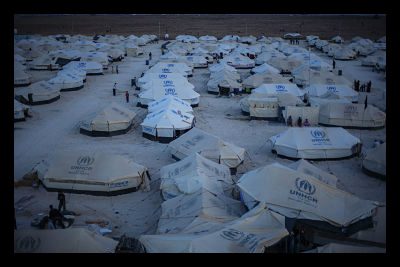
 The U.S. Association for UNHCR, also known as the U.N. Refugee Agency, is based out of Washington, D.C. This organization was during World World II to help the victims displaced by this conflict. The UNHCR faced its first major emergency in 1956 after the Soviet demolition of the Hungarian Revolution. The decolonization of Africa in 1960 produced a dire humanitarian and refugee crisis, and the organization provided relief to victims of displacement in Asia and Latin America for the following two decades, followed by another refugee crisis from the conflict in the Balkans.
The organization won a Nobel Peace Prize in 1954 for its groundbreaking work in Europe, followed by an award in 1981 for being the world’s best worldwide assistance to refugees. The organization has grown from a staff of 34 to over 8,600 national and international members that work in approximately 126 countries.
This organization is dedicated to saving, protecting and rebuilding the lives of the victims of conflict. USA FOR UNHCR responds to the most urgent crises in the world, and is currently specializing in Syria, South Sudan, Central African Republic and Iraq.
Current humanitarian emergencies have produced astounding levels of suffering and displacement; 51.2 million men, women, and children are currently displaced in the world, the average time refugees are separated from their lives is 17 years, and 32,000 people flee their homes every day. USA for UNHCR addresses the basic needs and rights for refugees, most importantly shelter, water and food, and protection from harm. Emergency relief efforts include sending relief supplies within 72 hours, addressing the survival needs of victims with resources such as shelter, clothing, soap, heat lamps, blankets, sleeping mats, kitchen sets, solar lamps and mosquito nets.
In regards to health and nutrition, USA for UNHCR describes their efforts as, “Working closely with partner organizations through supporting their vital work to supply clean water and nutritious food, set up sanitation programs and ensure refugees have access to emergency and basic health care services. For example, USA for UNHCR works with partners to carry out large-scale vaccination campaigns to protect refugees from diseases like polio and measles.”
There is support and relief for refugees whenever and wherever they can for every step of the journey, for UNHCR is the first in and last out in an emergency situation. According to USA for UNHCR, 91 percent of their staff are based in the field providing direct support to people in need. In 2013, 469 emergency experts were dispatched to the field. The ten largest operations have taken place in Afghanistan, Colombia, Democratic Republic of the Congo, Mali, Pakistan, Syria, Jordan, Lebanon, Turkey and Iraq. Currently, there are 434 USA for UNHCR offices worldwide.
There are several ways one is able to join the cause for USA for UNHCR. One is able to become a monthly donor, fundraise for refugees, and raise awareness.
– Neti Gupta
Sources: Guide Star, UNHCR 1, UNHCR 2, UN Refugees
Photo: Flickr

Poverty in São Paulo, Brazil
São Paulo is one of Brazil’s most populated cities. It represents around six percent of Brazil’s total population with over 10 million residents. Unfortunately, Brazil has had a bad past when trying to house all of these residents equally and fairly. In general, the principal housing option for the poor is to build-it-yourself or the purchase of a house in an informal settlement.
Favelas are one of the places that the poor have to rely on when they have no other housing option. From 1973 to 2007, the amount of houses in the favelas grew from 14,504 to 377,236.
The dimensions of São Paulo’s housing problem demand attention and resources from both the federal and state government, but in recent years, the São Paulo government has become more attuned to long-term slum and favela upgrading. With the government playing an active role with aid from a global alliance, Cities Alliance, the city has been able to focus on improving the conditions of the slums and favelas.
In 2006, the São Paulo Municipal Housing Secretariat created management information system that is now able to track that status of favelas and other sites that need improvement. In 2008, Cities Alliance hosted high-ranking officials from other major cities to discuss the challenge of slum upgrading.
The legal steps involved in establishing a clear land title are hazy. There are also issues with squatters, people who occupy buildings without having lawful permission to do so. Landowners are worried that if they build, their buildings will become filled with squatters who will provide no compensation.
There is a change happening for the good in São Paulo. There is general agreement in São Paulo that the communities within these slums must band together and help turn things around. It is not just the government that can help. With community leaders that act as mediators that advocate for the community stepping up, São Paulo will continue to improve its housing conditions.
– Erik Nelson
Sources: World Bank, Cities Alliance
Photo: Favel Issues
Five Factors Contributing to Hunger in Samoa
1. Food Dependence
The people of Samoa depend upon foods that they receive from other countries. Additionally, access to these foods is unequal, so the Samoans who do have access to the imported foods tend to eat all of it. For lack of complete meals, a large percentage of the population becomes obese.
2. Nutritional Imbalance
In Samoa, the top five food group shares in its total food supply, as of 2011, are as follows:
Cereals – 18.5 percent
Roots – 10.2 percent
Meat – 16.3 percent
Vegetable oils and animal fats – 9 percent
Sugars and honey – 8.6 percent
What’s missing? Vegetables and fruits. The people of Samoa become obese in large part because healthy foods are not made available to them in large enough amounts to provide an adequate diet to the overwhelming majority.
3. Inadequate Reporting
In April 2013, Samoa Observer released an article titled, “Samoa praised for ‘cutting hunger’ in half”. However, upon closer research, an astute Samoan writer named Mata’afa Keni Lesa discovered that the story was inaccurate. The article claimed to have met the first of the Millennium Development Goals, but Lesa pointed out that the other two had gone unmet. These goals are:
Target 1.a: Halve, between 1990 and 2015, the proportion of people whose income is below the basic needs poverty line
Target 1.B: Achieve full and productive employment and decent work for all, including women and young people.
The 2012 Pacific Regional MDGs Tracking Report states, “…the increase in the level and depth of hardship was significant for the rural areas, especially Savai’I, which accounts for a quarter of the poor in Samoa.” With such a high percentage of Samoans below the poverty line, how can they possibly have enough income or resources to get their dietary needs met?
4. Demographics
As of 2014, 80.73 percent of the Samoan population lives in rural regions, meaning that about 81 percent of Samoans do not have easy access to trade routes, This percentage has only increased from 1999, when it was 78.16 percent.
5. Geographical Breakdown
Only a small percentage of their land, less than 5 percent, is arable. On top of this, their access to machines like agricultural tractors is improbable, averaging 2.14 tractors per 1000 hectares of arable land. In 2012, unsafe fertilizers were banned from farming techniques.
– Leah Zazofsky
Sources: Faostat, Samoa Observer, Food Anthro
Photo: Google Images
Education in the Solomon Islands
Of those 60 percent, only 72 percent of students complete their primary education. As for secondary school, the current numbers show 32 percent of boys attend, while 27 percent of girls do. Since there are so little resources, students have to take an exam to continue on to secondary school. Depending on their score, they can either be placed into secondary school or not score high enough to earn one of the few positions available.
These statistics all contribute to the 75 percent adult illiteracy rate. While education is not compulsory in the Solomon Islands, it is free for at least primary school. So, why are these numbers showing up?
The Solomon Islands had a civil war from 1998-2003, and once the country began to gain its footing again, a devastating tsunami hit in 2007. These events have only add to the hardships the people of the Solomon Islands face. Since adults have no educational background, the main source of income is through agriculture and farming. This can only get a family by for so long, and many children work alongside their families in lieu of going to school.
If a child does attend school, he or she has to deal with a shortage of teachers and classroom materials. Not only are half of all teachers unqualified, but they also struggle to receive payment for their services. In addition, less than half of the schools have access to adequate drinking water. Hopefully, the government will prioritize education in the coming years and break the cycle of poverty in the Solomon Islands.
– Melissa Binns
Sources: Classbase, Education in Crisis, ICDE
Photo: Flickr
What is USAID?
Want to really know what the United States Agency for International Development (USAID) is doing? To learn more about USAID, go explore their official video channel. See videos about agriculture, development, health, war and famine relief, videos in the field, and on the ground showing their progress and impact.
The bigger overall question though: What is USAID, really?
USAID is the agency of the US government that handles all international affairs relating to diplomacy, development, and foreign policy. Started in 1961 by John F. Kennedy, USAID works in over 100 countries, creating markets and trade partners, protecting human rights, food security, and the environment, addressing health issues, prevention and recovery from conflicts, reduction of poverty, basic humanitarian response, and addressing US interests and security. While all of this is massively challenging and consuming work, USAID tries to do it all while working with less than 1% of the total federal budget.
One of their agendas is to make all governments more transparent, accessible, and accountable in order to build democracy worldwide and “make every voice count.” In partnership with Sweden, the UK Department for International Development (DFID), and Omidyar Network (ON), they have launched an inclusive campaign for citizen involvement; a global fund to support innovation, scaling-up, and research that will harness new technologies to enable citizen engagement and government responsiveness.
Want to know more of the inside scoop about what they’re doing and what it all means? Click here.
– Mary Purcell
Source: You Tube, Makingallvoicescount.org, USAID
Education in Suriname
Suriname is the smallest independent country on the South American continent, slightly larger than the state of Georgia, and has a relatively small population. Suriname is mostly a tropical rain forest and the majority of the Surinamese population lives along the coast. Recently, UNICEF has made many efforts to reduce inequity in Suriname’s education system.
Although 97 percent of Surinamese children are enrolled in primary education, serious disparities exist between the coastal and rural schools and the interior. Suriname is nationally on track to meet Millennium Development Goal 2, but significant disparities in terms of gender and socio-economic status is significantly lacking progress and falling below the target.
There are various reasons why some children are more successful than others within the education system as well as why the disparities become increasingly evident as the pupil grows and progresses.
According to the United Nations Suriname, the “availability of schooling opportunities, accessibility of schools, quality and appropriateness of the education system affect the learners’ results in the highly varying education context in Suriname. Whereas the national gross primary school enrolment rates are high, enrolment and attendance rates in the interior are generally low in comparison to the national average. Poor availability and quality of pre-schools and the sudden switch from local languages to Dutch, being the medium of instruction and texts books, could be identified as one of the main hurdles, resulting in high repetition rates in first grade and poor net completion rates in the interior.”
Furthermore, the situation regarding water and sanitation for school youth has posed a major challenge. Only 29.4 percent of schools in the rural coastal areas have piped water and 67.5 percent of the other schools in the rural coastal and rural interior do not have piped water— forcing them to collect rain or river water during school hours.
UNICEF has stepped in to reduce the inequities within the school system of Suriname. The UNADF Action Plan 2012-2016 will continue supporting the Ministry of Education and Community Development strengthening the capacity of kindergarten and primary school teachers in an effort to establish child friendly schools. Thirty percent of the teachers in the interior are not qualified to teach and in public primary schools, five percent have not even completed primary education themselves.
Plans have also been made to assist Suriname with the implementation of technology to provide a better education. UNICEF, in close cooperation with the Ministry of Education and Community Development, has implemented the Computer Aided Learning Project.
– Eastin Shipman
Sources: CIA World Factbook, Curacao Chronicle, United Nations Suriname, UNESCO
Photo: UN
Malnutrition in Liberia, an Epidemic
“Stunted” can mean a variety of health problems: hindered growth, a weak immune system, a smaller IQ, blindness, brain damage and eventually death. Not only does Liberia lack the proper means and knowledge to nourish their bodies, they also struggle with gaining access to clean, safe drinking water. When faced with unclean water and other unhygienic practices, children can easily develop diarrhea which makes nourishment an even harder goal to reach.
Another contributing factor to malnutrition in Liberia is teenage pregnancy. They have one of the highest teenage birth rates in the entire world. Thirty-eight percent of girls are pregnant or mothers by age 18. This high birth rate can be attributed to the poverty Liberia faces, which in turn affects their education and resources. Fifteen percent of these mothers are malnourished themselves, impacting a child before he or she is even born.
Organizations are attempting to fix this issue by teaching Liberians about contraception, hygiene, agriculture and the importance of breastfeeding. There is a trend where young mothers in Liberia do not wish to breastfeed for cosmetic reasons. Other charities are providing milk, folic acid and other medical treatment to Liberian’s malnourished, particularly the babies. Once a baby starts to become stunted due to malnourishment, it is difficult to reverse the process.
Those providing aid to Liberians hope to stop this epidemic. While there are many other issues resulting from the poverty in Liberia, malnutrition is dramatically altering and even ending lives. With some small changes to their nourishment practices, a large percentage of lives can be saved.
– Melissa Binns
Sources: Action Against Hunger, AllAfrica, Child Fund International, UNICEF
Photo: Press TV
USA for UNHCR
The organization won a Nobel Peace Prize in 1954 for its groundbreaking work in Europe, followed by an award in 1981 for being the world’s best worldwide assistance to refugees. The organization has grown from a staff of 34 to over 8,600 national and international members that work in approximately 126 countries.
This organization is dedicated to saving, protecting and rebuilding the lives of the victims of conflict. USA FOR UNHCR responds to the most urgent crises in the world, and is currently specializing in Syria, South Sudan, Central African Republic and Iraq.
Current humanitarian emergencies have produced astounding levels of suffering and displacement; 51.2 million men, women, and children are currently displaced in the world, the average time refugees are separated from their lives is 17 years, and 32,000 people flee their homes every day. USA for UNHCR addresses the basic needs and rights for refugees, most importantly shelter, water and food, and protection from harm. Emergency relief efforts include sending relief supplies within 72 hours, addressing the survival needs of victims with resources such as shelter, clothing, soap, heat lamps, blankets, sleeping mats, kitchen sets, solar lamps and mosquito nets.
In regards to health and nutrition, USA for UNHCR describes their efforts as, “Working closely with partner organizations through supporting their vital work to supply clean water and nutritious food, set up sanitation programs and ensure refugees have access to emergency and basic health care services. For example, USA for UNHCR works with partners to carry out large-scale vaccination campaigns to protect refugees from diseases like polio and measles.”
There is support and relief for refugees whenever and wherever they can for every step of the journey, for UNHCR is the first in and last out in an emergency situation. According to USA for UNHCR, 91 percent of their staff are based in the field providing direct support to people in need. In 2013, 469 emergency experts were dispatched to the field. The ten largest operations have taken place in Afghanistan, Colombia, Democratic Republic of the Congo, Mali, Pakistan, Syria, Jordan, Lebanon, Turkey and Iraq. Currently, there are 434 USA for UNHCR offices worldwide.
There are several ways one is able to join the cause for USA for UNHCR. One is able to become a monthly donor, fundraise for refugees, and raise awareness.
– Neti Gupta
Sources: Guide Star, UNHCR 1, UNHCR 2, UN Refugees
Photo: Flickr
Poverty in Manila a Growing Problem
Infrastructure in Manila has improved since Benigno Aquino became president in 2010; however, inequalities in the city still exist. The 586 slums are put at additional risk when natural disasters strike. On Nov. 14, 2013, the effects of a typhoon killed 6,000 people and left many homeless.
The Philippines also has one of the highest birth rates in Southeast Asia. The average population for a Manila slum is 75,000-80,000 people per square mile. It is theorized that Filipinos do not believe in or are not educated about contraception. Families generally have 10-12 children, making adequate resources hard to come by.
Most Manila citizens get their food from agriculture—also the city’s main source of income—but some of the poorest find food in the garbage. There is even a word for the food scrapped up from the trash: “pagpag.” Under these conditions, Manila is widespread with disease and illness.
While the government is aware of the problems and has claimed they will work on it, citizens still feel that they are not doing enough. Most aid comes from outside sources and organizations from other countries. There are many factors contributing to the poverty in Manila. Without major intervention, conditions will only continue to get worse for the people of Manila.
– Melissa Binns
Sources: CNN, Mission Ministries Philippines, News Statesman
Photo: Zimbio
How India’s Emerging Economy Will Impact Its Poverty
India is well acquainted with poverty and has been for many years now, with a large portion of the country’s population living in slums and other unsanitary conditions. Approximately 33 percent of the population lives in poverty, with only 62 percent of adults being literate, and only 49 percent of girls attending secondary school largely due to economic reasons.
The recent change in India’s economy could alter this. India’s stock market has reached new highs in recent months with a stable rupee.
Politics have had a large effect on India’s recent success, with the election of new Prime Minister Narendra Modi. Modi’s Bharatiya Janata Party, or BFP, experienced its first win in 30 years. The result is a more optimistic India that hopes to heal a broken bureaucracy.
Nicholas Smithie, Chief Investment Strategist at Emerging Global Advisors, says Modi is more likely to tackle major obstacles, such as a poor infrastructure, than previous prime ministers. Modi and the BJP work on a pro-growth platform, focusing on government approvals and advances in labor and education.
India might only be getting lucky. Certain aspects of the global economy — slowdown in China, money printing in Japan, Russia’s recession, stagnation in the European zones and falling oil prices — aren’t hitting India quite as hard. The deflation around the world is proving helpful to India, which has suffered high inflation. India has a rare opportunity to capitalize on new political officials and economic reform. International corporations are growing eager to invest in India, now assured that India’s policies will foster economic expansion.
As India’s economy emerges with a strong, stable foundation, the future of poverty reduction looks a little brighter. As the economy improves, families are better able to afford food, clean water and sanitary conditions. Educational opportunities are allowed to expand as the economy grows, creating a more secure future for Indian children, particularly girls. The path to recovery and to reducing poverty in India is long, but with a stronger economy and a hopeful leader, India seems to be on the right track.
– Alaina Grote
Sources: The Economist, UNICEF, U.S. News
Photo: Flickr
Ebola Cases Falling in West Africa
The current Ebola epidemic began a year ago in Guinea and spread throughout West Africa. Guinea, Liberia and Sierra Leone are the worst-affected countries but are also seeing steady decreases in Ebola case numbers since the beginning of the year.
Guinea recorded 52 new Ebola cases in the week of Feb. 8. In August and September 2014, Liberia experienced over 300 new Ebola cases per week; during the week of Feb. 8, Liberia recorded only two new confirmed cases. Sierra Leone now holds the highest infection rate, experiencing up to 248 new Ebola cases per week; however, in January, the numbers declined to 118. During the week of Feb. 8, Sierra Leone confirmed 74 new cases, 54 of which were in Sierra Leone’s capital of Freetown.
The life-threatening disease has caused other problems throughout West Africa. Farming and food production has slowed, numerous roads have been closed, bans have been put on travel and families have been displaced or torn apart.
Experts blame ignorance and fear for contributing to the disease’s rapid spread in West Africa in the worst outbreak on record. There have also been violent attacks on healthcare facilities and workers despite large-scale education campaigns.
However, the decline in cases is already bringing positive effects. President Ernest Bai Koroma of Sierra Leone announced in January that the country was lifting the travel restrictions it had implemented in an effort to contain the virus.
West Africa’s year-long Ebola outbreak has now killed over 9,365 people from among 23,218 cases recorded, mainly in Liberia, Guinea and Sierra Leone.
One challenge has risen from seemingly good news: funding. Officials say that international financial support has also decreased with the number of Ebola cases. Officials say that $1.5 billion is needed to combat the disease for the next six months, and so far only $482 million has been pledged.
– Alaina Grote
Sources: New York Times, Thomson Reuters Foundation
Photo: Flickr