The World Food Programme: 6 Hunger Hot Spots
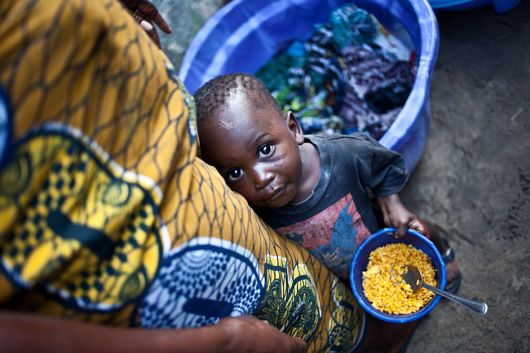
The World Food Programme is waging war on hunger and fighting an uphill battle in six of the world’s hunger hot spots; Syria, Iraq, Yemen, South Sudan, Nepal and the Ebola-affected regions in Guinea, Liberia and Sierra Leone.
Most of the world’s population lives in developing countries. Many of them are mired in extreme poverty, with little hope of access to clean water and often reduced to scavenging for food in trash heaps lining their decrepit shanty town streets, just to feed their children. But in these six emergencies, the situation is even more urgent.
The World Food Programme (WFP), the world’s largest humanitarian aid agency fighting hunger, is the food aid branch of the United Nations, working to address hunger across the globe and promoting food security. Workers are on the ground in these areas trying to ease the crisis by providing needy families with life-saving food.
In Syria, the WFP is struggling to meet food need demands, as nearly six million people have been displaced. The ongoing armed conflict in Syria has been growing worse and the situation steadily deteriorating. Although the WFP has been reaching approximately four million people using hand to mouth operations, funding is running low and the need is increasing drastically.
Iraq has been in crisis for years and continues to be. The recent upsurge in violence has left 1.8 million displaced without access to water or food. The WFP reports having reached out to about a million people since June, providing assistance.
Yemen is a rapidly deteriorating humanitarian emergency. With around half of all children under five being stunted (too short for their age), Yemen already stands as having one of the highest child malnutrition rates in the world. Millions of people are being cut off from basic human needs such as food, water and electricity as fighting persists and fuel shortages continue.
Although the food security threat in South Sudan has been stabilized for now, sustainable assistance is essential in the region as the situation remains extremely fragile. The WFP has been able to reach more than 2.5 million people this year but if fighting continues, the situation in South Sudan could turn into a full-blown catastrophe.
The 7.8 magnitude earthquake that hit Nepal on April 25th, 2015 devastated the region, leaving approximately eight million people affected and living without access to food, water or shelter. With the epicenter being just outside of Kathmandu, large populations were displaced and 30 out of 75 districts in the country were ruined. The Nepalese government issued a state of emergency and the WFP is currently in the country providing assistance.
The WFP has responded in force to the Ebola emergency plaguing West Africa and has met the needs of people affected by the outbreak since April in Guinea, Liberia and Sierra Leone. Along with food assistance, the WFP is also helping get the humanitarian staff and equipment into the crisis zones.
According to www.worldhunger.org, the United Nations Food and Agriculture Organization estimates that about 805 million people of the 7.3 billion people in the world, or one in nine, were suffering from chronic undernourishment in 2012 to 2014. Almost all the hungry people, 791 million, live in developing countries, representing 13.5 percent, or one in eight, of the population of developing counties.
When disaster strikes or when war tears through a nation, humanity can be taken to the breaking point. With help from organizations like the World Food Programme, families fighting for survival can find some relief and possibly some hope.
– Jason Zimmerman
Sources: WFP, World Hunger
Photo: Action Against Hunger
