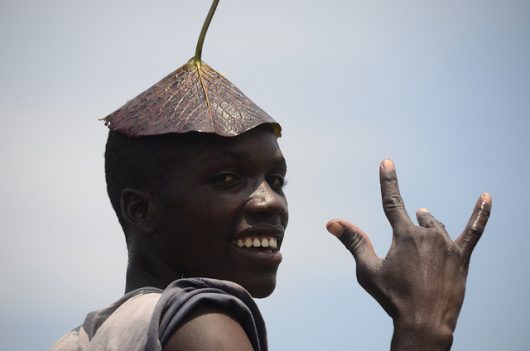
Activists often participate in endless debates about what they think will be the key to unlocking a world without hungry children and families. There are numerous charities that work to stop world hunger, and many of them are making real, sustainable impact in countries all over the world. One way to take a step towards a world with healthy, well-fed families is to spread awareness of these foundations. By spreading awareness, there is a higher chance these charities will get the funding they need to continue to meet their goals.
Five Charities Looking to End World Hunger:
1. Action Against Hunger
With more than 6,500 staff workers all over the globe, Action Against Hunger’s programs have been able to reach more than 13.6 million people as of 2014. Its programs not only save lives but also teaches impoverished people how to live safely long-term. With more than 35 years of experience in food crises and disaster, this foundation knows how to keep children healthy and understands where and when to expect malnutrition.
Regarding nutrition and health, Action Against Hunger has treated 5 million people around the world. This includes almost 3 million people from Nigeria, over 104,000 people in the Democratic Republic of Congo and over 93,000 people in South Sudan. They are able to impact millions of hungry people by evaluating nutritional needs, treating acute malnutrition, preventing acute malnutrition and building local capacity. This is done by collecting data on nutritional indicators like geography, infrastructure, local capacities, resources and cultural practices.
2. Bread for the World Institute
The Bread for the World Institute is a voice that urges national leaders throughout the world to end hunger in their own countries and others around the globe. The foundation has been able to help the hunger epidemic in the United States, Asia, Latin America and Africa. The institute works with members of Congress on issues that affect world hunger including immigration reform, incarceration and child nutrition. Basically, Bread for the World Institute wants the goal of eliminating world hunger to be a priority and believes that by doing so, world hunger can be eliminated by 2030.
Through their Vote to End Hunger campaign, Bread for the World Institute encourages voters to make world hunger one of their top priorities during the 2016 election campaigns and in the ballot box. Their goal is to elect a leader who will make ending world hunger a priority in congress.
3. Freedom from Hunger
Freedom from Hunger provides families the resources necessary to build a healthy future. By equipping families with the proper resources, they can live sufficiently on their own and build healthy lives without continuous aid. Freedom from Hunger believes in educating and empowering communities to fight world hunger. Education modules are influenced by the needs of chronically hungry women, a demographic deemed a priority during the research phase. Group activities, training sessions, guidance counselors and interactive discussions are implemented to inform and encourage the women in safe health practices, like HIV/AIDS prevention or breastfeeding practices and hygiene.
4. The Hunger Project
The Hunger Project focuses on ten principles fundamental to ending world hunger: human dignity, gender equality, empowerment, leverage, interconnectedness, sustainability, social transformation, holistic approach, decentralization and transformative leadership.
The Hunger Project believes there are three essential pillars their foundation must follow in order to make an impact on impoverished communities: empowering women as key change agents, mobilizing entire communities into self-reliant action and fostering effective governments to engage local government.
In Africa, India, Bangladesh, Mexico and Peru, The Hunger Project has supported community development and empowered local entrepreneurship.
5. Heifer International
Heifer International works with various impoverished communities to help boost their economies. Their approach focuses on developing income and assets, food security and nutrition, and the environment. They then work on empowering women and social capital in order to multiple the success of their efforts. The foundation has seen much success in bringing sustainable agriculture and commerce to families without food.
Heifer International supports the “passing on the gift” model. By giving a family a goat, a cow or even a water buffalo, a family can build a sustainable life. Cows produce milk, fertilizer for crops or the capacity to plow fields. When these animals create offspring, families are encouraged to pass on the first female baby to another family. This family then does the same with the offspring of their animals.
It is important to raise awareness and donate to these foundations, seeing that they have been making real-time change and investments. Like these vastly different organizations, ending world hunger does not take a single fix-all approach. Different strategies, supported by generous gifts, provide hungry people with the tools and willpower they need to stop world hunger.
–Casey Marx
Photo: Flickr

Syngenta’s Good Growth Plan Aids Farmers in Asia
Swiss multinational agribusiness Syngenta has been in the limelight since the inception of its Good Growth Plan. This plan revolves around Syngenta’s vision: make farming more efficient, protect farmland, preserve biodiversity, encourage smallholders to take initiative in their farming practices. Syngenta’s belief in improving farmland and empowering smallholders affects farmers in Asia and the farming sector in the U.S.
Currently, farmers in Asia, specifically in rural areas, are not protected by their local governments, which means they lack the resources to protect their land. These farmers or smallholders often live on meager incomes, and they lack the funds to receive training to practice their business sustainably.
Since the farming sector is the backbone for many developing economies, it is vital that technology is inculcated in farming practices to make them productive and protected. Farmers’ incomes rise by 80 to 140 percent through the efficient use of advanced technology. Syngenta’s plan is to drastically improve sustainability and aid farmers in Asia by 2020.
Syngenta’s concerted efforts with the MasAgro program has helped target such smallholders who don’t have the technology for crop protection and efficient production. In the year 2015, Syngenta was able to reach out to about 17.2 million farmers by providing field experts to optimize farmers’ use of new products and current farms’ productivity. Syngenta’s work with USAID, The Sustainable Markets Intelligence Center (CIMS) and the Sustainable Food Lab played a major role in achieving this remarkable feat.
Additionally, the Sales Management Information System has been able to empower smallholders in Asia, helping them “finance higher-yielding products and reach markets to sell their crops.” The Rice Ten Tonne Club, a partner of the Good Growth Plan, rewards rice growers who have been able to effectively produce yields to the ten tonnes per hectare requirement in a sustainable way. This encouragement has incentivized sustainable and productive farming practices. Farmers in Asia have been able to maintain the fertility of their soils, increase revenue and improve their overall productivity.
One of the main ways Syngenta assisted farmers was through safety training and awareness programs about labor safety. Out of 5.7 million people trained in 2015, 70 percent of them were smallholders and have undergone safety training programs about technology usage and crop protection through briefings and commercial activities. Syngenta has very recently won the Silver PRSA Anvil Award for its success in weed management for farmers.
The Fair Labor Program is the crowning jewel of the Good Growth Plan and has aided thousands. It evaluates the labor conditions of production plants, farms, and suppliers in the supply chain. Syngenta’s supplier contracts have helped the monitoring of child labor, working conditions of farmers and enforcement of health and safety laws. In 2015, Syngenta received a major endorsement, FLA accreditation, for effective procedures and supply operations.
Syngenta’s strategic planning and investments in companies like Phytech and Brandtone, two companies changing the face of developing markets, has helped bring aid to smallholders. It has also provided them with many opportunities and crop protection projects which have helped thousands. Moreover, Syngenta has worked with the United Nations Global Compact (UNGC) to protect farmland and corn crops especially.
The recent $44 billion takeover bid proposed by ChemChina will impact Syngenta’s work drastically. Farmers and investors in the west see this as something deplorable as monopolistic practices may arise as market share increases.
But the silver lining would be amplified investments to developing countries in Asia pacific where Syngenta has a stronghold, as Chinese companies have a higher propensity to invest now due to slow growth.
-Shivani Ekkanath
Photo: Wikipedia
Ten Facts on Epilepsy in Developing Countries
As one of the most common neurological conditions in the world, epilepsy hits resource-poor communities particularly hard. Although there are simple and inexpensive ways to treat epilepsy, the stigmatization of the disorder in developing countries leaves those suffering from epilepsy misunderstood and untreated. In addition, health care providers in developing countries often lack training in diagnosing and treating neurological disorders like epilepsy. Thus, shedding light on the facts about epilepsy is crucial to improving the lives of those affected by epilepsy in developing regions of the world.
By ensuring healthcare providers know how to diagnose epilepsy, consistently distributing AED’s to both rural and urban communities and erasing the stigma surrounding the disorder, the prevalence of epilepsy in developing countries has the potential to be reduced as low or lower than in developed countries.
– Daniela Sarabia
Photo: Medscape
Five Nonprofits Fighting Poverty in Gaza
According to the World Bank, poverty in Gaza has risen to nearly 40 percent, twice as high as that in the West Bank. More than 65 percent of Gazans have inadequate access to water and sanitary services and unemployment rates are over 40 percent.
Despite the extreme hardships endured by the Gazan people, there are numerous nonprofit organizations across the globe helping to improve conditions in the Gaza Strip.
1. United Palestinian Appeal (UPA) – Washington D.C.
UPA’s mission statement is to alleviate the sufferings of Palestinians living in Gaza, the West Bank and refugee camps across the Middle East by providing direct aid through program and grants.
The Healing Through Feeling Program provides Gazan children, 50 percent of whom suffer from PTSD, with trauma counseling and community support.
Other programs include scholarship funding, medical care provisions, food security and small business education.
2. Al Mezan Center For Human Rights – Gaza City, Gaza Strip
Al Mezan’s mission is to promote the protection of human rights in Gaza through research, legal intervention and advocacy. Projects include gathering information on human rights violations, meeting with governmental bodies to discuss violations and spreading awareness.
Al Mezan also offers a variety of training courses, workshops and lectures to train lawyers and analysts on the necessary information for their professional programs.
3. Just Vision – Jerusalem, New York, Washington D.C.
Just Vision’s goal is to foster peace and build a future of freedom and equality for both Palestinians and Israelis by ending the occupation. As a team of advocates, filmmakers and journalists, Just Vision creates films about the under-documented stories of Palestinian and Israeli activists.
Award-winning films include Encounter Point, My Neighborhood, Budrus and The Wanted 18.
4. The Jerusalem Fund – Washington D.C.
The Jerusalem Fund aims to foster a greater awareness for the Palestinian cause and improve the livelihood of Palestinians living in the Gaza Strip, West Bank and diaspora.
The Jerusalem Fund works to accomplish these goals through three programs:
The Humanitarian Link, which provides direct aid and relief services to Palestinian communities; the Palestine Center, which functions as the educational branch, hosting regular lectures and redistributing published articles; and the Gallery Al-Quds, which features contemporary Arab-American and Arab artists whose work centers on issues of the Arab and Islamic world.
5. The Freedom Theater – Jenin Refugee Camp, Gaza Strip
The Freedom Theater inspires creativity and encourages theater arts to empower the youth and women living in Jenin to explore their own potential and use art as a catalyst for social change.
In 2008, the Freedom Theater launched a theater school that offers intensive three-year programs in various fields: acting, dance, movement, voice, acrobatics, improvisation, playwriting, dramaturgy, history of theatre, costume design, set design, production and stage management.
Whether it is by providing direct aid or spreading awareness, these five nonprofit organizations are saving lives, providing sustainability and making a difference in the fight against poverty in Gaza.
– Kristyn Rohrer
Photo: Pixabay
Climate-Smart Agriculture: Helping Farmers in Africa
Although El Niño responsible for extreme weather changes around the world since the end of 2015, more productive and resilient farming practices are necessary to mitigate the future impact of climate change in Africa: Climate-smart agriculture.
A new briefing paper by the Montpellier Panel, consisting of African and European experts from the fields of agriculture, trade and ecology, have determined that African food security and agricultural development policies will fail if they do not promote farming practices that are climate-smart. The panel’s conclusion comes as Southern Africa tries to recover from a severe drought caused by the strongest El Niño in decades.
The Montpellier Panel’s paper critiques the Malabo Declaration, which was signed by member states of the African Union in 2014. It commits to doubling agricultural productivity by 2025 to feed Africa’s rapidly growing population. Increasing investment in agricultural sectors and boosting intra-African trade in agricultural services are among the main instruments the union will rely on to end hunger.
The Montpellier Panel argues that the targets set by the Malabo Declaration underemphasize the risk of climate change on food security, productivity and the importance of investing in Africa’s science potential. According to the briefing paper, African countries must integrate climate-smart programs. These are currently small in scale and set up by international or local NGOs into larger agriculture investment plans.
Climate-smart agriculture involves increasing productivity, strengthening resilience to sudden weather changes and minimizing farming-related greenhouse gas emissions in a sustainable manner.
The Montpellier Panel’s release of the paper occurred as Africa tries to recover from the worst drought in a generation, which is linked to El Niño.
The Southern African Development Community has reported that crop failure and livestock deaths as a result of water shortages has led to higher food prices. Additionally, they have caused an estimated 41 million people in Southern Africa to become food insecure with 21 million needing immediate food assistance.
In Zimbabwe and Madagascar, last year’s harvest decreased “by half compared to the previous year because of substantial crop failures,” according to the Montpellier Panel. Cereal producers from South Africa to the Democratic Republic of Congo have also experienced a 9.6 million metric ton shortfall in production. South Africa is facing a 2.6 million ton deficit in maize harvests, the SADC said.
Although El Niño has ended and water deficits may improve if a La Niña weather pattern develops, climate change is expected to continue to have a significant impact on Africa. Over the next decades, mean temperatures across the continent will increase faster than the global average. Sea level rise will threaten land in the Nile Delta and other coastal areas.
The Montpellier Panel has recommended ways for African countries to expand the use of climate-smart agriculture and help farmers overcome the impact of droughts and other extreme weather changes.
The briefing paper stresses the need for investments in innovation and scientific research. These investments will develop drought-tolerant crops and expose farmers to more efficient agricultural methods that can improve soil fertility and reduce greenhouse gas emissions. Reliable climate information services that provide weather forecasts and insurance programs that compensate farmers after severe climate events can also increase reliance.
Several countries have already experienced the benefits of climate-smart agriculture.
In Kenya, bucket drip kits supported by the Kenya Agriculture Research Institute have helped farmers deliver water to crops effectively and at a cheaper cost than other irrigation techniques. According to the Montpellier Panel, high-iron beans and orange maize have also become staple crops in Zambia because of their ability to tolerate droughts and heat.
– Sam Turken
Photo: Pixabay
Five Charities Working to Stop World Hunger
Activists often participate in endless debates about what they think will be the key to unlocking a world without hungry children and families. There are numerous charities that work to stop world hunger, and many of them are making real, sustainable impact in countries all over the world. One way to take a step towards a world with healthy, well-fed families is to spread awareness of these foundations. By spreading awareness, there is a higher chance these charities will get the funding they need to continue to meet their goals.
Five Charities Looking to End World Hunger:
1. Action Against Hunger
With more than 6,500 staff workers all over the globe, Action Against Hunger’s programs have been able to reach more than 13.6 million people as of 2014. Its programs not only save lives but also teaches impoverished people how to live safely long-term. With more than 35 years of experience in food crises and disaster, this foundation knows how to keep children healthy and understands where and when to expect malnutrition.
Regarding nutrition and health, Action Against Hunger has treated 5 million people around the world. This includes almost 3 million people from Nigeria, over 104,000 people in the Democratic Republic of Congo and over 93,000 people in South Sudan. They are able to impact millions of hungry people by evaluating nutritional needs, treating acute malnutrition, preventing acute malnutrition and building local capacity. This is done by collecting data on nutritional indicators like geography, infrastructure, local capacities, resources and cultural practices.
2. Bread for the World Institute
The Bread for the World Institute is a voice that urges national leaders throughout the world to end hunger in their own countries and others around the globe. The foundation has been able to help the hunger epidemic in the United States, Asia, Latin America and Africa. The institute works with members of Congress on issues that affect world hunger including immigration reform, incarceration and child nutrition. Basically, Bread for the World Institute wants the goal of eliminating world hunger to be a priority and believes that by doing so, world hunger can be eliminated by 2030.
Through their Vote to End Hunger campaign, Bread for the World Institute encourages voters to make world hunger one of their top priorities during the 2016 election campaigns and in the ballot box. Their goal is to elect a leader who will make ending world hunger a priority in congress.
3. Freedom from Hunger
Freedom from Hunger provides families the resources necessary to build a healthy future. By equipping families with the proper resources, they can live sufficiently on their own and build healthy lives without continuous aid. Freedom from Hunger believes in educating and empowering communities to fight world hunger. Education modules are influenced by the needs of chronically hungry women, a demographic deemed a priority during the research phase. Group activities, training sessions, guidance counselors and interactive discussions are implemented to inform and encourage the women in safe health practices, like HIV/AIDS prevention or breastfeeding practices and hygiene.
4. The Hunger Project
The Hunger Project focuses on ten principles fundamental to ending world hunger: human dignity, gender equality, empowerment, leverage, interconnectedness, sustainability, social transformation, holistic approach, decentralization and transformative leadership.
The Hunger Project believes there are three essential pillars their foundation must follow in order to make an impact on impoverished communities: empowering women as key change agents, mobilizing entire communities into self-reliant action and fostering effective governments to engage local government.
In Africa, India, Bangladesh, Mexico and Peru, The Hunger Project has supported community development and empowered local entrepreneurship.
5. Heifer International
Heifer International works with various impoverished communities to help boost their economies. Their approach focuses on developing income and assets, food security and nutrition, and the environment. They then work on empowering women and social capital in order to multiple the success of their efforts. The foundation has seen much success in bringing sustainable agriculture and commerce to families without food.
Heifer International supports the “passing on the gift” model. By giving a family a goat, a cow or even a water buffalo, a family can build a sustainable life. Cows produce milk, fertilizer for crops or the capacity to plow fields. When these animals create offspring, families are encouraged to pass on the first female baby to another family. This family then does the same with the offspring of their animals.
It is important to raise awareness and donate to these foundations, seeing that they have been making real-time change and investments. Like these vastly different organizations, ending world hunger does not take a single fix-all approach. Different strategies, supported by generous gifts, provide hungry people with the tools and willpower they need to stop world hunger.
–Casey Marx
Photo: Flickr
UNICEF Releases Video for Childhood Poverty Awareness
UNICEF recently released a video showing how people react to children based on the types of clothes they are wearing. The video was in conjunction with the State of the World’s Children Report of 2016, sending a strong message to society about childhood poverty awareness.
The social experiment video that UNICEF released in company with the State of the World’s Children Report of 2016 has sparked an overdue societal reaction. The video has ignited conversations about what can be done to increase childhood poverty awareness.
UNICEF’s message following the video was that the world must invest in poor children before the world becomes more divided and unequal. It is a call to action motivated by a sense of urgency and the conviction that a better world is possible.
In the video, the production team dresses a little girl named Anano in very nice clothes. As she stands alone on the sidewalk, people consistently ask her if she is lost and try to help her. When the production team changes Anano’s appearance, dressing her in scrappy clothes with soot on her face, a drastic change occurs. Looking as if she is stricken by poverty, those passing by ignore her. She is left alone in the street without anyone giving her a second glance.
In the second experiment, the production team has Anano enter a restaurant using the same set-up. When she was dressed in stylish clothing, many customers are very friendly towards her and are willing to entertain her. When her appearance changes, she is greatly ignored. As she walks past tables, women move their purses out of range and suggest that she be taken out of the restaurant. Anano became so upset after this scene that production had to halt the video.
What is clear is the heart-wrenching message that UNICEF is trying to portray with the release of this video. Although reading a report may strike a chord, visual images often evoke stronger reactions.
The emotions that society feels while watching the video are the emotions that UNICEF would like everyone to feel knowing that there are millions of children around the world living in extreme poverty. It is not enough to feel for just Anano; as a society, it is imperative that these reactions are put into actions and are carried out throughout the world.
In the 180 pages of the State of the World’s Children Report of 2016, UNICEF notes that childhood poverty awareness must be increased today in order to achieve the Millennium Development Goals by 2030. If these goals are not met, 167 million children will live in extreme poverty by that time. In addition, 69 million children that are now under the age of five will die before 2030 and 60 million children of age to attend primary school will not attend.
The report covers child health, education, poverty and equality. It urges society to strengthen the principles of increasing child poverty awareness by allowing the public to have access to information about the number of children living in poverty. The report also suggests ways to accelerate the processes of investing in equity and creating innovative ways to finance the poorest of the poor.
One disparity that UNICEF reports on is the lack of health providers in poor countries. Sub-Saharan Africa has 1.8 million fewer health workers than its population needs. With women facing a 1-in-36 chance of dying from pregnancy-related complications, UNICEF urges that child survival begins with women’s health.
The report concludes that the futures of millions of impoverished and vulnerable children will be endangered unless the world advances the pace of the developments that are being made in mitigating childhood poverty awareness.
– Kimber Kraus
Photo: YouTube
Ending the South African Education Crisis
Although it invests more money into its education system than any other African country, South Africa is currently facing a public education crisis. One-quarter of students failed their final examinations this past school year. The dropout rate has also increased, resulting in less than half of current students completing their secondary education, which greatly contributes to the South African education crisis.
Students in South Africa often face challenges in the areas of mathematics and science. One explanation for this issue is that 25 percent of secondary schools do not offer math classes for grades 10 through 12. In 2014 and 2015, South Africa’s math and science programs ranked last out of 140 countries in the Global Competitiveness Report.
Language barriers between teachers and students are also a major dilemma, as South Africa is a very linguistically diverse country with 11 official languages. According to Professor John Volmink, in order to bridge the gap, teachers must be better equipped to teach English to their students.
Multiple leaders also point out the negative consequences of education stemming from apartheid. Schools of better quality are mostly located in predominately white areas, meaning that black students must travel to these schools or settle for sub-par schools in their neighborhoods. Though apartheid is over, the South African education system is still working to reduce its residual negative consequences.
South African Minister of Education Angie Motshekga recognizes the weaknesses in the South African education system and continues to work to overcome the legacy of apartheid. She also plans to work with unions to increase teacher attendance, allowing students more time in the classroom.
However, while these factors do play a part in the reality of the education system in South Africa, there is hope. Business Tech is quick to point out that the South African education crisis, and specifically the country’s rankings, do not “reflect the ability of the country’s learners but is indicative of an education system that needs urgent intervention.”
Some schools that lack even basic educational resources still excel academically. South Africa also has many high-quality private institutions, although not all families are able to afford these schools. With help from the international community, more South African students can reach their full academic potential.
– Carrie Robinson
Photo: Flickr
Namibian First Lady Launches ‘One Economy’ Foundation
The First Lady of Namibia, Monica Geingos, established the One Economy Foundation in May of this year. The organization’s slogan, “one Namibia, one Economy,” describes its plans to bridge the gap between formal and informal entrepreneurship in the African nation.
Namibia’s economy has been improving recently, with Bloomberg calling it the top emerging economy in Africa in 2012. However, informal entrepreneurship (unregulated, untaxed commerce operating without contracts or laws) continues to inhibit the country’s growth potential.
According to the Namibian Statistics Agency, the country’s unemployment rate stood at 27.4 percent in 2012. Many of the unemployed opt to work informally, due to significant barriers to entry in Namibia’s formal economy. However, informal work offers little in terms of long-term growth at the individual and national level. This is the problem the One Economy foundation wishes to address.
The One Economy Foundation will focus on entrepreneurship, early childhood development and health. The most crucial components are professional economic coaching and collateral-free lending. These strategies will help young Namibians—particularly those without preexisting connections to the nation’s high-powered financial sector—get a foot in the door.
According to Geingos, “One Economy is about providing fair opportunity. It’s about providing people with talent with opportunity.” She went on to explain that the need for the One Economy Foundation exists at both ends of Namibian commerce, as many enterprising Namibian bankers need the means to tap into the population of informal workers.
Prior to her involvement in the state, Geingos was one of the key figures in Namibia’s growing economy, possessing major holdings in Namibian mining, banking and media corporations. Her most recent endeavors, as a member of the Economic Advisory Council and First Lady, have been part of a larger effort in Namibia’s war on poverty.
The First Lady’s husband, President Hage Giengob, has also made poverty his focus in recent years. Despite a report in the Journal of Economic Structures stating that Namibia has “one of the most unequal income distributions on the African continent,” the President and First Lady remain hopeful that the nation’s wealth can be redistributed to address the nation’s poor.
Late last year, the president declared an “all-out war on poverty,” after receiving an impressive 87 percent of votes in the Namibian general election.
One Economy has already raised over N$4.5 million for implementation later this year.
– John English
Photo: Flickr
How One Small Organization is Expanding Internet In Uganda
The power of information availability is transformative to all communities throughout the world. However, 60 percent of the world still does not have access to the Internet, according to Internet Live Stats.
The disadvantages linked to communities without Internet access are extensive. These individuals lack the right to easily access the research, educational tools, information and communication that are all found on the Internet.
After traveling to many parts of the world, one couple, Deb and Ron Plotkin decided they were going to develop an organization in Northern Uganda to educate communities on computers and the Internet.
The Plotkins saw the devastation that 20 years of civil war had left in the Northern territories and knew how great of an impact access to the Internet in Uganda would have on these communities. Their consequent organization, U-Touch (Universal Technology Outreach Community Hubs), expands access to the Internet in Uganda by providing IT training as well as job, health and life skills.
U-Touch has locations in five remote villages in Northern Uganda—Gulu, Kitgum, Pader, Kabale and Mbale—and tries to find sponsors in order to educate its trainees free of charge.
Over 3,000 trainees have graduated from U-Touch since the organization began in 2010. Its trainees come from all walks of life. Some are men and women or former child soldiers that never had access to education while others are educated medical workers, students, teachers and farmers.
The educated workers that go to U-Touch typically seek specific training on research methods. Many medical workers engage U-Touch to gain research skills in order to improve their diagnostic and treatment skills. Students use the program to improve their academic performances and apply to universities. Professionally, teachers use it to gain information to relay to their students, and farmers use it to receive agricultural information that can improve their crop yields.
Though U-Touch is available to help anyone, it was created with individuals like its former trainee, Atim Gracious, in mind. Atim was an unemployed woman who went to U-Touch for an education. After graduation, she started her own business. Atim’s business provides training in computer use, typing, printing, photocopying, binding and scanning.
Her clients consist of schools, NGOs, churches and individuals. U-Touch not only changed Atim’s life but also helped her change the lives of others.
U-Touch starts its training by teaching very basic computer skills since most of its trainees have never touched a computer before. Within 12 weeks, it educates its trainees on how to use the Internet for research, email, Microsoft Office and social networking programs. It also provides its trainees with an assortment of life, job, health, communication, entrepreneurship and digital art skills.
The skills taught at U-Touch are a critical foundation for individuals in the workforce all around the world. U-Touch has helped hundreds receive employment and is supplementing many of Africa’s growing economies that are seeking skilled IT workers. Currently, 86 percent of people in Africa do not have Internet access, according to U-Touch’s most recent records. Nevertheless, U-Touch is doing what it can to make a difference one village at a time, with hopes of completing its goal of dramatically increasing the usage of the Internet in Uganda.
Millions of young men and women living in regions of rural Africa without Internet access are cut off from the worldwide web of improved education, employment and empowerment. In an interview, the Plotkins stated they have “witnessed talent, wisdom and brilliance distributed equally around the globe…[but] opportunity is not.” If one couple can make a difference in over 3,000 lives by distributing opportunity via the Internet in Uganda, so much more is feasible with future volunteer work.
– Bella Chaffey
Photo: Flickr
Doctors Without Borders: Equitable Access to HIV Treatment
Nonprofit medical aid conglomerate Doctors Without Borders, or Medecins Sans Frontieres, requests increased access to treatment for Western and Central African countries. Although not the highest-risk demographic, less than one-third of the afflicted receive life-saving medicines.
Eastern and Southern Africa hold half of the world’s HIV-infected population. As a result, intervention, prevention and treatment overwhelmingly pour into this region of the world, leaving others without equitable aid. Dr. Cecilia Ferreyra, HIV adviser for Doctors Without Borders, reports that in the last five years, “the number of people on life-saving HIV treatment worldwide doubled.” Yet, 4.5 million people in Western and Central Africa do not receive treatment.
The plea from the organization came a day before an important U.N. meeting discussing the prevention of AIDS. On June 10, a U.N. press release indicated the member states would implement a bold course of action to end AIDS as a public health threat by 2030. With a goal like this, areas of concern can now be reached with renewed vigor.
It seems Doctors Without Borders has been effective in lobbying the UN for increased attention to regions with a lower HIV prevalence. In the press release, UNAIDS stated, among its other goals, that it would set “an action agenda for getting to 90-90-90,” referring to the percentage of people who know their HIV-positive status, receive antiretroviral treatment and reach viral suppression. Its goals also promise UNAIDS will be “leaving no one behind” in the quest to completely eliminate AIDS.
The U.S. specifically has committed to introducing a $100 million Key Populations Investment Fund that is intended to bridge the gap between PEPFAR and those who don’t normally receive financial help. It aims to assist people facing discrimination, such as sex workers, gay men, intravenous drug users, transgender people and prisoners. This could help regions like Western and Central Africa in which stigmatization prevents those with HIV from receiving proper treatment.
Despite the region-specific challenges faced by Western and Central Africa—which (besides stigma) includes a shortage of well-trained medical staff, service shortcomings and high fees—the spread of HIV/AIDS is certainly slowing. The goal of ending AIDS by 2030 encompasses the entire globe, not just the areas in dire need.
– Connor Borden
Photo: Flickr