Syngenta’s Good Growth Plan Aids Farmers in Asia
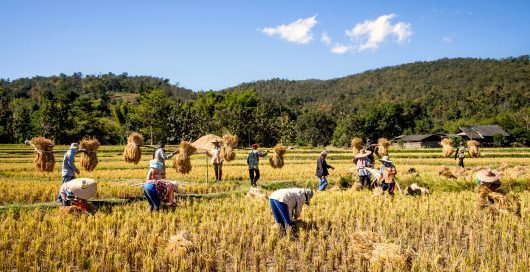
Swiss multinational agribusiness Syngenta has been in the limelight since the inception of its Good Growth Plan. This plan revolves around Syngenta’s vision: make farming more efficient, protect farmland, preserve biodiversity, encourage smallholders to take initiative in their farming practices. Syngenta’s belief in improving farmland and empowering smallholders affects farmers in Asia and the farming sector in the U.S.
Currently, farmers in Asia, specifically in rural areas, are not protected by their local governments, which means they lack the resources to protect their land. These farmers or smallholders often live on meager incomes, and they lack the funds to receive training to practice their business sustainably.
Since the farming sector is the backbone for many developing economies, it is vital that technology is inculcated in farming practices to make them productive and protected. Farmers’ incomes rise by 80 to 140 percent through the efficient use of advanced technology. Syngenta’s plan is to drastically improve sustainability and aid farmers in Asia by 2020.
Syngenta’s concerted efforts with the MasAgro program has helped target such smallholders who don’t have the technology for crop protection and efficient production. In the year 2015, Syngenta was able to reach out to about 17.2 million farmers by providing field experts to optimize farmers’ use of new products and current farms’ productivity. Syngenta’s work with USAID, The Sustainable Markets Intelligence Center (CIMS) and the Sustainable Food Lab played a major role in achieving this remarkable feat.
Additionally, the Sales Management Information System has been able to empower smallholders in Asia, helping them “finance higher-yielding products and reach markets to sell their crops.” The Rice Ten Tonne Club, a partner of the Good Growth Plan, rewards rice growers who have been able to effectively produce yields to the ten tonnes per hectare requirement in a sustainable way. This encouragement has incentivized sustainable and productive farming practices. Farmers in Asia have been able to maintain the fertility of their soils, increase revenue and improve their overall productivity.
One of the main ways Syngenta assisted farmers was through safety training and awareness programs about labor safety. Out of 5.7 million people trained in 2015, 70 percent of them were smallholders and have undergone safety training programs about technology usage and crop protection through briefings and commercial activities. Syngenta has very recently won the Silver PRSA Anvil Award for its success in weed management for farmers.
The Fair Labor Program is the crowning jewel of the Good Growth Plan and has aided thousands. It evaluates the labor conditions of production plants, farms, and suppliers in the supply chain. Syngenta’s supplier contracts have helped the monitoring of child labor, working conditions of farmers and enforcement of health and safety laws. In 2015, Syngenta received a major endorsement, FLA accreditation, for effective procedures and supply operations.
Syngenta’s strategic planning and investments in companies like Phytech and Brandtone, two companies changing the face of developing markets, has helped bring aid to smallholders. It has also provided them with many opportunities and crop protection projects which have helped thousands. Moreover, Syngenta has worked with the United Nations Global Compact (UNGC) to protect farmland and corn crops especially.
The recent $44 billion takeover bid proposed by ChemChina will impact Syngenta’s work drastically. Farmers and investors in the west see this as something deplorable as monopolistic practices may arise as market share increases.
But the silver lining would be amplified investments to developing countries in Asia pacific where Syngenta has a stronghold, as Chinese companies have a higher propensity to invest now due to slow growth.
-Shivani Ekkanath
Photo: Wikipedia
