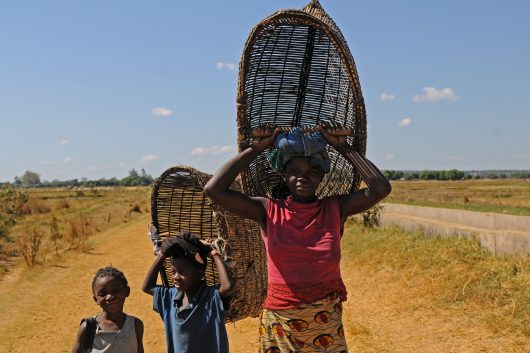
 It is the time of year to reflect on achievements and the need for change. The World Economic Forum 2016 Report on the Global Gender Gap points to both.
Countries are measured on the following metrics regarding women and gender inequality: economic participation and opportunity, political empowerment, educational attainment, health, and survival.
The highest possible score is one for gender equality. The lowest possible score is zero for gender inequality. Rwanda has achieved a ranking of five. Pakistan and Yemen are 143 and 144 respectively out of a total 144 countries. Gender inequality examples are numerous in both Yemen and Pakistan.
Gender inequality leads to gender-based violence against both women and young girls affecting one in three females around the world, in the name of “honor killings”, public stoning’s, wartime rape, domestic violence and abuse. Increased conflict in Yemen highlights a correlation with marrying off child bride’s sooner. This is a longstanding human rights violation in Yemen.
Numbers from a survey of 250 community members conducted by UNFPA indicated 72 percent of child marriage survivors in North Yemen were married between the ages of 13 and 15. In the South, 62 percent were married before the age of 16. Child brides experience pregnancy complications and are more vulnerable to violence. They are expected to conceive within their first month after marriage.
Pakistan also experienced severe spikes in violence against women this past summer. Women died by burning, strangling, and poison. Women are vulnerable to early marriage, domestic violence and death by male family members who may be suspicious that they are unfaithful.
New legislation passed in October called the “anti-honor crime bill”. This marks progress; there will, however, remain obstacles between parliament and religious groups. For real change, all murders will need to be treated the same as a crime against the state.
True change for women living in vulnerable settings is possible. Protecting Girls Access to Education in Vulnerable Settings Act is a bill that was introduced in July 2016 that “… is critical to ensure that children, particularly girls, displaced by conflicts overseas are able to receive a quality education and that the educational needs of women and girls are considered in implementing U.S. foreign assistance policies and programs.”
Pakistan activists are taking action for change with a play on words to end violence against all women. The U.N. Women Pakistan’s new #BeatMe campaign challenges men to beat well-known women from Pakistan at things in which they excel. The campaign confronts physical abuse with female mountain climber Samina Baig. She is the only Pakistani woman to climb Mount Everest.
The campaign will focus on success stories of women from all walks of life. Pakistan’s #BeatMe campaign has advocacy components, legal services for survivors and intends to address a shift in social attitudes particularly among men and boys. The campaign’s long-term goals focus on opening a global dialogue about women’s rights and gender equality.
It has been twenty years since the Rwandan genocide where 100 million men, women and children died. Women extended their strength as mothers into the fields of construction and mobilization to rebuild their nation. Today women have a seat at the economic and political tables of power. This is why Rwanda ranks 5th this year for improving the status of women.
- Fifty percent of Rwanda’s Supreme Court Justice’s are women
- Girls attend public school in equal numbers to boys
- Women can legally own property and pass citizenship to their offspring
- Established businesswomen are leaders in the private sector
- Rwanda ranks first in the world for women’s representation in elected lower house of parliament.
New laws are one factor in the Rwanda’s shift to a country where women hold a new place in society. These laws are strengthened by a paradigm shift in the collective thinking of the entire country.
Rwanda did not rebuild overnight. The strength of Rwandan women is a model for countries at war, where women are struggling to stay alive, and seek freedom from violence, a large stepping stone to education, political power and equal pay.
– Addison Evans
Photo: Flickr

Drones for Refugees: Saving Lives in the Mediterranean
Since 2014, 10 people have died every day attempting to travel to Mediterranean countries by sea. The Drones for Refugees project wants to make the voyage safer.
The drones livestream areas heavily trafficked by refugees in the Mediterranean Sea and use infrared sensors to allow easy viewing at night. The drones run on solar batteries and use wireless internet connection, requiring little human involvement. Workers in ground stations monitor the footage on a computer or mobile device and collect information such as the number of people on a boat, the coordinates, whether the route is correct and whether there are enough life vests. In the case of an emergency, monitors quickly alert rescue crews. Newer drone prototypes carry an emergency aid package that can be released when needed. This quick response can save many lives.
The prototype was tested in Lesbos between July and August 2016. A more advanced version will debut in Sicily in the spring of 2017. Drones for Refugees is currently self-funded, but with help from investors and donors, the organization hopes to produce larger drones capable of traveling longer distances.
Project director Mehdi Salehi originally co-founded Good Drones, an innovation and design lab focused on using drones to solve social problems. Drones for Refugees is only one of the projects of the Good Drones initiative. Salehi was inspired by news footage of Syrian refugees traveling on worn-down boats in the middle of the Mediterranean Sea, as well as his own personal experiences.
In 2001, Salehi was an Afghani refugee. He and a friend traveled to Greece on a small boat. Once he arrived in Greece, Salehi was imprisoned for five months. Eventually, with the help of a Greek lawyer, he was able to receive political asylum. He went on to graduate from the University of Volos and moved to New York to attend Parson School of Design. He says about his experience, “I was very lucky. I got a lot of support from people that met me along the way, especially in Greece. They encouraged me and believed in me. Refugees and migrants, that’s what we need: an opportunity to thrive.”
For refugees, crossing the Mediterranean can be an exhausting and terrifying experience. Drones for Refugees wants to ensure that refugees are given a fighting chance to escape the violence and oppression in their home countries.
– Karla Umanzor
Photo: Flickr
HIV-Detecting USB: Changing the Lives of HIV Patients
Scientists at Imperial College London and tech company DNA Electronics have developed a USB that can diagnose HIV and allow patients to track their own virus levels. This HIV-detecting USB could save the lives of many.
Worldwide, 36.7 million people have HIV. According to AIDS.gov, the majority of HIV-positive people are from disadvantaged countries. A large number are unaware of their status. Others who know they are positive do not have access to necessary equipment.
According to Dr. Graham Cooke, a researcher from the Department of Medicine at Imperial College, “We have taken the job done by this equipment, which is the size of a large photocopier, and shrunk it down to a USB.”
How Does It Work?
The process is simple. The patient places a drop of blood on the USB. A complementary metal-oxide semiconductor detects HIV RNA. The presence of HIV in the patient’s blood triggers a change in acidity in the metal, which is translated into an electrical signal. Users can read the results on a computer.
Scientific Reports published the results of trials in early November. The USB tested 991 blood samples with 95% accuracy. The average wait time to get results was under 21 minutes. The process is quick and accurate. The technology is still in its early stages and will not be on the market for a while, but according to reports, the HIV-detecting USB is relatively inexpensive to produce.
Easily Used Outside of Hospitals
The developers want this device to reach patients living in regions where hospitals have limited resources to monitor their patients’ blood HIV levels.
The device is not restricted to medical facilities. Patients in remote areas can use the device to monitor their own HIV levels. Tracking virus levels helps patients receive accurate antiviral treatments and prevent the development of drug resistance.
Cook said, “HIV treatment has dramatically improved over the last 20 years…However, monitoring viral load is crucial to the success of HIV treatment.”
Soon, this HIV-detecting USB may be instrumental to treatment in underserved areas around the globe.
– Karla Umanzor
Photo: Flickr
Rain Harvesting to Improve Water Quality in Ethiopia
Erratic rainfall negatively affects the water quality in Ethiopia and can cause famine and food shortage. In addition, war diverts resources that could be used for clean water projects.
Essential for survival, water is something most people can access very easily. The number of people in Ethiopia with access to clean water has doubled, from 29 percent in 2000 to 59 percent in 2015. Yet 41 percent of the population lacks adequate access to safe water.
Ethiopia has endured four severe droughts since 1974 and is currently facing the worst drought it has seen in 50 years. The water crisis can be attributed not only to severe drought but also to lack of government funding and infrastructure.
Best-selling author and YouTuber John Green went to Ethiopia with Bill Gates. “When I asked people about their greatest needs, almost all of them–from the Women’s Health Army volunteers to children–cited clean water first.”
Women spend hours every day carrying 50-pound cans filled with clean water for their families. Because of the distance that many women must travel to get clean water, families often utilize any water they have access to, regardless of its safety.
One method of improving water quality in Ethiopia is to implement rainwater harvesting techniques. Rainwater harvesting initiatives have helped those facing drought in India, China and Mexico and could be the answer to improving water quality in Ethiopia on a widespread basis. Rainwater harvesting helps people provide themselves with clean water from a reliable source that can last through even the driest seasons.
When asked about rainwater harvesting by the BBC, Dennis Garrity of the World Agroforestry Centre said, “Ethiopia, often regarded as a dry country, could collect enough for half a billion people…The time has come to realize the great potential for greatly enhancing drinking water supplies…by harvesting more of the rain when and where it falls.”
In a study assessing the impact of rainwater harvesting systems in the Abreha Weatsbeha watershed, the community utilized sustainable land management methods such as integrated soil and water conservation practices. Farmers learned to use conservation structures and vegetation in the upper part of watersheds to contribute to the amount of groundwater discharged in the lower part of the catchment.
The groundwater table is now only three meters beneath the surface, even in the driest season (it was previously 15 meters underground). Farmers now have their own shallow irrigation wells and the community has 388 hand-dug wells. The people in Abreha Weatsbeha call these groundwater ponds their “water bank.” Thanks to the “water banks” rainwater harvesting systems create, quality of life and water in Ethiopia can greatly improve.
– Mary Barringer
Rural Education in Peru: Inconsistent but Improving
Children in Peru are required to be enrolled in school until age 16. After secondary school, however, student enrollment numbers begin to dwindle. As the United Nations Educational, Scientific and Cultural Organization (UNESCO) reported in 2010, primary schools have the highest percentage of children enrolled. From primary school to tertiary school, enrollment rates decline about 50%. Despite this decline, 94% of Peruvian adults are literate, which is higher than the world median.
Education in Peru: Urban vs Rural
Children in urban areas have the easiest access to education in Peru. Those living in the Andes, Sacred Valley and other rural areas, however, struggle to reach education levels similar to those of their urban peers. These children are more likely to drop out of school due to family labor responsibilities. As recorded in the CIA World Factbook, of the 2.5 million children in Peru approximately 865,600 children are in the labor force. School life expectancy, or the number of years an individual is expected to spend in school assuming a constant enrollment rate, is 13 years for citizens of Peru.
Rural students’ school experience differs from that of their urban counterparts, as they have to walk several hours a day to get to school in nearby urban areas. Sometimes rural areas have schools, but these schools frequently do not have the resources or support to educate students at different levels. Instead, students of all ages sit in one classroom, making uniform curriculum development a difficult task.
Teachers are being trained to educate rural students under yearly contracts. This training can be challenging, as most rural students do not know Spanish. Teachers have to learn Quechua, the native language of many rural students. Rural and urban teachers alike are faced with an inadequate hierarchy system. Teachers often do not know whether they will be teaching until a week before classes begin, eliminating the ability to plan ahead. These teachers are also unable to get necessary resources, fear being fired and are paid very little.
To overcome these obstacles, Peru’s Ministry of Education developed the Alternate Education for Rural Development program. Since 2002, this project has assisted nearly 3,000 young children in 40 rural schools and 11 regions. The program has been successfully accommodating rural students, as shown in 2012 when about 50% of students were enrolled in tertiary school and close to 70% were simultaneously working.
Other organizations are improving education in Peru as well. Unearth the World (UTW) works with nonprofit organizations in Peru to help provide women, children and teens living in poverty with proper education services. Peruvian Hearts helps Peruvian girls attend secondary school and college by offering scholarships ranging from $500 to $6000 per year.
– Kristen Guyler
Photo: Flickr
SE200 Community Chlorine Maker: Clean Water in Five Minutes
To help remedy this issue, the SE200 Community Chlorine Maker is using electricity and salt to provide clean drinking water to people in need. By producing accurate amounts of chlorine, the battery powered device is able to clean 200 liters of water in five minutes. Chlorine kills an array of microbes and sanitizes water thoroughly. However, chlorine is not always available in remote and impoverished areas.
The Chlorine Maker is simple to use. Water is mixed with salt and poured into a brine bottle. Then the solution is added to the chlorine maker. The device is attached to either a 12V battery or wall plug. After the start button is pushed the liquid begins to bubble. This indicates that electrolysis is occurring. The chemical reaction creates bleach.
Originally this technology was developed by the military but the Mountain Safety Research (MSR) in collaboration with PATH, an international health organization, modified it so anyone can easily use it directly at water sources.
Compared to other chlorine generators, the SE200 Community Chlorine Maker is relatively inexpensive and easy to use. Most importantly, it is able to calculate the correct amount of chlorine needed each time it is used. The SE200 Community Chlorine Maker has been tested in different countries such as Kenya and Ghana. It was officially put on the market in May of this year. It currently costs $200.
MSR and PATH in partnership with World Vision and Operation Blessing want to bring the Chlorine Maker to communities in need of clean water at no cost to them. MSR launched an Indiegogo campaign to raise $50,000 in order to send a minimum of 2,500 devices to communities around the world by the end of 2017. These devices will provide safe drinking water for approximately 500,000 people.
In late November, MSR reached their $50,000 goal and now hopes to reach $60,000. They are currently at $59,500 with 645 backers. With their goals met, the SE200 Community Chlorine Maker will improve the lives of many.
– Karla Umanzor
Photo: Flickr
Anderson Cooper and Kelly Ripa Honor “CNN Heroes”
From adventurous kayaker Brad Ludden’s First Descents to young father Sheldon Smith’s Dovetail Project, the organizations represented were truly diverse, with notables including those furthering progress in the developing world.
CNN Heroes kicked-off by celebrating Luma Mufleh and her organization, Fugees Family. Founded in 2004, Luma assists refugee children to the United States by offering free academic enrichment programs and coaching after-school soccer games. As a Jordanian refugee herself, she targets children displaced due to war, and tailors services to meet individual needs, whether overcoming language barriers, learning about American institutions or combating discrimination. To date, Fugees Family has assisted more than 850 kids from 28 countries.
Another highlight is Umra Omar’s Safari Doctors which began in 2014. Umra temporarily lived in the U.S. but returned to her home in Kenya to provide medical care to the remote Lamu archipelago near the Somali border. Faced with frequent threats and spillover attacks by Al-Shabaab terrorists, most professionals in health care and education fled the Lamu area. However, Umra looks past the danger and now delivers immunizations and other basic health services, arriving on her own by boat. She estimates that she has treated over 2,000 people so far and maintains that these dire communities would benefit most from the return of trained professionals.
Finally, the 2016 Hero of the Year? Jeison Aristizabal, a native of Cali, Colombia, began a project known as ASODISVALLE to assist disabled persons in one of the poorest areas of his home country. Jeison suffers from cerebral palsy and since 2000, has worked to triumph over prevailing stigmas for all. Part of his mission focuses on the identification of other disabled people in the region, but the more important part focuses on providing inclusive rehabilitation and educational services to integrate these citizens back into the community. He offers everything from job training to healthy meals, stimulating the opportunities and happiness of thousands in the area.
Hosts Cooper and Ripa were seen getting emotional more than once at the event, a testament to their support for such projects around the developing world. Cooper has been a part of the program since its inception 10 years ago, and Ripa joined just this year, though making appearances as a presenter during the last two ceremonies. Ripa is also a known supporter of UNICEF.
While the real stars of the event are undoubtedly the remarkable CNN Heroes honorees, it is likely that Cooper and Ripa will both continue to use their presence to draw attention to similar causes in upcoming years.
– Zachary Machuga
Photo: Flickr
Notre Dame and USAID Team Up to Improve Education in Haiti
Currently, almost 80 percent of teachers have not been exposed to the proper training prior to their tenure as educators, and half of those working in the country’s few public institutions lack basic teaching qualifications.
Public schools are almost non-existent in Haiti – almost 90 percent of establishments are run by religious organizations and non-government entities. Because these schools are private, they require tuition fees in order to operate, which is often a huge burden for families in a country where the average annual income is roughly $800.
More than half of all children do not attend school, and the development of education in Haiti must contend with the staggering fact that over half of Haitian adults are illiterate, and as many as 50 percent of second graders cannot read even one word.
However, in an effort to improve the quality of life for millions around the world, USAID has teamed up with 6 U.S. universities to develop innovative solutions to a variety of problems. By awarding over $3 million in grants to graduate students across the country, USAID has committed to improving the lives of people across the globe.
As part of this effort, the University of Notre Dame was awarded a grant in December 2012 to take on the challenge of literacy in Haiti. The grant will cover 150 schools and as many as 30,000 children and will work in tandem with the Haitian Catholic Church over the next four years. Additionally, USAID has partnered with Haiti’s Ministry of Education to the tune of $6.3 million to improve early-grade reading and writing skills.
The University of Notre Dame is certainly familiar with the daunting task of improving the lives of Haiti’s young students. In 2014, the university’s Alliance for Catholic Education (ACE) launched the “Read to Learn” initiative, aiming to reach 7,000 children in 52 schools by expanding Creole reading programs, the native language of 95 percent of Haitians.
Although recent years have been tumultuous and full of challenges for the country, its people remain resilient and dedicated to improving their communities and the lives of their children. With the help of organizations such as ACE and USAID that are committed to improving literacy and education in Haiti, students throughout the island have hope for better education and a brighter tomorrow.
– Emily Marshall
Photo: Flickr
Access to Clean Water and Sanitation Services in Burundi
In 2015, Burundi’s gross domestic product (GDP) per capita was the lowest in the world at 276 U.S. dollars, and its population density was one of the highest at 435 people per square kilometer of land area, according to The World Bank. As a result, everyday things such as access to clean water and sanitation services in Burundi can be a struggle for the people who live there.
Burundi is located in the Great Lakes Region of East Africa and has been called “the Heart of Africa” because of its geographic shape and location. Although landlocked, the country’s freshwater sources are plentiful. Nearly the entire western border of Burundi lies on the shores of Lake Tanganyika, and most of its northern side is bordered by the Kanyaru River. Other bodies of water there include the Malagarasi, Rusize and Ruvubu Rivers; and Cohaha and Rwero Lakes.
A 2010 Water and Sanitation Profile on Burundi from the United States Agency for International Development (USAID) reported that their renewable internal freshwater availability was equal to just under 330,000 gallons per person every year. With a number as large as this, how is it possible that access to clean water and sanitation services in Burundi is a struggle?
The Problems Facing Access to Clean Water and Sanitation Services in Burundi
Since 1962, four wars have taken place in Burundi, the results of which have directly impacted their water sector infrastructure. “Burundi’s water supply and sanitation (WSS), sector endured years of destruction brought on by sabotage and neglect during the civil war and its aftermath […] several kilometers of water pipes, connections and 80% of installed meters were destroyed,” according to USAID. This caused many people to use untreated water, which led to waterborne diseases, triggering higher mortality rates.
In 2000, world leaders adopted the U.N. Millennium Declaration along with seven goals, known as the Millennium Development Goals (MDG), which had targets for addressing extreme poverty. Goal number 7, target 10, was to “halve, by 2015, the proportion of people without sustainable access to safe water and basic sanitation.” USAID reported that in 2008, 72% of urban and rural populations in Burundi had access to drinking water, and 46% had access to sanitation services. There was significant improvement seen in the availability of sanitation services, with 1.2 million people gaining access since 1990.
Although Burundi was likely to meet the MDG, targeting sustainable access to drinking water, it was not expected to reach the “water and sanitation services in Burundi” target. However, the Government of Burundi was working to improve their WSS sector by creating new policies to increase coverage throughout the country, according to the USAID. Past and current donors contributing to the WSS sector include the African Development Bank (AfDB), the United Nations International Children’s Emergency Fund (UNICEF) and The World Bank.
– Kristin Westad
Photo: Flickr
Poverty in Togo
Togo is a largely underrepresented country when it comes to global poverty awareness. Up until about 500 years ago, nothing about the area was known. Togo is an African country sandwiched between Benin and Ghana on the Gulf of Guinea. It is characterized by palm-lined beaches, hilltop villages and phosphate production. Although Togo is one of the world’s top five producers of phosphates, an otherwise prosperous resource used in fertilizers, its inhabitants remain poor and almost entirely dependent on humanitarian foreign aid. Thus, the rates of poverty in Togo are very high.
Nearly 81.2 percent of Togo’s rural population lives under the global poverty line. This makes Togo one of the world’s poorest countries. Child welfare is a huge issue, as 49.5 percent of those impoverished are under 18 years of age. One out of every eight Togolese children will not live to see their fifth birthday. Many face disease, as well as violence and exploitation at the hands of corrupt labor forces and human trafficking. Although the Togolese put a lot of value into education, most children are unable to continue schooling, as their parents cannot afford it.
For years, Togo has been the target of criticism for its human rights policies and poor governance. Developmental aid for Togo was halted in 1992 due to poor governance and human rights issues. In the past, it has gained notoriety as a transit spot for ivory taken from poached elephants and rhinos. For many, this criminal behavior is an act of desperation, as poverty in Togo is so high that many see no other alternative.
However, work is being done. In 2015, Togo began making strides towards eliminating the worst forms of child labor. The Togolese government adopted a new penal code that would implement harsher penalties for human traffickers and other forms of child abuse. The National Committee for the Reception and Social Reinsertion of Trafficked Children also endorsed a new Protective Policy Document on Child Domestic Work which would launch movements to help vulnerable children access education.
As Togo relies heavily on NGOs and international organizations, it is also important that foreign governments help these children by supporting laws such as the Education for All Act. Acts like this one would help to ensure that children similar to those in Togo receive a better education and opportunities.
– Kayla Provencher
Photo: Flickr
Gender Inequality Examples and Progress Across the Globe
Countries are measured on the following metrics regarding women and gender inequality: economic participation and opportunity, political empowerment, educational attainment, health, and survival.
The highest possible score is one for gender equality. The lowest possible score is zero for gender inequality. Rwanda has achieved a ranking of five. Pakistan and Yemen are 143 and 144 respectively out of a total 144 countries. Gender inequality examples are numerous in both Yemen and Pakistan.
Gender inequality leads to gender-based violence against both women and young girls affecting one in three females around the world, in the name of “honor killings”, public stoning’s, wartime rape, domestic violence and abuse. Increased conflict in Yemen highlights a correlation with marrying off child bride’s sooner. This is a longstanding human rights violation in Yemen.
Numbers from a survey of 250 community members conducted by UNFPA indicated 72 percent of child marriage survivors in North Yemen were married between the ages of 13 and 15. In the South, 62 percent were married before the age of 16. Child brides experience pregnancy complications and are more vulnerable to violence. They are expected to conceive within their first month after marriage.
Pakistan also experienced severe spikes in violence against women this past summer. Women died by burning, strangling, and poison. Women are vulnerable to early marriage, domestic violence and death by male family members who may be suspicious that they are unfaithful.
New legislation passed in October called the “anti-honor crime bill”. This marks progress; there will, however, remain obstacles between parliament and religious groups. For real change, all murders will need to be treated the same as a crime against the state.
True change for women living in vulnerable settings is possible. Protecting Girls Access to Education in Vulnerable Settings Act is a bill that was introduced in July 2016 that “… is critical to ensure that children, particularly girls, displaced by conflicts overseas are able to receive a quality education and that the educational needs of women and girls are considered in implementing U.S. foreign assistance policies and programs.”
Pakistan activists are taking action for change with a play on words to end violence against all women. The U.N. Women Pakistan’s new #BeatMe campaign challenges men to beat well-known women from Pakistan at things in which they excel. The campaign confronts physical abuse with female mountain climber Samina Baig. She is the only Pakistani woman to climb Mount Everest.
The campaign will focus on success stories of women from all walks of life. Pakistan’s #BeatMe campaign has advocacy components, legal services for survivors and intends to address a shift in social attitudes particularly among men and boys. The campaign’s long-term goals focus on opening a global dialogue about women’s rights and gender equality.
It has been twenty years since the Rwandan genocide where 100 million men, women and children died. Women extended their strength as mothers into the fields of construction and mobilization to rebuild their nation. Today women have a seat at the economic and political tables of power. This is why Rwanda ranks 5th this year for improving the status of women.
New laws are one factor in the Rwanda’s shift to a country where women hold a new place in society. These laws are strengthened by a paradigm shift in the collective thinking of the entire country.
Rwanda did not rebuild overnight. The strength of Rwandan women is a model for countries at war, where women are struggling to stay alive, and seek freedom from violence, a large stepping stone to education, political power and equal pay.
– Addison Evans
Photo: Flickr