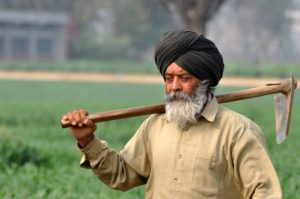
 Persistent gaps in reach, quality and reliability mark energy access in India. Around two-thirds of the country’s 1.3 billion people live in rural areas, many working on small farms with limited electricity access. Despite national progress, energy access in India’s rural regions remains unreliable or unavailable. Approximately 300 million Indians live off-grid and many agricultural areas remain disconnected due to high costs and coordination challenges. Most farmers earn about $4 a day.
As a result, farmers remain dependent on costly fossil fuels for irrigation and mechanization. Diesel is nearly twice as expensive as subsidized grid electricity, significantly reducing profit margins. While rural electrification efforts in the 2000s, such as RGGVY, expanded household electricity, they largely neglected agricultural needs, focusing on basic domestic connections rather than high-capacity farm requirements like irrigation pumps. Districts electrified after these policy changes saw only two additional electrified wells per 100 households, compared to 16 in districts electrified earlier.
This shift increased diesel pump adoption, raising operating costs and emissions. Reliance on diesel generators also heightens environmental and health risks, as prolonged exposure to emissions is linked to respiratory diseases such as lung cancer and pneumonia. Critically, the absence of stable, grid-based electricity perpetuates poverty cycles among farmers, as inefficient and expensive energy solutions erode already narrow profit margins. However, emerging initiatives are leveraging technology to address these gaps, offering scalable, sustainable alternatives to uplift rural livelihoods.
Zor: A Battery-Sharing Model Transforming Rural Energy
Zor is an innovative startup founded by Rea Savla and Vishesh Mehta, two Harvard Business School graduates with agricultural expertise. The company tackles energy access in India’s rural areas through a modular battery-sharing system, enabling farmers to rent and swap charged batteries powered by both grid and renewable sources as needed.
Recognizing diesel’s financial burden on smallholder farmers and leveraging India’s existing solar subsidy programs, Zor designed a pay-per-use model. This approach avoids brand-specific subsidies and eliminates prohibitive upfront costs that often deter solar adoption. It shortens typical payback periods from 10–20 years to under two years, dramatically improving returns on investment for farmers.
Zor’s modular lithium-ion battery system, powered by adaptable software, supports diverse agricultural needs, including grinding, milling, transportation and crop preservation. Designed for resilience, the batteries can be reliably charged even in remote areas with unstable grid access. Operating in rural India required a high-touch approach. Success demands constant availability and a hands-on mindset. Zor’s team conducted 18 months of fieldwork to ensure a farmer-centric solution, engaging more than 700 farmers across 25 villages to understand their pain points and refine the model.
Zor Energy’s Community-First Model
Early pilots in Odisha and Jharkhand proved the model’s viability as farmers rapidly adopted the service for convenience and cost savings. Zor’s community-driven approach prioritizes local management by deploying village charging stations and training residents to operate them, ensuring sustainability and scalability. The model also emphasizes gender inclusion, aiming for 50% female field staff to create economic opportunities for women historically marginalized in rural energy sectors.
With seed funding secured, Zor Energy is poised to scale its technology and expand its reach. This solution delivers reliable, on-demand electricity for farming and household needs, cutting energy costs by 40% compared to diesel. Its modular design directly addresses rural India’s electrification gaps, demonstrating that affordability and sustainability can go hand in hand.
Bridging the Critical Energy-Irrigation Gap
Zor’s model targets diesel-dependent irrigation in energy-poor regions, a well-documented challenge in rural electrification studies. In eastern Indian states like Odisha and Jharkhand, where Zor piloted its approach, farmers face inconsistent grid access. They often rely on costly diesel pumps that deplete groundwater.
Research indicates that closing this energy-irrigation gap could expand irrigated land by 20% during dry seasons, boosting productivity and resilience. Zor’s decentralized battery system directly supports this goal, cutting costs and enabling sustainable irrigation where the grid falls short.
Community-Led, Scalable Impact
Zor emphasizes community participation and skills development, mirroring successful initiatives like Swayam Shikshan Prayog (SSP). SSP has trained 60,000 women as clean energy leaders across rural India, reaching four million people, increasing the adoption of clean cookstoves and reducing household pollution. This grassroots approach builds local support networks, develops technical skills, facilitates livelihoods, all whilst improving energy access in India.
Zor similarly engages women as field staff and managers, promoting gender inclusion and creating pathways for economic agency and social change. Like SSP, Zor employs a market-based, decentralized model designed for scalability. It demonstrates how clean energy solutions can meet widespread demand while creating livelihood opportunities, making it a sustainable blueprint for rural development in India and beyond.
A More Equitable Energy Future
By enabling farmers to access clean, modular power, Zor enhances adaptability during droughts and erratic monsoons, supporting climate resilience and food security. Its gender-inclusive hiring approach mirrors the proven positive effects of female-led clean energy expansion, catalyzing economic and social transformation in rural communities.
Zor’s battery-sharing innovation is more than a technology solution to energy access in India. It aligns with a proven ecosystem of decentralized, community-led clean energy initiatives that drive economic uplift, climate adaptation and social equity. Its scalable, agrarian-focused model is a strong example of how local renewable energy solutions can advance sustainable development and reduce poverty.
– Jacobo L. Esteban
Jacobo is based in Cali, Colombia and focuses on Technology and Solutions, Politics for The Borgen Project.
Photo: Flickr

Building 3D-Printed Shelters for a Nation Ravaged by War
A Nation in Ruins
In the wake of Assad’s brutal regime, Syrians have suffered untold trauma, death and the leveling of homes and public infrastructure during a devastating civil war. With an economy in ruin, around two-thirds of Syria’s 24 million civilians currently depend on humanitarian aid to survive.
Following more than a decade of conflict, nearly half of all Syrians are currently displaced or otherwise fragmented. About 6.8 million of them remain within Syrian borders and around the same amount are settling in neighboring countries like Turkey and Jordan or seeking refuge across Europe.
As Syria’s public services struggle to cope with the ongoing tensions, a rapidly changing climate is compounding food shortages due to drought-like weather conditions. As a result, nearly all Syrians live below the poverty line, making it extremely difficult for communities to rebuild their broken lives.
The Spectre of Assad’s Housing Crisis
In the process of destroying Syrian public infrastructure, Assad’s forces systematically targeted homes, schools, family businesses and hospitals within rebel-controlled areas. This process incurred a significant housing crisis that impacts many of the struggles the population faces daily.
A 2019 United Nations (U.N.) assessment mapped the true scale of the destruction through satellite imagery, finding that 140,000 buildings were destroyed or severely impacted by the attacks. Highly populated cities like Aleppo, Damascus and Homs have emerged as the most affected. With estimated damages totaling between $250 to $400 billion, it has become clear that the road to Syria’s long-term rehabilitation requires immediate and cost-effective solutions due to the damages left in the shadows of war.
As a result, Syria now faces the risk of entering a new era marked by property-based retaliation and social fragmentation. Without a well-coordinated housing policy to protect the population, this critical moment in the nation’s pursuit of long-term peace and security could be lost.
3D-Printed Shelters
In light of these growing challenges, 3D concrete printing is emerging as a promising solution for building more durable shelters in refugee camps. These structures offer longer lifespans and greater resilience against the harsh desert climate. By producing “layer-by-layer complex geometries” using cement with impressive speed and precision, building 3D-printed concrete shelters provides better safety from damage than previous structures. It enhances long-term stability and efficiency and improves thermal insulation and privacy for those most in need.
For instance, around 80,000 Syrian refugees are based in Zaatari and Azraq in neighboring Jordan. The current shelters can often cause serious health problems for occupants due to water leakage and air penetration and only have a two to four-year lifespan. With the introduction of 3D concrete printing techniques, these technologies are not only emerging as safer and more cost-effective, but the use of contour crafting is enabling the construction of larger-scale shelters that can last up to 30 years with far less waste.
Conclusion
At a time of great change, building 3D-printed shelters provides innovative ways of supporting Syrians displaced due to the conflict. With an economy ravaged by war and the mismanagement of public resources, these technologies could play a significant role in rebuilding Syrian infrastructure.
– Gabriel John Gunn
Photo: Flickr
Reducing Maternal Mortality in Nigeria: The Abiye Project
In response to these shocking statistics, the Ondo State government launched the Abiye Project, meaning “Safe Motherhood,” in 2009. This program has become a pioneering initiative for reducing maternal mortality in Nigeria. The project is reducing maternal deaths by overhauling health care infrastructure, developing community-based services and eliminating financial barriers to maternal care.
Addressing the Four Delays
The Abiye Project was built around addressing the four leading delays responsible for the high rate of maternal deaths in the state:
Before the implementation of the program, these delays had a devastating impact: only 16% of women registered at health facilities ended up delivering there, opting instead for far riskier home births.
The Abiye Project Strategies
Impact on Maternal Health and Poverty
The results of the Abiye program were both rapid and transformative. Within its first year, antenatal registration surged by an astounding 1,855%, while facility-based deliveries increased by 1,602%.
By 2016, Ondo State’s MMR had dropped to 112 per 100,000, an 84.9% reduction within five years of the project’s inception. This achievement demonstrates how the program’s localized, person-centred strategies are invaluable for reducing maternal mortality in Nigeria.
The Abiye Project also had an impact on poverty levels. In 2022, Ondo State had the lowest poverty level in Nigeria, with around 27% of the population living in poverty, compared to the national average of 63%. These results demonstrate the capabilities of the project’s approach for not only saving lives but also improving the economic stability for all.
Conclusion
The Abiye Project is a powerful case study of how strategic health care interventions and a community-based approach can save lives and reduce poverty. By tackling the four key systemic causes of maternal deaths, it has set a new standard for reducing maternal mortality in Nigeria and beyond.
The project has earned recognition from the World Bank and UNICEF as a model for reform. With the project’s methods continuing to be adapted, the Abiye model has become a flagship in reducing maternal mortality in Nigeria, with the potential to revolutionize maternal care across developing countries.
– Reuben Avis-Anciano
Photo: Unsplash
Recent Innovations in Mental Health Care in Africa
Despite these staggering statistics, Africa spent less than $1 per capita on mental health. The continent also has an average of one mental health worker per 100,000 people compared to the global average of nine.
Within the last few years, the need for mental health services in Africa has risen. Luckily, organizations and platforms around the world have begun to recognize this demand. Here are three recent innovations to improve mental health care in Africa.
Supporting Mental Health Care in Africa
At its inaugural Digital Well-Being Summit, social media giant TikTok discussed plans for improving in-app support for users struggling with mental health, with a focus on sub-Saharan African users. The summit in Johannesburg brought together policymakers, industry leaders and mental health experts from South Africa, Nigeria, Kenya, Ghana, Zimbabwe and beyond. The event acted as a platform to discuss enhancing online safety tools, providing users with reliable information, and expanding user access to experts on the app.
TikTok announced that its $2.3 million global Mental Health Education fund will now be expanded to encompass sub-Saharan African organizations for the first time since its establishment. The selected organizations include the South African Depression and Anxiety Group, Mentally Aware Nigeria Initiative, and Kenya’s Mental360. They will be provided with funding and support from TikTok to create relevant, evidence-based content that discusses mental health in African communities.
TikTok has committed to expanding its in-app mental health helplines to the continent. African users will now be able to easily access helplines that will connect them with expert support and mental health resources such as counselling and psychological support. It will also be easier for African users to report harmful content related to bullying, hate, self-harm, and other topics that violate TikTok’s community guidelines.
The summit also introduced TikTok’s new Mental Health Ambassadors. In a partnership with the WHO, TikTok’s Mental Health Ambassadors will use their platforms to give guidance and advice to users. The inaugural group of verified healthcare professionals from the WHO Fides Network includes Sanam Naran and Dr. Siya from South Africa, Dr. Claire Kinuthia from Kenya, and Dr. Wales from Nigeria.
“Weaving Lives Together” Helps Communities Recover
The Weaving Lives Together project in Northern Nigeria aims to provide support to violence victims. It introduces creative interventions to fill the gaps left by other mental health resources. Its goal is to bring together mental well-being and economic opportunities to support both psychological recovery and socio-economic livelihoods.
Weaving Lives Together is the result of a partnership with the Neem Foundation, Creative Women in Lagos, and fashion house Ituen Basi. People, especially women, are given a creative outlet to turn their artistic expression in fashion and textile arts into opportunities for economic independence.
The initiative received funding through the One King’s Impact Fund at the School of Global Affairs at King’s College of London, a fund to support interdisciplinary solutions to global challenges. They are committed to fighting for whole-life health, peace and justice, and gender equality worldwide.
Digital Innovations in Mental Health Care in Africa
King’s College of London is also sponsoring and funding a new digital platform for depression intervention in African countries. This initiative expands upon the success of Zimbabwe’s Friendship Bench project, a model that has provided Zimbabweans with therapy for common disorders such as anxiety and depression by trained health workers.
Led by Dr. Gabrielle Samuel of the Department of Global Health and Social Medicine, the new platform will make mental health support more accessible, especially to those in underserved communities. People will be able to access self-guided therapy via their mobile phones, which will expand the reach of health workers and reduce wait times for those seeking help.
Mental health care in Africa has long needed improvement, with suicide and depression rates higher than global averages, especially in males. These three new innovations are only part of the efforts to bring better mental health counselling, resources, and education to the continent.
– Hannah Fruehstorfer
Photo: Flickr
Boosting Yields and Income: Sustainable Farming in Nigeria
Challenges of Smallholder Farming in Nigeria
Agriculture makes up a significant portion of the country’s economy, as the industry employs more than one-third of the entire workforce. Smallholder farmers, defined as those working on farmlands less than 24 acres, make up a large portion of this workforce and its production, with only 10% of the entire nation’s food supply coming from other sources. However, smallholder farmers face many challenges that inhibit productivity.
The regular use of the slash-and-burn technique to clear farmland, synthetic fertilizer and pesticides all contribute to a decrease in crop yields, as well as damage to their land. With Nigeria as a whole already impacted by climate instability and extreme weather, the additional damage done by these farming practices only worsens their predicament. Many of these practices lead to the erosion of soil and subsequent decrease in fertility. This issue currently impacts more than 23% of Nigerian land. However, many farmers do not have access to the knowledge of how to properly make the transition from their current methods to the practices of sustainable farming that the FSSS promotes.
Another obstacle that smallholder farmers face is a lack of access to proper resources. A majority of farmers do not have access to high-quality seeds and non-synthetic fertilizers. In addition, lack of access to loans and insurance means that many farmers would not be able to buy these products even if they were available, and cannot insure their lands against potential environmental damage. As a result of all of these elements, productivity has waned so greatly that, on average, these farmers are producing “less than half of their potential output per hectare.”
Food Insecurity in Nigeria
According to the Global Hunger Index, Nigeria’s hunger level is serious. It affects the population as a whole, as 18% are undernourished. However, it affects children the most, as 31.5% of Nigeria’s population under the age of 5 are stunted. In addition, more than 10% of children die before their 10th birthday, reflecting “the most serious consequence of hunger.”
This worrying level of food insecurity is due to a combination of many different factors. However, despite the country’s reliance on them as a main food source, the declining output of smallholder farmers is a significant contributor.
How FSSS is Helping Nigerians
To properly promote sustainable farming in Nigeria, the FSSS has several initiatives to improve the amount of education and resources available. One of its initiatives is the Farmer’s Service Centers, also known as Farmer’s Hubs. These centers are run for locals by locals and provide farmer’s necessities at low costs. They have tools such as high-quality seeds and fertilizers and rentals for farming machinery. Yusuf Haliru, the operator of the Farmer’s Hub in Bichi, said: “Now, everything is within their reach—and the impact has been massive.”
The FSSS also partners with local financial institutions to provide smallholder farmers with services such as low-interest loans and insurance. This helps farmers, especially those with little to no financial literacy, invest more into their farms and financially protect themselves and their lands in an emergency or natural disaster.
However, the organization’s foremost initiative is its education. The FSSS educates farmers on many techniques that help progress the advent of sustainable farming in Nigeria. These techniques include crop rotation and using organic fertilizers like manure to reduce soil erosion and degradation. The use of compost as fertilizer caused a “40% increase in crop yields compared to conventional fertilization,” according to the UNDP. It also teaches techniques such as agroforestry and intercropping. These methods all help the farmers produce more while using less.
In May 2025 alone, the FSSS reached more than 1,000 farmers across four states, including almost 300 female participants through its educational programs. It will continue expanding its reach and resources moving forward, maximizing its positive impact and helping improve the lives of farmers and all those who rely on its yield.
– Delaney Gouveia
Photo: Flickr
Everything to Know About Hunger in the Czech Republic
A Great Leap Backward
The Communist Party of Czechoslovakia (KSČ) assumed power in February 1948. KSČ nationalized private enterprises, prioritized heavy industry and reoriented trade. The Soviet model of central planning went hand in hand with limited innovation and perverse incentives.
Over the next 40 years, Czechoslovakia experienced a rare phenomenon of de-development. The 1961-65 period witnessed virtual economic stagnation and food shortages, as output for beef, pork and meat struggled to meet plan targets. Agriculture recorded poor performance between 1975 and 1980. A world recession, high input prices and restrictive domestic policies led to stagnation by the mid 1980s.
Unrest over economic growth and material conditions pushed out Communist regimes across East and Central Europe in 1989. Late to jump onto the bandwagon, Czechoslovak planners managed to keep food supplies in stores, delaying and defusing public discontent. The KSČ often compared Czechoslovak living standards to Poland and Hungary, where citizens stood in long lines for simple groceries, to dismiss demands for regime change.
A Return to Europe
The velvet revolution hit Czechoslovakia in November 1989, ushering in a liberal government. After implementing reforms for a market economy and parliamentary democracy, Czechoslovakia pursued a “return to Europe.” The President Václav Havel not only emphasized the benefits of European integration for Czechoslovakia, but demonstrated an impulse to join the EU to lend a hand to global security: “We can approach the richer nations of Western Europe, not as poor failures or helpless, recently amnestied prisoners, but as countries that can make a genuine contribution.” Czechia achieved membership of NATO in 1999 and the European Union (EU) in 2004.
Everything to know about hunger in the Czech Republic includes understanding how EU membership drove economic improvement and food security. The EU’s Cohesion Policy directed European funds to help Czechia’s development needs in four main areas: entrepreneurship and employment, research and education, the environment and transport. From 2014 to 2020, Czechia distributed funding across 10 operational programs. It invested 10% in the Rural Development Programme (RDP), 18% in Enterprise and Innovation, 12% in OP Research, Development and Education and 9% in OP Employment.
The EU’s Common Agricultural Policy (CAP) directed European funds to encourage a sustainable, resilient and diversified agricultural sector. Around 78% of the Czech population live in rural areas. The European Commission approved a CAP Strategic Plan for Czechia in November 2022. The Plan seeks to support Czech farmers and raise rural living standards. For the 2023-2027 period, Czechia can invest CZK 200 billion in direct payments, rural development and common market organization.
National Policies and Reforms
The Czech Ministry of Agriculture seeks to maintain normal levels of agricultural and food production. The Ministry petitioned the Czech government to increase funds for the Support and Guarantee Agricultural and Forestry Fund (PGRLF) and the RDP in March 2020. The PGRLF will receive CZK 1 billion and the RDP will get CZK 3.3 billion.
Czechia’s RDP focuses on sustainable farming practices and the management of natural resources. The second priority is increasing the competitiveness of agriculture and forestry as well as the food industry. It provides investment support to farms and creates new jobs to boost the rural economy.
The Ministry collaborates with the State Agricultural Intervention Fund (SZIF) to administer CAP’s direct payments, rural development and common market organization measures. The SZIF also manages national agricultural subsidies, OP Fisheries and food quality labels. The latter aims to promote organic farming products and improve the overall standard of food on shelves.
Global Anti-Hunger Effort
Along with 184 countries, Czechia committed to eliminating hunger and achieving food security at the World Food Summit in 1996. Minister for Agriculture Jan Fencl organized a follow-up meeting in 2002 to affirm the key objective to end extreme hunger and poverty. Fencl emphasized the Food and Agricultural Organization (FAO) as mediator and coordinator of mutual cooperation between countries. He also endorsed the concept of a global Alliance Against Hunger.
After 20+ years of democratic and economic development, Czechia now provides official development assistance (ODA) to a host of countries. Afghanistan, Moldova, Mongolia, Bosnia and Herzegovina and Ethiopia are the largest recipients of Czech ODA in 2012. Czechia allocated 19% of its bilateral ODA to agriculture and water supply. This helps ensure access to quality and basic food and water.
With Prosperity Comes Responsibility
Czechia recently achieved a high Global Food Security Index (GFSI). After analyzing food availability, quality and safety in 113 countries, the Economist Impact Report ranked Czechia 16th in GFSI in 2022 with 77.7 points.
The work is not done. While the Czech government accomplished great strides domestically, its contribution toward global food security is underdeveloped. A step in the right direction, Czechia joined the Global Alliance Against Hunger and Poverty in February 2025. The Alliance aims to accelerate efforts to implement the Sustainable Development Goals (SDGs) 1 (No Poverty) and 2 (Zero Hunger).
Everything to know about hunger in the Czech Republic extends beyond its borders. While Czechia’s commitment to the Alliance demonstrates its recognition of the value of food security and nutrition, it can do more to align with international goals on hunger.
– Alessandra Lewis
Photo: Unsplash
Argentina’s Return to Work Program
The Return to Work Program
Milei has become known for figuratively and literally taking a chainsaw to the Argentine government, cutting away bloated or ineffective programs. One such program, Enhance Work, was dismantled and replaced with a new initiative called Return to Work. The program aims to develop and sustain sociolaboral skills for participants transferred from its predecessor. The initiative combines vocational training, certified skill-building and workplace internships with career orientation and job placement support.
Participants receive a fixed monthly non‑remunerative stipend of about $61 for up to 24 months, disbursed directly each month. The program works alongside educational initiatives, promoting completion of basic schooling and literacy where needed. Through partnerships with employment offices, civil society, universities and municipalities, Return to Work offers individualized job search assistance, labour intermediation services and support for both formal employment and independent or cooperative entrepreneurship.
Built on simple tools and community engagement, the scheme fosters employability while cushioning vulnerable households. With clear funding and a defined 24‑month duration, Return to Work delivers structured training, economic support and practical experience in the formal labor market.
The Impact
When people return to work, a nation’s economy begins to recover and Argentina is no exception. In March 2025, the country’s inflation rate stood at 3.7%, but by June, it had dropped to 1.5%. Lower inflation creates more opportunities for impoverished people to improve their circumstances.
Argentina’s Return to Work program has been critical in this turnaround. By connecting thousands of unemployed citizens with stable jobs and offering support services like job matching, the program has helped reduce dependency on government aid.
It also encourages formal employment, which expands the tax base and strengthens public services. As more people find work, consumer spending increases, businesses grow and the cycle of poverty begins to break.
Final Remarks
The most effective way to lift people out of poverty is by providing stable employment and job security. When individuals can work and earn a reliable income, they can rise above their circumstances and live healthier, more dignified lives. If programs like these receive sustained funding, global poverty could one day become a thing of the past. Until then, Argentina’s Return to Work program and others like it, are paving the way for a brighter, more equitable future..
– John Menechino
Photo: Flickr
Energy Access in India: Zor’s Battery-Sharing for Small Farmers
As a result, farmers remain dependent on costly fossil fuels for irrigation and mechanization. Diesel is nearly twice as expensive as subsidized grid electricity, significantly reducing profit margins. While rural electrification efforts in the 2000s, such as RGGVY, expanded household electricity, they largely neglected agricultural needs, focusing on basic domestic connections rather than high-capacity farm requirements like irrigation pumps. Districts electrified after these policy changes saw only two additional electrified wells per 100 households, compared to 16 in districts electrified earlier.
This shift increased diesel pump adoption, raising operating costs and emissions. Reliance on diesel generators also heightens environmental and health risks, as prolonged exposure to emissions is linked to respiratory diseases such as lung cancer and pneumonia. Critically, the absence of stable, grid-based electricity perpetuates poverty cycles among farmers, as inefficient and expensive energy solutions erode already narrow profit margins. However, emerging initiatives are leveraging technology to address these gaps, offering scalable, sustainable alternatives to uplift rural livelihoods.
Zor: A Battery-Sharing Model Transforming Rural Energy
Zor is an innovative startup founded by Rea Savla and Vishesh Mehta, two Harvard Business School graduates with agricultural expertise. The company tackles energy access in India’s rural areas through a modular battery-sharing system, enabling farmers to rent and swap charged batteries powered by both grid and renewable sources as needed.
Recognizing diesel’s financial burden on smallholder farmers and leveraging India’s existing solar subsidy programs, Zor designed a pay-per-use model. This approach avoids brand-specific subsidies and eliminates prohibitive upfront costs that often deter solar adoption. It shortens typical payback periods from 10–20 years to under two years, dramatically improving returns on investment for farmers.
Zor’s modular lithium-ion battery system, powered by adaptable software, supports diverse agricultural needs, including grinding, milling, transportation and crop preservation. Designed for resilience, the batteries can be reliably charged even in remote areas with unstable grid access. Operating in rural India required a high-touch approach. Success demands constant availability and a hands-on mindset. Zor’s team conducted 18 months of fieldwork to ensure a farmer-centric solution, engaging more than 700 farmers across 25 villages to understand their pain points and refine the model.
Zor Energy’s Community-First Model
Early pilots in Odisha and Jharkhand proved the model’s viability as farmers rapidly adopted the service for convenience and cost savings. Zor’s community-driven approach prioritizes local management by deploying village charging stations and training residents to operate them, ensuring sustainability and scalability. The model also emphasizes gender inclusion, aiming for 50% female field staff to create economic opportunities for women historically marginalized in rural energy sectors.
With seed funding secured, Zor Energy is poised to scale its technology and expand its reach. This solution delivers reliable, on-demand electricity for farming and household needs, cutting energy costs by 40% compared to diesel. Its modular design directly addresses rural India’s electrification gaps, demonstrating that affordability and sustainability can go hand in hand.
Bridging the Critical Energy-Irrigation Gap
Zor’s model targets diesel-dependent irrigation in energy-poor regions, a well-documented challenge in rural electrification studies. In eastern Indian states like Odisha and Jharkhand, where Zor piloted its approach, farmers face inconsistent grid access. They often rely on costly diesel pumps that deplete groundwater.
Research indicates that closing this energy-irrigation gap could expand irrigated land by 20% during dry seasons, boosting productivity and resilience. Zor’s decentralized battery system directly supports this goal, cutting costs and enabling sustainable irrigation where the grid falls short.
Community-Led, Scalable Impact
Zor emphasizes community participation and skills development, mirroring successful initiatives like Swayam Shikshan Prayog (SSP). SSP has trained 60,000 women as clean energy leaders across rural India, reaching four million people, increasing the adoption of clean cookstoves and reducing household pollution. This grassroots approach builds local support networks, develops technical skills, facilitates livelihoods, all whilst improving energy access in India.
Zor similarly engages women as field staff and managers, promoting gender inclusion and creating pathways for economic agency and social change. Like SSP, Zor employs a market-based, decentralized model designed for scalability. It demonstrates how clean energy solutions can meet widespread demand while creating livelihood opportunities, making it a sustainable blueprint for rural development in India and beyond.
A More Equitable Energy Future
By enabling farmers to access clean, modular power, Zor enhances adaptability during droughts and erratic monsoons, supporting climate resilience and food security. Its gender-inclusive hiring approach mirrors the proven positive effects of female-led clean energy expansion, catalyzing economic and social transformation in rural communities.
Zor’s battery-sharing innovation is more than a technology solution to energy access in India. It aligns with a proven ecosystem of decentralized, community-led clean energy initiatives that drive economic uplift, climate adaptation and social equity. Its scalable, agrarian-focused model is a strong example of how local renewable energy solutions can advance sustainable development and reduce poverty.
– Jacobo L. Esteban
Photo: Flickr
Ebbs and Flows: Rise of Poverty in France
The poverty rate in France has climbed to 15.4%, the highest recorded since 1996. Wealth disparity is also widening, with a striking 20% gap between the richest and the most impoverished. This marks a steady rise from 14.4% in 2022. In 2025 alone, around 665,000 people fell into poverty. Poverty has reemerged in this developed nation, lingering like a persistent spectre of domestic hardship.
Context
The median standard of living has stagnated and relative prosperity persists despite inflation, governance and quality of life shifts. Meanwhile, the neediest segment of France has faced a steady decline in living conditions over the past decade, closely linked to cuts in housing benefits. Child poverty has also surged, with one in five children now living in destitution, largely due to housing reforms that disproportionately impacted single-parent households. In 2021, 22.8% of children were at risk of social exclusion, which remains unchanged. Many of these issues are the residual effects of policies enacted during the COVID-19 pandemic.
These issues disproportionately affect migrants and their children compared to native French citizens. This disparity is primarily attributed to limited educational attainment, as many immigrants lack the formal qualifications held by their native counterparts. Additionally, scholars suggest that persistent poverty among immigrants is partly driven by language barriers, particularly the inability to communicate effectively in French. However, this issue extends beyond France’s immigrant population. Anyone below the poverty line faces the harsh reality of soaring inflation outpacing stagnant wages.
In addition, the Russian-Ukrainian War and subsequent European sanctions on Russian oil have driven up energy prices across France, with devastating consequences for many residents. As utility costs climb, more people cannot cover their bills, leading to evictions or entrapment in cycles of debt. Manuel Domergue, Director of Studies at the Foundation for Housing the Disadvantaged, noted: “Electricity and gas cuts for nonpayment are skyrocketing, the number of people who say they are cold in their homes has almost doubled and we are seeing a sharp rise in evictions.”
Solutions
In 2022, France passed a law raising the retirement age from 62 to 64, which worsened elderly poverty. However, numerous French political parties have called for repealing or reversing this law to ease the burden on an already vulnerable population. Alongside proposals to lower the retirement age, many parties also advocate expanding benefits for retirees. These initiatives aim to align pension payments more closely with the absolute poverty threshold.
Furthermore, in November 2024, France’s new minimum wage policy came into effect, raising the Salaire Minimum Interprofessionnel de Croissance (SMIC) by 2%. This adjustment aimed to offset the rising cost of living and rampant inflation, particularly affecting low-income earners. The government emphasized that the increase was part of a broader effort to narrow the income gap and strengthen social protections for vulnerable workers.
To address the surge in energy prices, the Energy Regulatory Commission (CRE) implemented a regulation to reduce the electricity sales tax. This measure is expected to lower monthly utility costs for a broad segment of French households.
Conclusion
France is suffering from increased poverty for several reasons, but all hope is not lost. With a robust social welfare and security foundation, France can alleviate these issues through substantial reform and reinforcement. The battle against poverty is being fought within the halls of the National Assembly and Senate by many political parties. Reaffirming historic social welfare policies will relieve many issues.
– Jackson Hufman
Photo: Flickr
Empowering Refugees in Kenya Amid Poverty
According to the Hebrew Immigrant Aid Society, economic constraints, bureaucracy, little refugee engagement and little infrastructure hinder the improvement of empowering refugees in Kenya. However, despite struggles, initiatives have continued to progress.
Transforming Camps Into Municipalities
In March 2025, according to the Ministry of Interior and National Administration, President William Ruto unveiled the ambitious “Shirika Plan.” This signals a paradigm shift in empowering refugees in Kenya. Inspired by the Swahili word for “cooperation,” this 11-year initiative aims to integrate refugee camps into formal municipalities, notably Kakuma and Dadaab.
With more than 830,000 refugees across Kakuma, Dadaab and urban zones, the plan’s initiative marks a historic step toward sustainable, development-led inclusion. According to the Ministry of Interior and the National Administration, some of the key components include:
Microloans for Refugees and Hosts
In February of 2024, Equity Bank, with backing from the International Finance Corporation (IFC), launched a $20 million risk-sharing facility. According to Equity Group Holdings, this is aimed at expanding unsecured microloans to refugees and host-community entrepreneurs across 14 counties, all empowering refugees in Kenya. This marks the world’s first such dedicated facility for forcibly displaced individuals.
Some of the major highlights of the facility, according to Equity Group Holdings, include:
Equity Group CEO James Mwangi underlined the initiative’s goal of transforming lives, dignifying refugees and fostering wealth creation.
Scaling Refugee Entrepreneurship
Rwanda-founded social enterprise Inkomoko has played a transformative role in supporting refugee and host-community entrepreneurs in Kenya. According to the organization, its support model has:
Examples illustrate the real impact, such as tailor Adele Mubalama, who grew her Kakuma-based business to employ 26 people and earn approximately $8,300. Similarly, according to Finance Commerce, former Ethiopian soldier Mesfin Getahun expanded his “Jesus is Lord” retail chain using a $115,00 loan from Inkomoko.
“We find that refugee business owners actually have the characteristics that make world-class entrepreneurs,” Inkomoko runner Julienne Oyler said, reporting on Finance Commerce.
Digital and Leadership Empowerment via Amahoro Coalition
Founded by Isaac Kwaku Foku, the Amahoro Coalition champions digital inclusion and leadership among refugees. Some highlights, according to the Kenya Private Sector Alliance (KEPSA), include:
Mandating the country a “digital freelancing hub” supporting youth in accessing jobs online. Additionally, in June 2024, Amahoro launched a 12-month mentorship program for women with lived displacement experience within the Amahoro Fellowship. Amahoro is moving refugees beyond humanitarian aid toward genuine economic participation and leadership by merging digital capacity-building, mentorship and private-sector engagement.
Rights, Resources and the Road Ahead
While these strides signal hope, key challenges remain. Refugees still lack full freedom of movement and citizenship rights, limiting mobility and economic opportunity. Camp schools run at 300% capacity and water sanitation infrastructure remains inadequate.
Observers warn that prioritizing livelihoods over rights could jeopardize long-term inclusion. Broader legal protections and clear citizenship pathways are still urgently needed.
– Clarissa Dean
Photo: Flickr
Seaweed in Indonesia: How a Plant Can Reduce Poverty
How Seaweed Reduces Poverty in Indonesia
Global demand for seaweed is rising as the product gains recognition for its low cultivation cost and short production time and Indonesia’s exports are expected to continue climbing. With more than 267,000 families depending on seaweed farming for income, the industry has become vital to the region. The industry is generating employment, allowing the economy to grow at a time when other job opportunities along the coastlines have become scarce. It also provides an alternative food source for people in the region, aligning with the United Nations (U.N.) Sustainable Development Goals (SDGs).
Indonesia’s Economy
Indonesia’s economy has experienced ups and downs throughout its history, but it has recently been undergoing a period of growth. The country has employed macroeconomic policies, focusing on creating better jobs within the middle class that will lead to improved standards of living.
One of the markets responsible for Indonesia’s economic growth is seaweed. Indonesia’s seaweed production capacity is second only to China’s. It has become an industry that is integral to the many coastal communities in the country, where these families depend on seaweed farming to live. As a result, seaweed farming in Indonesia has helped reduce poverty and bolster economic growth.
Seaweed from Indonesia is gaining global popularity, creating a higher demand for the product. The country’s trade exports have steadily increased, contributing to economic growth. This growth is largely due to the rising value of the seaweed trade and Indonesia’s consistently lower price per ton compared to competitors, giving the country an opportunity to increase its economic gains and invest further in infrastructure.
Current Challenges
The seaweed industry is currently facing three challenges that limit its capabilities to expand even further. The first is its limited processing capabilities domestically, which local farmers can potentially resolve by investing in processing infrastructure. Currently, Indonesia can produce seaweed cheaper than any other country, but it does not have the same processing capabilities as its competitors.
Its second challenge is an inefficient supply chain, which stems from the issue of scale. Due to the relatively recent boom in the seaweed industry, seaweed farmers in Indonesia are not used to producing on this large a scale. They are currently addressing this issue by standardizing the process in an effort to create more uniformity across the industry. The third challenge it is facing is weakened compliance with international standards, which reduces consumer confidence in the product. Indonesia is addressing this by developing national standards that all seaweed farmers must follow. While the country is facing challenges, they are actively developing policy and infrastructure designed to combat these challenges and continually grow the industry as well as its economy.
Looking Forward
As Indonesia continues to develop its infrastructure and policies, it can further expand its economic growth. Seaweed has become an integral part of life, as thousands of families rely on the product for income. Due to the industry’s growth, many citizens in coastal regions have been able to improve their livelihoods.
– Olivia Peters
Photo: Flickr