Seaweed in Indonesia: How a Plant Can Reduce Poverty
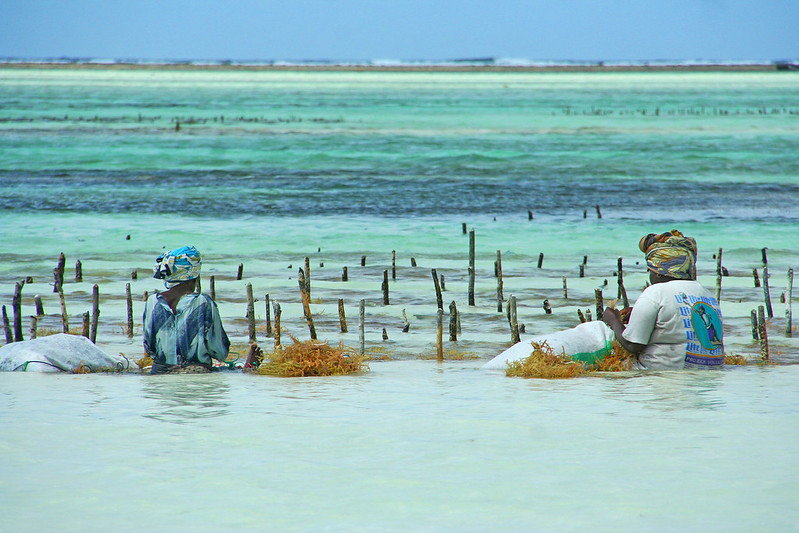 Seaweed is becoming a growing industry globally and Indonesia has become the second-largest seaweed producer in the world. Located between the Indian and Pacific oceans, Indonesia comprises more than 17,000 islands, making its vast coastlines a prime location for growing seaweed. Indonesia sits within the world’s largest archipelago, making seaweed production a year-round industry. The country has centered its economy around this sector, which has helped boost its GDP.
How Seaweed Reduces Poverty in Indonesia
Global demand for seaweed is rising as the product gains recognition for its low cultivation cost and short production time and Indonesia’s exports are expected to continue climbing. With more than 267,000 families depending on seaweed farming for income, the industry has become vital to the region. The industry is generating employment, allowing the economy to grow at a time when other job opportunities along the coastlines have become scarce. It also provides an alternative food source for people in the region, aligning with the United Nations (U.N.) Sustainable Development Goals (SDGs).
Indonesia’s Economy
Indonesia’s economy has experienced ups and downs throughout its history, but it has recently been undergoing a period of growth. The country has employed macroeconomic policies, focusing on creating better jobs within the middle class that will lead to improved standards of living.
One of the markets responsible for Indonesia’s economic growth is seaweed. Indonesia’s seaweed production capacity is second only to China’s. It has become an industry that is integral to the many coastal communities in the country, where these families depend on seaweed farming to live. As a result, seaweed farming in Indonesia has helped reduce poverty and bolster economic growth.
Seaweed from Indonesia is gaining global popularity, creating a higher demand for the product. The country’s trade exports have steadily increased, contributing to economic growth. This growth is largely due to the rising value of the seaweed trade and Indonesia’s consistently lower price per ton compared to competitors, giving the country an opportunity to increase its economic gains and invest further in infrastructure.
Current Challenges
The seaweed industry is currently facing three challenges that limit its capabilities to expand even further. The first is its limited processing capabilities domestically, which local farmers can potentially resolve by investing in processing infrastructure. Currently, Indonesia can produce seaweed cheaper than any other country, but it does not have the same processing capabilities as its competitors.
Its second challenge is an inefficient supply chain, which stems from the issue of scale. Due to the relatively recent boom in the seaweed industry, seaweed farmers in Indonesia are not used to producing on this large a scale. They are currently addressing this issue by standardizing the process in an effort to create more uniformity across the industry. The third challenge it is facing is weakened compliance with international standards, which reduces consumer confidence in the product. Indonesia is addressing this by developing national standards that all seaweed farmers must follow. While the country is facing challenges, they are actively developing policy and infrastructure designed to combat these challenges and continually grow the industry as well as its economy.
Looking Forward
As Indonesia continues to develop its infrastructure and policies, it can further expand its economic growth. Seaweed has become an integral part of life, as thousands of families rely on the product for income. Due to the industry’s growth, many citizens in coastal regions have been able to improve their livelihoods.
– Olivia Peters
Olivia is based in Newport, RI, USA and focuses on Business and New Markets for The Borgen Project.
Photo: Flickr
