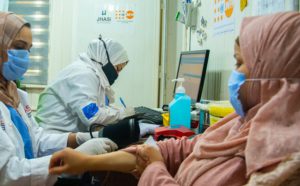
 The consequences of war are immense; it impacts every aspect of life, from transportation to crop cultivation and the ash and smoke of conflict taints everything. Countrysides are ravaged, cities are turned to rubble and families are displaced, but all that is widely known; however, what is not frequently discussed is the systematic harm.
For 13 years, Syria was plagued by a violent civil war and during this time, people who had cancer found themselves in a precarious situation. Oncology institutions suffered from scarce supplies, staff and necessary medical equipment. Even in the developed world, cancer remains a prominent reason for mortality. With conflict, this issue is exacerbated and worsened.
Challenges
War affects every aspect of ontology care. For one, the ability of patients to continue financing treatment is hindered. Despite the abundance of humanitarian assistance and aid programs, many Syrians experience severe financial distress, with social support, medical insurance frameworks and affordable treatment being conspicuously absent. This burden results in treatment costs exceeding 40% of a household’s capacity to pay. However, this matter is intensified by the number of internally displaced persons living in the territories of the Idleb and Aleppo governorates. It is a structural predicament, derived from the base of all institutions being shaken by the roar of artillery.
It’s not just patients who suffer; the oncology institutions are also affected. Supplies are limited due to the logistical challenges caused by the conflict. Most advanced oncology centers are concentrated in major cities, making it extremely difficult for people in other parts of the country to access essential care. The Al-Bayrouni center in Damascus is responsible for a significant portion of care; further, such an institution is the only location in the country able to address thyroid care. Uncommon cancers can only be treated in specialized departments, which are only present in specified localities.
Confounding factors, such as cost, location and scarcity, combine to worsen the effects of cancer. These barriers prevent patients from accessing essential palliative care, allowing the disease to progress unchecked. As a result, mortality rates rise, with early-stage cancers advancing rapidly to more severe stages. Between 2019 and 2022, 61% of cancer patients in Syria were stage III or above at diagnosis, which exemplifies the issue. Even at the conception of care, the ailment is too far developed for adequate and affordable remedies, making the process easy to ameliorate.
Solutions and Aftermath
The abdication of Bashar Al-Assad has induced a dramatic shift in the domestic conditions of Syria. The underlying conditions for many of the present maledictions abated with the presence of the new administration. The newfound peace rectifies issues derived from logistical limitations; roads no longer carry the burden of armed militants and paramilitary organizations, which means that both individuals can travel with relative ease and supplies can be rendered more efficiently.
In an important administrative step, the debt of Syria has been paid for by the Gulf States, thereby allowing for additional loans from the World Bank. This exciting opportunity heralds the possibility for the revitalization of infrastructure, such as medical institutions, roads and state-sponsored welfare programs. The creation of a robust framework is not possible and, in topological terminology, a base capable of holding additional structures is now present.
If these corrections are implemented, the people of Syria will benefit greatly. Tangible societal changes could make medical care in Syria more affordable, reducing mortality rates and giving low-income populations access to essential cancer treatment. Affordable health care is a cornerstone for survival; it creates a healthier, more productive population capable of working, saving and contributing to the economy. As the conflict subsides, medical institutions could be revitalized through international support, domestic stability and strengthened oncology infrastructure.
Conclusion
Many of the challenges rooted in the conflict may begin to ease as a transitional state takes shape, fostering a fragile but hopeful peace. This shift will directly benefit people with low incomes, who will gain access to a developing market capable of meeting critical health care needs. Additionally, the rate of brain drain is likely to fall, allowing for a stable labor force. A new horizon is emerging, with a bright future dawning over a land once shrouded in darkness.
– Jackson Hufman
Jackson is based in Glenwood, MD, USA and focuses on Good News and Politics for The Borgen Project.
Photo: Flickr

Children of the Mekong Increases Access to Education for Girls
The United Nations Educational, Scientific and Cultural Organization (UNESCO) reported that “129 million girls are out of school globally, with the highest concentration in sub-Saharan Africa and South Asia.” These statistics illustrate the prevailing existence of gender disparities and the barrier to access to education faced by young women globally.
Children of the Mekong
Children of the Mekong is a nonprofit organization supporting underprivileged children across Southeast Asia. Founded in 1958, the organization works to improve access to education, health care and emotional support for vulnerable youth. It operates through child sponsorship programs, educational centers and partnerships with local communities to create lasting change.
Focusing on dignity, responsibility and long-term impact, Children of the Mekong empowers children, especially girls, to rise above poverty and shape a better future. The charity has improved the standard of living of more than 23,000 children through local programs and targeted integration.
Aware of the sociocultural climate, Children of the Mekong is not ignorant of the rates at which young women lack the same educational opportunities as young men. The organization recognizes the vital role women play in the global economy. This goes beyond the private sphere of the home and family structure. As a result, it is committed to ensuring that girls also receive an education of their own.
Why Investing in Girls’ Education Matters
Below are just some statistics reporting the gender disparities experienced by children and young women in South Asia. This data outlines why prioritizing education for girls matters and provides context for Children of the Mekong’s mission.
Education for girls and women means more than attending school; it means the difference between having a better chance of survival. It is the opportunity to transform these girls’ futures.
Final Remarks
Children of the Mekong has significantly improved girls’ lives across South Asia by promoting access to education, health and empowerment opportunities. Through scholarships, the organization has enabled several girls, especially in Cambodia, Vietnam and Myanmar, to stay in school and avoid early marriage or child labor.
The nonprofit’s programs also focus on building self-confidence and life skills, equipping girls to break the cycle of poverty. Local partnerships and community involvement ensure a culturally sensitive, long-term impact. As a result, more girls graduate, pursue careers and become role models within their communities.
Children of the Mekong’s targeted efforts are transforming girls’ lives in South Asia by giving them the tools to succeed. The organization is paving the way for a more equitable and hopeful future through education and empowerment.
– McKenzie Rentie
Photo: Flickr
Drug-Resistant Tuberculosis Treatment in Peru
What Is Tuberculosis?
Tuberculosis is one of the most deadly infectious diseases in the world. It is an airborne disease that attacks the lungs, but it can also affect the kidneys, spine and brain. While antibiotics are used to treat tuberculosis, some people develop drug-resistant strains, meaning the bacteria no longer respond to the usual medications.
Treating drug-resistant tuberculosis requires special medications, which can cause side effects and may take months or even years to work. In comparison, non-drug-resistant tuberculosis typically takes up to nine months to treat.
Tuberculosis Treatment in Peru
Every year, doctors in Peru diagnose around 1,500 people with multidrug-resistant tuberculosis, one of the most difficult forms of the disease to treat. The standard treatment can take up to two years and involves daily pills along with two or three injections a day. That changed in 2024, when Peru became one of the first countries in Latin America to adopt new treatments for drug-resistant tuberculosis: bedaquiline, pretomanid, linezolid and moxifloxacin (BPaLM). These regimens are shorter, take just six months and eliminate the need for injections.
This shorter treatment period comes with several benefits. Patients need fewer visits to the health center, reducing their transportation costs. It also causes fewer side effects than previous treatments. Fewer visits make it easier for people to stay in treatment while continuing to work. Peru did not implement this new treatment program overnight. Since 2023, doctors, nurses and health monitors have been receiving training on how to use the treatment, manage its potential side effects and support patients throughout both treatment and recovery.
The new regimen is also included in Peru’s National Tuberculosis Plan, which makes tuberculosis treatment free for patients. The new treatment, with all its benefits, has proven successful. More than 1,200 people have received the shorter regimen as of March 2025 and treatment success rates have increased from 60% to 90%. Additionally, dropout rates, the number of people who stop treatment, have dropped from 25% to just 7%.
Leading the Way in Tuberculosis Treatment
As a result of its success in implementing the new treatment, Peru is leading the way in tuberculosis treatment. In June, Peru held a regional meeting that brought together 20 different countries to accelerate collaboration and scale-up of the implementation of the new treatment. The meeting was held with PeerLINC, a global peer-to-peer knowledge hub for tuberculosis. About 200 clinicians and health officials participated in the meeting and the training on the new treatment.
Peru’s experience shows that with strong national leadership, targeted training and patient-centered care, even the most challenging forms of tuberculosis can be effectively treated. By cutting treatment time, reducing side effects and improving success rates, Peru is setting a new standard for managing drug-resistant tuberculosis in Latin America and globally. As other countries look to replicate this success, Peru’s progress offers a powerful example of how innovation and commitment can transform public health outcomes.
– Axtin Bullock
Photo: Unsplash
Internet Access in Nigeria: The Evolving Landscape
In 2024, despite substantial investments in Nigeria and other regions of Africa, only 38% of the population was online. The International Telecommunications Union (ITU) reported that Africa ranked the lowest in global internet usage, starkly contrasting the global average of 68%. The ITU highlighted that while internet adoption in Africa is on the rise, millions remain offline due to high service costs, digital illiteracy and inadequate infrastructure, particularly in rural communities.
Current Internet Landscape
As of April 2025, Nigeria’s internet landscape boasts approximately 142 million subscribers, with broadband penetration reaching 48.15%. Internet usage has surged to 983,283.43 terabytes (TB). In January 2025, there were 141 million internet subscribers and a broadband penetration rate of 45.61%. These statistics underscore Nigeria’s expanding digital footprint and the increasing demand for internet services.
Furthermore, according to the Nigerian Communications Commission (NCC), the telecommunications regulator, 141.2 million mobile connections were recorded as of April 2025. The market share by generation indicates that 89% of the country’s connectivity still relies on 2G and 4G technologies.
Affordability of Internet Access in Nigeria
The cost of internet access poses a significant barrier for many Nigerians, affecting both individual users and businesses. According to a report by ITU, affordability remains a critical obstacle to achieving broader digital inclusion.
The ITU highlighted that in 2024, the median price of an entry-level mobile broadband plan (2GB per month) was 4.2% of the gross national income (GNI) per capita, a slight decrease from 4.6% in 2023. However, this figure is still more than double the United Nations Broadband Commission’s affordability target of 2%, making it the highest among all ITU regions.
Government and Private Initiatives
In response to these challenges, the government and the private sector invest in infrastructure and initiatives to enhance internet access and affordability. One notable initiative is Project 774 LG Connectivity, which focuses on bridging the digital divide across local governments in Nigeria. Spearheaded by the Federal Ministry of Communications and Digital Economy, this project leverages NIGCOMSAT’s VSAT technology to provide reliable internet access in Nigeria.
The initiative aims to improve e-governance, education, health care, security and economic opportunities at the grassroots level by ensuring that communities can access affordable Internet services. The National Broadband Plan (2020-2025) also sets ambitious targets for internet penetration and affordability, aiming to achieve 70% broadband penetration by 2025.
In January 2025, the Center for Information Technology and Development (CITAD) revealed that about 27 million Nigerians have no access to telecom infrastructure, excluding those who can’t afford it. CITAD launched the Dakwa Community Hub in the rural area of Abuja to enable access to the internet in the community and online educational opportunities to about 50% of Nigerians who lack access.
– Damilola Bukola Omokanye
Photo: Wikimedia Commons
Endometriosis in Uganda: A Silent Crisis and the Power of NGOs
In Uganda, many women are led to believe that menstruation cramps, debilitating pain and heavy bleeding are part of being a woman. Yet, the reality is that intense cramps, heavy periods, constant fatigue, gastrointestinal distress, pain during intercourse and the ineffectiveness of nonsteroidal anti-inflammatory drugs (NSAIDs) are the hallmarks of endometriosis.
Absence of a Targeted Health Care Policy
According to Grace Nagawa, Executive Director of the Endometriosis Foundation Uganda, one in seven Ugandan women may have endometriosis. However, there is no government or international data on its prevalence. This absence is not trivial as it prevents precise assessments, targeted allocation of resources and the implementation of proper public health policies. To date, endometriosis remains absent from Ugandan public health legislation. Furthermore, despite the government’s recent increase in the national health budget to more than $1 billion in 2025/26, there is still no dedicated national budget for endometriosis.
This oversight results in limited specialist resources for diagnosis and treatment, which is exacerbated by the low awareness of the condition. Many Ugandan women face years of misdiagnosis, with the first correct diagnosis taking nine to 10 years. This delay often leads to progression to advanced stages of the disease, such as Stage 4, which constitutes the most severe one. Uganda also faces a severe shortage of endometriosis specialists. Following the death of Dr. Kiggundu in 2025, only four specialists remain to treat the condition nationwide, resulting in an unmet demand for care. Critical diagnostic equipment, notably laparoscopes, is also lacking, especially in regional hospitals.
Socioeconomic Repercussions on Women and Girls
The socioeconomic impact of endometriosis in Uganda is huge. Severe pain often disrupts education and employment. According to a 2025 value-for-money audit, around 64% of Ugandan girls miss school due to menstruation. The financial burden of endometriosis is also considerable, as the cost of hormonal treatments and surgery is prohibitive for many.
Laparoscopic surgery, the most effective diagnostic method, can cost more than what most affected women can afford. While wealthier Ugandan women can afford a laparoscopy or receive treatment abroad, notably in Nairobi, the most impoverished are forced to suffer in silence. Chronic pain, delayed diagnoses and disrupted lives also contribute to mental health issues, such as anxiety, depression, isolation and trauma.
Local Efforts: NGOs Are Leading The Fight
Despite these challenges, two Uganda-based NGOs are working to support and empower women and girls affected by endometriosis:
The organization also helps women who are economically affected by endometriosis and cannot afford treatment or surgery. Finally, its mission also consists of advocating for better access to health care, timely diagnosis, appropriate treatment and national investment in medical research.
Through the Social Capacity Building and Empowerment Program, ECCU promotes narrative-sharing among women with endometriosis, fostering peer support between women at different stages of their medical journey. This program also provides life-skills development, confidence and talent nurturing to help women and girls return to education and employment after years of illness.
Finally, through its Lobbying and Advocacy Program, ECCU advocates for recognizing and including endometriosis in the Ministry of Health’s data systems and Ugandan legislation. Finally, it also works toward implementing laws and policies that improve the diagnosis, treatment options and provision of resources for endometriosis in Uganda.
Conclusion
Endometriosis poses a critical health and socioeconomic challenge in Uganda. A significant number of women are affected, often struggling for years with misdiagnosis and untreated symptoms. The Endometriosis Foundation Uganda and the ECCU are working to improve access to health care, awareness and diagnosis and advocate for policy change.
While their efforts are critical to supporting affected women and girls, major gaps remain. There is a pressing need for a comprehensive approach involving the Ugandan government, international organizations and local NGOs. Key issues include the shortage of endometriosis specialists, the high cost of treatment and the lack of targeted health policies and data.
– Juliette Delbarre
Photo: Flickr
Extreme Weather and Food Security in East Africa
Ethiopia, Somalia and Kenya: A Regional Snapshot
Each country in East Africa faces unique but interrelated challenges. In Somalia, four consecutive failed rainy seasons, including the October–December 2024 deyr season, have caused severe pasture and water shortages, significantly reducing crop yields and weakening livestock health.
Across Ethiopia, insufficient rainfall during the June 2023–September 2023 kiremt season led to localized cereal shortfalls and about 4.5 million livestock deaths.
Meanwhile, northern and eastern Kenya experienced its driest rainy seasons in more than 40 years, exacerbating desertification and displacing pastoralist communities.
FAO’s Global Information and Early Warning System
FAO’s Global Information and Early Warning System (GIEWS) is a critical tool used across East Africa to anticipate and respond to food crises. It provides near real-time monitoring of agricultural production, food prices and extreme weather patterns.
In Somalia, for instance, GIEWS reported that the 2024 deyr rainy season saw below-average and erratic rainfall, leading to pasture and water shortages in pastoral areas and below-average cereal yields. As a result, the livestock-to-cereal terms of trade deteriorated; in January 2025, a goat in Burao Market could purchase only 48 kg of sorghum, compared to 68 kg the previous year, a decline that severely impacted household food access.
The R4 Rural Resilience Initiative
The World Food Program (WFP), in partnership with Oxfam, is helping farmers manage weather-related agricultural risks through the R4 Rural Resilience Initiative. R4 enables smallholder farmers to access crop insurance, savings accounts, and weather adaptation training.
In Ethiopia alone, as of 2020, more than 54,000 households have enrolled in the program since its launch and participants have reported improved yields and greater resilience to seasonal shocks. R4 not only safeguards livelihoods but also reduces the need for emergency food aid during extreme weather events.
Kenya’s National Smart Agriculture Strategy
Kenya has implemented a National Smart Agriculture Strategy aimed at mainstreaming adaptation to extreme weather into every level of agricultural planning. The strategy focuses on three key pillars: increasing productivity, building resilience, and lowering emissions. It promotes drought-resistant crops, precision irrigation, and agroforestry techniques. Supported by international donors and NGOs, the initiative seeks to create a sustainable agricultural model that can withstand future weather-related challenges.
Toward a Resilient Agricultural Future
The future of food security in East Africa depends on continued investment in adaptive strategies that address both immediate hunger and long-term resilience. Strengthening regional cooperation, funding scalable programs like GIEWS and R4, and supporting national policies such as Kenya’s CSA Strategy will be crucial.
By aligning weather adaptation with food systems planning, East African nations have a path forward to reduce vulnerability and build sustainable food security.
– Joseph Hasty
Photo: Flickr
Palliative Peace: Cancer Patients in Syria
For 13 years, Syria was plagued by a violent civil war and during this time, people who had cancer found themselves in a precarious situation. Oncology institutions suffered from scarce supplies, staff and necessary medical equipment. Even in the developed world, cancer remains a prominent reason for mortality. With conflict, this issue is exacerbated and worsened.
Challenges
War affects every aspect of ontology care. For one, the ability of patients to continue financing treatment is hindered. Despite the abundance of humanitarian assistance and aid programs, many Syrians experience severe financial distress, with social support, medical insurance frameworks and affordable treatment being conspicuously absent. This burden results in treatment costs exceeding 40% of a household’s capacity to pay. However, this matter is intensified by the number of internally displaced persons living in the territories of the Idleb and Aleppo governorates. It is a structural predicament, derived from the base of all institutions being shaken by the roar of artillery.
It’s not just patients who suffer; the oncology institutions are also affected. Supplies are limited due to the logistical challenges caused by the conflict. Most advanced oncology centers are concentrated in major cities, making it extremely difficult for people in other parts of the country to access essential care. The Al-Bayrouni center in Damascus is responsible for a significant portion of care; further, such an institution is the only location in the country able to address thyroid care. Uncommon cancers can only be treated in specialized departments, which are only present in specified localities.
Confounding factors, such as cost, location and scarcity, combine to worsen the effects of cancer. These barriers prevent patients from accessing essential palliative care, allowing the disease to progress unchecked. As a result, mortality rates rise, with early-stage cancers advancing rapidly to more severe stages. Between 2019 and 2022, 61% of cancer patients in Syria were stage III or above at diagnosis, which exemplifies the issue. Even at the conception of care, the ailment is too far developed for adequate and affordable remedies, making the process easy to ameliorate.
Solutions and Aftermath
The abdication of Bashar Al-Assad has induced a dramatic shift in the domestic conditions of Syria. The underlying conditions for many of the present maledictions abated with the presence of the new administration. The newfound peace rectifies issues derived from logistical limitations; roads no longer carry the burden of armed militants and paramilitary organizations, which means that both individuals can travel with relative ease and supplies can be rendered more efficiently.
In an important administrative step, the debt of Syria has been paid for by the Gulf States, thereby allowing for additional loans from the World Bank. This exciting opportunity heralds the possibility for the revitalization of infrastructure, such as medical institutions, roads and state-sponsored welfare programs. The creation of a robust framework is not possible and, in topological terminology, a base capable of holding additional structures is now present.
If these corrections are implemented, the people of Syria will benefit greatly. Tangible societal changes could make medical care in Syria more affordable, reducing mortality rates and giving low-income populations access to essential cancer treatment. Affordable health care is a cornerstone for survival; it creates a healthier, more productive population capable of working, saving and contributing to the economy. As the conflict subsides, medical institutions could be revitalized through international support, domestic stability and strengthened oncology infrastructure.
Conclusion
Many of the challenges rooted in the conflict may begin to ease as a transitional state takes shape, fostering a fragile but hopeful peace. This shift will directly benefit people with low incomes, who will gain access to a developing market capable of meeting critical health care needs. Additionally, the rate of brain drain is likely to fall, allowing for a stable labor force. A new horizon is emerging, with a bright future dawning over a land once shrouded in darkness.
– Jackson Hufman
Photo: Flickr
Everything to Know About Renewable Energy in Djibouti
Why Djibouti Needs Renewable Energy
Djibouti faces high electricity prices due to its reliance on imported fossil fuels. The country also experiences power shortages that hinder industrial growth and daily life. According to the World Bank, only 65% of the population had access to electricity in 2022—and in rural areas, that number drops below 20%. This limited access disproportionately affects poor and remote communities, where families are forced to rely on expensive diesel generators or go without electricity entirely.
Without reliable power, small businesses struggle to operate, students are unable to study after dark and health clinics face life-threatening service disruptions. In fact, 50% of Djiboutians lack reliable electricity, contributing to significantly higher infant mortality and economic instability in off-grid regions. Djibouti’s overall poverty rate remains high, with more than 17% of the population living below the national poverty line.
To reduce costs and improve access, Djibouti’s government created the National Energy Strategy, which aims for 100% renewable electricity production by 2035. Launched in 2020, the initiative focuses on geothermal, solar and wind energy projects supported by international investors and development organizations.
Major Projects Advancing Renewable Energy in Djibouti
Several large-scale energy projects have transformed renewable energy in Djibouti from a goal into a reality:
Key Benefits of Renewable Energy in Djibouti
Key benefits of renewable energy in Djibouti are:
Ongoing Challenges and Solutions
While renewable energy in Djibouti continues to expand, the country faces obstacles. These include limited technical expertise, underdeveloped grid infrastructure and high upfront costs. To address these issues, Djibouti has partnered with the United Nations Development Programme (UNDP) to train local engineers and expand grid connectivity to rural communities.
Additionally, the African Development Bank (ADB) launched the Desert to Power initiative in Djibouti to improve solar access across the region. Since 2022, it has funded mini-grid projects reaching more than 50,000 residents in remote areas.
Djibouti’s commitment to renewable energy has placed the country on a path toward energy security, economic growth and environmental sustainability. Through targeted investment and international cooperation, renewable energy in Djibouti is no longer a distant goal, but a rapidly growing reality.
– Hayden Chedid
Photo: Unsplash
Renewable Energy in Slovenia: Ending the Energy Poverty Gap
An Overview of Renewable Energy in Slovenia
As an overview, one-third of Slovenia’s energy comes from hydroelectric sources, with the other two-thirds coming from renewable energy in Slovenia that encourages a lowering of greenhouse gas emissions.
Utilizing the power of the Sava River, rushing water powers the hydro-electric plants to become renewable energy in Slovenia. Indeed, along the banks of the Sava River, is home to many small and large plant chains that all work together to produce energy leading into a single unit. In total, there are four Slovenian plants generating power on these banks to effectively and, most importantly, sustainably power the nation.
Not only are these plants and renewable sources that have spread all over the nation sustainably generating Slovenia; these renewable sources have led to the opportunity for many low-income families that did not have access to energy to power their homes properly.
Energy Poverty in Slovenia
As it stood in 2023, the percentage of Slovenian families that experts considered energy-poor households was at 7.2%, with an even larger number of 41 million people across Europe unable to power their homes. Within a faction of the Slovenian government, the Eco Fund as it is noted, promotes projects that invest in support of lower-income families to gain energy access in their homes sustainably; which includes the promotion of hydro-electric plants. The Eco Fund looks to support projects across Slovenia that reduce carbon and greenhouse emissions while reducing energy waste.
The tools the Eco Fund plan to utilize include properly insulating roofs, installation of energy-efficient windows and replacement of heating devices, along with the spread of renewable energy in Slovenia broadly. All of these tools give lower-income families the chance to both save money and power.
Using these plans to efficiently power the nation, the Eco Fund looks to cut energy-poverty almost in half. With the investment of proper tools in lower-income homes, the Eco Fund seeks to reach by 2026 the use of renewable energy in Slovenia to almost 8,000 homes within lower-income communities.
Looking Ahead
Looking into the future, it is clear that the chance for Slovenia to reduce improper energy use and the energy poverty gap within its nation is something that will be reduced soon. Slovenia and the Eco Fund work to not only reduce energy-use but the poverty gap that is present in their nation to broadly expand chances for citizens to live better lives.
In a broader lens, Slovenia’s example of changes with its Eco Fund offers a look into the reduction of energy cost and carbon and greenhouse emissions that should be more accessible for all in the future. Furthermore, this investment gives a look into how being sustainable is a well-rounded opportunity that helps the poverty gap for lower-income families and helps countries become less energy inefficient as a whole.
– Angelina Tas
Photo: Flickr
How Colombia’s New Labor Law Can Help Reduce Poverty
Aims of Colombia’s New Labor Law
How It Can Help Reduce Poverty
With increased access to reliable contracts and government support, workers in Colombia can more effectively sustain jobs to support their families. In addition, poverty can be ameliorated by providing workers with easier access to welfare benefits and higher minimum wages. For workers in Colombia, these reforms subsidize the amount of income they are spending on necessary services, leaving room for emergencies and adequate nutrition.
Formalizing the gig economy, paying workers more and limiting atypical contracts are expected to increase labor costs. However, these reforms have the promising potential to underpin the workforce, provide fair compensation and benefits and help sustain poverty reduction by offering workers viable and endurable opportunities.
As employment in Colombia steadily rises, workers must be supported with effective social services and protected by enforced labor laws. Compliance from employers, government oversight and support for workers and businesses will be critical to improving conditions for Colombian workers and effectively reducing poverty throughout the country.
– Erin Hellhake
Photo: Unsplash
Investing in Girls’ Education in Malawi
CAMFED: Scholarships and Mentorship
The Campaign for Female Education (CAMFED) has made significant strides in Malawi by providing holistic support for girls’ secondary education. Since its launch, CAMFED Malawi has supported more than 646,000 students by covering school fees, uniforms, books and menstrual supplies. It has also trained 4,710 students in government schools with essential services and mentorship through its Learner Guide model.
CAMFED fosters long-term educational engagement through its alum network, the CAMFED Association. The association reached nearly 110,000 students in 2023 with mentoring, life-skills development and leadership training. These initiatives are directly credited with boosting retention and completion rates among rural girls.
Let Girls Learn Initiative
In Malawi, the Let Girls Learn initiative, backed by USAID and the U.S. Department of State, led to focused efforts that helped more girls continue their education beyond primary school. One of the key projects, called Apatseni Mwayi Atsikana Aphunzire (AMAA), was carried out by Save the Children and Concern Worldwide across five districts. The program built girl-friendly school facilities, supported girls’ transitions to secondary school and offered life-skills training to boost their confidence and resilience.
Globally, the Let Girls Learn program contributed $25 million to support locally driven education programs in 13 countries, including Malawi. These efforts addressed major obstacles such as school fees, period poverty and child marriage while promoting leadership, inclusion and long-term access to learning.
National Strategy and Policy Reform
The government of Malawi has prioritized gender equity in education through its National Strategy for Girls’ Education. The project integrates school access with child protection, gender-based violence prevention and reproductive health education. The strategy supports the re-enrollment of young mothers, the enforcement of anti-child marriage laws and teacher training to create safe and inclusive learning environments.
Implemented with organizations such as UNICEF and the Global Partnership for Education, this policy framework addresses the systemic and social causes of girls’ dropout rates.
Building a Brighter Future
The combined impact of local nonprofits, international partnerships and national education reforms is reshaping the landscape for girls in Malawi. Programs like CAMFED have supported thousands of students. A recent World Bank report highlights that investing in girls’ education is one of the most effective ways to reduce poverty, improve health outcomes and promote gender equality.
Educated girls are more likely to delay marriage, have healthier families and contribute to economic growth. By supporting comprehensive approaches that combine schooling with health, mentorship and legal protections, Malawi is laying the foundation for a more equitable and prosperous future.
– Joseph Hasty
Photo: Flickr