Boosting Yields and Income: Sustainable Farming in Nigeria
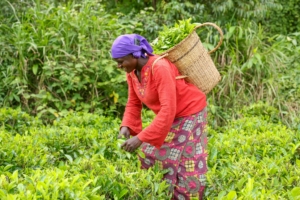 The Foundation for Sustainable Smallholder Solutions (FSSS) is a nonprofit organization promoting sustainable farming in Nigeria. It’s helping local smallholder farmers increase their crop yields and lower costs. It currently operates in 54 different locations throughout the country, including several agricultural hotspots such as Nasarawa, Kano and Oyo.
Challenges of Smallholder Farming in Nigeria
Agriculture makes up a significant portion of the country’s economy, as the industry employs more than one-third of the entire workforce. Smallholder farmers, defined as those working on farmlands less than 24 acres, make up a large portion of this workforce and its production, with only 10% of the entire nation’s food supply coming from other sources. However, smallholder farmers face many challenges that inhibit productivity.
The regular use of the slash-and-burn technique to clear farmland, synthetic fertilizer and pesticides all contribute to a decrease in crop yields, as well as damage to their land. With Nigeria as a whole already impacted by climate instability and extreme weather, the additional damage done by these farming practices only worsens their predicament. Many of these practices lead to the erosion of soil and subsequent decrease in fertility. This issue currently impacts more than 23% of Nigerian land. However, many farmers do not have access to the knowledge of how to properly make the transition from their current methods to the practices of sustainable farming that the FSSS promotes.
Another obstacle that smallholder farmers face is a lack of access to proper resources. A majority of farmers do not have access to high-quality seeds and non-synthetic fertilizers. In addition, lack of access to loans and insurance means that many farmers would not be able to buy these products even if they were available, and cannot insure their lands against potential environmental damage. As a result of all of these elements, productivity has waned so greatly that, on average, these farmers are producing “less than half of their potential output per hectare.”
Food Insecurity in Nigeria
According to the Global Hunger Index, Nigeria’s hunger level is serious. It affects the population as a whole, as 18% are undernourished. However, it affects children the most, as 31.5% of Nigeria’s population under the age of 5 are stunted. In addition, more than 10% of children die before their 10th birthday, reflecting “the most serious consequence of hunger.”
This worrying level of food insecurity is due to a combination of many different factors. However, despite the country’s reliance on them as a main food source, the declining output of smallholder farmers is a significant contributor.
How FSSS is Helping Nigerians
To properly promote sustainable farming in Nigeria, the FSSS has several initiatives to improve the amount of education and resources available. One of its initiatives is the Farmer’s Service Centers, also known as Farmer’s Hubs. These centers are run for locals by locals and provide farmer’s necessities at low costs. They have tools such as high-quality seeds and fertilizers and rentals for farming machinery. Yusuf Haliru, the operator of the Farmer’s Hub in Bichi, said: “Now, everything is within their reach—and the impact has been massive.”
The FSSS also partners with local financial institutions to provide smallholder farmers with services such as low-interest loans and insurance. This helps farmers, especially those with little to no financial literacy, invest more into their farms and financially protect themselves and their lands in an emergency or natural disaster.
However, the organization’s foremost initiative is its education. The FSSS educates farmers on many techniques that help progress the advent of sustainable farming in Nigeria. These techniques include crop rotation and using organic fertilizers like manure to reduce soil erosion and degradation. The use of compost as fertilizer caused a “40% increase in crop yields compared to conventional fertilization,” according to the UNDP. It also teaches techniques such as agroforestry and intercropping. These methods all help the farmers produce more while using less.
In May 2025 alone, the FSSS reached more than 1,000 farmers across four states, including almost 300 female participants through its educational programs. It will continue expanding its reach and resources moving forward, maximizing its positive impact and helping improve the lives of farmers and all those who rely on its yield.
– Delaney Gouveia
Delaney is based in Newport, RI, USA and focuses on Good News for The Borgen Project.
Photo: Flickr
