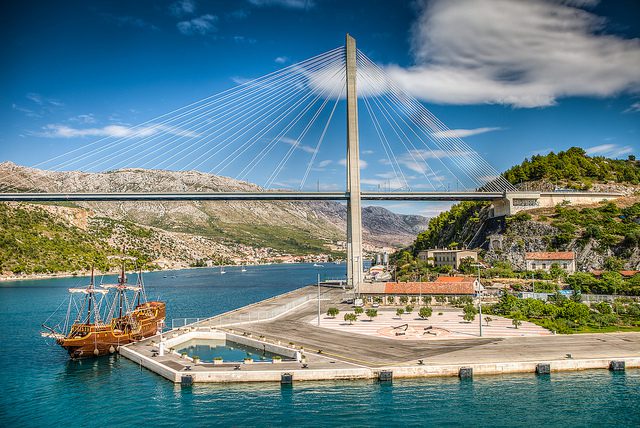
 Located in Europe, Croatia is a country with access to clean water and an almost perfect literacy rate, standing at 99 percent. Despite certain successes, the country struggles with other issues, such as high unemployment which stands at 44 percent. Here are five development projects in Croatia that are creating change in the country.
Modernization and Restructuring of the Road Sector Project
The purpose of this project is to strengthen the institutional effectiveness, enhance operational efficiency and increase the debt service capacity of Croatia’s road sector. The road network in Croatia is the largest infrastructure asset in the country.
Croatia’s road network is of vital importance to its economy, as it encourages industry growth and tourism. By expanding the road sector, Croatian roads can integrate with other European networks. Furthermore, for the country to continue to maintain relations with other entities, development projects in Croatia like these are necessary.
Croatia Innovation and Entrepreneurship Venture Capital Project
One of the best ways to help reduce poverty and develop a nation is to increase innovation and creativity within a country. This project allows that exact thing. It aims to strengthen risk capital financing for startups in Croatia. This could also add a fresh wave of businesses to the country and potentially create more jobs for the country.
Sustainable Croatian Railways in Europe
In addition to innovation, infrastructure is another way to reduce poverty. Building up the country’s infrastructure could have many potential benefits, as evidenced by the Modernizing and Restructuring of the Road Sector Project.
The Sustainable Railways in Europe Project aims to further develop infrastructure in Croatia by improving the operational efficiency and the financial sustainability of the public railway sector.
The World Bank approved three loans totaling $183.4 million in support of the country developing its railway sector. Croatia’s railway system has changed dramatically in the past in order to meet the criteria of the European Union (EU). The loan and the project combined will continue to see more changes, including making the railway companies more customer-oriented.
Health System Quality and Efficiency Improvement
Improving the health system of a country is another way to reduce poverty within a country. Specifically, the project aims to improve the healthcare delivery system to better provide sustainable health services; rationalize the hospital network to streamline healthcare services; strengthen the government’s capacity to develop and monitor effective health sector policies and promote effective public health interventions.
Development projects in Croatia have made vast improvements to its health system in recent years. However, there are still areas needing improvement. For example, Croatia suffers from an uneven availability of healthcare across regions in addition to lacking quality care. The project would increase efforts to improve the country’s healthcare system and afford citizens much-needed care and increased access.
Together for Sustainable Development in Croatia
This project depends on community involvement to help sustain local development through networking and partnerships. Its specific objective is to “strengthen the voice of civil sector in shaping, monitoring and evaluating sustainable development policies on local, national and international level through networking, cross-sectoral partnership and capacity building,” according to Croatia Rural Development Network.
The project anticipates cooperation from Croatian civil society networks as well as European networks. Its ultimate goal is to have stakeholders for sustainable development and an increased level of citizen and CSO participation in the process of monitoring of sustainable rural policies. With such innovative tactics, Croatia should be able to find and develop more ways to lift itself out of poverty.
These development projects in Croatia are small, but necessary, steps in the right direction for reducing poverty and enabling growth.
– Dezanii Lewis
Photo: Flickr

What Has the UN Done?
UNICEF
UNICEF is an agency that was created by the United Nations that stands for the United Nations International Children’s Fund. UNICEF protects the rights of children throughout the world and works towards increasing their standard of living. UNICEF works in 190 countries.
UNAIDS
The United Nations has been highly successful in the global battle against HIV/AIDS. They raise awareness, funds and create programs for prevention and treatment. The most recent UNAIDS update states that it plans to end the AIDS epidemic by 2030.
World Food Programme
The United Nations’ World Food Programme is one of the most successful agencies created by the U.N. thus far. The U.N. World Food Programme feeds 104 million people across 80 countries every year, focusing on war zones, natural disaster areas, health emergencies and poor countries.
UNHCR
Another success of the United Nations is the United Nations High Commissioner for Refugees, founded in 1949. The leaders of the UNHCR work with refugees and ensure that governments take responsibility in regards to refugees. UNHCR has received two Nobel Peace Prizes for work done in Europe and worldwide assistance to refugees.
Peacekeeping Missions
The United Nations has 16 peacekeeping missions underway across the world. The purpose is to encourage peaceful relations between countries. The peacekeeping missions have saved many lives and are one of the most successful projects the U.N. has undertaken throughout history.
Among the accomplishments of the United Nations, it is clear how important they are and what a large impact they have made throughout the world. In addition to these five accomplishments are countless others that are just as crucial to the groundbreaking aid they have provided. The question “What has the U.N. done?” starts with these five important things and continues with many other forms of aid.
– Chloe Turner
Photo: Flickr
Sustainable Agriculture in Peru for the Matsés People
Who are the Matsés? The Matsés are an indigenous group that occupies riverbank areas in the Amazon rainforest. There are only about 2,200 Matsés in these areas. According to Survival, a non-governmental organization committed to the rights of indigenous people, the Matsés live off the land by farming, hunting and fishing.
Farming is an important aspect of Matsés culture. The Permaculture Research Institute explains that slash and burn techniques are common agricultural practices that the Matsés use in order to farm. Although this practice is traditional for the Matsés, it does raise some ecological issues, as it is not a sustainable agricultural method.
The slash and burn technique, which is a method of clearing forests and then burning the vegetation, leads to disastrous environmental concerns. The Ecologic Development Fund explains that this method and deforestation contributes to climate change, habitat loss and ultimately nutrient-depleted soil.
This does not only affect the environment, but also the health of the Matsés people. The John A. Dutton E-Education Institute explains that soil that is low in nutrients will result in poor nutrient levels in crops, as these plants will only be supplied with the nutrients that are leftover from previous seasons. This ultimately means that the Matsés people are likely not getting adequate nutrition from the food they are producing.
Luckily, there is hope that these issues will improve as sustainable agriculture in Peru spreads.
William Park from the Permaculture Research Institute explains permaculture, which is a sustainable agriculture technique that was introduced to the Matsés, as “consciously designed landscapes which mimic the patterns and relationships found in nature, while yielding an abundance of food, fiber and energy (shelter, medicine) for the provision of local needs.”
The Permaculture Research Institute and the Acaté Amazon Conservation started a permaculture farm where David Fleck, the field coordinator, has focused on integrating sustainable farm practices into the lives of the Matsés. This method will not only yield more nutritious food but also reduce deforestation in the area.
Luckily, these methods have proved successful, as they do increase crop yields. The Permaculture Research Institute says this has helped the Matsés people to embrace these changes. They are confident that the Matsés will continue with these sustainability practices and that these methods will spread throughout the region to grow sustainable agriculture in Peru.
What does this mean for the future of the Matsés people and the Amazon? These new techniques show promise in providing adequate amounts of food that are fully nutritious. This should ensure that the Matsés live healthier lives. Furthermore, these practices enable the Matsés people to become better educated on the richness and importance of the Amazon. The Matsés Project is committed to educating the Matsés so they can preserve their culture and be able to better defend their land from companies trying to exploit their home.
– Mary McCarthy
Photo: Flickr
“In Rwanda Nobody Was Interested”: 15 Rwandan Genocide Facts
The Rwandan genocide sprung from a complex web of factors spanning hundreds of years. This compendium of 15 Rwandan genocide facts illustrates the most important things to understand about the genocide.
Top Rwanda Genocide Facts
The Rwandan genocide began on April 6, 1994, and ended approximately 100 days later on July 16.
According to U.N. estimates, between 800,000 and one million Tutsis and moderate Hutus were killed. As many as 10,000 people were killed per day. Seventy percent of the Tutsi population was wiped out, and over 10 percent of the total Rwandan population.
The Hutus are the majority ethnic group in Rwanda. At the time of the genocide, they made up 85 percent of the population. Historically, the Hutus were farmers who occupied a lower social status than their Tutsi neighbors. They took control of Rwanda after the nation gained its independence in 1962.
The Tutsis traditionally owned cattle, which allowed them to achieve more wealth and social power than the Hutus. Compared to the Hutus, the Tutsis were taller and thinner. Though the minority, the Tutsis benefited from their elite status under Belgian rule.
On April 6, 1994, Rwandan President Juvenal Habyarimana was killed in a plane crash. While it has never been determined exactly who was to blame, both Hutu extremists and the rebel Tutsi Rwandan Patriotic Front (RPF) were accused of the crime. Less than half an hour after the crash, the Hutu presidential guard began shooting Tutsi civilians.
On April 7, the day after the fatal crash, Prime Minister Agathe Uwilingiyimana was assassinated, along with ten Belgian peacekeepers assigned to protect her. Other moderate Hutu leaders were murdered as well.
Hutu leaders used radio broadcasts to incite genocide, broadcast misinformation and identify Tutsi targets and locations. Ten percent of the violence can be attributed to radio broadcasts.
Hundreds of thousands of women were raped, including nearly every survivor over the age of 12. For the first time, rape was listed as an official act of genocide by the International Criminal Tribunal for Rwanda (ICTR).
Hutus released AIDS patients from hospitals in order to form rape squads. Though men were quickly killed by the attackers, rapists intentionally infected their female victims and told them that they would die slowly and painfully from AIDS. As a result, more than 67 percent of rape victims are now HIV-positive.
Leaders handed out kill lists to militias familiar with local communities, so they had no trouble locating their victims. Neighbors killed neighbors, and some Hutu husbands even murdered their Tutsi wives out of fear for their own lives. Religious institutes provided no respite; priests and nuns were convicted of killing those who sought sanctuary in churches. Militias targeted those taking refuge in churches as well, sometimes killing thousands with grenades, fire, machetes and firearms.
The rest of the world watched the Rwandan genocide in horror, but did very little to stop it. U.N. Secretary-General Boutros Boutros-Ghali lamented that “in Rwanda nobody was interested.” Bill Clinton, U.S. President at the time of the massacres, admitted that the genocide was “one of history’s great failures” and “one of my personal failures.”
The killings ended when the Tutsi RPF took control of Rwanda on July 16, 1994.
After the RPF took control, two million Hutus fled into the neighboring Democratic Republic of Congo. There, Hutu militias caused years of conflict and were responsible for up to five million deaths.
In December 1996, proceedings began in Rwanda’s first genocide trial under the ICTR. Additionally, local courts tried almost two million people for their roles. Lower sentences were given when defendants showed remorse and sought reconciliation.
Because they had no vocabulary to adequately convey the magnitude of post-traumatic stress and grief endured by survivors, Rwandans coined a new term: “ihahamuke.”
These 15 Rwandan genocide facts shed light on the atrocities committed in the African nation in 1994. Hopefully, they serve as a reminder of the international community’s duty to prevent similar horrors in the future.
– Anna Parker
Photo: Flickr
The Success of Humanitarian Aid to The Gambia
Project Gambia
Project Gambia has been working since 2010 to bring volunteers to The Gambia and better the lives of its citizens, mainly in the Gunjur region of the country. The organization is based out of the United Kingdom. Their projects do not address one specific issue but cover a wide variety of societal needs.
Related to health, the organization has trained 420 people in emergency first aid as well as providing them with fully stocked first aid kits and reference books. In addition, the organization worked to refurbish a community health center with supplies, furniture and health information. They have also specifically addressed the problem of malaria by organizing a malaria awareness event, attended by 200 community members, and created a short film to raise awareness about malaria in the U.K.
In relation to general well-being, they have also built four wells and provided supplies for a women’s garden plot. The organization also refurbished two local schools, including playgrounds with newly planted trees. They have also done work in the U.K., such as collecting over 20 tons of recycled goods that they then shared within Gambian communities.
Foundation Humanitarian Aid Gambia (FHAG)
The Foundation Humanitarian Aid Gambia was founded in 1996 by a couple from the Netherlands who added a Gambia-based board in 2003. Their work has been focused on specific projects revolving around family and social issues.
The FHAG Orphan Project is their largest undertaking. The project involves finding safe foster families for orphaned children but also works to ensure that orphans receive the same opportunities as other children in their area. This includes ensuring food security, housing and education for orphans in The Gambia. One beneficiary of this project was able to earn a bachelor’s degree in agriculture with their help and now volunteers with the organization to repay them. The foundation still does work in health and education in addition to this project, including donating 75 desktop computers to the Ministry of Basic and Secondary Education.
Power Up Gambia
Power Up Gambia (PUG) specifically focuses on health in The Gambia, but in a unique way. They work with the Ministry of Health to bring electricity to medical centers with solar power. This humanitarian aid to The Gambia not only provides light but also life-saving water, heat and refrigeration for medication.
Power Up Gambia has brought electricity to 23 hospitals and clinics so far. The Gambia has over 60 health clinics in rural communities that provide healthcare to farmers, but most do not have access to electricity. PUG has partnered with We Care Solar to bring 58 portable solar power kits to these locations, which have been crucial during nighttime health emergencies. PUG also keeps spare parts for these kits on hand and trains Gambian technicians to complete any potential repairs. These technicians are trained at the Gambia Technical Training Institute where Power Up Gambia has implemented a curriculum on solar energy and solar technology to ensure the sustainability of the health centers the organization has provided power for.
The success of humanitarian aid to The Gambia provides a very bright future for the country. With the help of these organizations and others, the Gambian people’s lives will only continue to improve and grow.
– Megan Burtis
Photo: Flickr
5 Development Projects in Croatia
Modernization and Restructuring of the Road Sector Project
The purpose of this project is to strengthen the institutional effectiveness, enhance operational efficiency and increase the debt service capacity of Croatia’s road sector. The road network in Croatia is the largest infrastructure asset in the country.
Croatia’s road network is of vital importance to its economy, as it encourages industry growth and tourism. By expanding the road sector, Croatian roads can integrate with other European networks. Furthermore, for the country to continue to maintain relations with other entities, development projects in Croatia like these are necessary.
Croatia Innovation and Entrepreneurship Venture Capital Project
One of the best ways to help reduce poverty and develop a nation is to increase innovation and creativity within a country. This project allows that exact thing. It aims to strengthen risk capital financing for startups in Croatia. This could also add a fresh wave of businesses to the country and potentially create more jobs for the country.
Sustainable Croatian Railways in Europe
In addition to innovation, infrastructure is another way to reduce poverty. Building up the country’s infrastructure could have many potential benefits, as evidenced by the Modernizing and Restructuring of the Road Sector Project.
The Sustainable Railways in Europe Project aims to further develop infrastructure in Croatia by improving the operational efficiency and the financial sustainability of the public railway sector.
The World Bank approved three loans totaling $183.4 million in support of the country developing its railway sector. Croatia’s railway system has changed dramatically in the past in order to meet the criteria of the European Union (EU). The loan and the project combined will continue to see more changes, including making the railway companies more customer-oriented.
Health System Quality and Efficiency Improvement
Improving the health system of a country is another way to reduce poverty within a country. Specifically, the project aims to improve the healthcare delivery system to better provide sustainable health services; rationalize the hospital network to streamline healthcare services; strengthen the government’s capacity to develop and monitor effective health sector policies and promote effective public health interventions.
Development projects in Croatia have made vast improvements to its health system in recent years. However, there are still areas needing improvement. For example, Croatia suffers from an uneven availability of healthcare across regions in addition to lacking quality care. The project would increase efforts to improve the country’s healthcare system and afford citizens much-needed care and increased access.
Together for Sustainable Development in Croatia
This project depends on community involvement to help sustain local development through networking and partnerships. Its specific objective is to “strengthen the voice of civil sector in shaping, monitoring and evaluating sustainable development policies on local, national and international level through networking, cross-sectoral partnership and capacity building,” according to Croatia Rural Development Network.
The project anticipates cooperation from Croatian civil society networks as well as European networks. Its ultimate goal is to have stakeholders for sustainable development and an increased level of citizen and CSO participation in the process of monitoring of sustainable rural policies. With such innovative tactics, Croatia should be able to find and develop more ways to lift itself out of poverty.
These development projects in Croatia are small, but necessary, steps in the right direction for reducing poverty and enabling growth.
– Dezanii Lewis
Photo: Flickr
Sustainable Agriculture in Bhutan
Bhutan is a small, predominately mountainous country landlocked between China and India. It has a population of nearly 760,000 people— about 70 percent of whom live in rural areas. The agricultural sector is central to the Bhutanese economy. Over 65 percent of the population is involved in agriculture and it accounts for over 20 percent of Bhutan’s GDP. Thus, sustainable agriculture in Bhutan is a necessary future development.
The Effects of Climate Change
Most of Bhutan’s rural population depends on subsistence farming. However, climate change is altering ecosystems in ways that have far-reaching, adverse consequences for health and the economy. For example, high-mountain environments, such as that of Bhutan, are particularly vulnerable to changes in climate. This is in part due to the rapid rate of temperature changes which increases with elevation.
The projected effects of climate change in Bhutan include increasingly frequent floods and landslides, receding glaciers and other natural hazards — which all impose barriers to sustainable agriculture development.
Sustainable Agriculture in Bhutan
Sustainable agriculture in Bhutan is an important factor for socio-economic development and growth. In addition to climate-related hazards, challenges to productive and sustainable agriculture in Bhutan include water scarcity, fragmented landholding, changing land use, negative human-wildlife interactions, inadequate irrigation and poor infrastructural development.
In 2017, the Government of Bhutan developed the ‘Enhancing Sustainability and Climate Resilience of Forest and Agricultural Landscape and Community Livelihoods in Bhutan’ project. Its objectives are to strengthen biological corridors, build resilience for adaption to climate change and support sustainable agriculture in Bhutan by 2023.
Food Insecurity
Climate change poses fundamental threats to people’s livelihoods in Bhutan with its potential to increase food insecurity and rural poverty. Despite substantial economic growth in recent years, rates of food insecurity and malnutrition remain high. Thirty-three percent of the Bhutanese population suffers from food insecurity. Furthermore, over 33 percent of Bhutanese children have stunted growth.
The United Nation’s Sustainable Development Goals’ target of increasing agricultural productivity by 2030 is also driving the government’s efforts in the agricultural sector.
Although it will be difficult for Bhutan to reach this target due to uneven and mountainous terrain, the country is committed to alleviating poverty and food insecurity through sustainable agriculture development.
– Gabrielle Doran
Photo: Flickr
The Gateway Between Continents: Infrastructure in Azerbaijan
Azerbaijan, a country east of Turkey and located between the Black and Caspian Seas, makes for a perfect gateway linking southwest Asia and Europe. The country’s long history of being subjugated under Russia has made it a weak connection in the past, but now with the infrastructure in Azerbaijan strengthening, it is not only gaining a name in the world, but also seeing its citizens’ standards of living improve. While Azerbaijan still has some hurdles to overcome, the world is watching Azerbaijan’s poverty rate decrease and infrastructure improve.
Part of Azerbaijan’s difficulty in overcoming its weak infrastructure stems from its still-recent rule by Russia. After World War Ⅰ, Azerbaijan broke away and claimed independence. Many countries recognized its independence and world leaders appreciated its people’s dream of freedom. U.S. President Woodrow Wilson, in particular, commented on the parallel ideals of the United States and Azerbaijan. Azerbaijan’s independence did not last long. After only two years of independence, communist Russia invaded Azerbaijan and governed it for 70 years.
After the political subjugation and various wars of that 70-year period, Azerbaijan was able to claim independence again in 1991. Shortly afterward, the country elected Abulfaz Elchibey, although he was quickly replaced by Heydar Aliyev (the current president’s father) in 1993. President Heydar Aliyev was able to stabilize the country and began the journey to using its oil supply to strengthen the infrastructure in Azerbaijan and bring wealth to the country. Some are still concerned that Azerbaijan’s political future is not void of difficulty, although the current president, Ilham Aliyev, is using his experience in the oil industry, continuing in his father’s footsteps and bringing better living conditions to Azerbaijan’s people.
Azerbaijan has been able to grow its infrastructure so dramatically during the past ten years because of the oil market. With the increased profit and wealth coming into the country, President Aliyev is focussing on roads, railways and air transportation. During the last ten years, Azerbaijan has built more than 6,000 miles of road plus 300 bridges and restructured all main roads to make traveling between countries easier. As ground transportation improves and air travel becomes necessary, President Aliyev has also begun pushing for a focus on water portage as well.
Along with the improvements to transportation infrastructure, there have been significant improvements in many other areas, particularly regarding the internet. Azerbaijan has had expensive access, content blocking and slow speeds. While there are no real signs of transparency in what is monitored and blocked, there have been significant contributions to reducing the price and increasing the speed. In 2015, the government set down plans to improve the broadband infrastructure to give citizens faster and easier access.
Even with the improvements to many areas of infrastructure in Azerbaijan, it is still lacking in drinkable water. Gaining clean water for the whole country will be a long process, but the opening of Azersu’s Jeyranbatan ultrafiltration water purification facility in 2015 opened doors for clean water to become a staple. This complex’s focus is on some of the high population areas where lack of water has been an issue. Once Azerbaijan can find cheaper and simpler means of purifying water, then providing clean water to more rural areas will become easier.
Azerbaijan has invested billions into its infrastructure for transportation, internet, water and energy. As the infrastructure in Azerbaijan improves, so will its connection to the continents and its place in the world. Azerbaijan is on a path that will continue to improve its facilities and bring safe and reliable residences to citizens and visitors. Other countries will use their roads, rails and boats as a transit center, which will bring more wealth and jobs into the country. While there is much to look forward to, it will also be a trying time as many countries vie for dominance in using Azerbaijan as an increasingly important part of that North-South route that would link all of Europe to South Asia.
– Natasha Komen
Photo: Flickr
Sustainable Agriculture in South Sudan Making Gains Amid Crisis
South Sudan is also going through a food insecurity crisis. The aftermath of a four-year civil war, the deaths and displacement of citizens near the nation’s northern border, poor infrastructure and a lack of knowledge regarding sustainable agriculture practices contribute to the 4.8 million food insecure people. If sustainable agriculture in South Sudan makes no advances, an estimated 5.1 million people are expected to go hungry in 2018.
Sustainable agriculture in South Sudan has incredible yet unrealized potential. More than 70 percent of the nation’s total land area is suitable for crop production. Less than 4 percent of the total land area is currently cultivated. Increasing the total land cultivated by only 6 percent would more than double the country’s value of total agriculture production from $808 million to $2 billion.
In order to realize this goal, South Sudan must prioritize infrastructure improvements in targeted areas with high agricultural potential. Having more paved roads would ensure that farmers are able to make full use of their yields and would also reduce carbon emissions.
Uganda has provided aid to South Sudan following the outbreak of the December 2013 conflict in South Sudan. In December 2017, agencies in Uganda like the Adventist Development and Relief Agency (ADRA) focused their attention on teaching South Sudanese refugees about sustainable agriculture. ADRA challenged refugees to increase their independence by producing their own food and trained over 250 refugees in a period of five days.
The Food and Agriculture Organization of the United Nations (FAO) is currently managing a $61 million emergency rehabilitation program in South Sudan in an attempt to help 250,000 displaced farmers return to agriculture after being forced from their land.
“South Sudan is enormously rich in terms of natural resources, and with 95 percent of the population dependent on them for survival, it has huge potential for sustainable growth through agriculture,” said George Okech, Head of Office, FAO South Sudan.
According to the FAO, a lack of access to quality seeds and planting materials constrains yields. Through FAO, the most vulnerable farmers are provided with quality seeds and tools through seed fairs or direct distribution, along with training in good agronomic practices.
In areas less affected by the ongoing crisis, FAO fosters sustainable agriculture in South Sudan via farmer field schools and the promotion of seed multiplication, where selected farmers are provided with quality seed and trained in production, conditioning, storage and marketing.
In order to realize this goal, South Sudan must prioritize infrastructure improvements in targeted areas with high agricultural potential. There are many steps that need to be taken to fully implement sustainable agriculture in South Sudan, but the importance of it is known to many and progress is being made.
– Sam Bramlett
Photo: Flickr
Banana Production Fueling Sustainable Agriculture in St. Lucia
To better the training of those in the agricultural field, in 2014 the United Nations Development Program teamed up with the SEED Foundation, a U.S.-centered college preparatory system, to create a series of training sessions for St. Lucian farmers. The training sessions covered sustainable organic farming methodology. Farmers were taught about organic pest control, natural fertilization and how to improve the ecology of their farms to prolong their fertility.
However, despite these measures to preserve the economy surrounding sustainable agriculture in St. Lucia, the industry has taken a hit. The majority of revenue in the industry comes from banana production, which declined when the European Union introduced a new import regime. The St. Lucian Ministry of Agriculture launched an Agricultural Transformation Project in 2017. A large portion of the funds for the project are being put toward a three-year Banana Rehabilitation Project. The Agricultural Transformation Project also aims to refurbish 45 farm roads and the Fond Ausso Agro-Processing Plant, which has been in a state of disrepair for nearly six years.
In addition, a large number of banana plants have been killed by black sigatoka disease. Many banana farmers lack the technology and money to protect their crops from black sigatoka. Taiwanese farmers have had success in controlling the disease, so the Taiwan International Cooperation and Development Fund introduced the Banana Black Sigatoka Disease Prevention and Treatment Project in St. Lucia. The project includes initiatives to create a model to control black sigatoka and engineer new strains of disease-resistant banana plants.
With the introduction of these new practices and disease control methods, there is a good chance that sustainable agriculture in St. Lucia will rebound and start contributing more to the gross income of the nation again.
– Anna Sheps
Photo: Flickr
Infrastructure in Kiribati: One Road’s Impact on Half the Population
Kiribati is home to 108,000 residents, yet 50,000 depend on the country’s one main road—the South Tarawa Road. Tarawa is the densely populated capital of Kiribati, and the South Tarawa Road is the only main road in South Tarawa.
More than half of Kiribati’s population relies on the South Tarawa Road to connect the western Betio seaport, the eastern international airport and Bonriki. The road has not been rehabilitated since the 1970s, making it a dangerous route for travelers.
Heavy rain and increased traffic have caused large potholes to form, and travel along the road becomes particularly slow, uncomfortable and dangerous after rain. Tarawa has seen an increase in upper respiratory illnesses due to the excessive dust that collects along the road during Kiribati’s dry season.
The government has recognized the need to improve infrastructure in Kiribati by establishing the Kiribati Road Rehabilitation Project. The project involves the cooperation of Kiribati’s government, the World Bank, the Asian Development Bank and the Australian government.
The Kiribati Road Rehabilitation Project consists of three components:
Includes civil works activities to be done on the South Tarawa Road and the reconstruction and rehabilitation of paved roads.
Includes maintenance of activities to strengthen the road sector and sustainable main road infrastructure in Kiribati.
Includes establishment of a project management team, associated operating costs, a valuation specialist and project account audits.
The project has rehabilitated over 32 kilometers of the South Tarawa Road and upgraded six kilometers of secondary roads. Improved drainage, solar street lighting and road signage have been added to the road. Footpaths and pavement markings have also been installed to increase pedestrian safety.
Improved road infrastructure in Kiribati increases safety and reduces costs for drivers and pedestrians. Kiribati’s government aims to ensure that the road will last by supporting routine maintenance through local contractors. The local contractors will be trained to clean the drainage system, clear the roadway, fill potholes on unsealed roads, report potholes on sealed roads and maintain signage.
The Kiribati Road Rehabilitation Project is the largest economic infrastructure investment in the country since World War II. Its projected completion date is June 30, 2018. The completion of the upgrades will go a long way towards improving the daily lives of Kiribati’s people.
– Carolyn Gibson
Photo: Flickr