• Link to X
  • Link to Facebook
  • Link to Instagram
  • Link to TikTok
  • Link to Youtube
  • About
    • About Us
      • President
      • Board of Directors
      • Board of Advisors
      • Financials
      • Our Methodology
      • Success Tracker
      • Contact
  • Act Now
    • 30 Ways to Help
      • Email Congress
      • Call Congress
      • Volunteer
      • Courses & Certificates
      • Be a Donor
    • Internships
      • In-Office Internships
      • Remote Internships
    • Legislation
      • Politics 101
  • The Blog
  • The Podcast
  • Magazine
  • Donate
  • Click to open the search input field Click to open the search input field Search
  • Menu Menu
Blog - Latest News
Global Poverty, Hunger

Hunger in Uzbekistan: A need for change
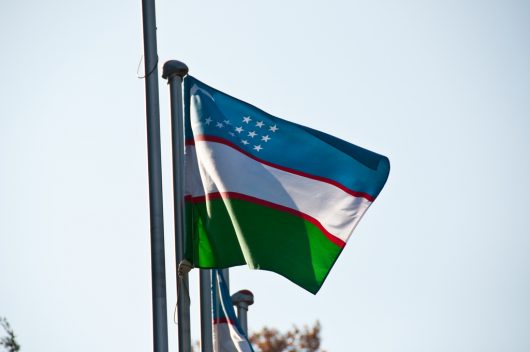
Hunger in UzbekistanHunger in Uzbekistan remains a serious issue, yet it is not recognized as a national one.

Close to 75 percent of the working-class population in Uzbekistan live in rural areas, and thus the income of this stratum of the population typically remains low, which exacerbates the lack of food security. This level of poverty has its roots in Uzbekistan’s independence.

Both the domestic and foreign policy of Uzbekistan are inimical to any significant changes that would address the hunger that plagues the country. Since the main priority of such policies is to keep the ruling regime in power, securing food and combating hunger is simply not a huge priority.

Another cause of the lack of food security is the slow growth of the gross domestic product (GDP), which in recent years was as low as seven percent, which is not sufficient for the steadily increasing population.

Furthermore, the economy of Uzbekistan, in regards to agriculture, is largely confined to producing cotton. This lack of diversification exposes Uzbekistan to increased economic risk. This problem is exacerbated by rising food prices as well.

Despite all of these indicators painting a bleak picture of Uzbekistan in the long run, recent reports have shown a decrease in hunger. From 2000 to 2014 the number of undernourished Uzbeks was reduced to less than half of what they previously were. Currently, this number is at around 1.7 million. While much work has to be done, this is a great improvement.

Additionally, unlike the GDP, the rate of agricultural production increased gradually at about 6 percent every year from 2000 to 2007. Furthermore, wheat production grew nine-fold from 1991 to 2006. These stark improvements are largely a result of the isolationist approach Uzbekistan has adopted in terms of its foreign policy, which has both its pros and cons.

One of the downsides that the Uzbeks have experienced as a result of this foreign policy has already been mentioned: the aversion of the rigid regime to take chances that may benefit its population but would otherwise risk its own stability, such as lifting restrictions on trade. The pros of this are increased self-sufficiency that has spurred the growth in certain aspects of the agricultural sector.

There is much work that needs to be done in order to reduce hunger in Uzbekistan. The country has improved in some ways but further work is needed in order to develop a sustainable model that adequately addresses the needs of the citizenry.

– Mohammad Hasan Javed

Photo: Flickr


November 13, 2017
Share this entry
  • Share on Facebook
  • Share on X
  • Share on WhatsApp
  • Share on Pinterest
  • Share on LinkedIn
  • Share on Tumblr
  • Share on Vk
  • Share on Reddit
  • Share by Mail
https://borgenproject.org/wp-content/uploads/borgen-project-logo.svg 0 0 Borgen Project https://borgenproject.org/wp-content/uploads/borgen-project-logo.svg Borgen Project2017-11-13 01:30:232024-05-29 22:28:01Hunger in Uzbekistan: A need for change

Get Smarter

  • Global Poverty 101
  • Global Poverty… The Good News
  • Global Poverty & U.S. Jobs
  • Global Poverty and National Security
  • Innovative Solutions to Poverty
  • Global Poverty & Aid FAQ’s
Search Search

Take Action

  • Call Congress
  • Email Congress
  • Donate
  • 30 Ways to Help
  • Volunteer Ops
  • Internships
  • Courses & Certificates
  • The Podcast
Borgen Project

“The Borgen Project is an incredible nonprofit organization that is addressing poverty and hunger and working towards ending them.”

-The Huffington Post

Inside The Borgen Project

  • Contact
  • About
  • Financials
  • President
  • Board of Directors
  • Board of Advisors

International Links

  • UK Email Parliament
  • UK Donate
  • Canada Email Parliament

Get Smarter

  • Global Poverty 101
  • Global Poverty… The Good News
  • Global Poverty & U.S. Jobs
  • Global Poverty and National Security
  • Innovative Solutions to Poverty
  • Global Poverty & Aid FAQ’s

Ways to Help

  • Call Congress
  • Email Congress
  • Donate
  • 30 Ways to Help
  • Volunteer Ops
  • Internships
  • Courses & Certificates
  • The Podcast
Link to: The Water Quality in Saudi Arabia: Resisting Water Salinization Link to: The Water Quality in Saudi Arabia: Resisting Water Salinization The Water Quality in Saudi Arabia: Resisting Water Salinization Link to: 10 Facts about Poverty in Puerto Rico Link to: 10 Facts about Poverty in Puerto Rico 10 Facts about Poverty in Puerto Rico
Scroll to top Scroll to top Scroll to top