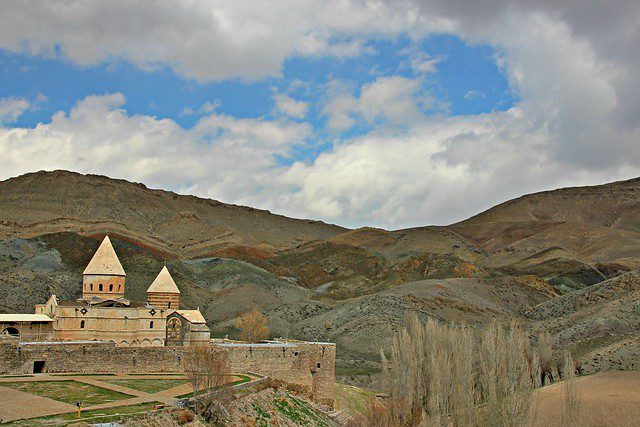
Heavy flooding due to severe rain wreaked havoc in Iran, destroying homes, infrastructure and agriculture. The flooding is the worst the country has seen in 70 years, but many in the international community have been gracious and cooperative in assisting relief efforts following the flood in Iran.
Unprecedented rainfall caused flooding that destroyed or damaged 143,000 homes and killed at least 78 people. An estimated 10 million people were affected, 2 million of which need humanitarian aid. Several countries and many humanitarian organizations are cooperating with the Iranian government to facilitate disaster relief.
Iranian Response
The Iranian government authorized allocating up to $2 billion from the country’s sovereign wealth fund. They plan to implement the funds through relief payments and reconstruction. The flooding inflicted $2.5 billion in damages to roads, bridges, homes and farmland. Around 4,400 villages across 28 of Iran’s 31 provinces were affected, and 8,700 miles of roads were damaged.
Initially, the Iranian Red Crescent Society’s (IRCS) Emergency Operations Center received meteorological alerts of severe rain and responded by circulating flood warnings. As the flooding occurred, IRCS sent helicopters and boats to rescue at-risk people threatened by rising floodwater. Many people took shelter in public evacuation centers inside of stadiums, halls and mosques.
Global Relief Efforts
The International Federation of Red Cross and Red Crescent Societies (IFRC) has been coordinating a relief plan implemented through the IRCS. The IFRC is appealing for over 5 million Swiss francs to assist around 150,000 people for nine months.
Thus far the IRCS has provided support services to more than 257,000 people. Those services include shelter for 98,000 people, pumping water out of 5,000 flooded houses and transporting 89 people to health facilities. They also distributed thousands of tents, blankets, heaters, health sets and kitchen sets. Part of the money appealed for by the IFRC would go toward replenishing stocks of emergency items like these.
Zala Falahat, the IRCS Under Secretary for General International Affairs and International Humanitarian Law, commented, “This is the largest disaster to hit Iran in more than 15 years…For the Red Crescent, this is one of the largest humanitarian relief efforts in our history.” The IRCS effort is 18,000 relief workers strong, many of whom are volunteers.
The European Commission is also actively assisting relief efforts following the flood in Iran. They activated the European Civil Protection Mechanism (EUCPM) and provided $1.2 million in humanitarian funding. Other countries from Europe providing support include Austria, the Czech Republic, France, Italy, the Vatican and Slovakia. The money has gone toward emergency supplies like generators, water and mud pumps, inflatable boats, hygiene kits and other necessary items.
Iraq has been especially active in providing support for people affected by the flood in Iran. The Iraq Popular Mobilization Force organized an aid convoy including six ambulances and 20 trucks of medical and food supplies. Other Middle Eastern countries have also cooperated with humanitarian efforts, including Amenia, Azerbaijan, Kuwait, Oman, Pakistan and Turkey. Russia, Japan and India have also sent relief items.
The United Nations has sent a wide range of agencies to help Iran. The UN Refugee Agency (UNHCR) is providing emergency supplies. Indrika Ratwatte, the UNHCR’s Director for Asia and the Pacific, said, “UNHCR’s efforts are in solidarity with Iran and its people who have hosted millions of refugees for four decades.” The UN’s Food and Agriculture Organizations (FAO) estimates $1.5 billion in damages to the agricultural sector due to the flood.
Though the flood in Iran caused wide-spread damage, the international humanitarian community is springing into action to help. The government of Iran expressed gratitude toward the many global partners who provided aid. The disaster relief effort is a powerful example of international aid in action.
– Peter S. Mayer
Photo: Flickr

L’Afrique Excelle Sparks Technological Advancements in Africa
The Work of L’Afrique Excelle
L’Afrique Excelle has supported new startups in raising up to five million dollars in funding from investors. The company has also connected startups with leading investors. Additionally, new startups can receive a one-week all-expenses-paid residency in Bamako and an all-expenses-paid residency to Paris including a showcase at VivaTech. These opportunities help new brands increase visibility and raise awareness.
Striking Benefits of Technological Advancements in Africa
L’Afrique Excelle is not the only organization currently aiding the development of technology in Africa. Digital Africa, a French-based development company, is working to increase investment funds in Nigeria, Kenya, South Africa and beyond. All of the startup companies that work with Digital Africa will also have the chance to showcase at the Francophone Africa Investor Summit (FAIS), an event that takes place in West Africa for early-stage investors.
Current Progress and Future Outlook
These businesses and investors, expanding from Cape Town to Cairo, will be working hard to innovate new and improved ways of solving Africa’s most pressing issues. According to African Law & Business (ALB), some of Africa’s most prominent issues as of 2019 include low access to world-class computing, low rates of developmental finance, governmental corruption, climate change, energy and business. L’Afrique Excelle’s mission to enhance the growth of digital businesses in Africa will help limit these problems and improve the standard living in Africa.
– Sara Devoe
Photo: Pixabay
The Problems with Trade Embargoes
Cuba and the U.S. Trade Embargo
Countries like Cuba, Libya, North Korea, Venezuela, China and Russia have often been on the receiving end of trade embargoes for decades. In the past, U.S. trade embargoes have resulted in sporadic political changes and dire effects on foreign policy.
For instance, Cuba, in particular, has been adversely impacted by the U.S. trade embargo since the culmination of the Cuban Missile Crisis of the 1960s, particularly in regard to the collapse of the sugar industry. The initial decline was catalyzed by the imposition of the Smoot-Hawley Tariff Act. Production further declined after the fall of the Soviet Union and a rise in the embargoes by the United States.
Trade Embargoes and Economies
At times, trade embargoes work because they can contribute to more peace and stability, and they can even prevent the debilitation of human rights violations, terrorism, aggression and nuclear threat. However, long term restrictions can be quite damaging and aggravate poverty and the standard of living for civilians. Owing to the sheer level of economic isolation and threat to trading relationships, the effects of trade embargoes can be especially damaging to the business, trade and commerce of a country, impacting a country’s GDP as well.
As a result of the negative effects of trade embargoes, domestic industries and producers often suffer a decline in their export markets and revenues, thereby threatening jobs and livelihoods. Countries that tend to overspecialize in certain commodities, goods and services may be most affected by these constraints as key sectors of the economy may be adversely impacted. Given their level of development, poorer countries are often restricted to producing goods in the primary industry that may have relatively lower returns.
Unintended Consequences
Trade embargoes may lead to grave economic and geopolitical problems like retaliation, such as the Russian counter-embargo after the 2014 EU Energy embargo during the Russian annexation of Crimea. This can result in an escalation in trade and price wars in the long run. Incidentally, the U.S. and China may now also be on the verge of a major trade war due to the new imposition of trade barriers, most recently on steel and China’s HUWEI chip sales.
Due to deficiencies in the country’s power to export goods and services during an embargo, its trade balance will also tend to suffer to a great degree. For instance, a U.N. arms embargo has been placed on North Korea concerning all armaments and related goods. Since December 2017, trade restraints have also been placed on key industries like oil and agriculture. This has created issues for the North Korean economy, but it has done little to deter the government from nuclear testing.
Open Trade Benefits Economies
According to the IMF, there is significant evidence that countries with open economies are more likely to achieve higher levels of economic growth. With new levels of trade liberalization and globalization, expanding economies are benefitting from massive inflows of capital and investment from stakeholder groups around the world. Moreover, in recent years, burgeoning and fast-paced economies like China are graduating to an open trade policy so that they can bolster trading ties with other key trading players.
In the year 2014, members of the World Trade Organization (WTO) agreed to sign the Trade Facilitation Agreement (TFA). In order to ensure greater ease, competitiveness, and efficiency in trade in the future, trade facilitation measures are now being implemented so that weak bureaucracy and productivity issues may be addressed. TFA will also aid developing economies to boost their exports and have greater access to markets.
The answer is not simple. Trade embargos can work under the right circumstances, but they are not always as effective as one would hope. Furthermore, they can have unexpected consequences. Given the vast scope and potential of free trade and development in a dynamically changing world, eliminating barriers and encouraging greater economic integration may provide a more effective way to address important social and economic issues and have profoundly positive impacts in the long term.
Photo: Flickr
Foreign Aid Required After Cyclone Idai Lashes Coast of Mozambique
Nearly a month after Cyclone Idai made landfall in Mozambique, officials and civilians are working to clean up the disaster zone. The Category 2 storm first hit near the city of Beira, an important port in Southern Africa, on March 14th and 15th. Winds during this period exceeded 105 miles per hour. The northern provinces of Mozambique are now beginning the reconstruction process.
The deadly storm left 603 people dead, though officials suspect many more unidentified victims washed out to sea. Additionally, Cyclone Idai destroyed 110,000 homes, wiped away entire towns and left rich farmland waterlogged. The people of the northern provinces depend on food from this farmland for both survival and business.
An Uphill Battle Against Poor Infrastructure
Mozambique struggles with a lack of access to quality healthcare, education and infrastructure. As a result, the nation is ranked 218 out of 223 countries with an average life expectancy of 51.4 years. Their impoverished status makes it difficult for them to recover from natural disasters.
The country requires aid from outside sources to rebuild in the north where Cyclone Idai first met the coastline. The United Nations’ fundraising appeal to cover the initial costs totaled $282 million USD. Hospitals-in-boxes are being transported by boat, food is being dropped from planes and 900,000 cholera vaccines have recently arrived in Beira. The vaccines are being distributed in the north as part of an effort led by Doctors Without Borders.
The Added Challenge of Cholera
Despite vaccination efforts, the cholera outbreak is continuing to spread because people still do not have access to clean water in the wake of Cyclone Idai. Residents of Biera are facing the brunt of the outbreak due to poor water infrastructure and overcrowding. Many of these residents have been moved to displacement camps with equally poor conditions.
There are 3100 confirmed cases of cholera as of March 27th, with six deaths. Health volunteers and officials in Beira are hoping that cholera cases will fall in response to the restoration of running water. However, this running water can only reach 60 percent of the city’s residents.
Dr. Katrin Duget from the Pioneros Centre explains that the use of antiretroviral drugs is a good solution for the time being. Well-equipped health facilities are heading distribution efforts.
A Nation Moving Forward
Many civilians will struggle to move forward, as they have to work to rebuild entire communities and homes. For now, it is important to focus on longer-term solutions such as an investment in vaccines. Cholera can also be treated by simple rehydration, but it must come quickly because the disease can kill within hours. The water filters being installed by the UN are helping communities gain access to clean water to hydrate properly.
In the months after disasters such as Cyclone Idai, it is important to look at proactive measures that can be taken before another crisis strikes. These include food education programs as well as vaccinations which can help civilians survive during a lack of widespread resources.
–Meredith Breda
Photo: Flickr
Post Genocide: Top 10 Facts About Rwanda Child Soldiers
Rwanda is an African country whose history is marred by colonialism, civil war, political turmoil and genocide. Since the 1994 genocide that killed nearly one million Tutsi and moderate Hutu, the country continues to deal with the aftermath of this suffering.
One of the central issues during the genocide and even today in the post-genocide environment has been the role of child soldiers. Here are the top 10 facts about Rwanda child soldiers.
Top 10 Facts About Rwanda Child Soldiers
Although Rwanda made great strides to demobilize the child soldiers that its own army produced, many child soldiers remain in the Democratic Republic of the Congo. It was not until 2013 that the Rwandan government acknowledged its role in the production of child soldiers and has, since then, made great efforts to combat this atrocity.
– Morgan Everman
Photo: Pixabay
The Cece Yara Foundation Fights Child Sexual Abuse in Nigeria
The Mission
The Cece Yara Foundation is an NGO with a mission to prevent the sexual abuse of children and provide emergency assistance and care. Bola Tinubu, a child activist and lawyer, founded the organization and she believes in protecting the safety of all children. The Foundation works in coordination with counselors, law enforcement and educators to ensure that every child lives with innocence and safety throughout their life.
Child sexual abuse is still a silent issue in Nigeria and there are many myths surrounding it. The Foundation also works to correct these myths and educate the public on how rampant the sexual abuse of children actually is. The organization believes that educating adults is the first step in preventing this abuse. Cece Yara ensures that every adult in a child’s life is aware of the signs of sexual abuse in a child and how to prevent it or even intervene.
Cece Yara also provides counseling services and a child forensic interview. The interview is a structured conversation between a counselor and a child to teach the child how to recount an incident of sexual abuse. Many children are afraid to come forward about abuse either because they are ashamed or confused. The forensic interview allows them to feel safe enough to get the help they desperately need.
Nigeria’s First Child Helpline
The Cece Yara Foundation has recently implemented the first child helpline in Nigeria. The helpline is available 24 hours a day and has professionals, trained on how to talk to children, answering the line. There are two lines; Cece Yara offers one free for children and the other paid for adults. This line serves to provide immediate help and assistance to a Nigerian child suffering from sexual abuse.
Child Abuse and Poverty
Children in developing nations are more vulnerable to sexual abuse and exploitation compared to those living in high-income countries due to the stress associated with poor living conditions. Alleviating poverty can have a significant impact on the rate of child abuse in an impoverished region.
The Cece Yara Foundation has been able to help 2,000 children in Nigeria since its launch in 2016. It has had a tremendous impact on the lives of Nigerian children who have suffered or are suffering from sexual abuse. The Cece Yara Foundation is fighting for a future that is safe for the children of Nigeria.
– Olivia Halliburton
Photo: Pixabay
Chefs for Change Connects Fine Cuisine and Rural Farming
Chefs for Change
Together with Nicolas Mounard, the Chief executive of Farm Africa, world-renowned chefs Joan Roca, Eneka Atxa and Gaggan Anand launched Chefs for Change in June 2017. This movement focuses on sustainable agriculture in developing communities and its importance in regards to achieving sustainable development goals. During an event that highlighted the cause, the three chefs talked about their involvement with Chefs for Change.
Chef Joan Roca said, “A dish is much more than the sum of its ingredients. If we consider its sourcing, we see that every ingredient has been created by a varied cast of human characters involved in every step of the food’s journey from land to the plate.” One of the main goals for Chefs for Change is to help rural farmers get the recognition they deserve to ensure that their business can be successful.
Different chef ambassadors are appointed to rural communities in Africa, Asia and Latin America. Here, these Chefs for Change shadow local chefs as they visit the local farms that provide the food and then return to the restaurants where the food is prepared and served. After working with local farmers for some time, the chef ambassadors then report the progress made in these local communities in regards to their contribution to the 17 sustainable development goals.
The Importance of Farmers in Rural Communities
More than 70 percent of the world’s food supply comes from small farms like the ones that these chefs are working with. These chef ambassadors know that without the help of these rural farmers and the role they play in agriculture, chefs around the world would not have many of the ingredients available for them to use on a daily basis. Through these experiences, the chefs are not only helping the local farmers achieve sustainability but they are learning from them as well.
When the ambassador chefs return from their trips, they have many stories to share. These stories are what help to bridge the divide between upper and lower class agricultural societies. In addition to sharing these stories, the three ambassador chefs hope to inspire other chefs to follow in their footsteps, thus continuing this path of positive exposure and success for smaller farming communities.
Chefs for Change is bringing awareness to the important issue of agricultural infrastructure. The goal is to rid these rural farming communities of food insecurity and ensure that the farmers are thriving in their agricultural practices. By continuously working with local chefs and ensuring that they progress towards achieving the U.N.’s SDG goals, those involved with Chefs for Change are helping to work towards a poverty-free future.
Photo: Unsplash
Flood in Iran Rallies International Relief Effort
Heavy flooding due to severe rain wreaked havoc in Iran, destroying homes, infrastructure and agriculture. The flooding is the worst the country has seen in 70 years, but many in the international community have been gracious and cooperative in assisting relief efforts following the flood in Iran.
Unprecedented rainfall caused flooding that destroyed or damaged 143,000 homes and killed at least 78 people. An estimated 10 million people were affected, 2 million of which need humanitarian aid. Several countries and many humanitarian organizations are cooperating with the Iranian government to facilitate disaster relief.
Iranian Response
The Iranian government authorized allocating up to $2 billion from the country’s sovereign wealth fund. They plan to implement the funds through relief payments and reconstruction. The flooding inflicted $2.5 billion in damages to roads, bridges, homes and farmland. Around 4,400 villages across 28 of Iran’s 31 provinces were affected, and 8,700 miles of roads were damaged.
Initially, the Iranian Red Crescent Society’s (IRCS) Emergency Operations Center received meteorological alerts of severe rain and responded by circulating flood warnings. As the flooding occurred, IRCS sent helicopters and boats to rescue at-risk people threatened by rising floodwater. Many people took shelter in public evacuation centers inside of stadiums, halls and mosques.
Global Relief Efforts
The International Federation of Red Cross and Red Crescent Societies (IFRC) has been coordinating a relief plan implemented through the IRCS. The IFRC is appealing for over 5 million Swiss francs to assist around 150,000 people for nine months.
Thus far the IRCS has provided support services to more than 257,000 people. Those services include shelter for 98,000 people, pumping water out of 5,000 flooded houses and transporting 89 people to health facilities. They also distributed thousands of tents, blankets, heaters, health sets and kitchen sets. Part of the money appealed for by the IFRC would go toward replenishing stocks of emergency items like these.
Zala Falahat, the IRCS Under Secretary for General International Affairs and International Humanitarian Law, commented, “This is the largest disaster to hit Iran in more than 15 years…For the Red Crescent, this is one of the largest humanitarian relief efforts in our history.” The IRCS effort is 18,000 relief workers strong, many of whom are volunteers.
The European Commission is also actively assisting relief efforts following the flood in Iran. They activated the European Civil Protection Mechanism (EUCPM) and provided $1.2 million in humanitarian funding. Other countries from Europe providing support include Austria, the Czech Republic, France, Italy, the Vatican and Slovakia. The money has gone toward emergency supplies like generators, water and mud pumps, inflatable boats, hygiene kits and other necessary items.
Iraq has been especially active in providing support for people affected by the flood in Iran. The Iraq Popular Mobilization Force organized an aid convoy including six ambulances and 20 trucks of medical and food supplies. Other Middle Eastern countries have also cooperated with humanitarian efforts, including Amenia, Azerbaijan, Kuwait, Oman, Pakistan and Turkey. Russia, Japan and India have also sent relief items.
The United Nations has sent a wide range of agencies to help Iran. The UN Refugee Agency (UNHCR) is providing emergency supplies. Indrika Ratwatte, the UNHCR’s Director for Asia and the Pacific, said, “UNHCR’s efforts are in solidarity with Iran and its people who have hosted millions of refugees for four decades.” The UN’s Food and Agriculture Organizations (FAO) estimates $1.5 billion in damages to the agricultural sector due to the flood.
Though the flood in Iran caused wide-spread damage, the international humanitarian community is springing into action to help. The government of Iran expressed gratitude toward the many global partners who provided aid. The disaster relief effort is a powerful example of international aid in action.
– Peter S. Mayer
Photo: Flickr
Tackling Plastic Waste in India: A Victory for Mumbai
Volunteers
Afoz Shah, a lawyer, and his volunteers made the elimination of plastic waste a reality for Versova beach. Shah took initiative one day in 2015 to pick up the trash he saw on his walks. Eventually, his neighbor joined him and that led to 1,000 volunteers pulling up their sleeves and getting dirty. Shah has also taken it upon himself to educate the locals about sustainable waste practices to residents who live along the coastline. Fifty-five thousand citizens live in the Versova beach area.
The Problem: Plastic Waste in India
The mass amount of wasted plastic Shah and his volunteers found on this beach is just a peek into the throw-away mentality of India. People have littered several other beaches nearby with plastic. Creeks are transporting tons of plastic to beaches with their currents. These creeks run by slums and are turned into sewers, dragging the plastic into the waters. Sadly, most slums have no garbage pick-up. As a result, most inhabitants throw their trash into the water to become someone else’s problem.
The Solutions
The government is now paying residents to collect plastic bags. The government wants to promote that collecting plastic bags is a means of income in the hopes of deterring the laissez-faire mindset amongst Indians when it comes to wasted plastic.
In fact, municipal authorities are now starting to criminalize the use of plastic bags. These new laws can come with $366 fines and jail time. Companies like McDonald’s and Starbucks are even feeling the heat to change their packaging. Plastic pollution in India is affecting water sources by blocking up streets and waterways, but hopefully, these stern new laws will make the streets clear.
Thirteen million tons of plastic end up in the world’s ocean every single year. Imagine dumping two trucks full of trash every minute into the ocean. The UNEP advises that plastic not only threatens marine life but also human life. Hopefully, more countries will take a page from India’s book and start implementing strict laws towards plastic waste.
So far, the work of the volunteers to clear Versova beach has had a significant impact. Thanks to their tireless efforts, Olive Ridley turtles have started hatching on the beach. Olive Ridley turtles are the smallest in the ocean and no one has spotted them in decades. So far, 80 of the Olive Ridley turtles have survived and made it to the Arabian Sea.
– Jennifer O’Brien
Photo: Flickr
The “Happiness Plan” for Children of Venezuela
In a nation experiencing an economic crisis, the children of Venezuela are suffering. Poverty is on the rise, including an increase in the malnutrition of children due to limited access to resources. Families fleeing to Peru have traveled quite far. Along the way, many have faced discrimination due to their migrant status. UNICEF and Plan International have developed a strategy for aiding children who are experiencing rapid changes in their home lives. They are helping children in Venezuela find a “Happiness Plan.”
Conditions in Venezuela
At one time, Venezuela was part of a wealthier portion of Latin America. However, with new officials and underdevelopment, poverty is now abundant. A large number of resources were focused toward developing the oil industry while other developments were delayed. With the newfound prosperity that oil brought, the economic gap grew further and further apart. The consequences of such destitution can be easily seen in the adults and children of Venezuela. Food, medicine, water and other resources are greatly lacking. This leaves people desperately searching for food.
The desperation associated with poverty was significantly increased in March due to a five-day blackout. Resources like food and water were even more scarce than usual. Some resorted to collecting water from sewage pipes. Multitudes of people were left without food. People rushed to stores to find food but discovered that the stores were already stripped. Some stores were even trashed and burnt in the chaos that ensued with riots. The riots were also the cause of several deaths from untreated medical conditions to gunshot wounds. Hospitals operated under less than ideal conditions, with limited access to electricity and supplies, such as soap.
The Effects of This Crisis On Children
In a press release, UNICEF stated, “ While precise figures are unavailable because of very limited official health or nutrition data, there are clear signs that the crisis is limiting children’s access to quality health services, medicines and food.” Statistics about conditions in Venezuela can be hard to come by, and the ones that are available are often disheartening. Malnutrition is becoming a larger issue for the children of Venezuela. While the government has attempted some measures of addressing the problem, such as monthly packages of food for sale, more still needs to be done to provide for the Venezuelan people.
As a result of the continued crisis in Venezuela, many have fled the country. As of 2018, two million people had already left Venezuela; without a doubt, numerous others have left since. For those who are awaiting refugee status or to be reunited with lost family members, UNICEF has created a safe place to help children with this difficult time.
The Happiness Plan
The “Happiness Plan” is a safe space for children that has been set up in a tent in the country of Peru. Filled with games, coloring pages and books, this tent provides an outlet for children to be children while awaiting their official entry into Peru. In addition to the fun activities, the “Happiness Plan” offers psychosocial support from professionals for children struggling with these difficult transitions they are facing.
Some of the children passing through the tent have been separated from their families. They are awaiting the chance to rejoin their families in Peru. Others are with some members of their nuclear family but had to leave the rest of their family and friends behind them in Venezuela. One survey taken by UNICEF and the International Organization for Migration stated that 73 percent of Venezuelan families in Tumbes, Peru, had to leave behind one or more of their children.
In such a dismal time for Venezuela, it is reassuring to know that organizations such as UNICEF and Plan International are implementing programs to help these children who have experienced such abrupt change. They will undoubtedly need physical and psychological support to heal from the trauma they have experienced in their home country.
Photo: Flickr
Top 10 Facts about Living Conditions in South Korea
Since the Korean War, South Korea has emerged as one of the more politically and economically free nations in the world. Home to companies like Samsung and Hyundai, South Korea’s economy has been growing for years. While South Korea has become a model for other countries in southeastern Asia, the country is also facing new challenges that a strong economy alone cannot fix. Here is a list of the top 10 facts about living conditions in South Korea.
Top 10 Facts about Living Conditions in South Korea
South Korean has made great advancements in the quality of living conditions, but there is still room for improvement. Many younger Koreans believe that President Moon’s policies will lead to more benefits and a fairer society. These top 10 facts about living conditions in South Korea outline a promising future, but making mental health and financial stability a priority is necessary for the country’s citizens.
Photo: Flickr