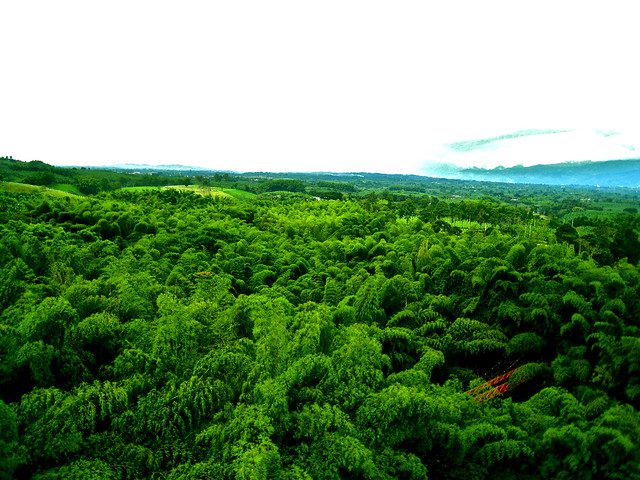
As of 2015, less than one-third of our planet’s surface contains forests, and that percentage continues to decrease. According to the World Wildlife Fund, approximately 18.7 million acres of forest are destroyed annually. But a search engine called Ecosia is on a mission to help.
The Problem With Deforestation
Deforestation rates have slowed down somewhat since peak levels in the 1990s. Nevertheless, the Earth continues to lose this ecosystem at an alarming rate. Forests are home to an estimated 80 percent of the world’s non-aquatic species. The Amazon rainforest alone shelters an estimated 2,000 animal species and 40,000 plant species. As the world’s forests are gradually destroyed, millions of plants and animals lose their habitats. It is possible that, due to deforestation, countless species have gone extinct before they were ever discovered by humans.
In addition, forests play a number of roles in maintaining a safe and habitable environment. Forests are carbon sinks, meaning that they absorb large amounts of carbon from the atmosphere, thereby helping to maintain a balanced and habitable climate. The loss of forests is responsible for at least 15 percent of all greenhouse gas emissions, contributing to rising temperatures, extreme weather conditions and an increasing number of dangerous storms. These changes have the potential to make human life more difficult and dangerous, and people in impoverished countries often face the greatest risks.
What is Ecosia?
Ecosia is a web search engine founded in 2009 and based in Berlin, Germany. The brainchild of Christian Kroll, Ecosia was created as a “social business” with the primary objective of helping the world. For most businesses, profit comes first and service projects second. Ecosia has turned this order on its head.
Like other search engines, Ecosia makes money off of ads in internet searches. But unlike other engines, 80 percent of Ecosia’s revenue is used to plant trees in countries suffering from heavy deforestation and to fund reforestation projects. The search page also comes with a tree counter, allowing users to see how many trees their searches have planted so far.
As of 2018, Ecosia is contributing to reforestation efforts in 15 countries across Asia, Europe, and South America. Its projects target biodiversity hotspots containing a high number of plants and animals without alternative habitats. Many of these areas are at risk of disappearing. By reforesting these areas, Ecosia’s efforts are preventing countless species from going extinct.
Agricultural Benefits of Reforestation
Forests are vital to the health and safety of agriculture. Apart from maintaining a healthy climate and biodiversity, trees prevent erosion by holding soil. Without this protection from erosion, good soil is lost, and agriculture becomes significantly more difficult.
Trees also shield smaller crops from violent storms and channel nutrients to surrounding plants. They provide habitats for bees and other pollinators, facilitating natural fertilization of crops and plants. Perhaps most importantly, trees aid in precipitation. By drawing groundwater through their roots and evaporating it through their leaves, the water can return as rain. Not long after the reforestation project in Burkina Faso commenced, rainfall became more frequent in the semi-desertic area.
By setting the groundwork to create better and more sustainable conditions for agriculture, Ecosia is helping rural communities around the world improve their livelihoods.
Community Benefits of Reforestation
While reforestation efforts are inherently beneficial to the environment, Ecosia also ensures that local communities benefit from their projects. Many of the company’s efforts focus on planting trees that are useful to local farmers. One example is Ecosia’s project in Ghana, where more than 900,000 trees were planted along the Daka River. Most of these trees were fruit or nut trees. These trees not only helped restore and maintain the water level of the river but provided local people with food. Through the harvesting and selling of shea nuts, the plants also created new economic opportunities.
Finally, Ecosia projects bring communities out of poverty by employing locals to plant trees. The company provides a stable source of income for people in areas where jobs and money are scarce.
How to Help
Ecosia can be downloaded for free as an extension for browsers including Safari, Firefox and Google Chrome. It is also offered as an app on iOS or Android. So far, nearly 6 million people have begun using Ecosia, leading to the planting of more than 40 million trees. By 2020, the company hopes to have planted at least 1 billion, reviving broken habitats and contributing to a sustainable future.
–Keira Charles
Photo: Flickr

How Does China’s Economy Benefit Asia?
The ASEAN-China Agreement
China’s development benefits the rest of South-East Asia in many ways. Its remarkable economic growth benefitted businesses in nearby countries. China’s market today is the second largest in the world, which has caught the attention of both the US and nearby nations. Noticing its growth, South-East Asian countries strengthened their trade relations with China via the ASEAN-China agreement, in 1991. As a method of improving and strengthening relations, both parties established the ASEAN-China Cooperation Fund. Such economic agreements brought along peace maintenance assurances.
Trade Relationships
The growth of China’s own economy also indirectly benefits neighbouring economies. The more the manufacturing sector in China grows the more it depends on imports to supply its factories. Therefore, important economies such as Japan, South Korea, Taiwan, Thailand, Singapore, Malaysia, Indonesia, Philippines and India are all running trade surpluses with China. Countries like Taiwan, Korea and Japan are now relying on China to bolster their production lines as they moved their labor-intensive industries to China which allows them easier access to international competition. It is in the neighbouring countries’ interests to allow China’s economy to grow further as it is now their main exporting location.
A Political Partner
Additionally, China’s development offers political stability and security to the rest of South-East Asia. Similar to their economic relations, China and the ASEAN countries also established the ASEAN-China Senior Officials Political Consultation to focus on politics and security. As a way of ensuring peace and political stability, China ensures that it supports its neighboring countries to reach their fullest potential. China provides assistance for developing countries such as Laos, Burma and Cambodia through funding construction of power plants and regional grid interconnection.
The International Railway
On top of that, China’s economy benefits the rest of South-East Asia due to its dedication to building a railway that connects the whole of South-East Asia. This has been long planned, however, without Japan’s support it seemed impossible. Now that China is able to fund those plans without Japan’s support, construction has begun in the north of Thailand. China’s influence not only in Thailand but in the whole of the region is foreseen through its plans of building a 3000km railway that goes from the north of Thailand, to Malaysia, and all the way to Singapore This railway would mean development for the whole region and for China itself. It may allow it to seize more control of the South China Sea in exchange for the economic development the railway will bring. The railway’s endpoint is extremely strategic due to the fact that the Strait of Malacca is located in Singapore, the pathway for oil from the Middle East to East Asia.
– Njoud Mashouka
Photo: Flickr
Search Engine Ecosia Uses Revenue to Reforest
As of 2015, less than one-third of our planet’s surface contains forests, and that percentage continues to decrease. According to the World Wildlife Fund, approximately 18.7 million acres of forest are destroyed annually. But a search engine called Ecosia is on a mission to help.
The Problem With Deforestation
Deforestation rates have slowed down somewhat since peak levels in the 1990s. Nevertheless, the Earth continues to lose this ecosystem at an alarming rate. Forests are home to an estimated 80 percent of the world’s non-aquatic species. The Amazon rainforest alone shelters an estimated 2,000 animal species and 40,000 plant species. As the world’s forests are gradually destroyed, millions of plants and animals lose their habitats. It is possible that, due to deforestation, countless species have gone extinct before they were ever discovered by humans.
In addition, forests play a number of roles in maintaining a safe and habitable environment. Forests are carbon sinks, meaning that they absorb large amounts of carbon from the atmosphere, thereby helping to maintain a balanced and habitable climate. The loss of forests is responsible for at least 15 percent of all greenhouse gas emissions, contributing to rising temperatures, extreme weather conditions and an increasing number of dangerous storms. These changes have the potential to make human life more difficult and dangerous, and people in impoverished countries often face the greatest risks.
What is Ecosia?
Ecosia is a web search engine founded in 2009 and based in Berlin, Germany. The brainchild of Christian Kroll, Ecosia was created as a “social business” with the primary objective of helping the world. For most businesses, profit comes first and service projects second. Ecosia has turned this order on its head.
Like other search engines, Ecosia makes money off of ads in internet searches. But unlike other engines, 80 percent of Ecosia’s revenue is used to plant trees in countries suffering from heavy deforestation and to fund reforestation projects. The search page also comes with a tree counter, allowing users to see how many trees their searches have planted so far.
As of 2018, Ecosia is contributing to reforestation efforts in 15 countries across Asia, Europe, and South America. Its projects target biodiversity hotspots containing a high number of plants and animals without alternative habitats. Many of these areas are at risk of disappearing. By reforesting these areas, Ecosia’s efforts are preventing countless species from going extinct.
Agricultural Benefits of Reforestation
Forests are vital to the health and safety of agriculture. Apart from maintaining a healthy climate and biodiversity, trees prevent erosion by holding soil. Without this protection from erosion, good soil is lost, and agriculture becomes significantly more difficult.
Trees also shield smaller crops from violent storms and channel nutrients to surrounding plants. They provide habitats for bees and other pollinators, facilitating natural fertilization of crops and plants. Perhaps most importantly, trees aid in precipitation. By drawing groundwater through their roots and evaporating it through their leaves, the water can return as rain. Not long after the reforestation project in Burkina Faso commenced, rainfall became more frequent in the semi-desertic area.
By setting the groundwork to create better and more sustainable conditions for agriculture, Ecosia is helping rural communities around the world improve their livelihoods.
Community Benefits of Reforestation
While reforestation efforts are inherently beneficial to the environment, Ecosia also ensures that local communities benefit from their projects. Many of the company’s efforts focus on planting trees that are useful to local farmers. One example is Ecosia’s project in Ghana, where more than 900,000 trees were planted along the Daka River. Most of these trees were fruit or nut trees. These trees not only helped restore and maintain the water level of the river but provided local people with food. Through the harvesting and selling of shea nuts, the plants also created new economic opportunities.
Finally, Ecosia projects bring communities out of poverty by employing locals to plant trees. The company provides a stable source of income for people in areas where jobs and money are scarce.
How to Help
Ecosia can be downloaded for free as an extension for browsers including Safari, Firefox and Google Chrome. It is also offered as an app on iOS or Android. So far, nearly 6 million people have begun using Ecosia, leading to the planting of more than 40 million trees. By 2020, the company hopes to have planted at least 1 billion, reviving broken habitats and contributing to a sustainable future.
–Keira Charles
Photo: Flickr
5 Beer Companies That Give Back
In order for the industry to be successful beer companies rely heavily on natural resources from other countries such as water, wheat, barley, etc. With such a high dependence on the support of other nations, many beer companies want to continue to support those communities by focusing on sustainability and reducing poverty. Here are five beer companies that give back.
5 Beer Companies That Give Back
This popular Dutch beer company has been on the market for nearly a century and has recently created a campaign to support its global partners. Brewing a Better Future campaign launched in 2010 as an initiative to better utilize resources and modify industrial processes in the companies most vital region: Africa. As one of the top three users of malt barley in the world, Heineken is aware of its responsibility to maintain and support the farming communities it has access to. Slight changes in industrial practices can have an extensive impact on the surrounding economy.
This campaign seeks to increase profit in African communities by developing sustainable agriculture methods. Some goals are to reduce water consumption at breweries by 25 percent, reduce carbon dioxide emissions during production by 40 percent and utilize 60 percent of locally sourced raw materials in Africa. These goals are set to be achieved by 2020.
Another initiative, Growing Together in Africa, is a partnership between African farming communities and Heineken to improve farming conditions. By utilizing cassava crops, one of the most popular sources in Africa, in Heineken production, African farmers would have increased profit. Heineken’s effort to improve water quality, provide safe health care, increase crop cultivation and develop a proactive agricultural economy has prompted other companies to do the same.
Anheuser-Busch, owner of Bud Light, Budweiser, Michelob Ultra and more, has also used its profits to help reduce global poverty. One recent Michelob Ultra campaign to benefit other developing countries came to public attention in December 2018. Michelob Ultra advertised its partnership with world-famous cyclist Lance Armstrong to raise funds for the World Bicycle Relief.
This organization is dedicated to providing bikes to individuals living in poor communities without adequate access to transportation. In many developing countries it is common to have to walk for miles just to get access to clean water. Providing more bicycles as a mode of transportation will reduce travel time and create more opportunities for the millions of people who need it.
Michelob Ultra raised $25,000 in the month of December 2018 by donating a percentage of the sales of a six-pack of beer. The company plans to continue this partnership and increase donations in the future to reduce issues contributing to global poverty such as the lack of transportation.
This Irish classic also has a knack for philanthropy. This 260-year-old company has donated more than $8 million dollars to developing communities around the world to reduce the number of people living in poverty.
Guinness launched its Water of Life campaign in 2007 to provide communities all across Africa access to clean drinking water. By developing eco-efficient water tanks in African communities, more than ten million people now have purified water. This program has also established healthcare facilities in Nigeria and hygiene stations in Uganda, as well as 200 other projects to support developing communities in Africa.
Guinness has also partnered with Ikhayalami, a South African organization dedicated to creating sustainable infrastructure throughout the country. Projects started by Ikhayalami focus on research and development techniques to build energy efficient structures that withstand natural disasters. By utilizing solar energy, remodeling infrastructural practices, developing emergency preparedness tactics and connecting energy grids, these once underdeveloped communities will have the opportunity to thrive in technologically advanced homes, greatly reducing the risk of suffering from hunger and natural disasters.
Some debate whether or not Stella counts as a beer company, but its contributions to eliminating global poverty are definitely worth noting. Like many other beer companies worldwide, Stella Artois recognizes how beer production negatively impacts water resources surrounding its factories. Approximately 844 million people have extremely limited access to clean drinking water, all of them living in underdeveloped and poverty-stricken regions.
To counteract the consequences brought on by industrialization, Stella Artois uses its resources to provide clean water to those most affected by the global water crisis. The company is partnering with Water.org and the #PourItForward campaign to provide financial solutions to offset the growing crisis. Matt Damon and Gary White founded this campaign and have provided water access to 17 million people around the world. Stella Artois joins this campaign by promising to donate a percentage of sales directly to the organization. The company has produced limited edition chalices as an online fundraiser accessible to the general public. For every chalice sold Stella Artois will donate 3.13 dollars.
Even small establishments can have a big impact. Thirsty Planet Brewing Co., a small beer company located in Texas, believes in brewing with a purpose. This company partners with Well Aware to fund projects provide clean water all across Africa. Well Aware strives to allow universal access to clean water by building 100 percent sustainable wells and water systems in small communities throughout the continent.
A child dies from a water-borne illness every 90 seconds, most often in countries in extreme poverty and contaminated water. Thirsty Planet and Well Aware host fundraisers and mobilize efforts to increase sustainable water systems and clean water that is easy to access.
Beer companies do more than just provide refreshing beverages throughout the world. By partnering with humanitarian organizations these companies have displayed social consciousness, helping millions gain access to food, health care, education and clean water.
– Becca Cetta
Photo: Pixabay
How Improving Girls’ Education in Thailand Can Boost the Economy
UNESCO is now working with Thai educators to improve STEM education and motivate young girls to pursue their dreams in the science fields. This initiative is a part of a 20-year strategy that aims to transform the country to increase innovation, creativity, research, development and green and high-technologies driving the economy.
– Madeline Oden
Photo: Creative Commons
Women and Water: Cornerstones of Developing Communities
The Burden of Water
Women and children bear the majority of the burden when it comes to water collection. Every day, they collectively spend almost 200 million hours locating and obtaining water for their communities. Over 50 million more hours are spent searching for sanitary places to relieve themselves. Hours devoted to collecting water take away time from education, employment and family. Additionally, in some areas, water scarcity is so severe that women have to settle for dirty and contaminated water for drinking, cooking and cleaning, exposing them to water-borne diseases and parasites.
Providing sources of clean water and sanitation to women in developing nations has the potential to do much more than reducing health risks. The hours women and children reclaim when they get access to clean water in their homes or villages can instead be used to pursue higher education, start small businesses or even grow food for their families. One study conducted by UNICEF in Tanzania found that cutting down the time needed for collecting water from 30 minutes to 15 increased rates of girls attending school by over 10 percent. However, since women are rarely actively included in the process of supplying and financing water management solutions, their perspectives are not addressed in the long run.
Access to Clean Water’s Impact on Women
When women get the opportunity to elevate their responsibility for water beyond collection and into management, their potential can blossom. Water.org features stories of the impact access to clean water can make on the lives of women. In India, they found that women are often forced to collect water from outside their communities due to a lack of funds for installing water taps near their homes.
This inspired the creation of WaterCredit, a service providing affordable, short-term loans going towards constructing taps that offer long-term access to clean water in developing communities. Women like Manjula make up nearly 90 percent of borrowers, reducing the need to travel so far outside their communities to obtain water. This gives them the time and energy needed to manage personal businesses, which earn enough income to easily repay the loan from WaterCredit. Water.org reports that WaterCredit provided around 4.6 million loans, amassing a total value of 1.7 billion dollars, demonstrating what a feasible and impactful solution this service offers.
–Emmitt Kussrow
Photo: Flickr
The International Impact of Donated Clothing
When Marie Kondo’s Netflix series, “Tidying Up with Marie Kondo,” came out on New Year’s day in 2019, it sparked a donation craze in the United States. Within several weeks of the premiere, clothing, shoes and more overwhelmed donation centers. While charities resell or reuse some of these items, not all donations remain in the immediate community. So what happens to donated clothing that charities cannot resell or reuse? In fact, the international impact of donated clothing is greater than it may seem.
Where Do Donations Go?
According to estimates from ABC News, thrift shops and charitable organizations keep or sell less than 10 percent of donated clothing. Charitable organizations redirect the other 90 percent of unusable or unwanted clothing to textile recycling companies. These companies turn the clothes into cleaning rags, furniture filler, insulation and other products.
However, recycling companies cannot use all the material they purchase. Accordingly, they redirect a fourth of purchased material to other markets. These clothing donations become exports to developing countries around the world.
According to M.I.T’s Observatory of Economic Complexity, the U.S. is the largest exporter of used clothing (also known as textile waste, clothing or scrap) in the world. The sale of used clothing brings nearly $683 million to the U.S. economy each year. On the other side, Pakistan and Ukraine are the two largest importers, purchasing over six percent and four percent of exported clothes, respectively. While exporting used clothing helps repurpose material from the U.S., it can seriously undermine the textile industries of developing countries.
The International Impact of Donated Clothing
Donated clothing from the U.S. floods the markets in developing countries, providing cheap alternatives to domestically manufactured textiles. Often, donated clothes are more affordable and available than domestic options. Thus, as donated clothes find their way into foreign markets, they undercut domestic producers.
For example, several decades ago, half a million Kenyans had jobs in the garment industry. As of 2017, only 20,000 of those jobs remained. Now the garment industry in Kenya focuses on redistributing and shipping secondhand clothes domestically. Similarly, Zambia lost the majority of its clothing industry over the past 30 years. With increasing imports, Zambians could not afford to buy locally produced garments anymore.
With a constant stream of cheap clothing from developed nations, like the U.S., industries abroad struggle to compete. The constant competition stifles the development of alternatives to imported textiles. However, by keeping clothing donations local, individuals can help lessen the international impact of donated clothing. Try the tips below to keep donations local!
Five Ways to Donate More Responsibly
– Morgan Harden
Photo: Flickr
Top 10 Facts About Girls’ Education in India
Top 10 Facts About Girls Education in India
India aims to grow from a medium developed country to one of higher rank. Considering its recent strides in education, it is possible for India to attain this goal. However, this can only be done by realizing there is still more work to be done in closing the gap between boys and girls as these top 10 facts about girls’ education in India show.
Photo: Flickr
Latin American Drug Cartels Target Impoverished Children
Drug cartels are a rising problem everywhere, especially for those that are in poverty. Children, specifically children in poverty, are generally the most vulnerable population anywhere in the world. Latin American drug cartels target impoverished children specifically due to their innocence and willingness to obey. Although this situation seems unfixable, people are uniting together against Latin American drug cartels, providing much needed hope.
The Situation
In Latin America, 43 percent of children live in poverty. These children’s come from families with no money for food, clothing or shelter. Cartels know the struggles of these children, so they offer them work. Because many feel they have no choice but to accept work from Latin American drug cartels, 80 percent of children under 25 agree to work for them.
Young children in Mexico and other Latin American countries draw less suspicion than older individuals and are willing to work for little money. As a result, the cartels use them in every way possible. Cartels often send children unaccompanied to push drugs across borders. Subsequently, border security will help unaccompanied children, thus enabling drug traffickers to smuggle drugs across borders.
How Countries Combat Drug Cartels
Luckily for these children, countries are taking steps to eliminate cartels. Recently, Mexico initiated a joint investigative team with the U.S. to fight against drug cartels. The U.S. and Mexico have worked together to combat cartels since the 1970s. For instance, one program, the Merida Initiative, worked to stop the flow of illegal weapons from the U.S. into Mexico and, subsequently, Latin American cartels. Similarly, the U.S. and Mexico offer amnesty to drug dealers in exchange for information.
This new joint investigative team is based in Chicago and directly targets cartel finances. Cartels survive by distributing goods to suppliers and laundering money. Therefore, disrupting their finances and cracking down on money laundering will drastically slow their production. In doing so, the team intends to weaken and ultimately stop Latin American drug cartels.
How Nonprofit Organizations and KIND Help
Nonprofit organizations band together to help the children that drug smugglers employed previously. One organization in particular, KIND, is dedicated to offering such help. KIND protects children’s rights when unaccompanied children are detained by the U.S. and when they are on the move. KIND ensures detained children receive necessary legal aid, especially as these children are burdened with an immigration system they do not understand.
With the U.S. and Mexico targeting drug cartels’ financial assets and nonprofit organizations providing the necessary help, there is hope to eliminate drug cartels and keep vulnerable children safe. The U.S. and Mexico, along with nonprofit organizations, are executing solutions to keep drug cartels away from children and shut them down altogether.
– Emme Chadwick
Photo: Pixabay
Cyclone Idai Survivors Helped by Humanitarians
Background
Cyclone Idai and the resulting floodwaters destroyed infrastructure, homes and crops. As the crisis comes into focus, it is clear that it could take some time for the region to recover.
The death toll between the three countries is over 750 people and rising as government and aid workers assess the damage. An estimated 1.85 million people have been affected and 36,000 homes destroyed in Mozambique alone. Rescue workers have been scrambling to save people stranded by floodwater.
Cyclone Idai is one of the top three deadliest tropical cyclones ever to affect the Southern Hemisphere. Many climbed trees to escape the rising floodwater, with rescue workers lifting 634 survivors out of trees. Others fell into the crocodile-infested waters as they became too exhausted to hold on.
Displaced people are migrating toward the port city of Beira, Mozambique and to makeshift camps to escape areas engulfed by water. The close grouping of people in the camps has created new concerns for aid workers. Disease, hunger and mental health problems threaten these survivors.
Disease Among Survivors
The International Federation of the Red Cross and Red Crescent Societies (IFRC) has reported cases of malaria infections and cholera among Cyclone Idai survivors. Jana Sweeny, a spokesperson for the IFRC, told Earther: “In disasters like this one–one where there is a lack of clean water and sanitation, and potential overcrowding–outbreaks of waterborne diseases are common.”
The standing floodwater is a breeding ground for mosquitoes that may carry malaria. Cholera, a waterborne bacteria, could also infect the floodwaters.
Humanitarian Efforts
At least 16 different humanitarian organizations, several governments and the United Nations are contributing to help Cyclone Idai survivors. The United States government pledged the assistance of its military. IFRC Secretary General Elhadj As Sy said at press conference in Geneva: “We are seeing tremendous collaboration and partnership from National Red Cross and Red Crescent Societies from all over the world, and from our international and United Nations partners.”
The United Nations has unloaded 22 metric tons of food supplies, and 40 more are on the way. U.N. organizations have been active in the region, initially in rescue operations, then as aid distributors. The U.N. Central Emergency Fund has allocated $20 million to provide aid to more than 400,000 people.
The IFRC is appealing for over $30 million for disaster relief. They have been delivering Emergency Response Units, which include equipment and teams that can provide sanitation and water purification for 20,000 people per unit. The IFRC is also deploying a field hospital that will be able to administer medical care for at least 150,000 people.
The IFRC has set up an online portal for connecting displaced children with their distraught parents. Cyclone Idai has left many children unaccompanied as they were either separated from their parents or orphaned. Save the Children is also working to help these child Cyclone Idai survivors.
There is difficulty distributing aid as some of the affected areas are remote. Helicopters are the only safe mode of distribution since the cyclone destroyed roads and communications infrastructure.
The damage done by Cyclone Idai on Southeastern Africa will not be fully realized until some time has passed. But for now, the global humanitarian community is helping the region recover from this disaster.
– Peter S. Mayer
Photo: Flickr
5 Interesting Facts About World Water Day 2019
5 Interesting Facts About World Water Day 2019
The theme for World Water Day 2019 was “Leaving No One Behind.” Technology is providing new methods to increase access to clean water. Additionally, it mobilizes programs combating water scarcity. Above all, technology connects individuals interested in making a difference, no matter where they are. However, these advances can’t only benefit privileged populations. Improvements must be available to marginalized groups, as well. World Water Day 2019 emphasized access to clean water is a human right, as recognized by the U.N. in 2010. Everyone deserves water, regardless of sex, race, ethnicity, religion or age.
The U.S. government is working to implement a strategy to improve global water access through the U.S. Agency for International Development. While the fight to bring access to clean water is global, USAID renewed its commitment to providing clean drinking water this World Water Day. As such, USAID supports the core objectives outlined in the U.S. Government Global Water Strategy. These objectives include promoting better stewardship of freshwater resources and expanding the availability of sanitation services. Additionally, USAID is enacting policy and programs aimed at providing 15 million people access to clean water by 2022.
This World Water Day marked the first completed year of the U.N.’s “Water Action Decade.” Three years ago, the U.N. General Assembly unanimously decided to make the global water crisis a top priority for 10 years straight. The “Water Action Decade” kicked off in 2018. Therefore, efforts to increase sustainable water management and access to safe water will last through World Water Day 2028. And nations around the world execute large-scale programs, addressing water scarcity stemming from pollution, drought and urbanization.
Women played a key role in the message of World Water Day 2019. While many suffer due to water scarcity, women disproportionately carry the burden. According to U.N. research, women and girls make up the majority of people responsible for obtaining water in areas where clean water isn’t accessible. Collectively, women devote around 200 million hours to finding and gathering clean water. Subsequently, a major goal for World Water Day 2019 was improving women’s access to water, which can lead to awesome opportunities that promote independence for women. Therefore, the U.N. sponsors women-led projects in rural areas to include women in community decisions about water as just one part of its commitment to improving universal access to clean water worldwide.
In fact, World Water Day is just one example of U.N. efforts to meet Sustainable Development Goal 6. Overall, the U.N. has agreed on 17 different goals to promote sustainable development worldwide, specifically in growing and impoverished nations. These Sustainable Development Goals must meet their goals by 2030. Particularly, the primary task of Sustainable Development Goal 6 is to make water safe, affordable and accessible universally. And World Water Day marks just one of many U.N. efforts to reach this crucial goal on target. Ultimately, the first step in achieving universal access to clean water is raising awareness.
Nevertheless, on World Water Day 2019, nations joined hands to strengthen efforts toward making clean water accessible worldwide. The celebration honored organizations that provide aid, unite communities and save lives. And they celebrate innovations that revolutionize water management, along with the people dedicated to campaigning for water access without leaving anyone behind.
– Emmitt Kussrow
Photo: Unsplash