How Mobile Libraries Fight Poverty Through Global Literacy Access
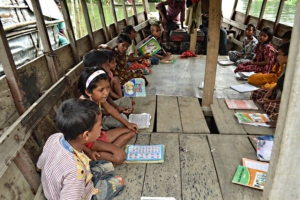 Mobile libraries are breaking barriers to education and aiding in the fight against poverty in underserved regions. From floating schools in Bangladesh to digital hubs in Ukraine, these initiatives prove that literacy is a powerful tool to fight poverty and build resilience.
Floating School Boats and Libraries in Bangladesh
Operating 111 floating school boats and libraries, Shidhulai Swanirvar Sangstha in Bangladesh serves more than 100,000 people in flood-prone areas. These boats do more than carry books; they are also equipped with solar-powered technology and classrooms, allowing for the assurance of the continuation of education during floods.
Each vessel teaches lessons in literacy, mathematics and other more specific topics like environmental awareness. In countries where flooding can disrupt thousands, innovations like these allow for education not to come to a standstill.
UNDP-Supported Digital Literacy Hubs in Ukraine
Repurposed libraries supported by the United Nations Development Program (UNDP) have become digital literacy hubs benefiting several Ukrainians. The program swiftly grew, beginning with 52 trainers who trained 235 administrators to host 135 events for 2,109 participants. It reached 25,391 people in 22 regions and Kyiv by the end of 2024 and 82% of them reported having strong digital skills following training, compared to just 17% previously.
Today, more than 3,000 libraries offer courses designed for senior citizens that cover everything from using e-services to cyber hygiene, AI tools and smartphone fundamentals. In 2025, new coordinators will receive Diia, AI and event planning training. By ensuring these abilities continue proliferating, educational tools turn libraries into centers of social resilience and economic opportunity. Besides mobile initiatives, UNDP’s impact is transforming library access into bridges for economic development.
Why Mobile Libraries Matter for Poverty Reduction
Mobile libraries are effective instruments for ending the cycle of poverty and offer more than just book delivery services. Research shows that access to mobile libraries significantly boosts reading comprehension, raising literacy scores by 3.3 points on standard scales and explaining 46% of literacy and reading ability variation.
This improvement goes beyond academics; literacy is a key tool in reducing poverty because it is directly associated with increased earning potential, better health outcomes and better employment opportunities. Mobile libraries remove barriers such as distance, cost and poor infrastructure, often preventing people in rural or disaster-affected areas from accessing education. They deliver books, learning materials and internet access directly to underserved communities.
Mobile classrooms and floating libraries guarantee that education continues even in the face of floods or other disruptions in vulnerable climate areas and they offer secure spaces for learning and socializing in regions affected by conflict. By making literacy attainable for all, mobile libraries promote long-term community development globally and empower individuals.
Moving Forward
These programs have repeatedly shown that people can change their lives when they have direct access to books, technology and learning spaces. This is especially true for those who live in remote, underserved or crisis-affected areas. The current challenge is to increase this reach. In addition to scaling up current programs, further funding would support innovative delivery strategies, the creation of locally relevant content and the incorporation of digital tools that equip communities to meet the demands of the contemporary economy.
Through universal literacy access, mobile libraries fight poverty by transforming reading into a domino effect of social resilience, economic opportunity and educational advancement.
– Kyra Cribbs
Kyra is based in Charleston, SC, USA and focuses on Good News for The Borgen Project.
Photo: Flickr
