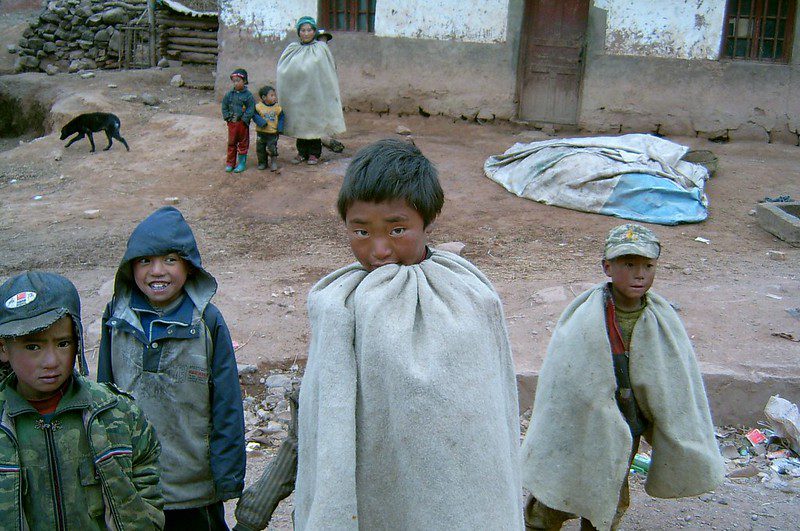
Insufficient early childhood development is an epidemic in the developing world. It is the engine that propels the cycle of poverty. According to the World Bank, 250 million children around the globe are at risk of not reaching their full potential due to poverty as well as physical and cognitive stunting. Of note, only half of all 3-to-6-year-olds around the world have access to primary school. The Global Partnership for Education reports that there are over 175 million children not enrolled in pre-primary education worldwide. When it comes to breaking the poverty cycle, early childhood development cannot be ignored.
According to a Wyoming Scholars Repository report, childhood poverty can change the structure of a developing brain, potentially impacting the frontal lobe, the temporal lobe, the prefrontal cortex, the amygdala, the hippocampus and neurotransmitter. This means that a child’s attention, inhibition, emotional regulation, motivation, planning and decision-making skills are all at risk of not reaching their full potential. The same report found that low socioeconomic status is responsible for around 20 percent of the variance in childhood IQ.
Furthermore, according to the Childhood Poverty Policy and Research Centre, approximately 1 billion children will be growing up with stunted mental development by 2020. This is why early childhood development is the key to breaking the poverty cycle.
Two Components of Early Childhood Development
There are two main components of early childhood development that many impoverished children lack which are essential to brain development. The first is education and stimulation. According to UNICEF, early childhood education builds cognitive and language skills, increases social competence and supports emotional development. Early childhood stimulation and care boost the brain’s capacity to function by sparking neural connections across multiple regions of the brain. According to the World Bank, a 20-year study of children in Jamaica showed that early stimulation interventions for infants and toddlers increased their future earnings by 25 percent. In addition, a World Bank Group analysis in 12 countries found that children involved in early education are more likely to be employed in high-skill jobs as adults.
The second component is health and nutrition. Sufficient early childhood health begins with prenatal care. The Wyoming Scholars Repository reports that deficiencies in nutrients such as folate, choline, B12, zinc, omega-3 fatty acids, iodine and iron are commonly noted in pregnant women living in poverty. These deficiencies can increase the risk of defects such as oral-facial clefts, spina bifida and stunting in eye and brain development.
According to the Childhood Poverty Policy and Research Centre, childhood malnutrition and nutrient deficiencies also increase a child’s vulnerability to diseases both in childhood and adulthood, which greatly decreases the likelihood of breaking the poverty cycle. Some gains can be made in adulthood to combat the consequences of insufficient early childhood development, but many effects, especially those related to cognitive development, are irreversible. Mitigating the stunting of children in poverty is crucial to reducing global poverty. According to the World Bank, children in a long-term study in Guatemala who suffered from stunting were much more likely to break the poverty cycle and earned up to 50 percent higher wages in adulthood.
Economic Benefits of Early Childhood Development
Research shows that investing in early childhood development has economic benefits at an individual and societal level. A RAND Corporation analysis found that targeted early interventions like education, health services, parent skill training and child abuse recognition create positive economic and societal outcomes such as:
- Improvements in educational process and outcomes for the child
- Increased economic self-sufficiency, initially for the parent and later for the child, through greater labor force participation, higher income and lower welfare usage
- Reduced criminal activity
- Improvements in health-related indicators, such as child abuse, maternal reproductive health and maternal substance abuse
Early childhood development proves to be a cost-efficient investment. According to the World Bank, for every $1 invested, there is a return of between $6 and $17. A report conducted by the Copenhagen Consensus and the Indian Consensus Prioritization Project found that implementing cash incentives to increase enrollment in pre-school education and passing policies to improve the quality of pre-school both show positive benefit-to-cost ratios.
Liberia is a good example of a country that has taken notice of the value of the investment in early childhood development.
In 2010, Liberia’s Ministry of Education implemented the Education Sector Plan for 2010-2020 with a grant from the Global Partnership for Education. The plan committed to cross-sectoral efforts around early childhood development and the expansion of access to pre-primary education. In 2011 the government established the Bureau for Early Childhood Education and approved its National Inter-Sectoral Policy on Early Childhood Development.
However, according to the Bernard van Leer Foundation, the Early Childhood Development Community Education and Awareness Programme (ECDCEAP) passed in 2012 has been the most effective in raising awareness about the importance of early childhood development. The program trains mental health professionals, pre-school teachers on childhood development knowledge and health workers and midwives to provide proper support to pregnant women and new mothers. There has yet to be a formal analysis of the ECDCEAP. However, the Bernard van Leer Foundation states that anecdotal evidence suggests an improvement in the comprehension and action surrounding early childhood development.
The Global Partnership for Education (GPE) is a non-governmental organization that focuses on bringing education and early childhood development to the developing world. The organization has invested $270 million in early childhood education in 35 countries and two-thirds of the organization’s grants in 2018 included support for early childhood care and education. According to a GPE report, enrollment in pre-primary education doubled from 2002 to 2016 in the countries partnering with the organization.
Early childhood development is the key to breaking the poverty cycle. It gets the root cause of poverty’s cyclical behavior. Although organizations like The Global Partnership for Education are making large strides, early childhood development is not as recognized as it should be for reducing poverty. According to the same GPE report, 40 percent of countries with data allocate less than 2 percent of their education budget to early childhood education and less than one percent of global aid is invested in pre-primary education. To end the cycle of poverty, early childhood development needs to move up the hierarchy of foreign aid, government expenditure and international focus.
– Zach Brown
Photo: Flickr

5 Facts About Nauru’s Overweight Health Issue
Nauru is a small island country located in the Pacific Ocean near Papa New Guinea and is home to around 10,000 people. More than 70 percent of the population in this country is categorized as obese and overweight. According to the World Health Organization, Nauru has the highest percentage of overweight and obese people in the world. Its ongoing health issue has gained much attention from health organizations. Many organizations, like the World Diabetes Foundation, have reached out and offered financial help to establish health care programs in the hopes that the people of Nauru will take on a healthier lifestyle but have found little success. Here are 5 facts about Nauru’s overweight health issue.
5 Facts About Nauru’s Overweight Health Issue
These 5 facts about Nauru’s overweight health issue have shown that the island country of Nauru is suffering from a huge obesity problem and exercise is not the only solution to this issue. Good nutrition is an extremely important aspect of preventing diabetes, heart disease and kidney disease and something that Nauru has to prioritize to see any changes in the lifestyles of its citizens. Providing children and adults with fresh vegetables and fruits instead of imported junk foods will make a huge impact on the health of this country. The people of Nauru are capable of changing their lifestyles if provided with the right tools.
Photo: Flickr
10 Facts About Life Expectancy in Guadeloupe
Life expectancy is an assessment of not only the projected lifetimes of individuals within a population but also a measure of the quality of life. Life expectancies of various countries range from 50 to nearly 85 years, but life expectancy statistics are consistently higher for women than they are for men regardless of what region a person is analyzing. Guadeloupe, one of three island regions of France that exist overseas in the Caribbean, is showing that it is exceeding the minimum standards in terms of human longevity. Guadeloupe continues to improve relative to the place with the highest life expectancy. Here are 10 facts about life expectancy in Guadeloupe.
10 Facts About Life Expectancy in Guadeloupe
The standard for living for the islanders of Guadeloupe is near the highest in the Caribbean. Coincidingly, life expectancy numbers are also relatively high for this region. Various factors (not just the GDP per capita) measure the standard of living of a country that determines the quality of life, such as personal consumption of goods as well as factors that are outside of individual control, like environmental conditions and public services.
Since Guadeloupe is a French territory, the social legislation in place is synonymous with that of metropolitan France. The largest general hospital is at Pointe-à-Pitre, but multiple smaller independent clinics exist throughout the area. As of 2016, France implemented a universal health care system for Guadeloupe citizens in an attempt to reduce poverty and prevent further revolts.
Guadeloupe has seen a rise in the cost of living and increased disparity among commodities in comparison to metropolitan France. In 2009, islanders began revolting for a relative wage increase. Still, poverty and unemployment rates in Guadeloupe run more than double what exists in France.
The efforts that the Ministry of Health and the Ministry of Overseas Territories put forth served priorities including improving the overall status of health and reducing disparities of health status, improving crisis management, assessing and addressing the needs of senior citizens and persons with disabilities and lowering inequality with regard to access to health services. This health insurance covers pregnant women and means that they no longer have to pay upfront for their medical appointments as part of their maternity coverage. Patients suffering from long-term illnesses also do not have upfront copays, which takes a lot of financial stress off of those with medical needs living in poverty. This type of access to health care should only improve these 10 facts about life expectancy in Guadeloupe.
The leading causes of death during maternity and birth are maternal hypertension and hemorrhaging during delivery. Mosquitoes spread the Zika virus and it can be a source of illness for pregnant women, causing microcephaly in the fetus of an infected mother who does not receive treatment. The Caribbean has announced that Zika is no longer prevalent, however, scientific analysis reveals that due to changes in the classification system, the ability to track the Zika virus is what has actually changed, not the disease itself. In other words, the status of the Zika virus has merely shifted from epidemic to something that one needs to manage long-term.
Guadeloupe has a low population growth rate relative to the other West Indian Islands. This makes sense, considering both the birth and death rates are below the Caribbean average. Perhaps less turnover is indicative of a relatively high life expectancy, as demonstrated by the population of Guadeloupe.
The life expectancy for both sexes in Guadeloupe was 81.84 as of July 2019, whereas the life expectancy of women is 85.24 next to 78.13 for men. In comparison, statistics for France show a projected life expectancy of 85.36 for women and 79.44 for men, with a figure of 82.46 for both sexes. The life expectancy is lower in Guadeloupe in all classifications of sex, even though both countries are French territory.
Some causes of death go unclassified in Guadeloupe. In 2013, there was documentation of 6,600 deaths between the three departments of the French West Indies. These deaths were due to cardiovascular diseases, parasitic or infectious diseases and unclassified diseases. In fact, 13.4 percent of deaths in Guadeloupe were unclassifiable.
In 2013, reports determined there were 240 new cases of HIV in Guadeloupe. Mortality rates from AIDS remain relatively and consistently low due to the fact that population growth rates are fairly low along with the availability of antiretroviral drugs. However, it is still notable that while AIDS might not be a common direct cause of death, mortality from AIDS-related infections is still the leading cause of death in Guadeloupe. In metropolitan France, the leading cause of death is cancer.
Survival rates of and trends of patients with HIV/AIDS in Guadeloupe resemble patterns to Europe as opposed to those in the Caribbean. However, reports still confirm that HIV infections do not typically receive a diagnosis until they have progressed to the stage of AIDS. Although therapy treatments are slightly more developed in Guadeloupe than in neighboring Caribbean countries, medical advancements remain necessary to increase survival rates and aid in the prevention and diagnosis of HIV/AIDS.
When considering life expectancy on an international scope, Guadeloupe is surpassing the minimum standards. Currently, the benefits of the 2009 uprisings are evident only in the health care system; poverty and unemployment continue to be rampant among the islanders of Guadeloupe. At the very least, a high percentage of the population has this universal insurance coverage and the populations most in need even receive supplementary health insurance coverage which provides augmented health care at no additional cost. These 10 facts about life expectancy in Guadeloupe show that things are moving in the right direction in terms of decreasing disparity between Guadeloupe and metropolitan France. The supplemental assistance available to individuals (regardless of employment status) is just the type of progressive accessibility to resources that should be implemented in so many countries facing extreme poverty.
– Helen Schwie
Photo: Flickr
Mobilizing Congress Matters
The Misconception
Recent data indicates that the reason the majority of people don’t vote is that they either don’t care or don’t think their vote matters. In fact, a 2008 survey showed that 13.4 percent of people were not interested in voting. Socioeconomic status and cultural norms have proven to affect whether people believe mobilizing Congress matters. Some are taught that it is expected that they vote in order to make a difference in the country. Other people, however, believe that “politics is a kind of abstract, dirty business. So, a lot of people come to adulthood with a different understanding of their place in the political system.”
Inequalities reinforce themselves throughout every aspect of life. If someone is from a highly affluent community, they are likely to associate with people who believe in voting. This may inspire them to go out and vote. Whereas, those in poorer communities are more apt to believe that their voice doesn’t matter. This creates a pattern in these communities. Members from wealthier communities continue to show up to elections, but members from poorer communities are underrepresented. Conversely, residents from affluent areas see their preferences being represented. However, preferences from struggling areas continue to go ignored.
Past Mobilization Victories
Mobilizing Congress matters, and the historical record shows it. The following are two examples of global poverty reduction movements that succeeded thanks to U.S. citizens rallying together to enforce change.
Congress Wants to Hear from its Citizens
Politicians have always been aware of the power a constituent’s voice holds. One of America’s first Congressmen, Thomas Jefferson, held that “the functionaries of every government have propensities to command at will the liberty and property of their constituents.” Jefferson believed that the government functioned only by the will of the people.
Furthermore, it is Congress’ job to represent its citizens. Therefore, congressmen need to hear from their constituents to make their preferences known. The conversations congressmen have with their people guide policymaking. Members of Congress also look at letters and e-mails that have personal touches to see what issues citizens are passionate about. Members of Congress want to stay in touch with their people and they are willing to use modern technological innovations to do it.
Mobilizing Congress matters! Congress says it, the historical record indicates it and Congress’ job description requires it. However, it is up to the people of the U.S. to take advantage of it.
– Gabriella Gonzalez
Photo: Wikimedia
Table Banking Empowers Women in Kenya
Table banking is a group-based funding strategy in which members form groups where they can save and borrow money immediately during meeting times. The objective of the strategy is to help the poor, particularly women, fight poverty and stay financially sound. About 97 percent of table banking members in Kenya are women.
Members of a table banking group save money each time they meet from which they can take either short or long term loans. The repayment of these loans is what helps to grow the group’s revolving fund. Different groups have varying methods of how they can raise additional funds. Some tactics include investing in land, applying for grants from county governments or fining members for lateness and absenteeism.
How Table Banking is Different From Conventional Banking
Table banking in Kenya became popular among women because it made it easy for them to access loans without land. Additionally, it means that they no longer have to go through microfinance institutions to get loans. While table banking groups have similar principles as a guide, each group creates and agrees on their own rules such as which members can receive loans and what the terms of repayment are. This means that interest rates can be as low as 1 percent, compared to an interest rate of 12.39 percent in banks.
Another key difference between conventional banking and table banking is that when a member of a table banking group gets into difficulty in terms of repaying their loan, their group members assist them to overcome those difficulties. As the group members are dependent on and accountable to one another, the loan repayment rates tend to be high.
Benefits of Table Banking
Table banking has given women, who were once totally dependent on their husbands for everything, the ability to support their families as well. Women have been able to help out when it comes to paying school fees and rent as well as purchasing groceries and other household goods. The Joyful Women Organization (JOYWO) reports that as women increasingly become part of the source of income for their families, people no longer view them as liabilities. This has strengthened family bonds.
In addition to financing household activities, table banking in Kenya has enabled women to create small businesses or to expand their already existing ones. JOYWO, which is one of the most visible table banking movements in Kenya, has documented success stories of women who have put up rental houses and started small shops where they sell various items.
Table banking in Kenya has also given women the ability to buy and own land. Reports show that while women can constitutionally buy and own land, less than 7 percent of women have title deeds.
Women in Africa contribute between 60 percent to 80 percent of food, but they only have an estimated 5 percent access to agricultural extension services. The Global Report on Food Crises 2018 estimates that at least 25 percent of Kenya’s population is food insecure as a result of dry weather. As more women take ownership of land, they will be able to use their harvest as food to feed their families or as a means of income which will enable them to buy what they do not have at home, making their families food secure.
Conventional Banks are Taking Notice
The Central Bank of Kenya shows that women currently account for at least 82 percent of total savings in Kenya. Leading banks in the country are taking notice of the effects of table banking in Kenya and most of them now have group accounts to entice the various groups. Additionally, the banks are now reaching out to the various groups and offering them loans on friendly terms.
Table banking in Kenya has been a game-changer for women as individuals as well as for their families and it is going a long way in helping lift people out of poverty.
– Sophia Wanyonyi
Photo: Flickr
Breaking the Cycle: Investing in Early Childhood Development
Insufficient early childhood development is an epidemic in the developing world. It is the engine that propels the cycle of poverty. According to the World Bank, 250 million children around the globe are at risk of not reaching their full potential due to poverty as well as physical and cognitive stunting. Of note, only half of all 3-to-6-year-olds around the world have access to primary school. The Global Partnership for Education reports that there are over 175 million children not enrolled in pre-primary education worldwide. When it comes to breaking the poverty cycle, early childhood development cannot be ignored.
According to a Wyoming Scholars Repository report, childhood poverty can change the structure of a developing brain, potentially impacting the frontal lobe, the temporal lobe, the prefrontal cortex, the amygdala, the hippocampus and neurotransmitter. This means that a child’s attention, inhibition, emotional regulation, motivation, planning and decision-making skills are all at risk of not reaching their full potential. The same report found that low socioeconomic status is responsible for around 20 percent of the variance in childhood IQ.
Furthermore, according to the Childhood Poverty Policy and Research Centre, approximately 1 billion children will be growing up with stunted mental development by 2020. This is why early childhood development is the key to breaking the poverty cycle.
Two Components of Early Childhood Development
There are two main components of early childhood development that many impoverished children lack which are essential to brain development. The first is education and stimulation. According to UNICEF, early childhood education builds cognitive and language skills, increases social competence and supports emotional development. Early childhood stimulation and care boost the brain’s capacity to function by sparking neural connections across multiple regions of the brain. According to the World Bank, a 20-year study of children in Jamaica showed that early stimulation interventions for infants and toddlers increased their future earnings by 25 percent. In addition, a World Bank Group analysis in 12 countries found that children involved in early education are more likely to be employed in high-skill jobs as adults.
The second component is health and nutrition. Sufficient early childhood health begins with prenatal care. The Wyoming Scholars Repository reports that deficiencies in nutrients such as folate, choline, B12, zinc, omega-3 fatty acids, iodine and iron are commonly noted in pregnant women living in poverty. These deficiencies can increase the risk of defects such as oral-facial clefts, spina bifida and stunting in eye and brain development.
According to the Childhood Poverty Policy and Research Centre, childhood malnutrition and nutrient deficiencies also increase a child’s vulnerability to diseases both in childhood and adulthood, which greatly decreases the likelihood of breaking the poverty cycle. Some gains can be made in adulthood to combat the consequences of insufficient early childhood development, but many effects, especially those related to cognitive development, are irreversible. Mitigating the stunting of children in poverty is crucial to reducing global poverty. According to the World Bank, children in a long-term study in Guatemala who suffered from stunting were much more likely to break the poverty cycle and earned up to 50 percent higher wages in adulthood.
Economic Benefits of Early Childhood Development
Research shows that investing in early childhood development has economic benefits at an individual and societal level. A RAND Corporation analysis found that targeted early interventions like education, health services, parent skill training and child abuse recognition create positive economic and societal outcomes such as:
Early childhood development proves to be a cost-efficient investment. According to the World Bank, for every $1 invested, there is a return of between $6 and $17. A report conducted by the Copenhagen Consensus and the Indian Consensus Prioritization Project found that implementing cash incentives to increase enrollment in pre-school education and passing policies to improve the quality of pre-school both show positive benefit-to-cost ratios.
Liberia is a good example of a country that has taken notice of the value of the investment in early childhood development.
In 2010, Liberia’s Ministry of Education implemented the Education Sector Plan for 2010-2020 with a grant from the Global Partnership for Education. The plan committed to cross-sectoral efforts around early childhood development and the expansion of access to pre-primary education. In 2011 the government established the Bureau for Early Childhood Education and approved its National Inter-Sectoral Policy on Early Childhood Development.
However, according to the Bernard van Leer Foundation, the Early Childhood Development Community Education and Awareness Programme (ECDCEAP) passed in 2012 has been the most effective in raising awareness about the importance of early childhood development. The program trains mental health professionals, pre-school teachers on childhood development knowledge and health workers and midwives to provide proper support to pregnant women and new mothers. There has yet to be a formal analysis of the ECDCEAP. However, the Bernard van Leer Foundation states that anecdotal evidence suggests an improvement in the comprehension and action surrounding early childhood development.
The Global Partnership for Education (GPE) is a non-governmental organization that focuses on bringing education and early childhood development to the developing world. The organization has invested $270 million in early childhood education in 35 countries and two-thirds of the organization’s grants in 2018 included support for early childhood care and education. According to a GPE report, enrollment in pre-primary education doubled from 2002 to 2016 in the countries partnering with the organization.
Early childhood development is the key to breaking the poverty cycle. It gets the root cause of poverty’s cyclical behavior. Although organizations like The Global Partnership for Education are making large strides, early childhood development is not as recognized as it should be for reducing poverty. According to the same GPE report, 40 percent of countries with data allocate less than 2 percent of their education budget to early childhood education and less than one percent of global aid is invested in pre-primary education. To end the cycle of poverty, early childhood development needs to move up the hierarchy of foreign aid, government expenditure and international focus.
– Zach Brown
Photo: Flickr
Yellow Fever in French Guiana
Yellow Fever in French Guiana
In August of 2018, a Swiss man in his 40s, living in a forested area near the river Comté, developed a fever, body aches and mild myalgia. On August 5, a day after his symptoms began, he sought out medical attention. He was sent away with the diagnosis of an acute, dengue-like viral infection. In the days that followed, he experienced vomiting, prostration and a persisting fever. He returned to seek medical attention at the Cayenne hospital. He was admitted into the intensive care unit on August 8, and shortly thereafter, on August 9, he was transferred to a specialized transplant center outside of Paris and received a hepatic transplant. On August 10, blood tests confirmed that he had contracted yellow fever in French Guiana. On August 30, he passed away.
Yellow fever is a virus transmitted by the Aedes and Haemogogus species of mosquitos, the same species responsible for the spreading of Zika and Dengue. Yellow fever is endemic in French Guiana. Many of the infected do not experience symptoms, but those who do typically report some combination of a fever, an aching in the back and head, a loss of appetite, nausea and vomiting. A small percentage of those who do experience the initial wave of symptoms will later experience a second wave, referred to as the toxic phase. Those in the toxic phase will likely experience the development of jaundice, a darkening of the urine, vomiting and abdominal pain. Approximately half of all those who enter the toxic phase will die within seven to 10 days.
The endemic status of yellow fever in French Guiana says volumes on the state of the territory as a whole. Although there have been improvements in vaccination rates, with an estimated 80 to 90 percent of the population receiving the yellow fever vaccine, a lack of infrastructure and health care options thoroughly ostracize those living in more rural settings.
Some communities, such as Maripasula, the most isolated town in French Guiana and France as a whole, takes three days to reach. One must travel by boat down the Amazon. The people of Maripasula have long demanded a road be put in, but as of now, no road exists. This greatly reduces their ability to combat fast-acting diseases such as yellow fever.
The government that rules over French Guiana is the same that rules mainland France, and yet, the GDP of those living in French Guiana is roughly half that of their European counterparts. A shocking 40 percent of citizens live in poverty, and over 20 percent are unemployed.
In 2018, USA Today listed France as the 24th richest country in the world.
The disparity in income and quality of life between mainland France and French Guiana is drastic, to say the least. In 2017, French Guiana was overcome with protests and social unrest, with many of its citizens participating in mass strikes. The French government apologized for its neglectful treatment of French Guiana and promised to allocate 3 billion euros to the South American territory. This money was meant to be dispersed throughout a variety of sectors, with healthcare and education at the forefront. As of May 2019, this monetary promise remains largely unfulfilled.
– Austin Brown
Photo: Flickr
3 Young Advocates Who are Changing the World
Today, some of the most innovative, forward-thinking change-makers happen to be under the age of 18. Keep reading to learn more about these three top young advocates who are doing their part to address global issues from poverty to gender equality and education.
3 Young Advocates Who are Changing the World
Since the age of 10, Zuriel Oduwole has been using her voice to spread awareness about the importance of educating young girls in developing countries. Now 17 years old, Oduwole has made a difference in girls’ education and gender issues in Africa by meeting with and interviewing important political figures like presidents, prime ministers and first ladies. To date, Oduwole has spoken in 14 countries to address the importance of educating young girls in developing countries, including Ethiopia, South Africa, Ghana, Tanzania and Nigeria. “They need an education so they can have good jobs when they get older,” Oduwole said in a 2013 interview with Forbes. “Especially the girl child. I am really hoping that with the interviews I do with presidents, they would see that an African girl child like me is doing things that girls in their countries can do also.”
Yash Gupta
After breaking his glasses as a high school freshman, Yash Gupta realized how much seeing affects education. He did some research and found out that millions of children do not have access to prescription lenses that would help them to excel in their studies. Gupta then founded Sight Learning, a nonprofit organization that collects and distributes eyeglasses to children in Mexico, Honduras, Haiti and India.
Amika George
At the age of 18, Amika George led a protest outside of former U.K. Prime Minister Theresa May’s home to convince policymakers to end “period poverty.” Period poverty is the unavailability of feminine sanitary products for girls who cannot afford them. Girls who can’t afford these products are often left to use rags or wads of tissue, which not only raises health concerns but also keeps girls from their education. In order to combat this issue, George created a petition with the goal for schools to provide feminine products to girls who receive a free or reduced lunch. As of now, George has mobilized over 200,000 signatures and helped catapult the conversation of period poverty at the political level in the U.K.
These three world-changing children prove that age does not matter when it comes to making a difference in the world.
– Juliette Lopez
Photo: Flickr
8 Facts About Turkey’s Kurds
The Kurds are a Muslim-majority ethnic group located mainly in Turkey, Syria, Iraq and Iran. With a total global population of around 30 million, they are the largest ethnic group without a state. Since the rise of the Islamic State, the Kurds have been crucial in the fight against ISIS and have been a reliable US military ally. The Turkish government has had a contentious relationship with the Kurds for decades, as it views the Kurds as a threat to the Turkish state and the Kurdistan Workers’ Party or PKK as a terrorist organization. To better understand Turkey’s relations with its Kurdish minority, here are eight facts about Turkey’s Kurds.
8 Facts about Turkey’s Kurds
Conclusion
Due to this unequal distribution and Turkey’s historical relationship with the Kurds, critiques of the Turkish government conclude that it is aiding the Kurds not based on their needs, but according to their ethnicity. According to this argument, the Turkish regime provides social assistance to its Kurdish population solely in the hopes of containing the political unrest and weakening the ethnic identity of the Kurds.
The Kurds are one of the largest ethnic groups in the Middle East, and Turkey’s Kurds make up a substantial minority of its population. Thus, Turkey’s conflict with the Kurds has huge implications for the entire Middle East. As these eight facts about Turkey’s Kurds show, this fraught relationship spans decades and will not be easy to resolve, as it concerns the sovereignty of the Turkish state and the rights of the Kurdish people.
– Sarah Frazer
Photo: Flickr
The Environment Affects Impoverished Communities
The environment can have profound effects on impoverished communities by being a huge force in either aiding or hindering developing countries. Those facing extremely impoverished conditions often rely almost solely on the health of their environment in order to sustain a clean, resourceful and plentiful living environment. An abundance of varying environmental factors like temperature, average rainfall, wildlife, water sources, soil nutrients and pollution levels can contribute to the general well-being of citizens in impoverished communities. Meanwhile, a lack of resources that could improve significant environmental factors in comparison to the more advantaged higher-class community can put impoverished communities at an automatic disadvantage. The quality of water, the availability of natural resources and the vulnerability to natural disasters are all aspects of how the environment affects impoverished communities.
Quality of Water
Water sources available to a community can come in many forms and are critical to the everyday life of communities in poverty; the quality of local water sources and the resources available to maintain good quality water are examples of how the environment can have an effect on poor communities. Citizens of impoverished communities often cook, clean, drink, fish, irrigate their crops and bathe in shared water sources. This shows just how critical the quality of this water can be to an entire community.
Low-infrastructure regarding water filtration and purification can cause an increase in health problems. One of these health problems can be cholera, a potentially life-threatening disease common in impoverished communities due to water contamination. The accumulation of trash, dumping of hazardous materials and daily reliance on a source of water can cause contamination.
Availability of Natural Resources
Natural resources also assist in a community’s prosperity and serve as an example of how the environment affects impoverished communities. A rural community often relies on natural resources like agriculture and soil quality, livestock and genetic diversity and forests and fisheries for multiple reasons. A study by the Food and Agriculture Organization of the United Nations (FAO) revealed the positive effects of maintaining natural resources in impoverished communities. The study successfully expanded access to land in South Africa, increased access and management of forests in Bolivia, supported the sustainable management of watersheds in India, improved access and management of fisheries in Samoa and enabled the poor to be a part of the carbon market in Mexico. The FAO study also exhibits that an increase in natural resources can increase job opportunities for local citizens. More consideration and funding for natural resources, as well as education, can increase the well-being of an impoverished community.
Vulnerability to Natural Disasters
An impoverished community often faces increased vulnerability due to the devastating effects of natural disasters. Some natural disasters are hurricanes, tornados or tsunamis. The World Bank study reports that the effects of natural disasters cost the global economy $520 billion a year. This estimate is 60 percent higher than any previous estimate once it properly considered impoverished communities. Impoverished communities are especially vulnerable because there are few prevention and action emergency plans due to improper resources. Stronger government support and improved technology to better prepare for upcoming disasters could decrease the risk of detrimental effects.
A significant disadvantage low-class communities face compared to higher-class communities occurs because of an extreme lack of infrastructure, funding towards protecting natural resources and governmental prevention and action plans in the event of a natural disaster. Studies by the FAO and The World Bank demonstrate the importance of even one factor of the environment that affects impoverished communities. Once impoverished communities can put more focus into taking care of the environment, they can start building themselves from the ground up.
Photo Credits: Google
Labor Reforms in Qatar Are Improving Human Rights
In the prelude to the 2022 FIFA World Cup, Qatar received relentless criticism on migrants’ working conditions from the international community and mass media, causing the government to transform its labor system and uphold the rights of migrant workers through sweeping reforms.
Kafala System
Qatar’s kafala system ties migrant workers’ visas to their employers by requiring them to obtain their permission (a no-objection certificate) in order to change jobs. This, in turn, gives the employer entire control over the exit visa of his employees. This sponsorship and visa system not only leads to abuses and exploitation of labor practices, including the confiscation of migrant workers’ passports, but it also prevents a local domestic labor market from operating. Thus, radical labor reforms in Qatar are necessary in order for the country to develop itself according to international standards and to modernize its economy.
Recent Reforms
One of the significant steps Qatar made in 2017 was concluding a cooperation accord with the International Labor Organization (ILO). It stated that it would set a minimum wage and promised to repeal the kafala system. Later in 2017, Qatar introduced a temporary minimum wage of 750 Qatari Rial (approximately $200) and plans on introducing a non-discriminatory minimum wage by the end of 2019, making it the first country in the Gulf region to do so. These labor reforms in Qatar will improve migrant workers’ rights significantly, which will not only increase their working conditions but also their motivation to work, resulting in a more efficient and productive economy. In addition, Law No. 13 entered into force in October 2018, stating that migrant workers would no longer need their employers’ permission to enter and exit the country. These laws contribute to transforming Qatar’s current system into a modern industrial relations system.
Ending the Kafala System
However, Qatar still has not abolished the kafala system which caused hundreds of workers to go on strike and protest in August 2019. This is barring the fact that Qatari law strictly bans joining unions and participating in strikes. Protesting workers have reported that they have not received pay for months and are not receiving their renewed working permits from their employers, making it illegal for them to stay in the country. Consequently, Qatar’s Minister of Administrative Development, Labour and Social Affairs announced that the reform ending the Kafala system will enter into force in January 2020, facilitating the efficacy of the other recently introduced reforms as a whole.
Issue of Irregular Migration
Although positive, these reforms and Labor Laws do not cover migrant domestic workers with a local Qatari contract, meaning that the Labor Law does not protect them and they cannot seek assistance from the Ministry of Labor and Social Affairs. By excluding migrant domestic workers, Qatar is not tackling the issue of irregular migrants and the illegality of employment, which is a major concern for the local authorities. The Sponsorship Law binds domestic migrant workers to their employers, and so, if they suffer abuse, they are likely to abscond and either seek illegal work in the country or attempt to return to their home country. An underground informal labor market developed in Qatar due to the high number of irregular workers looking for work, which is a predominant issue for the government. Indeed, one of the key objectives included in the Qatar National Vision 2030 is to develop a knowledge-based economy consisting of highly skilled people and reduce Qatar’s dependency on low-skilled foreign nationals. Therefore, the inclusion of domestic migrant workers and resolving the issue of irregular/illegal workers is essential for Qatar’s plan to become a modern economy with highly-skilled people.
The current labor reforms in Qatar are a major step towards improving the human rights of the millions of migrant workers living in the country, in addition to contributing to the development of Qatar’s fast-growing economy. Despite the implementation of these laws seeming interminable, Qatar focuses on long-lasting and profound changes in its labor market with the help and recognition of international organizations such as the ILO and the United Nations.
– Andrea Duleux
Photo: Pixabay