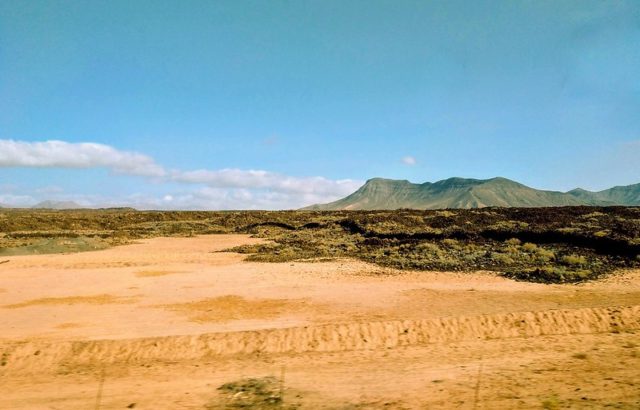
Desertification is the “degradation of land in arid, semi-arid and dry sub-humid areas,” according to the United Nations. Worldwide, people are seeing the encroaching effects of desertification increasing due to factors such as climate change, overgrazing of pastoral lands, deforestation, over drafting groundwater and over-farming land. When clearing trees and using groundwater, soil begins to lose root systems and hydration, causing it to simply blow away.
According to the United Nations Education, Science and Cultural Organization (UNESCO), one-third of the world’s land surface is susceptible to desertification. The issue is even more dire for areas already suffering from water scarcity, for when they lose their resources, there is often little rain or irrigation available to allow for the regeneration of forests and green lands. This then leads to subsequent food scarcity. However, many global initiatives exist to come up with solutions to desertification and its impact.
Technology
Satellite data has become an integral tool to map the spread and suppression of desertification globally. For 10 years, the United Nations Convention to Combat Desertification (UNCCD) has worked with the European Space Agency (ESA). Its partnership involves efforts to monitor global desertification.
Satellites allow scientists a bird’s eye view to be able to strategize better and cut off desertification as it spreads. They can map the levels of moisture in the soil, allowing scientists the foresight into areas that may become more susceptible to desertification. Satellites are also offering scientists the ability to maximize their rehabilitation efforts. In doing so, they can gauge the number of trees an area can withstand. Planting too many trees in an area involves wasting time and resources, considering the trees will not survive.
Rehabilitation Efforts
Rehabilitation is critical in reducing desertification. In Africa, a plan that the African Union instituted will create a wall of trees stretching from Senegal to Djibouti. The Great Green Wall will reduce the spread of desertification across the African plains and create an ecosystem for animals to be able to return. With purposeful and considerate planning, the green wall should allow for the cohabitation of humanity and nature. The wall also offers industry. By planting fruit-bearing trees, local people will be able to see the trees as a profit rather than a hindrance.
As of 2019, these efforts have only resulted in the planting of 15 percent of the planned 8,000 km of trees due to monetary issues. In addition, the process of planting and caring for trees is very slow. In 2002, China began enforcing the Law of Prevention and Control of Desertification. This involved the world’s first integrated wall for the prevention and resolution of desertification. The law itself is rather vague, merely stating that “units or individuals that use desertified land have the obligation to rehabilitate the land.” However, that is intentional as it allows provinces affected to implement solutions to desertification that work for them, rather than trying to make the same program fit for a vast range of peoples and landscapes.
Education
In 1994, the United Nations instituted The World Day to Combat Desertification and Drought, held annually on June 17. Observing the day acts as a way to promote education on the impacts of desertification globally. It also serves as a reminder that land degradation neutrality is achievable through problem-solving, community action and consistent cooperation at all levels.
Desertification has become a growing global concern, but affected countries are keenly and routinely taking action to develop solutions to desertification. Through preventative initiatives, pushes towards clean energy and climate change reducing measures, the hope is that someday land can restore so that desertification will be a problem of the past. However, it will need a global effort invoking the power of nations and people to care for the planet.

The Link Between Poverty and Tourette’s Syndrome
Poverty and Tourette’s Syndrome
A recent study showed that individuals with TS experience more psychological stress than individuals without. Poverty, which is already a stressful factor, has a more negative effect on individuals with the disorder. This study showed high amounts of psychological stress eventually lead to severe depression as well as an increase in tics and their severity. This is often seen in individuals facing both poverty and Tourette’s Syndrome. Limited access to medical care and the stress caused by their financial situation are ultimately making their condition worse.
Individuals with Tourette’s Syndrome struggle with finding jobs. According to the United Nations’ Department of Economic and Social Affairs Disability, 80 to 90 percent of the disabled population in developing nation’s is unemployed. In Asian and Pacific countries, there are 370 million disabled individuals. Statistically speaking around three million of those people will have Tourette’s Syndrome. Being unable to find work only exacerbates the situation and continues the cycle of poverty and stress.
Access to Medical Care
Many impoverished areas lack access to proper medical care. Many developing countries have very limited access to hospitals and doctors’ offices. Much of the resources offered by nonprofits and NGOs are equipped to help with HIV/AIDS support and common illnesses. They do not have the equipment needed to support and treat individuals with Tourette’s Syndrome.
Furthermore, people below the poverty line cannot afford medication. Impoverished people make up nearly 70 percent of the uninsured population. So, when they need medications for disorders such as Tourette Syndrome, they have to pay out of pocket. For many families facing poverty and Tourette’s Syndrome the medicine is out of their price range and not a top priority. The most common medication used to treat TS is risperidone. Without insurance, the retail price can be anywhere from $20 to almost $90 for 30 tablets depending on the dose, making it a monthly expense that some people cannot afford.
For some people, medicine does not help control their tics. Instead, they benefit from a therapy treatment called CBIT. Short for Comprehensive Behavioral Intervention for Tics, CBIT is a type of behavioral treatment that helps individuals develop actions known as competing responses to help either slow or reduce their tics and severity. More severe cases of TS might need deep brain stimulation. This is a surgical procedure where an electrode is implanted in the brain and sends shocks to alter the activity of the brain’s circuits, essentially restarting them and decreasing the tics. As of 2019, however, these treatments are only offered in the United States.
Organizations Helping with Tourette’s Syndrome
One organization assisting with TS globally is the Tourette’s Association of America. The website has access to research, resources, support, advocacy and webinars. Another organization is Tourette’s Around the World. It is a U.K. based website that provides links to all of the global websites that help and support individuals with TS. On the website, there are links to websites from more than 20 countries that provide information on support and treatment in those areas. However, there are no websites specifically addressing poverty and Tourette’s Syndrome.
Contrary to what is shown in the media, Tourette’s Syndrome is not an uncommon disorder. With exceptions to extreme cases, it does not inhibit a person’s ability to work. Because of this negative media portrayal many people with TS struggle to find work. This contributes to global poverty and leaves individuals without access to basic necessities or proper medical treatments and medicines. Although there are organizations working towards ending the negative stigma, negative media portrayals are still inhibiting individuals and leaving them excluded from the workforce, creating a link between poverty and Tourette’s Syndrome.
– Destinee Smethers
Photo: Flickr
Global Solutions to Desertification
Desertification is the “degradation of land in arid, semi-arid and dry sub-humid areas,” according to the United Nations.
According to the United Nations Education, Science and Cultural Organization (UNESCO), one-third of the world’s land surface is susceptible to desertification. The issue is even more dire for areas already suffering from water scarcity, for when they lose their resources, there is often little rain or irrigation available to allow for the regeneration of forests and green lands. This then leads to subsequent food scarcity. However, many global initiatives exist to come up with solutions to desertification and its impact.
Technology
Satellite data has become an integral tool to map the spread and suppression of desertification globally. For 10 years, the United Nations Convention to Combat Desertification (UNCCD) has worked with the European Space Agency (ESA). Its partnership involves efforts to monitor global desertification.
Satellites allow scientists a bird’s eye view to be able to strategize better and cut off desertification as it spreads. They can map the levels of moisture in the soil, allowing scientists the foresight into areas that may become more susceptible to desertification. Satellites are also offering scientists the ability to maximize their rehabilitation efforts. In doing so, they can gauge the number of trees an area can withstand. Planting too many trees in an area involves wasting time and resources, considering the trees will not survive.
Rehabilitation Efforts
Rehabilitation is critical in reducing desertification. In Africa, a plan that the African Union instituted will create a wall of trees stretching from Senegal to Djibouti. The Great Green Wall will reduce the spread of desertification across the African plains and create an ecosystem for animals to be able to return. With purposeful and considerate planning, the green wall should allow for the cohabitation of humanity and nature. The wall also offers industry. By planting fruit-bearing trees, local people will be able to see the trees as a profit rather than a hindrance.
As of 2019, these efforts have only resulted in the planting of 15 percent of the planned 8,000 km of trees due to monetary issues. In addition, the process of planting and caring for trees is very slow. In 2002, China began enforcing the Law of Prevention and Control of Desertification. This involved the world’s first integrated wall for the prevention and resolution of desertification. The law itself is rather vague, merely stating that “units or individuals that use desertified land have the obligation to rehabilitate the land.” However, that is intentional as it allows provinces affected to implement solutions to desertification that work for them, rather than trying to make the same program fit for a vast range of peoples and landscapes.
Education
In 1994, the United Nations instituted The World Day to Combat Desertification and Drought, held annually on June 17. Observing the day acts as a way to promote education on the impacts of desertification globally. It also serves as a reminder that land degradation neutrality is achievable through problem-solving, community action and consistent cooperation at all levels.
Desertification has become a growing global concern, but affected countries are keenly and routinely taking action to develop solutions to desertification. Through preventative initiatives, pushes towards clean energy and climate change reducing measures, the hope is that someday land can restore so that desertification will be a problem of the past. However, it will need a global effort invoking the power of nations and people to care for the planet.
Photo: Flickr
How WWOOF is helping farmers in poverty
Farmers Struggle to Meet the Rising Rates of Consumption
With the rising rates of consumption to an ever-growing world, farmers are struggling. In order to meet the increasing demand and multiply production, farms have to increase the efficiency and productivity of the existing farmland. WWOOF shares in the same philosophy and helps farmers in poverty by providing workers to those existing farms.
Since 1971, WWOOF has been connecting sustainable farmers and growers with visitors through an exchange of education and culture for a hands-on experience to help create food and other agricultural products—a key part of how WWOOF is helping farmers in poverty. The visitor picks the country they would like to be working in and WWOOF connects them to an available farm that will provide them with room and board. The guests can stay in the country while learning about its culture.
Working on the Farms with WWOOF
As for working on the farm, visitors normally stay from two to three weeks but farms are open to shorter or longer stays. Usually, they work from four to six hours a day and have afternoons and evenings free. Currently, WWOOF has farms in 95 countries all around the world. The organization proposes that the search for authenticity and local food, such as items from a farm shop, has the potential to enhance the visitor experience by connecting consumers to the region and its perceived culture and heritage.
Organic Farming
WWOOF focuses on organic farming, an agricultural method that involves not using pesticides, antibiotics and growth hormones. It helps by reducing the level of pollution and human and animal health hazards by reducing the number of residues in the product. Organic farming keeps agricultural production at a higher level. But, it is more labor intensive. Although organic farmers love the independence and the hard day-to-day work, most find themselves overloaded. Organic systems require 15 percent more labor but the increase of labor may range from seven percent to 75 percent. The WWOOF program offers a satisfying experience to the visitors whilst addressing the additional labor burden on the farming family.
The WWOOF program realized that organic farming has a vital role in helping farmers in poverty. As the years pass, organic farms will earn a higher income than those of the conventional farms due to the increasing awareness of pesticides and the ability to charge higher premiums. Not only that, organic farms have the potential to improve local food and nutritional security because of diversified production and resistance to weather variables. Because of the diversified production, organic farmers live a healthier lifestyle when using their own crops for food. The organization gives a small part that makes a big difference for those organic farms.
– Andrea Viera
Photo: Flickr
10 Ways To Help a Developing Nation Out of Poverty
10 Ways to Help a Developing Nation Out of Poverty
There is always a way to help a developing nation out of poverty. Following any of these 10 steps will ensure the future of millions who are seeking a way out and eradicate global poverty.
Photo: Flickr
5 Organizations Improving Health Care in Bangladesh
Bangladesh is a country in South Asia that borders Myanmar, India, Nepal and Bhutan. In 2019, the country’s estimated population was about 163 million people. Additionally, the country’s economy has shown an increase in exports and remittances in 2019. According to the World Bank, the country’s extreme poverty rate has reduced by half but people still consider it a developing nation. The country’s under-five mortality rate has declined in recent years as well as its maternal mortality rate. There has been an increase in malnourished children and lung diseases, however. There has also been an increase in health and safety in workplaces. Organizations both in the country and worldwide are helping to increase health care in Bangladesh.
5 Organizations Improving Health Care in Bangladesh
World Health Organization (WHO): Based in Switzerland, WHO is a United Nations agency that focuses on international public health. In Bangladesh, the company provides medical aid such as vaccinations, medical research and alerts on medical outbreaks and emergencies. It also helps develop health policies, as well as monitor illness and disease trends in an attempt to prevent outbreaks. By offering these resources, the World Health Organization is improving Bangladesh’s health faster than before, which the organization’s research shows. The organization’s research shows that in 2018, 94 percent of new or relapse Tuberculosis cases received treatment, compared to around 60 percent in 2008. By introducing advanced medical techniques to the country, vaccinations and monitoring, WHO has been able to decrease the number of individuals who die from the illness.
Bangladesh Department of Inspection for Factories and Establishments (DIFE): Bangladesh’s Ministry of Labor and Employment runs this organization and is responsible for the safety of factories, workplaces and their employees. Its job is to ensure the welfare, safety and health of all workers in Bangladesh. It ensures this by enforcing the country’s labor laws, as well as constantly updating policies to ensure employee safety. The organization has three departments including the Labor Department, the Department of Inspection for Factories and Establishments and the Department of Trade Union Registration. By breaking the organization into smaller departments, workplace health and safety has improved, as well as the number of businesses in the country. This increases jobs as well as job security because there is less fear of injury or illness from the workplace.
Public Health Foundation of Bangladesh: The World Health Organization has established the Public Health Foundation of Bangladesh, which is a volunteer-based organization. HR experts, researchers, scientists, clinicians, nurses, sociologists and other health science experts lead this group. The goal of the group is to conduct research and provide education that will develop the Bangladesh health in both society and health care systems. The organization aims to improve health care access to Bangladesh citizens by making health care more affordable and easily accessible for individuals below the poverty line.
World Lung Foundation: Established in 2004, the World Lung Foundation aims to increase global response to lung disease, an illness that kills around 10 million individuals annually. In 2017, lung disease made up 8.69 percent of the country’s deaths, which equals up to 68,462 people. The organization is decreasing the number by providing programs in Bangladesh, as well as emphasizing tobacco control, the negative effects of air pollution and how lung disease leads to illnesses such as Tuberculosis and acute respiratory infections. By educating Bangladesh citizens, Tuberculosis, maternal and infant mortality rates have dropped.
USAID: A U.S. based agency, USAID has set up programs to help improve health and nutrition in Bangladesh. Because of this, the organization has helped decrease the under-five mortality rates, as well as maternal mortality rates. USAID has also expanded the use of family planning, improved and integrated health systems into Bangladesh, as well as strengthen the health care system and government. This leads to overall better access to health care, healthcare policies and better health practices.
Bangladesh’s extreme poverty rate has reduced by half, but the country’s population has been rising. With an undesirable health care system, organizations such as WHO and USAID have helped the country’s overall health improve, and has also decreased mortality rates. The DIFE and Public Health Foundation of Bangladesh have ensured the safety and health of individuals in the workplace and in society. Also, organizations such as The World Lung Foundation bring awareness to some of the leading mortality rates.
– Destinee Smethers
Photo: Flickr
8 Facts About Violence in El Salvador
The Republic of El Salvador is a country in Central America situated between Honduras and Guatemala. It is the smallest and most densely populated coastal country in Central America, with 6.4 million people residing within approximately 8,000 square miles. Here are eight facts about violence in El Salvador.
8 Facts About Violence in El Salvador
Violence in El Salvador grew from the culmination of political unrest, poverty and socioeconomic inequality. Shook to its very core by the brutal civil war of the 1980s and 1990s, El Salvador found little time to recover. However, through the work of President Nayib Bukele and organizations like the Integrated Community Development Program run by the Anglican Episcopal Diocese of El Salvador, the country has a chance of getting its self back on track. The Integrated Community Development Program works to bring food security, community-centered economic stability and disaster risk reduction to the Salvadorian people so that they will not have to turn back to the gangs and cartels. The hope is that this will create a country where people can develop and stand on their own and foster a level of stability that El Salvador has lacked for decades.
– Emma Hodge
Photo: U.S. Department of Defense
5 Solutions to Pollution That Are Creating Jobs
The solution to pollution is not an easy fix and many industrializing countries in the Global South are facing the challenge of mitigating pollution while continuing to sustain economic growth. Because of this, environmental degradation and pollution are common in developing countries, both of which have adverse effects on health and the economy. Environmental degradation is near-inevitable for developing countries, due to industrialization, agricultural herbicides and groundwater dumping. This leaves developing countries with the challenge of finding solutions to all of this pollution. Finding solutions to pollution has brought sustainable industry and trade to developing countries. Here are 5 examples of innovative ideas that are creating jobs and reducing pollution in industrializing countries.
Five Solutions to Pollution and Poverty
Although the perfect balance between economic development and environmental protection is difficult to achieve, industrializing countries are successfully transitioning their economies to accommodate environmentally friendly business practices. This has increased job availability, prevented deaths and directly benefited the poor in the Global South. Private markets, Foreign Direct Investment and government initiatives have all alleviated pollution in developing countries and successfully created jobs. These solutions to pollution have the ability to drive the Global South to a cleaner and more economically viable model for industrialization while reducing poverty.
– Denise Sprimont
Photo: USAID
The Link Between Mental Health and Poverty in India
There is a web of denial that people weave around the issue of mental health in India. Most families and communities refuse to see mental health as a serious concern. Adding on to the stigma, there is also a lack of physicians available to treat mental illnesses and those affected often go unchecked. While mental health can affect individuals of all income levels, there is a significant link between mental health and poverty in India.
The Relationship Between Mental Health and Poverty
Specifically, there is a cyclical link between mental health and poverty in India. A case-control study conducted in Delhi from November 2011 to June 2012 found that the intensity of multidimensional poverty increases for persons with severe mental illnesses (PSMI) compared to the rest of the population.
As people receive diagnoses of mental illness, their work performance and social status decrease. Without much treatment available, these individuals continue to suffer in silence, slowly falling back from their jobs, families and friends. These individuals lose employment, which means they have a lack of income, ending up without a support system and resulting in poverty. In particular, women with severe mental illness (SMI) or those who are a part of the lower castes (Untouchables or Shudras) suffering from SMI are more likely to face multidimensional poverty. Because society often looks down on women and individuals of the lower caste system, they are the least likely to receive treatment or assistance when they receive a diagnosis of mental illnesses.
On the other side of this relationship, poverty, which many describe as a lack of employment and income, aggravates mental illness. When individuals do not have the necessities for survival, mental disorders such as depression or anxiety can develop and intensify. Without treatment, these disorders build up, eventually leading medical professionals to diagnose individuals with SMIs. Out of those in poverty, women, individuals of the lower castes and individuals with SMIs suffer the most, as they have the hardest time finding work or receiving external help.
In short, untreated mental illnesses can lead to or further exacerbate poverty, but unchecked poverty can cause mental illnesses as well, creating this link between mental health and poverty. In an attempt to fix the cyclical link between mental health and poverty in India, the government, doctors and businesses have taken action which aims to increase treatment and guarantee more rights to persons with mental illnesses.
Past Government Actions
In 2016, the Parliament in India passed the Mental Health Care Bill. This law replaced the older Act which stigmatized mental health and prevented people from receiving treatment. The new legislation provides state health care facilities, claiming that anyone with mental illness in India has a right to good quality, affordable health care. Individuals with mental health now have a guarantee of informed consent, the power to make decisions, the right to live in a community and the right to confidentiality.
Individuals and Organizations Taking On Mental Health
As the issue of mental health persists, doctors in India have attempted to integrate their services of mental health within the primary health care system. Since 1999, trained medical officers have had an obligation to diagnose and treat mental disorders during their general primary care routines. Furthermore, district-level mental health teams have increased outreach clinical services. The results have shown that if people receive treatment in primary health care facilities, the number of successful health outcomes increases. In the future, doctors are looking to expand services into more rural areas, hoping to offer more affordable care to those in severe poverty because there is such a significant link between mental health and poverty.
Alongside medical professionals, businesses are using the shortage of mental health care treatments in India to expand their consumer outreach; these companies rely on technology to bring together a global community of psychologists, life coaches and psychiatrists to help individuals through their journey. Using AI, companies like Wysa can use empathetic and anonymous conversations to understand the roots of people’s problems. Companies, such as Trustcircle, rely on clinically validated tests to allow individuals to determine their depression, anxiety or stress levels, enabling them to understand when to seek help. These companies are all providing free or drastically low-costing help, giving people feasible access to the treatment they need. The hope is that with quicker and cheaper access to treatment, people can address mental health on a wider scale.
Further Action Necessary
Despite the increasing support for mental health, there is a great deal of change that needs to take place. Currently, only 10% of patients suffering from mental illnesses receive treatment in India; while all patients do have the right to treatment, the shortage of money and psychiatrists hinders the accessibility. India spends as little as 0.06% of its budget on mental health, and there are only 0.3 psychiatrists per 100,000 people in the country. India needs to primarily focus on changing the societal culture regarding mental health. By educating children from a young age about the importance of mental health and acknowledging that mental illness is real and valid, the overall acceptance of mental health can increase. Changing the stigma surrounding mental health will enable more people to pursue jobs in treating mental health, increasing access. The cyclical link between mental health and poverty in India can only be broken by giving people, regardless of income, social status or gender and equal access to mental health treatment.
If India does not take a more aggressive stance on the issue of mental health, the country could face serious problems in the future. The World Health Organization (WHO) predicts that if mental health remains unchecked, 20% of the Indian population will suffer from some form of mental illness by 2020; additionally, it determines that mental illness could reduce India’s economic growth by $11 trillion in 2030. Essentially, the cyclical link between mental health and poverty in India must break to enable optimal growth in the future.
Malala Yousafzai Scholarship Act
Malala Yousafzai is a Noble Peace Prize laureate. After surviving a Taliban encounter, she wrote the memoir, “I Am Malala.” She advocates for education and against discrimination.
On September 26, 2019, Hakeem Jeffries introduced the Malala Yousafzai Scholarship Act. Communities of Pakistan and the United States have aligned with Malala’s text, principles and initiatives while many support her opinions on terrorism and poverty. The Malala Yousafzai Scholarship Act intends to ensure that young adults and Pakistani students live without fear of discrimination, and can successfully garner an education.
The Malala Yousafzai Act
There are government programs that guide access to education throughout the diaspora communities of Pakistan. The Malala Yousafzai Scholarship Act is pushing for the United States Agency for International Development (USAID) to support education initiatives for all in Pakistan, but in particular, for women and children. In Pakistan, approximately 22.8 million children under 16 are not enrolled in school. There is a significant gender disparity too as boys tend to outnumber girls.
This is the main reason for the Malala Yousafzai Act and Congress intends to uphold the very nature of equality. The purpose of the bill is to enhance opportunities for women to obtain a scholarship. If the bill passes, USAID will leverage the number of scholarships available to women in Pakistan.
Rurally, Pakistani women face many obstacles. The development of health, nutrition and the overall labor force is a determinant in the education of women. Issues such as early marriage, transportation and societal pressures as housewives prevent women from enrolling in higher education. The World Bank states, “The benefits of education go beyond higher productivity for 50 percent of the population. More educated women also tend to be healthier, participate more in the formal labor market, earn more income, have fewer children, and provide better health care and education to their children, all of which eventually improve the well-being of all individuals and lift households out of poverty.”
The Malala Yousafzai Act continues to mitigate discrimination and gender inequality. Malala Yousafzai frequently discusses the war on terrorism and how violence is a harsh reality for the vast majority of Pakistani women. These women continue to face seclusion and exclusion on the basis of patriarchy. Terrorists actively threaten girls and women to remove them from advancement opportunities in higher education and the public sphere.
Conclusion
For her 16th birthday, at the United General Assembly, Malala said, “So let us wage a glorious struggle against illiteracy, poverty, and terrorism. Let us pick up our books and our pens. They are the most powerful weapons. One child, one teacher, one book, and one pen can change the world. Education is the only solution.”
Currently, Malala is a student at the University of Oxford. She is studying politics, economics and philosophy. She continues to engage with women from across the globe, inspiring emerging adults to voice opinions. Anyone can make a direct impact by sending an email to Congress via The Borgen Project. For more information on how to advocate for the bill, visit here.
– Zach Erlanger
Photo: Flickr
5 Facts About Orphans in Belarus
In 2008, an economic crisis hit Belarus causing over 25,000 orphans. In addition to this, the effects of Chernobyl are still causing birth defects in children. Limited resources have put these disabled, Belarusian children into orphanages which contributes to a large number of institutionalized children without proper care.
5 Facts About Orphans in Belarus
A lot has been accomplished in Belarus in order to help Belarusian orphans, however, the changes are slow and require everyone to do their part. More awareness, a release of holds on potential parents and financial assistance should end the increased influx of Belarusian orphans in Belarus. In addition to this, children with disabilities should receive the proper care they require.
– Lisa Di Nuzzo
Photo: Flickr