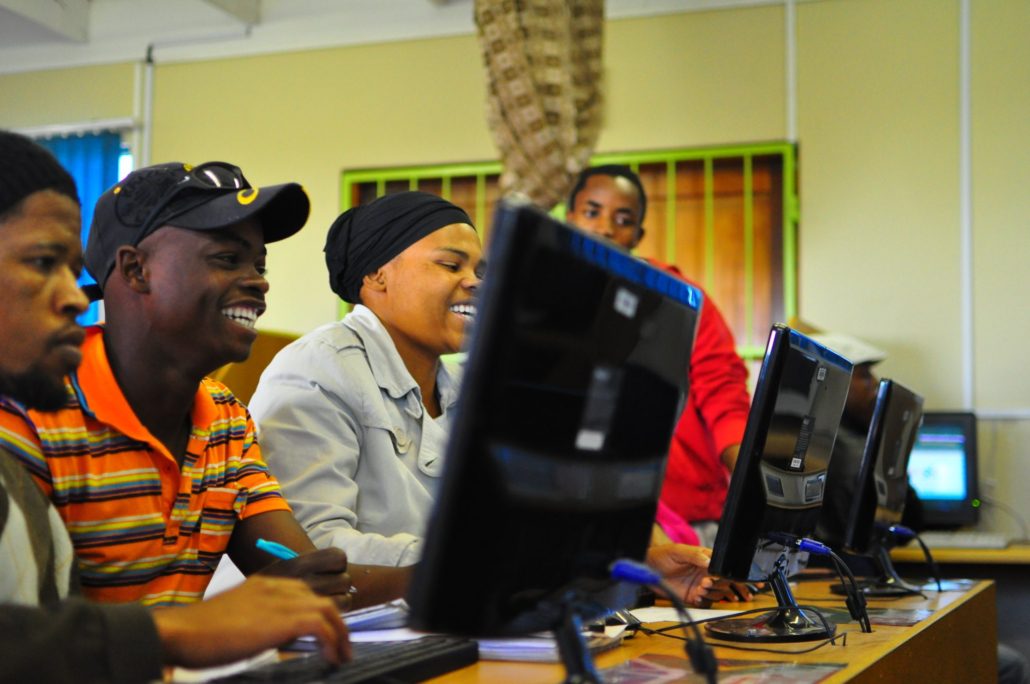
Technology plays an important role in a nation’s modernization. Through health, communication and economical advances, all nations benefit from the inclusion of tech. The world’s leading nations are also synonymous with technological innovations, emphasizing the effect and power of focusing on technological integration with society. Promoting technological advancements in Africa has benefitted them greatly.
Looking at the Numbers
Africa has seen a dramatic spike in mobile phone users from 330,000 in 2001 to 30 million users in 2013. However, the first piece of technology that has made a large impact and that one can consider a mark of technological advancement in Africa is the internet. In 2014, Africa Renewal, a United Nations magazine, concluded that the main issue in technological penetration of Africa would be in the rural South African regions outside of the scope of major cities.
However, the data that Pew Research showed that in six African countries, South Africa, Ghana, Senegal, Nigeria, Kenya and Tanzania, internet usage increased by 2 to 16 percent from 2013 to 2017, leaving South Africa the highest at 59 percent. This data shows that even if the median percentage usage, 41 percent, is not nearly as high as more developed nations like the U.S.’s 89 percent, sub-Saharan countries are still increasing in internet usage.
Pew Research has shown that younger people are the ones utilizing the internet more. From Tanzania to South Africa, 34 to 75 percent of people aged 18-29 utilize the internet. This group of users is breathing life into technological advancements.
One such case is Peter Kariuki, a Kenyan native, who recognized the growing issue of road accidents in Africa. Road accidents are now the eighth leading cause of death in all of Africa, at 1.35 million deaths in 2016, beating tuberculosis. Peter Kariuki has created CanGo (formerly SafeMoto), a ride-sharing app that links a user with a safe and experienced motorcyclist in the hopes of lowering the rate of traffic accidents
CareAI
Outside influence has trickled into Africa. One such influence comes in the form of the European Commission and CareAI. CareAI is a computing system that can diagnose diseases anonymously using blockchain. Blockchain is a decentralized growing list of records or blocks that cryptography links.
Malaria, typhoid fever and tuberculosis are some types of diseases that CareAI can test and identify and can do so in an anonymous manner. This anonymity allows migrants, minorities and those without health care to receive the diagnosis without the fear of others outing or persecuting them. The next step after the diagnosis is for CareAI to prescribe an individual with a prescription through an NGO, a nonprofit organization that operates independently of any government or even an NGO doctor.
M-Pesa
Technological advancements in Africa have helped regions connect via the internet and mobile devices. Widespread use of the platform has increased communication and facilitated technical improvements that improve internet connections.
An offshoot of this connectivity has brought an age of innovation, such as the app M-Pesa which acts as a digital wallet that allows for remote withdrawals without having to visit a bank. With this increased acceptance of technology in Africa, outside organizations have begun to invest in helping Africa, such as U.S. company Zipline. Zipline’s partnership with Rwanda delivers blood and plasma via drones. Technology has aided Africa’s ascent to modernization and will keep improving as long as innovation exists.
With health care innovation, Africa can easily provide medical attention to those living in remote areas. The increasing connectivity of African society benefits not only the welfare of the nation but computer media connections. Outside of health care, technological advancement in Africa has improved manners of access to finances, ridesharing and social media. Africa has taken a step in the right direction in focusing on technological improvements, and people can provide assistance through the African Technology Foundation with its mentorship or partnership programs that focus on providing the education and resources necessary for technological advancements in Africa.
– Richard Zamora
Photo: Flickr

10 facts about sanitation in Brazil
With a population of over 200 million people, Brazil stands as one of the most densely populated countries in the world. Its large population begs a simple question; does Brazil have an adequate amount of resources, including clean water, to support its people? Unfortunately, sanitation in Brazil is far from ideal, but the good news is that the country’s access to clean water has been steadily improving since 2010. Below are 10 facts about sanitation in Brazil.
10 Facts About Sanitation in Brazil
In general, the key takeaway is that despite its fairly large economy, sanitation in Brazil has a long way to go. Due to its large population, organizations like Water.org and the National Public Sanitation Plan will need to do significant work in order to ensure that Brazil will evenly distribute water and sanitation among its citizens.
– Adam Abuelheiga
Photo: Flickr
10 Facts about Corruption in Iraq
10 Facts about Corruption in Iraq
Transparency International’s corruption index rankings are comprised of 180 countries. Iraq comes in as the eighteenth most corrupt nation. The index measures perceived levels of corruption in the public sector of countries based on ratings by experts and business people.
About a third of Iraqis report having paid a bribe for police services, registry and permits. It is not uncommon for police members to advance in ranks thanks to bribes directed at politicians. Companies with connections to political leaders also benefit more from bribes and kickbacks.
Billions of dollars in public money have been taken due to corruption. In 2013, it was estimated that Iraq “lost” $20 billion to corruption. That is relatively conservative when compared to the $100 billion lost in 2003.
In May, Iraq’s Integrity Commission seized $445,900 from the house of a relative of a former Iraqi official. Iraq’s Integrity Commission found the money while investigating a former Director of the Engineering Department for the Nineveh province. Kickbacks and bribes are rampant in Iraq, and the government is struggling to maintain its integrity.
Iraq’s last Chairman of the Integrity Commission, Judge Ezzat Tawfiq, was killed in a car crash in March. Many Iraqis and members of the commission mourned his death because they supported his work and considered him one of the most important figures in the battle against corruption. Although the car crash was officially categorized as an accident, some Iraqis were quick to question whether foul play was involved given the influence and power of the commission’s adversaries.
Iraqi officials arrested and abused aid workers in Mosul. Some Iraqi officials actively subvert the business of aid workers in the impoverished region. Police have been slandering and detaining individuals by making fictitious claims about them having ties to ISIS. These extortion tactics are aimed at diverting the funds of some organizations to corrupt local authorities.
In September, the Iraqi government had to shut down the nation’s border crossing with Mandali, Iran because of corruption. All of the employees at the location were transferred to different border crossings. An armed group had commandeered the crossing, which generates about 600,000,000 dinars of revenue a month.
In July, 11 ministers and ministerial-level officials were arrested and charged for corruption. In Iraq, members of parliament are considered immune from being charged with corruption charges stemming from their previous work as public officials. Lawmakers must lift this immunity before charges can be brought against those suspected of corruption.
In 2016, Hoshyar Zebari, the former Finance Minister of Iraq, estimated that there were 30,000 ghost soldiers in the Iraqi army. Corrupt officers are able to pocket the money received for the fake soldiers. Some blame the fall of the city of Mosul to ISIS in 2014 on these ghost soldiers because there were far fewer soldiers defending the city than records indicated.
The state-run Basara oil company was accused of corruption for paying two international firms $80,000,000 more than market price for loading equipment. Iraq has one of the largest oil reserves in the world, but the riches it provides are being stolen from the Iraqi people.
These 10 facts about corruption in Iraq provide the backdrop for the protests in Iraq. Many Iraqi executives and public officials are stealing money from those that need it the most. Iraq has won a battle against ISIS, but defeating entrenched corruption may be a more difficult struggle.
– Grant DeLisle
Photo: Flickr
10 Facts About Corruption in Ukraine
Massive corruption in the Ukrainian government has left Ukraine and its people in a state of developmental stagnation for decades. Despite this, in recent years, Ukraine has demonstrated its willingness to reform and change for the better through countless efforts to expose and clean up these corruptions. These 10 facts outline the specifics of corruption in Ukraine.
10 Facts About Corruption in Ukraine
Despite endemic corruption in Ukraine, its people have clearly not given up on improving their quality of life through reform. Since 2014, Ukraine has taken strides, big and small, to combat corrupt systems and has proven that it is capable of change.
– Ashlyn Jensen
Photo: Flickr
The Future of Typhoid Fever in Asia
Typhoid fever is a menace to developing nations, especially those that lack access to proper sanitation facilities. Nowhere is this more problematic than in Asia, where most typhoid fever fatalities occur. However, plenty of groups are doing their part to end the scourge of typhoid fever in Asia through the spread of clean water and proper sanitation.
What is Typhoid Fever?
Food and water contaminated with excrement that contains the bacteria Salmonella enterica causes the transmission of typhoid fever. Due to this, typhoid fever was once incredibly prevalent in urban areas throughout Europe and the United States during the 19th century as these countries frequently lacked sound sewage systems to deal with human waste. In the modern era, people only commonly see typhoid fever in the developing world, specifically in areas with poor sanitary conditions.
Common symptoms of typhoid fever are a sustained fever that can peak at around 103-104˚F, fatigue, bowel issues, wheezing and stomach pains. Typhoid fever risk factors in endemic areas include contaminated water, housing with subpar hygiene facilities and contact with a recently infected individual. Those affected can become chronic infectors, people who have on and off symptoms for extended periods and can transmit the disease to others regardless of if they are having an episode or not.
Typhoid fever has been treatable with vaccines since 1948, and mass immunization has proven successful in the past. However, typhoid that is resistant to the most common type of treatment (chloramphenicol) is now emerging. With approximately 16 million cases of typhoid fever reported each year, a treatment-resistant strain is a horrifying prospect. Thankfully, full resistance to treatment is exceedingly rare.
Why Asia and Who is Helping?
Most typhoid fever deaths happen in Asia, where 90 percent of all typhoid related deaths occur. Countries, where typhoid fever in Asia is endemic, include India, China, Vietnam, Pakistan and Indonesia. A significant factor contributing towards the spread of typhoid fever is a lack of sanitary water facilities, and thankfully, NGOs like Charity: Water have made it their mission to bring clean water to all developing nations.
Charity: Water does this by promoting and financing projects aimed at the creation and distribution of sanitary water facilities like latrines, hand-dug and drilled wells and piped water systems. One of the countries that Charity: Water has had a significant impact on is India. The organization has been working there since 2008 and has funded 4,479 projects with a total of $10,738,062 spread across all these projects.
The Future of Typhoid Fever
Typhoid fever was once a prominent issue in the United States and Europe, but with proper water and waste management systems, they have thoroughly eradicated it. Typhoid fever in Asia is a problem that countries can handle through the creation of clean water facilities. With the help of NGOs like Charity: Water, the world can finally eliminate typhoid fever once and for all, not just from the United States and Europe, but all across the globe.
– Ryan Holman
Photo: Flickr
The Fight Against Fake Medicine in Benin
Benin, a West African country about the size of Pennsylvania, has a tumultuous history. The site of the former Dahomey Kingdom, a kingdom that experienced rapid growth due to its involvement in the slave trade, Benin has since faced colonization, war, strife, civil unrest and a flood of pseudo-pharmaceuticals. With such struggles, a country can react in perpetuation or recovery and Benin has chosen the latter. This is most noticeable in the recent progress against fake medicine in Benin.
Fake Medicine in Benin
The origin of the issue of fake medicine in Benin likely relates to the country’s impoverished state. Benin had the 27th lowest per capita GDP as of 2017, at approximately $2,300. In terms of medical intervention, Benin has been desperate for some time now. The CIA lists the risk for Beninese citizens contracting infectious diseases as very high. The diseases responsible for the highest percentage of illnesses are bacterial and protozoal diarrhea, hepatitis A, typhoid fever, dengue fever, malaria and meningococcal meningitis. Benin also faces struggles relating to HIV/AIDS, which resulted in 2,200 deaths in 2018.
As of 2016, the nation spent only about 4 percent of its GDP on the health sector. This lack of financing for government-sponsored health care left an opening for black market interference and fake prescription drugs quickly flooded stores and pharmacies. These drugs often have no active ingredient and do little to fight the diseases that marketing suggests they cure. Instead, they lead to a litany of new health issues, often causing ulcers and organ failure. People have linked over 100,000 deaths to fake medicine in Benin.
The Fight Against Fake Medicine
Corruption has been inherent in most of Benin’s history. The issue of fake medicine in Benin is simply another facet of the same problem. Thankfully, the country is taking steps to address the endemic nature of this devastating problem.
For all intents and purposes, the fight against fake medicine in Benin began in 2009 with the Cotonou Declaration. This declaration focused on addressing the rampant fake medicine black market at the international level, as opposed to limiting the fight to within Benin’s borders. The declaration called for a raised awareness of drug trafficking and a limiting of the freedoms that often occur for those involved. Unfortunately, not much changed following the Cotonou Declaration. Benin raised awareness, but only for a moment, and it did not take any legitimate steps to combat the issue.
True progress began with the launching of Operation Pangea 9, a government organization founded under Benin’s current president, Patrice Talon. The organization works as a task force, set on fighting the manufacturing and selling of fake medicine through raids and legislation. In 2017 alone, the organization seized over 80 tonnes of fake medicine in Benin. This serves as a sign of drastic progress. For comparison, in 2015, the organization seized only about four tonnes of contraband.
The seizures took place throughout a multitude of marketplaces in Benin, resulting in the arrest of over 100 fake medicine traders. These raids and seizures served as stage one of Operation Pangea 9’s plan to eliminate the distribution of fake medicine in Benin. It was extremely successful, yet only addressed a fraction of the issue.
After the success of the seizures, in order to prevent a lapse back into the country’s past, President Patrice Talon’s government went after the suppliers. Many knew that corruption thoroughly aided the success of the selling of fake medicine in Benin. In December 2017, the police staged a raid at the home of Mohammed Atao Hinnouho, a member of Benin’s parliament. The police seized hundreds of boxes of pseudo-pharmaceuticals and arrested Mohammed Atao Hinnouho. This raid led to the outing of a vast number of those involved in the illegal trade and sent a definitive message that no matter the sources or persons responsible, they would face justice.
Conclusion
As of 2019, the country almost entirely eradicated the issue of fake medicine in Benin. The shelves of grocery stores that once held fake medicine now stand empty, and open-air pharmaceutical markets are a thing of the past. People should take the way in which the Beninese government dealt so swiftly with this issue as an example, a sign of what is possible when a country properly focuses attention and resources. Although Benin requires more in terms of setting up a proper health care system, these advancements serve as a sign to the end of an endemic issue and should not be overlooked.
– Austin Brown
Photo: Flickr
Roads for Water Benefits Infrastructure
Infrastructure is the physical and organizational structures necessary for the operation of a society or enterprise. This includes buildings, bridges and roadways. Roadways are a significant factor in ending poverty. Without safe roads, children are unable to go to school, employees cannot get to work safely and supplies like food and water cannot reach remote areas where poverty is most prevalent. The lack of clear infrastructure creates a tremendous economic and social cost. In fact, over 1.1 billion people are without electricity across the globe, which is 16 percent of the world’s population. Additionally, almost 663 million people across the globe lack access to clean water and 2.4 billion people have no sanitation. Even more astounding is that one-third of the world’s population does not have access to all-weather roads. Roads for Water benefits infrastructure by improving road maintenance costs while providing water that people can use.
Roads for Water
Roads for Water is part of a larger association of organizations aiming to promote road water harvesting. The consortium mainly focuses efforts in areas with severe poverty including Africa, the Middle East and parts of South America. Road water harvesting involves using roads as major instruments of water management and sustainability. Further, the roads are integral to transferring water across long distances to reach rural areas and others with no access to safe drinking water. About 20 percent of land surface across the globe is within one kilometer of a road. These are generally the most populous areas with easy access to water sources. Often, roads can alter the ebb and flow of water through corrosion and sedimentation. Harvesting this water and relocating it is better for the environment and for those who require access to potable water sources.
Benefits of Road Water Harvesting
In countries stricken with poverty, people typically forget to maintain infrastructures, such as failing bridges, dilapidated buildings and damaged roadways, or they are low on the list of priorities. In addition, the damage makes it difficult to access water sources. Roads for Water manages water with infrastructure which leads to three ways that Roads for Water benefits infrastructure:
Countries that Roads for Water Has Impacted
In Malawi, there is a high potential for harvesting water from road networks. However, the country has not yet fully established these networks due to weather conditions and conflict. The government has fortunately acknowledged the need for this program and has initiated the Integrated Catchment Management as a way to address water resource management issues. With efforts from the government, Malawi has a much higher chance of accomplishing its water harvesting goals across the country.
In addition, Nepal has strict guidelines for who can participate in its road maintenance groups. The District Road Core Network (DRCN) is the group of main rural roads that provide access to Village Development Committees (VDCs), as well as being responsible for the sustainability and maintenance of the country’s District Development Committee (DDC). There is a vast amount of land available for road building and the Road Maintenance Groups (RMGs) are efficient teams that effectively carry out the process and routine maintenance of the DRCN, which includes making sure the roads are all-weather and stay open year-round. With the support of the Nepali government, RMGs can keep up with the roadway systems, making water more accessible to all areas of the country.
How to Help
Finally, agencies such as The Rockefeller Foundation, USAID, World Bank Group and others support Roads for Water. Contributions and fieldwork make up most of the models’ message. Find out more about how to become involved here.
– Kaylee Seddio
Photo: Flickr
Technological Sustainability: Fixing World Problems
Technological innovations are changing the world. These innovations enable easier and more sustainable ways to support the Earth. Ensuring sustainable development includes technological innovations that improve the overall well-being of humans. It also requires a broad knowledge of technologies that can help advance people and organizations within the system. In order to create technological innovations for sustainability, there has to be a well-rounded understanding of the system. Once one has absorbed this knowledge, then they can create different technologies. These types of technologies include devices, methods, processes and actual practices. Technological innovations affect local communities in global areas as well.
Sustainable Development Goals
Technology is boosting the number of Sustainable Development Goals. This is creating solutions for social, economic and environmental threats. People have created many medical solutions through technological innovations. According to UNCTAD’s 2018 Technology and Innovations report, data analysis is aiding the response to disease outbreaks in different countries. In developing countries, some are using 3D printers to make custom-built prosthetic limbs for a cheap price.
Technological Innovation Devices
There are many other technological innovations that are promoting goals for the development of sustainability as well. Namely, one of those innovations includes the Zéphyr. Karen Assaraf, Julie Dautel and Cédric Tomissi created the Zéphyr, which acts as an eco-friendly generator. The device only uses water to inflate and capture solar energy from 165 feet in the air. Its purpose is to bring power to places that natural disasters have struck. In addition, the Groasis Waterboxx planting device is another technological innovation for sustainability. Pieter Hoff created the device which attempts to make growing crops in the desert possible and more efficient. It takes 90 percent less water than its traditional growing counterpart and people can use it in some extreme climates.
Initiatives for a Sustainable World
Along with technological innovations, there are also initiatives in place to create resources for a sustainable world. ENGIE Insight is a sustainable resource initiative working with businesses to reduce environmental impacts. ENGIE provides businesses with technology to support the reduction of their carbon footprint. So far ENGIE has worked with Gamestop and AMTRAK to assist in the creation of practices that reduce harm to the environment.
Additionally, in March 2018, the United Nations Industrial Development Organization (UNIDO) launched its Industrial Development Report. This report promotes industrial development and argues that mass consumption of manufacturers will set a “virtuous circle of industrial development – comprising income creation, demand diversification and massification of consumption.” The report also acknowledges that manufacturing is a key provider of quality goods and has a positive impact on living standards. Further, this contributes to the Sustainable Development Goals by ensuring the sustainability of the environment.
Technological advances that support sustainability are very important and are a part of the solution to change the world for the better. As the world becomes more sustainable, poor and marginalized communities should experience increased opportunities. In addition, improving sustainability through technology is impactful beyond the restraints of socioeconomic status. It all starts with technological innovations that require efforts from the people and political powers to set in motion.
– Jessica Jones
Photo: Flickr
Technological Advancements in Africa
Technology plays an important role in a nation’s modernization. Through health, communication and economical advances, all nations benefit from the inclusion of tech. The world’s leading nations are also synonymous with technological innovations, emphasizing the effect and power of focusing on technological integration with society. Promoting technological advancements in Africa has benefitted them greatly.
Looking at the Numbers
Africa has seen a dramatic spike in mobile phone users from 330,000 in 2001 to 30 million users in 2013. However, the first piece of technology that has made a large impact and that one can consider a mark of technological advancement in Africa is the internet. In 2014, Africa Renewal, a United Nations magazine, concluded that the main issue in technological penetration of Africa would be in the rural South African regions outside of the scope of major cities.
However, the data that Pew Research showed that in six African countries, South Africa, Ghana, Senegal, Nigeria, Kenya and Tanzania, internet usage increased by 2 to 16 percent from 2013 to 2017, leaving South Africa the highest at 59 percent. This data shows that even if the median percentage usage, 41 percent, is not nearly as high as more developed nations like the U.S.’s 89 percent, sub-Saharan countries are still increasing in internet usage.
Pew Research has shown that younger people are the ones utilizing the internet more. From Tanzania to South Africa, 34 to 75 percent of people aged 18-29 utilize the internet. This group of users is breathing life into technological advancements.
One such case is Peter Kariuki, a Kenyan native, who recognized the growing issue of road accidents in Africa. Road accidents are now the eighth leading cause of death in all of Africa, at 1.35 million deaths in 2016, beating tuberculosis. Peter Kariuki has created CanGo (formerly SafeMoto), a ride-sharing app that links a user with a safe and experienced motorcyclist in the hopes of lowering the rate of traffic accidents
CareAI
Outside influence has trickled into Africa. One such influence comes in the form of the European Commission and CareAI. CareAI is a computing system that can diagnose diseases anonymously using blockchain. Blockchain is a decentralized growing list of records or blocks that cryptography links.
Malaria, typhoid fever and tuberculosis are some types of diseases that CareAI can test and identify and can do so in an anonymous manner. This anonymity allows migrants, minorities and those without health care to receive the diagnosis without the fear of others outing or persecuting them. The next step after the diagnosis is for CareAI to prescribe an individual with a prescription through an NGO, a nonprofit organization that operates independently of any government or even an NGO doctor.
M-Pesa
Technological advancements in Africa have helped regions connect via the internet and mobile devices. Widespread use of the platform has increased communication and facilitated technical improvements that improve internet connections.
An offshoot of this connectivity has brought an age of innovation, such as the app M-Pesa which acts as a digital wallet that allows for remote withdrawals without having to visit a bank. With this increased acceptance of technology in Africa, outside organizations have begun to invest in helping Africa, such as U.S. company Zipline. Zipline’s partnership with Rwanda delivers blood and plasma via drones. Technology has aided Africa’s ascent to modernization and will keep improving as long as innovation exists.
With health care innovation, Africa can easily provide medical attention to those living in remote areas. The increasing connectivity of African society benefits not only the welfare of the nation but computer media connections. Outside of health care, technological advancement in Africa has improved manners of access to finances, ridesharing and social media. Africa has taken a step in the right direction in focusing on technological improvements, and people can provide assistance through the African Technology Foundation with its mentorship or partnership programs that focus on providing the education and resources necessary for technological advancements in Africa.
– Richard Zamora
Photo: Flickr
War Child UK Helps Children in Conflict Zones
Filmmakers David Wilson and Bill Leeson founded War Child after they witnessed the horrors of the Bosnian war and saw the apathy that political leaders back home in the United Kingdom had towards it. Some of the organization’s highlights include providing support to 123,182 children and families around the world and helping some 26,274 undocumented children receive recognition. War Child UK has grown since its founding and now has sister organizations in various countries such as Holland, Canada, the U.S., Australia and Sweden. These help War Child support and protect even more children. War Child UK helps children affected by war in various ways which include providing education, protection and advocacy, and helping improve youth livelihoods. These are a few highlights of the organization’s work:
Child Helplines in the DRC
Life in eastern DRC, where armed groups are still active, is still dangerous, even though the war in the Democratic Republic of the Congo (DRC) ended officially in 2003. Children bear the brunt of the conflict in this country. The U.N. reports that children were victims of more than 11,500 violations between 2014 and 2017. War Child UK runs a free helpline called Tukinge Watoto (meaning “Let’s Protect Children”) to help provide support to at-risk children and make sure that law enforcers respect their rights. Using the helpline, children can speak directly to social workers and trained counselors. The helpline then refers them to local child protection organizations, but those in emergency or high-risk situations go into protective care. So far, 4,860 children in DRC have received protection information through the helpline.
Emergency Food Assistance in Yemen
War has been going on in Yemen for more than four years now. The U.N. estimates that more than 80 percent of the population needs some form of humanitarian aid, with 7.4 million of this number being children. It has also been reported that more than 2 million children are malnourished. War Child UK helps children by offering both food and cash assistance in Yemen. The first food assistance program started in 2017. Rather than directly distributing food items, the organization provides food vouchers that help families buy food that can last for around a month. War Child U.K. began distributing unconditional monthly cash assistance to vulnerable families in the governorate of Sana’a because they felt it gave families the independence to choose how they spend their money, be it on food, clothing or medicine. Currently, the organization is working in the governorates of Sana’a, Ibb and Taiz.
Livelihoods in Uganda
Northern Uganda has received a huge influx of some 200,000 refugees from South Sudan in the past few years. War Child works with KATI, a social enterprise, to provide youth in the region with business training and access to start-up loans. War Child initially set up KATI, but it is now an independent organization. The partnership between the two organizations has had plenty of success as 1,500 youth have benefitted since its beginning. In 2017 alone, KATI helped launched 146 business ideas in Northern Uganda. War Child notes that it is important to help the youth find jobs or start businesses to prevent social tension and further instability. It also helps youth transition successfully into adulthood.
War Child UK helps children by providing them with a voice and support, especially those who grow up in environments of conflict and war. It is important that an organization exists like it exists to cater to the needs of these young people who the future of their respective nations.
– Sophia Wanyonyi
Photo: Flickr
The Agriculture Sector for the Poor in Myanmar
Agriculture is Myanmar’s most important sector and provides jobs for more than 60 percent of the population. Myanmar, formerly known as Burma, decreased its poverty rate from 48.2 percent in 2005 to 24.8 percent in 2017. One of the reasons for this huge reduction in poverty is its transition from a military-led government through economic reforms and development in sectors such as agriculture, finance, transportation and energy. The poor in Myanmar reside mainly in rural areas, and have poor education and employment in the agriculture field. By developing the agriculture industry, the government intends to continue to reduce its poverty.
Developing the Agriculture Sector
A 2018 report launched by the Central Statistical Organization, with technical support from the UNDP and the World Bank, provided data on poverty in Myanmar and what the country needs to do to continually reduce poverty. The report acknowledged the success of reducing the poverty rate in half, yet brought up challenges in alleviating poverty in rural areas such as the Chin State. The Chin State is a state in western Myanmar with about a 60 percent poverty rate. Approximately 500,000 live in the Chin State. Since the poor in Myanmar have employment in the agriculture sector, the key findings show that the country can achieve poverty reduction by focusing its efforts on improving agricultural productivity.
Myanmar is the second-largest exporter of beans and pulses and the ninth-largest exporter of rice. In 2016 and 2017, Myanmar exported agricultural products worth more than $3 billion, yet productivity was less than neighbors such as Vietnam, Thailand and Cambodia. Low productivity has stalled poverty reduction in areas such as Chin State due to relying on crops that are expensive to maintain and less profitable than most other crops that endure the same climate.
How Exactly Can Myanmar Reduce Poverty?
Findings from a separate report delved into even greater detail about what Myanmar needs to do to improve agricultural productivity, and therefore, increase income for the poor in Myanmar. The report, Myanmar: Analysis of Farm Production Economics, stated that a single day’s harvest during the 2013/2014 monsoon season produced 23 kg per paddy. In comparison, Cambodia produced 62 kg, Vietnam 429 kg and Thailand 547 kg per day. Reasons for lower production of paddy than Myanmar’s competitors include poor seed quality, insignificant use of fertilizers and a lack of infrastructure.
The conclusion to the report mentioned the need for broad-based agricultural development, as most farmers in the country produce paddy and not much else. Paddy is more expensive to produce and less profitable than other crops in the region. A lack of infrastructure further impedes progress and causes farmers to seek employment in distant urban areas for higher wages. The poor in Myanmar could benefit from diversifying into low-cost crops, especially ones that can handle the typical monsoon weather that the country experiences.
Investors Taking Action
The government and private investors are currently investing in Myanmar’s agriculture sector, particularly the growing fertilizer sector. Myanmar Awba Group received a $10 million loan from the International Finance Corporation to construct a chemical plant that will produce fertilizer. The Hmawbi Agricultural Input Complex opened in August 2018 and is expected to meet 50 percent of the demand for fertilizer in Myanmar. The demand for fertilizer has increased in the country, attracting investors from across the world. The Japanese conglomerate Marubeni Corporation invested $18.5 million in a fertilizer facility in the Thilawa SEZ.
Myanmar is also dealing with infrastructure, low productivity and poor seed quality this year, 2019. In January 2019, CITIC Corporation collaborated with Myanmar Agribusiness Public Corporation (MAPCO) to invest $500 million into constructing high-end rice mills and agribusiness service centers across Myanmar. Ye Min Aung, the Managing Director of MAPCO, said, “The establishment of the high-end rice mills will boost both the local and export market.” Thanks to foreign investors and government initiatives, Myanmar is seeing action in poverty reduction by focusing efforts on improving the agriculture industry.
– Lucas Schmidt
Photo: Flickr