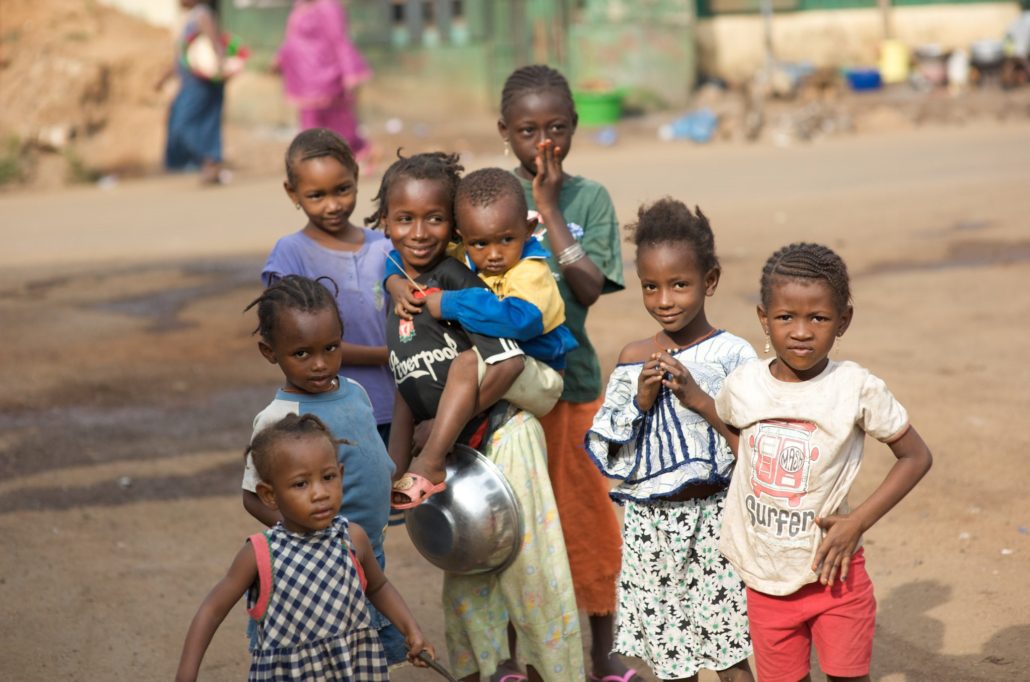
All As One is an orphanage fighting child poverty in Freetown, Sierra Leone. Sierra Leone is one of the poorest countries in the world – 56.8% of the population was living below the poverty line as of 2018. The 340,000 orphaned children feel the disparities of this country in particular. They have a one in five chance of dying before they reach the age of 5 and a 57% chance of never learning to read.
Recently, The Borgen Project had the opportunity to speak to the Executive Director of All As One, Deanna Wallace. During the interview, Wallace noted that All As One has been working in Sierra Leone over the past 20 years and that the orphanage has impacted “the lives of over 35,000 children and young adults, helping to bring change to a generation of children.”
How All As One Fights Child Poverty
Four main factors cause poverty in Sierra Leone including corruption within the government, insufficient infrastructure, lack of education and inadequate civil rights. Children often die at birth due to low-quality health care or starvation. The problem of child poverty worsened after the 2014 Ebola outbreak, which left thousands more children orphaned and impoverished.
All As One is fighting child poverty in Sierra Leone by taking care of its most vulnerable children and young adults. The orphanage provides them with a home, education, medical care and other amenities as needed. While All As One does not offer adoption services, the amenities it does provide help these children establish a healthier lifestyle.
Wallace stated that “All As One helps fight poverty on the ground level, mainly through education, so that their children can find jobs and support themselves as adults.” The organization also gives micro-loans to entrepreneurial young women with dreams of starting a business. In addition, All As One provides nourishing meals to 100 children every day, with hopes that these children escape the grips of poverty.
The organization currently has about 45 children in care and about 55 daily patrons from the surrounding community, who visit for schooling and food.
Life At the Center
Life for a child at All As One involves going to school, doing homework, completing small chores, having playtime in the afternoons, attending church on Sundays and occasionally going on outings. Reflecting upon these offerings, Wallace said that “the children we care for have it better than so many [children in Sierra Leone] like those who are forced into the workforce as a child.” A staggering 51.3% of children in Sierra Leone are subject to child labor.
Recent Strides in Fighting Global Poverty
Recently, five All As One students received the opportunity to take a university entrance exam. Although the test typically has a 95% failure rate, all five AAO students passed the exam and were able to continue on to attend university. Victories such as this encourage All As One to continue its fight against poverty in Sierra Leone.
– Emily Joy Oomen
Photo: Flickr

10 Facts About Water Quality in Asia
12 Facts about Water Quality in Asia
There is a global effort to improve the water quality of Asia. The South Asia Water Initiative (SAWI) is improving the management of the many river basins of Asia. SAWI has addressed issues such as riverbank flooding and the economic opportunities of hydroelectric power on the Brahmaputra Basin in India. It has also supported disaster management on the Sundarbans wetlands shared by Bangladesh and India.
These 10 facts about water quality in Asia demonstrate the many water crises that are happening all across the continent. While there are reforms in place, it will be many years until each country will have equal access to clean, safe water.
– Nicholas Pirhalla
Photo: Flickr
Drug Reform in Southeast Asia
The United Nations Office on Drugs and Crime (UNODC) has set forth its own sustainable development goals to reduce global poverty systematically. The third objective of its mission is to “ensure healthy lives and promote well-being for all ages,” and Target 3.5 within that states its intent to “strengthen the prevention and treatment of substance abuse, including narcotic drug use such as opium and heroin.” In suit with this target, the UNODC has recently progressed drug reform in Southeast Asia.
Taking Action
In Bangkok on November 19, 2019, the UNODC concluded a two-day meeting with ministers and other government officials from Mekong countries including Cambodia, China, Laos, Myanmar, Thailand and Vietnam. The collaboration between the six states and UNODC produced the establishment named The Mekong Memorandum of Understanding (MOU) on Drug Control. The sole purpose of the November discussion among these states was to confer over the implementation of necessary legislation that focuses on drug reform in Southeast Asia.
The current illicit substance situation in the Mekong countries is primarily the selling and use of methamphetamine in either pill or crystal form. China and Thailand make up significant shares of the global methamphetamine market (a USD $61.4 billion market) with the largest seizures of the illicit substance reported there. Another concern is the trafficking of precursor chemicals necessary to concoct these synthetic drugs and emerging new psychoactive substances (NPS). On a global level, Mekong countries and China, in particular, have become the largest suppliers of NPS as a result of their advanced chemical and pharmaceutical industries. Illegal horticulture for opium also continues at high levels in this subregion of Asia.
Progress Against New Psychoactive Substances
Previously initiated drug policies have kindled substantial efforts to combat the war on drugs in the Mekong. Record high seizures of substances have occurred in most recent years. In 2018, Thailand law enforcement seized 515 million methamphetamine tablets, which is 17 times greater than the amount for the entire Mekong region 10 years ago. Moreover, Thailand authorities captured more than 18 tons of crystal meth, resulting in a larger number than what authorities found in East and Southeast Asia combined five years ago. The Thai government implemented suppression campaigns along the Golden Triangle (Myanmar, Lao PDR, Thailand) borders, forcing the trafficking routes to its western border, by the Andaman Sea through Laos and Vietnam. These areas have had seizure numbers in the first half of 2019 that already surpass the 2018 totals.
While significant headway has occurred, the UNODC and MOU know continued actions need to happen to increase the suppression of narcotics within the region. UNODC Regional Representative for Southeast Asia and the Pacific, Jeremy Douglas, explains, “the epicenter is North Shan in Myanmar, with active supply routes in and out. And the organized crime syndicates behind the trade have demonstrated they can maintain production even if labs are seized, and that new precursors can be used when others are unavailable.” Consideration of all the relevant circumstances for the illicit substances in Mekong countries is essential when countries and organizations formulate further drug reform in Southeast Asia.
The two-day negotiations in Bangkok are proof that the governments of the six states plan to keep moving in a forward direction. Jeremy Douglas added that the consensus from the meeting is to “emphasize dampening market demand through preventive education and addressing health, harms and social consequences, by increasing cross-border operations, joint training and justice cooperation, and continuing to support impoverished opium farmers in Myanmar and Laos to transition away from the drug economy.”
Eyes on Organized Crime
Thailand’s Deputy Prime Minister Wissanu Krea-ngam made a statement in Bangkok addressing organized crime’s hand in its drug problem, “Organized crime takes advantage of gaps and vulnerabilities that result because of uneven law enforcement capacity and coordination problems. The Mekong MOU helps by providing a framework through which we can deliver a more coherent regional approach.”Organized crime in this subregion of Asia is its government’s new primary focus. It is evident that in future years, there will be a global reduction in illicit drugs, specifically in methamphetamine and NPS, due to the continuing drug reform in Southeast Asia.
– Ariana Kiessling
Photo: Flickr
6 Facts About Water Quality in Sub-Saharan Africa
6 Facts About Water Quality in Sub-Saharan Africa
Continued innovation, education and infrastructure development are necessary for Africa to improve access to safe and clean drinking water. While much progress is underway, these 6 facts about water quality in sub-Saharan Africa show that the continent will continue to face climate, political and economic barriers in meeting these goals.
– Susan Niz
Photo: Wikimedia
Food for Education is Feeding Kenyan Schoolchildren
The World Health Organization (WHO) reports that Africa has the highest rising rates of hunger in the world. In Eastern Africa, where Kenya is located, almost a third of the population is said to be undernourished. Additionally, 40 percent of the world’s stunted children live in Africa. Luckily, Food for Education is feeding Kenyan schoolchildren to help solve the problem.
Food for Education
Wawira Njiru founded Food for Education in 2012 to provide nutritious, subsidized meals to children in Kenyan primary schools. When she began, Njiru only fed 25 children from Ruiru Primary School. Now, her organization has provided over 500,000 meals to more than 10,000 children across 11 different primary schools. Food for Education has four head chefs and eight assistant chefs who prepare food. The organization delivers the food to the 11 partner schools by lunchtime. Parents pay $0.15 for the lunches using mobile money, which then credits into a virtual wallet. The wallet links to a smart wristband that students wear that they then use to pay for their meals.
Effects of Hunger on Students
Food for Education is feeding Kenyan schoolchildren and this is important because hunger affects both the physical and mental development of children. Estimates determine that 23 million children go to school without anything to eat in Kenya. Chronic undernutrition impacts one in four children, stunting their growth. Children who are hungry fall behind in classes because they have trouble learning and paying attention. The child may also fall behind in class as a result of missing classes to help their family put food on the table. In addition, they are also more likely to have behavioral problems. All of these challenges may result in the child having to repeat a grade, which contributes to the family’s financial strain. In the long run, it affects the child’s productivity and future economic potential.
There has been a positive impact since Food for Education began its work feeding Kenyan schoolchildren. The organization reports that other than the improved nutrition for the children, there has been an improvement in school attendance, school performance and the transition rates from primary to high school. The U.N. deputy secretary-general, Amina Mohammed, at a school visit by Food for Education, noted that stunted growth costs Africa $25 billion annually. Therefore, the work that Njiru and her organization does is helping lift people out of poverty.
The Benefit to the Community
Food for Education does not only benefit the student, it also feeds the community around them. For example, the organization utilizes food sourced from local farmers. Njiru also makes an effort to only hire locals. The 35 employees who help her meet her goal are all from the Ruiru community. This is important because it enables the members of that community to earn an income and support themselves.
Food for Education efforts are helping Kenyan children receive an education without worrying about a lack of stable access to food. In fact, Njiru’s contribution has not gone unnoticed. In 2018, she was the first recipient of the Global Citizen Prize, Cisco Youth Leadership Award. Among other things, the award came with a cash prize of $250,000 which has significantly helped boost the organization. She hopes that she can one day scale up from 10,000 meals a day to providing one million meals a day.
– Sophia Wanyonyi
Photo: Flickr
Facilitating Stock Market Participation in Nigeria
People have considered online fraud a major problem in Nigeria for a long time now. One popular online scam, known as a 419, is to send an email, letter, text or social media message wherein the sender offers the recipient money. The offer includes a request to help transfer money in exchange for a monetary reward. Although people now practice this scam worldwide, it originated in Nigeria.
As a result, many Nigerian stock investors have a difficult time opening stock accounts. Part of the account opening process involves selecting their nationality. Oftentimes, once they select Nigerian, they flag the account without opening it. One way people try to boost their assets is by investing; however, this effectively cuts Nigeria off from the world stock markets. Nigerians continue to face exclusion from the rest of the world and its stock markets. Of African countries, Nigeria makes the most from its movie and entertainment industry and is the top in the continent. It has also become a popular place for venture capital activity and the creation of startups.
Increasing Stock Market Participation in Nigeria
Since Nigerians are not able to open a stock account on these trading platforms, Chaka created a new platform. Chaka has a design to meet Nigerians’ needs; however, it is also open to everyone. It enables Nigerians to participate in foreign stock markets, including those in the U.S., U.K., Japan and Australia. One of Chaka’s drivers is to break down global investment barriers that block Africa from the rest of the world. This makes it easier for foreign investors to invest in Africa and vice-versa.
The platform works in partnership with DriveWealth, where Nigerian investors receive an affordable way to invest in stock markets with fractional shares. They only need an email to sign up and they start with a minimum of 1,000 Naira (or $10 USD) in their digital wallet. They can then begin investing in over 40 countries and over 4,000 assets, including major companies such as Google and Apple. Local trades cost 100 Naira and global trades cost $4 USD. Although the exchange rate of the Naira does fluctuate often, Chaka solves this problem by converting it to USD. The rate is set at 9 AM and continues until 2 PM for all transactions.
Security and Regulations
Chaka is locally and internationally regulated and provides bank-level encryption for all data and transactions. A local brokerage firm provides regulations, working with the Nigerian Stock Exchange (NSE), Central Securities Clearing System (CSCS) and Nigeria’s Securities and Exchanges Commission (SEC). A U.S. brokerage firm that follows the regulations of the U.S. Financial Industry Regulatory Authority (FINRA) and SEC provides international regulations. Advanced Encryption Standard (AES) protects all website traffic and keeps all transactions confidential.
Users
Currently, many Nigerian stock investors are looking for foreign investment opportunities to maximize potential profit. Chaka has become the go-to trading platform for Nigerians, causing its user base to skyrocket. Chaka already has between 1 and 2 million users, a number which is growing daily.
Chaka’s future plans include branching out to other investment products from its app, such as mutual funds, fixed income products and cryptocurrencies. In a five-year partnership with NASDAQ and Airtel Africa, it will be upgrading its platform to include more listings and improve digitization. It has also received an undisclosed amount of pre-seed funding from Iyinoluwa Aboyeji, but it has not provided the exact amount.
Chaka has also partnered with DriveWealth, a company that provides Chaka with the access that it needs to U.S. markets, as well as a series of digital products. DriveWealth also allocates Chaka with some of the best technology for Nigerian stock investors to use in international trading. Thus far, the merging of the two technologies has been simple. Further, Chaka believes the partnership will last for a while. Another organization that plans to help Chaka is Citi Investment Capital Limited (CICL), which is a local stockbroking firm that can make brokerage transactions easier. In return, Chaka has assisted CICL with improving its digital products. These combined efforts will aid the country in accessing foreign stock markets and provide more opportunities for stock market participation in Nigeria.
– Nyssa Jordan
Photo: Wikimedia Commons
All As One is Fighting Child Poverty in Sierra Leone
All As One is an orphanage fighting child poverty in Freetown, Sierra Leone. Sierra Leone is one of the poorest countries in the world – 56.8% of the population was living below the poverty line as of 2018. The 340,000 orphaned children feel the disparities of this country in particular. They have a one in five chance of dying before they reach the age of 5 and a 57% chance of never learning to read.
Recently, The Borgen Project had the opportunity to speak to the Executive Director of All As One, Deanna Wallace. During the interview, Wallace noted that All As One has been working in Sierra Leone over the past 20 years and that the orphanage has impacted “the lives of over 35,000 children and young adults, helping to bring change to a generation of children.”
How All As One Fights Child Poverty
Four main factors cause poverty in Sierra Leone including corruption within the government, insufficient infrastructure, lack of education and inadequate civil rights. Children often die at birth due to low-quality health care or starvation. The problem of child poverty worsened after the 2014 Ebola outbreak, which left thousands more children orphaned and impoverished.
All As One is fighting child poverty in Sierra Leone by taking care of its most vulnerable children and young adults. The orphanage provides them with a home, education, medical care and other amenities as needed. While All As One does not offer adoption services, the amenities it does provide help these children establish a healthier lifestyle.
Wallace stated that “All As One helps fight poverty on the ground level, mainly through education, so that their children can find jobs and support themselves as adults.” The organization also gives micro-loans to entrepreneurial young women with dreams of starting a business. In addition, All As One provides nourishing meals to 100 children every day, with hopes that these children escape the grips of poverty.
The organization currently has about 45 children in care and about 55 daily patrons from the surrounding community, who visit for schooling and food.
Life At the Center
Life for a child at All As One involves going to school, doing homework, completing small chores, having playtime in the afternoons, attending church on Sundays and occasionally going on outings. Reflecting upon these offerings, Wallace said that “the children we care for have it better than so many [children in Sierra Leone] like those who are forced into the workforce as a child.” A staggering 51.3% of children in Sierra Leone are subject to child labor.
Recent Strides in Fighting Global Poverty
Recently, five All As One students received the opportunity to take a university entrance exam. Although the test typically has a 95% failure rate, all five AAO students passed the exam and were able to continue on to attend university. Victories such as this encourage All As One to continue its fight against poverty in Sierra Leone.
– Emily Joy Oomen
Photo: Flickr
5 World Leaders in Agriculture Technology
Agriculture is a cornerstone of human development and one of the most easily accessible methods of generating food. However, agriculture is also one of the riskiest ways to feed a community due to the unpredictability of the weather and pests that could spontaneously destroy an entire year’s worth of crops. Many countries, like India, struggle to maintain farms due to a lack of water, infrastructure and storage facilities. It is no surprise, then, that experts across the world argue that advancements in agriculture technology could prove invaluable in the fight against poverty due to larger crop yields and more success during harvests. Although no one has found a definitive solution to effectively grow enough food to feed those in poverty, numerous organizations have developed potential solutions to the problems that plague agricultural communities.
5 World Leaders in Agriculture Technology
The use of agriculture technology is the most effective way to minimize world hunger. Whether it is a device that monitors the moisture level of crops or an initiative to educate citizens on optimal farming techniques, programs and innovations like these will continue to grow and develop to provide the quickest, cheapest access to food for disadvantaged communities.
– Charles Nettles
Photo: Flickr
H.R. 1616 and European Energy Security
H.R. 1616, The European Energy Security and Diversification Act of 2019, is a bill in the U.S. Senate that aims to incentivize and assist European and Eurasian countries to develop and utilize diverse energy sources. H.R. 1616, that Representative Adam Kinzinger introduced and nine other Representatives co-sponsored, focuses on European energy security that will incentivize American investment into European and Eurasian energy infrastructure and energy markets. According to the European Commission, European energy access is a problem for many Europeans.
The European Commission estimates that between 50 and 125 million people (at the highest estimation, 17 percent of the European population) in Europe are unable to afford the energy necessary for proper indoor thermal heating. H.R. 1616 would directly benefit these individuals, the energy poor, because of the introduction of more cost-effective energy infrastructure, an increase in accessibility in the energy markets.
European Energy Security
The Council of European Development Bank reports that energy poverty is a result of poor energy infrastructure and of the inaccessibility to energy markets. Because the majority of energy insecure homes are already poor, the lack of access to energy compounds the effects of poverty. The choice between energy and food, for instance, is a common choice for those in the bottom 20 percent of the income distribution. In Europe particularly, the lack of energy infrastructure across borders is detrimental; 85 percent of those who are energy insecure live in 10 of the 32 European states. Meanwhile, natural gas is 20 percent of the energy in Europe and coal makes up 20 percent of European energy markets. Both are inefficient and the grid infrastructure makes gas and coal inaccessible.
H.R. 1616 Policy Goals and Income
H.R. 1616 would increase access to energy markets by funding the transition away from natural gas and coal through aid, increasing European access to the American energy market and funding accessible infrastructure. The bill also allocates $579.5 million to help properly create supply routes throughout Europe, and between European states, which would ensure rural access to energy. H.R. 1616 would also negotiate cross-border energy infrastructure, including negotiating environmental standards and the accessibility of an array of energy sources.
The E.U. has been diversifying some forms of energy in the status quo by increasing energy production in the Baltics on the Mediterranean Sea and the Adriatic Sea. However, Europe would be unable to sustain the diversification of energy on its own due to current regulatory restrictions that the U.S. put in place, as well as the economic barrier of opening new markets. H.R. 1616 would raise the regulatory restrictions and fund the new markets, allowing for Europe to continue to decrease energy insecurity in its states.
A Lasting Effect
H.R. 1616 will decrease energy insecurity in Europe, alleviating the effects of poverty in the lowest echelons of society, and fund the transition away from unsuccessful forms of energy production. The infrastructure that H.R. 1616 would build would increase access to energy and allow cross-border energy trade, making sure that poor states have access to energy. The current European trend of diversifying energy would continue, ensuring European energy security and diversification. The House passed the bill, and the Senate has read it and referred it to the Committee on Foreign Relations for further review.
– Denise Sprimont
Photo: Flickr
The Importance of HIV/AIDS Treatment in eSwatini
HIV/AIDS Treatment in eSwatini: Successes
The government has made a commitment to tackle HIV/AIDS in eSwatini, most notably via its 90-90-90 targets that the country aimed to achieve by the year 2020. The goal is to have 90 percent of people who are living with HIV know their status; 90 percent of people who know their status should be receiving treatment and 90 percent of people who are on treatment will have “suppressed viral loads.”
According to 2018 UNAIDS data, the country has already achieved these targets and then some. In 2018, 92 percent of people with the virus knew their HIV-positive status; out of these people, 93 percent were on HIV treatment and out of those people on treatment 94 percent were virally suppressed. eSwatini has worked with PEPFAR and other partners to seriously tackle the HIV/AIDS epidemic since 2011, saving countless lives and contributing to a more sustainable outlook for the future.
Increased Access to Testing and HIV/AIDS Treatment in eSwatini
Campaigns such as the 90-90-90 targets were alsoachieved thanks to the efforts made to increase the number of people getting tested for HIV/AIDS. In the year 2009, only 16 percent of the population had been tested for HIV or knew their status. By 2014 this had increased to 66 percent of women and 54 percent of men as the government launched initiatives to make testing more accessible. For instance, by 2014, 83 percent of health facilities provided HIV testing. The government also launched a self-testing pilot program in 2015, making it possible for people to test for HIV in the comfort of their homes. The goal of the pilot scheme is to address the stigma associated with getting tested as well as circumvent other barriers such as long wait times at clinics and inconvenient clinic hours.
Although the public sector started providing antiretroviral therapy in November 2003, the country has since stepped up its efforts in order to ensure this treatment reaches those who need it. As of 2014, eSwatini implemented the World Health Organization guidelines, enabling anyone who is HIV positive to gain access to treatment.
HIV/AIDS is Still An Epidemic
Today, 27.3 percent of people aged 15-49 live with HIV currently and HIV/AIDS is still the number one cause of death in eSwatini which means more work still needs to be done to tackle the epidemic going forward. HIV/AIDS mortality coupled with widespread poverty contributes to low life expectancy rates in eSwatini. As of 2018, life expectancy for women stood at 61 years old and 54 years old for men.
Lack of education continues to be a major obstacle in combating the HIV/AIDS epidemic in eSwatini. In a study done by the Cultural Statistical Office in 2014, only 49.1 percent of young women and 50.9 percent of young men were able to identify ways to prevent HIV transmission.
The cultural stigma attached to the virus is another factor that impedes the proper prevention and treatment of AIDS. More than 63 percent of the population does not hold accepting views towards people who are HIV positive. This accompanied with the lack of education on the subject leads to fewer people getting tested for HIV or seeking treatment due to a fear of being judged and discriminated against.
Frontline AIDS Focuses on Spreading Awareness
Frontline AIDS is an NGO focused on addressing the stigma attached to HIV/AIDS. The organization also provides care for at-risk populations including young people and sex workers. This work includes programs such as the Resilient and Empowered Adolescents and Young People program. This initiative aims to reach 30,000 young people living with HIV in eSwatini, Mozambique, Tanzania and Zimbabwe by incorporating home and clinic visits to provide treatment as well as counseling.
As of 2019, Frontline AIDS has helped thousands of people living with HIV. The organization has provided 30,690 people with access to prevention activities and more than 31,000 people have accessed Frontline AIDS’ HIV treatment services.
Overall during the last 10 years, there have been major strides in terms of HIV/AIDS treatment in eSwatini. Despite this progress, there is still much room for improvement. In order to increase the prevention of HIV and AIDS within Eswatini, there needs to be a shift in the social and cultural views of this disease. The current discriminatory views that a large portion of the population still hold in regard to people who are HIV positive leads to fewer people seeking testing or treatment. However, groups like Frontline AIDS and others are working to help put an end to this epidemic.
Photo: Flickr
10 Facts about Sanitation in Ethiopia
10 Facts About Sanitation in Ethiopia
The government and other partners need to continue improving sanitation in Ethiopia if the economy is to continue to grow. Aspects of development like life expectancy, improved opportunities for women and girls to participate in society and food production are dependent on sanitation. It is only by dealing with this that the government can hope for continued growth and development as well as poverty reduction.
– Sophia Wanyonyi
Photo: Pixabay