10 Facts about Sanitation in Ethiopia
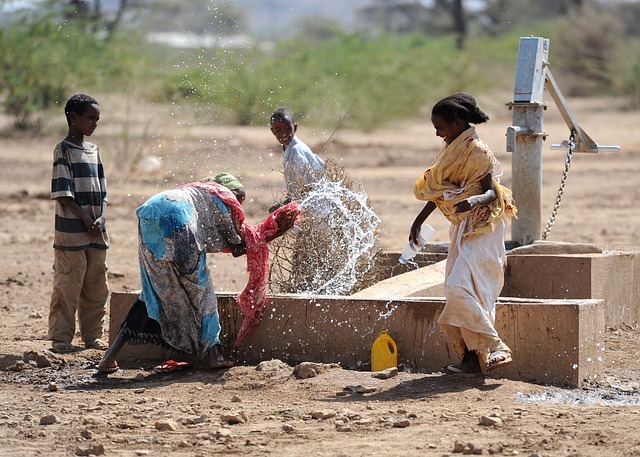 Ethiopia is Africa’s second-most populated country with more than 109 million people. It is also its fastest-growing economy even though it is one of the poorest countries in the world. Sanitation in Ethiopia is one of the factors proving to be a challenge when it comes to sustaining or improving on the country’s growth and development. Below are 10 facts about sanitation in Ethiopia.
10 Facts About Sanitation in Ethiopia
- Ethiopia is considered water-stressed because the rapid population growth over the last decade has put a strain on its abundant water sources. Despite estimations showing that 13.5 to 28 billion cubic meters of renewable annual groundwater is available per year, only 2.6 billion cubic meters is usable.
- Ethiopia is a country of two extremes. Some parts of the country are plagued by constant flooding while other parts experience water scarcity, degraded water quality and food insecurity because of recurring droughts.
- The majority of Ethiopia’s population lives in rural areas and is dependent on subsistence farming; therefore, a lot of water is used for agriculture. The global average for water withdrawals for agricultural use is 70 percent. Ethiopia uses 93 percent for agricultural.
- According to the WHO, 43 percent of Ethiopia’s population lacks access to an improved water source. Only around 28 percent of people nationwide have access to improved sanitation. While this is astoundingly low, it is an improvement from 3 percent in 1990.
- Women and girls bear the brunt of Ethiopia’s water and sanitation problem as they have to travel long distances daily to fetch water. Consequently, they are often unable to fully participate in community life or go to school.
- Open defecation is a daily part of life in 32 percent of Ethiopia’s rural homes and 7 percent of its urban population. Twenty-three million people practice open defecation due to a lack of access to improved sanitation.
- UNICEF attributes between “60 to 80 percent of communicable diseases in Ethiopia” to “limited access to safe water and inadequate water, sanitation and hygiene facilities.” Diarrhea, for example, accounts for 23 percent of all deaths for children under the age of five. Another report also shows that about 32 percent of health facilities in Ethiopia have access to safe water.
- The good news is that change is happening and has been happening. A joint report by WHO and UNICEF shows that Ethiopia has improved its water supply by 97 percent in urban areas and 42 percent in rural areas. Ethiopia achieved its Millenium Development Goal (MDG) target of providing 57 percent of the population with access to safe drinking water. This reduced the number of people without access to clean drinking water since 1990 by half.
- The government plans to further improve sanitation in Ethiopia under the One WASH National Program. It hopes to increase access to safe water to 98 percent for rural areas and 100 percent for urban areas. Under the program, all Ethiopians will also be provided with access to basic sanitation.
- There are also many international organizations aiding the government to improve sanitation in Ethiopia. Water.org has been working in Ethiopia since 2004 and has reached 243,000 people so far. Others, such as UNICEF and USAID, are supporting the One WASH program in various capacities.
The government and other partners need to continue improving sanitation in Ethiopia if the economy is to continue to grow. Aspects of development like life expectancy, improved opportunities for women and girls to participate in society and food production are dependent on sanitation. It is only by dealing with this that the government can hope for continued growth and development as well as poverty reduction.
– Sophia Wanyonyi
Photo: Pixabay
