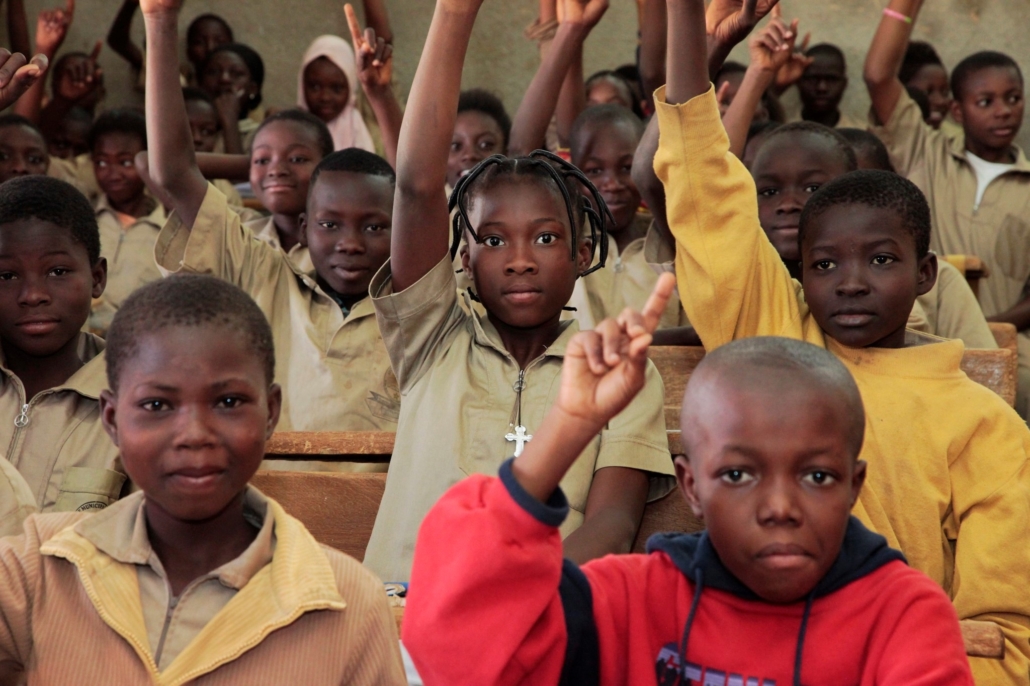
Burkina Faso is a presidential republic in Western Africa. After the country’s independence from France in 1960, Burkina Faso went through a period of political turmoil between 1970 and 2015. Between 2016 and 2018, Burkina Faso also suffered three terrorist attacks in its capital. The growing insecurity, due to more terrorist threats in the country’s northern and eastern regions, resulted in multiple tragedies. In 2019, more than 1,800 people died, nearly 500,000 people experienced displacement and more than 2,000 schools closed. This article will examine the state of higher education in Burkina Faso.
The Importance of Higher Education
This displacement of school closures resulted in a low literacy rate in Burkina Faso, where only 41.2 percent of the population above the age of 15 is literate. However, these conditions have improved in recent years. While the participation rate in education from pre-primary to higher education is still low compared to most of the world, recent UNESCO statistics show an upward trend in people’s participation in education.
One cannot underestimate the importance of higher education in a developing country such as Burkina Faso. While it is important to raise the literacy rate, many economic experts suggest that the governments of developing nations should invest in higher education. The World Bank, as early as 2000, recognized this importance. The report suggested that human capital, which is the knowledge, skill and resourcefulness of a country’s people, is increasingly becoming more important for a country’s future economic development. The World Bank’s 2020 education plan further reflects this.
There are three major public universities, three private universities and one technical university in Burkina Faso. The biggest public university, Universite de Ouagadougou (University of Ouagadougou), has 30,000 to 34,999 enrolled students. The University of Ouagadougou provides curriculums in humanities, arts, business and engineering. Meanwhile, the Universite Polytechnique de Bobo-Dioulasso (Polytechnic University of Bobo-Dioulasso) focuses its curriculum on science and technology. These universities bear the responsibility of improving and continuing higher education in Burkina Faso.
Challenges of Improving Education for Students
Higher education in Burkina Faso must overcome numerous challenges, but the state of education in the country has steadily improved over the past decade. There has also been a rise in the number of people who are eligible to participate in higher education. The gross enrolment ratio in higher education in the country rose from 3.58 percent in 2010 to 6.5 percent in 2018. However, there are concerns over the lack of infrastructure and teacher staffing levels in the nation’s higher education institutions.
While the Burkina Faso government’s expenditures in education have been steadily increasing since 2010, reports suggest that most of the investment went into building new universities instead of creating new fields of study. Gender disparity is another issue that higher education in Burkina Faso must overcome. According to the World Bank, the gender disparity in Burkina Faso’s education widens with each rung of the education ladder. UNESCO data shows that while female enrollment in tertiary education is steadily increasing, it is still significantly below male participation in higher education.
Improving Higher Education
There are efforts, both domestic and international, to improve higher education in Burkina Faso. The World Bank, for its part, invested in a $70 million project to improve the higher education in Burkina Faso.
In 2020, the Virtual University of Burkina Faso (UV-BF) is one of the projects with the aim of improving higher education in Burkina Faso. Professor Jean Marie Dipama, who set up UV-BF, said in an interview that she hopes that UV-BF will make higher education more available to Burkina Faso’s people. The Burkina Faso government also recently launched its new Education Sector Plan for 2017 through 2030, which aims to improve the quality and access to education across all academic levels
Higher education in Burkina Faso is striving to improve. As the world economy gets more complex, the need for better higher education in the country seems paramount. While the steadily rising literacy and education rate is a good sign, this is giving rise to concerns over Burkina Faso’s ability to provide quality higher education to all who desire it. However, the Burkina Faso government’s continuous effort to improve the country’s overall education aims to also improve the nation’s higher education. With the help of foreign investors and communities, such as the World Bank, many hope that Burkina Faso’s higher education will continue its improvement in the coming years.
– YongJin Yi
Photo: Flickr

10 Facts About Sanitation in Chile
Running along the thin stretch of land between the Andes and South America’s Pacific coast, Chile has grown to be one of the region’s most prosperous countries. Challenges remain ahead, however, as a drying climate and expanding urban build-up threatens the nation’s ability to supply clean water for its growing population. Here are 10 facts about sanitation in Chile.
10 Facts About Sanitation in Chile
Although the country faces many unique hurdles to overcome in the days ahead, these 10 facts about sanitation in Chile demonstrate a nation that is consistently striving to meet the needs of its people, blazing a trail for other Latin American nations to follow in the process.
– James Roark
Photo: Wikipedia
Living Conditions in Sao Tome and Principe
Sao Tome and Principe (STP) is a small island nation just north of the Equator. This formal Portuguese colony achieved its independence in 1975. As a Portuguese colony, from 1470 to 1975, people knew Sao Tome and Principe for its sugar production and trade. The slave labor utilized in the island’s sugar industry persisted into the 20th century. The country’s economy is largely dependent on agricultural exports, but the Sao Tome and Principe government is making efforts to diversify its economy. Here are the top 10 facts about living conditions in Sao Tome and Principe.
Top 10 Facts About Living Conditions in Sao Tome and Principe
Living conditions in Sao Tome and Principe are steadily improving. There are still many mountains that the STP government must climb in order to lead its country into a more prosperous future. While the STP economy’s dependence on agriculture and foreign aid is concerning, the high literacy rate in STP reflects the potential for growth. STP’s planned graduation from the U.N.’s list of least developed countries certainly seems to reflect this optimism. With this progress, a better future is surely coming for the people of STP.
– YongJin Yi
Photo: Flickr
4 Organizations Fighting World Hunger
Hunger and poverty integrally link together, because most people experiencing chronic hunger live in poverty. Further, most of the world’s hungry reside in developing nations. A 2018 report from the United Nations concluded that the number of people afflicted with chronic hunger was actually rising. In 2017, there were 821 million people around the globe that were hungry. In other words, hunger affects one in every nine people. World hunger is an issue that demands attention because of its regression throughout the past few years. Additionally, improving food security should boost global health and support the achievement of the Sustainable Development Goal of zero hunger by 2030. There are countless organizations working tirelessly to make a hunger-free world a reality. Below are four organizations fighting world hunger.
4 Organizations Fighting World Hunger
Hunger and poverty are issues that inherently tie together. These four organizations address global hunger through diverse programs and disciplines. Through each organizations’ work, achieving the Sustainable Development Goals of fighting world hunger has a profound possibility.
– Treya Parikh
Photo: Flickr
Tackling the Malaria Crisis in India
The malaria crisis in India has been an ongoing issue for centuries. However, along with the rest of the world, India has been making significant progress throughout the past few years with respect to decreasing its malaria cases. While millions are still at risk, India has implemented multiple health care plans that have contributed to its malaria reduction.
What is Malaria?
Malaria is a parasite that mosquitoes spread and can produce a wide range of symptoms including fever, chills, sweating, mental confusion and gastrointestinal symptoms. Malaria is most common in warm, humid and rainy climates because that is where the parasite is able to survive and complete its growth cycle. This is why malaria has been such a prevalent disease in India and in other countries close to the equator. However, despite the stagnant weather patterns, India has been making strides towards a malaria-free nation.
In 1995, there were approximately a total of 2.93 million cases of malaria in India, with about 1,151 deaths from the disease. In comparison, 2017 saw approximately 0.84 cases of the disease in the nation and only 194 deaths.
Eliminating Malaria
Due to a combination of factors, India is on track to complete its goal of total elimination of malaria by 2027. The nation has taken the disease very seriously and has strengthened both its Integrated Disease Surveillance Project (IDSP) and the National Health Mission (NHM). A combination of these two programs has helped health professionals and citizens respond to the malaria crisis in India.
A few different strategies currently control malaria cases in India. One is vector control, which means that people control mosquitoes in high-risk areas of malaria with personal protective measures and environmental awareness. Early Case Detection and Prompt Treatment (ECDPT) is a necessary strategy for all cases of malaria, as it not only improves symptoms of the disease in those already infected, but it also helps prevent the spread of the disease by providing treatment at the time of infection.
Since malaria is a very widespread disease across Asia, India is a member of the Asia Pacific Malaria Elimination Network (APMEN). This is a network that the Asia Pacific Leaders Malaria Alliance (APLMA) runs, which has the goal of eliminating malaria and sharing action plans across the countries of that region.
Though there is not a malaria vaccine yet, multiple countries in Africa are currently testing a vaccination program that could make its way to India if successful. A vaccine would be economically friendly for those who are among the poorest in India or live in remote areas, where 90 percent of malaria cases occur. The vaccine would also solve the recent issue of drug-resistant parasites.
World Malaria Day
Every year, on April 25, people celebrate World Malaria Day to encourage everyone’s education about the disease and how to prevent its spread. Four percent of all malaria cases occur in India, a substantial amount, which is why it is important that the awareness of the disease is prevalent in the country.
With the significant progress that the country has made in eliminating malaria, India will continue to defy odds by continuing to empower communities and committing to further action plans. This will ensure that the malaria crisis in India will no longer pose a major threat to its population.
– Alyson Kaufman
Photo: Pixabay
KopaGas Provides Clean Cooking Technology
Wood-based cooking harms the health of humans and the environment. KopaGas is one of many social enterprises tackling this problem by transitioning Tanzanian families to a clean cooking technology that is gas-based rather than wood-based through an innovative pay-as-you-go business model.
Imagine that a family is cooking dinner in the kitchen. They put charcoal into the stove and water for stew begins to boil. As the water heats, thick, grey smoke from the stove fills the room, the family’s lungs and the surrounding forest. In Tanzania, 96 percent of the population still uses dirty fuel sources like charcoal and firewood for cooking purposes. This has a harmful impact on respiratory health and the country’s ecology.
Effects of Wood-Based Cooking
Cooking with charcoal and firewood is comparable to exposing oneself to the smoke of 400 cigarettes per hour. Such air contamination contributes to roughly 4.3 million deaths per year worldwide. In Tanzania, respiratory infections are the second leading cause of death after malaria. In addition to devastating health effects, the resulting smoke causes ecological damage, particularly deforestation. A shocking 55 percent of the global wood harvest, representing 9 percent of primary energy supply, stems from traditional woodfuels.
To add to this, most wood-burning stoves are inefficient. Around 85 to 90 percent of the energy content of wood that people use for cooking becomes lost through the process of combustion. Such inefficiency means that people need to cut down more trees to satisfy the demand for woodfuel.
KopaGas as a Solution
Scientists Sebastian Rodriguez-Sanchez and Andron Mendes sought to address these health and environmental challenges head-on by creating clean cooking technology. In 2015, Rodriguez-Sanchez and Mendes co-founded KopaGas. The enterprise uses proprietary technology to help Tanzanian families transition to gas-based cooking.
Households pay an upfront fee of $6.50 to receive a liquefied petroleum gas (LPG) cooking kit. Families pay for the gas through a pay-as-you-go (PAYG) model via mobile phone payment. A smart meter that attaches to the LPG cooking kit measures gas consumption feeding back into the mobile application. Transparent information allows families to understand consumption patterns which can help return control over personal finances.
KopaGas’ innovation is revolutionary not because it utilizes clean cooking methods, but rather because it makes gas-cooking affordable through the PAYG system. Rodriguez-Sanchez told Reuters that the PAYG model needs to prove itself at a large scale to attract greater levels of investment. However, KopaGas is already gaining early financial support from the Acumen Fund, HRSV, Saisan Co. and DEG / KFW.
In January 2020, the U.K.-based holding company, Circle Gas Limited, acquired KopaGas’ PAYG technology. The company aims to expand access to technology across Sub-Saharan Africa, where 900 million people have yet to transition to modern and clean cooking fuels. Further expansion will then move into East Africa where the focus of 2020 is in Kenya.
Innovating Clean Cooking
While KopaGas is attempting to transition households from woodfuel-based cooking to gas-cooking, others are taking completely different approaches. One example is ServedOnSalt that emerged in collaboration with the DTU Skylab_FoodLab, a Food System Change laboratory that Roberto Flore founded and leads. The ServedOnSalt project developed a battery using solar energy, salt and water to create a cheap and clean-powered cooking stove. KopaGas, ServedOnSalt and other social enterprises within the clean cooking technology space are fundamentally transforming cooking practices in developing areas. These innovations are improving the health of humans and the planet.
– Kate McGinn
Photo: Flickr
The Electrification of Vietnam
Thirteen percent of the world’s population lacks access to electricity. This amounts to a whopping 940 million people living without electricity globally. People have made great strides in electrification. The year 2015 marks the first year in which the number of those without access to electricity fell below 1 billion, however, the world must continue efforts to address the large swathes of people continuing to live without this crucial resource. Electrification requires attention because energy access has a strong correlation with income levels and poorer households are far more likely to lack access to electricity. Due to this, access to electricity serves as an important social and economic indicator of poverty. Furthermore, electrification could be a cornerstone of poverty alleviation, economic growth and improving living standards. Here is some information about the electrification of Vietnam.
The Electrification of Vietnam
Vietnam’s rapid and total electrification is an impressive feat that has provided electricity throughout the nation. Since 2017, 100 percent of Vietnam’s population has access to electricity largely through the Vietnam Rural Electrification Programme. The program gave 82 million people access to electricity who did not have electrical grid access before. Vietnam progressed in its development agenda in efforts to provide better health care and improve overall welfare through its investment in electrification. Taking the time to understand the Vietnamese electrification process and its successes should allow people to apply these lessons in other regions where access to electricity is not as widespread.
Vietnam’s Electricity History
The Vietnamese electrification effort stems from the 1970s. After the Vietnam War and reunification, the Vietnamese infrastructure required a complete re-haul, electricity included. A major priority during this time period was connecting rice-producing areas to electricity for more efficient and modern industrial processes, as rice production was central to the Vietnamese economy. In the 1980s, Vietnam began to use renewable resources to power its rural electrification project. It did this in an effort to ensure that the focus was not only on urban economic development, such as irrigation systems and other small rural industries, by building hydropower plants and corresponding high voltage transmission and distribution lines. Vietnam also enacted policy during this decade to support the shift in attention to rural areas. The Doi Moi Renovation Policy aimed to make electricity services more affordable and provide credit for rural consumers.
The biggest changes occurred beginning in the 1990s with the emergence of a clear state electrification strategy. One can see this in the Establishment of Vietnam Electricity, a large state-owned electricity company, along with other reforms, refocusing electrification programs on poor households and leading to a surge in rural electrification. This time period also saw the 1996 Resolution which also clarified the government’s goals, stating that Vietnam had a target of 100 percent of districts, 80 percent of communes and 60 percent of rural households to connect to the national grid by 2000.
The Vietnam Rural Electrification Programme
Aside from this, a huge part of Vietnam’s electrification in the 1990s was the Vietnam Rural Electrification Programme, launched in 1998. This program alone provided access to electricity to 82 million additional people. The program took a sustainable development approach to increase access, focusing on financing, institutional support and societal buy-ins.
The Vietnam Rural Electrification Programme receives its funding from a variety of sources including the central government, cross-subsidies made by charging urban customers a surcharge on each kilowatt-hour of electricity they use for rural development programs, contributions from rural parties, loans from commercial banks and the involvement of international donors including the Japanese government and OPEC.
The program garnered societal buy-ins and support for these projects through targeted program design. The success of the program was contingent on the training of local populations to assist authorities in planning and design so the system effectively served the community it aimed to aid. In the same vein, the program instituted the service agent model in running the projects. This method trained locals to do routine technical and commercial operations as well as regular maintenance. This not only reduces the operating costs of the electrical grid but also employs local communities, provides faster emergency response and fosters greater ownership of the electrical system by rural communities. Vietnam designed the entire program to include community participation in every phase. Because of this design, the program has been incredibly successful in increasing access and is an immense reason that Vietnam reached 100 percent electrification in such a short period of time.
While some pieces of Vietnam’s electrification journey are specific to the nation and its resources, such as access to hydropower, other nations lacking access to electrification can repeat much of the policy and programs. Others can learn much from Vietnam’s centralized planning and government investment allowing for the kickstart of the electrification project, as well as the local involvement in the implementation and use of diverse funding sources. Developing countries including Kenya at 63.8 percent access, Angola at 41.9 percent access and Chad at 10.9 percent access can model electrification projects after Vietnam’s, using renewable resources available in the nation’s regions. With such a successful example and proof that electrification is central to the quality of life and other modes of development including education and health care, the world must put more programs in place to increase access to electricity globally.
Photo: Flickr
State of Higher Education in Burkina Faso
Burkina Faso is a presidential republic in Western Africa. After the country’s independence from France in 1960, Burkina Faso went through a period of political turmoil between 1970 and 2015. Between 2016 and 2018, Burkina Faso also suffered three terrorist attacks in its capital. The growing insecurity, due to more terrorist threats in the country’s northern and eastern regions, resulted in multiple tragedies. In 2019, more than 1,800 people died, nearly 500,000 people experienced displacement and more than 2,000 schools closed. This article will examine the state of higher education in Burkina Faso.
The Importance of Higher Education
This displacement of school closures resulted in a low literacy rate in Burkina Faso, where only 41.2 percent of the population above the age of 15 is literate. However, these conditions have improved in recent years. While the participation rate in education from pre-primary to higher education is still low compared to most of the world, recent UNESCO statistics show an upward trend in people’s participation in education.
One cannot underestimate the importance of higher education in a developing country such as Burkina Faso. While it is important to raise the literacy rate, many economic experts suggest that the governments of developing nations should invest in higher education. The World Bank, as early as 2000, recognized this importance. The report suggested that human capital, which is the knowledge, skill and resourcefulness of a country’s people, is increasingly becoming more important for a country’s future economic development. The World Bank’s 2020 education plan further reflects this.
There are three major public universities, three private universities and one technical university in Burkina Faso. The biggest public university, Universite de Ouagadougou (University of Ouagadougou), has 30,000 to 34,999 enrolled students. The University of Ouagadougou provides curriculums in humanities, arts, business and engineering. Meanwhile, the Universite Polytechnique de Bobo-Dioulasso (Polytechnic University of Bobo-Dioulasso) focuses its curriculum on science and technology. These universities bear the responsibility of improving and continuing higher education in Burkina Faso.
Challenges of Improving Education for Students
Higher education in Burkina Faso must overcome numerous challenges, but the state of education in the country has steadily improved over the past decade. There has also been a rise in the number of people who are eligible to participate in higher education. The gross enrolment ratio in higher education in the country rose from 3.58 percent in 2010 to 6.5 percent in 2018. However, there are concerns over the lack of infrastructure and teacher staffing levels in the nation’s higher education institutions.
While the Burkina Faso government’s expenditures in education have been steadily increasing since 2010, reports suggest that most of the investment went into building new universities instead of creating new fields of study. Gender disparity is another issue that higher education in Burkina Faso must overcome. According to the World Bank, the gender disparity in Burkina Faso’s education widens with each rung of the education ladder. UNESCO data shows that while female enrollment in tertiary education is steadily increasing, it is still significantly below male participation in higher education.
Improving Higher Education
There are efforts, both domestic and international, to improve higher education in Burkina Faso. The World Bank, for its part, invested in a $70 million project to improve the higher education in Burkina Faso.
In 2020, the Virtual University of Burkina Faso (UV-BF) is one of the projects with the aim of improving higher education in Burkina Faso. Professor Jean Marie Dipama, who set up UV-BF, said in an interview that she hopes that UV-BF will make higher education more available to Burkina Faso’s people. The Burkina Faso government also recently launched its new Education Sector Plan for 2017 through 2030, which aims to improve the quality and access to education across all academic levels
Higher education in Burkina Faso is striving to improve. As the world economy gets more complex, the need for better higher education in the country seems paramount. While the steadily rising literacy and education rate is a good sign, this is giving rise to concerns over Burkina Faso’s ability to provide quality higher education to all who desire it. However, the Burkina Faso government’s continuous effort to improve the country’s overall education aims to also improve the nation’s higher education. With the help of foreign investors and communities, such as the World Bank, many hope that Burkina Faso’s higher education will continue its improvement in the coming years.
– YongJin Yi
Photo: Flickr
Climate Change Causes Plagues of Locusts in Kenya
Climate Change Causes Plagues of Locusts in Kenya
The desert locusts have been a problem for East Africa since the beginning of 2020 if not sooner. The U.N. anticipates that the problem will worsen by the summer. Specifically, some project the number of locusts to multiply 500 times by June 2020. This is the greatest locust threat that Kenya has experienced in the last 70 years, and the U.N. fears that more countries are at risk too.
The Causes of the Plagues of Locusts in Kenya
The plague of locusts is due to a confluence of factors, namely climate-change-related events and armed-conflict, which exacerbated the issue. The locusts, which first ravaged the arid counties of Mandera and Wajir in north-eastern Kenya, came from Ethiopia and Somalia.
The weather in Kenya and elsewhere in the region has been unseasonably wet and hot due to climate-change-related cyclones in the Arabian Peninsula in May and October 2018. These conditions are perfect for generations of locust eggs to breed and hatch.
Climate change has worsened the locust problem because it has caused the warming of the Indian Ocean. This is responsible for increased and more severe tropical cyclones in the area. Furthermore, the warm temperatures aid the locust eggs in hatching and the winds help the locusts to spread. In addition, people cannot spray insecticide to control the locusts while it rains.
The Plague’s Effects
The most devastating effect of the plague of locusts is that it threatens the food security of the Kenyan people and the surrounding sub-region of Africa. The U.N.’s Food and Agricultural Organisation (FAO) considers desert locusts to be one of the most dangerous flying pests because they can fly long distances and thus migrate in a short period of time.
Each locust can eat its own weight in food every day, so when a swarm the size of Luxembourg descends upon Kenya, that is a huge problem. In fact, that number of locusts can eat the same amount of food as 10s of millions of people. The plague of locusts is a threat to the Kenyan economy, which is dependent on its agricultural exports. In 2019, the agricultural sector made up 26 percent of the country’s GDP. Due to these economic problems, Kenya’s currency could depreciate, which would be catastrophic.
International Response
The U.N.’s FAO has called on the international community to provide aid to “avert any threats to food security, livelihoods, malnutrition” from the unprecedented and devastating swarms of locusts. According to the FAO, aerial control, meaning insecticide that an aircraft sprays, is the only way to deal with the locusts, which local and national authorities have not been able to adequately deal with.
Kenya and other nations in East Africa are facing a perfect storm of climate-change-related weather events and conflicts in surrounding countries that have led to an unprecedented plague of locusts with the potential to cause famine. This locust plague is evidence of how climate change causes real damage to humans, most frequently from developing countries. Thus, the world must address the root cause of climate change to prevent catastrophic events like this from happening in the future.
– Sarah Frazer
Photo: Flickr
UN Report on Global Unemployment
Global unemployment plays a key role in global poverty. After all, the logic goes that employment leads to prosperity, even if little by little. Development economists proclaim the efficacy of providing jobs, however low paying, as the means to the end of escaping poverty, regardless of location. There is some evidence for this. According to the Brookings Institute, increasing work rates impacted poverty most, with education being second. With that said, a recent U.N. report on global unemployment clouds the future of international job growth since, for the first time in nearly a decade, the global unemployment rate has risen.
Previous Global Unemployment Rise
In 2008 and 2009, the Great Recession hamstrung the United States economy in the worst way since the Great Depression nearly 70 years prior. Unemployment soared, reaching 13.2 percent nationally and 5.6 percent globally. Between 2008 and 2009, the last time the U.N. reported on global unemployment rate increases, it increased by nearly a full percentage point, according to the World Bank. The stock market crash in the United States and Europe clearly caused this, but thankfully the rate recovered and surpassed the 2009 point in 2019, returning to about 4.9 percent.
Reasons for the Present Situation
A U.N. report on global unemployment in January 2020 indicated that this rise in the global unemployment rate was due largely to trade tensions. The United Nations said that these conflicts could seriously inhibit international efforts to address concerns of poverty in developing countries and shift focus away from efforts to decarbonize the global economy. Due to these strains, the report claims that 473 million people lack adequate job opportunities to accommodate their needs. Of those, some 190 million people are out of work, a rise of more than 2.5 million from last year. In addition, approximately 165 million people found employment, but in an insufficient amount of hours to garner wages to support themselves. These numbers pale in comparison to the 5.7 billion working-age people across the world but they concern economists nonetheless.
To compound the issue, the International Labor Organization said that vulnerable employment is on the rise as well, as people that do have jobs may find themselves out of one in the near future. A 2018 report estimated that nearly 1.4 billion workers lived in the world in 2017, and expected that 35 million more would join them by 2019.
The Implications
A rise in global unemployment, like that which the U.N. report on global unemployment forecasts, assuredly has an impact on global poverty. More people out of work necessarily means more people struggling to make ends meet. The World Economic and Social Outlook places this trend in a bigger context. Labor underutilization, meaning people working fewer hours than they would like or finding it difficult to access paid work, combined with deficits in work and persisting inequalities in labor markets means an overall stagnating global economy, according to the report.
Hope for the Future
First of all, stagnation is not a decline, and a trend of one year to the next does not necessarily indicate a predestined change for the years ahead. In fact, the World Bank points toward statistics that it issued at the end of the year to support the claim that every year, poverty reduces. In 2019, nearly 800 million people overcame extreme poverty from a sample of only 15 countries: Tanzania, Tajikistan, Chad, Republic of Congo, Kyrgyz Republic, China, India, Moldova, Burkina Faso, the Democratic Republic of the Congo, Indonesia, Vietnam, Ethiopia, Pakistan and Namibia. Over a 15-year period, roughly from 2000 to 2015, these 15 countries showed the greatest improvements in global poverty, contributing greatly to the reduction of the global rate of people living on $1.90 a day or less to below 10 percent. Additionally, efforts by organizations such as the International Development Association have funded the needs of the 76 poorest countries to the tune of $82 billion, promoting continued economic growth and assisting in making them more resilient to climate shocks and natural disasters.
While the U.N. report on global unemployment forecasts a hindrance to these improvements, hope is far from lost. The fight against global poverty continues with plenty of evidence of success and optimism for the future.
– Alex Myers
Photo: Flickr
How Germany is Helping to Improve Global Health
In June 2018, German Chancellor Angela Merkel introduced a new plan for Germany to become a front-runner in global health. This plan was to fully come into action by the end of 2019. In addition, the BMJ Journal reported that the plan involved bringing in non-governmental representatives to provide their knowledge to develop a strategy for Germany to improve global health.
What is the Plan?
Germany worked with the World Health Organization (WHO) to develop the Global Action Plan for Healthy Lives and Well-Being for All program. One of the main goals of this initiative is to accelerate progress in seven key areas:
These seven points focus on the main areas of mobilizing and enabling communities. They also focus on providing governments with the necessary funding and knowledge to help their people and ensuring the research and money is going to the areas that most need it.
Funding
Germany began working towards many of these goals as early as 2018. The Global Fund reports that Germany pledged 1 billion euros (roughly $1.094 billion) towards The Global Fund’s fight against diseases such as HIV, malaria and AIDS. Also, the website states that this was a 17.6 percent increase from its previous pledge. Germany is pledging this amount for a three-year period.
The website Donar Tracker notes that Germany donated 47 percent of its development assistance fund to multilateral, or multi-country, organizations. The website states that the main recipients of this funding were the previously mentioned Global Fund, the E.U. and Gavi. Gavi is an organization focused on giving impoverished countries access to vaccines.
Cooperation
The Global Health Hub Germany is a website that Germany hosts to improve global health. This website calls itself the platform for Global Health. The World Health Summit, which Berlin, Germany holds annually, helped to organize the launch of The Global Health Hub, claiming that its mission statement is one of cooperation.
The Global Health Hub Germany aims to inform people, get them working together and develop new ways for the world to improve global health. Additionally, it hosts frequent events and conferences aimed to give people the information they need to help improve global health. The website launched on October 29, 2019. Since then, it gained 555 members as of November 2019. Its members consist of activist groups and experts in the health field. The Global Action Plan for Healthy Lives and Well-being for All states Germany’s mission statement going forward to improve global health. Funding, cooperation and mobilization are just some of the ways that Germany aims to improve global health.
– Jacob Creswell
Photo: Flickr