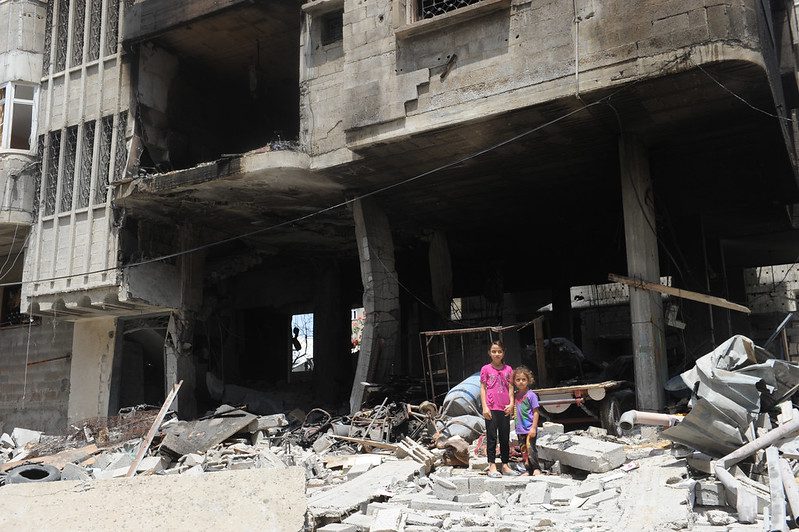
 On August 22, 2025, the war in Gaza reached a sobering milestone when the U.N.-backed Integrated Food Security Phase Classification (IPC) declared a famine in the Gaza Governorate. In a speech by the United Nations Under-Secretary-General for Humanitarian Affairs and Emergency Relief Coordinator, Tom Fletcher, he called this the world’s famine, underscoring what he saw as the abject failure of the international community to prevent Gaza’s suffering.
Just weeks later, the Independent International Commission of Inquiry on the Occupied Palestinian Territory, including East Jerusalem, and Israel found that Israel had committed four of the five genocidal acts defined in the 1948 Genocide Convention. Pedro Sanchez called the declaration of famine a “shame for all of humanity.” Such words of shame have ramped up as nations across the world call for an end to the suffering of Gazans, the release of hostages and a ceasefire to allow aid to reach the Gaza Strip unencumbered.
IPC Classifications
The IPC has individually assessed four of the five governorates in the Gaza Strip, according to the 2025 report. This has been evaluated on the Acute Famine Index and the Acute Malnutrition Index, each with five stages. The Famine Review Committee, which operates within the IPC, concluded that a Phase 5 famine was affecting the Gaza Governorate. This represents the most catastrophic classification and requires “extreme critical levels of acute malnutrition and mortality.”
North Gaza faced similar or worse conditions, but evidence was insufficient for an official Phase 5 classification. Both the Deir al-Balah and Khan Younis Governorates face a Phase 4 emergency, which the IPC projects will imminently rise to Phase 5 by September 30, according to the August 2025 review. While these classifications provide vital structure, it is crucial to recognise the lived realities they represent.
As of September 25, 2025 Israeli forces have killed almost 65,000 Palestinians, according to BBC, and have damaged or destroyed an estimated 90% of homes. Each of these fatalities is a life, each fatality has a story, and each fatality has a family that will be mourning their death. The human aspect of this conflict must always remain its primary framing.
Previous Warnings
Even before the official declaration of famine in Gaza, the IPC had been warning that the humanitarian crisis was reaching catastrophic levels. As early as March 2024, the IPC warned that “Famine is now projected and imminent in the North Gaza and Gaza Governorates.” Just a week before the official declaration of famine in Gaza, more than 100 organizations signed a statement calling on Israel to stop the “Weaponization of aid.”
Furthermore, in a statement on September 17, 2025, the leaders of more than 20 aid agencies called on world leaders to intervene after the declaration of genocide by a U.N. Commission. They called the situation on the ground “unconscionable” and recounted meeting Palestinians who had lost limbs and even children who wished for death to join their parents in heaven. Amnesty International echoed these appeals with a statement on the 25th September, asserting that “Words alone will not stop the atrocities.”
They called for all states to use every diplomatic, economic and political tool to exert influence over Israel to secure a ceasefire. These escalating appeals highlight a growing agreement among humanitarian groups that action on an international level is desperately needed.
The International Community
The realities of geopolitics in the region make it difficult for international actors outside of the U.S. to make decisions that could decisively end the war. In recent months, many of Israel’s allies, frustrated with the continuing conflict, have recognized Palestine in an attempt to revive the two-state solution that Netanyahu has said he will strongly oppose. However, some are calling for European states, particularly, to go further.
At the recent U.K. Labour Party conference, members of the governing party backed a non-binding motion calling for the full suspension of arms trade with Israel. This follows the Spanish government, which had already announced a full arms embargo on Israel in response to what Prime Minister Pedro Sanchez called a genocide. The European Commission has also announced plans to restrict trade with Israel and impose sanctions on extremist Israeli ministers.
Israel’s number one trading partner is the EU, and it accounted for 32% of Israel’s trade in 2024, positioning the EU well to apply meaningful pressure. However, experts predict the impact to be somewhat limited, with trade commissioner, Maroš Šefčovič, estimating the effect to be just €227 million a year, if the measure passes at all, which currently looks doubtful.
President Trump has also proposed peace with the backing of Netanyahu, which would see the demilitarisation of Gaza, the release of prisoners by both Israel and Hamas, a surge of aid into the strip and the creation of a temporary committee tasked with the transitional governance of Gaza. The success of this deal in the long term remains uncertain; however, leaders in the Middle East and Europe have signalled support for the plan.
Final Thoughts
International agencies described the humanitarian situation in Gaza as unprecedented in scale and severity. In September 2024, a U.N. commission declared that acts committed by Israel in Gaza met the legal definition of genocide, a finding that has intensified appeals for urgent international intervention.
Reports from the IPC, U.N. bodies, and humanitarian organizations continue to highlight widespread food insecurity, mass displacement, and the near-total collapse of essential services. Aid groups warn that without immediate and sustained access to food, water, and medical supplies, famine will deepen.
While long-term political solutions remain uncertain, humanitarian actors stress that the immediate priority is securing life-saving assistance for civilians. These repeated calls from agencies, governments, and human rights organizations are part of a growing international consensus that words of shame are insufficient without tangible measures to prevent further civilian suffering and loss of life.
– Adam Walsh
Adam is based in Burnley, UK and focuses on Global Health and Politics for The Borgen Project.
Photo: Flickr

Poverty Reduction in El Salvador
Project ‘Rural Dawn’
Effects of poverty include vulnerability to environmental disasters, such as droughts. This results in people lacking food security due to challenges in obtaining modern farming technology or suitable farmland. Between the months of February and May in 2023, 85,000 people were in a food crisis or worse, this is an important issue to confront in the mission to reduce poverty in El Salvador, as food insecurity has been a serious ongoing issue for many years.
To create opportunities in such a dire situation, the International Fund for Agricultural Development (IFAD) teamed with the Government of El Salvador in 2019 to launch the Rural Adelante project. This project is a wide-reaching scheme endeavoring to improve food security and living conditions among the rural poor, by providing farmers with support to increase their incomes. Through agricultural training, access to micro-financing and the creation of local cooperatives, families who once struggled to meet their basic needs, are now generating steady incomes and gaining financial independence. The project has succeeded in connecting rural farmers to the supply chain of more crops and has benefited more than 40,000 agricultural families. The program also has a specific focus on engaging women, young people and those from indigenous origin, offering training and opportunities to build successful businesses.
Growing Tourism in Surf City
As tourism grows, poverty reduces due to the new jobs and opportunities that become accessible to local people. With the growth of tourism comes openings of hotels, restaurants, new shops, wider transportation as well as demand for tour guides. These jobs do not require advanced degrees, meaning poorer communities are able to gain employment. Surf City, El Salvador’s coastal tourism project, focuses on enhancing connectivity and visitor experience through making significant infrastructural changes, which should positively impact more than 69,000 Salvadorans. These changes include new water treatment facilities to improve water quality, this is particularly important due to the struggles commonly faced in accessing clean water; more than 1.6 million residents of El Salvador need to leave their homes just to find and gather clean water to use.
Along with the improvements El Salvador is making to roads through adding bicycle and pedestrian lanes to improve safety, the project aims to improve quality of life for both tourists and locals, while also providing plenty of construction and engineering jobs. The country has witnessed impressive growth in tourism, in 2023 there were more than 3.4 million international visitors, stimulating the local economy through commerce.
Security and Safety
In recent years, crime rates have dropped significantly, with homicide rates declining 98% from the years 2015 to 2024. This is a result of harsher police enforcement and punishment for crime, which has led to an increase in success for small businesses, street vendors and entrepreneurs. For decades, gangs extorted these groups and even families. With extortion dropping by nearly 50% in 2024, microbusinesses are now able to keep more earnings. This encourages financial security for thousands more businesses and also eliminates costs previously spent on security guards, protection payments and theft losses, meaning that working people are keeping more of their income than previous corrupt social systems allowed.
Reduced crime and homicide rates contribute to psychological and social security; where previous fear of gangs may have kept people absent from school or work. Now, they are able to attend regularly and with less risk. This builds human capital, which is key to long-term poverty reduction in El Salvador.
TechnoServe’s Work
TechnoServe is a nonprofit organization that has been proposing business solutions to poverty for over three decades, through helping small businesses improve and grow. Its Crece Tu Empresa program (CRECE) is a scheme focused on involving young people in business leadership. CRECE supported 1,500 entrepreneurs and more than 500 youth-led businesses have benefitted from the program, 66% of which were female led. Its work has benefited many business and it is particularly important in this country, where high levels of unemployment limit opportunities for many young people and women.
By providing training, mentoring and business tools, entrepreneurs can professionalize and strengthen their businesses, leading to increased revenue and business growth. This results in a chain of positive effects, such as increased income, more job opportunities and stronger connections between local businesses due to reinvestment in local produce and services. This also encourages empowerment for young women due to increased involvement in schemes like these. When marginalized groups earn their own income, household stability improves and intergenerational poverty reduces. TechnoServe’s involvement in El Salvador is long-lasting as they provide important education. This is effective in ways different to one-time aid as it helps to build lasting economic resilience, resulting in more sustainable poverty reduction in El Salvador.
Looking Ahead
The work that is occurring to help relieve poverty in El Salvador, from both the government and charitable organizations, is widespread. From infrastructure and food security, to educating business skills, an abundance of work is being done to help the country’s downfalls. The improvements being made will benefit both the locals and tourists, and create better connectivity to the rest of the world. Although poverty remains a large issue, the work being done currently aims to build strong foundations for the future, with hopes to change public perceptions of El Salvador.
– Abigail Gadsden
Photo: Wikimedia Commons
Fighting Malnutrition in the Philippines with Biofortified Rice
Partnerships Bringing Nutrition to Families
The Philippine Department of Agriculture in collaboration with the Philippine Rice Research Institute (PhilRice) leads the rollout of biofortified rice and the International Rice Research Institute (IRRI), which is based in Los Baños, Laguna [3]. Together, these organisations have spent over a decade developing a variety of rice that not only grows well in local conditions but also delivers meaningful levels of Vitamin A.
Support has also come from global initiatives such as HarvestPlus, part of the CGIAR research partnership, which specialises in promoting biofortified crops [4]. Through training, seed distribution and farmer support, HarvestPlus and its partners are ensuring that Golden Rice reaches the communities most at risk of malnutrition.
Reaching Communities in Need
The first planting of biofortified rice in the Philippines began in 2022 in provinces with the highest rates of Vitamin A deficiency. PhilRice has distributed seed to local farmers and provided training on cultivation, while IRRI has worked alongside government agencies to monitor yields and nutritional outcomes, Reuters reports. The Department of Agriculture has committed to scaling up production nationwide, aiming to integrate Golden Rice into school feeding programmes and rural markets.
For families who cannot afford vegetables, meat or dairy on a regular basis, Golden Rice provides a low-cost way to improve diets and reduce poverty-linked illness. Studies show that just one cup of cooked Golden Rice can provide up to 30–50% of a child’s daily Vitamin A requirement.
A Model for Future Biofortification
Golden Rice is part of a broader movement to use biofortification to combat “hidden hunger.” Alongside Vitamin A-enriched rice, IRRI and HarvestPlus are supporting the development of zinc-biofortified rice and iron-rich crops for the region, Science reports. These innovations aim to strengthen food security and health without requiring major changes to eating habits. The hope is that biofortified crops could quickly become a trusted part of the Filipino diet, helping to reduce child malnutrition across the country.
A Brighter Future for Children
Fighting malnutrition in the Philippines with biofortified rice demonstrates how science and partnerships can deliver solutions to some of the world’s most pressing health challenges. By working together, PhilRice, IRRI, HarvestPlus and the Department of Agriculture are transforming a staple food into a life-saving tool.
As the program expands, millions of Filipino children stand to gain stronger immune systems, better vision and healthier growth. For families living in poverty, biofortified rice in the Philippines represents hope for a healthier future.
– Robert Darke
Photo: Flickr
Education in Madagascar: Charities Paving the Way Out of Poverty
Poverty and Hunger in Madagascar
In 2017, low productivity, reliance on agriculture and limited jobs drove Madagascar’s national poverty rate to 70.7%. By 2022, the rate climbed to 75.2%, with rural poverty reaching 79.9% and urban poverty increasing by 13.3% between 2012 and 2022. The COVID-19 pandemic is mostly responsible for this jump. Statistics from May 2025 show that more than 90% of Madagascan’s live on less than $3.10 a day.
Food insecurity compounds these challenges. Madagascar depends heavily on rain-fed agriculture, making it vulnerable to droughts in the south and cyclones in the southeast. Today, 1.31 million people face acute food insecurity. For children, 67.6% experience material deprivation in two or more dimensions of well-being, with 23.7% suffering from 4 or more in 2020. Nearly 40% of children suffer from chronic malnutrition.
Challenges in Madagascan Education
Education faces equally tough hurdles. Around 94% of children experienced learning poverty at the age of 10 (unable to read and understand), with the completion rate for primary school being 62% for girls and 57% for boys in 2022. As for secondary school, there was a big drop of around 25% for both genders. Still, there is momentum to improve education in Madagascar, and several charities are improving lives through education in Madagascar.
Learn Achieve Become (L.A.B): Nosy Be
L.A.B, a U.K.-registered charity, started out as an idea in 2017 by three education and development professionals who intended to support individuals through free education and support projects globally. Their slogan, “education without boundaries,” reflects a firm commitment to serving everyone regardless of their age, race, gender, religion, ability or social status. L.A.B targets areas where people are more vulnerable and left behind by providing activities like:
L.A.B in Madagascar
The Sunrise Centre in Nosy Be, Madagascar, is one of many projects L.A.B runs. L.A.B officially opened the center in 2023, and it now supports individuals (adults and children) with physical and intellectual disabilities by educating, upskilling and empowering them.
When people graduate from the Sunrise Centre, L.A.B.’s “TSAREE” focuses on creating jobs, especially for people with disabilities. Even with improved skills and experience, society continued to hold prejudices against them. Therefore, TSAREE has proven to be essential.
L.A.B also launched Ny Fianarantsika (Our Education) in Nosy Be. Bringing 100% free education to children’s doorsteps, this project aims to improve children’s literacy and numeracy skills.
Together, L.A.B is paving the way out of poverty for one individual at a time through education in Madagascar, as well as experience.
Madagascar Development Fund (MFD)
Between July 2008, when MDF officially started, and May 2025, MDF created or renovated nearly 200 state primary schools. From April to June 2025, MDF completed four school projects, along with Ifalimanjaka Basic Health Centre and Ambohitrakely Water System. Thanks to MDF, more than 36,000 children now have access to education in Madagascar. Improving education, water and health in Madagascar, MDF improves education in Madagascar with every successful project.
Education For Madagascar (EDU4MADA)
Founded in 2015, EDU4MADA is a U.K.-registered charity and Malagasy non-governmental organization (NGO). The organization aligns its work with Sustainable Development Goal 4, quality education for all, with the goal of improving education in Madagascar by paving the way out of poverty for the country’s most vulnerable children and youth.
EDU4MADA operates six educational projects, including the AKKA Montessori School, SCOLA youth scholarship program, KANTO cultural workshops, CARE Coding and Robotics, VIM volunteer outreach, and Career Day Awareness. These offer early childhood learning, creative after-school activities, technology and environmental education as well as professional insights.
By equipping learners with these tools and skills, EDU4MADA invests in both individual futures and the broader social progress of Malagasy communities.
Conclusion
Education in Madagascar faces significant challenges, but grassroots organizations are changing the story. L.A.B., MDF and EDU4MADA prove that education can empower individuals, reduce poverty and build resilience. By opening classrooms, reaching marginalized children and creating inclusive opportunities, these charities are improving education in Madagascar, whilst also paving the way out of poverty for the most vulnerable communities.
– Rebecca Lamb-Busby
Photo: Flickr
Inciting Action in the “War on Drugs”: Colombian Drug Use
Survey
Additional reports found that Colombian drug overdoses significantly increased in young women between 2018 and 2021. This likely links to the widespread emotional distress prompted by the COVID-19 pandemic and a corresponding increase in prescription administration. According to Think Global Health, many users are transgender (potentially using drugs to serve as an emotional coping mechanism for their social isolation).
In grouping overdoses by substance type, the Committee on National Security Systems administered a Colombian household survey; substances most frequently associated with Colombian overdose were “tranquilizers/sedatives/antidepressants (43%), cannabis (16%), stimulants (16%), alcohol (16%), and opioids (6%),” according to Columbia University. This data neglects to include Colombian drug use among homeless or incarcerated individuals who did not receive the survey.
Colombia’s Response to the Increase in Drug Consumption
In 2022, Colombia became one of 34 countries to implement take-home naloxone programs (used to reverse the repercussions of opioid usage). Later in 2023, Colombia joined 17 other nations in the institutionalization of drug consumption rooms (DCRs), together with international contention over establishing DCRs, which made international government sanctioning difficult to acquire.
These peer-run facilities oversee the safe consumption and injection of illicit drugs, essentially arguing that safe consumption is preferable to any alternative overdose. Facilities provide access to sterile supplies (i.e., syringes), on-site medical personnel, and resources on recovery; employees are either medical personnel or recovered users.
Cambie, the first official Colombian DCR
“Cambie,” which directly translates to the English word “change,” takes action that is intentionally and deeply rooted in the meaning of its name.
Not only is “Cambie” the first safe injection site sanctioned in Colombia, but it is also the first of its kind to exist in all of South America. The facility strictly injects heroin and follows an empathy-based model of care. In its first year, it effectively prevented 14 heroin-based fatalities, according to Think Global Health.
The Process
Upon entering the facility, clients receive a survey that allows Cambie to approximate the client’s safest dosage and injection site; its services are comparable to approximately 200 other international institutions. Based in the Santa Fe neighborhood of Bogóta, Colombia, the institution bolstered 87 clients within its first two years of operation. Resultedly, the surrounding community has experienced a reduction in public heroin use, injection litter, rates of sexually transmitted diseases, and overdose deaths, without experiencing a correlated increase in the frequency of crime or drug use.
Cambie is also spearheading research on injection supplementation; Psychologist and coordinator at Cambie, Daniel Rojas, conducted a study by providing 10 heroin users with hammer pipes, known for their substance-optimizing abilities, Think Global Health reports. The trade-in for hammer pipes welcomes the opportunity for users to manipulate a mechanism less likely to be riddled with contaminants. This may show particular benefits, considering how Cambie’s annual 2025 report indicated that the leading causes of overdose in users were abrupt “dose escalation,” unawareness of dosage, abrupt post-abstinence use, and “concomitant use with other depressants.”
A Colombian “Good Samaritan” Clause
There is a critical distinction between personal administration and trafficking, the former of which is not reinforced by DCRs. Nonetheless, in an effort to reduce Colombian drug trafficking and overdose frequency, the Colombian 2023 National Drug Policy allocated $49.5 million in assets towards funding of small projects, like injection sites and DCRs.
The approach to drug administration resembles Massachusetts’s “Good Samaritan Clause,” a clause that reduces the stigma and criminalization of underage, by eliminating the risk of persecution when reporting a medical emergency as an indoxicated minor. The ultimate goal – prioritizing the social emphasis on wellbeing rather than indictment.
Conclusion
Harm reduction is not just a form of health intervention, but a safeguard of human rights. Not only do DCR facilities protect critical sanitary needs of drug users, but they also consider the emotional underpinnings of drug use and recognize the drug epidemic as a reflection of systemic inequity in health care access. The government has effectively protected some of its most vulnerable communities by approaching the Colombian drug epidemic through this empathy-based lens.
– Talia Gitlin
Photo: Flickr
Childhood Anemia in Sierra Leone: Scale, Costs, and Solutions
The 2019 Sierra Leone Demographic and Health Survey reported an exceptionally high prevalence of anemia in children under 5. When combined with population estimates for the under-5 cohort (~1,188,000), the implied burden is roughly 900,000 young children affected. Quantifying both prevalence and headcount helps translate epidemiology into program scale and budgetary needs.
Causes and Clinical Impact
Multiple drivers contribute to childhood anemia in Sierra Leone: inadequate access to iron-rich foods, repeated infections (including malaria), intestinal parasites, and poor water, sanitation and hygiene (WASH) conditions. Clinically, moderate and severe anemia in young children associates with reduced activity, impaired immune response, delayed cognitive development and elevated risks of hospitalization and mortality—outcomes that reduce lifetime human capital.
Home fortification with multiple micronutrient powders (MNPs) constitutes one of the clearest, evidence-backed interventions for reducing iron deficiency and lowering anemia prevalence in infants and young children. Meta-analyses and program guidance report reductions in anemia (meta-analytic point estimates commonly around the high-teens percentage reduction in targeted age bands) and substantial declines in iron deficiency biomarkers. At the procurement level, UNICEF price data have shown MNP product costs can be very low (for example, roughly $1.65 for 90 sachets), but product cost is only one component of a functional program.
Delivery Costs and Program Scale
Product procurement at UNICEF commodity prices implies a modest line-item for sachets alone: covering a six-month intermittent regimen for ~903,000 children would cost on the order of $1.5 million for the sachets themselves. Implementation pilots, however, highlight that distribution, community health worker time, training, supervision and adherence monitoring drive total costs far higher. Pilot studies report per-child program costs in the low tens of dollars (for example, approximately $53 per child via community platforms and ~ $66 via facility platforms in a nine-month pilot), which projects to program budgets in the tens of millions to reach the whole affected cohort.
UNICEF, WFP and HKI
UNICEF partners with the Government of Sierra Leone on child-nutrition programs, including infant and young child feeding (IYCF) counselling, and supports behavior change and supply-chain steps that are essential to sustained impact. Recent UNICEF reporting describes local innovations and maternal/child nutrition support activities deployed in 2024–2025.
The World Food Program (WFP) has piloted local production of affordable, nutrient-enriched complementary foods for children and works through community and school platforms to improve diet quality—an approach that reduces reliance on imported products and supports local economies. WFP described a 2023 pilot equipping women’s producer groups to hygienically make nutrient-rich complementary foods.
Helen Keller International (HKI) acts as a long-standing nutrition partner in Sierra Leone and has worked with the Ministry of Health to expand access to prenatal multiple micronutrient supplementation and other nutrition services; HKI’s recent program descriptions note expansion of prenatal supplement access across more than 1,400 health facilities in recent years, an example of scaling maternal nutrition to support child outcomes indirectly.
Conclusion
The numbers outline a stark but solvable public-health challenge: a large cohort of young children faces anemia, and inexpensive commodities exist that reduce prevalence. The decisive constraints are delivery systems and integrated public-health responses. Scaling proven platforms—UNICEF’s supply and behavior-change partnerships, WFP’s local complementary-food initiatives and HKI’s facility-level nutrition expansions—offers an operational road map: combine affordable MNP procurement with funded distribution, malaria and deworming measures and maternal-child nutrition services to convert low unit costs into durable population health gains.
– Alexander Broermann
Photo: Flickr
International Community’s Reaction to Famine in Gaza
Just weeks later, the Independent International Commission of Inquiry on the Occupied Palestinian Territory, including East Jerusalem, and Israel found that Israel had committed four of the five genocidal acts defined in the 1948 Genocide Convention. Pedro Sanchez called the declaration of famine a “shame for all of humanity.” Such words of shame have ramped up as nations across the world call for an end to the suffering of Gazans, the release of hostages and a ceasefire to allow aid to reach the Gaza Strip unencumbered.
IPC Classifications
The IPC has individually assessed four of the five governorates in the Gaza Strip, according to the 2025 report. This has been evaluated on the Acute Famine Index and the Acute Malnutrition Index, each with five stages. The Famine Review Committee, which operates within the IPC, concluded that a Phase 5 famine was affecting the Gaza Governorate. This represents the most catastrophic classification and requires “extreme critical levels of acute malnutrition and mortality.”
North Gaza faced similar or worse conditions, but evidence was insufficient for an official Phase 5 classification. Both the Deir al-Balah and Khan Younis Governorates face a Phase 4 emergency, which the IPC projects will imminently rise to Phase 5 by September 30, according to the August 2025 review. While these classifications provide vital structure, it is crucial to recognise the lived realities they represent.
As of September 25, 2025 Israeli forces have killed almost 65,000 Palestinians, according to BBC, and have damaged or destroyed an estimated 90% of homes. Each of these fatalities is a life, each fatality has a story, and each fatality has a family that will be mourning their death. The human aspect of this conflict must always remain its primary framing.
Previous Warnings
Even before the official declaration of famine in Gaza, the IPC had been warning that the humanitarian crisis was reaching catastrophic levels. As early as March 2024, the IPC warned that “Famine is now projected and imminent in the North Gaza and Gaza Governorates.” Just a week before the official declaration of famine in Gaza, more than 100 organizations signed a statement calling on Israel to stop the “Weaponization of aid.”
Furthermore, in a statement on September 17, 2025, the leaders of more than 20 aid agencies called on world leaders to intervene after the declaration of genocide by a U.N. Commission. They called the situation on the ground “unconscionable” and recounted meeting Palestinians who had lost limbs and even children who wished for death to join their parents in heaven. Amnesty International echoed these appeals with a statement on the 25th September, asserting that “Words alone will not stop the atrocities.”
They called for all states to use every diplomatic, economic and political tool to exert influence over Israel to secure a ceasefire. These escalating appeals highlight a growing agreement among humanitarian groups that action on an international level is desperately needed.
The International Community
The realities of geopolitics in the region make it difficult for international actors outside of the U.S. to make decisions that could decisively end the war. In recent months, many of Israel’s allies, frustrated with the continuing conflict, have recognized Palestine in an attempt to revive the two-state solution that Netanyahu has said he will strongly oppose. However, some are calling for European states, particularly, to go further.
At the recent U.K. Labour Party conference, members of the governing party backed a non-binding motion calling for the full suspension of arms trade with Israel. This follows the Spanish government, which had already announced a full arms embargo on Israel in response to what Prime Minister Pedro Sanchez called a genocide. The European Commission has also announced plans to restrict trade with Israel and impose sanctions on extremist Israeli ministers.
Israel’s number one trading partner is the EU, and it accounted for 32% of Israel’s trade in 2024, positioning the EU well to apply meaningful pressure. However, experts predict the impact to be somewhat limited, with trade commissioner, Maroš Šefčovič, estimating the effect to be just €227 million a year, if the measure passes at all, which currently looks doubtful.
President Trump has also proposed peace with the backing of Netanyahu, which would see the demilitarisation of Gaza, the release of prisoners by both Israel and Hamas, a surge of aid into the strip and the creation of a temporary committee tasked with the transitional governance of Gaza. The success of this deal in the long term remains uncertain; however, leaders in the Middle East and Europe have signalled support for the plan.
Final Thoughts
International agencies described the humanitarian situation in Gaza as unprecedented in scale and severity. In September 2024, a U.N. commission declared that acts committed by Israel in Gaza met the legal definition of genocide, a finding that has intensified appeals for urgent international intervention.
Reports from the IPC, U.N. bodies, and humanitarian organizations continue to highlight widespread food insecurity, mass displacement, and the near-total collapse of essential services. Aid groups warn that without immediate and sustained access to food, water, and medical supplies, famine will deepen.
While long-term political solutions remain uncertain, humanitarian actors stress that the immediate priority is securing life-saving assistance for civilians. These repeated calls from agencies, governments, and human rights organizations are part of a growing international consensus that words of shame are insufficient without tangible measures to prevent further civilian suffering and loss of life.
– Adam Walsh
Photo: Flickr
New Integrated Plan To Address Disability and Poverty in Czechia
Current Challenges
According to the data that the European Union Statistics on Income and Living Conditions provided, the poverty risk rate for working-age persons with disabilities in Czechia was 13.2% in 2023, double compared to other persons of similar age.
Younger people with disabilities face particular disadvantages as well. Those in the 18-24 age group are far more likely to leave school early compared to their peers and are less likely to graduate from tertiary education. A significant group of children with disabilities receive education in separate schools rather than the public system, which deepens the social exclusion. The link between disability and poverty in Czechia starts at the very beginning of the societal and professional path.
The most common type of disability in Czechia is mobility impairment. People with disabilities point to transport and navigation of public spaces as their greatest challenges.
There are multiple elements within the national social security system to support individuals with disabilities such as financial benefits, tax relief, insurance and assistance. However, there is little focus on vocational rehabilitation, which experts point as perhaps the most productive solution to poverty and disability connection. Job market opportunities for people with disabilities are limited with low motivation for accommodations.
Past Achievements
Since joining international efforts for inclusion, such as ratification of the UN Convention on the Rights of Persons with Disabilities in 2009, Czechia made considerable progress in terms of legislation related to the protection of this citizen group.
The employment rate of persons with disabilities is marginally above the EU average. The government has incorporated multiple incentives in labor law to help achieve it, for example supplier diversity programs, parities requirements and targeted efforts from The Regional Employment Agencies to assist people with disabilities in finding suitable workplaces.
Many municipalities participated in the National Development Program for Mobility for All, which has been implemented since 2005, removing barriers and improving mobility in urbanized areas.
Plan for the Future
To better accommodate citizens with disabilities, the Czech government has approved a National Plan for Persons with Disabilities for 2026-2030. What is especially interesting in this new Plan is the integrated, holistic approach to proposed solutions. The Plan will focus on improving accessibility in public buildings and transport infrastructure, with both elements intentionally linked.
The basic objective of the National Accessibility for All Programme is to build comprehensive barrier-free pedestrian routes with direct links to the buildings of public institutions. Simply put, the plan is to not only help people get to the location or to navigate within the building, but to enable both, creating an accessible experience.
To support the efforts described in the Plan, on January 1, 2025, the amendment to the Czech Employment Act came into force, especially the obligation to employ a mandatory proportion of disabled employees. This change aims to encourage employers to hire disabled employees and prevent attempts to circumvent existing mechanisms.
Looking Ahead
The government describes the importance of the Plan as fundamental for the effective functioning and sustainable development of cities and municipalities, with regard to the demographic development of society and decreasing disability and poverty in Czechia.
– Patrycja Pietrzak
Photo: Unsplash
Youth Opportunities: Digital Literacy Programs in Southeast Asia
Growing Digital Economy and Skills Gap
Southeast Asia’s digital economy could reach $360 billion by 2025 and surge toward $1 trillion by 2030. However, most of the region’s workforce still lacks the digital skills needed to participate fully in this transformation. For instance, in Indonesia and Singapore, only 52% of non-tech employees receive digital skills training annually, as compared to 81% of tech employees. As a result, roughly half of non-technical employees do not have access to annual digital training. This gap threatens to widen inequality, as those without digital literacy remain locked out of opportunities created by online platforms, remote work and technology-driven industries. Thus, young adults run the risk of becoming stuck in low-wage, unofficial jobs that perpetuate poverty cycles.
Impact of Digital Literacy Programs in Southeast Asia
Digital literacy programs in Southeast Asia are proving to be effective engines of opportunity as they equip young people with marketable skills. Initiatives such as “Digital Jobs Philippines” and Singapore’s “SkillsFuture” help thousands of young people get hands-on experience in coding, e-commerce and digital communication. Similarly, the United Nations Development Programme (UNDP) launched its “Skill Our Future” program in 2023. It offers free online training in AI, digital literacy and workplace skills to underserved youth in the Philippines and across Asia, specifically to improve employability. In the same year, UNDP and Microsoft announced a joint initiative to equip 2 million underserved youth in Asia with digital and AI skills, further boosting their chances in the labor market.
Digital Literacy and Inclusivity
The impact of digital literacy programs in Southeast Asia extends beyond individuals. Marginalized youth, especially rural populations and women, often face the greatest challenges when it comes to digital participation. U.N. Women highlights that in several Asia-Pacific low and middle-income countries, women are 20% less likely to own smartphones or access the internet compared to men, emphasizing the critical need for training that is inclusive by design.
Moreover, according to the United Nations Children’s Fund (UNICEF), by 2030, 80% of jobs in Southeast Asia will require basic digital literacy and information and communications technology (ICT) skills. These digital literacy programs aim to close the inequality gaps by reshaping entire communities when designed to be inclusive. When marginalized youth gain digital skills, they secure better employment opportunities and also uplift their families and communities. Bridging these divides strengthens social cohesion and ensures that economic growth does not exclude anyone. These measures directly advance the fight against poverty as minoritized groups obtain opportunities to acquire skills that are greatly in demand, hence helping them access a plethora of opportunities.
Long-Term Gains for Economies and Communities
Digital literacy does more than prepare individuals for immediate job opportunities. It also strengthens national economies. The Asian Development Bank expects improved digital skills to add $1 trillion to Asia’s GDP by 2030. A workforce with strong digital skills draws in investment, encourages innovation and increases resilience to shocks to the economy. This ensures that Southeast Asian economies remain competitive in the global marketplace. This long-term growth translates into poverty reduction on a national scale, as higher employment rates generate tax revenue that governments can reinvest in social programs, infrastructure and education.
Looking Ahead
Digital literacy provides a pathway to opportunity by equipping Southeast Asia’s youth with highly demanded skills. In addition to empowering young entrepreneurs and ensuring that disadvantaged groups are not left behind, programs that offer these skills open avenues to employment. As governments, nongovernmental organizations (NGOs) and the private sector expand their investment in digital education, they are laying the groundwork for inclusive growth and long-term poverty reduction.
– Anagha Rajithkumar
Photo: Flickr
South-East Ladies Agro Collective: Making a Difference
This is how South-East Ladies Agro Collective was formed and how it exemplifies the importance of community action in politics.
The MV Wakashio Oil Spill
In 2020, the MV Wakashi, a ship owned by Nagashiki Shipping in Japan, ran aground near the village of Mahebourg in Mauritius. The BBC estimates that 1,000 metric tonnes of oil leaked from the ship and contaminated the nearby waters. Five years later, cleanup is still ongoing.
The oil spill has had various negative effects on Mauritius, most notably on its environment. Mauritius has an extremely diverse and unique ecosystem. According to the BBC, the ocean around Mauritius is one of the most biodiverse places on the planet. This spill has placed this fragile ecosystem in permanent jeopardy.
As the fate of Mauritius’ environment hangs in the balance, the government is left to determine what other issues have arisen from this disaster.
Farming to the Rescue
While environmental concerns are the highest priority, there are several other effects that Mauritius needs to address in the wake of the spill. The spill has also caused significant damage to the local economy, which relies heavily on fishing. With the ocean near Mauritius still heavily tainted by oil, local fishermen cannot fulfill their livelihood. With so many people out of work, the economy was stagnant and many families could not afford basic needs.
The South-East Ladies Agro Collective was founded in Mahébourg, Mauritius, by resident Sandy Monrose to combat this issue. After initially helping with clean-up efforts in the immediate aftermath of the oil spill, she began considering other ways to help her community recover. She requested a land grant from a local farming company, Ferney Ltd. Then she began speaking with other local women to see if they were interested in farming.
As the name implies, the South-East Ladies Agro Collective is primarily composed of women. Its goal is to help feed their village while income remains limited. Beyond farming, the collective also teaches residents the basics of agriculture. Active for about a year and thanks to the hard work of Monrose and her team, it has been a massive success. The group currently has 10 members who can feed their families and grow enough to sell their products on the side.
What Can We Learn?
Mauritius’ example shows us how essential community organizing is to making a better world and how much of a difference one person can make. Monrose saw a problem and instead of despairing, came up with a unique and innovative solution to her community’s issues and even got her fellow citizens involved.
The rise of South-East Ladies Agro also demonstrates how interconnected political issues can be. Farming and oil spill cleanup may seem unrelated, but Monrose’s example shows how one can directly affect the other. This is why out-of-the-box thinking is essential for political action. Activists can easily miss less obvious issues like this if they cannot conceive of unique angles of political issues.
Mauritius is still struggling with the aftermath of the MV Wakashio oil spill. However, every little bit helps and organizations like South-East Ladies Agro are a positive step toward community political engagement. With more efforts like this and more collaboration between citizens and their government, lasting changes can be made not just in Mauritius, but worldwide.
– Thaddeus Konieczny
Photo: Flickr
Beyond a Paradise: The Reality of Poverty in Seychelles
While Seychelles ranks lower than many countries with poverty on a global standard, the reality for many Seychellois is more complex than average statistics.
The Reality and the Numbers
A report released in 2021 by the National Bureau of Statistics and the World Bank claimed that “25.3% of the population in Seychelles was living below the national poverty line in 2018.” The monetary amount they used to determine the poverty line was SCR 4,376 per month (about $206).
Aside from the monetary aspect, a Multidimensional Poverty Index (MPI) survey was done in 2019. It found that 11.88% of Seychellois are multidimensionally poor. Indeed, they’re not just deprived monetarily, they are being deprived of multiple areas like education, employment and health care.
Although these numbers are much lower than other poverty averages seen in many other nations, due to the small population, it is a reality for a big minority. Not only do money and unemployment add to the poverty line, but the rising cost of living and continued hardships affect many as well.
Who Is Most Affected
Larger family households are much more likely to be multidimensionally poor. The MPI counted more than 30% of large family households in this category, compared to under 5% of small family households.
The unemployed face very high vulnerability. More than 57% of those without employment were identified as multidimensionally poor. Populations with lower or no education have much higher rates of deprivation.
Government Safety Nets and Help
The Seychellois government has tried to arrange safety nets to address these issues and bring change:
Challenges and Limitations Remain
Despite NGOs and government support, poverty in Seychelles has not yet been solved. Many challenges and limitations remain:
Conclusion
Poverty in Seychelles may be less visible than in many other nations. However, it remains a persistent issue for most of the population. While monetary poverty has declined and many live above extreme thresholds, multidimensional poverty is still widespread. The government’s safety nets are making important strides. However, until these programs adapt more effectively to rising costs and ensure equitable access, many people in Seychelles will continue to live in poverty.
– Brody L. Gates
Photo: Wikimedia Commons