United Nations Pilot Agrifood Initiatives To Combat Famine in Gaza
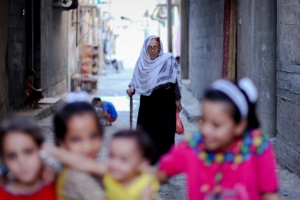
The humanitarian crisis in Gaza is mounting, reaching Phase 5 of famine according to the United Nations’ Integrated Food Security Phase Classification (U.N. IPC). Distrust in aid sites is rising as the Israeli military killed 1,373 Palestinians seeking basic necessities between May 27 and July 31, 2025, alone.
Calls for the blockade to end have led to droves of civilian-led flotillas to end the siege and renew the flow of aid into the region. Aside from this, action taken by the U.N. Food and Agriculture Organization (FAO) has facilitated the freedom of Gazans to restore their food supply.
Cash-Based Assistance Plan
The FAO has invested in farmers to combat famine in Gaza by monetarily supporting their agricultural practices. The U.N. has successfully supported 200 farmers in the Strip through its pilot initiative. This scalable model can recover some of the population’s food production abilities from the ground.
The FAO covers the costs of the supplies and resources available, many of which are extremely unaffordable due to hyperinflation. By funding farmers to buy costly fertilizers and seeds, agrifood systems can successfully reduce unaffordability by cultivating crops, returning supply to their economy and providing a basis for rebuilding the region.
In addition to the need to enact this model on a larger scale, Palestinians are unable to cultivate land without clearing a significant amount of rubble. As only 4.6% of the land in the Strip was deemed arable by the FAO in March 2025, compared to the 42% usable before 2024, the threat of desertification could severely escalate the issue.
A combination of funding for farmers and funding for removing and disposing of rubble to propagate the land is therefore essential to combating famine in Gaza.
Debris Management Framework
According to an article published by the American Journal of Public Health, bombardment in Gaza has caused environmental degradation and a public health crisis. The debris of fallen buildings has spread asbestos and other contaminants, affecting water, air and soil health. A geospatial assessment from the FAO and United Nations Satellite Center (UNOSAT) maintains that there is little space to “preserve livelihoods” because of the reduction of usable land.
The United Nations Development Programme (UNDP) has long guided debris management projects worldwide, providing technical documents to support rapid response during national emergencies. One such document highlights the “UNDP/Gaza rubble removal experience” in 2005, when the agency efficiently established a high-capacity rubble crushing site.
Removing highly contaminated and hazardous materials in accordance with the UNDP framework will help the local people meet environmental standards necessary to prevent toxic soil contamination. In addition to the FAO’s cash-based assistance plan for restoring food production, the UNDP framework can guide the revitalization of soil health to combat famine in Gaza.
Conclusion
The World Bank predicts that Gaza will not recover its gross domestic product (GDP) until 2038 under the current conditions. Simply giving buying power back to Palestinians is not a solution on its own. Ending the blockade now to allow essential supplies, like quality seeds, infrastructure and construction materials, is necessary to restart the agrifood sector and combat famine in Gaza.
– Aliyah Omar
Aliyah is based in Alberta, Canada and focuses on Global Health and Politics for The Borgen Project.
Photo: Pexels
