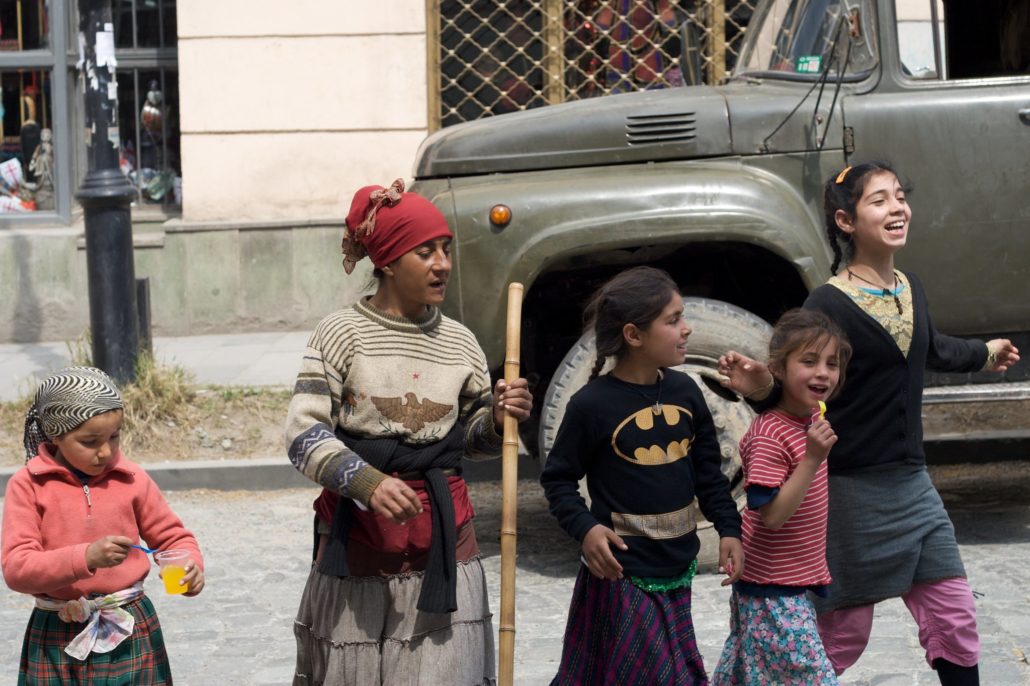
Sitting between Turkey and Russia, the nation of Georgia tells a unique story about successfully fighting poverty. Although the country’s poverty rate sits at around 20%, the current figure represents a steep decline from the 2010 rate of 37%. A more complete understanding of the decline of poverty in Georgia requires an understanding of the nation’s history.
Recent Georgian History
Throughout the 19th century, the Russian empire slowly annexed Georgia. In 1918, after the collapse of the Russian Empire, the Democratic Republic of Georgia declared its independence. In 1921, the Soviet Union forcibly incorporated Georgia. Under Soviet rule, the economy of Georgia modernized and diversified from being largely agrarian to featuring a prominent industrial sector.
In 1936, Georgia became a constituent republic and remained so until the collapse of the Soviet Union. After the collapse in 1991, Georgia
regained its independence, but instability, civil unrest and a falling GDP plagued the nation. After the Rose Revolution of 2003, the government of Georgia attempted to liberalize the nation’s economy and pursue cooperation with the West. Russia invaded the South Ossetia and Abkhazia regions in 2008 due to a territorial dispute, which still continues.
When viewing the recent history, it is clear that the decline of poverty in Georgia deeply intertwines with its reforms after emerging from the Soviet Union. With a government focused on stability and economic development, Georgia has been able to make strides to downsize poverty.
Success in Fighting Poverty
When the Georgian government made an attempt to liberalize the nation’s economy and pursue international cooperation after the collapse of the Soviet Union, the nation sought trade agreements with China and the European Union (EU). It also made reforms to eliminate corruption and simplify taxes. As a result, Georgia’s GDP per capita has expanded at a rate of 4.8% in 2019
In 2007, The World Bank ranked Georgia as the world’s number one economic reformer due to its successful policies focussing on promoting competition and diversifying the financial sector. In 2014, it found that poverty in Georgia had decreased for
the fourth consecutive year. Since 2014, Georgia has joined the EU’s Free Trade Area, and the EU has become
the country’s largest trading partner.
Georgia has also been working with the United Nations Development Programme (UNDP) to pursue democratic reforms, inclusive growth, conflict transformation, green solutions and the achievement of the Sustainable Development Goals (SDGs). In 2012, Georgia demonstrated positive growth, conducting a democratic election with a peaceful transition of power.
Fighting Poverty in the Future
Though the nation holds many statistical successes, poverty in Georgia is still a pressing matter. According to the Asian Development Bank (ADB), 19.5% of the population still lived below the national poverty line in 2019.
Unemployment remains a contributing factor to poverty in Georgia. The national rate sits at about 13.9%, though in some regions it is as high as 40%. Young people especially struggle economically in Georgia, and the country is currently working with the United Nations to improve vocational education and training. In 2017, the Georgian government put forth a rural development strategy, emphasizing its focus on the growth and diversification of the rural economy.
Despite the nation’s economic improvements, Georgia’s standard of living has decreased dramatically due to the loss of the cheap sources of energy previously received in the Soviet era. The country recognizes this problem and has made efforts to rebuild the energy sector in a sustainable way. In 2015, Georgia joined the EU4Energy Programme, which is dedicated to making effective, research-based policy decisions in the energy sector.
Healthcare also remains a contributing factor to poverty in Georgia, especially among children. The nation struggles with both a high infant mortality rate and a high rate of infections and parasitic diseases. In 2013, the country adopted a universal health care plan, which represents a significant step in making health care more accessible. The nation is currently working to expand the service to all areas of the population.
The previous victories in the decline of poverty in Georgia are laudable. Though Georgia still requires more work, the nation continues to make reform efforts and strives to ensure that the next chapter of economic history is one of continued success.
– Michael Messina
Photo: Flickr

Analyzing the US Space Force Budget
The U.S. Space Force (USSF) emerged as the newest branch of the Armed Forces in December 2019. It lies within the Department of the Air Force, which means the Secretary of the Air Force is responsible for its overall operations. While the USSF is a pioneering endeavor meant to expand U.S. capabilities to protect Americans, the $15.4 billion proposed U.S. Space Force budget for the fiscal year 2021 is a sum that would prove transformative in fighting global poverty. The following are examples of what $15.4 billion could do in this fight, as well as a comparison to U.S. funding allocated to foreign aid in general.
The US Space Force Budget and Foreign Aid
Contextualizing Funding
Foreign aid not only helps millions of suffering people all over the world but also addresses the root causes of many violent issues. As such, increasing funding for poverty eradication would serve U.S. security well. The U.S. Space Force budget is just one case that shows how effective a larger amount of foreign aid spending could be. In the long term, this would not only increase U.S. security but international security as well, lowering the risk of violent conflict involving the U.S. in the future while alleviating the suffering so many find themselves enduring.
Photo: Flickr
Poverty in Switzerland
The media often refers to Switzerland as one of the wealthiest countries. It is a country that others view as a model for a liberal-market economy. Its human development index (HDI) ranking is second in the world. Despite this, it still requires aid to support hundreds of thousands of residents struggling to make ends meet. In fact, the poverty rate grew from 7.5% in 2016 to 8.2% in 2017. Here is some information about poverty in Switzerland.
Poverty and Welfare in Switzerland
In 2020 (income 2019) about 8.5% of the Swiss population or 772,000 were poor. The Swiss poverty rate had decreased from 9.3% to 5.9% from 2007 to 2013, but since 2014, it has been trending upward. People most affected include households in which no adult is working, single-family households with children and people who have no education beyond compulsory education. Age also factors into poverty in Switzerland. Those 18 and younger along with those who are 64 and older are more likely to struggle with poverty .
Most poor people qualify for Swiss welfare. Known as the “basket of goods,” it is a monthly payment to provide for basic necessities. Basic needs include food and clothes, for which individuals will receive CHF1,000 ($961.70), as well as CHF1,000 for housing and CHF200 ($192.34) for health insurance as of 2020. Welfare recipients must find the cheapest housing and those 25 and under must live with their families. Welfare pays only for public transportation, not for a car. Persons who receive welfare may also have to meet with a budget advisor to help improve financial stability. As people earn more money, the government lowers their payments. About half of the people on welfare stay on it for less than a year, 20% need one to years to get off welfare and eight percent need up to six years.
NGOs Fighting Poverty in Switzerland
Beyond the Swiss government, there are a number of non-governmental organizations (NGOs) providing assistance in Switzerland. Caritas Switzerland is one of the oldest, and is working to “reduce poverty in half.” Caritas is a global organization, with the goal to reduce poverty globally as well as provide emergency relief and post-natural disaster reconstruction. Caritas emerged in Switzerland in 1901, working to provide aid for those who experience financial disadvantages such as single mothers, retirees and refugees. The NGO’s services in Switzerland include Caritas groceries for the poor, a Caritas “Culture Card” so poor people can attend cultural events and a debt advisory service.
A second major NGO supporting Switzerland’s poor is HEKS/EPER which, in 2019, ran 162 projects in 32 countries, including Switzerland. In Switzerland, HEKS/EPER is focusing on supporting asylum seekers, job integration and legal services. HEKS/EPER also created the project HEKS Wohnen, a program to assist those who may be socially disadvantaged, including those with addiction problems and mental illness, to find living quarters and successfully integrate into society.
Despite the uptick in Switzerland’s poverty rate, the support of NGOs such as HEKS/EPER, Caritas Switzerland and the government welfare reform programs provide aid and assistance to those living in the country. With these support systems in place, Switzerland should have the ability to reverse its higher poverty projections.
– Allison Lloyd
Photo: Flickr
4 Facts About Healthcare in Yemen
4 Facts About Healthcare in Yemen
Despite barriers to outreach, such as inadequate funding, there is an ongoing effort to stabilize and improve the state of healthcare in Yemen amid the violence of civil war. Efforts by the United Nations and numerous other humanitarian organizations are occurring to combat health issues related to circumstances of war, malnutrition and disease, while also providing Yemeni people with tools and training to treat and prevent further health complications.
– Emily Butler
Photo: Flickr
5 Facts About Poverty in Thailand
With the second-largest economy in Southeast Asia, Thailand is a relatively wealthy country. Its vibrant culture, delicious food and beautiful scenery attract millions of visitors a year, greatly contributing to its economy. In addition to the tourism industry, Thailand exports many commodities like rice, rubber and coconuts. The country also produces goods like textiles, cement and plastics.
Though Thailand’s poverty rate has decreased by 65% since 1988, impoverished living conditions are still a pressing issue in the country. Here are five facts about poverty in Thailand.
Despite these five facts about poverty in Thailand, the country has many success stories in terms of poverty alleviation. Everyone in the country has access to electricity, water sanitation is excellent and education rates are high. However, to ensure every single citizen of Thailand is free from poverty, the government’s efforts are crucial in economic development and producing innovative jobs for vulnerable populations.
– Borgen Team
Photo: Pixabay.
Updated: June 16, 2024
7 Facts About Tuberculosis in Zambia
7 Facts About Tuberculosis in Zambia
These facts show that the health crisis of tuberculosis in Zambia exposes a dire need for increased accessibility of healthcare and better methods of diagnosis and treatment. The recent efforts in management and care of tuberculosis show promise of effective tuberculosis management and an overall healthier population.
– Jennifer Long
Photo: Flickr
4 Facts about Poverty in Slovakia
The current population of Slovakia is 5.4 million and 80.7% is Slovik. Slovakia does not have a high percentage of migrants, with only 0.2 migrants per 1,000 persons. Also, less than one-eighth of the population lives in poverty. Although poverty is not as severe in Slovakia as in other countries, poverty affects certain demographics more heavily. Here are four facts about poverty in Slovakia.
4 Facts About Poverty in Slovakia
Concluding Thoughts
These four facts about poverty in Slovakia show that it has a low poverty rate in comparison to other countries. Access to clean water and other human necessities are available for some; however, poverty in Slovakia disproportionately affects minority groups. These groups do not have the same access to essential human needs and it affects their everyday lives. There is hope, however, because organizations, such as Habitat for Humanity and The Environmental Training Project, are working to provide necessary resources for developing communities.
– Brooke Young
Photo: Flickr
7 Facts about Homeless Children in Ethiopia
7 Facts about Homeless Children in Ethiopia
-Grace May
Photo: Flickr
Understanding Tuberculosis in Pakistan
Economic Background and Effects
The average monthly cost to treat Tuberculosis in Pakistan is between 1,500 and 1,800 Pakistani rupees, which equals around $9 to $11 per month. In Pakistan, this is a huge financial burden considering the average monthly income of less than $35, with many TB patients earning even less than that. One study reported 96.7% of Pakastani TB patients were already struggling financially prior to their diagnosis.
After diagnosis, changes in employment status are common for many patients. Roughly 75% of TB patients are unemployed after diagnosis. Those who do not lose their jobs often face cuts in work hours. These economic constraints inadvertently encourage non-compliance and refusal of treatment, which ultimately contributes to the spread of TB in Pakistan.
Stigmatization of Tuberculosis
Beyond employment consequences, tuberculosis in Pakistan is heavily stigmatized by the public. More than three-quarters of Pakistanis believe TB patients should be kept in hospitals or sanitariums during treatment. Some even admit that they would not marry an individual who has had TB. Out of a fear of being ostracized, most TB patients in Pakistan hide their disease and refuse treatment—behavior that contributes to the high rates of MDR-TB in the country.
The stigmatization of TB in Pakistan is mainly a result of a lack of public knowledge and misconceptions about the disease. Recent studies point toward insufficient TB awareness among the public and even patients in Pakistan. One study found that 88.7% of patients questioned did not know the risk factors of TB or the protective measures people with the disease should take. Moreover, less than half of the respondents could accurately identify TB symptoms.
The National TB Control Program (NTP)
Despite the high rates of tuberculosis in Pakistan, the country has made strides in decreasing its numbers. Organizations such as the National TB Control Program (NTP) are actively working to achieve a TB-free Pakistan. NTP re-launched in 2001 after TB became a national emergency in Pakistan. Since then, the organization has worked alongside the National Institute of Health to fight TB in the country. The main objective of NTP is to cut the number of TB cases present in 2012 in half by the year 2025.
The organization has brought more attention to the issue and improved its detection of cases from 11,050 cases in 2000 to 248,115 in 2008. The NTP hopes to increase that number to 420,000 by the end of 2020. Furthermore, the organization was able to bring the treatment success rate up to 91% by 2007 and has been working to maintain that level since.
COVID-19 Impact
The recent outbreak of COVID-19 across the globe has posed a major threat to the state of tuberculosis in Pakistan. With social distancing regulations, it has become difficult for individuals to be diagnosed and treated for the disease. Despite these new challenges, Pakistan and the NTP have remained committed to controlling the TB situation. The National Manager of NTP, for example, announced that follow-up appointments following treatment are to be conducted over the phone. Furthermore, the NTP outlined plans to use methods like the Pakistan Postal Service and Uber to deliver ongoing treatment to patients across the country.
The NTP has also started an online TB case notification pilot program where patients can register and receive treatment notifications and additional assistance from healthcare workers via text. This program will provide the NTP with greater information on TB cases in Pakistan as well as encourage patient compliance with treatment plans.
– Mary Kate Langan
Photo: Flickr
10 Facts about Homelessness in Chile
Homelessness in Chile persists as a problem. The wealth distribution continues to place a great number of people on the streets. Below are 10 facts about homelessness in Chile.
10 Facts about Homelessness in Chile
As people begin to take notice and set up organizations, the issue of homelessness in Chile may be brought to the forefront of government discussion. Meanwhile, 12,000 Chileans still struggle to find a place to sleep at night.
– Abigail Lawrence
Photo: Flickr
The Decline of Poverty in Georgia
Sitting between Turkey and Russia, the nation of Georgia tells a unique story about successfully fighting poverty. Although the country’s poverty rate sits at around 20%, the current figure represents a steep decline from the 2010 rate of 37%. A more complete understanding of the decline of poverty in Georgia requires an understanding of the nation’s history.
Recent Georgian History
Throughout the 19th century, the Russian empire slowly annexed Georgia. In 1918, after the collapse of the Russian Empire, the Democratic Republic of Georgia declared its independence. In 1921, the Soviet Union forcibly incorporated Georgia. Under Soviet rule, the economy of Georgia modernized and diversified from being largely agrarian to featuring a prominent industrial sector.
When viewing the recent history, it is clear that the decline of poverty in Georgia deeply intertwines with its reforms after emerging from the Soviet Union. With a government focused on stability and economic development, Georgia has been able to make strides to downsize poverty.
Success in Fighting Poverty
When the Georgian government made an attempt to liberalize the nation’s economy and pursue international cooperation after the collapse of the Soviet Union, the nation sought trade agreements with China and the European Union (EU). It also made reforms to eliminate corruption and simplify taxes. As a result, Georgia’s GDP per capita has expanded at a rate of 4.8% in 2019
Georgia has also been working with the United Nations Development Programme (UNDP) to pursue democratic reforms, inclusive growth, conflict transformation, green solutions and the achievement of the Sustainable Development Goals (SDGs). In 2012, Georgia demonstrated positive growth, conducting a democratic election with a peaceful transition of power.
Fighting Poverty in the Future
Though the nation holds many statistical successes, poverty in Georgia is still a pressing matter. According to the Asian Development Bank (ADB), 19.5% of the population still lived below the national poverty line in 2019.
Despite the nation’s economic improvements, Georgia’s standard of living has decreased dramatically due to the loss of the cheap sources of energy previously received in the Soviet era. The country recognizes this problem and has made efforts to rebuild the energy sector in a sustainable way. In 2015, Georgia joined the EU4Energy Programme, which is dedicated to making effective, research-based policy decisions in the energy sector.
Healthcare also remains a contributing factor to poverty in Georgia, especially among children. The nation struggles with both a high infant mortality rate and a high rate of infections and parasitic diseases. In 2013, the country adopted a universal health care plan, which represents a significant step in making health care more accessible. The nation is currently working to expand the service to all areas of the population.
The previous victories in the decline of poverty in Georgia are laudable. Though Georgia still requires more work, the nation continues to make reform efforts and strives to ensure that the next chapter of economic history is one of continued success.
– Michael Messina
Photo: Flickr