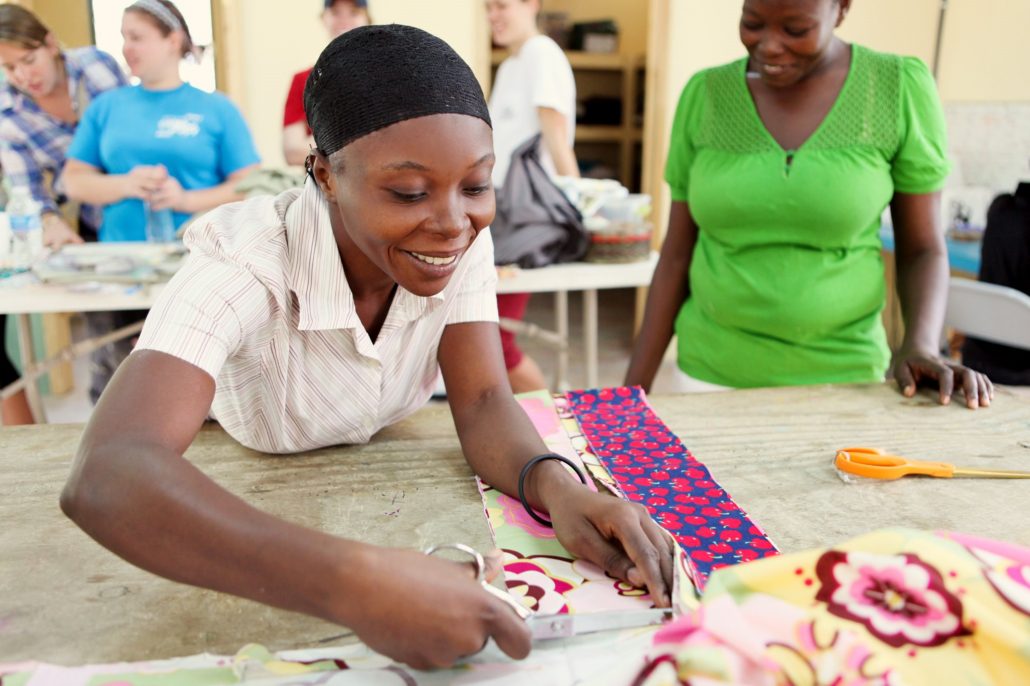
Fighting poverty can seem an impossible task, but the truth is that organizations exist all over the world working to alleviate suffering by providing employment. It is also easy to partner with these organizations by ethically shopping. Below are five places to ethically shop while alleviating poverty in their countries.
The LifeStitches Project
The LifeStitches Project sells beautiful tabletop décor and other fabric products. Arua, Uganda is home to a vibrant and extensive fabric market. The LifeStitches workshop utilizes the fabrics to create skillfully sewn products. Brightly patterned tablecloths, potholders, aprons and bags show off the culture and skill of the women who create them.
LifeStitches began as a support group for women with HIV/AIDS. In Uganda, 1.2 million citizens have HIV/AIDS. According to the website’s “LifeStitches Uganda Documentary,” 95% of “children living with HIV acquire it from their… mother.”
The documentary goes on to explain that, tragically, deep stigma often causes the women to stay silent about their condition. In 2000, a hospital worker, O’daru Grace Yiti, faced the dreaded diagnosis. Three years later, she brought other women living with HIV/AIDS together to support one another. They met “under the mango tree on the hospital grounds” and created a community for each other.
Two years later, Katherine Gnauck, M.D came to Arua and met the support group. She noticed a need for economic stability since the women faced such a strong stigma. Together, Gnauck and the support group began a project for the women to support themselves and their children.
Now, the women struggling with AIDS/HIV in Arua, Uganda have a place to make a living. Their products are available online via an Etsy shop.
Aarong
Aarong, an incredibly popular retail chain in Bangladesh, is another business that provides a way to ethically shop. Aarong sells clothing, jewelry and leather merchandise along with many other products.
The heart behind Aarong, according to its website, is to provide a “productive outlet for the marginalized artisans while celebrating quality work.” In order to accomplish this goal Aarong gives people training to become artisans. Shondhya Rani Sarkar joined Aarong to provide for her son. She worked her way up and is now training new employees. Aarong has helped over 65,000 artisans like Shondhya.
Aarong originally started as just a few artisans that BRAC, a development organization, employed to create unique goods. The beginning, in 1976, was quite slow, but over the course of time, Aarong became a well-known brand. Still employing local artisans, Aarong’s products are both ethical and well-made.
Its website provides an opportunity to ethically shop. It also has an app available for more convenient shopping.
Azizi Life
For home décor and kitchen wares in addition to bags and jewelry, the Rwandan company, Azizi Life, is a wonderful place to ethically shop. Its woven bowls and baskets have both simple and intricate designs, giving options for every style. In addition, the wooden kitchenware gives an artistic flair to everyday objects.
Azizi Life strives to build a family of businesses that would then feed into local efforts to alleviate poverty within the local community. With its roots in the organization Food for the Hungry, Azizi Life grew into a self-sustaining business that provides employment to artisans across Rwanda. In fact, Rwandan artisans create each of the products at Azizi Life.
Jeannine Umutoniwase became CEO in 2016 when the founder, a member of the nonprofit that founded the business, wanted to hand it over to local leadership.
The organization hopes to assist with “the national vision for growth and development.” According to its website, three of Azizi Life’s hallmarks are commitments to fair trade, sustainability and the environment. In addition, the artisans use natural products, and the company even ships the products in recyclable packaging.
To ethically shop at Azizi Life, visit its website.
Vi Bella
Vi Bella offers an easy way to shop ethically for jewelry, sewn and home products. Lovely and simple, the products span from stylish handbags to beaded earrings. Vi Bella also offers a wide selection of home décor.
Vi Bella started in 2011 when the founder, Julie Hulstein, saw terrible devastation in Haiti after a major earthquake. Because of the sudden poverty, she saw a need to sell goods from Haitian craftsmen. Additionally, she wanted to sell them at a fair wage and to a larger client base. Vi Bella offers a way for craftsmen to sell their products overseas.
Not long after, the organization expanded to Mexico and the U.S., employing over 60 craftspeople.
Vi Bella’s products are available on its website.
Ten Thousand Villages
Ten Thousand Villages is a store that sells beautiful handmade gifts from all over the world. With the aim to end generational poverty and bring about social change, Ten Thousand Villages sells everything from soap from Israel to hammocks that artisans made in Nicaragua.
The organization started in the 1940s when a few women from La Plata, Puerto Rico met an American by the name of Edna Ruth Byler. The women needed a go-between to export their embroidery. It started simply with Byler bringing products home to sell. Those simple acts resulted in Ten Thousand Villages, which, over 70 years later, is still thriving by employing local artisans all over the world who otherwise would have little means to export their goods.
Ten Thousand Villages provides a simple and often inexpensive place to shop on its website.
There are dozens of organizations that offer ways to ethically shop. In addition to the five above, there are a great many that have the heart to pull themselves and their neighbors out of poverty all while celebrating beautiful art and style.
– Abigail Lawrence
Photo: Flickr

7 Facts About Hunger in Ethiopia
7 Facts Concerning Hunger in Ethiopia
Though Ethiopia has struggled to meet the needs of its people with regards to food supply in the past, current aid and education from foreign nations are assisting in the ultimate goal to eradicate hunger and malnutrition. The issue of hunger in Ethiopia is an immense one to tackle, but with work to develop and improve agricultural techniques for individual farmers, the country can collectively improve the situation.
– Pratik Koppikar
Photo: World Vision
Homelessness in Malaysia: NGO and Government Collaboration
Causes of Homelessness in Malaysia
A fact lesser known amongst locals is that 90% of the homeless community are Malaysian citizens–not foreigners. The top reasons for homelessness in Malaysia include unemployment, low income and domestic violence. Contrary to common perception, the majority of the homeless in Malaysia are members of the workforce who do not have access to a sustainable source of income to afford a place to live. Moreover, the homeless community is often targeted by employers seeking to exploit them by paying them below minimum wage. In other words, the homeless are victims of their circumstances and do not live on the streets by choice.
The government relies on The Destitute Persons Act 1977 to resolve homelessness in Malaysia. In accordance with this act, anyone who is deemed homeless by authorities can be taken into custody and then transferred to the relevant welfare institutions. However, only a minority of the detained manages to be helped by the welfare institutions. The majority are released within a few hours and expected to return to their original informal settlement on the streets without transportation or money. The homeless community occupies a disadvantaged position in society that allows them neither the voice nor the financial resources to be able to significantly improve their living circumstances on their own. So what is being done to help the homelessness in Malaysia?
Solutions
There are a variety of ways in which welfare-focused organizations fight to end homelessness in Malaysia; for example, providing free legal counsel, organizing soup kitchens and spearheading residential rehabilitation programs. Community Excel Services (CES) is a Christian nonprofit charitable organization in Malaysia that offers counseling, legal services and community development programs for people in need.
The mission of CES is to restore a sense of love, justice and hope within the community, thereby transforming lives. CES operates on three levels: providing relief and services, development programs and advocacy. The organization’s Street Ministry involves reaching out to the homeless community and solidifying friendships with them through meal-sharing during weekly food banks and equipping them with workforce skills to enhance their employability. During the COVID-19 pandemic, CES provided food aid to more than 12,000 needy individuals through the Social Concerns Project in May. Apart from providing the homeless community with basic necessities, the admirable work of CES is seen in its persistent efforts to try to understand and address the root cause of homelessness in Malaysia in order to create a more equitable society.
Government Aid During the COVID-19 Pandemic
In light of the COVID-19 pandemic, the local government took the initiative to house the homeless community (around 500 people) within community centers and provided them with food and water thrice a day. The prompt response of the local government in aiding the homeless community during the COVID-19 pandemic provides a hopeful insight into the increasing efforts and continued investment in improving the social welfare of the homeless community in Malaysia.
A concerted effort is required to bring an end to homelessness in Malaysia. While food is arguably the most important resource needed by the homeless community, it is by no means the only thing that is required. The various outreach activities organized by both the Malaysian government and charitable organizations clearly demonstrate this. In the words of the nation’s first Prime Minister, Tunku Abdul Rahman Putra Al-Haj, “We must ensure that the bonds of unity and goodwill, of tolerance and harmony, grow stronger and stronger.”
– Mariyah Lia
Photo: Flickr
TikTok in Africa Empowers Youth
TikTok, the popular video-sharing social media platform, has taken a unique approach to enter the African market by empowering young Africans to take a stance as influencers. Many users on the site share short entertaining videos of themselves or friends singing and dancing along to popular songs. They can connect to others based on shared viewing interests. Some users of TikTok in Africa have decided to take things a step further and use the platform to share their support for certain ideas or causes.
TikTok for Good
One way the company encourages activism on its platform is through the TikTok for Good program, where users receive encouragement to share hashtags across the site that promote causes they are passionate about. “TikTok wants to inspire and encourage a new generation to have a positive impact on the planet and those around them,” the company wrote in a statement on its website. By uploading videos with a hashtag that represents a specific cause or campaign, users can become influencers and advocates and continue to share videos within the trend.
#DanceforChange Inspires Advocacy
A popular advocacy trend on TikTok in Africa has been the #DanceforChange challenge in partnership with the United Nations’ International Fund for Agricultural Development (IFAD). IFAD is a Rome-based U.N. agency that works to encourage individuals, companies and countries around the world to invest in more sustainable agriculture in order to improve food security across the globe. According to its website, IFAD has given $20.9 billion in loans and grants towards 1,069 sustainable agriculture projects that it has supported in partnership with 125 governments. In total, it has reached approximately 483 million people around the world with its programs.
The #DanceforChange challenge encourages users to post dancing content to the site with the hashtag. The videos act as a virtual petition that IFAD uses in support of greater investment in sustainable agriculture across rural African communities. “IFAD invests in rural people, empowering them to reduce poverty, increase food security, improve nutrition and strengthen resilience,” the organization said in a statement on its website.
Sherrie Silver, IFAD’s advocate for rural youth and an MTV award-winning choreographer, partnered with the popular African recording artist Mr Eazi to highlight the TikTok campaign in the hopes of inspiring more African youth to take action using the site. “We are dancing to capture the world’s attention and to share a message with young people everywhere: our generation can end global hunger, but only if our leaders invest more in agriculture and the next generation of young farmers,” Silver said in an interview with IFAD.
TikTok in Africa
The Chinese-based company quickly gained popularity in the United States and across Europe, though TikTok is now focusing on the African market. Along with the #DanceforChange challenge, TikTok has begun moving some company operations into Africa. For example, in 2018 TikTok partnered with Nairobi Garage, a co-working space in Nairobi that offers meeting rooms, club space and private offices, to offer educational sessions on creating content and safe practices while using the platform. The company also began hiring local staff for TikTok in Africa throughout Kenya, Nigeria and South Africa in order to both provide jobs within each country’s business sector and connect to the local African market from within.
By moving TikTok into Africa, the company has been able to offer formal employment opportunities at its new office spaces, which in turn helps to reduce poverty levels in those countries as incomes and quality of life increases. Additionally, TikTok is able to create a more inclusive audience as African creators and influencers join the platform to share their culture.
TikTok in Africa continues to make a positive impact both within the country and across the globe by connecting people from impoverished backgrounds to the same creative spaces the rest of the world is able to access. Not only does the app inspire users around the world to advocate for development in Africa, but it also empowers youth within Africa to take their own action to fight hunger because they have a chance for others to hear and see them.
– Myranda Campanella
Photo: Flickr
5 Places to Ethically Shop Online
Fighting poverty can seem an impossible task, but the truth is that organizations exist all over the world working to alleviate suffering by providing employment. It is also easy to partner with these organizations by ethically shopping. Below are five places to ethically shop while alleviating poverty in their countries.
The LifeStitches Project
The LifeStitches Project sells beautiful tabletop décor and other fabric products. Arua, Uganda is home to a vibrant and extensive fabric market. The LifeStitches workshop utilizes the fabrics to create skillfully sewn products. Brightly patterned tablecloths, potholders, aprons and bags show off the culture and skill of the women who create them.
LifeStitches began as a support group for women with HIV/AIDS. In Uganda, 1.2 million citizens have HIV/AIDS. According to the website’s “LifeStitches Uganda Documentary,” 95% of “children living with HIV acquire it from their… mother.”
The documentary goes on to explain that, tragically, deep stigma often causes the women to stay silent about their condition. In 2000, a hospital worker, O’daru Grace Yiti, faced the dreaded diagnosis. Three years later, she brought other women living with HIV/AIDS together to support one another. They met “under the mango tree on the hospital grounds” and created a community for each other.
Two years later, Katherine Gnauck, M.D came to Arua and met the support group. She noticed a need for economic stability since the women faced such a strong stigma. Together, Gnauck and the support group began a project for the women to support themselves and their children.
Now, the women struggling with AIDS/HIV in Arua, Uganda have a place to make a living. Their products are available online via an Etsy shop.
Aarong
Aarong, an incredibly popular retail chain in Bangladesh, is another business that provides a way to ethically shop. Aarong sells clothing, jewelry and leather merchandise along with many other products.
The heart behind Aarong, according to its website, is to provide a “productive outlet for the marginalized artisans while celebrating quality work.” In order to accomplish this goal Aarong gives people training to become artisans. Shondhya Rani Sarkar joined Aarong to provide for her son. She worked her way up and is now training new employees. Aarong has helped over 65,000 artisans like Shondhya.
Aarong originally started as just a few artisans that BRAC, a development organization, employed to create unique goods. The beginning, in 1976, was quite slow, but over the course of time, Aarong became a well-known brand. Still employing local artisans, Aarong’s products are both ethical and well-made.
Its website provides an opportunity to ethically shop. It also has an app available for more convenient shopping.
Azizi Life
For home décor and kitchen wares in addition to bags and jewelry, the Rwandan company, Azizi Life, is a wonderful place to ethically shop. Its woven bowls and baskets have both simple and intricate designs, giving options for every style. In addition, the wooden kitchenware gives an artistic flair to everyday objects.
Azizi Life strives to build a family of businesses that would then feed into local efforts to alleviate poverty within the local community. With its roots in the organization Food for the Hungry, Azizi Life grew into a self-sustaining business that provides employment to artisans across Rwanda. In fact, Rwandan artisans create each of the products at Azizi Life.
Jeannine Umutoniwase became CEO in 2016 when the founder, a member of the nonprofit that founded the business, wanted to hand it over to local leadership.
The organization hopes to assist with “the national vision for growth and development.” According to its website, three of Azizi Life’s hallmarks are commitments to fair trade, sustainability and the environment. In addition, the artisans use natural products, and the company even ships the products in recyclable packaging.
To ethically shop at Azizi Life, visit its website.
Vi Bella
Vi Bella offers an easy way to shop ethically for jewelry, sewn and home products. Lovely and simple, the products span from stylish handbags to beaded earrings. Vi Bella also offers a wide selection of home décor.
Vi Bella started in 2011 when the founder, Julie Hulstein, saw terrible devastation in Haiti after a major earthquake. Because of the sudden poverty, she saw a need to sell goods from Haitian craftsmen. Additionally, she wanted to sell them at a fair wage and to a larger client base. Vi Bella offers a way for craftsmen to sell their products overseas.
Not long after, the organization expanded to Mexico and the U.S., employing over 60 craftspeople.
Vi Bella’s products are available on its website.
Ten Thousand Villages
Ten Thousand Villages is a store that sells beautiful handmade gifts from all over the world. With the aim to end generational poverty and bring about social change, Ten Thousand Villages sells everything from soap from Israel to hammocks that artisans made in Nicaragua.
The organization started in the 1940s when a few women from La Plata, Puerto Rico met an American by the name of Edna Ruth Byler. The women needed a go-between to export their embroidery. It started simply with Byler bringing products home to sell. Those simple acts resulted in Ten Thousand Villages, which, over 70 years later, is still thriving by employing local artisans all over the world who otherwise would have little means to export their goods.
Ten Thousand Villages provides a simple and often inexpensive place to shop on its website.
There are dozens of organizations that offer ways to ethically shop. In addition to the five above, there are a great many that have the heart to pull themselves and their neighbors out of poverty all while celebrating beautiful art and style.
– Abigail Lawrence
Photo: Flickr
7 Ways Ghana is Minimizing COVID-19 Cases
Amid the widespread pandemic, nations worldwide have been operating under similar prevention measures to combat COVID-19. Yet, some are more effective than others, and the results are clear. From the start of the COVID-19 pandemic, Ghana showed how it is collectivistic and holds personal responsibility for its citizens. On March 16, Ghana began to lockdown non-essential businesses and schools to prevent an outbreak as COVID-19 reached the nation. As of June 4, 2020, Ghana confirmed 8,297 cases and 38 deaths. In the process of easing restrictions, Ghana allowed communities to reopen schools and universities on June 5 with social distancing guidelines. Here are seven ways Ghana is minimizing COVID-19 cases and is rearing up reopen.
7 Ways Ghana is Minimizing COVID-19 Cases
While countries worldwide are following similar prevention measures to stop the spread of COVID-19, Ghana, among other nations, was able to reopen earlier than expected. Ghana is minimizing COVID-19 cases and can reopen because of citizens’ and health workers’ commitment to implemented prevention measures. The Ghanaian government has also worked diligently to raise awareness and create proper prevention measures for rural and metropolitan areas alike. Ghanian citizens are provided with clean water, medical treatment and free counseling services to ensure social distancing measures are followed, and citizens remain healthy amid the unexpended circumstances. Due to its early lockdown and comprehensive testing, Ghana continues to lessen its COVID-19 cases and is heading toward a promising future.
–Kim Elsey
Photo: Flickr
Enhancing Education in Haiti Through Language
Due to the history of French colonization in Haiti, the French language and its influence have permeated many aspects of life in the country. The French language is very present in education in Haiti as a language of prestige and affluence. As a result, French was the language of instruction in schools, despite only 5% of the population speaking it. The most widely spoken language in Haiti, however, is Haitian Creole.
Called Kreyòl by its speakers, the language formed in the late 17th and early 18th century. Enslaved people from different linguistic backgrounds that came from Africa to Haiti used the language to communicate with each other. The language is a mix of French and various languages from the Niger-Congo language family, and it uses features from each of these tongues. Since then, the majority of Haitians have spoken the language, currently 95% of the population. However, despite the Haitian population speaking Haitian Creole as opposed to French, schools in Haiti have historically taught in French. More recently, though, efforts at enhancing education in Haiti have led to the use of Haitian Creole in schools.
French in Classrooms
The use of French in education is a remnant from Haiti’s time as a French colony. Since the people in power, the French colonizers, spoke the French language, it became the language of prestige and civilization. Many people believed that Haitian Creole was inferior because it was the language of slaves.
Seeing as French colonizers historically viewed the language as broken French, the attitude around Haitian Creole became that it is the language of those with the least education. This stigma is not only false but damaging.
Haitian Creole is a legitimate language with its own phonological and grammatical characteristics and has an orthography system that emerged in 1979. However, due to the stigma, schools have used French as the language of instruction.
Educating in Haitian Creole
Haitian students often feel lost and discouraged when they have to learn school subjects in a language they barely know. This is why Haiti’s government announced a policy in 2015 to educate its students in Haitian Creole due to an agreement between Haiti’s Ministry of National Education and the Haitian Creole Academy. The Haitian government made this effort to help its children establish strong foundations in their native language through education, while also respecting their cultural identity. Once the children have these foundations, they may be able to more easily learn second languages, such as French.
Schools Teaching in Haitian Creole
While many schools still teach in French, the number of schools that are enhancing education in Haiti by teaching in Haitian Creole is on the rise. Liv Ouvè school in Port-au-Prince, Haiti is one school that has implemented this change for the better. In the past, children at this school have struggled with learning in French, which caused their educational performance to decline. Now at Liv Ouvè, teachers instruct in Haitian Creole, but still teach the basics of French in the context of their native language. This allows students to learn and practice both Haitian Creole and French without risking their educational success.
Another school in Haiti that conducts lessons in Haitian Creole is the Matenwa Community School. This school uses Haitian Creole for all instruction up until the third grade where the curriculum introduces French as a second language once the students have a set foundation. Unfortunately, not all books are in both French and Haitian Creole, but the school raises money to buy books specifically in Haitian Creole. A Haitian linguist, Michel DeGraff, found that the Matenwa student’s reading skills are nearly three times greater than the average score of 84 mainland schools.
Another school that has implemented this change in Haiti is the Louverture Cleary School in Croix-des-Bouquets. This Catholic boarding school in Haiti caters to students from poor neighborhoods by offering a tuition-free education. This school’s approach seeks to counteract illiteracy among Haitian youth by instructing students in Haitian Creole. By incorporating Haitian Creole into difficult subjects such as science and math, the school counteracts the idea that the language is not sophisticated enough for such subjects. This school has achieved a 98% rate of students passing national high school exams as opposed to the countrywide average of 30%.
Enhancing education in Haiti through the use of Haitian Creole both validates the linguistic identity of Haitians while ensuring that language is not a barrier in youth education. By using this language in schools, students have a better chance of succeeding academically, instead of struggling due to this linguistic barrier. Haitian Creole shows Haitian youth that their language is intelligent and important, and it gives them the opportunity to pursue the education they desire.
– Natascha Holenstein
Photo: Flickr
7 Facts About Sanitation in Syria
In Syria, unsafe water, sanitation and hygiene facilities kill more than 85,000 children each year. In contrast, the war kills approximately 30,000 annually. Without clean water, young children, specifically 5-year-olds and younger, are left vulnerable to malnutrition and preventable diseases such as diarrhea, typhoid, cholera and polio. Syrian families forced to flee due to the war are at a greater risk of contracting deadly illnesses. Here are 7 facts about sanitation in Syria.
7 Facts About Sanitation in Syria
The Good News
Although Syrians, displaced or not, are still facing a sanitation and hygiene crisis, many organizations around the world have been doing their part to help.
UNICEF, the leader of the Water and Sanitation sector, has provided some relief to the people of Syria. Since 2011, UNICEF has provided 22,000 people with drinking and domestic water, 225,000 people have received soap and other hygiene products and 17,000 people have gained access to toilets and sanitation facilities. Nine years later, UNICEF concluded its first phase of WASH by completely restoring major water and sewage pipelines. In turn, 700,000 people have more and cleaner water instead of contaminated sources.
Another organization that has provided major support is World Vision. Its efforts have included installing 10 water tanks in a refugee camp in Azraq, 5,200 WASH structures above and below ground such as toilets and sewage pits and constructing 35 tap stands that are connected to water tanks underground.
While Syria continues to grapple with war and violence, it must not forget to also address sanitation. With continued help from organizations like UNICEF and World Vision, hopefully sanitation in Syria will improve.
– Stacey Krzych
Photo: Flickr
5 Things Being Done to Prevent Cholera Outbreaks in Africa
5 Things Being Done to Prevent Cholera Outbreaks in Africa
While as of 2018, cholera hotspots around the world have seen a decline of 60% since 2013, thousands of individuals are still susceptible to cholera in Africa. The WHO has estimated that Cameroon, Kenya, Somalia, Sudan and the Democratic Republic of the Congo have had more thna 45,000 confirmed cases and close to 700 deaths just in the time span of 2017 to 2020. The call to educate others on and how to prevent cholera outbreaks is imperative to the health of those who face cholera as an everyday battle.
– Olivia Eaker
Photo: Flickr
The State of Hunger in Indonesia
With the population estimated at over 250 million people, Indonesia is the fourth most populous country in the world. It has been enjoying strong economic growth in the past decades and it is the largest economy in the Association of Southeast Asian Nations (ASEAN). Despite the impressive economic growth, however, it is still a lower middle-income country. Hunger in Indonesia continues to be a significant issue.
Poverty and Hunger in Indonesia
Poverty is still concentrated in rural areas, with 14.3% of the rural population living in poverty in 2014, accounting for more than 60% of the total poor. Additionally, challenges of high food prices and unequal access to food remain unresolved, despite increasing trends in food production and availability. As a consequence of poverty and food scarcity, 19.4 million Indonesians are unable to meet their dietary needs.
A 2019 report by the Asian Development Bank (ADB) and the International Food Research Institute (IFPRI) found that about 22 million people suffered from chronic hunger in Indonesia between 2016 and 2018. Despite the strong growth that Indonesia has made in the agricultural sector, many families across the country still engage in traditional agricultural activities that are low-paid. This leads to hunger and stunting in children.
The Double Burden of Malnutrition
The impressive economic growth has brought about substantial improvements in many aspects of human development in Indonesia. The mortality rate of children under five has dropped from 85 out of 1000 births in 1990 to 31 in 2012. The prevalence of underweight children is also low at 5.4%.
However, the stunting rate in Indonesian children remains widespread. Approximately 37.4% of children under five in 2013 suffered from stunted growth. Stunting in children, a sign of chronic malnutrition, comes with lifelong consequences. It interferes with other development processes of the body, including brain development, which has damaging effects on intelligence, performance in school and productivity at work later in life.
Malnutrition can have detrimental effects very early on in life. When children receive inadequate nutrition in the womb, they become more prone to obesity when their body consumes more food. This in turn leaves them vulnerable to other non-communicable diseases such as diabetes and heart disease. This is the double burden of malnutrition that Indonesia faces. It is estimated that 8.9% of adult women and 4.8% of men are obese, while 8% of the women and 7.4% of men in Indonesia have diabetes. Additionally, more than 1 in 4 women of reproductive age suffer from anemia.
The negative effects of malnutrition are not only felt by the individuals suffering from them but also by society as a whole. It is estimated that losses due to stunting and malnutrition account for 2-3% of Indonesia’s gross domestic product (GDP).
Efforts to Decrease Hunger
In an effort to secure food for low-income households, the government of Indonesia set up a program called Raskin to deliver subsidized rice monthly to the most vulnerable households. Under this program, the eligible households could purchase 15kg of rice each month for a fifth of the market price. Each year, the government distributes 3.4 million tons of rice to a target population of 17.5 million people. With the annual budget of $1.5 billion, Raskin is Indonesia’s largest social support program.
The government also coordinates with nonprofit organizations globally to help combat hunger in Indonesia. Due to its size and geography, Indonesia is particularly vulnerable to natural disasters, which cause food security in many communities. The World Food Program (WFP) is working closely with the Indonesian government to improve nutrition and the quality of food. It also helps mitigate the effects of natural disasters on food security by providing policy advice and technical assistance.
Moving forward, it is essential that the government and other humanitarian organizations continue to make hunger in Indonesia a priority. With continued efforts, hopefully the nation will be successful in achieving Sustainable Development Goal 2: zero hunger in Indonesia.
– Minh-Ha La
Photo: Flickr
Food Systems and COVID-19
The Borgen Project has published this article and podcast episode, “Food Tank, Food Systems and COVID-19: A Conversation with Dani Nierenberg,” with permission from The World Food Program (WFP) USA. “Hacking Hunger” is the organization’s podcast that features stories of people around the world who are struggling with hunger and thought-provoking conversations with humanitarians who are working to solve it.
To say Danielle Nierenberg is passionate about food is an understatement. A world-renowned researcher, speaker and advocate, she’s spent her career fighting for food-systems change and is an expert on all things food and ag.
In 2013, Danielle co-founded Food Tank, a global community pushing for food systems change. Food Tank aims to educate and inspire and highlight solutions that will create change.
We’ve been curious to learn more about Danielle and her work for a while. And during this unprecedented time, we wanted to get her expert insight into how coronavirus will affect food systems as well. So, we dialed Danielle up to talk about her career, Food Tank and COVID-19.
Click below to listen to Danielle Nierenberg’s conversation about food systems and COVID-19.
Photo: Flickr