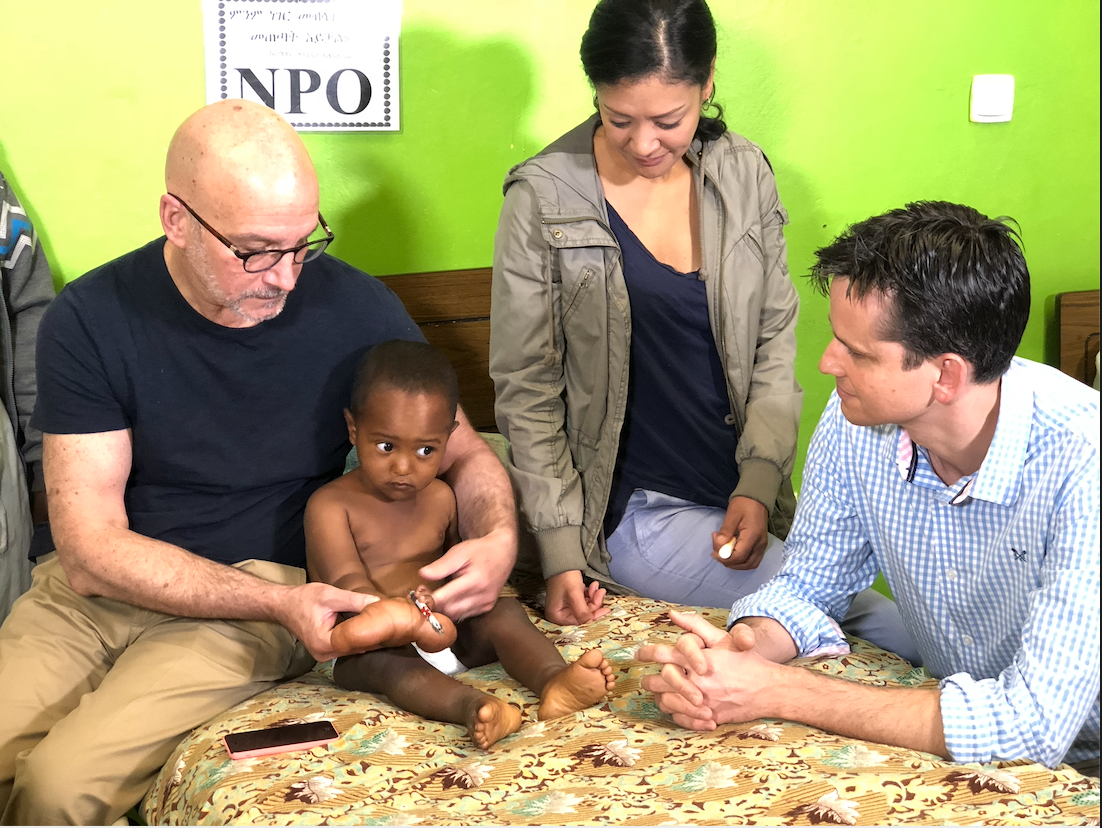
Touching Hands is a nonprofit that provides free hand surgery to those in need around the world. The organization serves international and domestic communities, such as Ethiopia, Ghana, Haiti, Guatemala, Honduras, the United States and Nepal. These interviews detail the intricacies of the organization Touching Hands and its international impact.
Dr. Scott Kozin, M.D., Founder of Touching Hands and Chief of Staff for Shriners Hospitals for Children in Philadelphia, PA.
Q: What was the process of becoming the founder of Touching Hands?
A: “In 2014, I was President of the American Society for Surgery of the Hand, and I wanted to make outreach a pillar of the organization. At that point, there were only four pillars: education, research, organizational excellence, and patient care. During my presidential year, I had a singular goal to have one international outreach mission, which was based in Haiti, the poorest country in the hemisphere. My presidential speech passionately pleaded with doctors and surgeons, stating, ‘We have been so lucky—just look at everything we as an organization have accomplished. Now is the right time to give back.’ The membership responded with their hearts, souls, expertise, and money. The mission to Haiti was a success and a turning point for Touching Hands, which has blossomed over the last six years. We currently have an outreach director who sits on the 13 member Hand Society council and provides a ‘seat and a voice at the table.’ We accomplished our goal and established outreach as a pillar of the organization.”
Q: Can you describe the outreach missions and how you organize the teams for the missions?
A: “Teams vary in size per each mission. There could be a handful of people to 40 people on any given mission. The team members include hand surgeons, nurses, and anesthesiologists. Many of the doctors and nurses who attend the missions cannot afford a week away from their practice, so we subsidize members with a $1,500 stipend that usually covers the cost of their travel and accommodations. We also try to include a community element to each trip, such as visiting an orphanage, building a school or constructing stoves.
“What really resonates with me about Touching Hands and participating on missions is the Carpe Diem principle. When you are in another country with a team of people whom you love and whom you love working with, there is a common goal. There is no competition; we are all just working towards the same objective. The principle goal is to help the people in need as much as we can. It’s a great thing to do—going on outreach missions—but there are more missions to do and more patients to care for across the globe. There’s always more to do.”
Dr. Rick Gardner, M.D., Orthopedic Surgeon and Medical Director for CURE Ethiopia
Q: Why do you do what you do?
A: “Oh, why do I do what I do? Well, I think for me I’m doing exactly what I’m supposed to do. I’m helping children in a developing world setting and giving them care that we take for granted in the Western World. It gives me deep satisfaction and fills my life with purpose–helping these children.”
Q: Can you explain the relationship between Touching Hands and your practice in Ethiopia? What impact have you seen?
A: “When I started working for Cure International in Ethiopia, I wanted to help children and train the local surgeons. Here in Ethiopia, there is a population of over 109 million people, and when I started working here seven years ago, there were just 60 orthopedic surgeons. Government healthcare resources were predominantly focused on trauma care with little resources or expertise to care for children with musculoskeletal disability. We care for children throughout Ethiopia, some having to travel for five days to come to our hospital.
[So,] when I heard of Touching Hands, I immediately got into contact with Dr. Scott Kozin. I had a patient called Rahel, born with a mirror hand [Ullnar Dimelia], a very rare congenital condition where the child has eight fingers. He had cared for many similar children and came to visit our hospital for the first time six years ago. He did incredible work, reconstructing her hand, restoring function and appearance. He and Dr. Duretti Fufa have made annual trips since then, caring for children with brachial plexus palsy, congenital hand pathology, Volkmann contractures, chronic burns and many others. They have revolutionized the breadth and quality of our upper limb service and we pass on these techniques to our Ethiopian residents and fellows.
“Touching Hands transformed our level of care here in Ethiopia. Dr. Kozin and Dr. Fufa have taught us how to take care of these children and restore their lives. They have provided world-class care to these children and have enabled us to continue that level of care throughout the year. Dr. Kozin and Dr. Fufa continue to visit us each year. They have been a huge blessing to us.”
Dr. Fraser Leversedge, M.D., Chief Section fo Hand Surgery at the University of Colorado, Touching Hand’s Team Leader
Q: Can you describe the impact you have seen on your missions to Honduras?
A: “Since 2014, I have traveled twice a year to the Ruth Paz Hospital in San Pedro Sula, Honduras with Touching Hands. In Honduras, our medical teams – made up of members from all over North America – are given the opportunity to witness the impact of helping those who were previously unable to work, care for their families, or contribute to society. By restoring hand function, we are impacting their lives tremendously—not only helping the patient, but influencing the lives of his or her family, coworkers, and community. We [also] do not just help for a week and then leave. We believe in the importance of ‘teaching them how to fish [rather than giving them a fish].’ [Through Touching Hands,] we teach the local surgeons and trainees how to perform procedures that they may not have been taught beforehand. We are passing along our educational expertise to allow them to increase the services they provide to their patients and communities.”
Q: Why do you think it is important for doctors to consider outreach as part of their practice?
A: “I think certainly in the United States or other countries who are fortunate enough to have well-educated, funded and safe medical practices, outreach allows doctors to reset and remember why we do what we do. It also gives healthcare providers [surgeons, anesthesia providers, nurses, and therapists] and all the volunteers a sense of appreciation for what we have.”
The website for Touching Hands provides multiple options for those interested in getting involved with the cause, including volunteering, information regarding outreach missions and donating directly towards Touching Hands’ efforts.
– Kacie Frederick
Photo: Dr. Scott Kozin, M.D.

Renewable Energy in Nicaragua
The Emergence of Renewable Energy in Nicaragua
Nicaragua’s government has turned to renewable energy for a few key reasons. One is the country’s natural abundance of renewable resources. Nicaragua experiences powerful winds and large amounts of sunlight on a regular basis. The country is also home to 19 volcanoes—a reliable source of geothermic heat.
The second reason for turning to renewable energy resources is to become energy independent. Nicaragua itself does not produce oil. As a result, Nicaragua has historically relied on imports of fossil fuel resources. While the country still imports foreign oil, the increased production of renewable energy, like geothermal energy from Nicaragua’s volcanoes, has reduced that dependency.
These two reasons have led Nicaragua to increase its consumption of renewable resources over the past few years. Much of the renewable energy that is produced in Nicaragua is sugarcane biofuel, which accounts for 33.2% of the renewable energy sector. The second most used form of renewable energy is geothermal, which comes in at 24.6%, followed by wind energy at 22.5%. The least used forms of renewable energy are solar energy at 0.5% and hydroelectric energy at 0.25%. As the percentages show, Nicaragua is using more renewable energy leading to a diversification of its energy sector. Nicaragua also has the potential to expand the amount of renewable energy produced, particularly from wind. Wind alone produces over 1,000 megawatts.
Benefits of Renewable Energy in Nicaragua
Nicaragua is an extremely poor country with high poverty rates, especially in rural areas. Fortunately, renewable energy has the potential to help the impoverished people of Nicaragua and provide a model for other impoverished nations.
People who live in poverty tend to have a harder time gaining access to electricity because of their inability to afford it. Some forms of renewable energy are becoming more affordable than fossil fuels. Take geothermal energy for example—the second largest form of renewable energy in Nicaragua. This form of energy is 80% cheaper than fossil fuels. Solar energy is on its way to becoming cheaper than fossil fuels as well. While installation of the technology needed to produce renewable energy is initially expensive, once installed, it lowers the cost and increases the accessibility of electricity for impoverished people.
Nicaragua is continuing to develop its renewable energy sector. The reward of this action will be a cleaner environment and cheaper electricity for its impoverished citizens.
– Jacob E. Lee
Photo: Wikimedia
5 Facts about Poverty in El Salvador
El Salvador is the smallest country located in the Southern part of Central America. With a population of almost 6.5 million people, the country has the largest population density for its size in the region. The country is famous for its exports, primarily coffee and sugar, which are ideal crops for a tropical climate. The gorgeous weather also makes it an alluring vacation spot and draws tourists seeking sweeping palm trees, breathtaking views and glistening beaches from across the globe. However, just outside the paradise of the resorts is a much different world. Here are five facts about poverty in El Salvador.
5 Facts About Poverty in El Salvador
Looking Ahead
These five facts about poverty in El Salvador are grim, but also solvable. Fortunately, Habitat for Humanity, an organization that strives to improve living conditions for the impoverished, has committed to helping. The organization has built homes for around 25,000 Salvadorans. To support the community, the volunteers also build public structures such as new schools, health centers, business suites and much more. In addition, the volunteers teach citizens job skills, money management and disaster preparation in order to give them the tools needed to thrive. With continued relief efforts by humanitarian organizations, a better future can emerge for current generations and generations to come.
– Samantha Decker
Photo: Flickr
10 Facts About Sanitation in Mauritania
Mauritania is the geographic and cultural bridge between North African Maghreb and Sub-Saharan Africa. The Islamic nation has a population of around 4 million people. Located in northwest Africa, the coastal country includes 90% desert land. Mauritania is infamous for being the last country to abolish slavery — in 1981 — and slaves still make up 4% to 10% of the population. Meanwhile, Forbes ranked Nouakchott, the capital of Mauritania, the 20th dirtiest city as it lacks proper water management, which leads to famine and disease. Here are 10 facts about sanitation in Mauritania.
10 Facts About Sanitation in Mauritania
Improving sanitation in Mauritania can potentially have wide-reaching benefits — from raising incomes and boosting the national economy, to improving education and lowering mortality rates. It is imperative that the government and other organizations focus on providing sanitation resources to the people of Mauritania.
– Zoe Chao
Photo: Flickr
The War Against Tuberculosis in Lesotho
On May 13, 2020, Lesotho confirmed its first case of COVID-19, making it the last country in Africa to contract the virus. The country now has to make a difficult decision on how to take charge of the situation. In short, the government has its work cut out for it.
But COVID-19 is not the first disease that the country has had to fight off. For years, Lesotho has been at war with tuberculosis, an incredibly infectious disease that acts similarly to COVID-19. Although Lesotho’s fight with TB may not be over, it has certainly made great strides towards ending the epidemic its citizens are living in.
Tuberculosis in Lesotho
Lesotho is a country in Africa that South Africa surrounds on all sides. It is a developing country home to approximately 2.11 million people. Currently, Lesotho ranks second in the world for people with tuberculosis, with an estimated 724 cases per 100,000 people—about 15,276 people in total. In Lesotho, tuberculosis is particularly harmful to those with HIV, as 73% of people who contract tuberculosis also have HIV.
Tuberculosis is the leading fatal infectious disease in the world, and it kills more than 1.6 million people worldwide each year. TB is an airborne disease: it transfers when a person breathes contaminated air droplets from an actively sick person. If untreated, active TB can be lethal. However, 90-95% of infected people do not actually show symptoms. Most tuberculosis is treatable, as the success rate of treatment in Lesotho is around 77%, but the country has seen a rise in MDR-TB or multidrug-resistant tuberculosis. As the name suggests, multidrug-resistant tuberculosis is immune to the common medications for TB. According to the National Center for Infectious Diseases, MDR-TB affects about 10% of people with smear-positive TB or around 1,000 people. The stronger strain of the bacteria requires that doctors develop more creative treatment options.
Treating Tuberculosis
Although the tuberculosis epidemic has significantly impacted life in Lesotho, the country has not stopped its ongoing war with it. Trained community health workers treat and supervise several patients from the patients’ homes. These workers give injections as well as monitor the side effects of treatments. Patients who become dangerously ill go to Botshabelo Hospital, a place that specializes in MDR-TB in the capital of Maseru.
The CDC also partnered with Lesotho in 2007 to help fight the infection. Since then, it has been working diligently to bring peace. The CDC helps the Ministry of Health and Social Welfare’s efforts towards HIV and TB treatment by improving health information systems, preventing transmission of HIV between mother and child, increasing the capacity in laboratories and giving counseling and testing for those HIV has affected. It also works with the ministry on diagnosis and treatment of the many variations of TB infecting the country. Altogether, the CDC has lowered the TB mortality rate to just 46 deaths per 100,000 infected.
Global Resilience
As a whole, the world has made phenomenal progress in its fight against tuberculosis. Global efforts have saved more than 50 million lives since 2000. Furthermore, global aid is actually is one of the best investments in the public health industry, as each dollar that goes towards TB relief yields $43 back.
Even though Lesotho is facing much loss, including those from its new COVID-19 cases, the country has stayed resilient amid hardship. Lesotho continues its ongoing war with TB, and it will not stop until there is no disease left to fight. The people of Lesotho show the world each day what true bravery looks like as they work towards a new, tuberculosis-free era.
– John Pacheco
Photo: Flickr
7 Facts About Poverty in Cyprus
Cyprus is an island country in the Mediterranean Sea, just south of Turkey, with a population of 1.2 million. The Republic of Cyprus, the country’s only internationally recognized government and part of the European Union, controls 60% of the southern region of the island. The Turkish Republic of Northern Cyprus controls 36% of land in the north region of the island. The division between the North and South republics of Cyprus has created a power struggle of high tension, leaving the island politically unstable. Despite this instability, Cyprus has seen an improvement in decreasing poverty rates, as well as an expanding economy. Here are seven facts about poverty in Cyprus.
7 Facts About Poverty in Cyprus
Concluding Thoughts
Despite Cyprus’s political tensions between the southern and northern regions, the country has expanded its economy, increased tourism and implemented programs that encourage business relationships. These factors have allowed for an overall decrease in poverty in Cyprus. Hopefully, this progress will continue in the coming years.
– George Hashemi
Photo: Wikimedia Commons
Tuberculosis in the Marshall Islands: A public health emergency
Tuberculosis in the Marshall Islands is one of many health issues decimating the Central Pacific civilization. The country, which encompasses around 1,200 islands, struggles with high poverty rates and little access to sustainable health care and medicine.
General Facts about TB
Tuberculosis is one of the longest-lasting pandemics in modern history. As the deadliest infectious disease in the world, it kills approximately 4,000 people a day and most commonly affects the lungs. Colloquially termed “consumption” in the 1800s, tuberculosis, if untreated, overwhelmingly consumes an individual’s body. The World Health Organization (WHO) estimates the disease affects around one-quarter of the world’s population with latent tuberculosis, but only a small percentage of those cases become active.
Tuberculosis becomes active due to public health issues that accompany poverty, such as malnutrition, overcrowding and lack of accessible healthcare. In the Marshall Islands, 30% of the population lives under “the basic-needs income line,” and more than 75% of the population resides on its two main islands: Ebeye and Majuro. This population density places the country’s population at severe risk for tuberculosis.
Marshall Islands Risk Factors
The PBS documentary, “Unnatural Causes: Is Inequality Making us Sick?” explores the tuberculosis crisis in The Marshall Islands. The sixth episode of the series on the Marshallese explains that the rate of tuberculosis is 23 times higher than in the United States, partially due to overcrowding. Ebeye Island is more densely populated than Manhattan, with Majuro trailing close behind.
In the Marshall Islands, most people cannot afford to go to the hospital. Instead, they rely on public health outreach to hand-deliver tuberculosis medication to them on a daily basis. Although tuberculosis is highly treatable, the cost and strict daily medication regimen lasting from six months to two years also contribute to the Marshallese becoming increasingly susceptible to tuberculosis.
“What tuberculosis needs to flourish in a person’s body is a broken down immune system,” said Jim Yong Kim, MD, a doctor from Harvard University. “The stress itself of poverty can contribute to the likelihood of developing active tuberculosis.”
Multidrug-Resistant TB
Furthermore, if someone stops taking their medication when they have not finished the full course, they are at risk of developing multidrug-resistant tuberculosis. Antibiotics do not affect this strain of the disease and therefore are virtually impossible to treat.
In 2010, the Marshall Islands declared “a public health emergency” due to a sudden rise in multidrug-resistant tuberculosis. While the country made the effort to quarantine the infected, most Marshallese do not have the economic option to quarantine and stay home from work.
Treatment Rate and Projects
Yet, among these harrowing tales of tuberculosis, the global rate of the disease is decreasing at approximately 2% per year, according to the World Health Organization. In addition, the Marshall Islands, as of 2017, has an 83% treatment success rate.
While tuberculosis in the Marshall Islands presents a scary feat, some outside groups are also working in the country to combat the disease.
Notably, a group from the Migrant Clinicians Network (MCN) embarked on an ambitious 24-week project in 2018 to screen every person on Ebeye island for tuberculosis. The group managed to screen 70% of the population, making the project hugely successful considering the amount of time and manpower it takes to test an entire densely populated island.
MCN identified more than 250 cases of active tuberculosis and set all cases into a strict treatment regimen. Dr. Zuroweste, MD, one of the doctors who worked on the project, also noted the extreme need for widespread testing not only for health but for economic reasons. “Anytime you have TB incidence that’s over 1%, it’s been shown to be cost-effective to screen the population for the disease,” said Zuroweste, noting the 1.5% incidence in the Marshall Islands.
In addition, MCN noted that testing and treating the Marshallese would have “downstream effects.” Most active tuberculosis cases in Arkansas, U.S., are from Marshallese immigrants, so identifying the problem at the source can prevent its spread to other nations.
While tuberculosis poses a significant threat to the Marshall Islands, medical missions to the islands and concentrated efforts to reduce dangerous strains of the disease are already underway. Building awareness of the disease and its harmful complications can also encourage more efforts to help the public health issue worldwide.
– Grace Ganz
Photo: Flickr
5 Facts About Tuberculosis in Mozambique
5 Facts About Tuberculosis in Mozambique
– Will Sikich
Photo: Flickr
10 Facts About Poverty in Pakistan
Founded during the partition of India and located in South Asia, the Islamic Republic of Pakistan has the fifth-largest population in the world, with a population of more than 220 million. Cornerstones of Pakistani culture include incredible cuisine, iconic architecture and the popular game of cricket. However, like so many nations across the globe, Pakistani citizens must confront the harsh reality of extreme poverty. Here are ten facts about poverty in Pakistan.
10 Facts About Poverty in Pakistan
With continued efforts, poverty in Pakistan will hopefully decrease. The Citizens Foundation is one of many nonprofits that have been working to improve the quality of life for underprivileged Pakistani citizens. In 25 years, the Citizens Foundation has created 1,652 schools, providing proper education to more than 266,000 children who would not have had it otherwise. These schools also combat gender inequality in Pakistan, as they have all-female faculty and a 50% student gender ratio.
However, there is still work that is necessary to combat poverty in Pakistan. In Pakistan, gender disparities compound the unjust realities of poverty. Poverty rates in rural areas are more than five times higher than those in urban areas. Yet, similar to global trends, the amount of people living in poverty in Pakistan has clearly been decreasing in recent years. This is in large part due to individuals and organizations dedicating themselves to the cause of ending poverty. These continued efforts will help fight and eventually end poverty in Pakistan, and in turn, will make the Republic a more just and equal country for all those who call it home.
– Ehran Hodes
Photo: Flickr
Interviews with Members of Touching Hands
Touching Hands is a nonprofit that provides free hand surgery to those in need around the world. The organization serves international and domestic communities, such as Ethiopia, Ghana, Haiti, Guatemala, Honduras, the United States and Nepal. These interviews detail the intricacies of the organization Touching Hands and its international impact.
Dr. Scott Kozin, M.D., Founder of Touching Hands and Chief of Staff for Shriners Hospitals for Children in Philadelphia, PA.
Q: What was the process of becoming the founder of Touching Hands?
A: “In 2014, I was President of the American Society for Surgery of the Hand, and I wanted to make outreach a pillar of the organization. At that point, there were only four pillars: education, research, organizational excellence, and patient care. During my presidential year, I had a singular goal to have one international outreach mission, which was based in Haiti, the poorest country in the hemisphere. My presidential speech passionately pleaded with doctors and surgeons, stating, ‘We have been so lucky—just look at everything we as an organization have accomplished. Now is the right time to give back.’ The membership responded with their hearts, souls, expertise, and money. The mission to Haiti was a success and a turning point for Touching Hands, which has blossomed over the last six years. We currently have an outreach director who sits on the 13 member Hand Society council and provides a ‘seat and a voice at the table.’ We accomplished our goal and established outreach as a pillar of the organization.”
Q: Can you describe the outreach missions and how you organize the teams for the missions?
A: “Teams vary in size per each mission. There could be a handful of people to 40 people on any given mission. The team members include hand surgeons, nurses, and anesthesiologists. Many of the doctors and nurses who attend the missions cannot afford a week away from their practice, so we subsidize members with a $1,500 stipend that usually covers the cost of their travel and accommodations. We also try to include a community element to each trip, such as visiting an orphanage, building a school or constructing stoves.
“What really resonates with me about Touching Hands and participating on missions is the Carpe Diem principle. When you are in another country with a team of people whom you love and whom you love working with, there is a common goal. There is no competition; we are all just working towards the same objective. The principle goal is to help the people in need as much as we can. It’s a great thing to do—going on outreach missions—but there are more missions to do and more patients to care for across the globe. There’s always more to do.”
Dr. Rick Gardner, M.D., Orthopedic Surgeon and Medical Director for CURE Ethiopia
Q: Why do you do what you do?
A: “Oh, why do I do what I do? Well, I think for me I’m doing exactly what I’m supposed to do. I’m helping children in a developing world setting and giving them care that we take for granted in the Western World. It gives me deep satisfaction and fills my life with purpose–helping these children.”
Q: Can you explain the relationship between Touching Hands and your practice in Ethiopia? What impact have you seen?
A: “When I started working for Cure International in Ethiopia, I wanted to help children and train the local surgeons. Here in Ethiopia, there is a population of over 109 million people, and when I started working here seven years ago, there were just 60 orthopedic surgeons. Government healthcare resources were predominantly focused on trauma care with little resources or expertise to care for children with musculoskeletal disability. We care for children throughout Ethiopia, some having to travel for five days to come to our hospital.
[So,] when I heard of Touching Hands, I immediately got into contact with Dr. Scott Kozin. I had a patient called Rahel, born with a mirror hand [Ullnar Dimelia], a very rare congenital condition where the child has eight fingers. He had cared for many similar children and came to visit our hospital for the first time six years ago. He did incredible work, reconstructing her hand, restoring function and appearance. He and Dr. Duretti Fufa have made annual trips since then, caring for children with brachial plexus palsy, congenital hand pathology, Volkmann contractures, chronic burns and many others. They have revolutionized the breadth and quality of our upper limb service and we pass on these techniques to our Ethiopian residents and fellows.
“Touching Hands transformed our level of care here in Ethiopia. Dr. Kozin and Dr. Fufa have taught us how to take care of these children and restore their lives. They have provided world-class care to these children and have enabled us to continue that level of care throughout the year. Dr. Kozin and Dr. Fufa continue to visit us each year. They have been a huge blessing to us.”
Dr. Fraser Leversedge, M.D., Chief Section fo Hand Surgery at the University of Colorado, Touching Hand’s Team Leader
Q: Can you describe the impact you have seen on your missions to Honduras?
A: “Since 2014, I have traveled twice a year to the Ruth Paz Hospital in San Pedro Sula, Honduras with Touching Hands. In Honduras, our medical teams – made up of members from all over North America – are given the opportunity to witness the impact of helping those who were previously unable to work, care for their families, or contribute to society. By restoring hand function, we are impacting their lives tremendously—not only helping the patient, but influencing the lives of his or her family, coworkers, and community. We [also] do not just help for a week and then leave. We believe in the importance of ‘teaching them how to fish [rather than giving them a fish].’ [Through Touching Hands,] we teach the local surgeons and trainees how to perform procedures that they may not have been taught beforehand. We are passing along our educational expertise to allow them to increase the services they provide to their patients and communities.”
Q: Why do you think it is important for doctors to consider outreach as part of their practice?
A: “I think certainly in the United States or other countries who are fortunate enough to have well-educated, funded and safe medical practices, outreach allows doctors to reset and remember why we do what we do. It also gives healthcare providers [surgeons, anesthesia providers, nurses, and therapists] and all the volunteers a sense of appreciation for what we have.”
The website for Touching Hands provides multiple options for those interested in getting involved with the cause, including volunteering, information regarding outreach missions and donating directly towards Touching Hands’ efforts.
– Kacie Frederick
Photo: Dr. Scott Kozin, M.D.
5 Facts about Poverty in Finland
Many know Finland as one of the happiest countries in the world. Not only do people know Finland for the iconic Northern Lights, but they also consider it to be one of the least poverty-stricken countries in all of Europe. Finland has the fourth-lowest poverty rate in OCED countries and a Gini coefficient of .27, which is lower than the United States. Here are five facts about poverty in Finland.
5 Facts About Poverty in Finland
Concluding Thoughts
The probability of someone becoming poor in Finland is actually lower than the probability of them becoming poor in all of Europe. In 2016, the chance of someone in Finland being at risk of poverty was approximately 16% compared to 22% in the European Union as of 2019. Finland also has one of the highest Human Development Indexes (HDI) with a placement of number 12 out of 189 countries. Its HDI has been increasing for nearly two decades now and sits at a .925 as of 2018. One can attribute Finland’s success as a country to an increased life expectancy at birth since 1990, an increased number of expected and mean schooling since 1990 and an increase in its Gross National Income (GNP) per capita since 1990. These five facts about poverty in Finland show that overall, Finland is one of the most prosperous countries in Europe due to the exceptional education system, low poverty rate and expanding economy.
– Hena Pejdah
Photo: Flickr